7 Signs You Need a New Roof (Not Just a Repair)
The roofer gave you a quote for a $900 repair. Your neighbor just paid $14,000 for a full replacement. One of you is about to make an expensive mistake — and it’s not always the neighbor.
TL;DR: If your roof is near the end of its lifespan and you’re seeing widespread curling, granule loss, multiple leaks, or daylight in the attic — replacement is the smarter move. Isolated damage on a younger roof? Repair it. The seven signs below show you how to tell.
1. Your Roof’s Age: It’s Past Its Expected Lifespan
- 3-tab asphalt shingles: 15–20 years
- Architectural (dimensional) asphalt shingles: 25–30 years
- Metal roofing: 40–70 years
- Wood shakes/shingles: 20–30 years
- Clay or concrete tile: 50+ years
- Slate: 75–100 years
What it means: Once an asphalt roof crosses ~20 years, repairs stop bonding well, and each fix lasts a shorter time.
2. Curling, Buckling, or Clawing Shingles
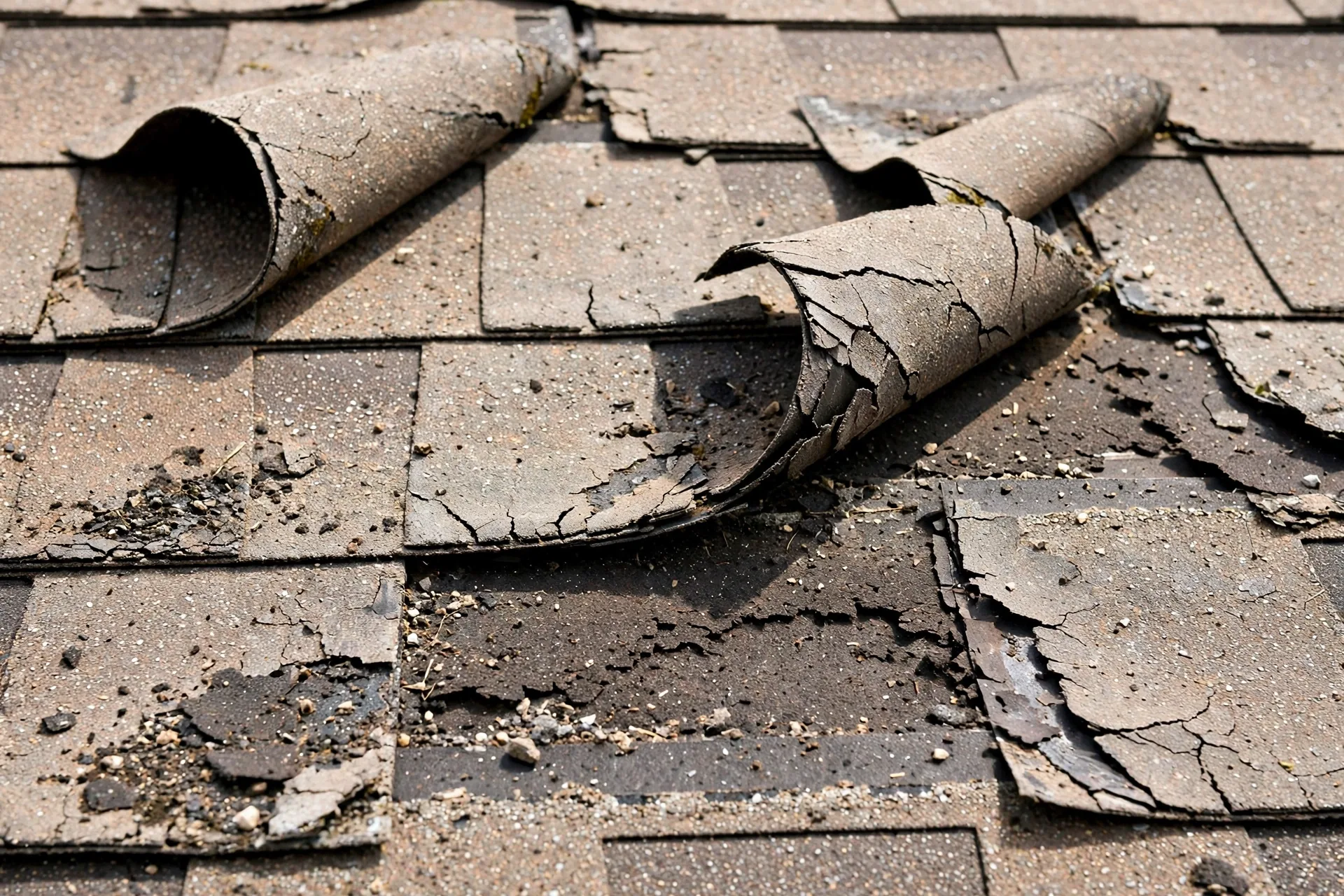
Stand across the street and look at your roof slope. Edges turning upward (curling), waviness across courses (buckling), or centers lifting (clawing) signal the asphalt layer is drying out across whole slopes — one of the clearest “replace, don’t repair” signals.
3. Granule Loss in the Gutters (or on the Roof)
- Dark, gritty sediment in gutters or at downspouts
- Bald or shiny patches on the shingle surface
- Shingles looking darker or streakier than they used to
PRO TIP: After a heavy rain, scoop debris from the gutter outlet. A handful of granules is normal on a roof under 10 years old; repeated, heavy accumulation means the protective layer is washing off and UV damage is accelerating.
4. Leaks in More Than One Spot
Check the attic: water stains or dark rings on decking, pinpricks of daylight, damp insulation, musty smell. One leak = one failed detail. Multiple leaks in different places = the roofing system is failing at scale.
5. Sagging or Soft Spots in the Roof Deck
Any dip or wave in the roofline points to moisture-soaked decking underneath. You can’t re-shingle over compromised decking — this almost always means a full replacement.
6. Moss, Algae, or Fungi That Keep Coming Back
Thick moss growing between shingles, lifting tabs upward, means trapped moisture and years of accelerated decay. Heavy, recurring moss — especially in damp regions — is a top shingle killer.
7. Your Energy Bills Keep Creeping Up
Damaged shingles and failing underlayment let conditioned air escape. A scorching-hot attic despite working ventilation points at the roof system.
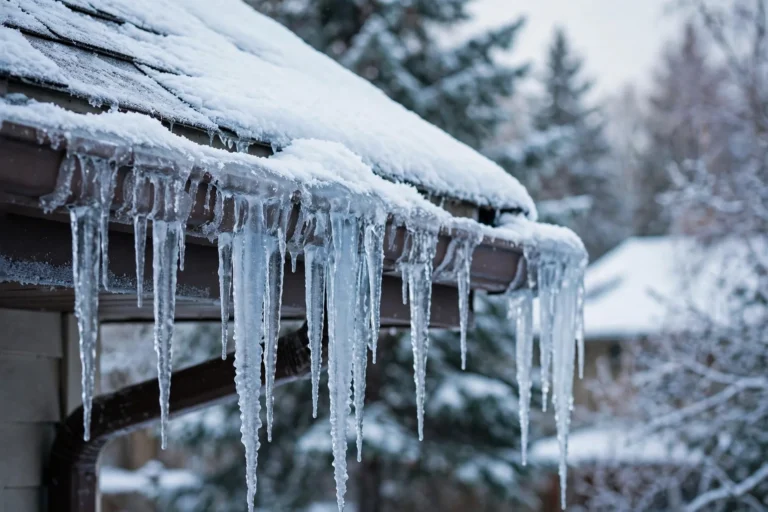
Winter brings its own roof challenges — if you’re seeing ice buildup along the eaves, see our ice dam removal and prevention guide.
Repair or Replace? A Quick Comparison
| Scenario | Usually a repair | Usually a replacement |
|---|---|---|
| Roof age | Under ~15 years (asphalt) | 20+ years (asphalt) |
| Damage extent | One or two shingles, one detail | Damage across multiple slopes |
| Leaks | Single, localized leak | Multiple leaks |
| Granule loss | Minimal | Heavy, widespread |
| Shingle condition | Mostly flat and flexible | Curling across large areas |
| Decking | Solid | Sagging or soft spots |
| Typical cost (2026) | $150–$1,500 per repair visit | $8,000–$20,000+ for a full replacement |
⚠️ Safety note: Inspect from the ground, a sturdy ladder, or inside the attic. Walking a pitched roof is pro territory.
Bottom Line
- Check the age first. An asphalt roof past ~20 years is a replacement candidate.
- Patterns beat incidents. One curled shingle is a repair; widespread curling or gutters full of granules is a replacement.
- Inspect twice a year from the ground — spring and fall.
- Stay off the roof.
- Get 3 written estimates from licensed local roofers.
FAQs
How long does an asphalt shingle roof typically last?
3-tab: 15–20 years; architectural: 25–30 years.
Can I just layer new shingles over the old ones?
Up to two layers are allowed in many areas — but it hides decking damage, adds weight, and voids most warranties. A tear-off is almost always the better investment.
How much does a roof replacement cost in 2026?
Roughly $8,000–$15,000 for asphalt on a typical 1,500–2,000 sq ft home; higher in major metros.
Does homeowners insurance cover a full roof replacement?
Typically only for sudden events (storms, hail) — not wear and tear. Document damage with photos right after a storm.
How long does a roof replacement take?
Most residential asphalt replacements take 1–3 days.
What should I ask a roofing contractor before hiring?
License and insurance proof, written scope with material brands, certified installer status, deck-repair handling, and a clear payment schedule.