Tapestry Wall Hanging: Match the Method to the Weight, or It Falls
TL;DR
Tapestry wall hanging works when the method matches the tapestry’s weight and value: light printed pieces can use Command strips, clips or a tension rod; heavy woven pieces need a rod with brackets, a sewn sleeve or a stretcher frame; valuable vintage pieces need a Velcro conservation mount or framing. Never pin or staple through the fabric itself, never hang a heavy piece from two corner pins, and keep every tapestry out of direct sunlight and off heating vents.
Tapestry wall hanging looks easy until the piece falls, sags or tears — because most guides list hanging methods as if they were equals, and they are not. A heavy woven tapestry on Command strips will fall, a valuable vintage piece pinned through its fabric will tear, and a light printed tapestry screwed into brackets is overkill that damages a wall for nothing. This guide matches the method to the tapestry first: identify the type, then the method, then the damage trade-off, with the sag fix and the sunlight rules that protect the piece after it is up.
What Is a Tapestry Wall Hanging?
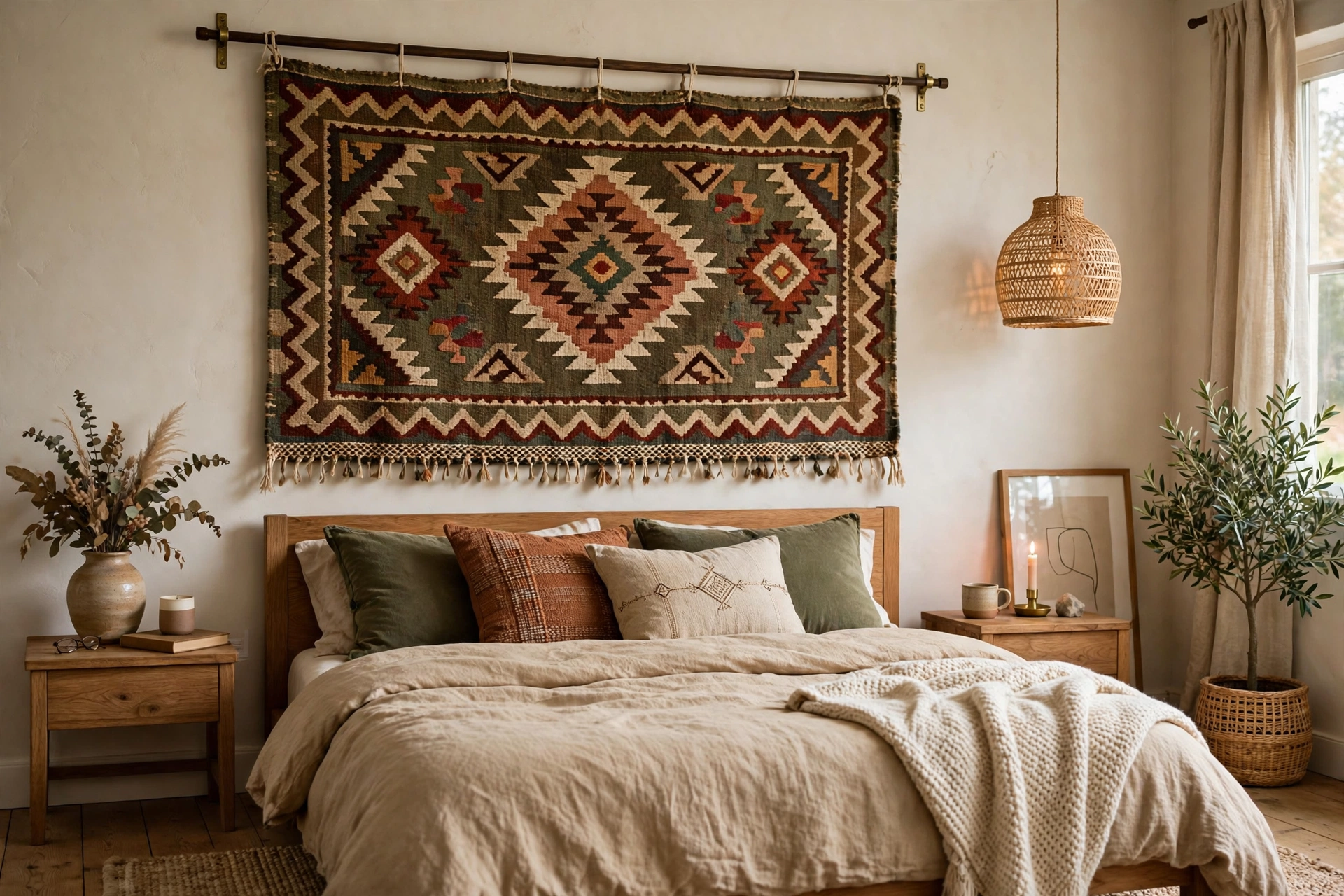
A tapestry wall hanging is a textile artwork hung on a wall — woven, printed or vintage — that adds colour, texture and warmth a framed print cannot match. Woven tapestries are heavier than printed ones because the design is in the weave itself, not printed on the surface. Printed tapestries are lighter, cheaper and easier to hang, but they wrinkle and fade faster. Vintage or valuable tapestries need conservation care: no pins, no staples, no direct sunlight, and stable temperature and humidity. The type decides everything that follows, so identify it before buying any hardware.
Which Hanging Method Fits Your Tapestry Type?
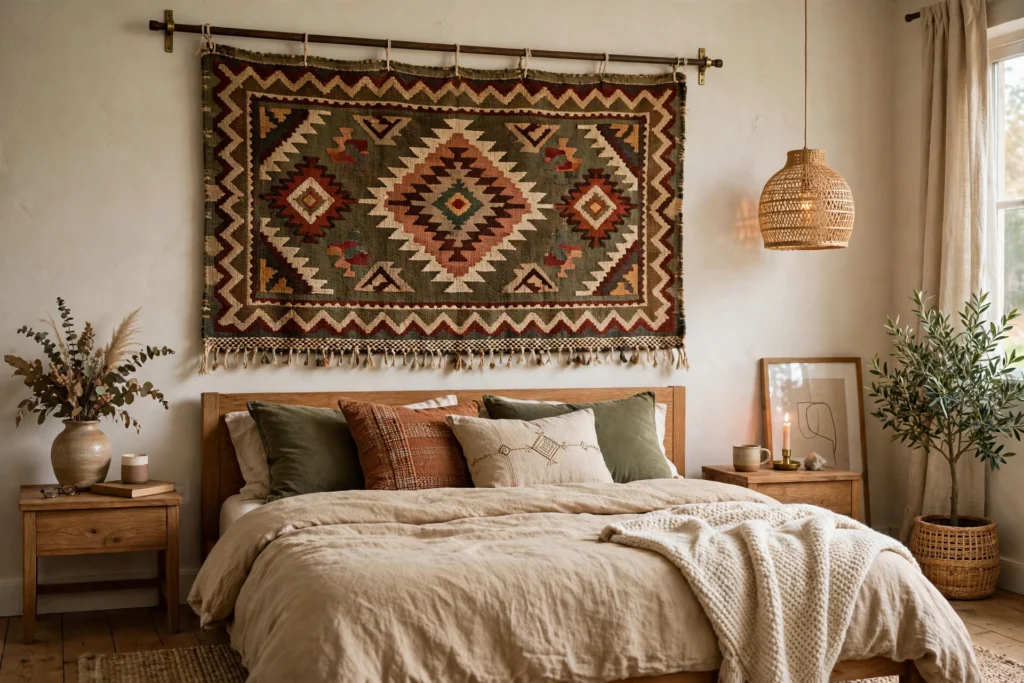
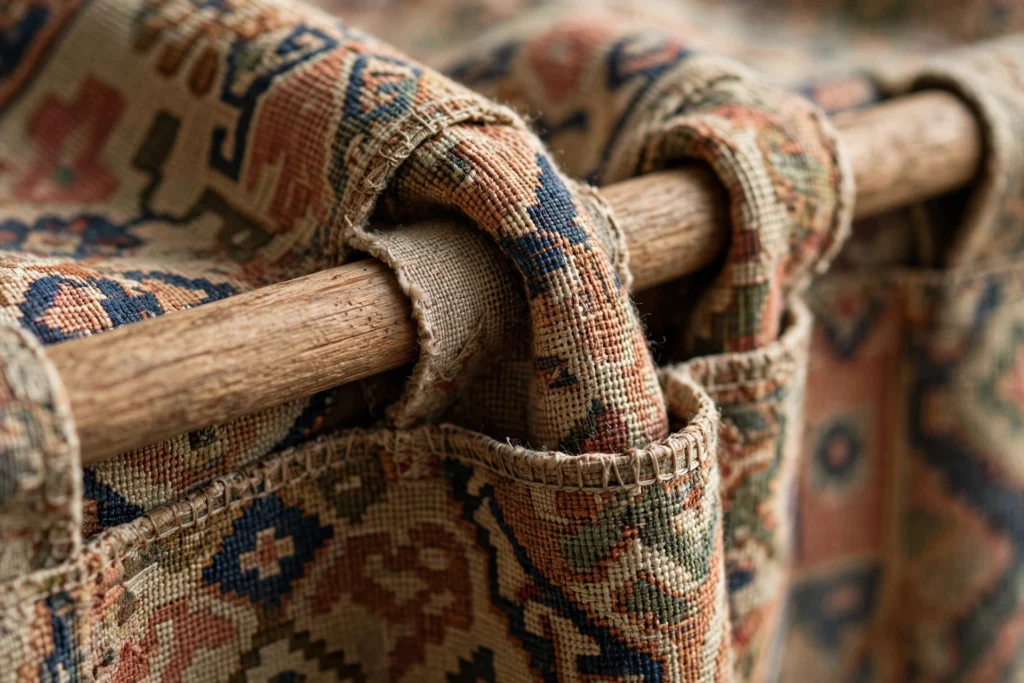
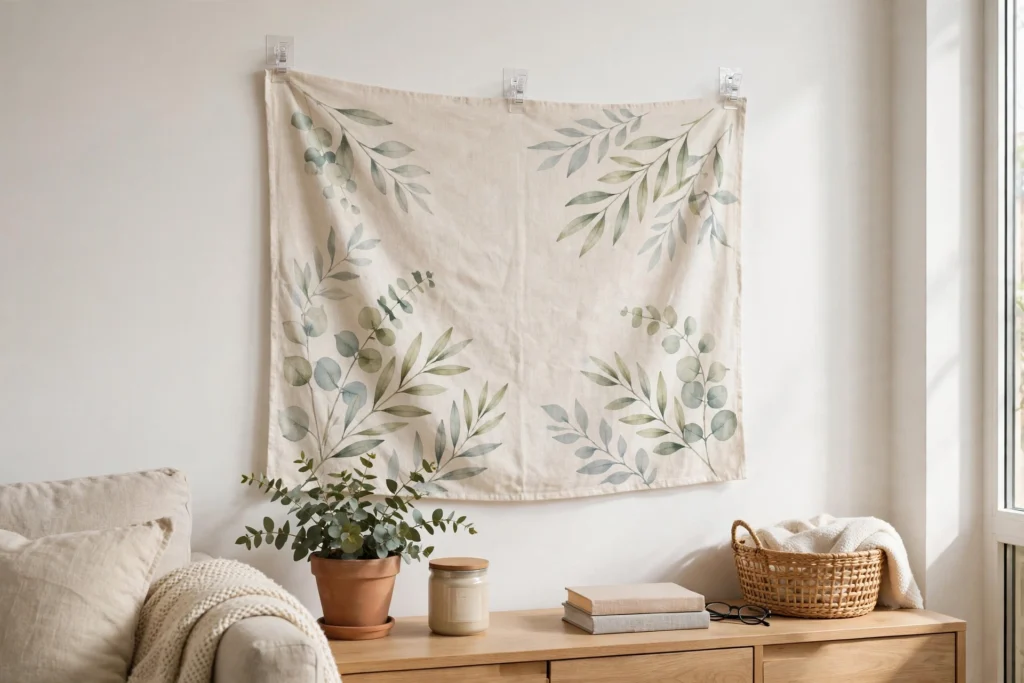
Match the method to the type, not to what is cheapest in the drawer. Light printed tapestries suit Command strips and hooks, clips on hooks, or a tension rod between walls — all damage-free and strong enough for light fabric. Heavy woven tapestries need a rod through a sewn pocket with brackets, a sewn sleeve, or a stretcher frame — methods that spread the weight across the full top edge instead of concentrating it at two points. Valuable or vintage tapestries need a Velcro conservation mount, where one side of Velcro is sewn to the tapestry and the other fixed to the wall, or full framing with UV protection — no pins, no staples, no holes through the fabric at all.
| Tapestry type | Method | Wall damage | Weight limit |
|---|---|---|---|
| Light printed | Command strips/hooks, clips, tension rod | None | Light fabric only |
| Heavy woven | Rod + brackets, sewn sleeve, stretcher frame | Bracket holes, worth it | Heavy pieces, full support |
| Valuable / vintage | Velcro conservation mount or framed | Minimal, reversible | Any weight, with UV protection |
How Do You Hang a Tapestry Without Damaging the Wall or the Fabric?
Follow the damage ladder, from least to most, and stop at the first method strong enough for your piece. No damage comes from Command strips and tension rods, which suit light printed pieces and renters. Tiny holes come from pins, but only for light pieces with loops — never pin through the fabric itself, because pins tear fibres and leave holes that do not close. Bracket and anchor holes are worth it for heavy pieces, because a fallen tapestry damages both the piece and the wall far more than a bracket ever will. Framing gives the most protection and costs the most, and it is the right choice for valuable pieces that must survive decades.
| Damage level | Method | Best for |
|---|---|---|
| No damage | Command strips, tension rod | Light printed, renters |
| Tiny holes | Pins, only with loops | Light pieces, temporary hangs |
| Bracket holes | Rod brackets, anchors | Heavy woven pieces |
| Framed | Full frame, UV glass | Valuable, vintage, long-term |
How Do You Stop a Tapestry Sagging or Curling?
Sag comes from uneven support: two corner pins on a heavy piece let the middle droop, and a single top rod that is too thin bows under weight. The fix is even top support — a rod pocket or sewn sleeve that carries the full width, or a Velcro strip across the whole top edge — so no single point bears the load. Curling at the bottom comes from uneven weight or humidity; a bottom weighting bar, a light hem weight, or a second rod at the bottom keeps the fabric flat. Wrinkles are fixed with steam, not an iron pressed directly onto the fabric, and a tapestry that has been folded in storage needs a day hanging flat before its wrinkles are judged.

Where Should a Tapestry Hang, and Where Should It Not?
Size it like any wall art: above a bed or sofa, aim for about two-thirds of the furniture width, following the same rule as the living-room pillar guide, and centre it at eye level. Keep every tapestry out of direct sunlight, which fades colours fastest, and off heating vents, which dry and weaken fibres. For valuable pieces, conservation guidance is 65–70°F and 45–55% humidity — normal room conditions, in other words, but not a sun-baked wall or a wall above a radiator. A tapestry in a hallway, bedroom or living room lasts far longer than the same piece in a sunroom or above a heater.
Frequently Asked Questions
Command strips or rod for a heavy tapestry?
Rod, always. Command strips are for light printed pieces only; a heavy woven tapestry will pull them off the wall, and the fall damages the piece more than bracket holes ever would.
Will hanging a tapestry damage my deposit?
Not if you use the right method: Command strips, clips and tension rods leave no damage for light pieces, and a rod bracket’s small holes are usually covered by normal touch-up. Pins through fabric damage the tapestry, not just the wall.
How do I stop my tapestry sagging?
Give it even top support — a rod pocket, sewn sleeve or full-width Velcro strip — instead of two corner pins. Add a bottom weight if the lower edge curls, and steam out wrinkles rather than ironing them.
Can I hang a tapestry in a bathroom or kitchen?
Only a light printed piece, well away from steam and cooking grease, and never a valuable woven piece. Humidity and grease damage textiles faster than sunlight, so bedrooms and living rooms are the safer rooms.
A tapestry is not hung by its prettiest method — it is hung by its weight and its value. Weigh the piece, pick the method from its type, never pin through the fabric, and keep it out of sun and heat. Do that, and the tapestry stays up, stays flat, and stays beautiful for years.