AC Blowing Warm Air? 9 DIY Checks Before Calling a Pro
It’s 94°F outside, the AC is humming, and the air coming out of your vents feels… warm. Before you panic-dial an HVAC company and pay a $150–$300 emergency service fee for a five-minute fix, take a breath: in a surprising number of cases, the culprit is a wrong thermostat setting, a clogged filter, or a tripped breaker.
Roughly a third of “my AC isn’t cooling” service calls trace back to homeowner-fixable issues — and an emergency visit runs $150–$300 before parts. This guide walks you through the 9 checks that solve the most common causes, easiest first — and when to stop and call a licensed pro.
TL;DR: Start at the thermostat (mode, setpoint, batteries), check the filter and supply vents, then inspect the outdoor condenser for debris and tripped breakers. Frost on the lines = airflow problem; hissing or never-quite-cooling = refrigerant — a licensed pro’s job.
1. Check the Thermostat Settings
- Mode: Confirm COOL, not HEAT or OFF.
- Setpoint: At least 5°F below the current room temperature, or the system simply won’t run.
- Fan: Set to AUTO, not ON. With the fan ON, the blower runs constantly, pushing room-temperature air through the vents between cooling cycles.
- Batteries and power: A dim screen or low-battery warning means weak signals. Swap in fresh batteries.
- Location: Thermostats near ovens, lamps, or in direct sunlight read hot and shut cooling off early.
After a power outage, give the system up to 10 minutes — most units have a built-in compressor delay.
2. Replace (or Clean) the Air Filter
A dirty filter is the most common mechanical cause of warm air. Hold the filter up to a light — if you can’t see light through it, it’s done. Standard 1-inch filters need replacing every 1–3 months in cooling season.
If the coil has already frozen, turn the system OFF and run just the fan for a few hours to thaw it, then retry with a clean filter.
3. Make Sure Every Vent Is Open and Unblocked
- Open all supply vents, even in unused rooms. Closing vents raises static pressure and can make the whole system blow warmer.
- Move furniture, rugs, curtains, and toys away from vents and the return-air grille.
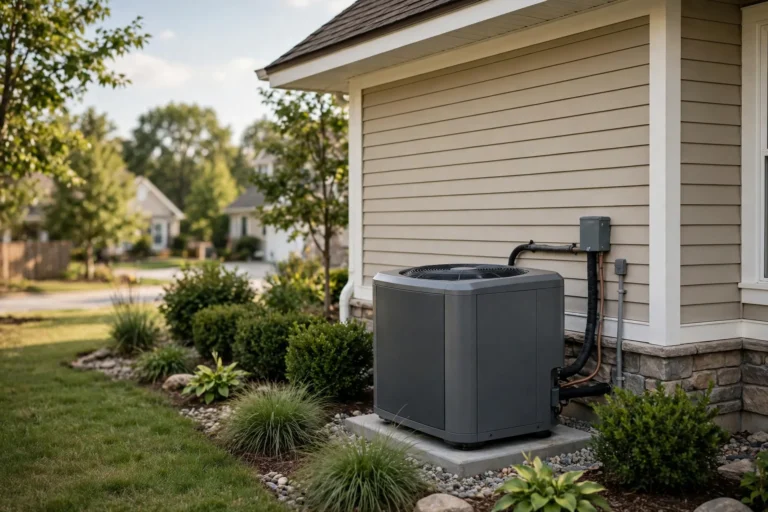
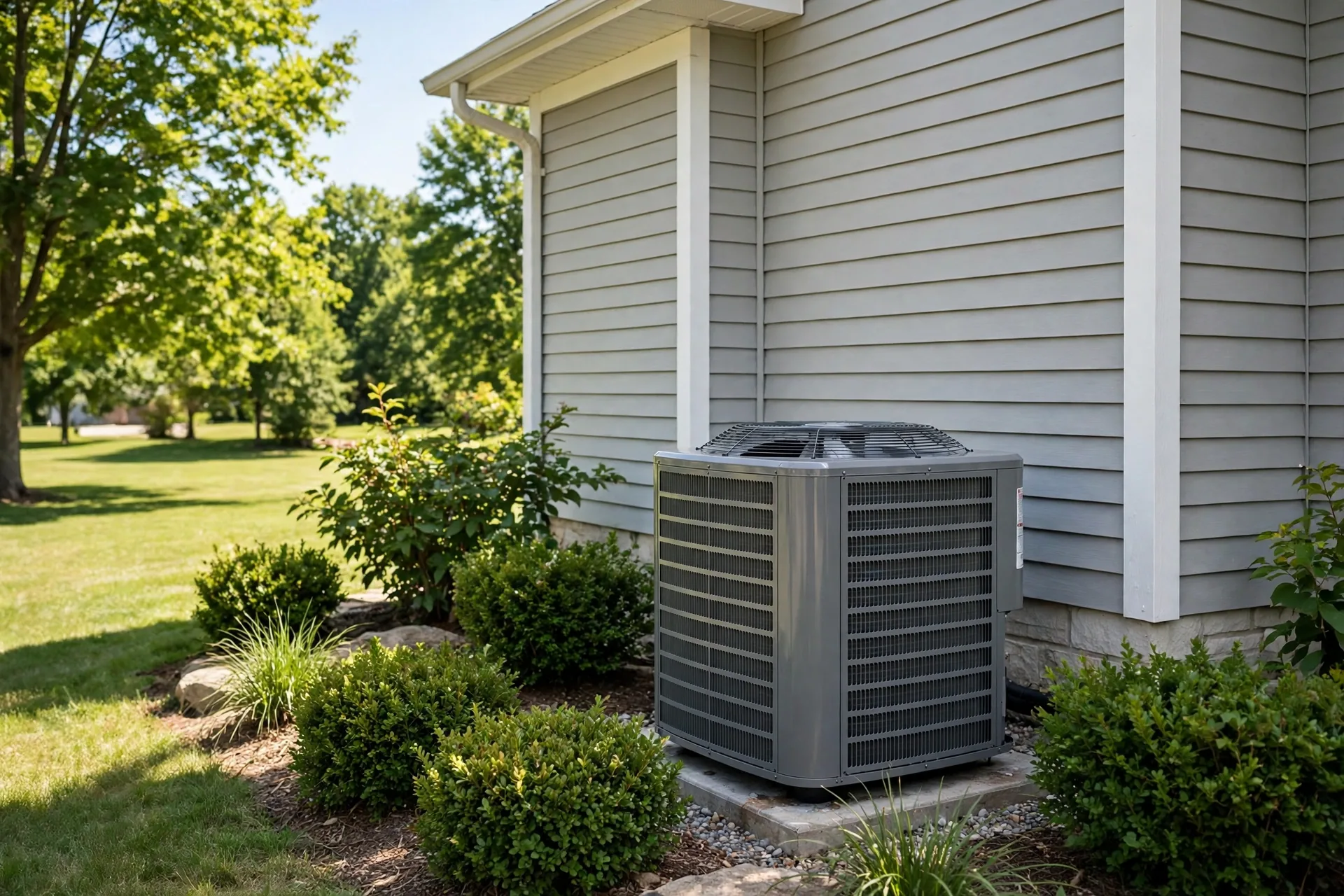
4. Inspect the Outdoor Condenser Unit
- Clear at least 2 feet of space around the unit.
- Hose the exterior fins gently (spray outward). Turn the power off at the outdoor disconnect first. Never use a pressure washer.
- The fan should spin smoothly when the system runs. Dead fan while the unit hums = likely capacitor issue — a tech’s job.
PRO TIP: While you’re outside, hold your hand over the fan exhaust while the unit runs. You should feel hot air blasting upward — lukewarm exhaust on a hot day signals the system isn’t absorbing indoor heat, usually an airflow or refrigerant problem.
5. Check Your Breakers and the Outdoor Disconnect
- Confirm the outdoor disconnect is ON, then check the breaker panel — a tripped breaker may sit halfway between ON and OFF. Flip it fully OFF, then back ON.
- If it trips again immediately, do not keep resetting it. Call a pro.
6. Look at the Refrigerant Lines — But Don’t Touch Them
Two copper lines connect the outdoor unit to the indoor coil. The thick insulated line should feel cool and slightly sweaty in summer.
- Frost or ice on either line usually means restricted airflow or low refrigerant.
- Hissing, bubbling, or oily residue are classic signs of a refrigerant leak — legally restricted to EPA-certified technicians.
7. Clear the Condensate Drain Line
Pour a cup of distilled white vinegar into the access tee monthly in cooling season. Suction the outdoor end with a wet/dry vac for 2–3 minutes to pull out a clog.
8. Rule Out the “It’s Just Really Hot” Scenario
A properly sized central AC typically cools 15–20°F below the outdoor temperature. If it’s 100°F outside and your house holds 82–85°F with the AC running nonstop, that’s often a design limit, not a breakdown.
9. Note the Symptoms — Then Call a Pro Armed With Info
If checks 1–8 didn’t fix it, gather this intel before you call: fan spinning? ice on lines? air slightly cool or room-temp everywhere? system age? Expect a diagnostic visit at $75–$150, capacitor replacement $150–$400, refrigerant leak repair plus recharge $400–$1,500+.
If your system is aging and repairs are adding up, see our heat pump vs furnace comparison to understand your replacement options.
When It’s Definitely Time for a Professional
| Symptom | DIY fix | Call a pro when… |
|---|---|---|
| Dirty filter | Replace it ($5–$15) | Coil freezes repeatedly with a clean filter |
| Weak airflow everywhere | Open vents, clear obstructions | Flow stays weak (blower or duct issue) |
| Dead condenser fan, electrical smell | Clear 2 ft of space; hose fins | Likely capacitor or motor problem |
| Tripped breaker | Reset once, fully OFF then ON | Trips again, or you see burnt wiring |
| Frost or ice on lines | Thaw (fan-only, system off); fix airflow | Ice returns — low refrigerant or metering issue |
| Hissing / oily residue on lines | — | Always. Refrigerant work requires EPA certification |
| Clogged condensate drain | Vinegar flush; wet-vac suction | Standing water won’t drain; visible water damage |
⚠️ Electrical safety: Turn off power at the breaker and the outdoor disconnect before touching the condenser. Capacitors can hold a charge even with power off. When in doubt, stop and call a technician.
Bottom Line
- Start with the thermostat — COOL mode, AUTO fan, setpoint well below room temp.
- A clean filter and open vents are non-negotiable.
- Give the outdoor condenser room to breathe — 2 feet of clearance and clean fins, power off while you work.
- One breaker reset, never more.
- Frost, hissing, or oily residue = licensed pro territory.
FAQ
How long should I wait after resetting a breaker before the AC blows cold?
Give it a full 15 minutes. Most systems have a 5–10 minute compressor delay after power restoration.
Can a dirty filter alone really cause warm air?
Yes. A severely clogged filter can freeze the evaporator coil into solid ice. Replace the filter, thaw the coil (fan-only, system off), and it often recovers fully.
Why does my AC run constantly but never reach the set temperature?
Either it can’t keep up with the heat load or it’s underperforming (low refrigerant, dirty coil, duct leaks). If it reached setpoint in similar weather last year, recheck the filter and condenser.
Is it safe to pour vinegar in my AC drain line?
Yes — a cup of distilled white vinegar in the access tee monthly during cooling season is standard maintenance.
Should I cover my outdoor condenser in winter?
Skip full covers — they trap moisture and invite rodents. A top-only cover is fine, but make sure it’s off before cooling season.
How much does an AC service call cost in 2026?
Plan on $75–$150 for the diagnostic visit. After-hours calls often run $150–$300+ just to show up.