Fall Furnace Maintenance Checklist: 12 Things Before Winter
Furnaces that have sat idle for six months get switched on all at once, and the ones with a dead flame sensor, a clogged filter, or a failed ignitor don’t start — they click, hum, or blow cold air. Most of those emergency calls could have been prevented with about 90 minutes of fall maintenance.
TL;DR — Key takeaways: Replace or clean the furnace filter, test the thermostat and CO detectors early, clear vents and registers, and vacuum the blower area. Book a professional tune-up in September or early October before the rush. Never open the burners or gas valve yourself — that’s a job for a licensed HVAC pro.
What you’ll need (DIY portion)
- Replacement furnace filter (check the size printed on the filter slot)
- Vacuum with a hose attachment
- Soft brush and damp cloth
- Fresh batteries for the thermostat and CO detectors
- Screwdriver (usually 1/4″ or 5/16″ nut driver for access panels)
DIY: 9 things you can do yourself
1. Replace (don’t just check) the furnace filter
A clogged filter is the #1 cause of furnace problems. Slide it out, note the airflow arrow direction, and insert the new one the same way. Write the date on the filter frame with a marker.
2. Test the thermostat before you need heat
Switch to HEAT and raise the set temperature. The furnace should fire up within a minute. Finding out in September that your thermostat is dead is a minor fix; finding out in January is an emergency call.
3. Open all supply registers and check return vents
Make sure every supply register is open and unobstructed. Vacuum the grilles. Keep interior doors open so return air can circulate.
4. Test every carbon-monoxide detector in the house
Press the test button — you should get a loud alarm. Replace batteries now, and check the manufacture date (units last 7–10 years). You need a working CO detector on each floor and near sleeping areas.
5. Clear the area around the furnace
Remove anything stored within 3 feet of the furnace. Sweep up lint and dust around the base.
6. Vacuum the blower compartment (power off first)
Turn the furnace off at the thermostat AND at the breaker. Remove the blower access panel, vacuum loose dust, wipe the panel. Do not touch the burners, wiring, or gas valve.
7. Check the condensate drain and pump (high-efficiency furnaces)
Check that the drain tube is clear and there’s no standing water in the pan. Clear a clog with a wet/dry vacuum at the outside drain outlet.
8. Inspect vents, flue pipes, and the chimney cap from the ground
Remove leaves and nests blocking exhaust vents. If you see rust or separated joints on metal flue pipe, note it for the pro visit.
9. Check the humidifier, if attached
Replace the water pad annually and set the humidistat to around 35–45% relative humidity.
Pro service: 3 things to book a licensed HVAC technician for
PRO TIP: Book your fall tune-up in September or early October. Once the first cold snap hits, every HVAC company in town is booked solid. A scheduled tune-up typically costs $80–$150; an emergency no-heat visit can run $150–$400+ just to show up.
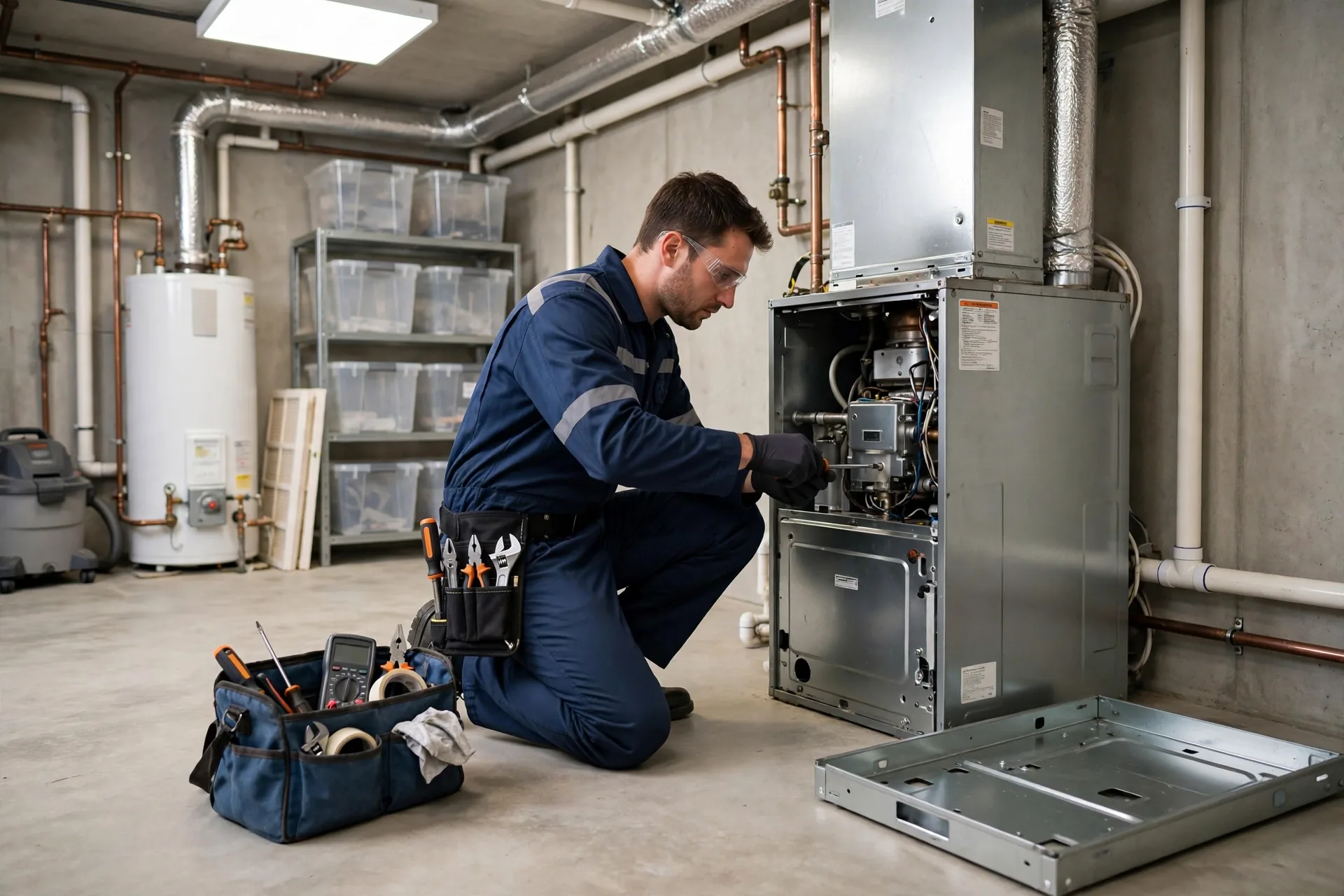
10. Full combustion and heat-exchanger inspection
The technician pulls the burners, cleans them, checks flame quality, measures gas pressure and temperature rise, and inspects the heat exchanger for cracks. Expect 45–90 minutes.
11. Gas leak and ignition-system check
The tech checks the gas valve, supply line connections, and ignition system. If you ever smell rotten eggs near the unit, that’s strictly pro territory.
⚠️ SAFETY WARNING: If you smell gas near your furnace, do NOT flip switches or investigate. Leave the house immediately and call your gas utility’s emergency line or 911. If a CO detector alarms, get everyone out and call the fire department.
12. Ductwork quick-look and airflow check
Ask the technician to check static pressure and accessible ductwork for disconnected joints — leaky ducts can waste 20–30% of heating energy.
If your furnace is aging and you’re weighing repair vs. replace, see our heat pump vs furnace comparison for 2026 costs and guidance.
DIY vs. pro at a glance
| Task | DIY | Call a licensed HVAC pro |
|---|---|---|
| Change filter, open vents, vacuum blower area | ✅ | |
| Test thermostat and CO detectors | ✅ | |
| Clear condensate drain, replace humidifier pad | ✅ | |
| Burner cleaning and combustion check | ✅ | |
| Heat-exchanger crack inspection | ✅ | |
| Gas valve, gas line, or ignition repairs | ✅ | |
| Electrical component replacement | ✅ | |
| Furnace repeatedly fails to start | ✅ |
Bottom Line
- Do it early: Complete your fall furnace checklist by late September or early October.
- Filters matter most: A clean filter prevents the #1 cause of furnace breakdowns.
- Safety first: Working CO detectors on every floor and a professional heat-exchanger inspection protect your family.
- Know your limits: Cleaning, filters, and testing are homeowner tasks. Gas, burners, and electrical belong to a licensed pro.
- A tune-up pays for itself: A $80–$150 annual service call catches small problems before they become $300–$600 emergency repairs.
Frequently Asked Questions
When should I do fall furnace maintenance?
Late September through early October is ideal — early enough to beat the technician booking rush.
How much does a professional furnace tune-up cost?
Most companies charge $80–$150. Emergency no-heat calls outside normal hours can cost $150–$400+.
How often should I replace my furnace filter?
Every 1–3 months during heating season for standard 1″ filters; every 6–12 months for 4–5″ media filters.
Can I clean the burners on my gas furnace myself?
No — leave burners, the gas valve, and the combustion chamber to a licensed HVAC technician.
Why does my furnace blow cold air when it first turns on?
A short burst of cool air at cycle start is normal. If it blows cold continuously, check the thermostat, filter, and pilot/ignitor, then call a pro.
What are the signs of a cracked heat exchanger?
Strange smell when heat runs, soot around the furnace, yellow flickering flame instead of steady blue, or repeated cycling. Shut down and call a pro immediately.