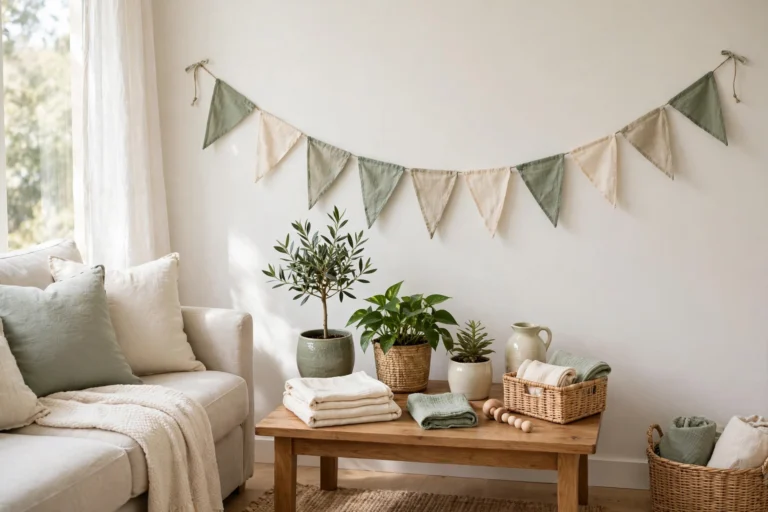
Wall Art for Living Room: The Complete Guide
TL;DR
Measure the furniture first, not the wall. Your art should span two-thirds to three-quarters of the furniture below it, sit 6 to 12 inches above it, and centre 57 to 60 inches from the floor. Tape paper templates to the wall and live with
them for a day before you drill. Renter-safe options included.
Most living rooms don’t have an art problem — they have a measuring problem. This guide to wall art for living room spaces fixes that with a tradesman’s order of operations: measure the furniture first, pick the wall second, and choose the format last. Follow that order and you stop guessing, stop buying pieces that turn out too small, and stop patching nail holes.
The two mistakes most often seen are buying art that is too small for the furniture beneath it, and centring art on the wall instead of on the furniture. A 24-inch print floating over an 84-inch sofa looks lost no matter how beautiful it is. The same print over a narrow console looks intentional. The furniture is the anchor — everything else follows from it. That furniture-first order is what separates good wall art for living room walls from expensive guesses.
Wall Art for Living Room: How Big Should It Be Above a Sofa?
For an 84-inch sofa, hang art — or a group — spanning 56 to 63 inches wide, leaving 6 to 12 inches between the sofa back and the bottom of the frame. That two-thirds to three-quarters span makes the art look connected to the sofa instead of floating randomly.
Rule: measure the furniture, then multiply. Two-thirds of 84 inches is 56; three-quarters is 63. The middle of the range is the safest bet if torn between two sizes. When in doubt, go bigger — slightly too large looks deliberate, slightly too small looks like an afterthought.
A group counts as one unit: measure the full span from the left edge of the first frame to the right edge of the last, including gaps. Two to three inches between frames keeps the arrangement reading as one piece.
| Furniture | Art width | Gap above furniture | Centre height |
|---|---|---|---|
| 84-in sofa | 56–63 in | 6–12 in | 57–60 in from floor |
| 120-in sectional | 69–90 in | 6–12 in | 57–60 in from floor |
| Fireplace mantel | Just narrower than the mantel | Above the mantel shelf | 57–60 in from floor where possible |
| Bare wall (no furniture) | Sized to the wall, not the room | n/a | Centre 57–60 in from floor |
For a 120-inch sectional, the same math gives 69 to 90 inches — which is why a single small canvas never works over a sectional. If shopping for wall art for living room sectionals, start with the 69-to-90-inch range and work backward to a format. You need either one very large piece, a wide triptych, or a planned group. This is also where the companion large wall art guide comes in: oversized pieces have their own hanging and weight rules, and they are worth reading before committing to a 60-inch frame.
Over a mantel, art should be just narrower than the mantel shelf itself, so the shelf visually frames it rather than the art overhanging the edges. On a bare wall with no furniture below, forget the furniture rule and centre the piece 57 to 60 inches from the floor — the gallery standard.
How High Should Living Room Art Hang?
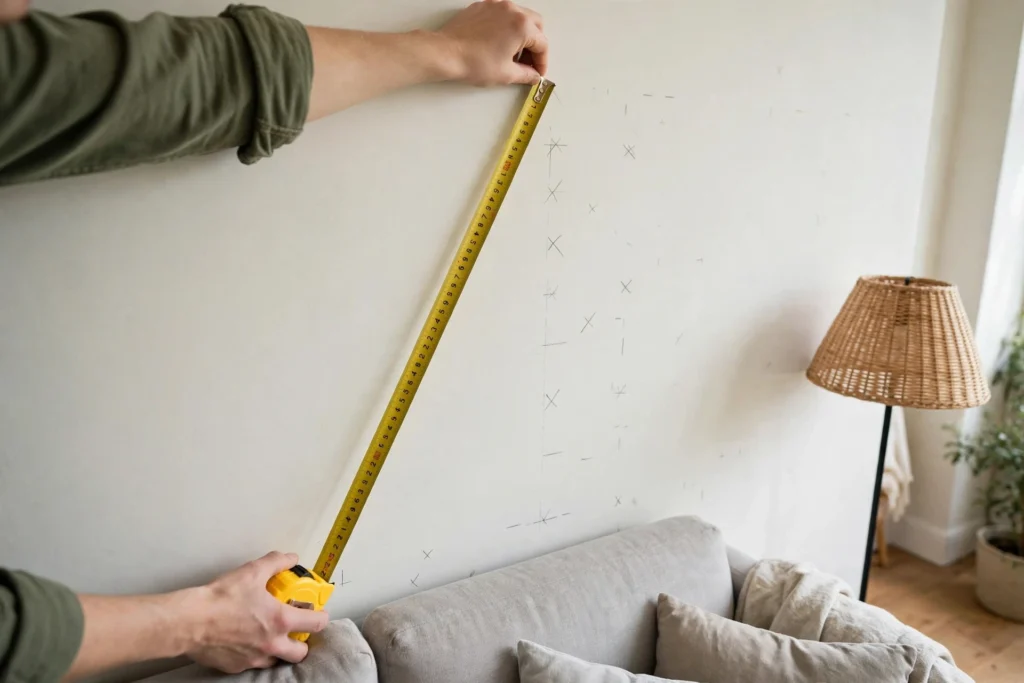
Centre the art 57 to 60 inches from the floor to its middle, and keep 6 to 12 inches of space above the furniture below it. When those two rules disagree, the gap above the furniture wins — art floating a foot above a sofa always looks disconnected.
The 57-to-60-inch centre comes from average eye level and is the number galleries use. But living rooms are not galleries: people sit on sofas, and furniture sets the sightline, which is why the 6-to-12-inch gap matters more in practice. Measure from the top of the sofa back (or mantel shelf) to the bottom of the frame, not from the floor.
Two common errors: hanging art at standing eye level over a sofa — it ends up a foot too high once everyone sits down; and centring art on the whole wall, including empty space above a tall bookcase or below a high ceiling. Centre it on the furniture zone, not the architecture.
Which Wall Should You Pick?
Pick the wall after you measure the furniture, not before. The sofa wall is the default, the fireplace wall works when the art is narrower than the mantel, the TV wall suits flanking pieces, and the wall between windows takes a vertical piece centred between the window edges.
| Wall | Playbook |
|---|---|
| Above the sofa | Horizontal piece or group, two-thirds to three-quarters of the sofa width, 6–12 in above the sofa back |
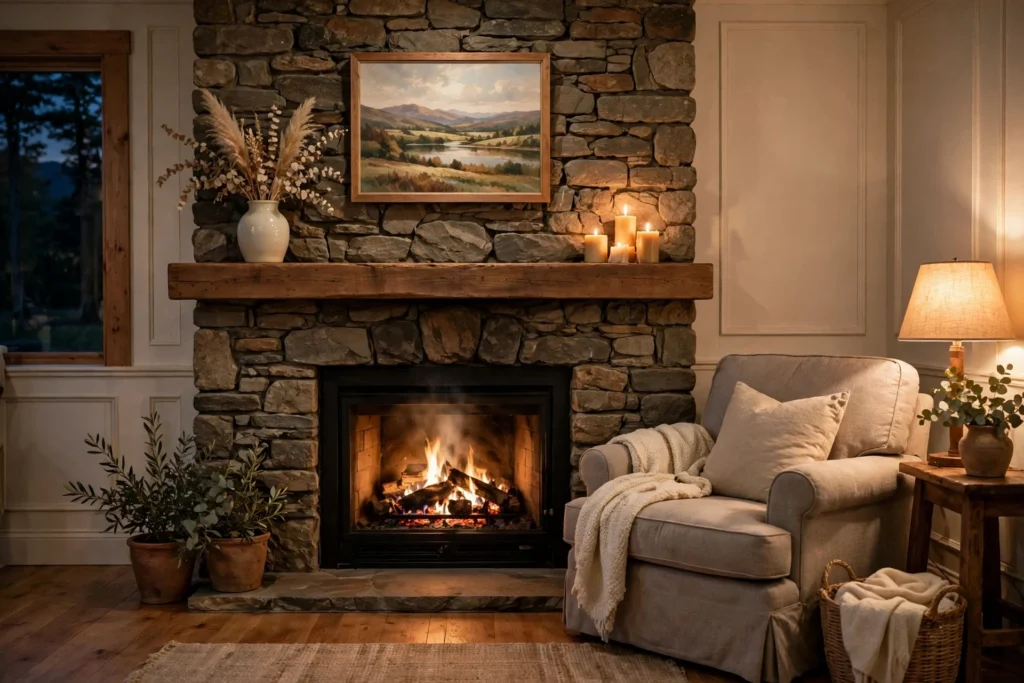
| Fireplace | Art narrower than the mantel, hung above the shelf with heat clearance — test the wall temperature after the fire has run 30 minutes |
| TV wall | Flank the screen with smaller pieces; never hang one big piece that fights the TV for attention |
| Between windows | Vertical piece, 16×20–18×24 in, centred between the window edges |
| Floating furniture | Anchor to a console or a structural wall — never hang art over furniture that floats with nothing behind it |
The sofa wall is the easiest win in most living rooms: it is wide, it is the room’s focal point, and the furniture gives you exact measurements. The fireplace wall is second, but it comes with a heat warning. For wall art for living room fireplaces, heat is the deciding factor, not style. If the wall above your mantel gets hot to the touch after the fire has been running, move the art higher or choose a different wall — heat and humidity warp canvases and fade prints over time.
The TV wall is where most people go wrong. A television is already a big black rectangle; hanging another big rectangle above or beside it creates a visual fight. Instead, flank the screen with smaller pieces, or leave the TV wall alone and put your best art on the opposite wall, where you actually look at it while sitting down. The best wall art for living room TV walls is small and flanking, not big and competing.
Between windows is the most underused spot in the living room. This is the easiest wall art for living room project to get right, because the windows do the measuring for you. A vertical 16×20 or 18×24 piece, centred exactly between the window edges, turns dead space into a deliberate moment — and because windows give you fixed edges to measure from, getting it centred is easy.
Floating furniture — a sofa in the middle of the room with its back to open space — needs an anchor. Hang the art on the structural wall behind a console table placed behind the sofa, not on thin air above a floating back. If there is no wall and no console, lean a large piece on a console or sideboard instead of hanging anything.
How Do You Test the Size Before You Drill?
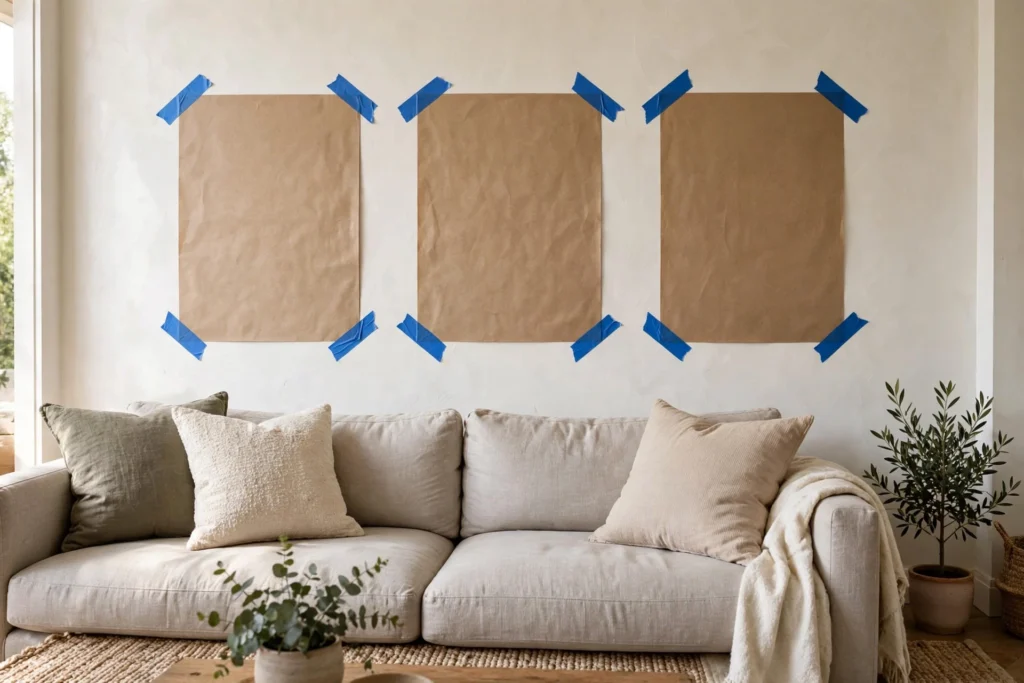
Cut the art’s outline from kraft paper, tape it to the wall with painter’s tape, and live with it for at least a day before you drill. Check it from the doorway, from the sofa, and at night with the lamps on — paper is free to move, but a nail hole is not.
This is the step every rival guide skips, and it is the one that saves you from the most expensive mistake: a beautiful piece at the wrong size. Tape the outline up, then walk in from the hallway the way a guest would. Sit on the sofa and look at it the way you will every evening. Turn the lamps on — art that looks fine in daylight can disappear in warm evening light, which is when a picture light earns its keep.
A paper template is the cheapest insurance your wall art for living room project will ever buy. Adjust the template before you commit. Slide it left or right, raise it two inches, try a wider outline. Each move costs nothing. Only when the template has survived a full day of glances do you mark the nail points through the paper and drill.
What Hardware Holds Each Weight?
Match the hardware to the weight, not to what came in the box. Light pieces under 10 pounds can hang on a picture hook or adhesive strip, medium pieces need wall anchors, and heavy framed art must go into studs with rated hardware — never into drywall alone.
| Weight | Hardware | Notes |
|---|---|---|
| Light, under 10 lb | Picture hooks or adhesive strips | Fine for small framed prints and unframed canvas |
| Medium, 10–30 lb | Wall anchors rated above the piece’s weight | Toggle or self-drilling anchors; check the rating on the pack |
| Heavy, large framed, over 30 lb | Studs + rated hardware | Two screws into studs, never drywall alone; use two hooks for wide pieces |
Finding a stud is straightforward: studs usually sit 16 inches apart, and an electronic stud finder removes the guesswork. Weigh the frame before you shop — wall art for living room walls over 30 pounds changes the hardware completely. Mark both edges of the stud and aim for its centre. For heavy pieces, use two hooks spread across the frame’s wire — one centred hook lets a wide frame tilt over time, and a tilted frame is the first thing guests notice.
Never trust drywall alone for a heavy frame. Drywall holds a nail for a week and a framed mirror for a month; then gravity wins, usually at night, usually onto the furniture below. If you cannot find a stud where the art needs to go, move the art to the stud — or use a French cleat rated for the weight, which spreads the load across a wider area.
What If You Rent and Cannot Drill?
Yes — use adhesive hooks rated above your frame’s weight, lean large pieces on a console, or hang from a picture ledge that needs only two small screws. Remove adhesive strips by pulling the tab straight down slowly; yanking outward takes paint with it.
The renter rule is simple: never exceed the hook’s rated weight, and always buy one rating above what you think you need — a 12-pound frame gets a 16-pound hook. Clean the wall with rubbing alcohol first, press firmly for 30 seconds, and wait an hour before hanging. Most adhesive failures are impatience, not product defects.
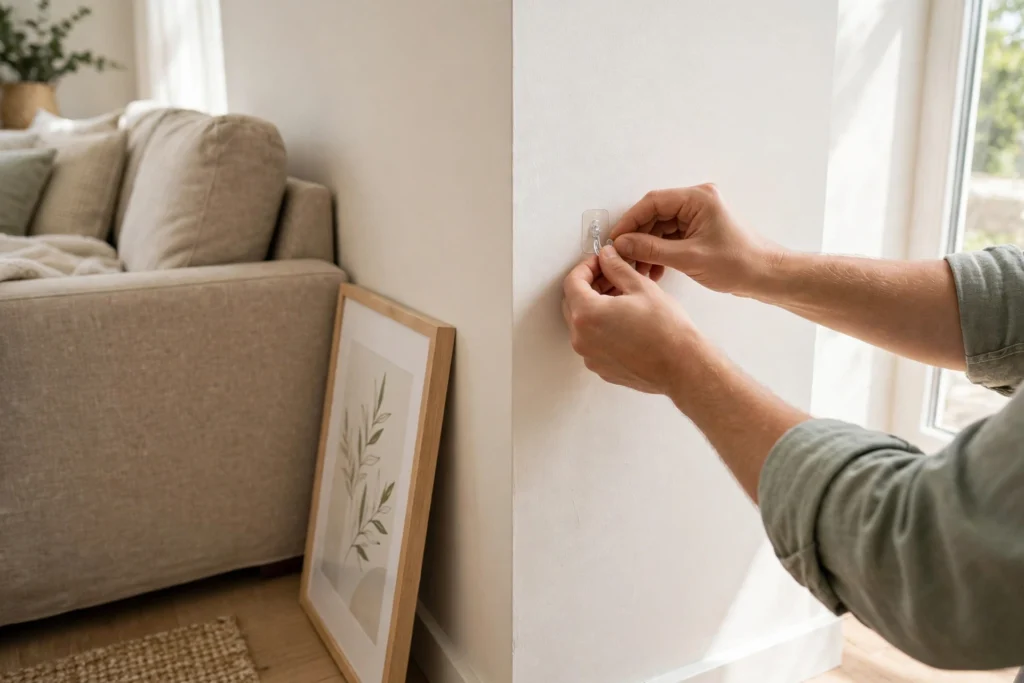
Leaning is the renter’s secret weapon, and the most forgiving way to display wall art for living room rentals. A large canvas leaned on a console or mantel looks intentional, needs zero holes, and can be moved in seconds when you rearrange. Picture ledges are the middle path: two small screw holes that are easy to fill at move-out, with the freedom to swap art without new holes each time.
What Format Should You Choose Last?
Choose the format after the size and wall are settled. Canvas is light and glare-free, framed prints look formal but weigh more, and a group of smaller frames works where one big piece would overwhelm the wall. Format is the finishing choice, not the starting one.
Canvas is the easiest large format: no glass means no glare from windows, and a stretched canvas weighs far less than the same size framed behind glass. For large wall art for living room walls, canvas is usually the lightest big format you can buy. That weight difference matters — it is often the difference between anchors and studs. Framed prints suit formal rooms and photography, but budget for the extra weight and the glass reflection opposite windows.
A group of smaller frames — the gallery wall approach — works where one big piece would dominate a narrow wall or compete with a fireplace. The companion gallery wall guide covers spacing and layout for multi-frame arrangements, and the canvas wall art guide covers stretched-canvas care and hanging. Both are worth a read once your size and wall are fixed.
Lighting is the finishing touch most people skip. A picture light or plug-in sconce above the art makes the piece visible in the evening, when living rooms are actually used. Warm 2700K light flatters art and matches living-room lamps; cool white light makes a living room feel like an office.
What should you budget? As rough planning estimates, not quotes: a picture-hanging kit runs about $15–$30, a stud finder $25–$50, a large canvas set $80–$250, a picture light $40–$120, and adhesive hooks $10–$20 for a multi-pack. Professional hanging runs roughly $100–$300 per piece depending on size and wall type. Prices vary by brand, size, and region, so treat these as planning numbers, not quotes.
Frequently Asked Questions
How high should art hang above a sofa?
Leave 6 to 12 inches between the top of the sofa back and the bottom of the frame, with the centre of the art roughly 57 to 60 inches from the floor. That gap rule is the single most useful wall art for living room measurement you will learn. If the two rules conflict, keep the gap — art that floats too high above a sofa looks disconnected even at the “correct” centre height.
Can art go between windows?
Yes — it is one of the best spots in a living room. Use a vertical piece, usually 16×20 or 18×24 inches, centred exactly between the window edges. Measure from window trim to window trim, not from the wall corners, so the piece sits in the true middle of the gap.
What if the sofa floats in the middle of the room?
Anchor the art to something solid: a console table behind the sofa with art on the structural wall behind it, or a large piece leaned on that console. For wall art for living room layouts with floating furniture, the console is the anchor, not the sofa. Never hang art over a floating sofa back with open space behind it — without an anchor, the arrangement looks accidental.
How do I hang heavy art if I cannot find a stud?
Move the art to the stud rather than forcing the placement. Studs usually sit 16 inches apart, so shifting a few inches in either direction usually finds one. If the placement is truly fixed, use a French cleat rated above the piece’s weight — never hang a heavy frame on drywall alone.
Should art match the sofa or the wall colour?
Neither, exactly. Art should relate to the room’s palette without matching any single piece — pick up one or two colours already in the room, like a cushion or rug tone, and let the rest of the piece contrast. Matching the sofa exactly makes the art disappear; clashing with everything makes it shout.
The Short Version
Measure the furniture. Span two-thirds to three-quarters of it. Centre 57 to 60 inches high, 6 to 12 inches above the furniture. Paper-template it for a day. Hang light pieces on hooks, medium pieces on anchors, and heavy pieces on studs — and if you rent, lean it or stick it. Do those steps in that order, and your wall art for living room walls stops being a gamble and starts being the best-looking decision in the room.