Large Wall Art: Ideas and Picks That Fill a Big Wall
A big blank wall is not a decorating problem — it is a measuring problem. Most people buy large wall art that is too small, hang it too high, and then wonder why the room still feels unfinished. The fix is simple: measure the wall, aim to cover about two-thirds of the width above your furniture, and commit to ONE layout instead of scattering small frames and hoping they add up. This guide gives you five layouts, each with its size range, its hanging hardware, and what it roughly costs, so you can pick by measurement rather than by guesswork.
TL;DR
Measure your wall and the furniture below it, then cover about two-thirds of that width with art. Pick one large wall art layout — oversized single, diptych or triptych, grid, picture ledges, or gallery wall — sized from the table below. Budget roughly $60 to $600 depending on the layout. Prices in this guide are rough planning estimates, not quotes.
How Big Should Large Wall Art Be for My Wall?
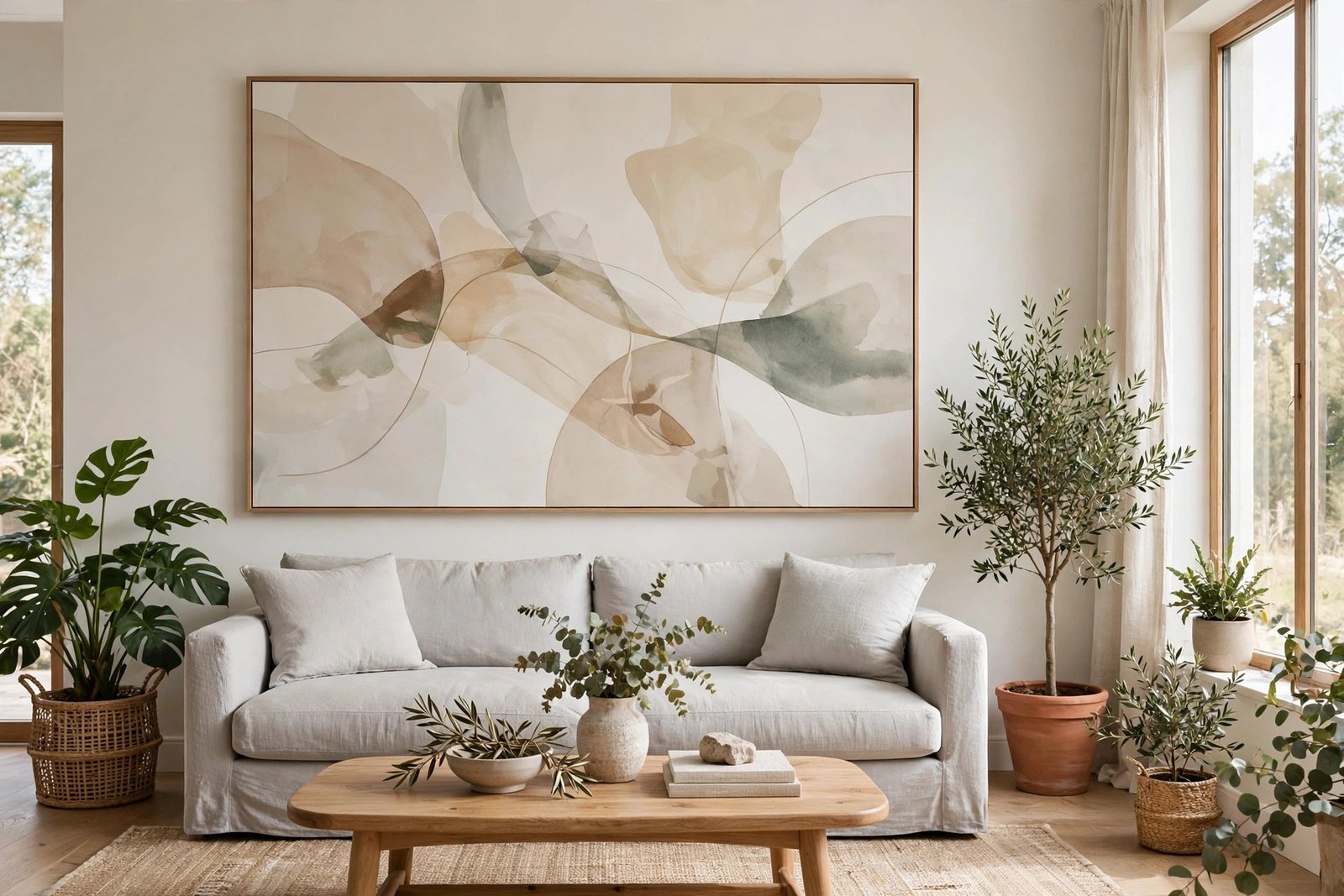
Your art should span roughly two-thirds (about 60–75%) of the width of the furniture below it, or of the wall itself if there is no furniture. A 6-foot sofa, for example, wants about 48 inches of art above it — one 48-inch canvas, a triptych totaling 48 inches, or a grid about 48 inches wide. Hang the center of the arrangement at about 57 inches from the floor, or 6–8 inches above the furniture. Anything much smaller reads as a postage stamp on a big wall, no matter how beautiful the piece itself is.
| Wall / situation | Total art width to aim for | Best layout shape |
|---|---|---|
| 5–8 ft wall | 48–60 in total art width | Oversized single, or a diptych |
| 8–12 ft wall | 60–72 in total art width | Triptych, grid, or picture ledges |
| 12 ft+ wall | 72 in+ total art width, or two groupings | Two groupings, a wide gallery wall, or ledges plus a statement piece |
| High ceiling (10 ft+) | Go tall, not just wide | Vertical/portrait piece, or a stacked pair |
| Wall with no furniture below | Cover ~⅔ of the wall width | Grid or gallery wall reads best at this scale |
What Are the Five Layouts That Actually Fill a Big Wall?
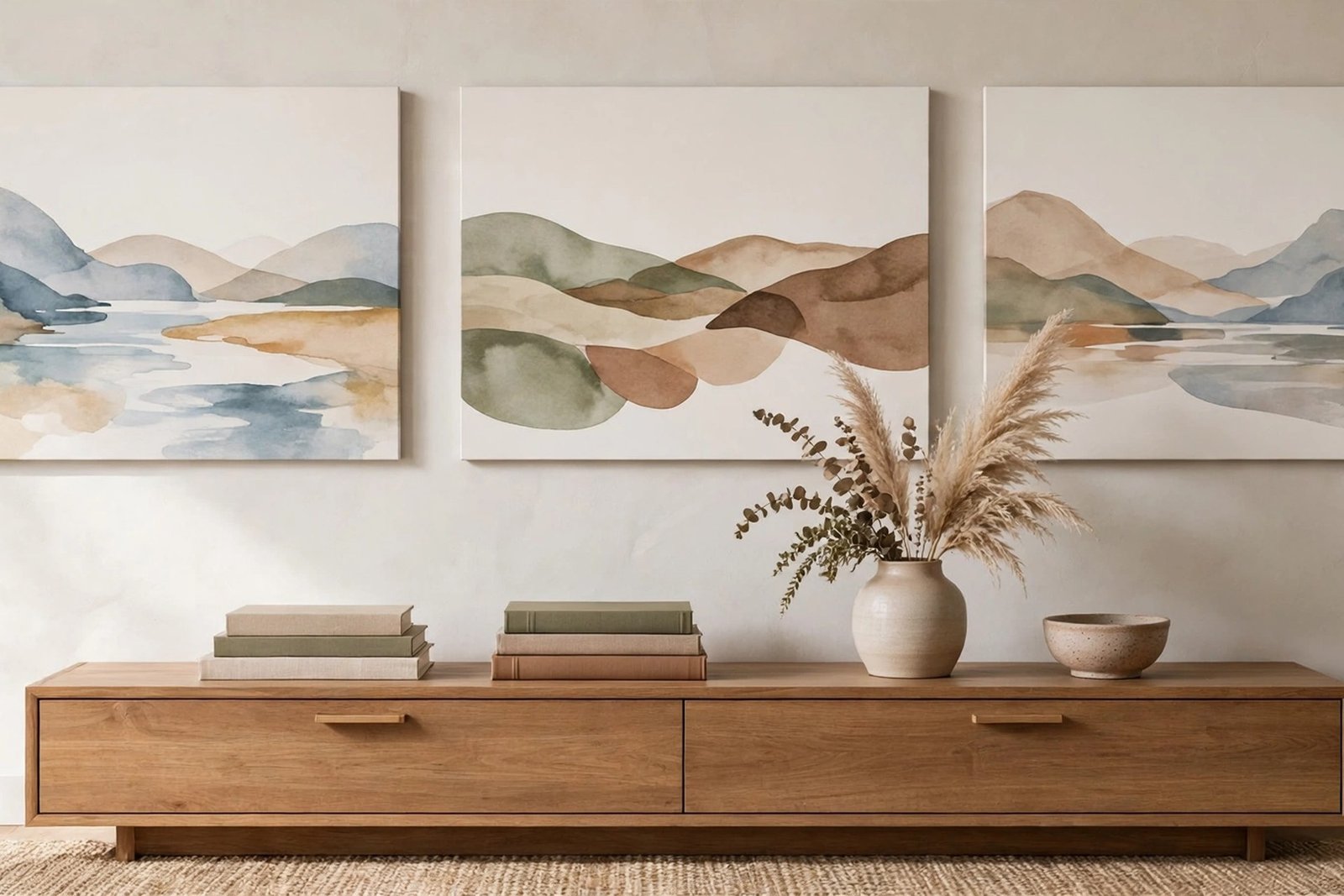
There are only five layouts worth considering for a big wall, and each suits a different wall, budget, and commitment level. An oversized single is the simplest and boldest. A diptych or triptych breaks one image across panels and forgives a slightly off-center hang. A grid is the most orderly and the easiest to build on a budget. Picture ledges let you layer and swap pieces without new holes. A gallery wall is the most personal but the hardest to keep from looking cluttered. The costed table below is the shortcut: find your wall size, find your budget, and the layout picks itself.
| Layout | Size range | Hanging hardware | Rough budget tier |
|---|---|---|---|
| Oversized single | One piece 40–60 in wide (48 in is the sweet spot over a standard sofa) | 2 heavy-duty hooks or a French cleat; stud-mounted for pieces over 20 lbs | $150–$600 for a ready-to-hang canvas; $60–$150 for a large framed print |
| Diptych / triptych | 2–3 panels totaling 48–72 in wide, with 2–3 in gaps between panels | 1–2 hooks per panel; a level and a paper template keep spacing even | $90–$350 for a canvas set; $60–$200 for framed print sets |
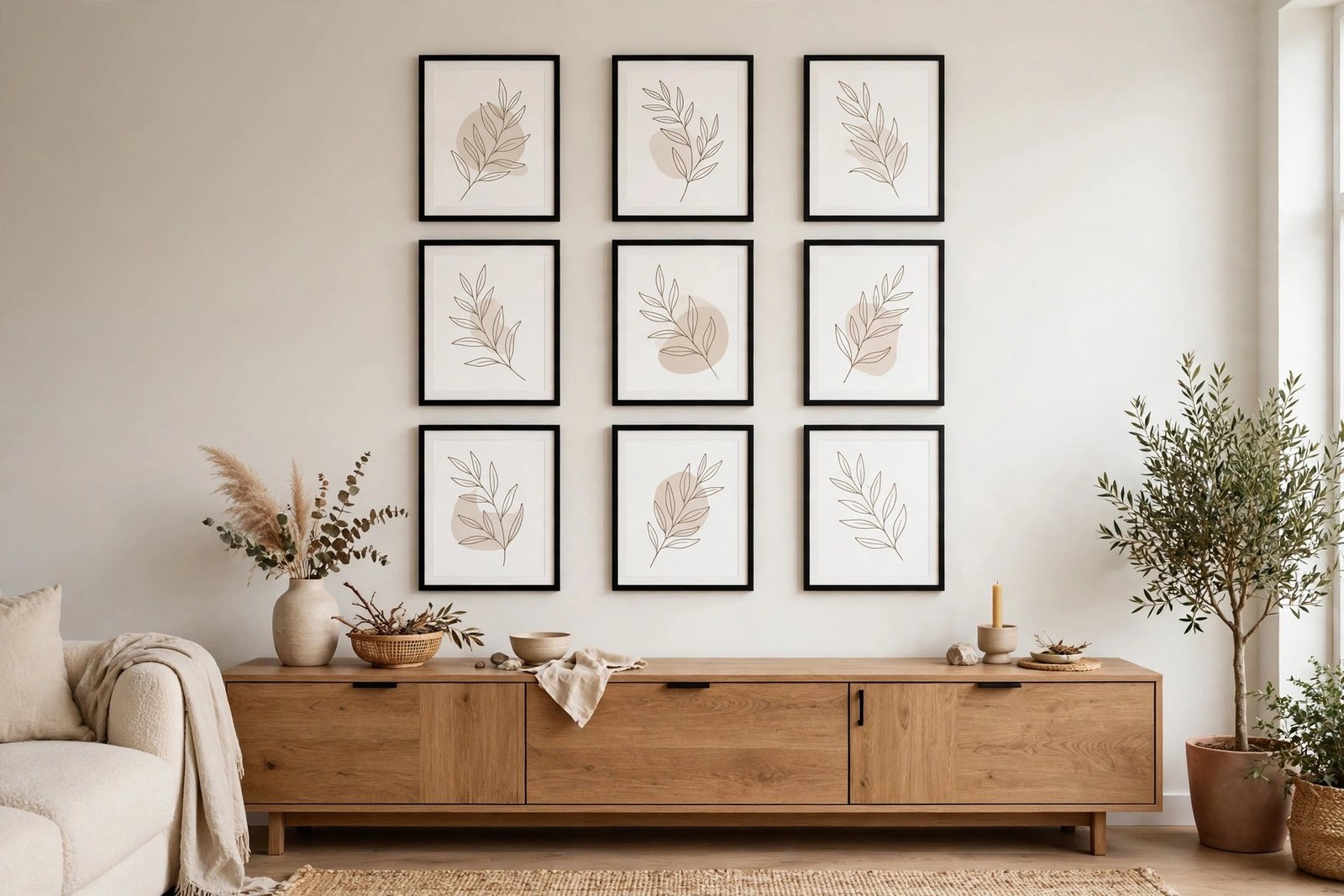
| Grid (9–16 pieces) | 9–16 matching frames, each 8×10 in or 11×14 in, totaling 48–72 in wide | Small nails or picture-hanging strips per frame; a grid template saves hours | $80–$250 using ready-made frames and prints; $40–$120 with thrifted frames |
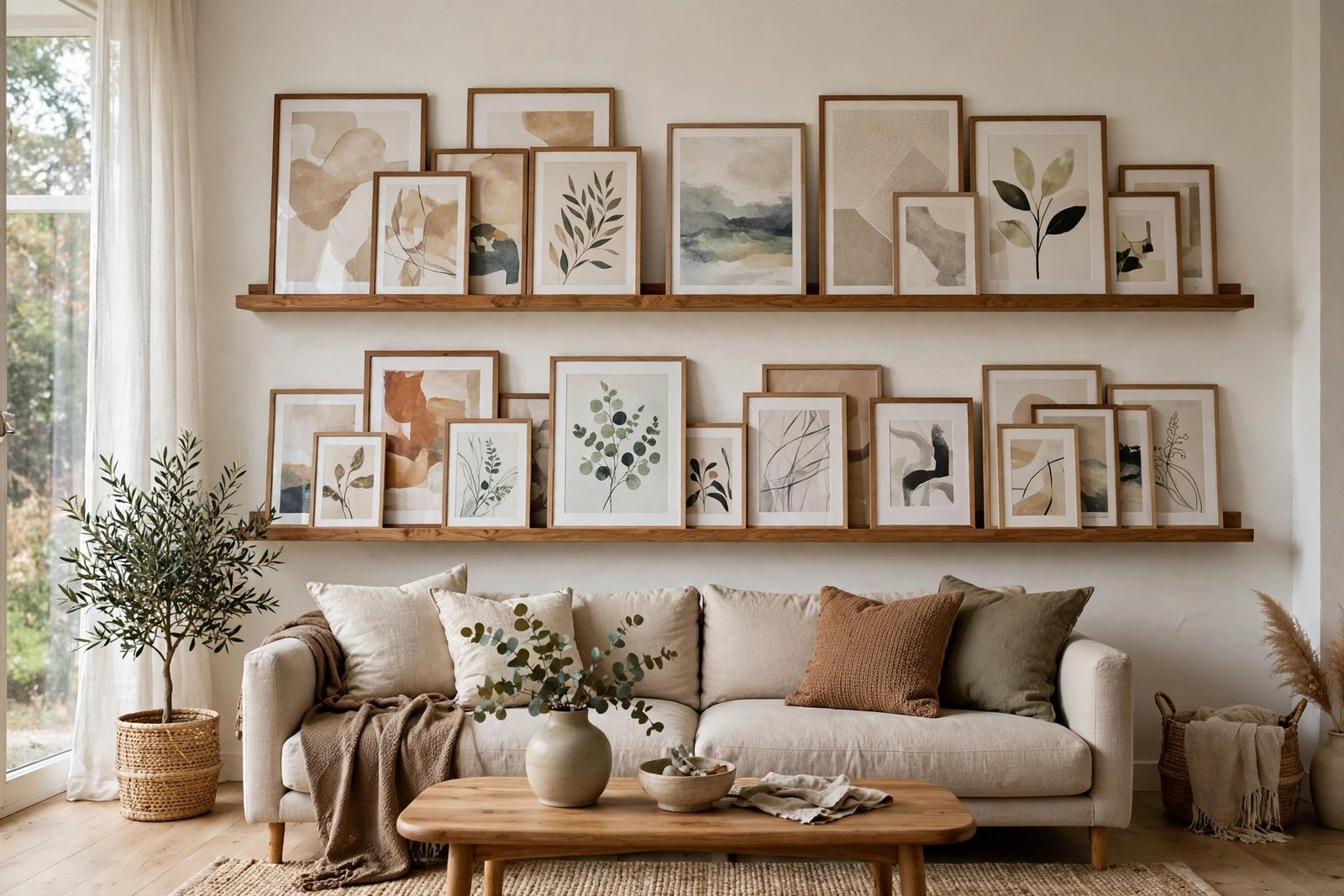
| Picture-ledge layering | 2 ledges, 36–48 in each, layered with 5–8 frames of mixed sizes | Ledge brackets screwed into studs (or heavy-duty wall anchors); frames simply lean | $60–$180 for a ledge pair plus frames; $30–$80 for the ledges alone |
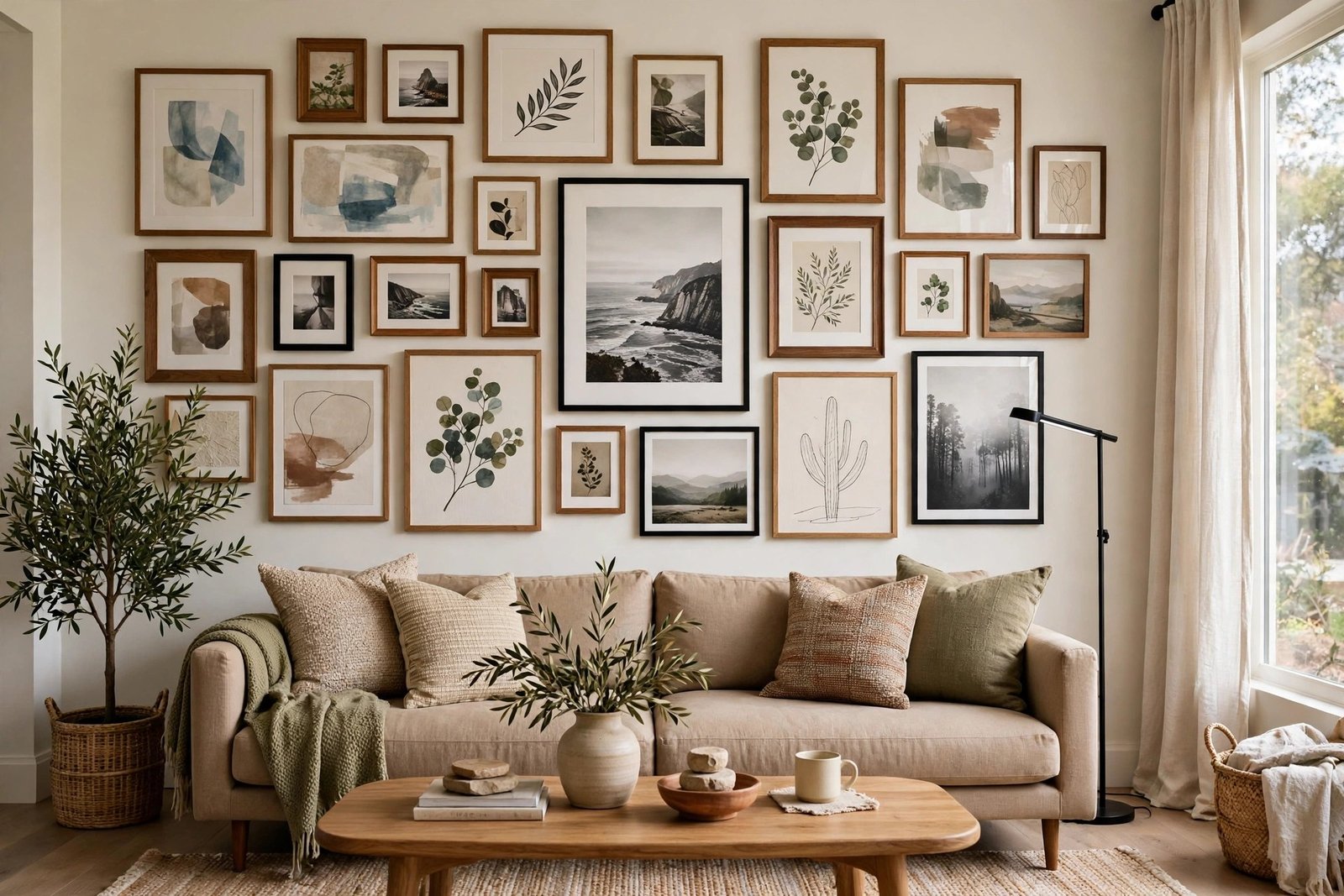
| Gallery wall | 8–15 pieces of mixed sizes, covering 60–84 in wide as one composition | Mix of nails, hooks, and strips; plan the layout on the floor first | $100–$400 depending on frame quality; $50–$150 with thrifted and printable art |
All prices are rough planning estimates, not quotes — frame size, canvas quality, and whether you print at home or order prints will move the total up or down.
Is One Large Piece Better Than Many Small Ones?
Yes, on a big wall, one large piece usually beats many small ones — because a single large composition reads as intentional from across the room, while scattered small frames read as clutter. One oversized canvas above a sofa anchors the whole seating area in a single decision: pick the piece, hang it centered, done. Many small pieces only work when they are deliberately grouped into one composition, like a tight grid or a planned gallery wall, with consistent spacing and a shared frame style. If you already own small pieces you love, group them; if you are starting from scratch, start big.
How Do I Fill a Big Wall on a Budget?
Start with the cheapest layout that still reads as one composition: a grid of thrifted frames or a picture-ledge pair. A 9-piece grid built from matching ready-made frames and printable art can come in around $80–$150 total, and it covers the same 60 inches a $400 canvas would. Large-format engineering prints (black-and-white photos or line art printed at a copy shop) cost roughly $15–$30 per large sheet and look far more expensive once framed simply. Skip the single tiny framed print floating in the middle of a big wall — it is the most common money-waster in wall decor, because it neither fills the space nor anchors the furniture.
What Works on a Wall With a High Ceiling?
Go tall rather than just wide, because a wide-but-short piece leaves an awkward band of empty wall above it on a high ceiling. A vertical or portrait-format piece (roughly 36×48 in or taller) pulls the eye upward and suits the proportions of the wall. Alternatively, stack two pieces vertically with 3–4 inches between them, which fills the height without requiring one enormous frame. Tall bookcases, a floor lamp, or a tall plant beside the art help bridge the remaining height. For more on choosing art by room, see the companion living-room wall art guide.
Can Renters Hang Large Wall Art Without Losing the Deposit?
Yes — renters have two deposit-safe routes, and both work at large scale. Adhesive photo tiles and adhesive strips hold light-to-medium frames with no holes at all, and picture ledges need only two small screw holes per ledge, which are easy to fill with toothpaste-grade filler at move-out. The rule is weight: keep adhesive-hung pieces under the strip’s rated weight (usually 12–16 lbs per set of strips), and save heavy framed mirrors and oversized canvases for stud-mounted hardware if your lease allows it. Always check your lease first — some landlords allow small nail holes as normal wear, which opens up the grid and gallery layouts too.
| Renter route | Owner route | |
|---|---|---|
| Best layouts | Adhesive photo-tile sets, picture ledges, lightweight grids on strips | Any layout, including heavy oversized frames and gallery walls |
| Hardware | Adhesive strips and tiles (no holes); ledges need 2 small screws each | Stud-mounted hooks, French cleats, and wall anchors for heavy pieces |
| Deposit risk | Low — strips remove cleanly; small ledge holes fill easily | Not applicable; patch and paint between tenants or owners as needed |
| Weight limit | Stay under ~12–16 lbs per adhesive set; split big arrangements into lighter pieces | 20 lbs+ pieces are fine with studs or heavy-duty anchors |
| Budget | $40–$150 for tiles, strips, and ledges | $60–$600 depending on layout (see Table 2) |
How Do I Hang Heavy Large Wall Art Safely?
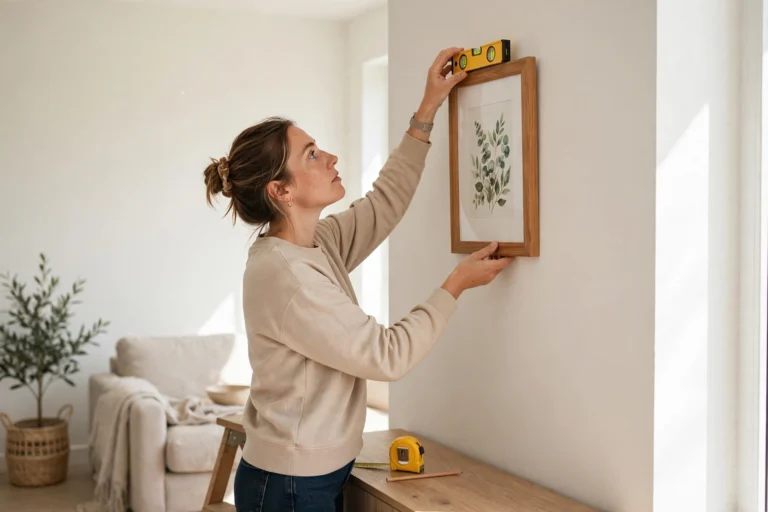
Heavy art — anything over about 20 lbs — must go into a stud or a heavy-duty wall anchor rated well above the piece’s weight, never into plain drywall with a single nail. Find the stud with a stud finder (or the knock test), use two fixing points spread across the frame’s width so the piece cannot tilt, and use a French cleat for very large or heavy canvases, since it distributes weight across a wide bar. Hang the center at about 57 inches from the floor, step back, and check it with a level before you call it done. If the wall is plaster, brick, or concrete, use the anchor made for that material — the wrong anchor is the usual reason heavy art falls.
How Do I Keep a Gallery Wall From Looking Cluttered?
Treat the gallery wall as one piece of art, not fifteen separate decisions. Start with one anchor piece — the largest frame — and build outward from it, keeping 2–3 inches of consistent spacing between frames and one shared element (the same frame color, the same mat color, or the same art style) across at least half the pieces. Lay the whole arrangement on the floor first and photograph it before a single nail goes in; what looks balanced on the floor usually works on the wall, and what looks crowded on the floor will look worse upright. The companion gallery wall guide walks through spacing templates in detail, and the companion canvas wall art guide covers choosing canvas versus framed prints.
Bottom line: the best large wall art for your wall is the layout that matches your measurements and your budget — not the piece you liked most in the store.
FAQ
Should I buy one large piece or many small pieces for a big wall?
One large piece is the safer bet on a big wall: it reads as a single intentional composition, anchors the furniture below it, and needs only one hanging decision. Many small pieces work only when grouped tightly into a grid or gallery wall with consistent spacing — scattered small frames just make the wall look unfinished.
How do I fill a wall on a budget?
Build a grid from matching ready-made or thrifted frames (roughly $80–$150 for nine pieces), use picture ledges to layer prints you already own, or order large-format prints for about $15–$30 per sheet and frame them simply. All three routes cover 48–72 inches of wall for well under the cost of one statement canvas.
What about high ceilings?
Choose a vertical or portrait-format piece, or stack two pieces vertically with 3–4 inches between them, so the art fills the height as well as the width. A short, wide piece on a tall wall leaves an empty band above it; tall plants, bookcases, or a floor lamp beside the art help close the remaining gap.
How high should I hang large wall art?
Center the arrangement at about 57 inches from the floor, or 6–8 inches above the top of the furniture below it. Hanging art too high is the most common mistake — if you have to tilt your head up to see it from the sofa, it is too high.
What if my wall is wider than 12 feet?
Treat it as two walls: create two groupings (for example, a statement piece over the sofa and a grid or ledge arrangement over a console), each covering about two-thirds of its own zone, with breathing space between them. One arrangement stretched across 14 feet looks thin; two confident groupings look designed.