Low Water Pressure? 8 Causes and Easy Fixes
It’s Monday morning. You step into the shower, shampoo in your hair, and the water comes out as a tired dribble. Low water pressure is one of the most common homeowner plumbing complaints in the US.
The good news: about half of all low-pressure problems come down to simple culprits — a clogged aerator, a valve someone half-closed years ago, or a failing pressure regulator. Work through these 8 causes from simplest to most serious.
TL;DR — Quick Summary
- Normal residential water pressure is 40–80 psi. Below 40 feels weak; above 80 stresses pipes and appliances.
- One slow fixture? Almost always a clogged aerator or showerhead — a 5-minute DIY fix.
- Whole-house pressure loss? Check shutoff valves, then the pressure regulator, then look for leaks and pipe corrosion.
- DIY the simple stuff (aerators, showerheads, valve checks, the pressure-gauge test). Call a licensed plumber for regulator replacement, hidden leaks, and whole-house repipes.
Test Your Pressure Before You Touch Anything
Buy a pressure gauge with a hose-bib connection ($10–$15). Screw it onto an outdoor spigot near the main water line, make sure no water is running in the house, then open the spigot fully and read the needle.
PRO TIP: A healthy home reads 40–80 psi, with 50–60 psi the sweet spot. Low readings at the outdoor spigot point to a whole-house cause; normal readings with one weak fixture point to a local restriction.
1. Clogged Aerator or Showerhead
Diagnose it: Weak pressure at one faucet or shower, everywhere else fine. Look for white crust or grit in the aerator mesh.
The fix (DIY, 5 minutes): Unscrew the aerator, tap out debris, soak in white vinegar for 30 minutes. For a showerhead, tie a bag of vinegar over it for a few hours.
2. Partially Closed Shutoff Valve
Diagnose it: Sudden whole-house pressure drop after a plumbing repair. Someone didn’t fully reopen a valve.
The fix (DIY, 10 minutes): Confirm the main shutoff valve is fully open. Find your main shutoff before an emergency, not during one.
3. Pressure Regulator Failure
Diagnose it: The bell-shaped PRV on your main line limits municipal pressure. When it fails, whole-house pressure drops or fluctuates.
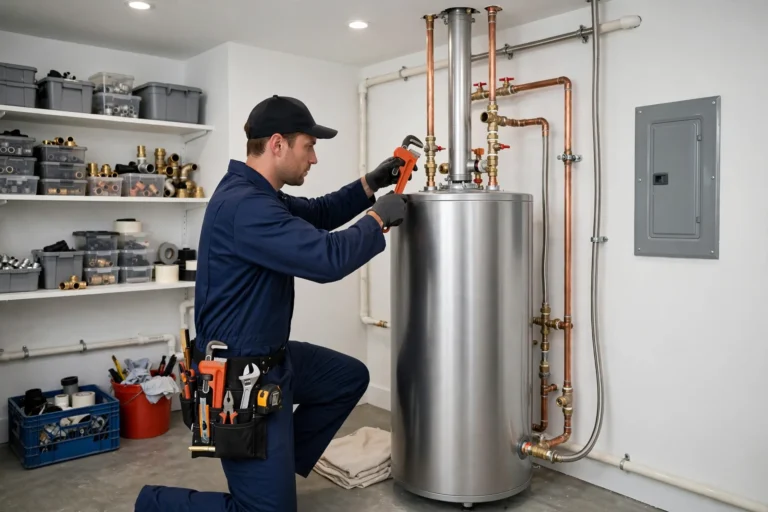
The fix: A failing regulator needs replacement — typically $150–$400, a 1–2 hour job. Call a licensed plumber.
4. Hidden Leaks
Diagnose it: Sudden unexplained spike in your water bill (20–50%), damp spots, musty smell, running-water sounds when everything is off, or a meter that keeps spinning with every fixture closed.
The fix: Accessible drips = DIY. Anything hidden, in-slab, or underground = call a licensed plumber.
5. Corroded Galvanized Steel Pipes
Diagnose it: Pre-1980s home, brown water at first open, gradual decline over years. Mineral scale narrows pipes to the diameter of a pencil.
The fix: No cleaning reverses it — replacement only ($4,000–$15,000+ in PEX or copper). Call a licensed plumber.
6. Municipal Supply Issues
Diagnose it: Neighbors report the same weak pressure, or the drop followed utility work in the street.
The fix: Call your water utility. If they confirm a problem, it resolves when their work wraps up.
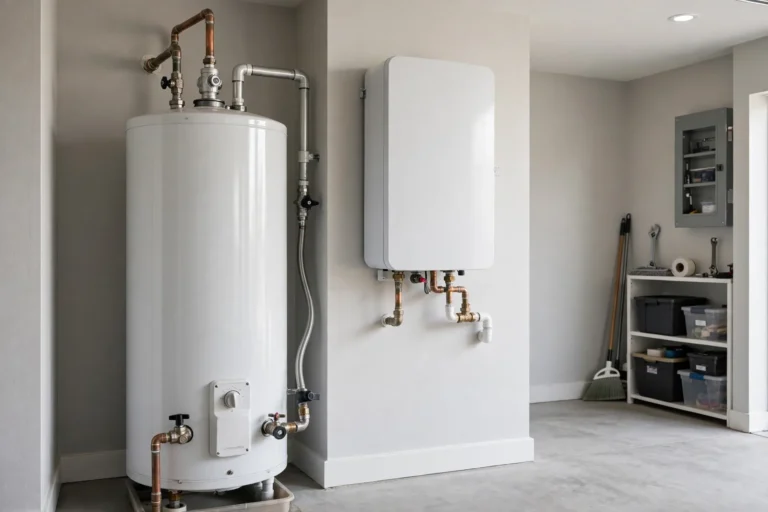
7. Water Heater Sediment (Hot Side Only)
Diagnose it: Cold flows fine, hot trickles. Sediment clogs the hot-water outlet.
The fix (DIY, 45 minutes): Flush the heater annually. If the heater is 10+ years old or leaking, replacement belongs to a licensed plumber. See our tank vs tankless water heater comparison if you’re considering an upgrade.
8. Shared Lines and Peak-Hour Demand
Diagnose it: Pressure sags at the same times daily — morning showers, evening dishes.
The fix: Well owners can check the pressure tank settings (30/50 or 40/60 psi). Pump work and line upgrades = call a licensed plumber.
Quick Reference: Cause → Symptoms → DIY or Pro
| Cause | Key symptoms | DIY or call a pro? |
|---|---|---|
| Clogged aerator/showerhead | One fixture only; white crust | DIY — 5 min |
| Partially closed valve | Sudden whole-house drop after repair | DIY if valves turn freely |
| Pressure regulator failure | Whole-house drop or fluctuation | Call a licensed plumber |
| Hidden leaks | Spiking bill, damp spots, meter spinning | Call a licensed plumber |
| Corroded galvanized pipes | Brown water, gradual decline, pre-1980s home | Call a licensed plumber |
| Municipal supply issue | Neighbors affected; recent utility work | Wait it out / call utility |
| Water heater sediment | Hot side only; rumbling tank | DIY flush; pro for replacement |
| Peak-hour/shared demand | Drops at same times daily | Pro for pump or line upgrades |
Bottom Line
- One slow fixture = clogged aerator or showerhead.
- Measure before you guess. 40–80 psi is normal.
- Whole-house loss follows a pattern: valves first, then the regulator, then leaks and corrosion.
- Hot-side-only = water heater sediment — flush yearly.
- Know your limits: regulators, hidden leaks, repipes, and service-line upgrades belong to a licensed plumber.
Frequently Asked Questions
What is normal water pressure for a house?
40 to 80 psi. Most plumbers aim for 50–60.
Why is my water pressure low in only one bathroom?
Almost always a clogged aerator, mineral-caked showerhead, or partially closed valve under the sink.
Can a bad water heater cause low water pressure?
Yes, but only on the hot side. An annual tank flush usually fixes it.
How do I know if a hidden leak is causing low pressure?
Unexplained bill jump, damp spots or musty smells, a meter that moves with every fixture off — call a plumber.
Is low water pressure dangerous?
Usually just annoying. Hidden leaks lead to mold and structural damage; pressure above 80 psi can burst pipes.
How much does it cost to fix low water pressure?
$5–$40 for an aerator or showerhead; $150–$400 for a regulator replacement; $4,000–$15,000+ for a whole-house repipe.