Canvas Wall Art: How to Choose the Right Size, Format, and Print
If you have ever hung a beautiful print and thought it looked oddly small, you are not alone. This guide gives you a neutral buyer’s checklist — the measurements, materials, and hanging rules that separate canvas wall art you love for years from a piece you quietly move to a hallway.
TL;DR
Measure your furniture before you shop, pick the format by room light, and check three quality markers before you pay: artist-grade cotton, kiln-dried pine bars, and UV-resistant inks. A canvas should span roughly two-thirds of the furniture below it, hang near eye level, and stay out of harsh direct sun.
What Is Canvas Wall Art, and Why Do So Many Homes Choose It?
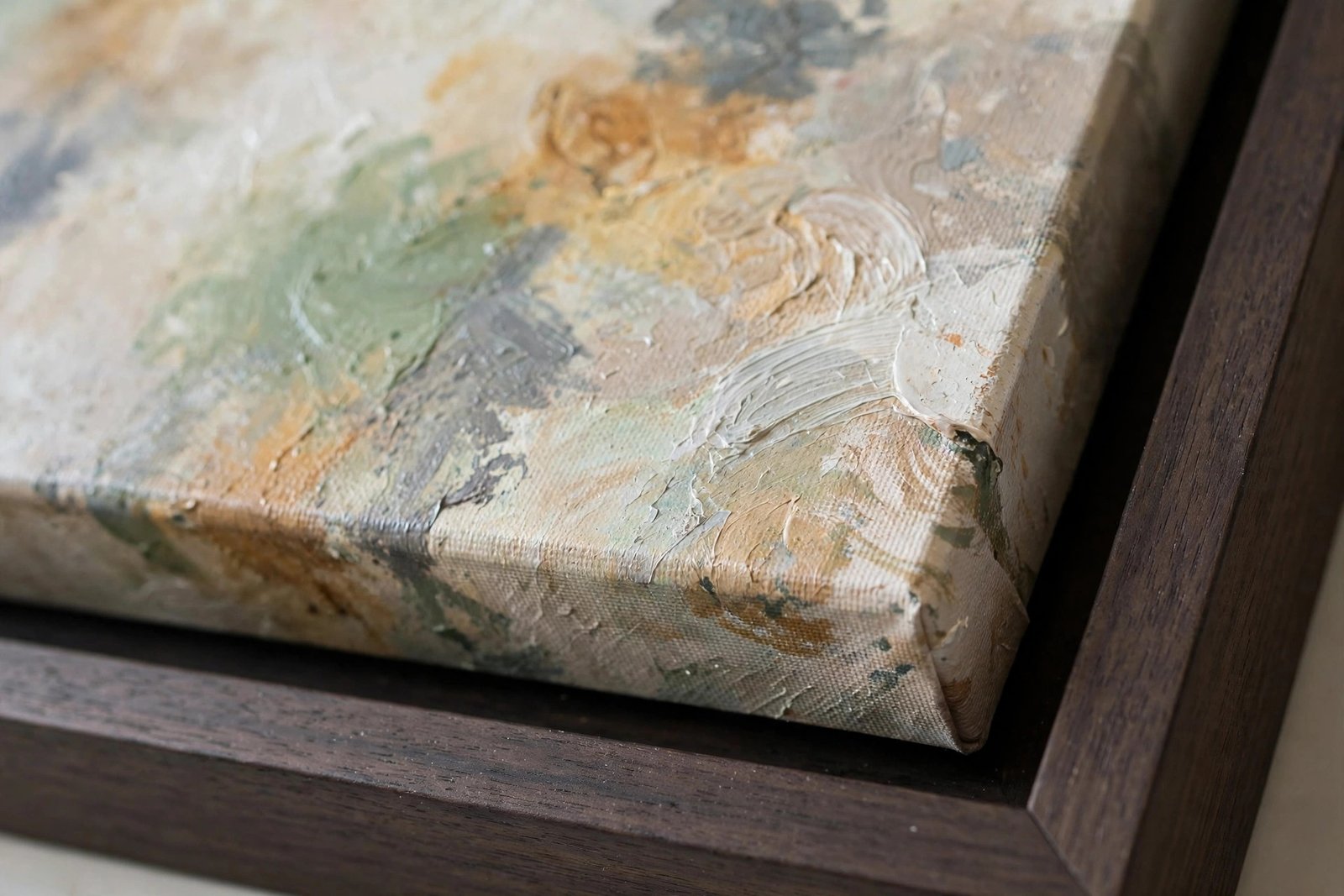
Canvas wall art is an image printed on woven canvas fabric, stretched tight over a wooden frame, and hung without glass. That frameless, matte surface reads like a painting rather than a poster, does not glare under lamps or daylight, and suits relaxed, modern, and boho rooms alike. With no glass, it also weighs less than a framed print of the same size.
The trade-off is honest too. Canvas wall art has no glass shield, so it needs a little more care around sunlight, moisture, and dust. Pick the right canvas for the room and the texture becomes a feature; pick the wrong one for a sunny or steamy spot and fading or sagging can follow.
What Size Canvas Wall Art Should You Hang Over a Sofa?
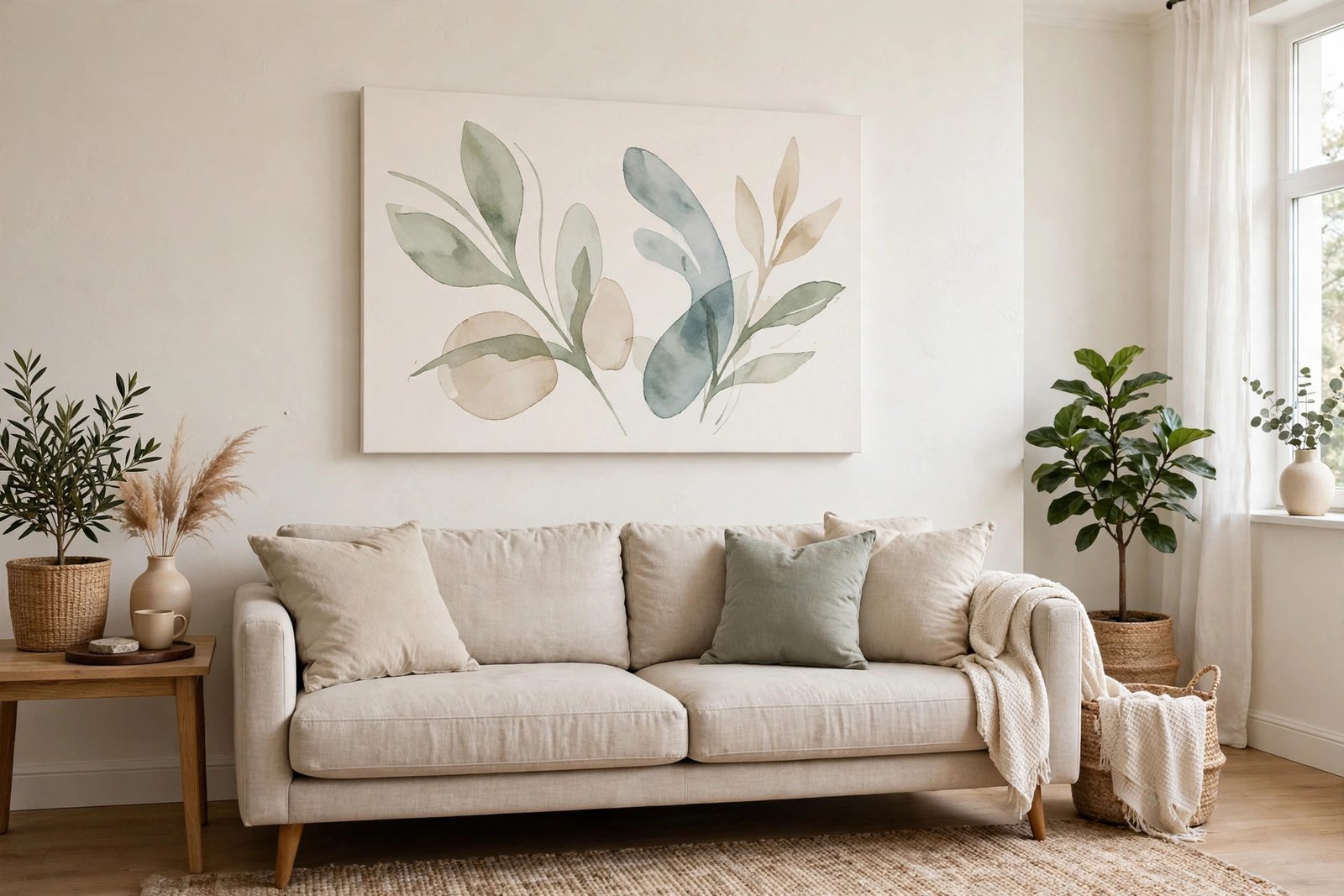
Canvas wall art over a sofa should span about 60 to 75 percent of the sofa’s width, hang 6 to 10 inches above the back cushions, and sit with its centre roughly 57 to 60 inches from the floor. For a standard three-seat sofa around 84 inches wide, that means a piece about 48 by 32 inches. Over a longer sectional, step up to around 60 by 40 inches so the art holds its own.
The most common mistake is buying too small: a 24-inch canvas over an 84-inch sofa looks like an afterthought, even if the image is gorgeous. Tape the outline on the wall first, live with the rectangle for a day, and only then order.
Size by furniture and wall
| Placement | Width rule | Good starting size | Budget planning estimate |
|---|---|---|---|
| Above a standard sofa (about 84 in) | 60–75% of sofa width | 48 × 32 in | $60–$180 |
| Above a sectional (about 108 in) | 60–75% of sofa width | 60 × 40 in | $120–$350 |
| Above a queen bed (about 60 in) | 50–70% of bed width | 40 × 30 in or a triptych totalling 48–54 in | $70–$220 |
| Above a console or sideboard | 60–75% of furniture width | 36 × 24 in | $45–$130 |
| Small wall, up to 5 ft wide | Total art 36–42 in wide | 36 × 24 in single panel | $45–$130 |
| Medium wall, 5–8 ft wide | Total art 48–60 in wide | 48 × 32 in | $60–$180 |
| Large wall, 8–12 ft wide | Total art 60–72 in wide | 60 × 40 in or triptych | $120–$350 |
| Extra-large wall, 12 ft and wider | Total art 72 in and wider | 72 × 36 in or multi-panel set | $180–$500 |
For a deeper room-by-room take, see our living-room guide: wall art for living room.
Single Panel or Multi-Panel: Which Layout Looks Better?
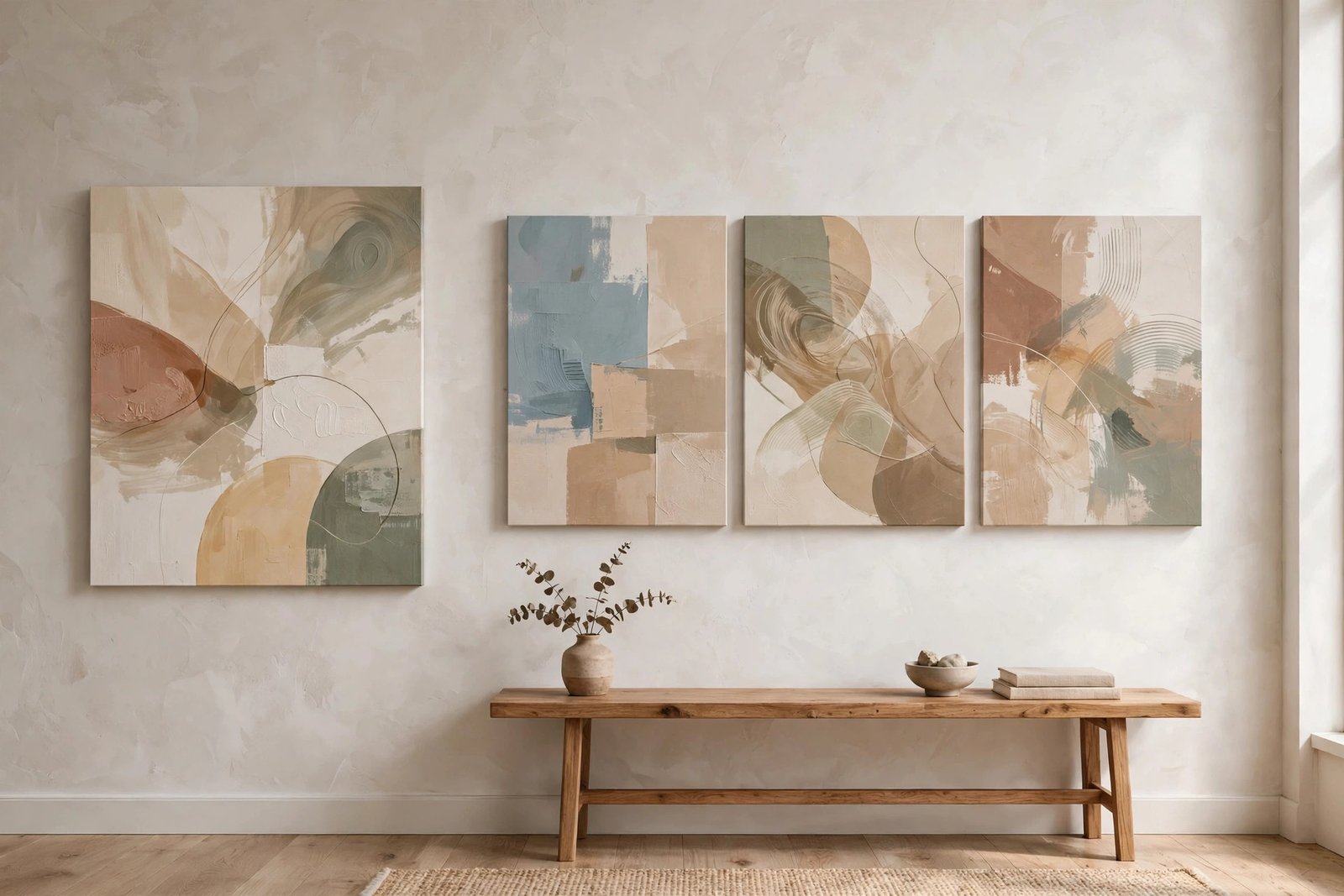
A single panel suits a focused statement, while a multi-panel set suits a wide wall that needs rhythm. Choose a single large canvas wall art piece when one image deserves full attention, and a triptych when the wall is wider than 8 feet or the furniture below it is long. Gaps between panels also visually stretch the total width, forgiving small measurement errors.
Spacing matters. Keep 2 to 3 inches between panels, and treat the whole set as one unit: the outer edges, not each panel, should hit that 60 to 75 percent rule. Hang the centre panel first, level it, then work outward.
Framed or Unframed Canvas: What Is the Difference?
An unframed, gallery-wrapped canvas has its image wrapped around the edges and needs no frame. A framed canvas adds a traditional or floating frame, leaving a small gap for a gallery look. Unframed suits casual, modern, and boho rooms and costs less; framed suits formal rooms and classic decor.
The floating frame is the premium middle ground: it protects the canvas edges, adds depth, and still shows the wrapped texture. Expect roughly $40 to $120 more than the same size unframed. If you love the gallery look but not the price, buy unframed first and add a floating frame later — most standard sizes fit off-the-shelf frames.
Format chooser
| Format | Look | Planning estimate | Best room | Watch out for |
|---|---|---|---|---|
| Stretched (gallery-wrapped) canvas | Modern, frameless, no glass | $45–$250 | Living room, bedroom, office | Thin stretcher bars can sag on large sizes |
| Floating-frame canvas | Gallery look, protected edges | $90–$380 | Living room, dining room, entryway | Frame and canvas depths must match |
| Framed print (canvas in a traditional frame) | Classic, formal, finished | $80–$350 | Dining room, traditional living room | Added weight needs stronger hardware |
| Rolled canvas (frame it yourself) | Flexible, ships flat, custom framing | $30–$150 before framing; $80–$250 with framing | Any room, if you already own a framer | Stretching a large rolled canvas well takes skill |
How Do You Hang Canvas Wall Art Without Damaging the Wall?
Hang canvas wall art by finding hardware rated for its weight, marking the centre at eye level, and levelling before you commit. Most medium canvases weigh 5 to 12 pounds and hang safely on one picture hook in drywall, while pieces over 20 pounds need two hooks, a French cleat, or a wall stud. Never trust adhesive strips alone for a large piece.
First, mark the centre of the wall space. Second, hold the canvas wall art so its centre sits about 57 to 60 inches from the floor, or 6 to 10 inches above the furniture below it. Third, mark the hook position, allowing for the hanger drop — usually 2 to 4 inches below the top edge. Hang, level, and step back; if it tilts forward, add felt bumpers behind the bottom corners.
Which Rooms Suit Canvas Best, and Which Need Caution?
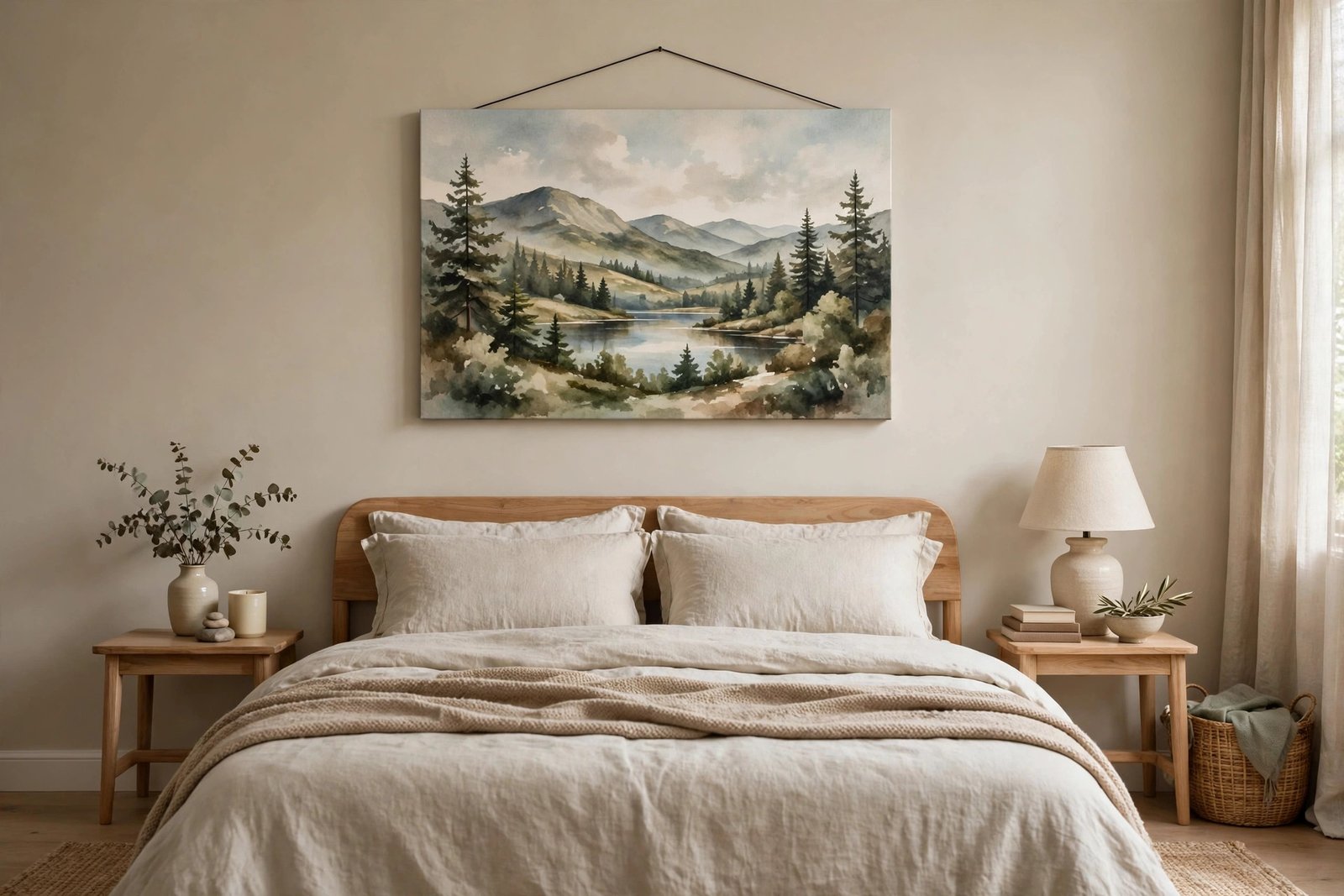
Canvas wall art thrives in living rooms, bedrooms, offices, and hallways, where light varies through the day and a matte surface avoids glare. It works above sofas, beds, consoles, and desks, and softens large blank walls that would make a glass-framed print feel cold.
Two rooms need caution. Bathrooms and kitchens carry humidity, steam, and grease that can stain or loosen canvas wall art over time, so choose a smaller, affordable piece there and keep it from direct steam and splashes. The same applies to harsh, all-day direct sun: a north-facing wall or sheer curtains is a safer home for a favourite piece.
For statement sizing on a big blank wall, pair this guide with our large-piece advice: large wall art ideas.
How Do You Check Canvas Quality Before You Buy?
Check canvas wall art quality by confirming the fabric, stretcher bars, inks, wrap depth, and returns policy before you pay. Those five checks separate a piece that stays taut and vivid from one that sags or fades within a year. Reputable sellers state all five clearly; vague listings are a warning sign.
Artist-grade cotton holds ink evenly and ages better than thin polyester, which can look plasticky and stretch unevenly. Kiln-dried pine bars resist warping, while green or softwood bars can bow as they dry. UV-resistant archival or giclée inks hold colour far longer in bright rooms. Wrap depth — 0.75 inches standard, 1.5 inches gallery depth — decides how substantial the piece looks from the side. A 90-day return window and 1-year warranty is a fair seller benchmark.
Quality checklist before buying
| Check | What to look for | Red flag |
|---|---|---|
| Fabric | Artist-grade cotton, tight weave | Thin polyester with a shiny finish |
| Stretcher bars | Kiln-dried pine, at least 0.75 in deep | Unspecified wood, bars under 0.75 in on large sizes |
| Inks | UV-resistant, archival or giclée inks | No ink information at all |
| Wrap depth | 0.75 in standard, 1.5 in gallery depth | Image cut off awkwardly at the edges |
| Finish | Matte, even coating, no visible print lines | Glossy patches or banding in flat colour areas |
| Returns and warranty | 90-day returns, 1-year warranty as a benchmark | No returns, or a warranty under 90 days |
How Much Should You Budget for Good Canvas Wall Art?
Budget about $45 to $180 for a good medium canvas wall art piece, $120 to $350 for a large statement piece, and $180 to $500 for an extra-large or multi-panel set. Bargain pieces under $30 often cut corners on fabric, bars, or inks, while pieces above $500 usually pay for original art or custom sizing rather than durability alone.
The best value move is to spend on size and quality, not extras you do not need. A well-made 48 by 32 inch cotton canvas beats a cheap 60 by 40 inch polyester one every time. If money is tight, start with one strong medium piece in the room you use most, then add matching panels later.
Budget guide by size
| Size | Good-quality planning estimate | Best for |
|---|---|---|
| 24 × 16 in | $30–$80 | Small rooms, hallways, gallery walls |
| 36 × 24 in | $45–$130 | Bedrooms, offices, above consoles |
| 48 × 32 in | $60–$180 | Standard sofas, main living-room walls |
| 60 × 40 in | $120–$350 | Sectionals, large living-room walls |
| 72 × 36 in or triptych | $180–$500 | Extra-large walls, open-plan spaces |
How Do You Clean and Care for Canvas So It Lasts?
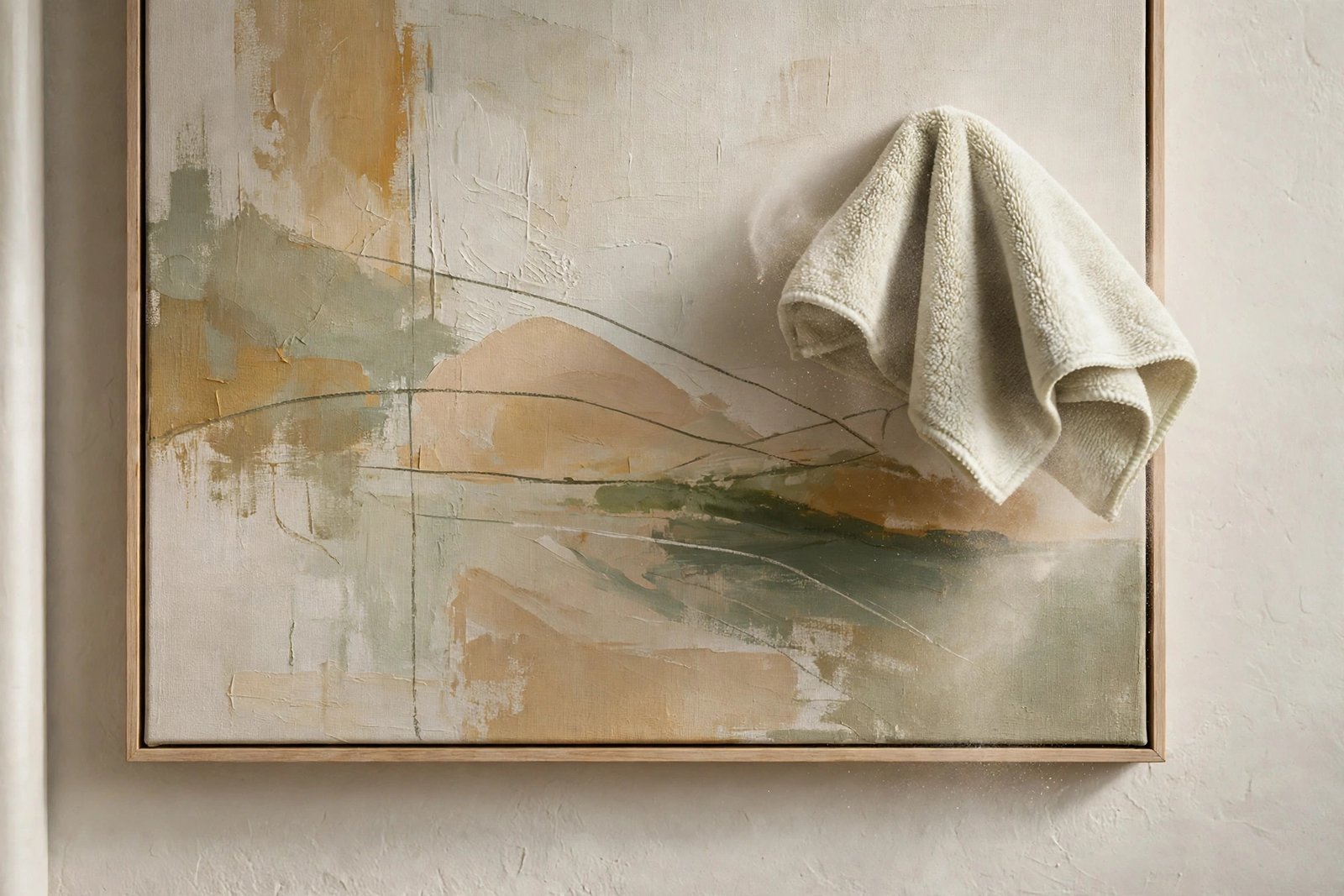
Clean canvas wall art gently and rarely, away from direct sun, damp air, and harsh cleaners. Dust with a dry microfiber cloth every few weeks, working lightly in one direction. For a smudge, dab — never rub — with a barely damp cloth, then let it dry fully.
Never use glass cleaner, bleach, or abrasive pads on canvas wall art, and never soak it. In a bright room, add sheer curtains to cut harsh midday sun, and check corners and stretcher bars once a year — a framer can often re-stretch a sagging canvas for far less than a replacement. With light care, a quality canvas lasts a decade or more.
FAQ
Is canvas wall art better than a framed print?
Canvas wall art suits rooms with variable natural light because its matte, glass-free surface avoids glare and reads like a painting. A framed print suits low-light rooms, formal spaces, and pieces you want fully protected behind glass. Choose canvas for warmth and texture, and framed prints for protection and a classic finish.
What size canvas wall art goes over a sofa?
Canvas wall art over a standard sofa should span 60 to 75 percent of the sofa’s width, which usually means about 48 by 32 inches for an 84-inch sofa and about 60 by 40 inches over a sectional. Hang it 6 to 10 inches above the back cushions with its centre near 57 to 60 inches from the floor.
Will canvas wall art fade in sunlight?
Canvas wall art can fade in harsh, all-day direct sun, especially without UV-resistant inks. Archival or giclée inks slow fading, but even the best canvas lasts longer on a north-facing wall or behind sheer curtains.
Can you hang canvas wall art in a bathroom?
You can hang a small, affordable canvas in a well-ventilated bathroom, but steam shortens its life and can loosen the fabric. Keep it away from the shower, and prefer framed prints behind glass for damp rooms.
How do you hang a heavy canvas without a stud?
Hang a heavy canvas without a stud by using two picture hooks rated for the total weight, a French cleat, or heavy-duty drywall anchors rated well above the piece’s weight. Spread the load across two points, level carefully, and add felt bumpers behind the bottom corners so the canvas sits flat.
Related reads: Wall Art for Living Room and Large Wall Art Ideas.