Deep Cleaning Checklist Before the Baby Arrives
If you’re reading this in your third trimester, I already know what deep cleaning before baby feels like from the inside: a long list, a tired body, and a clock that suddenly feels very loud. I’m Natalie Brooks, and I’ve cleaned hundreds of homes for families in exactly this window. Here’s the truth I give every one of them: you do not need a spotless house. You need clean air, clean floors, and clean surfaces for bottles and baths — in that order. Everything else is optional, and this checklist is built to prove it.
TL;DR
You don’t need a spotless house — you need clean air, clean floors, and clean bottle-prep surfaces. Rank everything by baby impact: dust reservoirs first (carpets, upholstery, HVAC filter), hygiene zones second (kitchen, your bathroom), harsh-chemical lockup third. Delegate anything involving ladders, heavy lifting, or strong fumes — and stop at 8pm.
Do You Really Need to Deep Clean Before the Baby Comes?
Yes for the big three, no for the showroom stuff. A newborn lives at floor level and breathes two to three times faster than you do, so what matters is what the baby actually breathes, touches, and eats from: the dust in the carpet, the air coming through the vents, and the surfaces where bottles get made. Nobody — and I mean nobody — has ever thanked the skirting boards. One real mom put it perfectly: “not once did I think ‘thank god the skirting boards are spotless.’ NOT ONCE.” Clean what protects the baby. Skip what only impresses visitors.
That one rule is the whole checklist. Every job below is ranked by it, so if you run out of energy (you will), you stop at the right place instead of the wrong one.
What Should I Deep Clean Before My Baby Arrives?
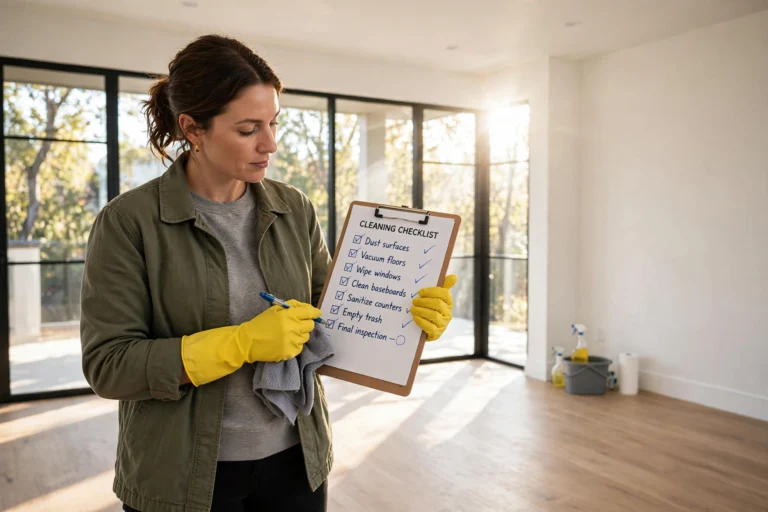
Rank every job by baby impact, not by room. A flat room-by-room list is how a tired pregnant woman ends up polishing a guest room nobody will enter while the nursery carpet holds a year of dust. Here’s the order I use on a professional walkthrough:
| Priority | What | Why it matters for baby |
|---|---|---|
| Do first (baby-impact) | Carpets, rugs, upholstery, curtains deep-cleaned; HVAC filter replaced; vents dusted | Newborns live at floor level and breathe 2–3× faster than adults — dust reservoirs are the #1 exposure |
| Do second (hygiene zones) | Kitchen counters/sink/fridge; bathroom you’ll use most; all high-touch (knobs, switches, remotes) | Bottle prep and bath happen here daily from day one |
| Do third (product switch) | Lock up bleach/ammonia/solvents; switch laundry + all-purpose to fragrance-free | Baby’s skin and clothes touch whatever’s under your sink |
| Skip guilt-free | Skirting boards, inside ovens, guest rooms, window tracks | Nobody — including the baby — will ever notice |
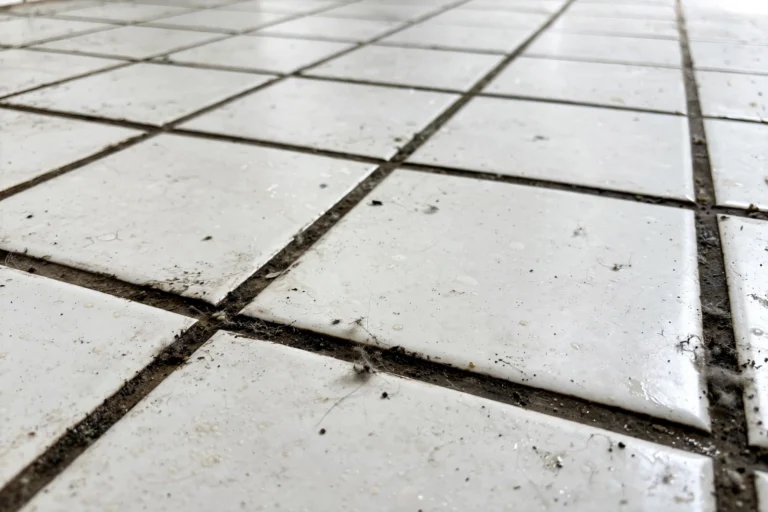
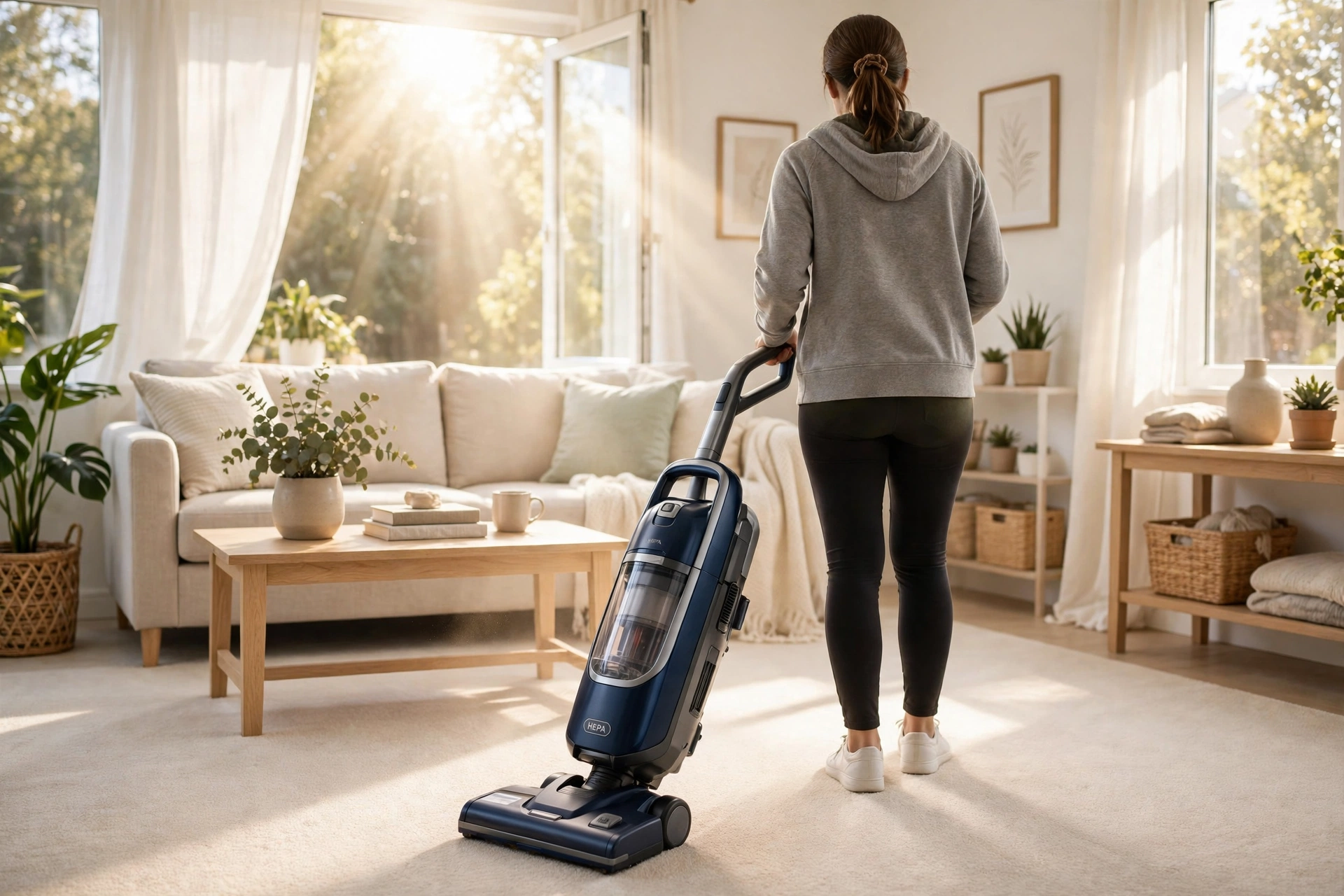
Do first: the dust reservoirs. Work top-down in each room — fans and vents first, then walls and surfaces, then baseboards, then floors last so dust settles once, not three times. Carpets and rugs are the biggest reservoir in most homes: vacuum slowly, in overlapping passes, and if you can, steam-clean or have them professionally extracted — especially with pets, where the pro-extraction rule is non-negotiable in my book. Upholstery and curtains get the same treatment; wash what can be washed, vacuum what can’t.
And the job almost nobody’s checklist leads with — the one I lead with on every walkthrough: replace the HVAC filter and dust the vents. Your heating and cooling system moves every particle in your home past that filter, and a clogged one just recirculates dust. It’s a ten-minute, ten-dollar job, and it does more for your baby’s air than any gadget. (For the full picture on what your baby actually breathes at night, our nursery temperature and air quality guide covers the filter-and-vents story in detail.)
Do second: the hygiene zones. The kitchen is a bottle-prep station from day one, so clean it like one: counters, sink, fridge handles, cabinet pulls, light switches — the high-touch circuit you and everyone else will grab with tired hands. The bathroom you’ll actually use gets the same treatment: sink, toilet, tub, and every touch surface. You don’t need to deep-clean a guest bathroom nobody enters.
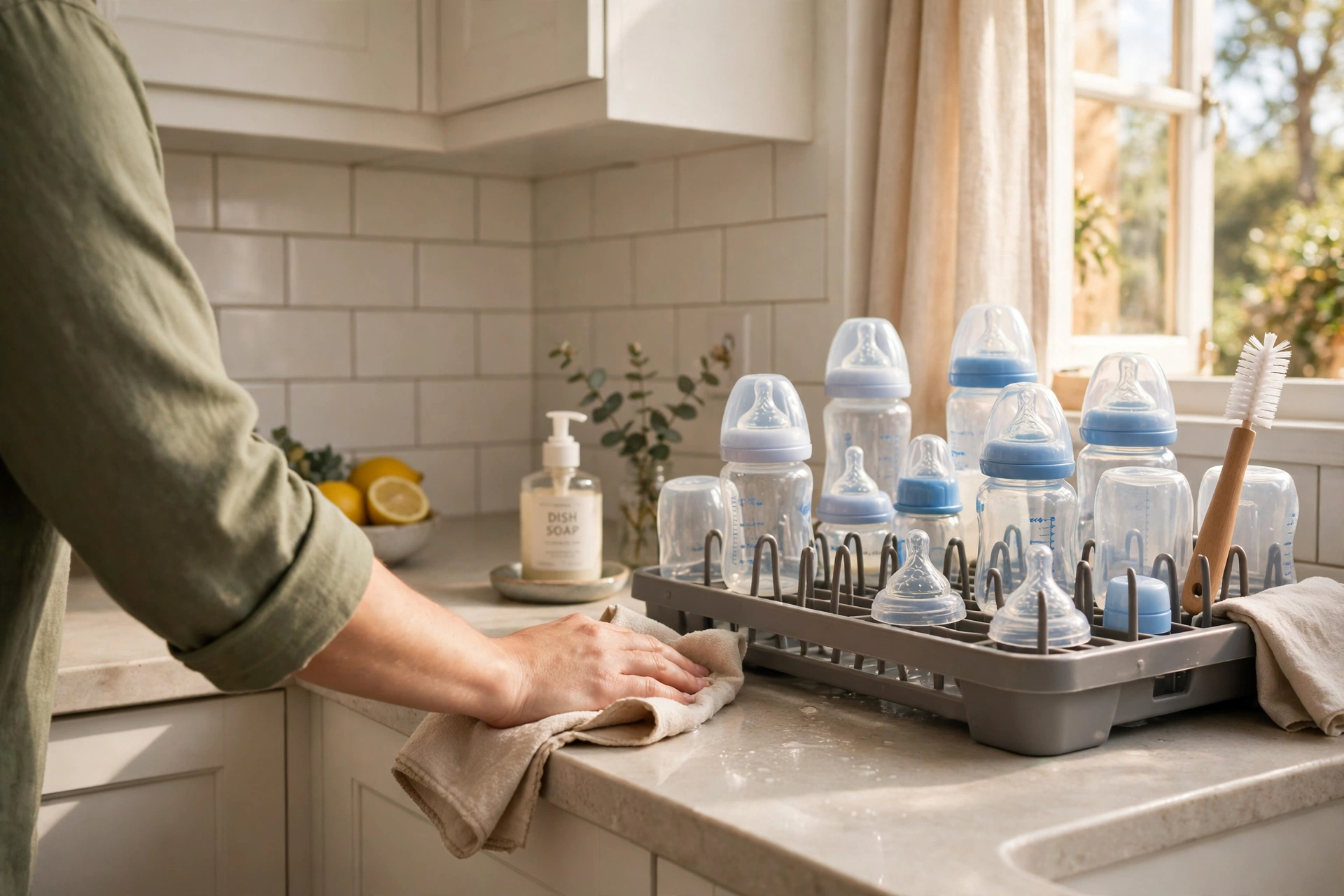
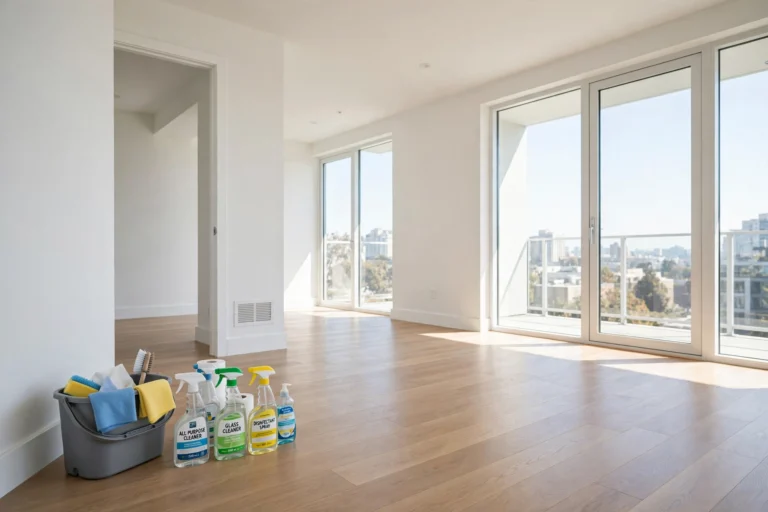
Do third: the product switch. This one matters more than it looks, because your baby’s skin and clothes will touch whatever lives under your sink. Lock up bleach, ammonia, solvents and oven cleaner now — not “before the baby can crawl,” now, while you’re thinking about it — and switch the laundry detergent and all-purpose cleaner to fragrance-free versions. Fragrance is the most common irritant hiding in a “clean” home, and the switch costs nothing once you’re buying anyway.

Skip guilt-free: skirting boards, inside ovens, guest rooms, window tracks. If a visitor notices them, that’s a visitor problem, not a baby problem.
When Should I Start Deep Cleaning Before the Due Date?
Start in the third trimester, one room a day, and never the week of. The sweet spot is two to four weeks before your due date: close enough that dust hasn’t resettled everywhere, far enough that you’re not waddling around a ladder at 39 weeks. Nesting energy lies about your stamina — it arrives in a rush at 8pm and bills you for it the next morning, which is why the one-room-a-day pace beats the weekend blitz every time.
One room a day also has a psychological trick built in: a finished room is visible progress, and visible progress is what keeps a tired person going. A half-cleaned whole house is just a bigger mess with a guilt chaser. If the nursery is done, the kitchen is done, and the bathroom is done, you are done — the guest room can wait for a grandparent with energy to burn.
Is It Safe to Use Cleaning Products While Pregnant?
Fragrance-free and ventilated is the rule; bleach, ammonia and oven cleaner are someone else’s job now. Switch to fragrance-free products across the board — laundry, all-purpose, bathroom — and open a window every time you clean, even in winter. Strong chemicals in enclosed spaces are the one thing I will not negotiate on: if a product makes your eyes water, it is not a third-trimester product, full stop.
And the nesting-safety rules, which I repeat to every client because nesting makes smart women do unwise things:
- No ladders or step stools. Fall risk, full stop. High dusting goes to the tallest volunteer in the helper table below.
- No heavy furniture. Your joints are loosened by relaxin right now; a sofa that was easy in January is a back injury in month nine.
- No strong chemicals in enclosed spaces. If it needs a mask, it needs another pair of hands.
- The 8pm hard stop. Nesting energy peaks in the evening and lies. When the clock hits eight, you stop — whatever is unfinished gets a name beside it in the handover table, not another hour of your back.
If you’re tempted to spray the baseboards yourself “just quickly” — don’t. Insecticides are a different category of chemical entirely, and that’s a job for the pregnancy-safe pest plan in our pest-control-in-pregnancy guide, not a nesting afternoon.
Should I Hire a Professional Cleaner Before the Baby?
The decision is simpler than the internet makes it: pets or wall-to-wall carpet means yes, book the pro extraction. A rental machine is heavy, and a pro extracts more from a carpet than a rental ever will — and with a pet in the house, that difference is the whole point. A small hard-floor home with no pets? The pacing plan above will carry you fine on your own, with a handheld steam cleaner doing the sanitizing work chemicals used to do.
One timing question worth a real answer: before or after the birth? If support will drop off after week two — and for a lot of families it does, once visitors go home — a cleaner booked for two or three weeks after the birth may help you more than one booked before it. The pre-birth clean is about the baby’s air and surfaces. The post-birth clean is about your sanity. If you can only afford one, pick the one that matches the week you’ll actually need help.
How Do I Get Help Without the Awkwardness?
Here’s the system that actually works, borrowed from the smartest checklist I’ve seen and sharpened by years of watching families use it: put a name beside every unfinished job. Offers of help are vague — “let me know if you need anything!” — and vague offers die. A named job gets done. Print this table, stick it on the fridge, and let people claim rows:
| Job | Best helper | Why them |
|---|---|---|
| Bathrooms (tub, toilet, floors) | Anyone with knees that bend | Bending + chemicals = not a third-trimester job |
| Carpet/upholstery deep clean | Pro service (or the strongest back) | Rental machines are heavy; pros extract more |
| High dusting (fans, vents, tops of cabinets) | Tallest volunteer | Ladder = fall risk, non-negotiable |
| Laundry (baby clothes, bedding, burp cloths) | Anyone | Fragrance-free detergent, hot water — easy win |
| Kitchen deep clean (fridge, oven, pantry declutter) | Partner/parent | Heavy lifting + awkward angles |
And if exactly one person shows up with exactly one afternoon, spend it in this order: the bathroom you’ll use, the kitchen counter, the walking routes through the house, and one load of laundry. That single visit covers hygiene, food prep, safe movement and clean bedding — the four things that actually matter in week one.

What About the Nursery Specifically?
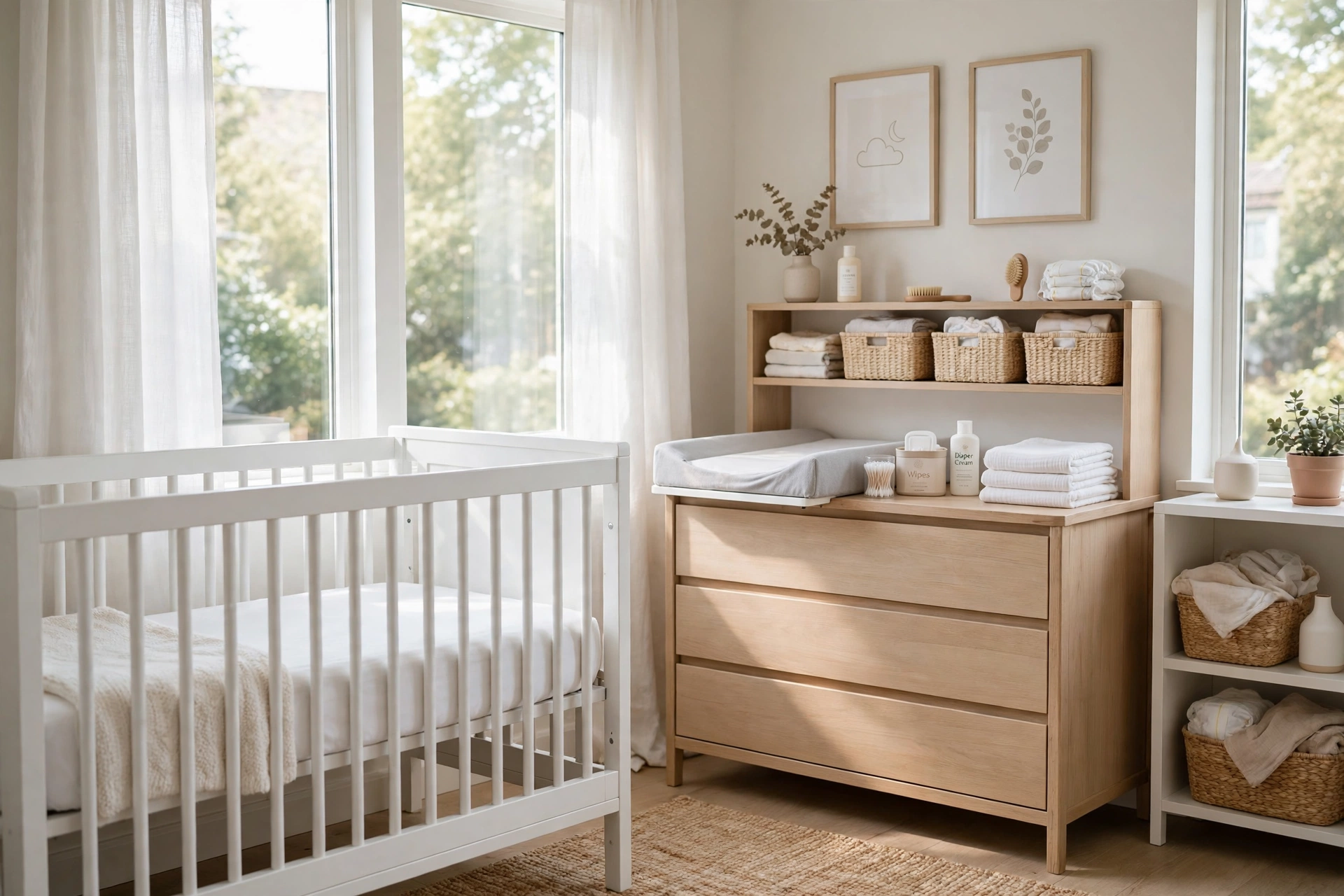
The nursery has one rule that surprises people: clean it last. Wash all the fabrics first — crib sheets, blankets, burp cloths, the glider cover if it comes off — in fragrance-free detergent and hot water, and dust the furniture properly. But do the room itself last in your sequence, because it will sit collecting dust while you finish the rest of the house, and a “done” nursery that sat for three weeks isn’t done anymore.
Check the crib area with fresh eyes at the end: mattress clean, no dust on the rails, nothing stored on top of the wardrobe shedding lint onto the bed. And if you’re still deciding where the crib goes, the nursery temperature and air quality guide is the one to read before the furniture is fixed in place — airflow matters more than wall color.
PRO TIP
Clean the filter first, on purpose, before anything else in the house. It’s the cheapest, fastest job on this list and the only one that improves every room at once. If you do literally one thing today, make it the filter swap — then go sit down. The rest of the list will still be there tomorrow, and so will you.
Frequently Asked Questions
How early is too early to deep clean before the baby?
More than four weeks out and dust resettles enough to undo the point of it. Two to four weeks before the due date is the sweet spot: close enough that the work holds, far enough that you’re not cleaning at 39 weeks. If the baby comes early, the tier-one jobs (dust reservoirs, filter, hygiene zones) are the only ones that matter anyway.
Is a steam cleaner better than chemicals for a pre-baby clean?
For most jobs, yes — and it’s my professional preference. A handheld steam cleaner sanitizes sinks, tubs and high-touch surfaces without leaving chemical residue a baby will later touch or breathe near. Chemicals still win on heavy grease (oven interiors, for example), but those are exactly the jobs on the skip list or the delegate list.
What if I have pets?
Book the professional carpet extraction — that’s the non-negotiable rule for pet homes — and wash all pet bedding in hot water with fragrance-free detergent. Vacuum upholstery the pets use, and keep the pet’s sleeping area clean through the first weeks, because pet dander is a dust reservoir just like carpet. The pets stay; the dander gets managed.
Do I need an air purifier before the baby arrives?
Nice to have, not a must-have. A fresh HVAC filter and dusted vents do more for your baby’s air than a budget purifier, and a good purifier is a purchase, not a panic buy. If you already own one, run it in the nursery. If you don’t, spend the money on the filter swap and the carpet clean first.
What can I skip entirely when deep cleaning before baby?
Skirting boards, inside ovens, guest rooms, window tracks, and anything in a room the baby won’t enter in the first month. Also skip: reorganizing closets, deep-cleaning the garage, and any job that requires a ladder. A clean house is not a perfect house — it’s a house where the air, the floors and the bottle-prep surfaces are safe.
The Bottom Line
Deep cleaning before baby is not about a spotless house — it’s about three things done well: clean air (filter, vents, dust reservoirs), clean floors (carpets, upholstery, hard floors), and clean bottle-prep and bath surfaces. Do those, switch to fragrance-free, hand the rest to named helpers, and stop at 8pm. When you’re ready for the rest of the pre-baby home prep, the babyproofing checklist is your next stop — it picks up exactly where this one ends, starting with the chemical lockup — and if you’re weighing whether to spray anything around the house, read the pest-control-in-pregnancy guide first. The nursery itself is the last room you clean and the first one you enjoy. That’s the whole job, and it’s enough.