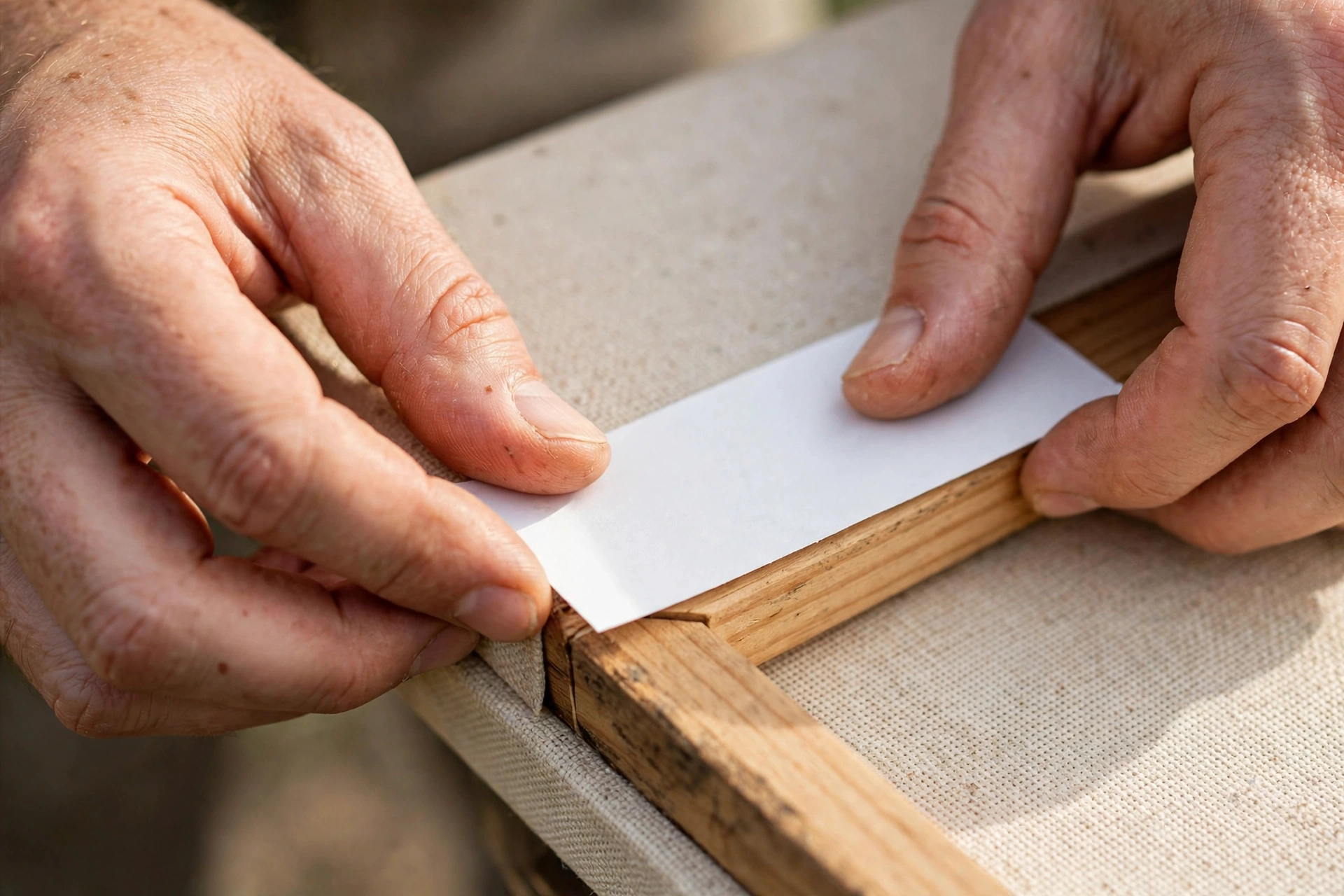
How to Hang Wall Art Without Nails in a Rental
TL;DR
This is how to hang wall art without nails and keep your deposit: adhesive strips for frames up to 15 pounds, a picture ledge for anything heavier, and leaning art for the rest. Weigh every frame first, clean the wall, and keep the centre of the art 57 to 60 inches from the floor.
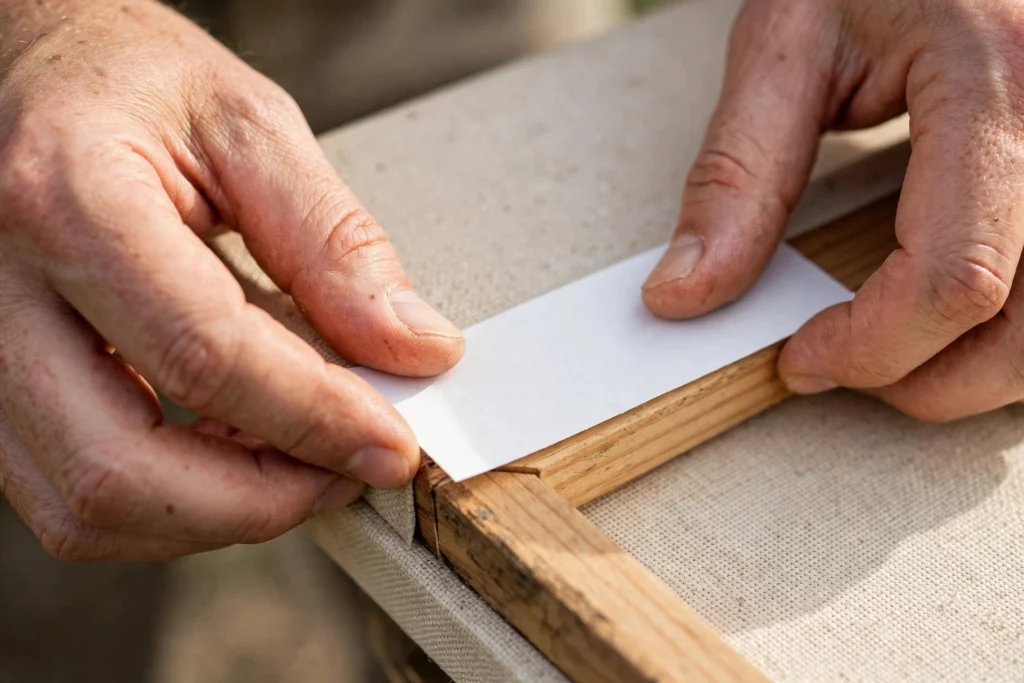
A nail is a hole, and a hole is a deduction. One renter put it plainly on Quora: “The walls should have no holes in them (that includes nail holes as there have been alternatives much less harmful for decades).” The alternatives have been around for decades, and they work — when they are used inside their weight limits. This guide to how to hang wall art without nails covers adhesive strips, ledges, and leaning art, with the weight limits, the renter rules, and the removal trick that keeps the paint on the wall. Our wall art for living room guide covers sizing and layout; this one covers hanging it without a single hole.
The short version of how to hang wall art without nails is three methods. Adhesive strips hang most framed prints and canvases up to 15 pounds. A picture ledge holds anything heavier, because the wall only carries the ledge. Leaning art needs no hardware at all. Most of these methods cost $5 to $25, and the wall takes about an hour.
How to Hang Wall Art Without Nails: What Works Best?
How to hang wall art without nails depends on weight: adhesive strips for frames up to 15 pounds, a picture ledge for heavier frames, and leaning art for large pieces and mirrors. Match the method to the weight first, and the wall stays undamaged because nothing is asked to hold more than it can.
Weight is the decision in how to hang wall art without nails, and it comes before everything else. Weigh each frame on a kitchen scale — bathroom scales are too coarse for a 3-pound frame — and write the number on a strip of tape on the back. A frame that weighs 4 pounds needs a different method than one that weighs 14, and guessing is how art ends up on the floor at 2am.
The three methods cover nearly every wall. Adhesive strips take the light and medium work, up to 15 pounds with four pairs. A picture ledge takes the heavy work, because the ledge screws into studs once and the art simply leans on it. Leaning art takes the largest pieces and needs no hardware at all.
How Much Weight Can Adhesive Strips Hold?
Adhesive strips hold 1 pound per pair for Small, 3 pounds per pair for Medium, and 4 pounds per pair for Large. Four pairs of Large strips hold 15 pounds, and 3M rates them for frames weighing up to 15 pounds and measuring up to 24 by 36 inches.
The numbers on the box are per pair, and the pairs add up — that is the first rule of how to hang wall art without nails. One pair of Small strips holds 1 pound. Two pairs hold 2. Four pairs of Large strips hold 15 pounds — that is the ceiling, and it covers most framed prints and small canvases. A 24-by-36-inch frame is the largest size the rating covers; bigger than that, the strips are not the method anymore.
| Strip size | Weight per pair | Four pairs hold | Largest frame |
|---|---|---|---|
| Small | 1 lb | 4 lb | 8×10 in |
| Medium | 3 lb | 12 lb | 18×24 in |
| Large | 4 lb | 15 lb | 24×36 in |
Which Method Works for Heavy Frames?
Heavy frames need a picture ledge or a lean, never adhesive strips. Large or framed glass mirrors, shelves with books, and TVs should never go on adhesives — lean them against the wall, set them on freestanding furniture, or use a tension-pole unit instead.
The heavy-item rule is absolute, because the failure mode is a falling mirror, not a peeling strip. A framed glass mirror concentrates its weight on two small points, and no adhesive is rated for it. Shelves with books and TVs are the same: the load is heavy, it shifts, and the adhesive gives way without warning. Lean a large mirror against the wall on a dresser or the floor.
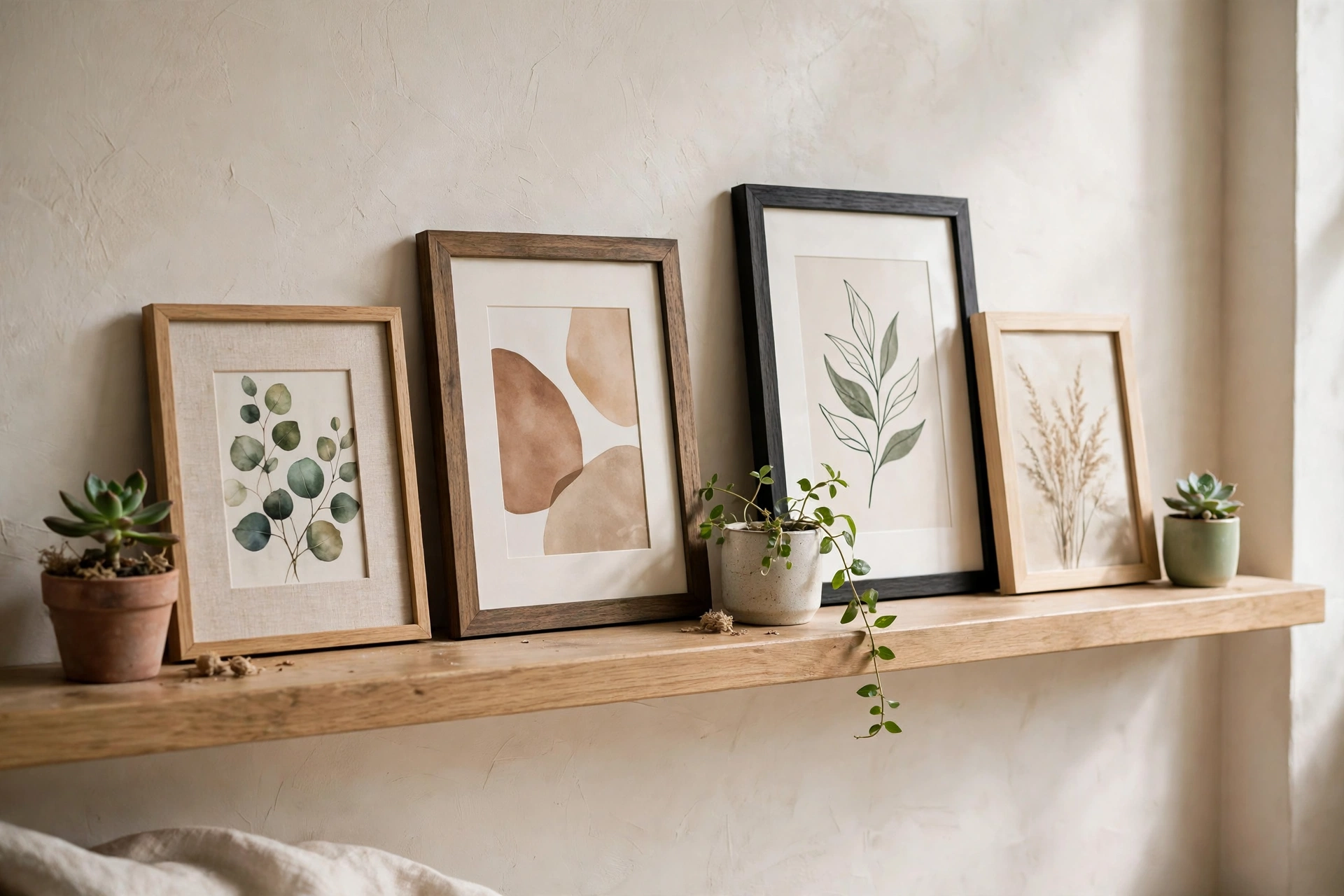
A picture ledge is the middle path for how to hang wall art without nails when the frame is heavy. The ledge itself screws into studs once — two small holes, patched in minutes at move-out — and then every frame on it simply leans. Swap the art monthly without touching the wall again. A 36-inch ledge costs about $15–$25 and turns one pair of holes into a whole gallery. Our bedroom wall decor ideas show a ledge above a dresser holding four frames that would need eight strips each.
How Do You Hang a Gallery Wall Without Nails?
Hang a gallery wall without nails by planning the layout on the floor first, hanging the largest frame at the centre with adhesive strips, and building outward with smaller frames at 2 to 3 inches apart. Keep every frame under 15 pounds, weigh each one, and use one more pair of strips than the weight calls for.
The floor is the planning table for how to hang wall art without nails: lay every frame on the floor in the arrangement you want, with 2 to 3 inches between frames, and photograph it first. The largest frame goes at the centre, at eye level — about 57 to 60 inches from the floor — and the smaller frames build outward. A gallery wall planned on the floor takes ten minutes; one planned on the wall takes an afternoon.
Strips are the right tool for a gallery wall because every frame is small. A 12-frame gallery of 8×10 and 11×14 prints weighs 1 to 3 pounds per frame, and two pairs of Medium strips per frame hold each one. Use one more pair than the weight calls for — the extra pair is insurance against a humid day. These methods for how to hang wall art without nails scale to a whole wall precisely because each frame is light on its own.

PRO TIP
Cut paper templates the size of each frame, tape them to the wall with painter’s tape, and live with the layout for a day before you stick anything permanent.
What Is a Picture Ledge, and When Should You Use One?
A picture ledge is a narrow shelf, usually 24 to 48 inches long, that holds framed art leaning against the wall instead of hanging from it. Use one when frames are heavy, when you change art often, or when the wall is textured, because the ledge carries the weight and the art simply leans.
A ledge solves the two problems strips cannot, and that is why how to hang wall art without nails often ends at a ledge. The first is weight: a ledge screwed into studs holds 10 to 15 pounds of frames. The second is change: swap the frames monthly without touching the wall. A 36-inch ledge costs about $15–$25, and two stacked make a gallery that rearranges in minutes.
Textured walls are the quiet reason to choose a ledge. Adhesive strips need a smooth, clean surface to bond, and orange-peel or knockdown texture defeats them no matter how carefully you clean. A ledge does not care about texture — it screws into the stud and the art leans on it. Our canvas wall art guide shows ledge arrangements that hold four frames on one shelf.
How Do You Hang Art in a Rental Without Losing Your Deposit?
Hang art in a rental by reading your lease first, cleaning the wall with rubbing alcohol, weighing each frame on a kitchen scale, and keeping the centre of the art at eye level, about 57 to 60 inches from the floor. Some leases ban nails but allow adhesive hooks, and that one line decides the whole method.
Read the lease before you buy anything. Some leases ban nails but allow adhesive hooks; others ban all wall attachments, leaving leaning art and freestanding furniture as the only options. A $200 deduction for nail holes buys a lot of adhesive strips.
The prep sequence is the same every time: clean the wall with rubbing alcohol and let it dry, press the strip to the frame and hold it for 30 seconds, then press the frame to the wall and hold it for another 30 seconds. Wait one hour before hanging anything heavy. These steps for how to hang wall art without nails are the difference between a strip that holds for years and one that falls in a week.
Why Do Command Strips Fall Off the Wall?
Command strips fall off for three reasons: the frame exceeds the stated weight capacity, the wall was not perfectly clean, or high humidity weakened the adhesive’s grip. Exceeding the weight is the most frequent cause, and a dirty wall is the second.
Weight is first because it is the easiest to get wrong, and how to hang wall art without nails starts with the scale, not the strip. A frame that weighs 5 pounds needs two pairs of Large strips, not one pair of Mediums, and a frame weighed by hand instead of on a scale is a guess. Weigh every frame on a kitchen scale and write the number on the back — it takes ten seconds and prevents the 2am crash.
Cleanliness is second. Dust, grease, and old paint residue sit between the adhesive and the wall, and the strip bonds to the dust instead of the paint. Wipe the spot with rubbing alcohol, let it dry fully, and never use a cleaner that leaves a film. Humidity is third: bathrooms and kitchens weaken the grip over months, so use strips there only for light frames and check them seasonally.
| Method | Max weight | Best for | Removal |
|---|---|---|---|
| Adhesive strips | 15 lb | Light frames, gallery walls | Pull tab, no damage |
| Picture ledge | 10–15 lb of frames | Heavy frames, frequent swaps | Two screw holes to patch |
| Leaning art | No limit | Large canvas, mirrors | Nothing to remove |
| Tension pole | 5–10 lb | Renters, no holes at all | Nothing to remove |
All figures here are rough planning estimates, not quotes. The table above is the decision shortcut: match the method to the weight and the wall, and the art stays up.
How Do You Remove Adhesive Strips Without Damage?
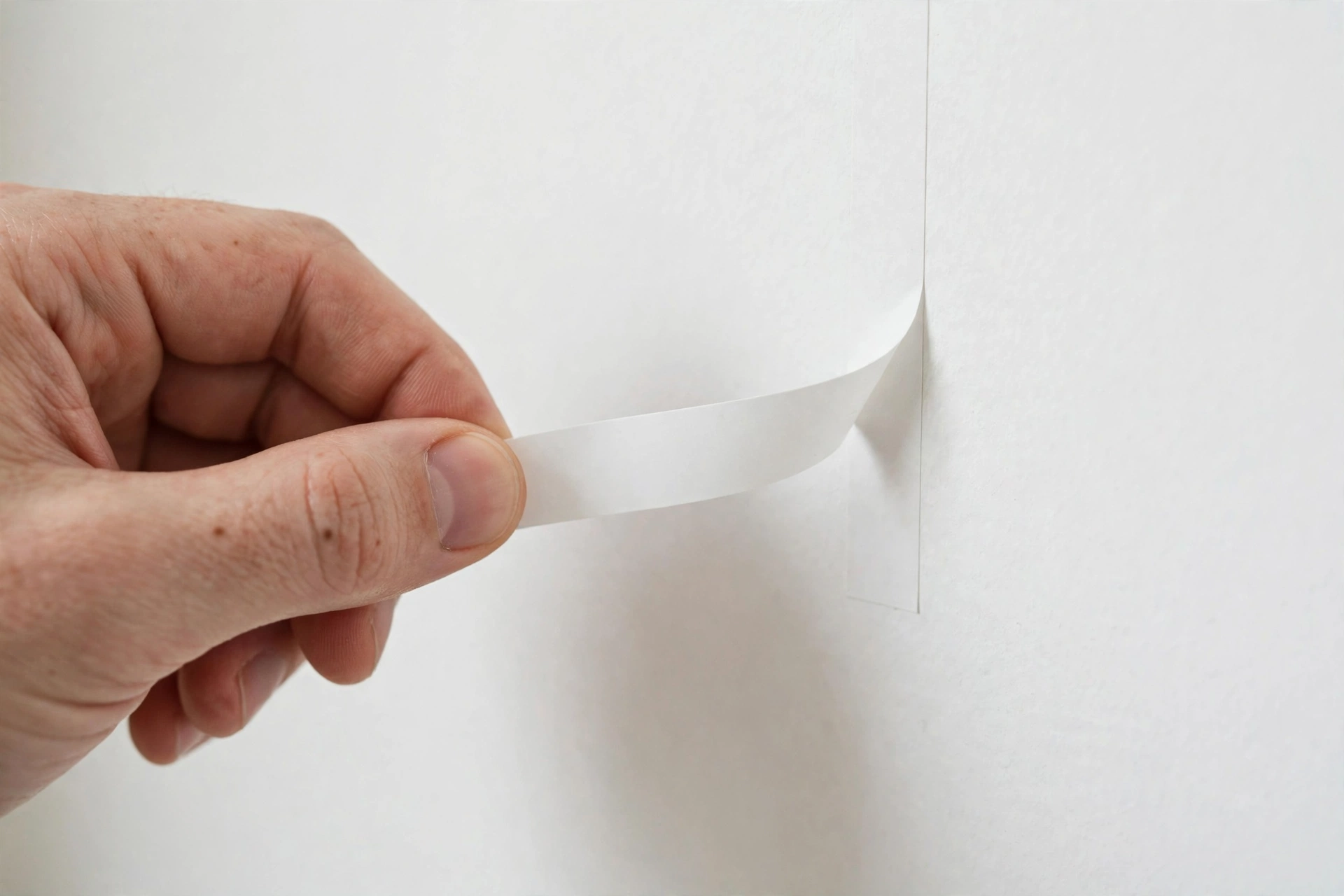
Remove adhesive strips without damage by pulling the tab straight down, slowly, along the wall — never outward and never fast. Hold the frame with one hand, pull the tab down with the other, and stretch it at least 6 inches before it releases.
The pull direction is everything in how to hang wall art without nails: the tab is designed to stretch down along the wall, thinning the adhesive until it lets go. Pulling outward rips the paint; pulling fast snaps the tab and leaves the strip on the wall. Pull slowly, straight down, and keep pulling until the strip stretches at least 6 inches — it feels wrong the first time, because the strip gets long and thin before it releases.
If a tab snaps, the fix is dental floss, not a knife. Slide unflavored dental floss behind the strip and saw gently downward. Wipe the spot with rubbing alcohol afterward and the wall looks untouched.
PRO TIP
Photograph the wall the day you move in — every scuff, every mark — so a pre-existing flaw is never charged to your deposit at move-out.
Frequently Asked Questions
How much weight can Command strips hold?
For how to hang wall art without nails, the limits are: Small strips hold 1 pound per pair, Medium 3 pounds per pair, and Large 4 pounds per pair. Four pairs of Large strips hold 15 pounds, and 3M rates them for frames up to 15 pounds and 24 by 36 inches. Count the pairs actually on the frame, not the pairs in the box.
Can you hang a heavy mirror without nails?
Yes — lean it. A large framed mirror should never go on adhesives: lean it against the wall on a dresser or the floor. A picture ledge is the other option for how to hang wall art without nails when the frame is heavy, because the ledge carries the weight and the mirror simply leans.
Do adhesive strips damage paint?
Not when they are removed correctly — that is the whole point of how to hang wall art without nails. Pull the tab straight down, slowly, along the wall — never outward and never fast — and the adhesive releases without tearing paint. If a tab snaps, slide dental floss behind the strip to cut the adhesive. Fresh paint under 30 days old is the one exception: wait for it to cure first.
What is the best method for a textured wall?
A picture ledge. Adhesive strips need a smooth, clean surface to bond, and orange-peel or knockdown texture defeats them. A ledge screws into the studs once and the art leans on it, so texture does not matter.
How high should you hang art?
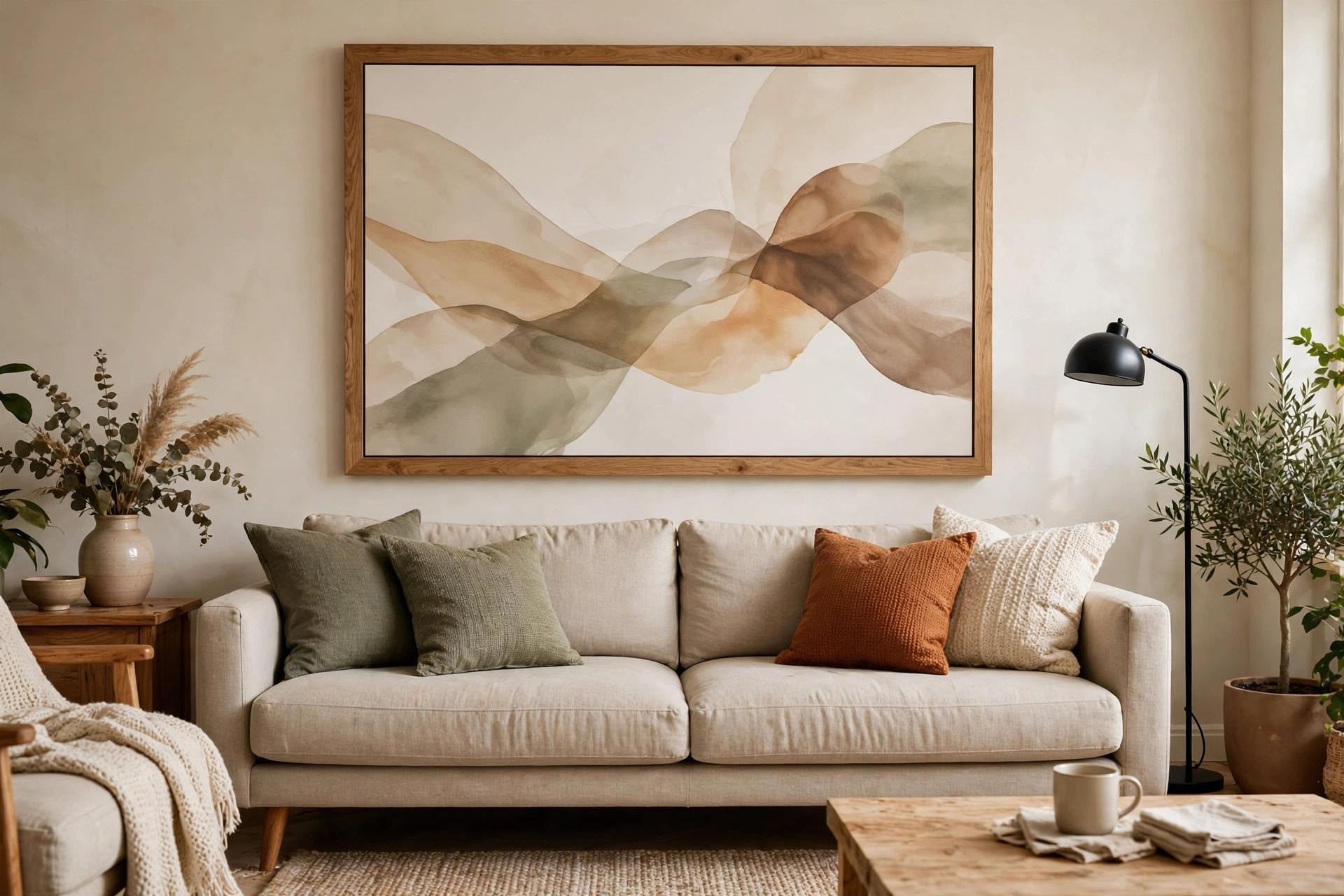
For how to hang wall art without nails, keep the centre of the art at eye level, about 57 to 60 inches from the floor. Above a sofa, the bottom edge sits 6 to 10 inches above the sofa back, and the art spans about two-thirds of the sofa width. One large piece beats three small ones over a sofa.
Will strips hold in a bathroom?
Only for light frames, and not forever — that is the humidity limit of how to hang wall art without nails. High humidity weakens the adhesive’s grip over months, so use strips in bathrooms only for frames under 3 pounds, check them seasonally, and prefer a ledge or leaning art for anything heavier or framed in glass.
Final Thought
This is how to hang wall art without nails and keep the walls — and the deposit — intact: weigh the frame, match the method to the weight, clean the wall, and pull the tab straight down when it is time to move.