How to Get Rid of Fire Ants in Texas: The Two-Step Fix
TL;DR
This is how to get rid of fire ants in texas the way Texas A&M teaches it: broadcast bait across the whole yard first, then treat the individual mounds 1 to 2 weeks later. Baits take weeks to reach 80 to 90 percent control, contact killers work in 1 to 2 days, and spring and fall are the best times.

A fire ant mound in a Texas yard is not a nuisance — it is a colony of up to 250,000 stinging ants. The method that works is the Texas A&M AgriLife Extension two-step, broadcast bait first and mound treatment second, and this guide follows it step by step. Our general guide to how to get rid of fire ants covers the basics; this Texas guide covers the two-step, the timing, and the local rules.
Texas is fire ant country: warm winters keep colonies active nearly year-round, and the clay soils of North and Central Texas hold the moisture mounds need. This guide to how to get rid of fire ants in texas covers identification, the two-step, bait versus contact treatment, bite care, and when to call a pro. Most of the work costs $20 to $40 in bait and takes about an hour.
How to Get Rid of Fire Ants in Texas: What Actually Works?
How to get rid of fire ants in texas comes down to one method: the Texas A&M two-step. Step one broadcasts bait across the whole yard so foraging ants carry it back to the colony. Step two treats the individual mounds that survive, 1 to 2 weeks later, with a contact treatment. Nothing else controls a whole yard.
The two-step works because it attacks the colony, not the mound. A mound is just the visible tip — the queen and the brood live underground. Bait works the other way: foragers carry it home, feed it to the queen, and the colony collapses from the inside over weeks. The two-step is the method most preferred by the Texas A&M AgriLife Extension Service, and every other method here is measured against it.
Timing matters as much as method. Spring and fall are particularly good times to apply baits, because the ants are actively foraging and the soil is warm. Mid-summer baiting works less well — the ants forage at night and may ignore bait left out in the sun. These steps for how to get rid of fire ants in texas are scheduled for spring and fall, when the ants do the work for you.
How Do You Identify a Fire Ant Mound?
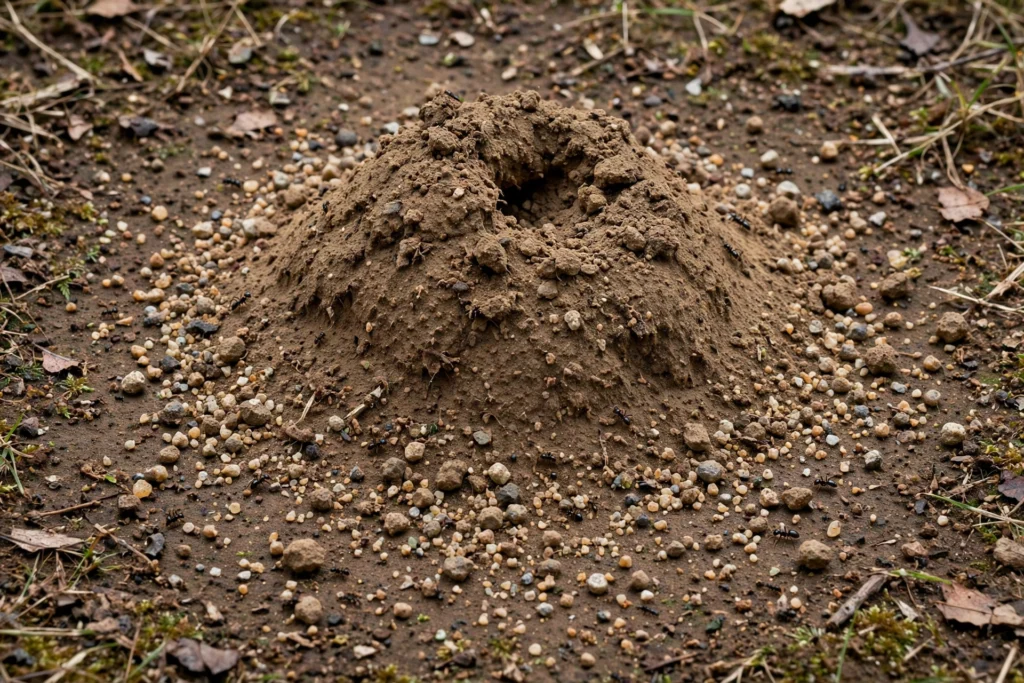
Identify a fire ant mound by its shape and its soil: a loose, fluffy pile of reddish soil, often with no clear central opening — though small holes can be visible where ants come and go — usually 12 to 18 inches across and up to 18 inches tall. Disturb it gently with a long stick and watch — fire ants pour out fast and aggressively, unlike native ants that scatter slowly.
The mound itself is the first clue when learning how to get rid of fire ants in texas. Fire ant mounds are loose piles of excavated soil — the ants mostly enter through underground tunnels, so the mound often shows no clear central opening. Native ant mounds are smaller, flatter, and usually have a visible hole. A mound that appears overnight after rain, in open sun, is almost always fire ants in Texas.
The behavior test confirms it, and it is the second step in how to get rid of fire ants in texas: poke the mound with a long stick and step back. Fire ants boil out within seconds and swarm anything that touches the mound. They are reddish-brown, about 1/8 to 1/4 inch long, and they sting rather than bite. Our how to get rid of scorpions guide covers the other stinging pest that shares Texas yards.
What Is the Texas A&M Two-Step Method?
The Texas A&M two-step method is broadcast bait first, then individual mound treatment: step one spreads bait across the whole yard so foraging ants carry it to every colony, and step two treats the mounds that survive, 1 to 2 weeks later, with a contact insecticide. Spring and fall are the best times to run it.
| Step | When | What to do |
|---|---|---|
| Step 1 — broadcast bait | Spring or fall, dry day | Spread bait over the whole yard |
| Wait | 1–2 weeks | Let foragers carry bait to queens |
| Step 2 — mound treatment | 1–2 weeks later | Treat surviving mounds individually |
Step one of how to get rid of fire ants in texas is the broadcast. Spread granular bait evenly across the whole yard with a hand spreader — not just on the mounds — at the rate on the bag. Apply on a dry day when the ants are foraging, late afternoon or early evening, and do not water the bait in. Foragers pick it up, carry it home, and feed it to the queen.
Step two is the cleanup. One to two weeks later, walk the yard and treat every mound still active with a contact treatment — a liquid drench or a granular treatment. The bait has already weakened the colonies, so the mound treatment finishes them. A bag of bait costs about $20–$30 and covers a typical yard twice, and the mound treatment adds about $10–$15.
Bait or Contact Killer: Which Should You Use?
Use bait for whole-yard control and contact killer for single mounds: bait is slow, taking weeks to months to reach 80 to 90 percent control, while most contact insecticides applied directly to a mound kill the colony in one to two days. The two-step uses both — bait first, contact second.
Bait is slow and thorough, and it is the patient half of how to get rid of fire ants in texas. AgriLife says baits can take weeks to months to reach 80 to 90 percent control, because the bait must travel from the foragers to the queen. The payoff is yard-wide: one broadcast treats every colony, including the ones with no visible mound yet. Bait is the only method that controls a whole yard.
Contact killers are fast and narrow — the urgent half of how to get rid of fire ants in texas. Most contact insecticides applied directly to a mound kill the colony in one to two days. The cost is scope: a contact treatment kills one mound, and the next mound over is untouched. Boiling water sits in between — 2 to 3 gallons of very hot water kills ants about 60 percent of the time, but it also kills the grass and scalds the person carrying it.
| Method | How it works | Speed | Control |
|---|---|---|---|
| Broadcast bait | Foragers carry it to the queen | Weeks to months | 80–90% yard-wide |
| Contact mound treatment | Kills the mound directly | 1–2 days | One mound |
| Boiling water, 2–3 gal | Scalds the colony | Same day | About 60% |
| Gasoline | Never use it | — | Dangerous, illegal |
All figures here are rough planning estimates, not quotes. Gasoline is on the table only to rule it out: Texas A&M is explicit — do not use gasoline or other petroleum products to control fire ants. It poisons the soil, it can ignite, and it does not work better than the legal methods.

PRO TIP
Bait on a dry evening when ants are foraging — bait left out in hot sun or washed away by sprinklers is bait wasted.
How Do You Treat a Fire Ant Bite?
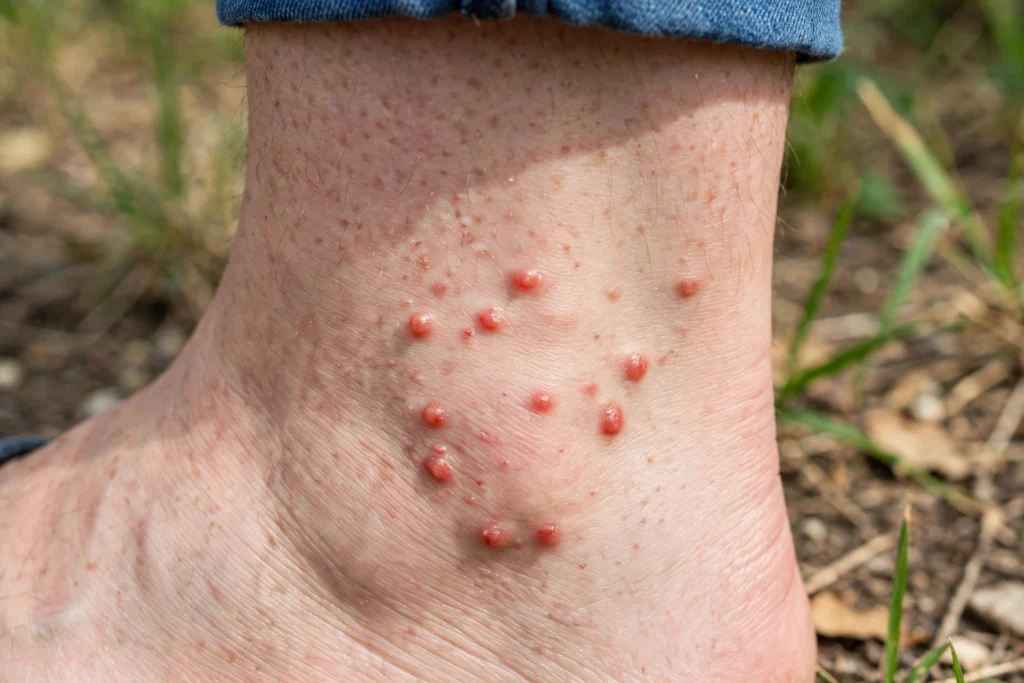
Treat a fire ant bite by washing the sting with soap and water, applying a cold pack for 10 minutes, and leaving the blister alone. The sting forms a small white blister within a day — do not pop it — and watch for signs of an allergic reaction, which needs emergency care immediately.
A fire ant sting is really a sting, not a bite, and knowing that is part of how to get rid of fire ants in texas safely: the ant grips the skin with its jaws and stings repeatedly in a circle, which is why the welts come in clusters. Wash with soap and water and apply a cold pack for 10 minutes. A small white blister forms within a day — that is normal, and popping it invites infection.
Watch for the allergic signs. Trouble breathing, swelling of the face or throat, dizziness, or widespread hives after a sting mean an allergic reaction — call 911 or go to urgent care. Most people get only local pain and itching for a day or two.
When Should You Call a Professional?
Call a professional when the infestation is large, when DIY methods repeatedly fail, or when mounds sit where children and pets play daily. A pro treatment runs roughly $150 to $400 for a typical yard, covering the broadcast, the mound treatments, and a follow-up visit.
Large means more than a dozen active mounds, or mounds that return within weeks of every treatment — and that is when how to get rid of fire ants in texas becomes a pro’s job. Repeated failure usually means the bait went out at the wrong time. A professional brings the broadcast equipment, the right product for the season, and the follow-up visit that closes the loop.
The other reason to call is location. Mounds in a daycare play area, a vegetable garden, or a dog run need a pro’s judgment. If you need a pro in the Dallas–Fort Worth area, Exterminator Grand Prairie handles fire ant work, and Pest Expert Pro covers the wider Texas area — ask either for a quote before the spring baiting season. Our how to get rid of german cockroaches guide covers the other indoor pest that brings Texans to a pro.
How Do You Keep Fire Ants From Coming Back?
Keep fire ants from coming back by baiting twice a year — spring and fall — and by keeping the yard short, dry, and clear of debris. Mow regularly, fix leaky outdoor faucets, remove piles of wood and leaves, and re-bait every mound that appears within a week of spotting it.
Twice-a-year baiting is the maintenance schedule for how to get rid of fire ants in texas for good. Spring baiting knocks down colonies, and fall baiting catches the ones that rebuilt. The Wood Glen community in Round Rock has baited together twice a year since 2005 — 548 homes — and the lesson is that ants do not respect fences: a yard treated alone reinfests from next door.
Yard habits do the rest. Short grass dries fast and hides no mounds. Fixing a leaky faucet removes the moisture colonies need. Clearing wood piles, leaf piles, and stacked bricks removes the harborage. These habits for how to get rid of fire ants in texas are unglamorous, and they are why treated yards stay treated.

What Should You Never Do to Fire Ants?
Never pour gasoline on a fire ant mound, never kick a mound apart, and never treat only the mounds you can see. Gasoline poisons the soil and can ignite; kicking a mound scatters the colony into new mounds; and treating visible mounds only leaves the hidden colonies to rebuild the yard.
Gasoline is the dangerous one, and avoiding it is the first rule of how to get rid of fire ants in texas. It does not kill the colony reliably, it sterilizes the soil, it can ignite, and it is illegal to pour on the ground in most Texas cities. Texas A&M’s warning is blunt: do not use gasoline or other petroleum products to control fire ants. The legal methods work better and cost less.
Kicking a mound apart is the common mistake. The colony does not die — it splits, and each fragment starts a new mound. The same logic applies to treating only the visible mounds: the colonies without mounds are still in the yard. Broadcast bait is the only method that reaches them.
PRO TIP
Walk the whole yard once a week in spring and fall and flag every new mound with a stick — treating a mound in its first week takes one application, while a month-old mound takes three.
Frequently Asked Questions
How long does it take to get rid of fire ants?
For how to get rid of fire ants in texas, broadcast bait takes weeks to months to reach 80 to 90 percent control, because the bait must travel from foragers to the queen. Contact treatments kill a single mound in 1 to 2 days. The full two-step — bait, then mound treatment — controls a yard in about a month.
What is the best fire ant killer for Texas yards?
For how to get rid of fire ants in texas, broadcast bait is the best whole-yard killer, and a contact mound treatment is the best single-mound killer. Use both in the Texas A&M two-step: bait the whole yard first, then treat the surviving mounds 1 to 2 weeks later.
Does boiling water kill fire ants?
About 60 percent of the time. Pouring 2 to 3 gallons of very hot water on the mound kills ants about 60 percent of the time, but it also kills the grass and can scald the person carrying it. It works as a free spot treatment only.
Are fire ant bites dangerous?
Usually not, but they hurt. A sting forms a small white blister within a day — wash it, ice it, and do not pop it. That is the first aid side of how to get rid of fire ants in texas. Trouble breathing, face or throat swelling, dizziness, or widespread hives mean an allergic reaction: get emergency care immediately.
When is the best time to treat fire ants in Texas?
For how to get rid of fire ants in texas, spring and fall are best, when ants are actively foraging and the soil is warm. Mid-summer baiting works less well because ants forage at night in the heat and may ignore bait left out in the sun. Bait twice a year, spring and fall, to keep the yard controlled.
How much does professional fire ant treatment cost?
A pro treatment for how to get rid of fire ants in texas runs roughly $150 to $400 for a typical yard. DIY bait costs about $20 to $30 per bag and covers a typical yard twice, with mound treatment adding about $10 to $15.
Final Thought
This is how to get rid of fire ants in texas for good: broadcast bait across the whole yard in spring and fall, treat the surviving mounds 1 to 2 weeks later, and keep the yard short and dry. Never gasoline, never kicking the mound apart, and never only the mounds you can see.