How to Get Rid of Scorpions in Texas (Without Spraying Everything)
TL;DR
How to get rid of scorpions in Texas starts with exclusion, not spray: seal the 1/16-inch gaps bark scorpions slip through, clear debris from the foundation, and cut the insects they eat. Check at night with a UV blacklight, when scorpions glow blue-green. Spray alone rarely works, because scorpions hide in cracks and shrug off most treatments.
Finding a scorpion on the living room wall at midnight is a Texas rite of passage nobody asks for, and how to get rid of scorpions is a question with a clear answer once you know what animal you are dealing with. Texas has about 18 scorpion species, and the striped bark scorpion — the most common, and the only one found across all of Texas — climbs walls, reaches attics, and slips through gaps as narrow as 1/16 inch. The good news: no Texas scorpion is considered deadly, and exclusion beats spraying every time.
This guide follows the exclusion-first approach Texas A&M AgriLife Extension recommends, and it is the full answer to how to get rid of scorpions in a Texas home: find where they enter, take away their shelter and food, and check your work at night with a UV light. The same attic-entry thinking applies to other Texas wildlife too — see our guide to signs of bats in house if you hear scratching overhead, since bats and bark scorpions both use tiny roofline gaps.
How to Get Rid of Scorpions: Why Is Exclusion First?
How to get rid of scorpions starts with exclusion, not spray, because insecticide cannot reach scorpions where they hide and their hard shell sheds most of what touches it. Sealing gaps, clearing debris, and cutting insect food remove why scorpions enter at all. Spray treats the symptom for a night; exclusion fixes the cause for the season.
That is why how to get rid of scorpions is a building job before it is a bug-spray job. Scorpions spend the day hidden in wall voids, under slabs, and behind stored boxes, where no spray reaches. At night they walk out along baseboards and walls, hunting the crickets and roaches that live in the same gaps. Close the gaps, and the hunting ground disappears.
Start with a night check before sealing anything, so you learn where they travel. Then seal the entries, clear the yard, and cut the insect food — in that order. Most Texas homeowners see numbers drop within weeks of a serious sealing job; the ones who only spray are usually still spraying a year later.
Which Scorpion Is in Your Texas House?
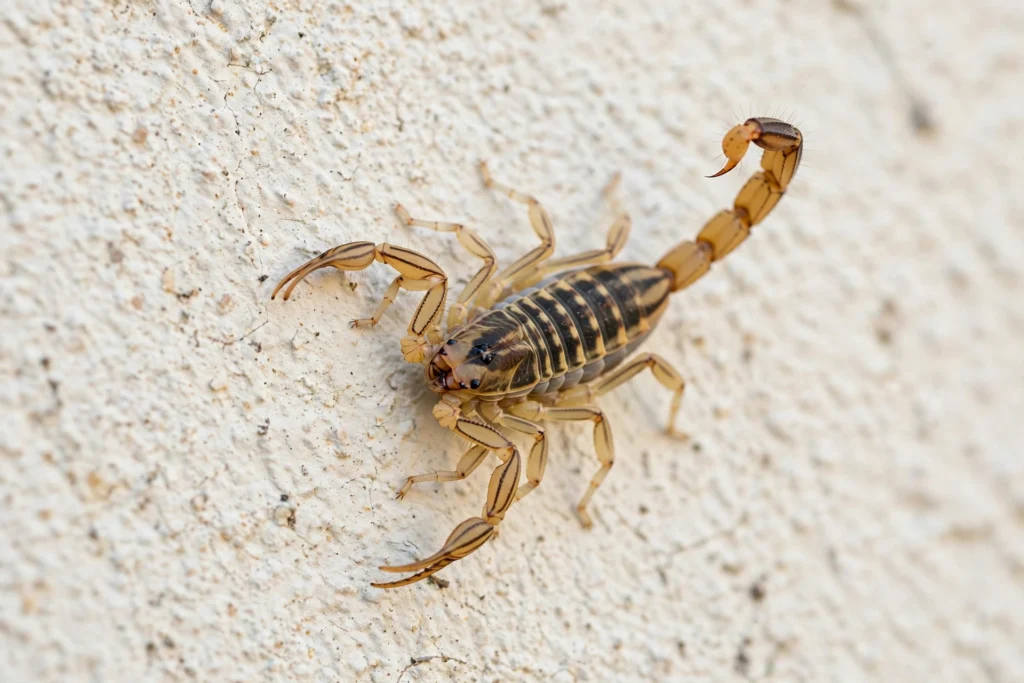
In most Texas homes it is the striped bark scorpion, a small scorpion about two inches long with dark stripes and a slender tail. It is the most common species in the state and the only one found across all of Texas. Other species live in some regions, but a scorpion climbing your wall is almost certainly a bark scorpion.
Knowing the species matters for how to get rid of scorpions, because bark scorpions climb. Unlike ground-dwelling species, they scale stucco, brick, and window screens and reach attics through roofline gaps — which is why a scorpion on a second-floor wall is almost always a bark scorpion. They hide by day under rocks, boards, and firewood, and come indoors in hot, dry weather for moisture.
No Texas scorpion is considered deadly, according to Texas A&M AgriLife Extension, but a sting is painful — sharp pain, swelling, and tingling around the sting are typical. Children, older adults, and pets need extra care, and any severe reaction means getting medical help right away. Never handle a scorpion with bare hands, even a dead one, because the stinger can still prick.
How Do Scorpions Get Inside?
Bark scorpions get inside through gaps as narrow as 1/16 inch: under doors, around pipes and wires, through weep holes, and along window frames. They climb stucco and brick, cross tree branches that touch the roof, and enter attics through roofline gaps. In hot, dry weather they come indoors seeking moisture, following the same routes as the insects they hunt.
| Entry point | What to use | Rough cost |
|---|---|---|
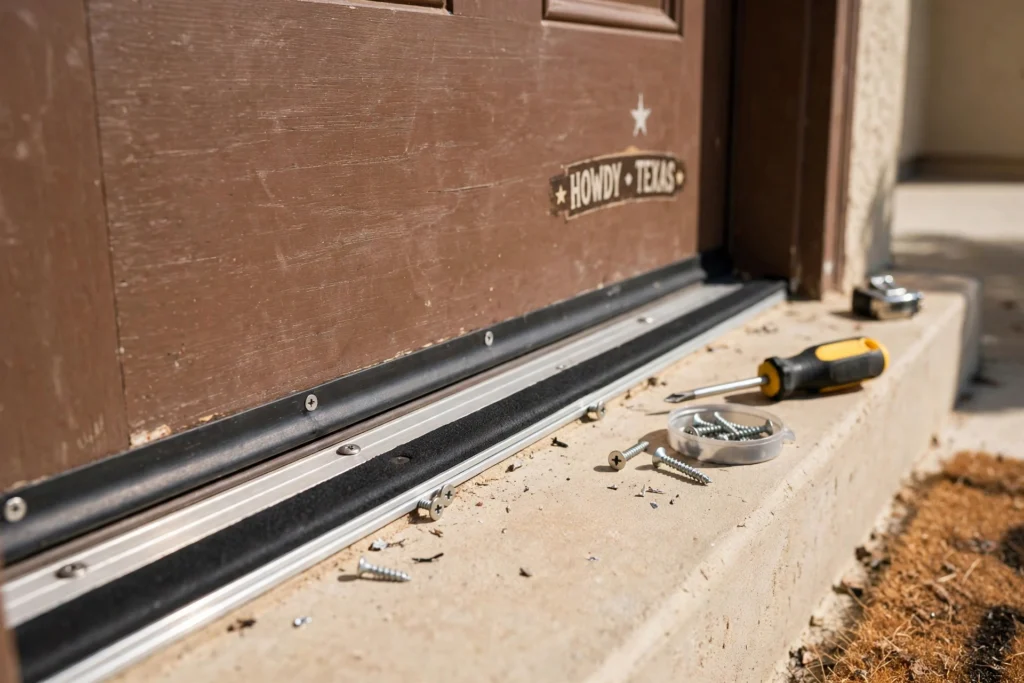
| Door gaps | Door sweep | $10–$25 |
| Weep holes | Copper mesh | $5–$15 |
| Pipe gaps | Caulk + mesh | $5–$20 |
| Roofline gaps | Sealant, flashing | $20–$50 |
Every gap you close answers how to get rid of scorpions at the source, and the smallest gaps matter most. A bark scorpion flattens itself through a crack 1/16 inch wide — thinner than a coin edge — so a door that looks sealed can still be an open road. The same attic-entry thinking applies to roof rats, which use the same roofline gaps: see our guide to how to get rid of roof rats if you hear scratching overhead.
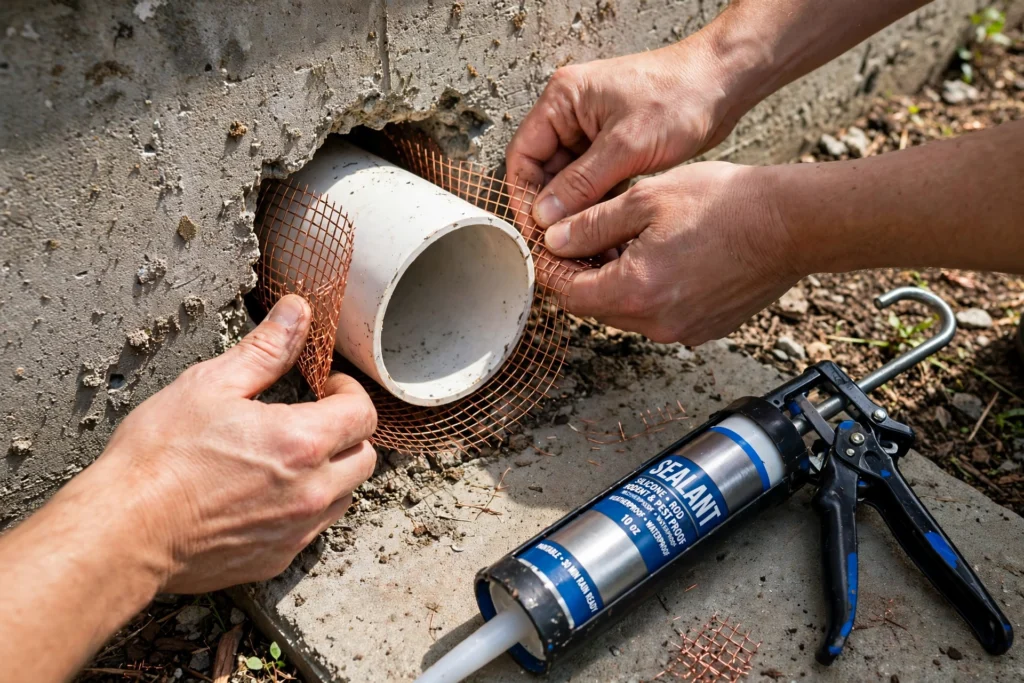
Work from the ground up: seal the lowest gaps first — doors, weep holes, and pipe entries — then windows and the roofline. Stuff copper mesh or steel wool into larger holes before caulking over it, since scorpions cannot chew through metal the way they push past foam. Check the seal after the first rain, as caulk shrinks and cracks.
How Do You Find Scorpions at Night?
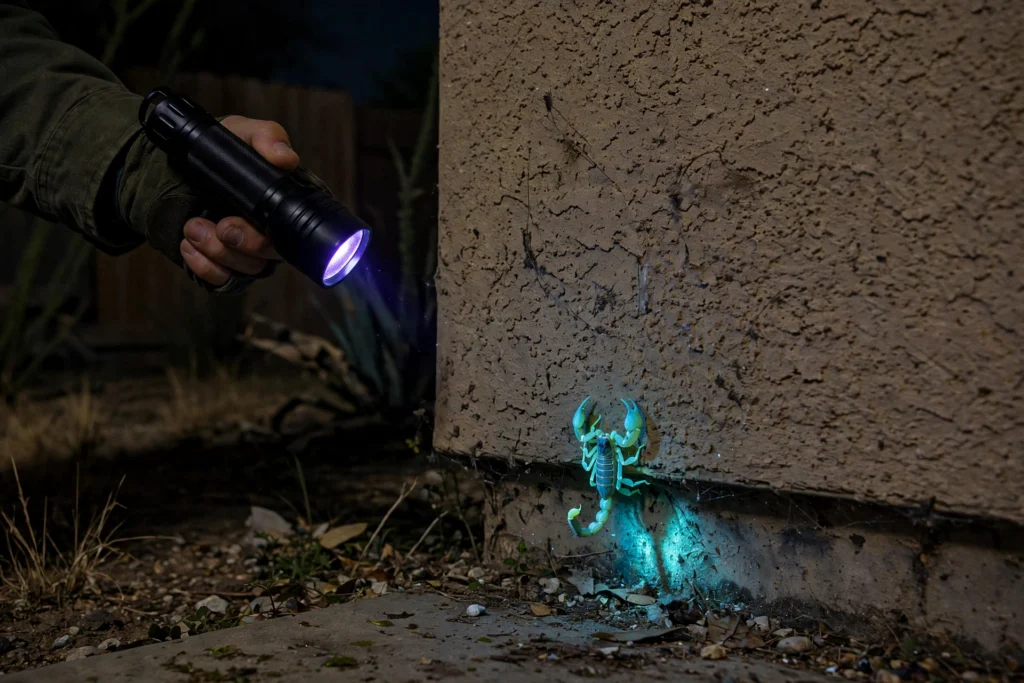
Search at night with a UV blacklight flashlight between 11 p.m. and 3 a.m., when scorpions are most active. Their shells glow blue-green under ultraviolet light, which makes them easy to spot on walls, floors, and foundation edges. Move slowly, scan baseboards and corners, and wear shoes and gloves, because a glowing scorpion is still a scorpion that can sting.
Night checks are the fastest way to learn how to get rid of scorpions in your own house, because you see where they actually travel instead of guessing. Scan slowly along baseboards, behind furniture, and around the garage and attic entrance. Mark every spot where one glows with a small piece of tape, then seal the nearest gap the next morning.
Wear closed shoes, long sleeves, and gloves, and carry a lidded jar if you plan to catch one for identification. Shake out shoes and clothing left on the floor before putting them on, and check bedding before climbing in — scorpions love warm, dark folds. A UV flashlight costs $10–$20 as a rough planning estimate, not a quote, and pays for itself the first night it finds a harborage.
PRO TIP:
Do your first UV check after a hot, dry day — scorpions come indoors for moisture then, so one night of checking shows you the real entry routes.
What Should You Remove From Around the House?
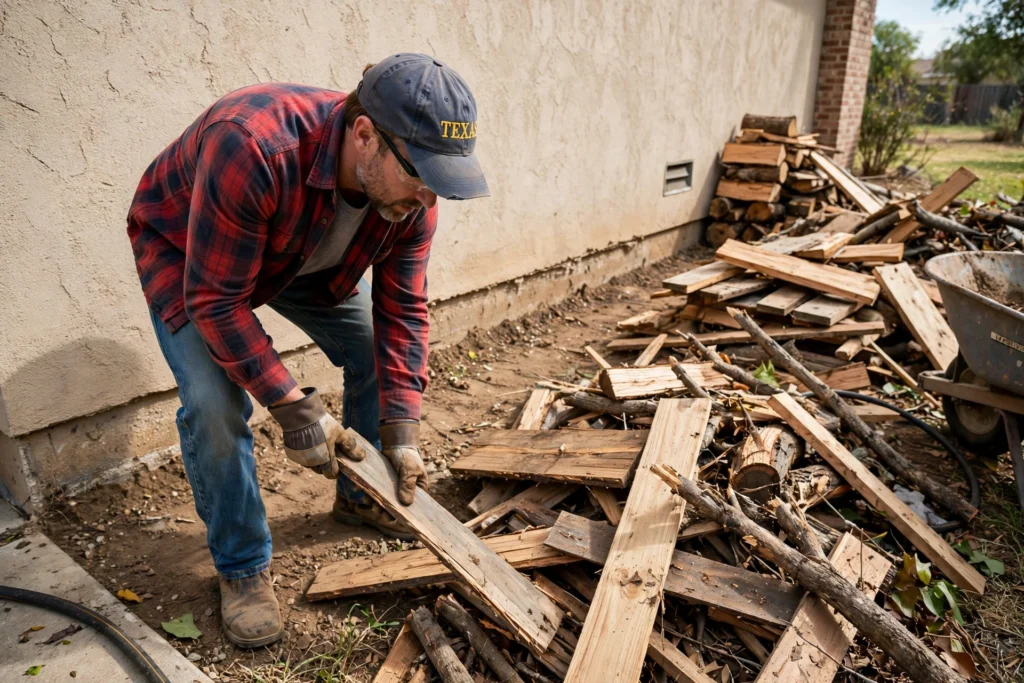
Remove rock piles, stacked firewood, boards, and leaf litter within 18 inches of the foundation, where scorpions hide by day. Move firewood away from the house and store it off the ground. Trim branches so none touch the roof, clear garage clutter, and keep grass short — every hiding place near the house is a staging post for the night.
Yard cleanup is the unglamorous half of how to get rid of scorpions, and it works because scorpions are only ever as far from the house as their nearest hiding place. Firewood stacked against the wall is the classic mistake: it shelters scorpions by day and puts them inches from a door gap by night. Move it at least 18 inches out, stack it off the ground, and keep the strip along the foundation bare.
Moisture matters as much as shelter: fix dripping outdoor faucets, clear clogged gutters, and move potted plants away from the foundation, since damp soil draws the insects scorpions eat. Seal the house for winter at the same time — our how-to-winterize-your-home guide covers the same gap-sealing work before cold weather.
What Kills Scorpions — and What Does Not Work?
Direct contact with a shoe or labeled scorpion spray kills the one you can see, but spraying does not solve an infestation, because scorpions hide in cracks and their shells resist residue. Glue traps catch wanderers and show where they travel. What works is exclusion plus removing shelter and insect food, with treatment only where a night check finds them.
| Method | Works? | Why |
|---|---|---|
| Door sweeps + sealing | Yes | Blocks entry |
| Yard cleanup | Yes | Removes shelter |
| UV night checks | Yes | Finds harborages |
| Broadcast spray | Rarely | Shell + hiding |
| Ultrasonic repellers | No | No evidence |
Products must be labeled for scorpions at that site — that label is the whole test for how to get rid of scorpions with chemicals, because a general insect spray that works on roaches may do nothing to a scorpion’s shell. Read the label, apply only where the label allows, and keep treatments away from children and pets. Even a labeled product works best as a backup to exclusion, applied to the exact harborages a night check revealed.
Glue traps are the honest tool here: they do not solve the problem, but they show you where scorpions travel and whether numbers are falling. Place them along baseboards, in the garage, and near doors, and check them weekly. If traps stay empty for a month after sealing, the job is working; if they keep filling, a gap is still open.
PRO TIP:
Put a glue trap on each side of every exterior door for two weeks — the trap that fills first tells you which door to seal first.
What Do You Do If You Are Stung?
Stay calm, wash the sting with soap and water, and apply a cool cloth for ten minutes to ease pain and swelling. Take an over-the-counter pain reliever if you need it, and watch for spreading numbness, trouble breathing, or muscle twitching. Children, older adults, and pets need extra care, and any severe reaction means getting medical help right away.
Most stings hurt for a few hours and then fade, with sharp pain, swelling, and tingling at the sting site. Keep the limb still, remove rings or watches before swelling starts, and do not apply a tourniquet or try to suck out venom — neither helps. Ice in a cloth, ten minutes on and ten off, is the most useful first aid. The sting is the moment when how to get rid of scorpions stops mattering and first aid starts, so know the first aid before you need it.
Watch children and pets closely after a sting, since smaller bodies react more strongly. For a pet, call the vet the same night rather than waiting to see how it goes. Prevention is the rest of the answer to how to get rid of scorpions: seal the gap that let this one in before the next hot night.
When Should You Call a Pro for Scorpions?
Call a pro if scorpions appear inside weekly, if night checks show several, or if sealing and cleanup have not cut numbers after a month. A pro inspection costs $100 to $300 as a planning estimate, not a quote, and should cover exclusion, not just spray. If stings keep happening, or a child or pet was stung, do not wait.
A good pro answers how to get rid of scorpions with a plan, not a single spray visit: a full walk-around of door and window gaps, weep holes, attic entries, and the yard. The plan should list the sealing work, the harborages to treat, and a follow-up night check to prove numbers fell — if the quote is only a spray, get a second opinion.
If scorpions keep showing up inside, or a child or pet has been stung, do not wait for the next hot spell. Pest Expert Pro can inspect your home and seal the entries the night checks found — a pro inspection costs $100–$300 as a rough planning estimate, not a quote.
Frequently Asked Questions
Seal gaps with copper mesh and caulk, fit door sweeps, clear debris 18 inches from the foundation, and cut insect food. How to get rid of scorpions without spray comes down to exclusion plus night checks with a UV light — spray alone rarely works, because scorpions hide where it cannot reach.
Their sting is painful — sharp pain, swelling, and tingling — but no Texas scorpion is considered deadly, according to Texas A&M AgriLife Extension. Children, older adults, and pets need extra care, and a severe reaction means getting medical help right away. The best response to any sting is calm first aid plus the prevention in this guide, because how to get rid of scorpions is the only way to stop the next sting.
Seal the roofline gaps, trim branches off the roof, and check the attic at night with a UV light — the attic version of how to get rid of scorpions is the same exclusion job, just higher up. Remove stored clutter that shelters them, and fix the gaps before treating anything, because a sprayed attic with open entries fills again.
Less often. Scorpions slow down in cold weather and shelter in wall voids, garages, and attics. A warm spell can bring them out mid-winter, so keep door sweeps and seals in place year-round rather than removing them in fall.
No — it finds the ones that are out and exposed, which is usually enough to map their routes. Scorpions hidden deep in wall voids will not glow until they come out, so repeat checks over several nights and after hot, dry days. Treat the light as a survey tool, not a cure: how to get rid of scorpions still comes down to sealing what the light reveals.
Most homes see numbers drop within a few weeks of serious sealing and yard cleanup, with a real change in two to three months. If new scorpions keep appearing after a month, a gap is still open — repeat the night check and seal what it shows.
Final Thought
Scorpions are a sealing problem with a spray habit, and how to get rid of scorpions in Texas comes down to unglamorous work: close the 1/16-inch gaps, clear the yard, cut the insects, and check at night with a UV light. Do that, and the house stops being a hunting ground. Skip it, and the next hot, dry night will bring them back.