How to Get Rid of American Cockroaches: The Palmetto Bug Guide
TL;DR
How to get rid of American cockroaches starts with identification: these are the big, sewer-dwelling palmetto bugs, not small kitchen Germans. Seal drains and pipe gaps, cut moisture, and place gel bait where they harbor. Most homes see numbers fall within two to three weeks, with full control in about a month.
Finding a two-inch roach at midnight is alarming, and the first instinct is to reach for a spray can. That instinct is why Houston homeowners spend for weeks and still see roaches. Learning how to get rid of American cockroaches starts with one fact: these are not kitchen roaches.
American roaches — the insects Southerners call palmetto bugs — live in sewers, drains, and damp outdoor harborages, then wander indoors through gaps you may never have noticed. If you have been fighting small tan roaches in your cabinets, that is a different insect, and our guide on how to get rid of german cockroaches covers that battle. This guide is for the big ones.
How to Get Rid of American Cockroaches: Palmetto Bug or German Roach?
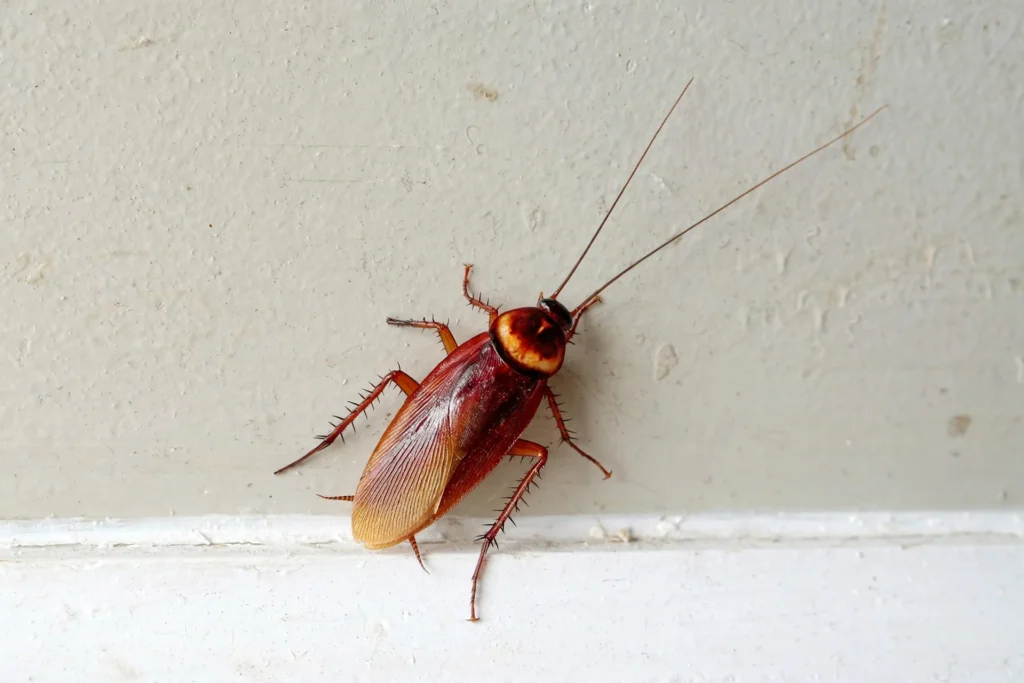
Start with size and location before you buy anything, because the two roaches need opposite plans. German roaches are small, tan, and live in warm kitchens, while American roaches are large, reddish-brown, and come from sewers and drains. If the insect is over an inch long and appears near a drain, it is almost certainly American.
Misidentification is the number one reason Houston homeowners spend and still have roaches. The first step in how to get rid of American cockroaches is to identify the insect, then seal the sewer entries it used. German treatments focus on kitchen baiting, because German roaches live near the stove. Spraying cabinets for a sewer roach is like locking the front door when the intruder comes through the basement drain. That is the core of how to get rid of American cockroaches: identify first, seal second.
| Feature | American cockroach (palmetto bug) | German cockroach |
|---|---|---|
| Size | 1.5–2 inches long | About 1/2 inch long |
| Color | Reddish-brown / mahogany, yellow band behind head | Light tan with two dark stripes behind head |
| Wings | Fully winged, can fly short distances | Wings present but rarely flies |
| Where found | Drains, sewers, basements, garages, mulch | Kitchens, warm appliances, cabinets |

Where Do American Cockroaches Come From?
Most American roaches live outside in mulch, leaf litter, and sewer lines, then slip indoors through floor drains, sewer cleanouts, and gaps around pipes. They follow warmth and moisture, not food crumbs, so a clean kitchen can still see them. Finding several at once near a drain points to a sewer entry, not a nest in your walls.
The sewer system is the main highway. American roaches thrive in the warm, damp dark of municipal sewers, feeding on organic matter. They reach your home through floor drains, dry P-traps, and loose cleanout caps. Understanding how to get rid of American cockroaches means understanding this route: block the sewer path and the roaches stop arriving.
Outside, they harbor in mulch beds, leaf piles, and damp crawl spaces. Keep mulch 12 inches back from the foundation — a small, cheap part of how to get rid of American cockroaches that actually works. Inside, they favor boiler rooms and laundry rooms, and they do not need your food: a leaking pipe is enough, which is why the what attracts cockroaches guide starts with moisture before food.

Why Do They Appear After Rain?
Heavy rain floods sewer lines and pushes roaches out through the path of least resistance, which is often your floor drain. A sudden surge of several large roaches within a day or two of a storm is a sewer-pressure event, not proof of a hidden colony. The fix is sealing entry points and cutting moisture, not spraying the whole house.
Houston homeowners know the pattern: a storm rolls through, the sewers surcharge, and the next morning there are large roaches in the bathroom. It feels like an invasion, but it is a displacement — rising water forces roaches up through floor drains and cleanouts. They are escaping the flood, and that changes the whole approach to how to get rid of American cockroaches.
A structural infestation needs baiting, but a rain surge needs exclusion. A broad spray after a surge kills the roaches you can see and does nothing about the open drain. After a surge, note where each roach appeared and refill dried P-traps. If surges repeat after every storm, the entry may be a cracked sewer line — a job for a plumber or a pest professional.
How Do You Seal Drains and Pipe Gaps?
Start with the drains. Fit a mesh drain cover on every floor drain, especially in the basement and laundry room, and run water into little-used drains weekly so the P-trap never dries out. A dry P-trap is an open door from the sewer: the water seal is the only barrier between your bathroom and the sewer line. Replace loose cleanout caps and caulk around the pipe penetrations under sinks.
Sealing pipe gaps is the other half. American roaches follow pipes the way mice follow walls — a 1/8-inch gap around a supply line is wide open. Caulk small gaps, foam larger ones, and fit escutcheon plates flush against the wall. These are cheap, one-time fixes that reduce how to get rid of American cockroaches to a maintenance task rather than a recurring war.
PRO TIP:
After you seal a drain, mark the date on your calendar. If roaches reappear within two weeks, the entry is not the drain you sealed — it is another one. Check the washer drain and the floor drain in the utility room before you blame the bait.

What Bait Works for American Cockroaches?
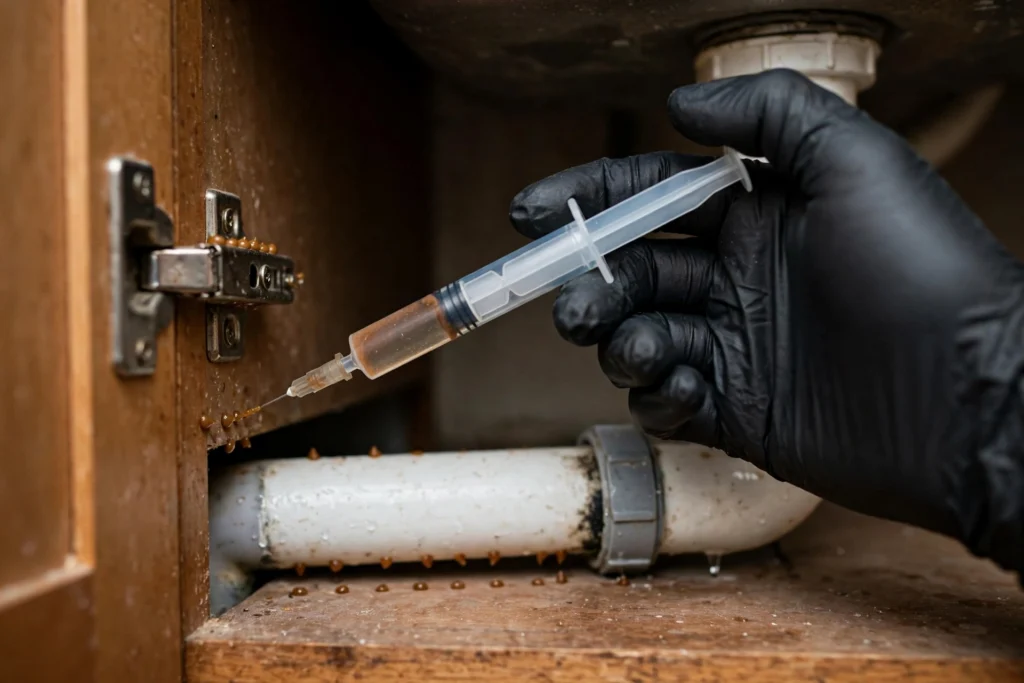
Gel bait is the most effective option for American roaches — fipronil or hydramethylnon-based gels applied as pea-sized dots in cracks, behind appliances, and along pipe runs. The roaches eat the bait, return to their harborage, and die there; nestmates feeding on the remains get a secondary dose. This is the slow, thorough mechanism that sprays cannot match: the bait travels back to the harborage, and the spray only reaches what you can see.
The bait vs spray comparison for American roaches is the same as for other roaches: bait is the better tool, because American roaches are spread across a wide harborage, not gathered in one cabinet. Gel bait works where the roaches actually travel — along pipes, under sinks, and inside wall voids — and it stays active for weeks rather than minutes.
| Bait type | Where to place it | Notes |
|---|---|---|
| Gel bait (fipronil) | Cracks, pipe runs, behind appliances | Pea-sized dots; reapply monthly |
| Gel bait (hydramethylnon) | Same as above | Slower kill, good for large harborage |
| Bait stations | Along walls, near drains | Child- and pet-safe placement |
| Boric acid dust | Wall voids, under appliances | Use sparingly; keep dry |
Place bait where the roaches travel, not where you last saw one — along pipe runs, behind the water heater, and in the dark gap behind the washer. Do not spray insecticide near your bait placements: the spray repels roaches from the bait, and the bait is the weapon. Keep bait away from pets and children by placing it in cracks and voids they cannot reach. Reapply monthly until two full months pass with no sightings.
How Do You Keep Them Out of the Kitchen?
American roaches enter the kitchen through the sink and dishwasher drains, not the pantry. Fix a slow drain, run water into the dishwasher drain weekly, and seal the gap where the dishwasher line meets the wall. Store dry goods in sealed containers — not because roaches eat them first, but because a sealed pantry removes the food that keeps a stray roach alive long enough to find the drain again.
The kitchen is where most people first notice American roaches, but it is rarely where they live. They arrive through the drains and leave through the same route, so the kitchen is a hallway, not a home. That is why cleaning the kitchen alone never solves an American roach problem: the roaches are not living in your kitchen, they are passing through it on their way from the sewer.
Wipe down the sink area nightly, keep the garbage disposal clean, and fix any leak under the sink the same day you notice it. A single slow drip under the kitchen sink creates a permanent water source that keeps roaches returning even after you seal the drains. Dry the sink before bed — a dry sink overnight removes the one thing that draws them up from the pipes.
How Long Until They Are Gone?
With drains sealed and gel bait placed, expect visible roaches to drop sharply within 2–4 weeks, and full control in 6–8 weeks. American roaches are slower to clear than German roaches because their harborage is spread across the sewer system, not gathered in one cabinet — so do not declare victory after one quiet week. Keep bait fresh for two full months after the last sighting.
The timeline depends on the entry point. A single drain-seal fix can stop a rain surge in days. A structural harborage in a wall void or crawl space takes the full 6–8 weeks of baiting, because the bait must work its way through the population. If you are still seeing roaches after 8 weeks of sealed drains and fresh bait, the entry is one you have not found yet — check the washer drain, the water heater closet, and the floor drain in the utility room.
PRO TIP:
Keep a simple log: date, room, and how many roaches you saw. A falling count over four weeks means the bait is working even if you still see the occasional roach. A flat count means the entry point is still open — re-check the drains before you buy more bait.
When Should You Call a Pro for American Cockroaches?
Call a professional if you see roaches daily for more than two weeks despite sealed drains and fresh bait, if they appear in multiple rooms at once, or if you suspect a cracked sewer line. A pro can camera-inspect the sewer line, treat wall voids, and place bait where you cannot reach. For Texas homeowners, a local pest control professional can handle sewer-line inspections and whole-house treatment — the kind of job where the entry point matters more than the spray.
The threshold is persistence, not numbers. One roach after a storm is a displacement event. Five roaches a week for a month is a structural problem, and a structural problem needs a professional’s tools: sewer cameras, wall-void dusting equipment, and access to commercial bait formulations. Do not keep spraying over the bait — call before the problem spreads to the neighbors’ units or the attic.
Frequently Asked Questions
Are American cockroaches dangerous?
American cockroaches are not venomous and do not bite people, but they carry bacteria from sewers onto food surfaces. They can trigger allergies and asthma in sensitive people. The health risk comes from contamination, not from the roach itself.
Do American cockroaches fly?
Yes, American cockroaches can fly — males more readily than females. They usually glide from high perches rather than flying long distances. Indoors, they mostly run, so a flying roach is usually one that was startled.
What is the difference between a palmetto bug and an American cockroach?
They are the same insect. “Palmetto bug” is the common Southern name for the American cockroach, used because the name sounds less alarming. A palmetto bug is an American cockroach, full stop.
How do I keep American cockroaches out of my kitchen?
Seal the sink and dishwasher drains, fix leaks under the sink the same day, run water into little-used drains weekly, and store dry goods in sealed containers. The drains are the entry — the kitchen is the hallway, not the home.
Does boric acid kill American cockroaches?
Yes, boric acid dust kills American cockroaches when they walk through it and groom it off their legs. Use it sparingly in dry wall voids and under appliances, and keep it dry — wet boric acid does not work. Keep it away from pets and children.
How long does it take to get rid of American cockroaches?
With drains sealed and gel bait placed, expect a sharp drop in sightings within 2–4 weeks and full control in 6–8 weeks. Keep bait fresh for two full months after the last sighting, and re-check drains if sightings stay flat.
Final Thought
American cockroaches look alarming, but they are a plumbing problem with a pest solution: seal the sewer path, cut the moisture, bait where they travel, and give it time. The roaches that surge after rain are escaping a flood, not invading your home — and the ones that keep coming back are following a drain you have not sealed yet. Find the drain, fix the water, and the roaches stop arriving.