Signs of Bats in Your House: The 5 Clues That Give Them Away
TL;DR
The signs of bats in house are small piles of dark droppings in one spot, squeaking or scratching at dusk, greasy smudges around a roofline gap, and a sharp ammonia smell in the attic. Bats are protected wildlife in many states, so the fix is exclusion — one-way devices that let them out and block their return — never killing, and never sealing holes during maternity season (May to mid-August).

Something is moving in the attic, and it only happens at dusk. The signs of bats in house are easy to miss because bats are quiet, nocturnal and small — a colony can live above your bedroom for months before you notice anything at all. But bats leave evidence, and this guide walks through the signs of bats in house one by one: droppings piled in one place, sounds that start at dusk and fade, a greasy smudge where they squeeze in and out, and a smell that builds through the summer. Prices below are rough planning estimates, not quotes.
The first rule is the most important one: bats are protected wildlife in many states, and the only legal and effective removal is exclusion — one-way devices that let bats fly out at dusk and stop them coming back. If you are not sure whether the animal is a bat or a mouse, read our guide to what is the difference between a mouse and a rat first — the droppings and the sounds are different, and the fix is different too.
What Are the Signs of Bats in House?
The signs of bats in house are small piles of dark droppings in one spot, squeaking or scratching at dusk, greasy smudges around a roofline gap, and a sharp ammonia smell in the attic. Bats leave at dusk to feed, so the sounds start in the evening and fade. Two signs together mean bats.
No single clue proves bats on its own. Droppings could be mice, a smell could be a dead animal — but the signs of bats in house stack up in a pattern that mice do not match: the droppings pile in one place instead of scattering, the sounds start at dusk and then stop, the smudge sits at a roofline gap rather than along a baseboard, and the smell is sharp ammonia rather than the musky odour of a mouse nest. Two or more of these together, in the same part of the house, is a strong case for bats — and the signs of bats in house are most convincing when two of them point at the same attic.
How Do Bat Droppings Differ From Mouse Droppings?
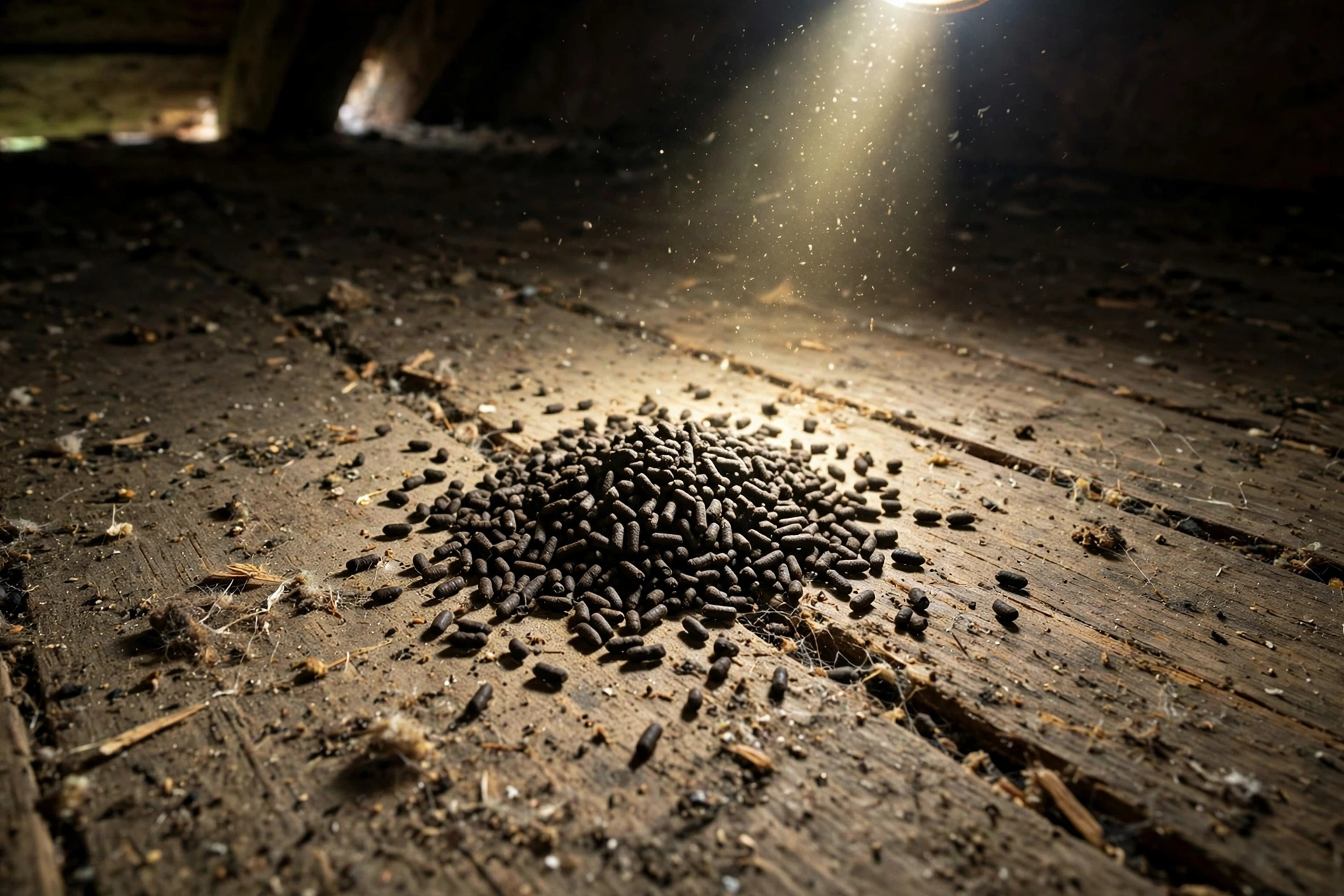
Bat droppings are small, dark, rice-grain-sized pellets that crumble into powder when you press them, and they often contain shiny bits of insect wings. Mouse droppings are larger, harder, and keep their shape when pressed. Bats also drop their waste in one pile below a roost, while mice scatter theirs along runways.
The pile is the giveaway, and it is the first of the signs of bats in house most people actually find. Bats return to the same roost night after night, and their droppings — called guano — collect in one spot below it: on the attic floor, on a windowsill, or on a porch below a vent. If you found one neat pile, think bats; if you found pellets scattered across the kitchen, think mice. Press a pellet with a gloved finger or a stick: a bat dropping crumbles into dry powder with shiny specks, while a mouse dropping is harder and keeps its shape.

| Feature | Bat droppings (guano) | Mouse droppings |
|---|---|---|
| Size | 1/8–1/4 inch, rice-grain | 1/8–1/4 inch, rice-grain |
| Shape | Elongated, blunt ends | Pointed ends |
| Texture | Crumbles to powder, shiny insect bits | Hard, keeps shape when pressed |
| Location | One pile below the roost | Scattered along runways |
PRO TIP
Do the crumble test with a stick, not your fingers — and wear gloves and a mask. Dry guano dust can carry histoplasmosis spores, so never sweep or vacuum a pile dry. Mist it lightly with water first, or leave the cleanup to a pro.
What Sounds Do Bats Make in a House?
Bats make high-pitched squeaks, chirps and soft scratching sounds, mostly at dusk when they wake and leave to feed. The noise starts in the evening, fades during the night, and returns briefly before dawn. Mice, by contrast, gnaw and scurry through the night, so the timing of the sound is your best clue.
Stand in the room below the attic at dusk and just listen. Bats wake as the light fades, and for twenty to forty minutes you may hear faint squeaking, chirping and a soft rustling as they shuffle toward the exit — then it goes quiet, because they are out hunting, and just before dawn there is a short burst of the same sounds as they return. That dusk-then-quiet pattern is one of the subtlest signs of bats in house, and it is the opposite of mice, which gnaw and run in bursts all night. If you hear scratching at 2 a.m., it is probably not bats; if you hear it at 8 p.m. and then nothing, it probably is.

What Do Bat Entry Stains Look Like?
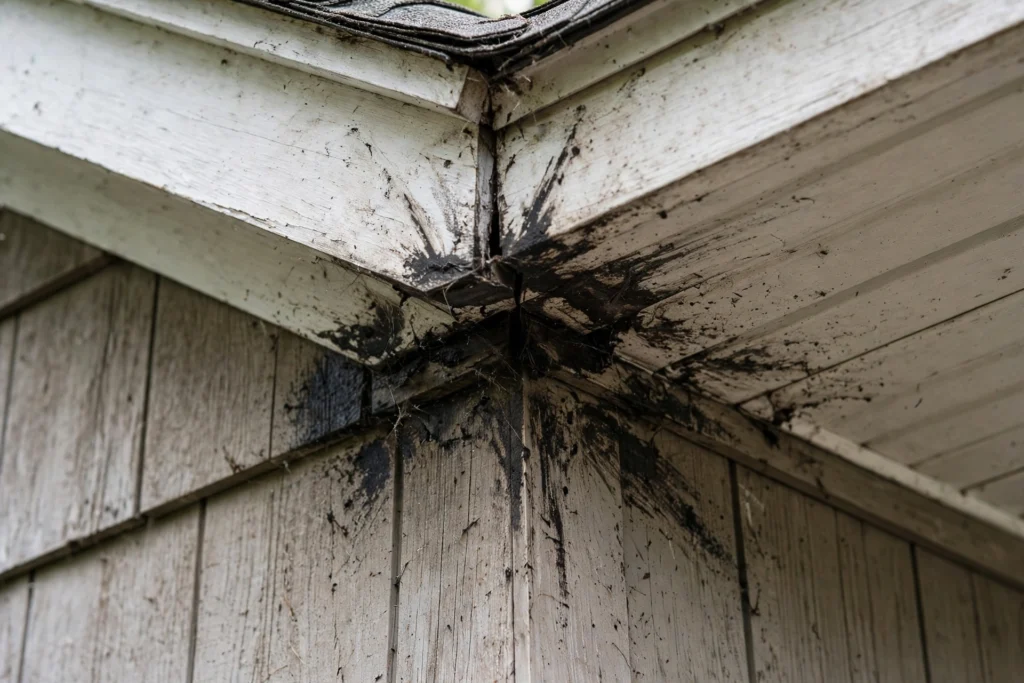
Bat entry stains look like dark brown or charcoal-grey greasy smudges around a small hole near the roofline, eave or vent. The stain comes from oils in bat fur rubbing the same spot every night. A fresh stain looks wet and dark; an old one looks dry and faded. The hole itself may be no wider than a coin.
Walk the outside of the house at dusk and look up. The stain sits where the bats enter and leave: around a gap in the fascia, under a loose shingle, at a vent that has lost its screen, or where a dormer meets the roof. It is a dark, greasy smudge, often with a slight sheen, and it follows the shape of the hole — and it is one of the most reliable signs of bats in house, because mice do not leave smudges at the roofline. Do not block the gap yet: blocking an entry while bats are inside turns a small job into a dead-animal problem in the walls. A stained gap is one of the most visible signs of bats in house.
What Does a Bat Roost Smell Like?
A bat roost smells sharp and stale, like ammonia mixed with old urine, and the smell grows stronger on hot, still days. It comes from urine and droppings building up in one place, usually the attic. If the smell is strongest near the ceiling below the attic, the roost is probably directly above that spot.
The smell is the last of the signs of bats in house most people notice, because it builds slowly — a few bats make almost no smell, but a colony that has used the same attic all summer makes a sharp, stale ammonia smell that gets worse when the attic heats up. If the smell is worst on hot afternoons and fades on cool days, that is a roost smell, not a plumbing smell, and smell plus a droppings pile in the same attic is one of the clearest signs of bats in house. The urine also stains: look for dark streaks on the attic insulation or on the ceiling drywall below the roost.

How Small a Gap Can a Bat Squeeze Through?
A bat can squeeze through a gap about a quarter of an inch wide — roughly the width of a pencil — because its skull is small and its body folds flat. That is why bats enter through gaps around vents, chimneys, loose flashing and rooflines. Any gap a mouse can use is more than wide enough for a bat.
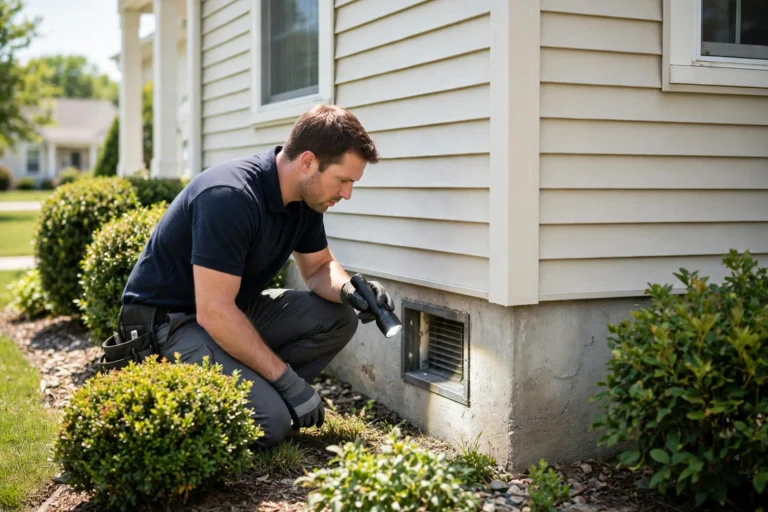
This is the fact that surprises most homeowners, and it is also why the signs of bats in house are so easy to miss: a quarter inch is the gap under a loose piece of fascia, the crack where a vent screen has pulled away, the space around a pipe where the caulk has dried out, or the slot where a chimney meets the roof. Check the usual spots with a flashlight and a mirror: the ridge vent, the gable vents, the soffit joints, the chimney flashing, the gap behind a gutter, and any place two building materials meet at the roofline.
| Entry point | What to look for |
|---|---|
| Ridge and gable vents | Missing or torn screens, gaps at the frame |
| Fascia and soffit | Loose boards, gaps where boards meet |
| Chimney flashing | Dried caulk, gaps between flashing and brick |
| Dormers and roof joints | Cracks where two roof planes meet |
| Pipes and wires | Unsealed holes where lines enter the attic |
What Should You Never Do With Bats in Your House?
Never touch a bat with bare hands, never seal entry holes while bats are inside, and never clean dry droppings without protective gear. Sealing bats in traps them, and pups die in the walls during maternity season. Dry droppings can carry the fungus that causes histoplasmosis, so protective gloves and a mask are not optional.
Breaking any of these rules turns the signs of bats in house into a much bigger problem. First, never handle a bat: a bat on the floor may be sick, and a bite can be so small you barely feel it, so if anyone may have touched a bat, or a bat was in a room with a sleeping person or a child, call your local health department the same day. Second, never seal the holes while bats are inside: trapped bats die in the walls, and the smell and the insects that follow are worse than the bats were. Third, never sweep or vacuum dry guano: wet it down first, wear gloves and a respirator mask, and bag it — or hire the cleanup out entirely. And above all three sits the maternity season rule: never exclude bats from May to mid-August, because flightless pups are in the roost.
PRO TIP
If a bat gets into a living room, do not chase it with a broom. Turn off the lights, open one window and one door, and leave the room for half an hour. Bats follow the air and the dark, and most find their own way out — then find the gap they used and get it sealed after exclusion season.
When Should You Call a Pro for Bats?
Call a wildlife professional when you find droppings, hear dusk sounds or see bats leaving the roofline — and call one first if anyone may have touched a bat. A pro inspects the attic, finds every entry point and installs one-way exclusion devices. Expect a pro inspection to cost $100–$300, with exclusion work running $300–$1,500.
Most bat jobs are pro jobs, and this is the honest reason why: the work happens on a roofline, the animal is protected, the timing is seasonal, and missing one gap out of twelve means the colony comes back. The signs of bats in house are the map the pro works from. A wildlife control pro does an attic inspection, maps every entry point, installs one-way tubes or netting that let bats out at dusk and stop them returning, waits a few nights to confirm the roost is empty, then seals every gap with metal and caulk — and the signs of bats in house are the evidence the pro uses to plan it all. Our guide to signs of voles in yard covers a different kind of yard wildlife if the signs turn out to be outside rather than in the attic.
Frequently Asked Questions
What are the first signs of bats in house?
The first signs are usually a small pile of dark droppings in one spot, faint squeaking at dusk, or a greasy smudge around a roofline gap. Most people notice the sounds first and find the droppings pile when they go up to look.
How can you tell bat droppings from mouse droppings?
Press a pellet with a gloved finger or a stick. A bat dropping crumbles into dry powder and often shows shiny bits of insect wings. A mouse dropping is harder, keeps its shape, and has pointed ends. Bats pile droppings in one spot; mice scatter theirs. That pile is one of the classic signs of bats in house.
Can bats get into a house through a tiny gap?
Yes — a bat can squeeze through a gap about a quarter of an inch wide, roughly the width of a pencil. Check ridge vents, gable vents, loose fascia, chimney flashing and any place two roof materials meet. A pencil-sized gap is one of the easiest signs of bats in house to miss.
What time of year should you remove bats?
Exclusion works best in early spring, before pups arrive, and in late summer into fall, after pups can fly. Never exclude bats from May to mid-August — flightless pups would be left behind to die in the walls.
Is bat guano dangerous to clean up yourself?
Dry guano dust can carry the fungus that causes histoplasmosis, so never sweep or vacuum it dry. Wear gloves and a respirator mask, mist the pile lightly with water first, and bag it. For a large pile, hire the cleanup out to a pro.
What does a bat exclusion job cost?
A pro inspection usually runs $100–$300, and exclusion work runs $300–$1,500 depending on entry points and roof height. Guano cleanup and insulation replacement are priced per job after inspection. Prices are rough planning estimates, not quotes.
Final Thought
The signs of bats in house reward a calm, patient look: a droppings pile in one spot, sounds that start at dusk and fade, a greasy smudge at a roofline gap, and a sharp ammonia smell on hot days. Two of those together mean bats, and the answer is exclusion by a pro, in the right season — never poison, never traps, and never a sealed hole with bats still inside. Learn the signs of bats in house once, and you will spot them in any attic. Check the attic at dusk this week, and if the signs are there, call a wildlife professional before the colony grows through another summer. The signs of bats in house are worth learning before the colony grows.
Author: Marcus Bell writes the pest-control guides for SilkStoneHome, covering identification, safe removal and when to call a pro.