How to Get Rid of Fire Ants in Your Yard: The Texas Two-Step That Works
TL;DR
How to get rid of fire ants? Use the Texas Two-Step from Texas A&M AgriLife: broadcast slow-acting bait over the whole yard so workers carry it to the queen, then treat the worst mounds directly. Sprays and drenches alone fail — the queen sits feet underground and the colony just moves. Timing honesty: the fall bait window (late August to mid-October) is just past, so spot-treat mounds now and broadcast bait in spring.
You stepped on a mound, and now your ankle is covered in burning stings. Red imported fire ants are Texas ground zero — Houston, Dallas, Austin and San Antonio, and the eastern two-thirds of the state — and they are not a pest you manage with a can of spray. How to get rid of fire ants is a yard-wide job, not a mound-by-mound job, because the colony lives underground and the queen is the only target that matters. This guide explains the Texas Two-Step, the method Texas A&M AgriLife recommends: broadcast bait for the queen, direct treatment for the worst mounds, and honest timing about when each step works. Prices below are rough planning estimates, not quotes.
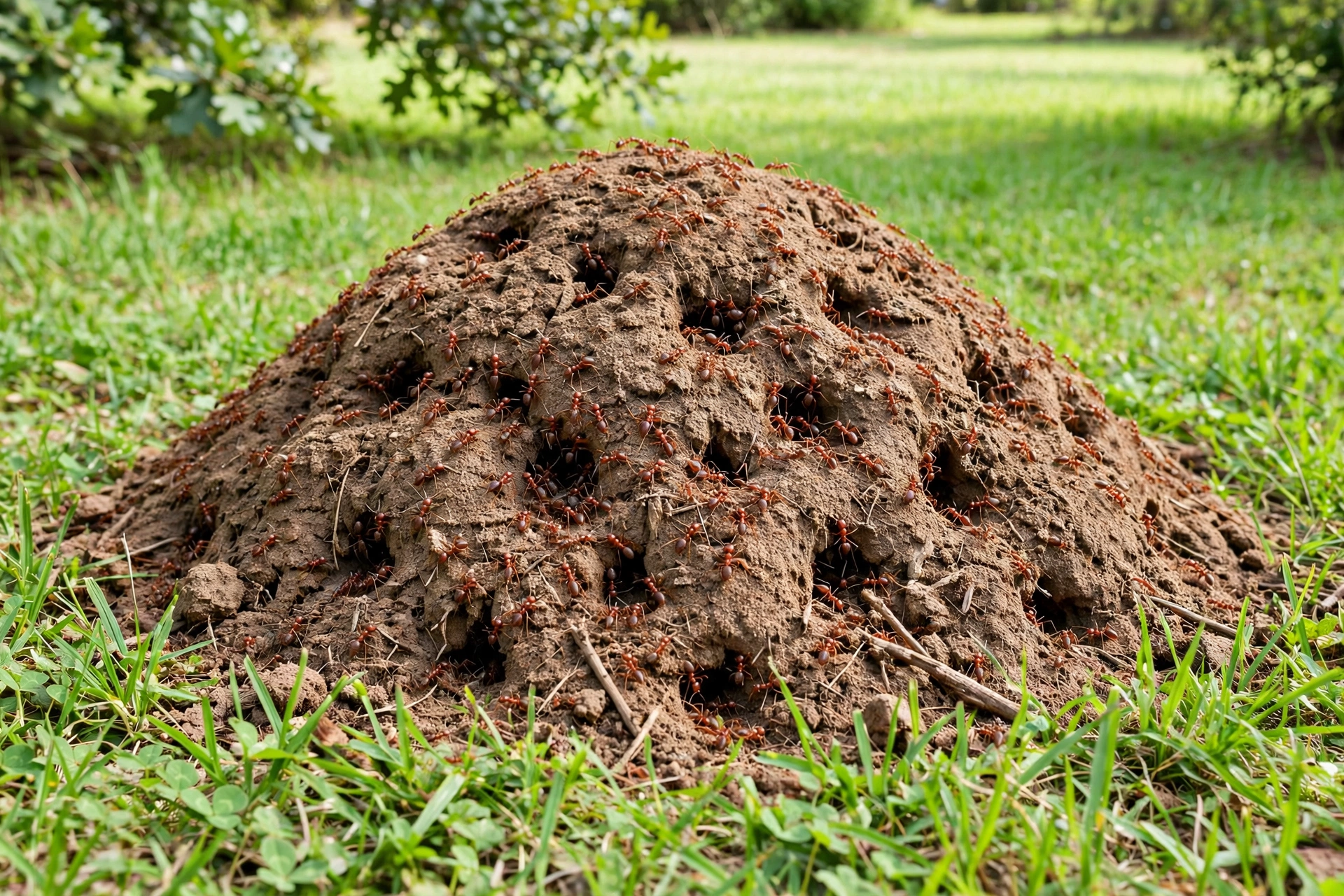
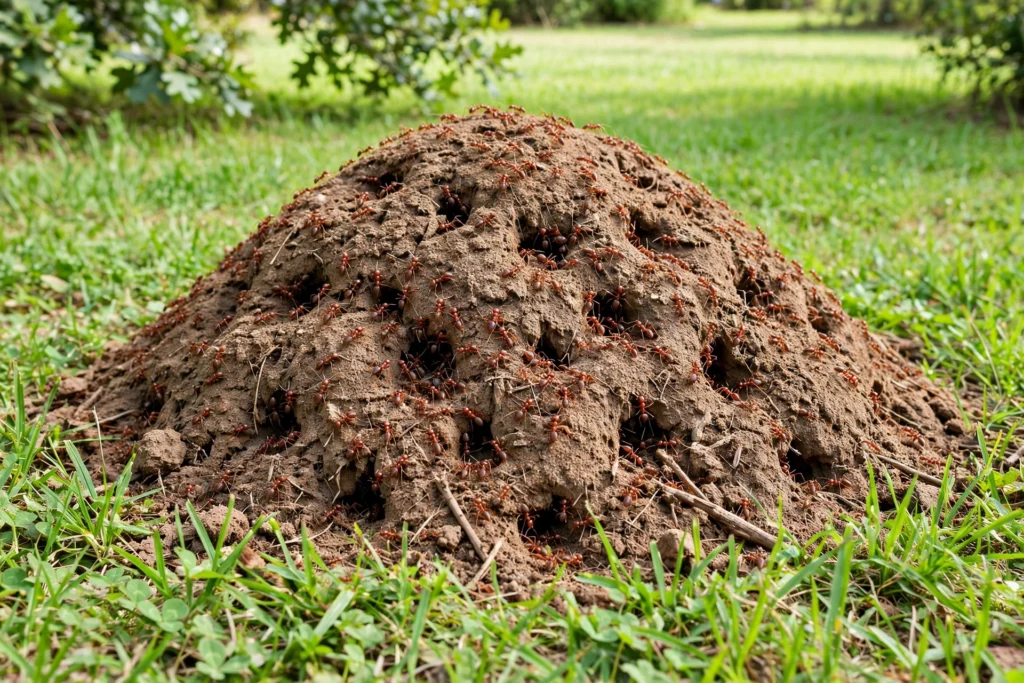
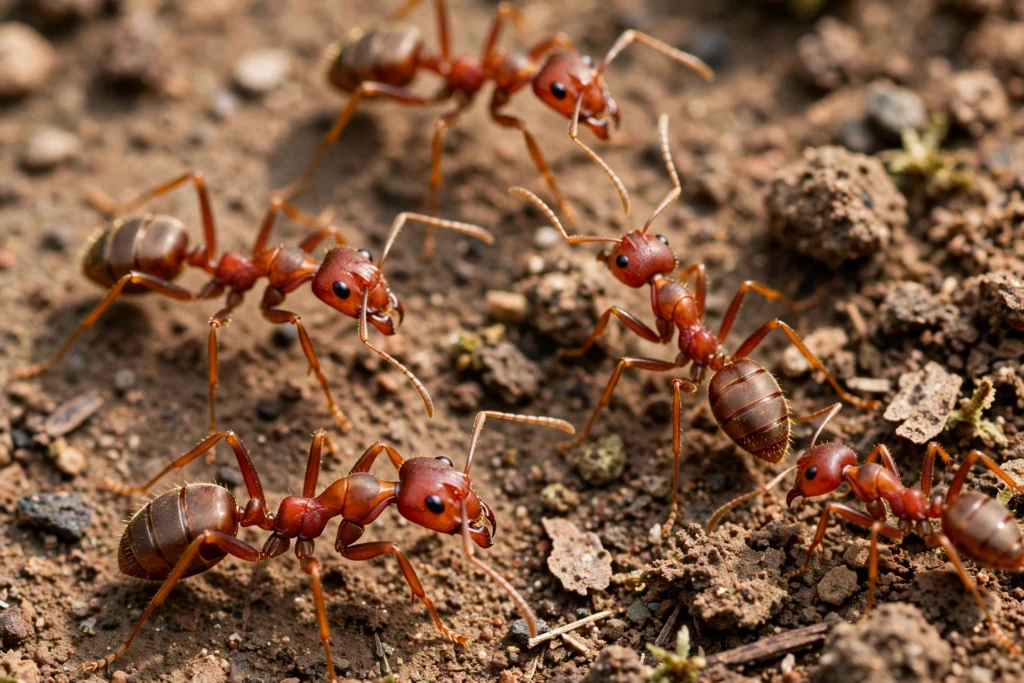
First, make sure they are fire ants — and that check is the first step of how to get rid of fire ants without wasting money on the wrong treatment. Fire ants are reddish brown, an eighth to a quarter of an inch long, and they build loose, fluffy mounds of soft soil with no visible entrance hole — just a dome of dirt that looks like someone dumped a bucket of soil on the lawn. Step near one and they swarm out fast, climb up, and sting in large numbers. The swarm-and-sting response is the giveaway, and it is also why children and pets need to learn to spot a mound before they step on one.
How to Get Rid of Fire Ants: What Is the Texas Two-Step?
The Texas Two-Step is Texas A&M AgriLife’s method for fire ants: first, broadcast slow-acting bait over the whole yard so workers carry it to the queen; second, treat individual problem mounds with a drench or granules. The bait kills the colony, and the mound treatment handles the mounds near doors, play areas and pets.
The two steps do two different jobs, and that is the whole point of how to get rid of fire ants the Texas Two-Step way. Step one is the colony killer: slow-acting bait scattered over the whole yard, which foraging workers pick up and carry deep underground to the queen. The queen eats it, stops laying eggs, and the colony dies over four to six weeks. Step two is the safety job: a drench or granules on the mounds where people actually walk. Neither step works alone: bait alone leaves the door mound stinging for a month, and mound treatment alone leaves the queen laying.
How Do You Tell Fire Ants From Other Ants?
Fire ants are reddish brown, 1/8 to 1/4 inch long, and they build loose, fluffy mounds of soft soil with no visible entrance hole. Disturb a mound and they swarm out fast and sting in large numbers. Other ants build neat mounds with a visible hole, move slowly, and rarely sting — the swarm-and-sting response is the giveaway.
The mound itself is the best field mark. A fire ant mound is a loose dome of soft, crumbly soil, often a foot across, with no hole you can see — the ants enter and leave through underground tunnels. The sting is the second field mark: a fire ant sting burns, then itches, then raises a white pustule that lasts for days. Anyone who has trouble breathing after stings needs help right away, because fire ant venom can cause a serious allergic reaction. Teach children the rule before they learn it the hard way — a dome of soft dirt with no hole is a mound, and you walk around it, never on it — and that rule is the starting point of how to get rid of fire ants without anyone getting hurt. For bait safety around kids and pets, our pet safe ant killer guide covers the same low-toxicity rules that apply to fire ant bait.
Why Do Sprays and Drenches Fail on Fire Ant Mounds?
Sprays and drenches fail because the queen sits several feet underground, and a surface treatment never reaches her. The workers die, the colony looks beaten, and then the queen lays more eggs — or the colony simply moves a few feet away and builds a new mound. Only bait carried to the queen kills the colony itself.
A spray kills the workers on the surface and a drench soaks the top few inches, but neither reaches the queen — and she can lay over a thousand eggs a day. The only treatment that reaches her is one she is fed — slow-acting bait, carried underground by her own workers — and that is the central fact of how to get rid of fire ants.
| Treatment | What it kills | Reaches the queen? |
|---|---|---|
| Spray on the mound | Workers on the surface | No — colony moves |
| Drench on the mound | Workers in the top inches | No — queen is feet down |
| Broadcast bait | The whole colony, slowly | Yes — workers carry it to her |
| Mound granules | Workers in that mound | No — safety job, not colony killer |
How Do You Broadcast Fire Ant Bait Correctly?
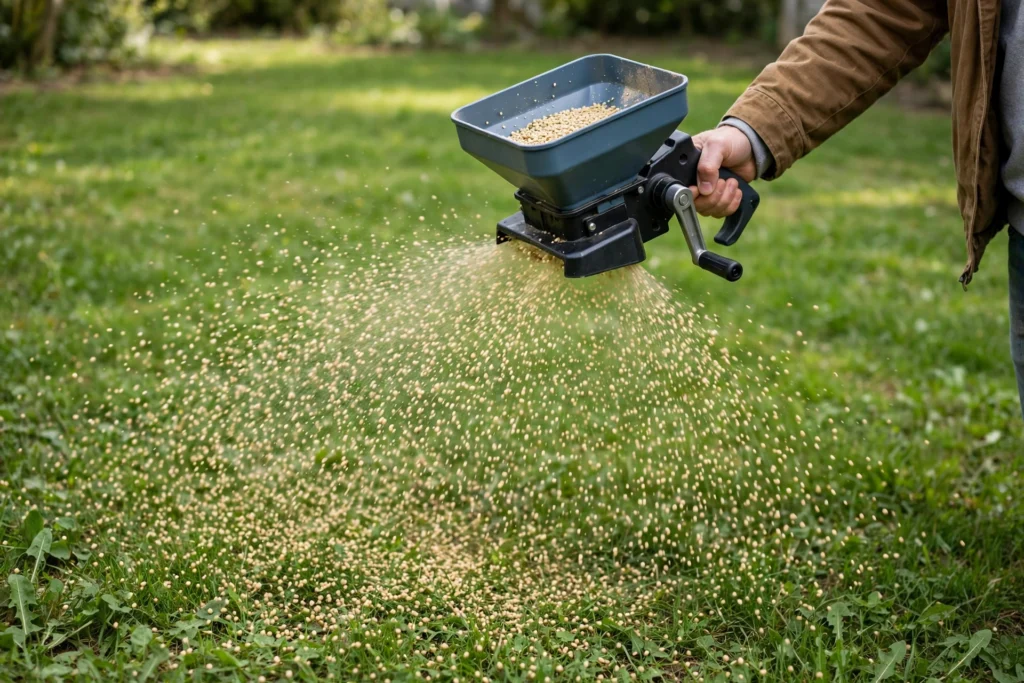
Broadcast bait on a warm, dry day when ants are foraging, using a handheld spreader at the label rate — about one to one-and-a-half pounds per acre. Scatter it evenly over the whole yard, not just on the mounds. Do not water it in, and do not mow or disturb the mounds for two days after.
Bait only works when ants are out foraging, which means warm soil and dry weather — a warm afternoon, not a cold morning and not a rainy day. Scatter the bait over the whole yard, not just on the mounds. Do not water it in, and do not mow or disturb the mounds for two days after broadcasting. Expect four to six weeks before the colony dies — that wait is the hardest part of how to get rid of fire ants, and it is also the proof the bait is working, because a slow death means the poison reached the queen.
PRO TIP
Test whether the ants are foraging before you broadcast: set a small pile of bait near a mound and watch for ten minutes. If workers pick it up and carry it away, the conditions are right. If they ignore it, wait for a warmer, drier day.
Which Mounds Need Direct Treatment Right Away?
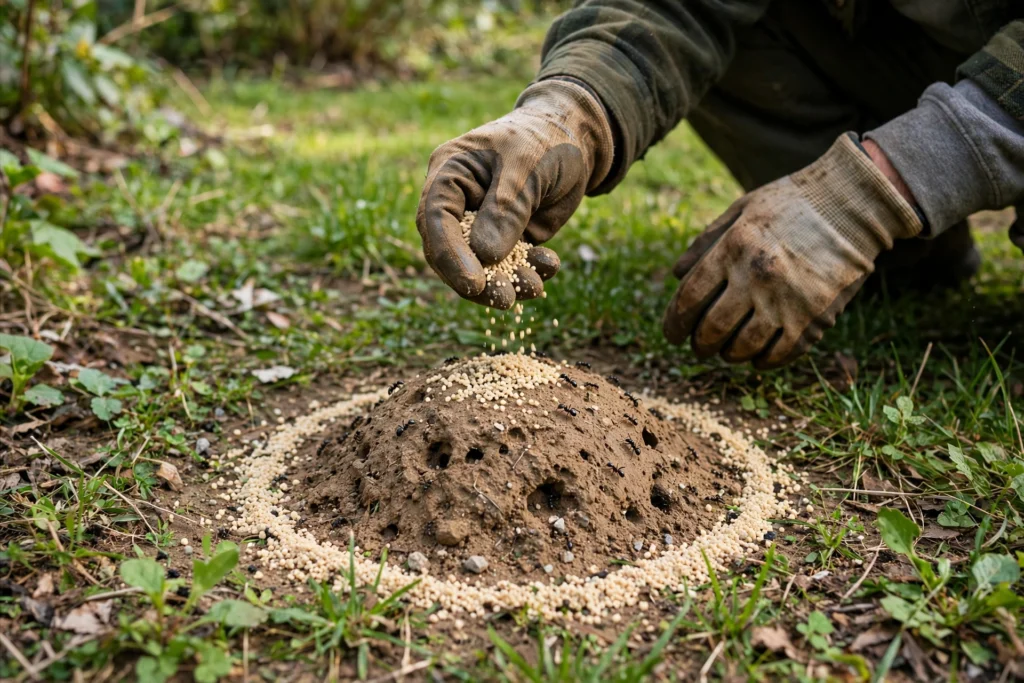
Treat directly any mound near a door, a walkway, a play area, a pet’s run or a vegetable bed — anywhere people or animals step without looking. Mounds in the middle of an open lawn can wait for the broadcast bait to work. Direct treatment is for safety and speed, not for killing the colony; the bait does that job.
List one is the danger list: the mound by the back door, the one on the path to the mailbox, the one in the middle of the kids’ play area, the one in the dog’s run. Direct treatment is a safety measure, not a colony killer: the drench kills the workers in that mound, but the queen is feet below. That safety job is the second half of how to get rid of fire ants. Do not mistake a dead mound for a dead colony — and that distinction is the part of how to get rid of fire ants that protects people while the bait does the real work.
When Is the Best Time to Treat Fire Ants in Texas?
The best time to treat fire ants in Texas is spring and fall, when the soil is warm and ants are foraging — AgriLife’s fall bait window runs late August to mid-October. In November the ants are slowing down, so spot-treat the worst mounds now and save the broadcast bait for spring. Bait takes four to six weeks to work.
This is the honest timing, and it matters more than any product choice — and that honesty is what makes how to get rid of fire ants a calendar job, not a product job. AgriLife’s fall window, late August to mid-October, is the last good baiting weather of the year, and by mid-November the ants are slowing down, foraging less, and bait left out in the cold goes uneaten. So the November plan is a split plan: spot-treat the dangerous mounds now, and broadcast bait in spring. Mark the calendar for the first warm weeks of spring, and treat the yard then, when the bait will actually be carried to the queen — because timing is the half of how to get rid of fire ants that no product can replace.
| Season | What to do | Why |
|---|---|---|
| Spring | Broadcast bait over the whole yard | Warm soil, heavy foraging, queen is laying |
| Fall (late Aug–mid-Oct) | Broadcast bait — AgriLife’s fall window | Colony is storing food, bait gets carried deep |
| November (now) | Spot-treat dangerous mounds only | Ants are slowing; save broadcast bait for spring |
| Winter | Watch, map new mounds | Colonies are quiet; plan the spring broadcast |
Are Fire Ant Baits Safe Around Kids and Pets?
Fire ant baits are low-toxicity by design — the active ingredient is used in tiny amounts, and the bait is carried underground, not eaten by pets. Keep kids and pets off the lawn until the granules have been carried in, usually a day. Store bait sealed and out of reach, and use drenches only on mounds away from play areas.
The safety of bait comes from its design: the poison is slow-acting and used in very small amounts — and that design is why how to get rid of fire ants with bait is safer than with sprays. A pet that eats a mouthful of granules is unlikely to be harmed, but keep kids and pets off the lawn until the granules have been carried underground, usually within a day. Drenches stay on the surface longer, so use them only on mounds away from play areas and keep pets off until the area is dry. If anyone in the house has a known sting allergy, keep an epinephrine injector within reach during yard work.

PRO TIP
Mow the lawn the day before you broadcast, not the day after. Short grass lets the granules reach the soil where foragers pick them up, and a fresh mow two days after broadcasting scatters uneaten bait before the ants have finished carrying it in.
When Should You Call a Pro for Fire Ants?
Call a pro when mounds keep returning after two bait rounds, when the yard is large or heavily infested, or when anyone in the house has a sting allergy. A pro runs a yard-wide bait program on a schedule and treats the mounds you cannot reach. Expect a pro yard program to cost $100–$300 per visit, with follow-ups.
If you broadcast in spring, spot-treated the danger mounds, waited six weeks, and the mounds are back in the same places — or new ones keep appearing along the fence line — the colony is bigger than a homeowner program can reach, or new queens are flying in from neighbouring yards, and that is when how to get rid of fire ants becomes a pro job. The allergy case should not wait for two rounds: if anyone has had a serious reaction to a sting, hire the program out. For DFW yards, exterminatorgrandprairie.com runs yard-wide fire ant programs on a schedule.
Frequently Asked Questions
How long does it take to get rid of fire ants?
Bait takes four to six weeks to kill a colony, because the poison has to be carried underground to the queen. That slow death is the proof of how to get rid of fire ants.
Can you get rid of fire ants without bait?
No — not the colony. Sprays and drenches kill the workers on top and leave the queen laying eggs feet below, so the colony moves a few feet away and rebuilds. Only slow-acting bait, carried underground by the workers themselves, reaches the queen — and that is why how to get rid of fire ants always comes back to bait.
Are fire ant mounds dangerous for dogs?
Yes. Dogs step on mounds, get swarmed, and can suffer dozens of stings at once — especially on the belly, paws and face. Keep dogs off the lawn for a day after broadcasting bait, and call a vet if a dog is stung many times.
What is the best fire ant bait?
A slow-acting broadcast bait applied over the whole yard at the label rate. The brand matters less than the timing: bait in spring or in AgriLife’s fall window (late August to mid-October), when the ants are carrying food underground to the queen — that timing is the heart of how to get rid of fire ants.
Should you water in fire ant bait?
No. Water ruins bait granules — they go stale and the ants ignore them. Wet bait is the most common reason how to get rid of fire ants fails. Broadcast on dry grass, do not water for two days, and do not mow or disturb the mounds for two days after. If rain is forecast within 48 hours, wait for a dry stretch.
How much does pro fire ant treatment cost?
A pro yard program usually runs $100–$300 per visit, with follow-ups through the season. Prices are rough planning estimates, not quotes — and that gap is why most homeowners try how to get rid of fire ants themselves before calling a pro.
Final Thought
How to get rid of fire ants is not a spray-and-done job — it is the Texas Two-Step, done on the right calendar. Broadcast bait so the workers carry it to the queen, treat the dangerous mounds directly so nobody gets stung while the bait works, and be honest about November: spot-treat now, save the broadcast for spring, and re-bait every year, because new queens will always fly in. That calendar is the whole of how to get rid of fire ants.
Author: Marcus Bell writes the pest-control guides for SilkStoneHome, covering identification, safe removal and when to call a pro.