Bait vs Spray for Roaches: Why Spraying German Roaches Backfires
You spot one at midnight — a German roach sprinting for the gap under the fridge. You grab the spray can and go to war: baseboards, cracks, behind the stove. For a week, silence. You won.
Then they’re back — inside the dishwasher door, behind the microwave, in rooms you never saw them before. The infestation didn’t die. It moved deeper, into harborages you can’t reach, and the survivors are warier of every chemical you own.
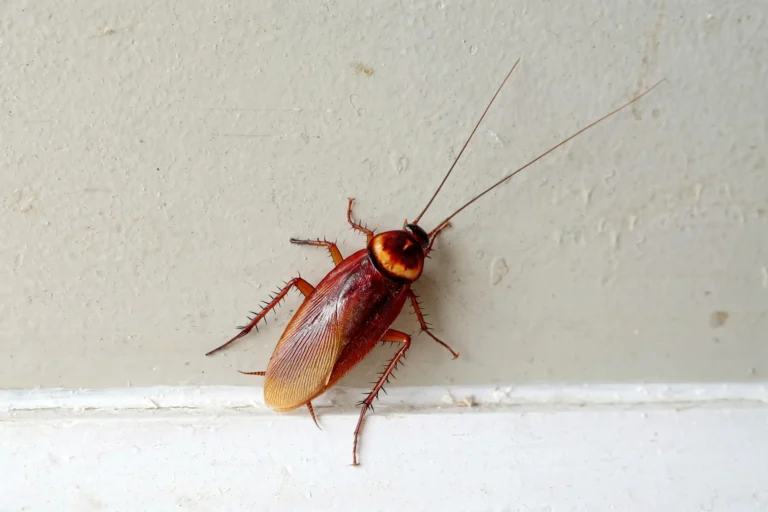
This is the most common mistake in roach control: with German roaches — the small, fast-breeding species behind most home infestations — a repellent spray doesn’t solve the problem. It scatters it. Here’s why bait-first beats spray-first, and how to run a bait program that finishes the job.
TL;DR: Sprays kill the roaches you see but scatter the colony deeper into wall voids and appliances — German roaches detect repellent residues and avoid them, while egg cases survive untouched. Gel baits work the opposite way: roaches eat the bait, return to the harborage, and poison the colony through shared food and contact (secondary kill). Use pea-sized bait placements near harborages, remove competing food and water, never spray over your bait, and rotate active ingredients if activity persists past 3–4 weeks. Keep all pesticides away from kids and pets, and call a pro for heavy, multi-room infestations.
How the Two Weapons Actually Work
Sprays and baits aren’t two versions of the same thing — they attack from opposite directions.
Contact and residual sprays
Most over-the-counter roach sprays are pyrethroid-based (actives ending in “-thrin”). They kill on direct contact and leave a residue meant to keep killing for weeks. The flaw: German roaches detect that residue and avoid it — they walk around it or abandon the harborage for a new one deeper in the structure.
Gel baits
Gel baits are food laced with slow-acting insecticide (fipronil, hydramethylnon, indoxacarb, abamectin). The roach eats, returns to the harborage, and dies hours later — after spreading the toxicant through droppings and cannibalism. This secondary kill is why baits clear infestations instead of thinning them: one feeding roach can kill dozens it never met.
| Repellent spray | Gel bait | |
|---|---|---|
| How it kills | Contact + residue | Ingestion + secondary transfer |
| Speed | Minutes (the ones you hit) | Days to weeks (the whole colony) |
| Effect on colony | Scatters survivors deeper | Collapses the harborage |
| Egg cases | Untouched | Nymphs die when they emerge and feed |
| Resistance risk | High — survivors breed | Lower — delayed action, rotation |
| Biggest mistake | Spraying harborages directly | Spraying near bait (contaminates it) |
Why Spraying German Roaches Backfires
1. Repellency scatters the colony
German roaches aggregate in harborages — tight, warm, humid cracks near food and water — drawn by aggregation pheromones in their droppings. A repellent spray’s residue screams “danger” to every roach that encounters it. The colony fragments: instead of one harborage behind the fridge, you get five — inside the dishwasher insulation, behind the microwave, under the sink, in a wall void. Each new harborage is harder to reach than the last, which is why the infestation always seems worse a month after a heavy spray campaign.
2. The survivors get harder to kill
Every spray campaign selects for survivors: the roaches most averse to the residue, or most resistant to the chemistry, live to breed. German roaches reproduce fast — one egg case holds 30–40 eggs, and females produce a new case every few weeks. A few generations of spray-and-survive breeds a population genuinely harder to kill. Baits sidestep this: delayed action means roaches never associate bait with death, and rotating actives keeps selection pressure low.
3. Sprays can’t touch the next generation
No contact spray penetrates a German roach egg case. The female carries it for weeks, then deposits it in a protected crack. Spray the adults all you want — in 3–4 weeks, 30–40 nymphs emerge per case and the cycle restarts. That’s the classic “came back worse” timeline: hidden cases hatch on schedule, and the population is younger, hungrier, and spread across the new harborages your spray created. Baits break the cycle because emerging nymphs feed on bait — and on contaminated droppings and corpses — as soon as they forage.
PRO TIP
If you’ve already sprayed heavily, wait 2–3 weeks before starting a bait program, and wipe down old residue where you’ll place bait. Fresh spray residue repels roaches away from your placements — the two methods actively sabotage each other.
How Gel Baits Actually Clear an Infestation
The magic is delayed mortality plus the roach’s own social behavior. A foraging roach eats your bait dot, returns to the harborage, and dies hours later — after leaving toxic droppings nymphs eat, being cannibalized by colony-mates, and possibly sharing bait by regurgitation. The harborage itself becomes the delivery system.
That’s why bait goes near harborages, not mid-room: you’re seeding the colony’s home with a slow poison it distributes for you. Expect reduced activity in 1–2 weeks and colony collapse in 4–8 weeks, depending on infestation size and sanitation.
Sanitation is baiting’s unsung half. Baits compete with every crumb, grease film, and pet-food bowl in the kitchen — the less competing food, the more attractive your bait. Wiping counters nightly, sealing dry goods, taking out trash, and fixing drips (roaches need water more urgently than food) can easily double bait effectiveness.
A Bait Placement Strategy That Works
Where to put it
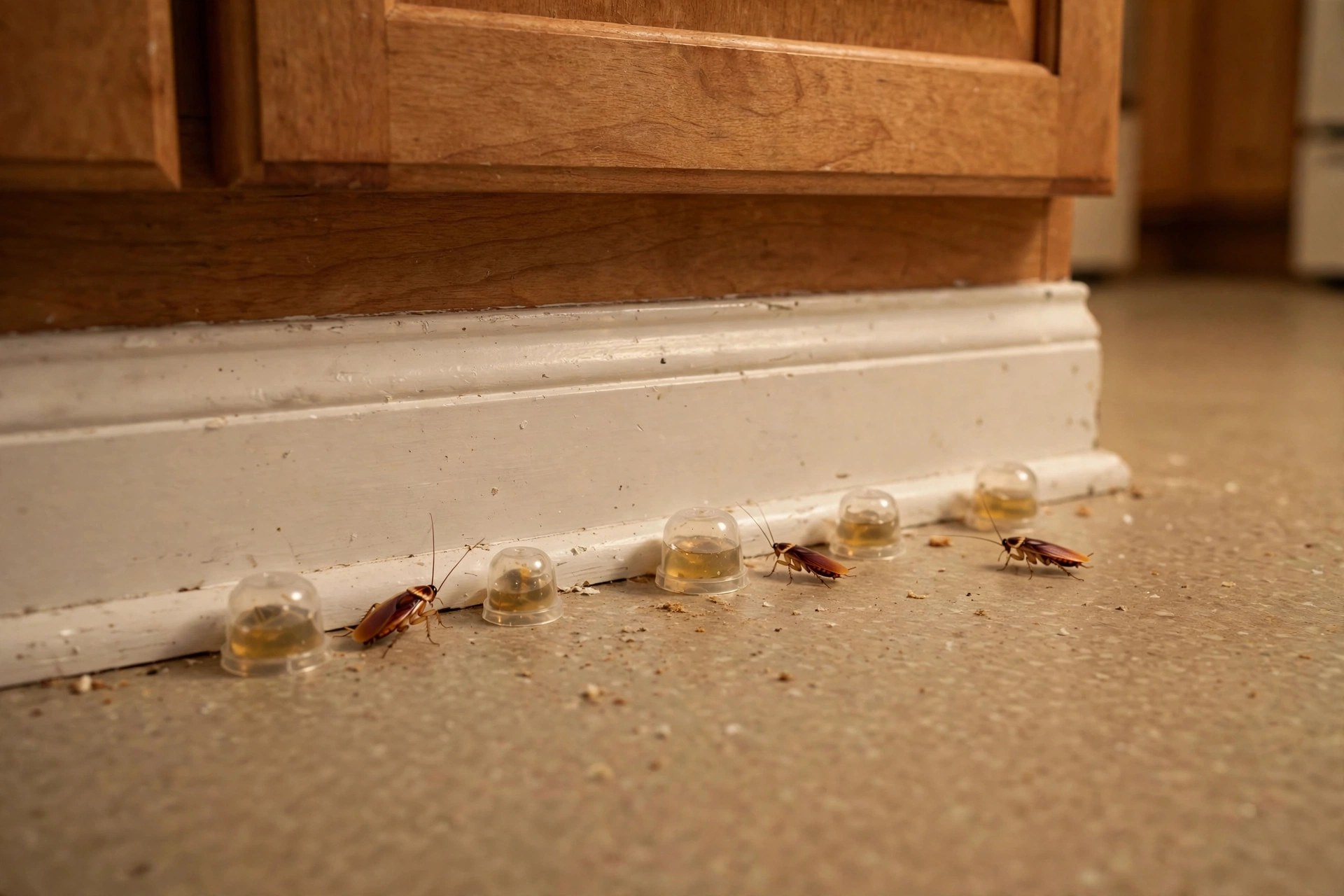
Think like a roach: warm, dark, tight, near food and water. Prime spots include fridge and dishwasher hinges, under-sink cabinet corners, behind the stove, under the microwave, inside cabinet false bottoms, behind the toilet, and along pipe chases. Place bait within a foot or two of these zones — close enough to be found, accessible enough to monitor.
How much and how
Pea-sized dots, every 6–12 inches along edges with droppings or activity. More small placements beat fewer big globs — roaches encounter bait sooner, and eaten placements map where the colony actually lives. Check weekly: replace eaten or dried-out bait (most gels dry out in 1–3 months), relocate untouched dots. Declining bait consumption over 3–4 weeks is your best sign the colony is collapsing.
Rotate the active ingredient
If activity persists past 3–4 weeks of solid baiting, the colony may be avoiding that bait matrix or active ingredient. Switch to a different active — fipronil to indoxacarb, for example — rather than applying more of the same.
PRO TIP
Run a flashlight and sticky monitoring traps for a week before baiting. The traps show where activity is heaviest, so first placements land in the right spots instead of scattered hopefully around the kitchen.
PRO TIP
Bait in the evening. German roaches forage at night — fresh bait placed after dinner gets discovered within hours, while morning-placed bait sits drying all day before the night shift clocks in.
The One Place Sprays Still Belong
Non-repellent sprays — chemistry roaches can’t detect, so they cross treated zones and die later — have a legitimate role as a perimeter barrier: a band around the foundation intercepting roaches migrating in from outside, sewers, or neighboring units. Avoid repellent contact sprays anywhere near an active bait program, and never blast “flushing” sprays into harborages.
In apartments with migration from adjacent units, baits plus sealing your own gaps still beat monthly baseboard sprays. Ask your landlord about building-wide treatment — a single-unit spray campaign just scatters roaches next door and invites them back later.
Mistakes That Sabotage Your Bait Program
- Spraying over or near bait. Even light repellent residue teaches roaches to avoid placements. One strategy per zone.
- Leaving competing food out. An open chip bag beats your bait every time. Seal dry goods, wipe grease, manage trash.
- Bait avalanches. Giant globs dry into unappealing crust. Small, fresh dots win.
- Set and forget. Dried, dusty, or eaten-out bait does nothing. Inspect and refresh on schedule.
- Kitchen-only treatment. German roaches follow water and warmth — check bathrooms and laundry areas too.
When to Call a Professional
DIY baiting handles light to moderate infestations — a few roaches at night, activity in one or two rooms. Call a licensed pest professional when: you’re seeing roaches in daylight (a sign of a large, crowded population), multiple rooms or a multi-unit building are involved, someone in the home has asthma (roach allergens are a real trigger), or a disciplined 6–8 week bait program hasn’t dented the population. A pro brings commercial-grade baits, non-repellent chemistry, and the experience to find harborages you’d never check.
Safety note: Keep all gel baits and sprays out of reach of children and pets — place bait in cracks, crevices, and behind appliances where little hands and paws can’t reach. Read every label, never mix products, and ventilate well if you spray indoors.
Bottom Line
- Sprays scatter; baits collapse. Repellent sprays fragment colonies into deeper, harder-to-reach harborages.
- Secondary kill is the whole game: one bait-fed roach poisons the harborage through droppings and cannibalism.
- Pea-sized dots near harborages, checked and refreshed weekly, beat giant globs.
- Sanitation doubles bait effectiveness — remove competing food and fix water sources.
- Never spray near your bait, and wait 2–3 weeks after a spray campaign before baiting.
- Rotate active ingredients if activity persists past a month.
- Daylight sightings or multi-room spread = call a professional.
Frequently Asked Questions
Why do I see more roaches after I start baiting?
Increased foraging in the first few days is normal — roaches found the bait and are feeding. Activity should decline within 1–2 weeks. If it’s still climbing after three weeks, reassess placement and sanitation.
How long does gel bait take to clear an infestation?
Individual roaches die within hours to days of feeding, but colony collapse takes 4–8 weeks as the toxicant circulates and catches newly hatching nymphs.
Can I use bait and spray at the same time?
Not in the same area. Repellent residue teaches roaches to avoid bait placements. Go bait-first for German roaches; keep any spraying to non-repellent perimeter treatments far from bait zones.
Where exactly should I put roach bait in the kitchen?
Within a foot or two of warm, dark harborages: fridge and dishwasher hinges, under-sink corners, the stove-to-wall gap, under the microwave, cabinet false bottoms. Pea-sized dots every 6–12 inches.
Do roaches become immune to bait?
True immunity is rare, but colonies can develop aversion to a bait matrix or tolerance to an active ingredient. That’s why you rotate to a different active if a program stalls after 3–4 weeks.
Is gel bait safe around kids and pets?
Gel baits are among the lowest-risk options — tiny amounts placed in cracks and crevices out of reach. Still, keep all pesticides away from children and pets, follow the label, and consider tamper-resistant stations in accessible areas.