How to Get Rid of Roof Rats: Attic Signs, Traps, and Exclusion
TL;DR
How to get rid of roof rats? Trap first, seal second — never seal rats inside. Set snap traps along attic runways, wait for several quiet nights, then seal every gap half an inch or wider with metal and trim branches six to ten feet back from the roof. Roof rats are the Texas attic rat: climbers that come in through the roofline, gnaw wiring, and shred insulation.

Something is scratching in the attic at night, and it is not a mouse. How to get rid of roof rats starts with knowing which rat you have, because the attic climber and the ground burrower need different fixes. Roof rats are the Texas attic rat — Dallas and Houston especially, where palms, rooflines and warm attics give them everything they need. They climb trees, vines and utility lines, walk the roof edge, and slip through a gap half an inch wide. Prices below are rough planning estimates, not quotes.
The first thing to know is the species. A roof rat is not a big mouse and not a Norway rat: it is slender, with a tail longer than its body, large ears and a pointed snout, while a Norway rat is stocky, lives near the ground, and burrows. If you are not sure which rodent you have, read our guide to what is the difference between a mouse and a rat first — size, tail and droppings tell the story before you buy a single trap, and that ID is the first step of how to get rid of roof rats without wasting a week on the wrong animal.
How to Get Rid of Roof Rats: What Are the Signs?
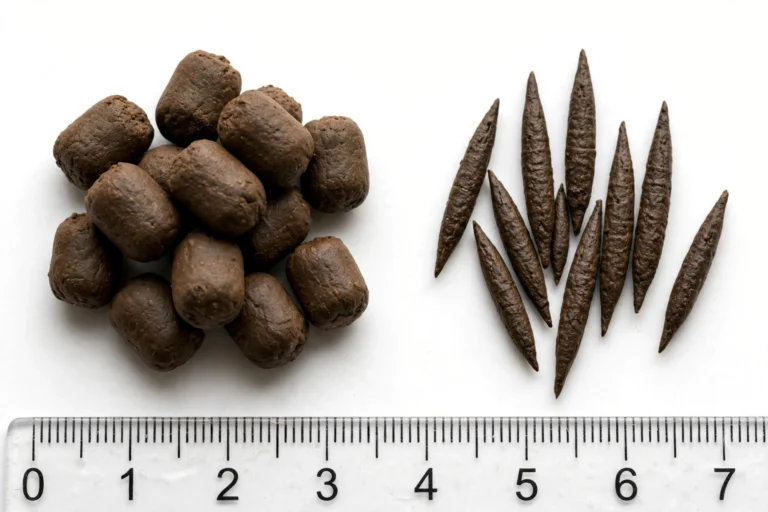
The signs of roof rats are scratching and scurrying in the attic at night, spindle-shaped droppings about half an inch long, gnawed wiring and wood, grease rub marks on beams, and shredded insulation used as nesting. Roof rats are climbers, so the signs are high up — in the attic, not on the ground floor.
The sound is usually the first sign, and it is the clue that starts how to get rid of roof rats. Roof rats are nocturnal, and their activity peaks in the first hours after dark. The droppings are the proof: spindle-shaped, about half an inch long, with pointed ends. And the grease marks are the map: rats run the same routes every night.

Roof Rats vs Norway Rats: How Do You Tell?
Roof rats are slender, with a long tail that is longer than the body, large ears and a pointed snout — and their droppings are spindle-shaped with pointed ends. Norway rats are stocky, with a tail shorter than the body, small ears and a blunt snout, and their droppings are capsule-shaped with blunt ends. Roof rats climb; Norway rats burrow.
A roof rat’s tail is longer than its whole body, thin and scaly, built for balance; a Norway rat’s tail is shorter than its body and thicker. The ears and droppings tell the same story. Why does it matter? Because the fix is different, and that difference is the whole point of how to get rid of roof rats correctly. Roof rats come in through the roofline and live in the attic; Norway rats come in at ground level and live in burrows, basements and sewers.

| Feature | Roof rat | Norway rat |
|---|---|---|
| Body | Slender, 6–8 inches | Stocky, 7–10 inches |
| Tail | Longer than body | Shorter than body |
| Ears | Large, prominent | Small, close to head |
| Snout | Pointed | Blunt |
| Droppings | Spindle-shaped, pointed ends, ~1/2 inch | Capsule-shaped, blunt ends, ~3/4 inch |
| Where it lives | Attic, roofline, trees | Ground, burrows, sewers |
How Do Roof Rats Get Into the Attic?
Roof rats get into the attic through gaps about half an inch wide around the roofline — loose fascia, vent screens, chimney flashing and gaps where pipes enter. They climb trees, vines and utility lines, then walk the roof edge to the gap. Trim branches six to ten feet back from the roof so the trees stop being a highway.
The rat climbs the branch, walks the line, steps onto the roof, and follows the edge until it finds a gap in the fascia, a vent screen, or the chimney flashing. Finding the route is half of how to get rid of roof rats, because the entry point is also the place the exclusion work starts.

What Damage Do Roof Rats Do in an Attic?
Roof rats gnaw wiring, which can cause short circuits and fires, chew PEX water lines until they leak, shred insulation for nests, and leave droppings and urine across the attic floor. A colony can ruin a whole layer of insulation in one season. The fire risk from gnawed wiring is the damage that matters most.
The wiring damage is the urgent one, and it is the reason how to get rid of roof rats is not a “deal with it next month” job. The NFPA lists rodent-gnawed wiring among the causes of residential fires, and it is the reason an attic rat problem is not a job to postpone. The water damage is the expensive one: a chewed PEX line can weep slowly for weeks before the stain appears in the room underneath. The insulation damage is the slow one: a colony shreds insulation for nesting, and a whole layer can lose its insulating value in a single season — the hidden cost of how to get rid of roof rats late.
How Do You Trap Roof Rats Along Their Runways?
Set snap traps along the beams and edges where roof rats run — they travel the same runways every night, marked by grease rubs and droppings. Bait with peanut butter, leave the traps unset for a few days so the neophobic rats accept them, then set them all on the same night. Check every morning and reset.
Trapping roof rats is a runway game, not a scatter game, and the runway is where how to get rid of roof rats is won or lost. Place the traps on the runways themselves, with the trigger facing the runway so the rat walks into it head-first. The unset-first trick is what makes the difference: bait the traps and leave them unset for three to five days, then set them all on one night.
| Method | How it works | Downside |
|---|---|---|
| Snap traps on runways | Kill on the runway; body in hand next morning | Slow, needs daily checks |
| Poison bait | Rat eats and dies later | Dies in walls; poisons pets and owls |
| Live traps | Catch and release | Illegal in many areas; rat returns |
| Sealing first | Closes the gaps | Traps the colony inside — never do this |
Poison is the option to skip: a poisoned rat dies in a wall void, and the smell lasts for weeks — and a poisoned rat is easy prey for a pet or an owl. That trade-off is the reason how to get rid of roof rats the right way means traps, not poison.
PRO TIP
Use at least four traps for a small colony and eight for a large one, all set on the same night. One trap catches one rat and teaches the rest to avoid it; a full row of traps on the same night catches the colony before it learns.
Why Must You Never Seal Entry Points First?
Never seal entry points before the rats are out, or you trap a live colony in the attic with no food and no water. Trapped rats die in the walls, and the smell and flies that follow are worse than the rats were. Trap first, confirm the attic is empty for several quiet nights, then seal the gaps with metal.
This is the rule that decides whether the job ends well or badly, and it is the rule that how to get rid of roof rats is built on. Sealing first feels like progress — and then the rats, trapped inside, gnaw their way into the living space or die in the walls. Trap until the catches stop and the attic is quiet for several nights — then seal every gap half an inch or wider with metal.

How Do You Keep Roof Rats Out for Good?
Keep roof rats out by sealing every gap half an inch or wider with metal — hardware cloth, steel wool and caulk, never foam alone — trimming branches six to ten feet from the roof, and removing the food and water that drew them in. Store birdseed and pet food sealed, fix dripping taps, and check the attic every fall.
Exclusion is a system, not a single repair, and that system is how to get rid of roof rats for good. Then remove the reasons they came: store birdseed in a metal bin, bring pet food in at night, fix dripping taps, and pick up fallen fruit weekly.
When Should You Call a Pro for Roof Rats?
Call a pro when trapping for two weeks has not cleared the attic, when the colony is large, or when the damage involves wiring or PEX lines. A pro maps every entry point, traps on a schedule, and seals the attic with metal. Expect a pro inspection to cost $100–$300, with full attic remediation running $500–$2,000 or more.
Two weeks of trapping with no improvement is the signal, and it is the point where how to get rid of roof rats becomes a pro job. It usually means the colony is bigger than the traps you set, or the rats have a food source you have not removed. The wiring case should not wait two weeks: if the damage involves gnawed wiring or a chewed PEX line, call a pro and an electrician the same week. For Central Texas attics, rodentcontrolpflugerville.com handles roof rat inspection, trapping and exclusion.
PRO TIP
After the attic is empty and sealed, leave two unset, baited traps up there for a month as monitors. If they stay untouched, the exclusion held. If one goes off, a new rat found a gap you missed — and you will know within days, not months.
Frequently Asked Questions
How do you get rid of roof rats in the attic?
Trap first along the attic runways with snap traps baited with peanut butter, leave them unset for a few days so the rats accept them, then set them all on one night. Wait for several quiet nights, then seal every gap half an inch or wider with metal. That is how to get rid of roof rats without trapping them inside — never seal first, and skip poison, because rats die in the walls and poison pets that eat them.
What is the difference between roof rats and Norway rats?
Roof rats are slender climbers with a tail longer than the body, large ears and a pointed snout; their droppings are spindle-shaped with pointed ends. Norway rats are stocky ground dwellers with a tail shorter than the body and capsule-shaped droppings with blunt ends.
Do roof rats come out during the day?
Rarely. Roof rats are nocturnal — they leave the attic at dusk to feed and return before dawn. Daytime activity in the attic usually means squirrels, which are loud in daylight. If you hear scratching at night and nothing during the day, roof rats are the likely culprit.
How small a gap can a roof rat get through?
About half an inch — roughly the width of a thumb. That half-inch rule is the measure of how to get rid of roof rats. Check the fascia, vent screens, chimney flashing and any place a pipe or wire enters the attic. Rats can also gnaw a smaller crack wider, so seal every gap you find — and that sealing step is the last part of how to get rid of roof rats for good.
Are roof rats dangerous?
They gnaw wiring, which can cause fires, chew PEX water lines until they leak, and spread disease through droppings and urine. That damage list is why how to get rid of roof rats is urgent. Their droppings should never be swept dry — wet them down, wear gloves and a mask, and bag them, following CDC guidance. The fire risk from gnawed wiring is the most serious danger.
How much does pro roof rat removal cost?
A pro inspection usually runs $100–$300, and full attic remediation — trapping, exclusion and insulation replacement — runs $500–$2,000 or more depending on the damage. Prices are rough planning estimates, not quotes.
Final Thought
How to get rid of roof rats is a question of order: trap first, seal second, and never the other way round. Snap traps on the runways, patience through the neophobic week, several quiet nights as proof, then metal over every gap and branches trimmed six to ten feet back. Follow that order and how to get rid of roof rats stays simple.
Author: Marcus Bell writes the pest-control guides for SilkStoneHome, covering identification, safe removal and when to call a pro.