Roof Replacement Cost: What You Will Actually Pay
TL;DR
Roof replacement cost averages $9,611 nationally in 2026, with most homeowners paying $5,903 to $13,380 at $4 to $11 per square foot installed. Your price moves with roof size, material, and pitch — and quotes for the same roof can differ by $12,000, so get three to six itemized quotes before you sign.

A roof is the most expensive thing on most houses that nobody thinks about until it leaks — and then the quotes arrive, and they do not agree. Four roofers quoted the same 27-square roof $12,500 apart, from $11,400 to $23,900, and one homeowner on Reddit collected three bids from $18,000 to $28,000 and felt every one was unreasonable. The numbers in this guide come from Angi’s 2026 data, based on 32,999 verified projects. Our how long does a roof last guide covers when a roof needs replacing; this one covers what it costs.
The short version: the national average roof replacement cost is $9,611, most homeowners pay $5,903 to $13,380, and the price runs $4 to $11 per square foot installed. Size, material, and pitch move that number more than anything else. All figures here are rough planning estimates, not quotes — your roof, your material, and your city set the real price.
How Much Does a Roof Replacement Cost?
Roof replacement cost averages $9,611 nationally in 2026, based on 32,999 verified Angi projects, with most homeowners paying between $5,903 and $13,380. The total depends on roof size, material choice, pitch, and location — and the spread is wide because all four move at once.
The average is the anchor, and the range is the reality. Most homeowners land between $5,903 and $13,380, but a small asphalt roof on a simple ranch can come in under $6,000, and a large tile roof on a steep, cut-up house can pass $25,000. Other 2026 sources cluster in the same place — around $9,500 to $11,500 for a typical asphalt-shingle replacement — so the Angi average is a fair planning number, not an outlier.
One figure to ignore: a $31,871 average sometimes quoted for a new shingle roof. That number is the U.S. average for a big 3,000-square-foot roof, not for an average home, and presenting it as the national average overstates the typical job by three times. Use the roof cost calculator on this site to price your own roof by size and material — it runs the same Angi-based math this guide uses.
How Much Does Roof Replacement Cost Per Square Foot?
Roof replacement cost runs $4 to $11 per square foot on average, and your total rises directly with your roof’s surface area. A steeper roof angle increases the actual surface beyond what your home’s footprint suggests, so pitch matters as much as size when estimating square footage.
Per-square-foot pricing is how roofers think, and it is how you should compare quotes. A 1,500-square-foot roof at $4 to $11 per square foot lands between $6,000 and $16,500 before pitch and material adjustments. Always ask for the per-square-foot rate on the quote, not just the total, because the rate is what lets you compare two roofers honestly.
Pitch changes the math quietly. A steep roof has more surface area than its footprint suggests, and it takes longer to work on, so steep pitch can add $1,000 to $3,000 to the total in extra labor and materials. The average home has a roof size between 1,300 and 1,800 square feet, and costs vary significantly across that range. If your quote does not mention pitch, ask — it is one of the biggest variables in any roof replacement cost.
How Much Does a Roof Cost by Size?
A roof costs by size roughly as follows: a 1,120-square-foot roof runs $4,900 to $12,300, a 1,565-square-foot roof runs $6,800 to $17,200, and a 2,235-square-foot roof runs $9,700 to $24,600. Larger roofs cost more in total but less per square foot, because the fixed costs — permits, dumpster, crew setup — spread across more area.
| Roof size | Average cost in 2026 |
|---|---|
| 1,120 sq. ft. | $4,900–$12,300 |
| 1,340 sq. ft. | $5,800–$14,700 |
| 1,565 sq. ft. | $6,800–$17,200 |
| 1,790 sq. ft. | $7,800–$19,700 |
| 2,235 sq. ft. | $9,700–$24,600 |
| 2,685 sq. ft. | $11,700–$29,500 |
| 3,130 sq. ft. | $13,600–$34,400 |
| 3,805 sq. ft. | $16,600–$41,900 |
The table above is Angi’s 2026 data, and the spread inside each row is the material and pitch range. A 1,565-square-foot roof at $6,800 is basic asphalt on a simple slope; the same roof at $17,200 is a premium material on a steep, cut-up roof. Measure your roof’s surface, not your home’s footprint — a two-story house with a 1,200-square-foot footprint can carry a 1,800-square-foot roof once pitch and overhangs are counted. The roof cost calculator on this site prices your roof by its size and material, and it is the fastest way to turn this table into your number.
Which Roofing Material Costs the Most?
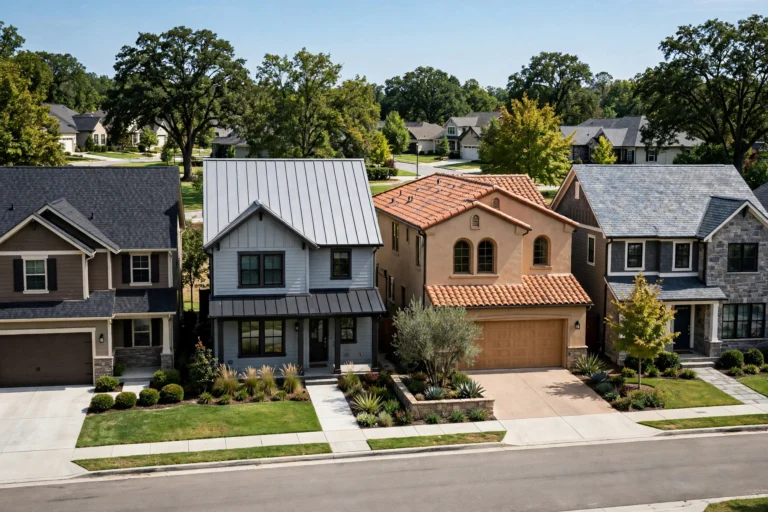
Stone and slate cost the most, at $5,800 to $30,000 installed, followed by tile at $8,500 to $26,400 and metal at $5,700 to $25,000. Asphalt shingles cost the least at $5,800 to $20,000 and remain the most common choice in the U.S., while wood shake runs $16,000 to $27,000.
Material is the biggest single driver of roof replacement cost, and the lifespan gap is the reason. Asphalt shingles last 15 to 30 years — three-tab about 20, architectural up to 30 — and they are the default because they are cheap and every roofer installs them. Metal lasts 30 to 100 years, clay and concrete tile 50 to 100, and slate up to 200 with proper care.
| Roof material | Average cost installed in 2026 | Lifespan |
|---|---|---|
| Asphalt shingle | $5,800–$20,000 | 15–30 years |
| Metal | $5,700–$25,000 | 30–100 years |
| Wood shake | $16,000–$27,000 | 20–40 years |
| Tile | $8,500–$26,400 | 50–100 years |
| Stone or slate | $5,800–$30,000 | Up to 200 years |
The cheapest material is not always the cheapest roof. An asphalt roof replaced twice over 40 years can cost more than a metal roof installed once, and a metal roof adds resale value an asphalt roof does not. The right question is cost per year of service: divide the installed price by the lifespan, and the premium materials often win. These roof replacement cost comparisons only make sense that way — price without lifespan is half the number.

PRO TIP:
Ask every roofer for the installed price and the lifespan in the same quote — the cheapest bid on a 20-year roof is often the most expensive roof you will buy.

What Else Affects Your Roof Replacement Cost?
Roof replacement cost moves with pitch, permits, removal, and warranties: a steep pitch adds $1,000 to $3,000, building permits run $100 to $1,400, old roof removal and dumpster rental add to the total, and warranties run $500 to $2,000 from the contractor or $500 to $5,000 and up from the manufacturer.
Pitch is the first hidden cost in roof replacement cost. An unusually steep roof pitch adds $1,000 to $3,000 in extra labor and materials, because steeper slopes need more material to cover the expanded surface and take longer to work on safely. A low-slope roof is the opposite: faster, cheaper, and easier to walk.
Permits and removal are the second. Building permits for a new roof typically range from $100 to $1,400 depending on your city, and most municipalities require them for full replacements — some HOAs also require pre-approval of shingle color or style. Removing the old roof adds labor and disposal, plus a dumpster rental. A post-installation inspection costs around $240 and confirms the work was done correctly.
Warranties are the third. Contractor warranties typically range from $500 to $2,000, while manufacturer warranties can run from $500 to upward of $5,000 when not included in the base price. Contractor warranties are often worth it because they typically cover annual checkups and minor repairs. A roofing professional charges $40 to $90 per hour per worker, and most jobs need at least two — ask whether your quote is project-based or hourly.
Repair or Replace: How Do You Decide?
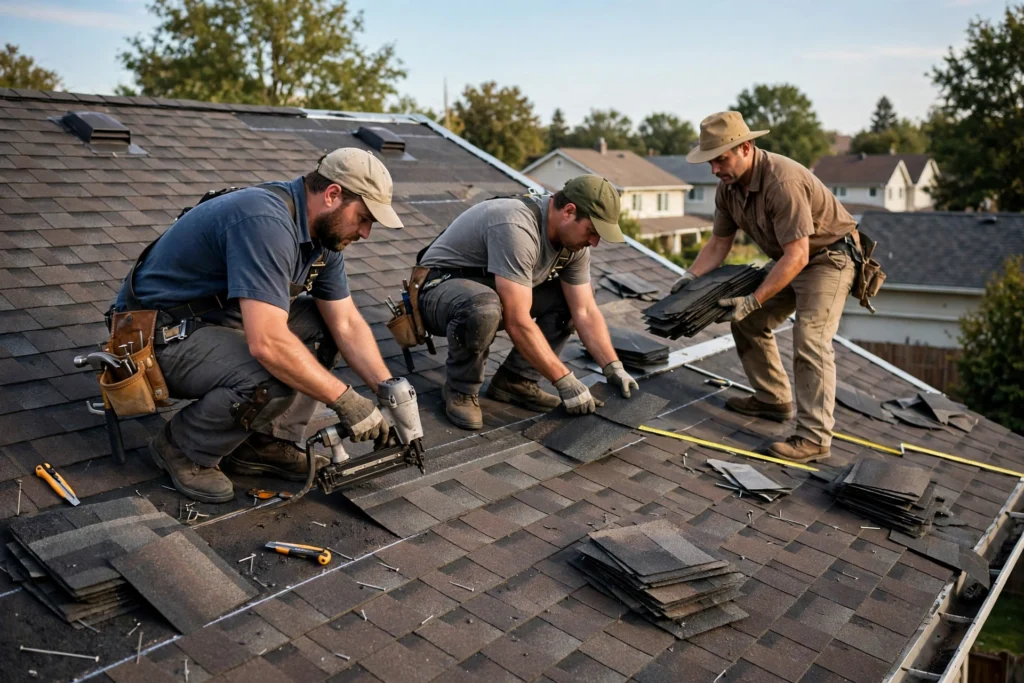
Decide repair or replace by the 50 percent rule: if the repair costs 50 percent or more of a full replacement, replace the whole roof. A partial replacement still needs permits and removal, costs more per square foot, and leaves a roof that is not uniform in color.
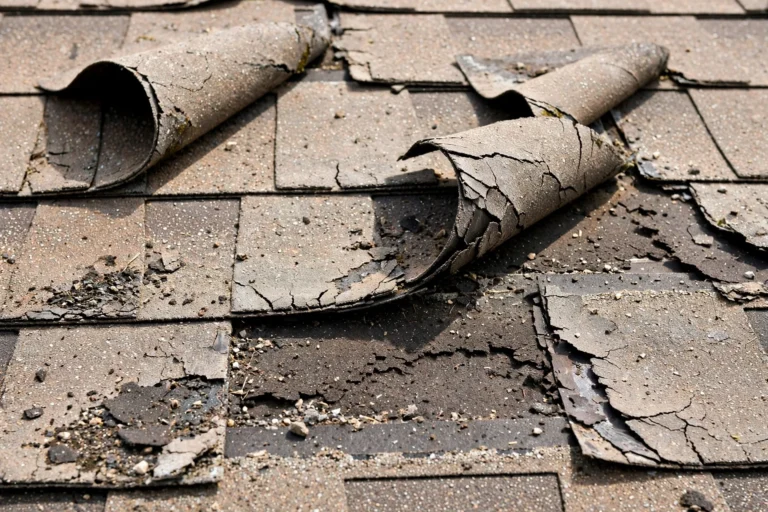
A single leak, a few missing shingles after a storm, or a small flashing failure is a repair — a few hundred to a couple thousand dollars, done in a day. But when the roof is losing shingles in major storms, when repairs keep recurring in the same area, or when the roof is near the end of its lifespan, replacement is the cheaper path. A good indicator that the roof needs to be replaced is evidence of missing shingles or other materials after storms.
Age is the other half of the decision in roof replacement cost. An asphalt roof at 25 years with a leak is a replacement, because the next leak is months away and every repair on an old roof is money spent twice. A roof at 10 years with one leak is a repair. If your entire roof is aging, or you need to replace the underlayment due to leaks, replacing everything reduces long-term costs — each portion of a job carries fixed costs, and a full replacement keeps the roof uniform in color. Our how long does a roof last guide gives the lifespan of every material so you can place your roof on that timeline.
How Do You Compare Roofing Quotes?
Compare roofing quotes by getting three to six itemized quotes that each list material, labor, removal, permits, and warranty separately. Four roofers quoted the same 27-square roof $12,500 apart — $11,400 to $23,900 — so the quote itself is the thing to compare, not just the total.
Itemized quotes are the only comparable kind for roof replacement cost. A quote that lists material, labor, removal, permits, and warranty separately can be checked line by line against the next quote; a single-number quote cannot. Ask every roofer the same five questions: which material and what warranty, whether removal and disposal are included, what the permit costs, how long the job takes, and what the workmanship warranty covers.
Watch for the two classic traps. The first is a quote that excludes removal, permits, or the underlayment, then adds them as extras after you sign. The second is a quote that prices a lower-cost material than the one discussed — ask for the material name and brand on the quote itself. On Reddit’s r/Roofing, the most common questions are exactly this confusion: “Is $72,000 reasonable?”, “What does RFG300 mean on my carrier estimate?”, “Is this quote standard?” If a quote cannot answer those questions in writing, it is not a quote yet.

How Can You Lower Your Roof Replacement Cost?
Lower your roof replacement cost by checking insurance coverage first, vetting every contractor, asking about reusing materials, scheduling in the off-season, and choosing a lower-cost material. Homeowners recoup 20 to 50 percent of a roof replacement’s cost in home value, so the cheapest roof is rarely the best investment.
Insurance is the first check on roof replacement cost. Most policies exclude regular wear and tear, and coverage for damage from earthquakes, mold, mildew, animals, pests, or improper installation is unlikely — but storm and hail damage is often covered, so file the claim before you budget. Check for any existing warranties, and ask your contractor if you can reuse any existing materials like flashing or vents.
Timing and material are the levers you control. Schedule work in your contractor’s off-season — late fall or winter in most climates — when crews have gaps and prices soften. Choose a lower-cost material if the premium one does not change your home’s value. Use energy-efficient materials where a rebate applies, and apply for home improvement grants from the USDA and HUD. Together, insurance, off-season scheduling, and a standard material can cut a $12,000 quote to under $9,000.
PRO TIP:
Get the quote in writing with the material brand, the warranty terms, and the start date on it — a verbal quote is a conversation, not a price.
Frequently Asked Questions
How much does a new roof cost in 2026?
The national average roof replacement cost is $9,611 in 2026, with most homeowners paying $5,903 to $13,380 at $4 to $11 per square foot installed. A small asphalt roof can come in under $6,000, and a large tile or slate roof can pass $25,000.
How much does a roof cost per square foot?
Roof replacement costs $4 to $11 per square foot on average, installed. Asphalt runs about $4 to $8 per square foot, metal $8 to $16, and clay or concrete tile $10 to $20. Steep pitch adds $1,000 to $3,000 to the total.
How long does a roof replacement take?
Most replacements take 1 to 3 days for a typical home, depending on size, pitch, and weather. A simple asphalt roof on a ranch can finish in a day; a large, steep, or cut-up roof takes 3 to 5 days. Your roofer should give you a start date and a day count in writing.
Does homeowners insurance pay for a new roof?
Sometimes. Storm and hail damage are often covered, but regular wear and tear, earthquakes, mold, mildew, animals, pests, and improper installation are usually excluded. File the claim and get the adjuster’s answer before you budget — it can change your out-of-pocket cost by thousands.
Is it cheaper to repair or replace a roof?
Repair is cheaper for a single leak or a few missing shingles. Replace when the repair costs 50 percent or more of the full roof replacement cost, when the roof is near the end of its lifespan, or when it keeps losing shingles in storms. A partial replacement costs more per square foot and leaves a non-uniform roof.
What roofing material lasts the longest?
Slate lasts the longest, up to 200 years with proper care. Clay and concrete tile last 50 to 100 years, metal 30 to 100 years, and asphalt shingles 15 to 30 years. Divide the installed price by the lifespan to compare materials fairly — the cheapest material is rarely the cheapest roof.
Final Thought
Roof replacement cost is not one number — it is an average of $9,611 with a range set by size, material, and pitch, and quotes for the same roof can differ by $12,000. Price your roof by the square foot, compare three to six itemized quotes, and buy the roof by its cost per year of service, not its price on the day.