Metal Roof vs Shingles: Pros, Cons, and 2026 Costs
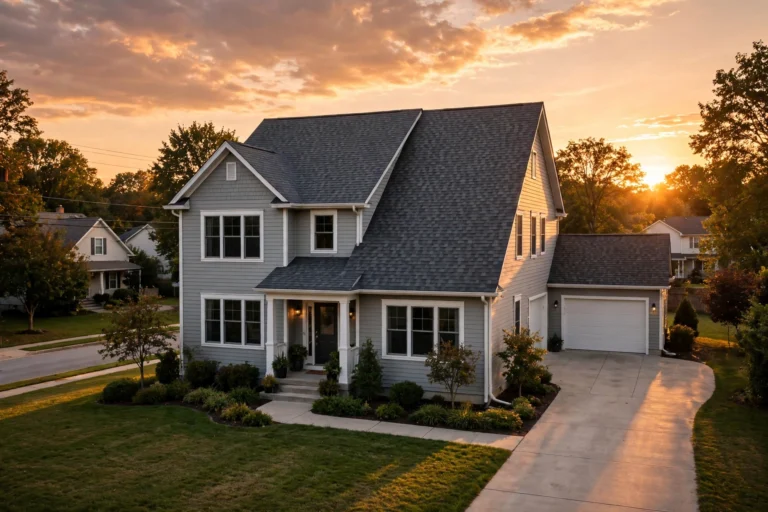
Two neighbors on the same street. One replaces a shingle roof for $13,500 and figures she’s done. The other pays $26,000 for standing-seam metal and gets called crazy at the barbecue. Twenty-five years later, neighbor one is getting quotes for her second roof — closer to $18,000 at today’s prices — while neighbor two hasn’t spent a dollar on roofing since.
That’s the real metal roof vs shingles choice: not which roof is “better” in the abstract, but how long you’ll own the home, where you live, and whether you can pay more now to pay less later. Here’s the honest 2026 math — costs, durability, energy, insurance — and whether metal is worth double the price.
TL;DR
In 2026, architectural asphalt shingles cost roughly $4.50–$8.50 per sq ft installed versus $9–$16 for standing-seam metal — about twice the price upfront. But shingles last 20–30 years and metal lasts 40–70, so over 50 years you buy two or more shingle roofs versus one metal roof, making metal the cheaper long-term option. Shingles win on affordability and easy installation; metal wins on lifespan, storm resistance, energy savings, and insurance discounts.
2026 Installed Costs: The Real Numbers
What you actually write on the check:

Asphalt shingles remain the least expensive roofing material:
- 3-tab shingles: $3.50–$5.50 per sq ft installed
- Architectural shingles: $4.50–$8.50 per sq ft installed
- Typical 2,000 sq ft roof: $9,000–$17,000 total
Metal roofing spans a wider range because “metal roof” covers several different products:
- Exposed-fastener panels: $6–$10 per sq ft installed
- Standing-seam metal: $9–$16 per sq ft installed
- Metal shingles/shake profiles and stone-coated steel: $10–$18 per sq ft installed
- Typical 2,000 sq ft roof: $18,000–$32,000 total for standing seam
2026 wrinkle: early-2026 steel and aluminum tariffs pushed metal material costs up roughly 12–18% versus late 2025, while asphalt barely budged. The old 2x rule of thumb is closer to 2.5x now.
Why pricier labor? Metal is a different trade — seaming, panel layout, and thermal-movement detailing require trained crews, and labor alone can run 60–70% of a standing-seam project. (Pricing a full replacement either way? See what roof replacement costs for a 1,500 sq ft house look like in practice.)
Metal Roof vs Shingles: Head-to-Head Comparison
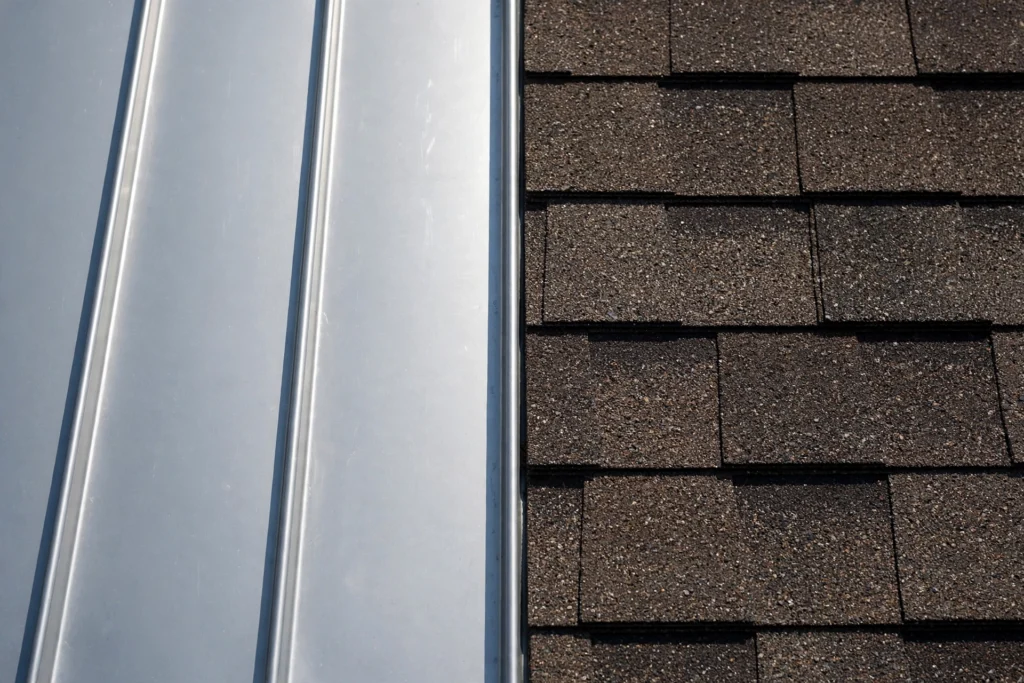
| Factor | Asphalt Shingles | Metal Roofing |
|---|---|---|
| 2026 installed cost (per sq ft) | $4.50–$8.50 (architectural) | $9–$16 (standing seam); $6–$10 (exposed fastener); $10–$18 (metal profiles) |
| Realistic lifespan | 20–30 years (architectural); 15–20 (3-tab) | 40–70 years (standing seam); 40–50 (quality panels) |
| Hail resistance | Standard shingles fail Class 4 testing; impact-rated versions cost extra | Usually earns UL 2218 Class 4 impact rating — the highest grade |
| Wind resistance | 110–130 mph (with enhanced nailing) | 140–180 mph on standing seam; interlocking panels resist uplift far better |
| Energy efficiency | Dark asphalt absorbs heat; reflective “cool” shingles are a niche product | Reflective cool-roof coatings can cut cooling costs up to ~25% in hot climates |
| Noise | Quiet — no concern | Non-issue with proper underlayment, decking, and attic insulation |
| Maintenance | Replace curled/cracked shingles periodically; vulnerable to algae and moss | Very low — standing seam is nearly maintenance-free; exposed-fastener screws need checks ~every 10 years |
| Insurance impact | Standard premiums; no discount | Many insurers offer 5–25% discounts for Class 4 metal, especially in hail states |
| Fire rating | Class A available | Class A standard — noncombustible; a plus in wildfire-prone areas |
| Resale value | Expected baseline — won’t hurt or excite | Boosts resale in storm regions; rarely recoups the full premium |
Total Cost of Ownership: The Math That Matters
Sticker prices lie by omission — model a 50-year window for a 2,000 sq ft roof:
Asphalt shingles: ~$13,000 in 2026 + ~$19,000–$22,000 for a second install around 2051 = ~$32,000–$35,000 lifetime, plus two full tear-offs and two rounds of disruption.
Standing-seam metal: ~$24,000–$26,000 once. No second roof. ~$24,000–$26,000 lifetime.
Metal wins by roughly $8,000–$10,000 — before insurance discounts and energy savings.
The catch: this only works if you’re around to collect. Selling within 10 years? You pay the full premium but capture only a fraction at resale. So:
- Staying 20+ years: metal is almost certainly cheaper all-in
- Staying 10–20 years: close — metal wins with insurance discounts and energy savings
- Selling within 10 years: shingles are the rational choice
Durability: Hail, Wind, and Fire
In hail-belt states, this section decides the whole debate.
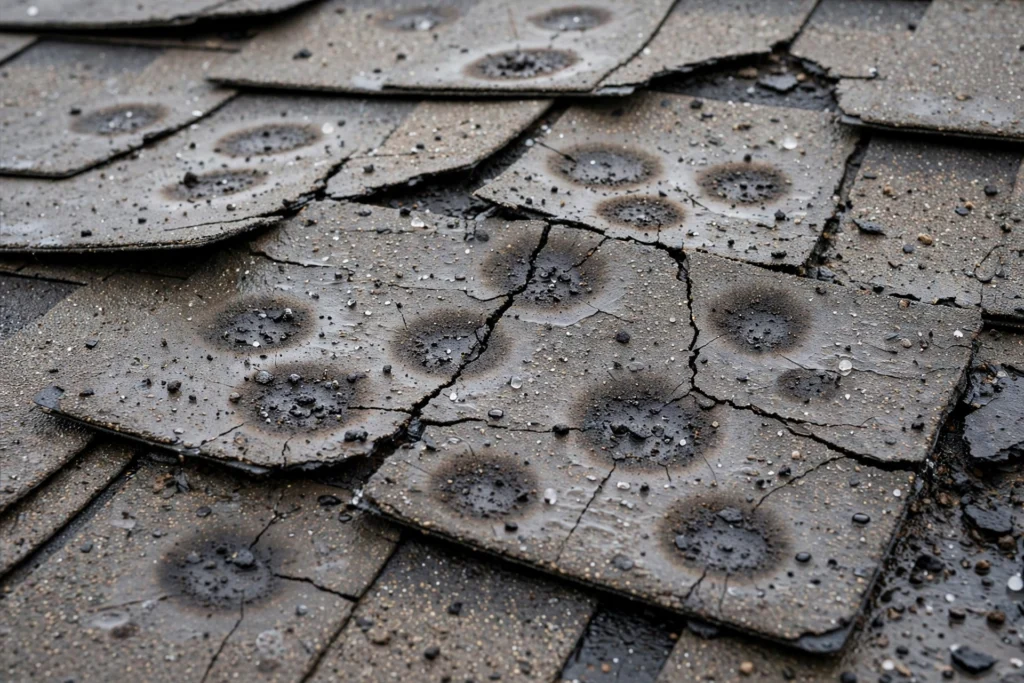
Hail. Asphalt shingles crack, bruise, and shed granules under hail — each storm shortens the roof’s life and can trigger a full insurance replacement. Most standing-seam and steel roofs earn the UL 2218 Class 4 impact rating — the highest — and shrug off the same storm. Some impacts dent softer metals, but dented-and-intact beats cracked-and-leaking. That’s also why insurers discount Class 4 metal in hail country: fewer claims, year after year.
Wind. Standing seam is rated to 140–180 mph — interlocking panels and concealed fasteners resist uplift far better than nailed-on shingles. Architectural shingles top out around 110–130 mph, and only with enhanced nailing that not every crew bothers with. In hurricane or tornado country, metal is the structural choice.
Fire. Metal is noncombustible and Class A rated as standard — a genuine advantage in wildfire-prone states. Asphalt can be Class A too, but it deteriorates under sustained ember attack where metal won’t.
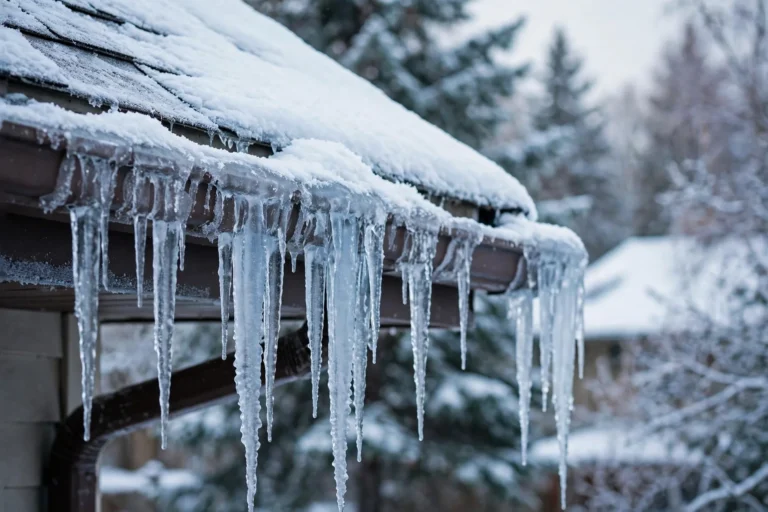
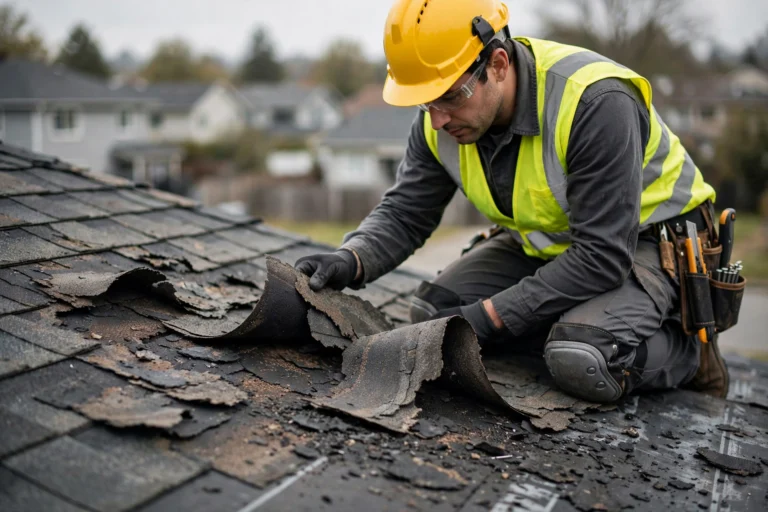
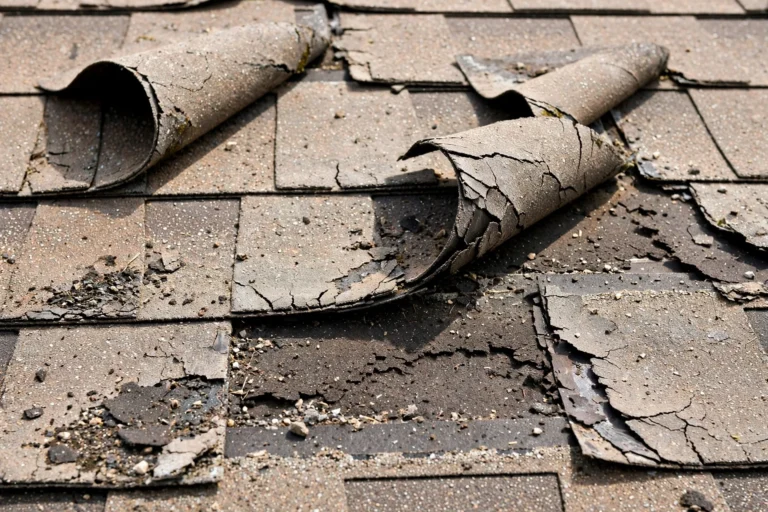
Honesty note: 30-year shingle warranties cover manufacturing defects, not weathering — most shingle roofs in hot or hail-exposed climates are functionally done by year 20–25. (These are exactly the signs you need a new roof worth checking every spring.)
Energy Efficiency and the Noise Question
Cooling bills. Metal wins decisively in hot climates. Asphalt absorbs solar heat and radiates it into the attic; a reflective metal roof — especially light-colored with a cool-roof coating — reflects much of it back. Sun Belt homeowners typically see summer cooling savings up to about 25%.
Heating. Neither material insulates much on its own — attic insulation and ventilation do that job.
The noise myth, answered honestly. The number-one hesitation about metal — and the answer is that it depends entirely on the assembly. A bare panel over open rafters will be loud in rain; that’s a barn, not a house. On a real home with solid decking, quality underlayment, and normal attic insulation, a metal roof sounds essentially the same as shingles from inside. Ask your contractor what underlayment goes under the metal, in writing.
Aesthetics and HOA Rules
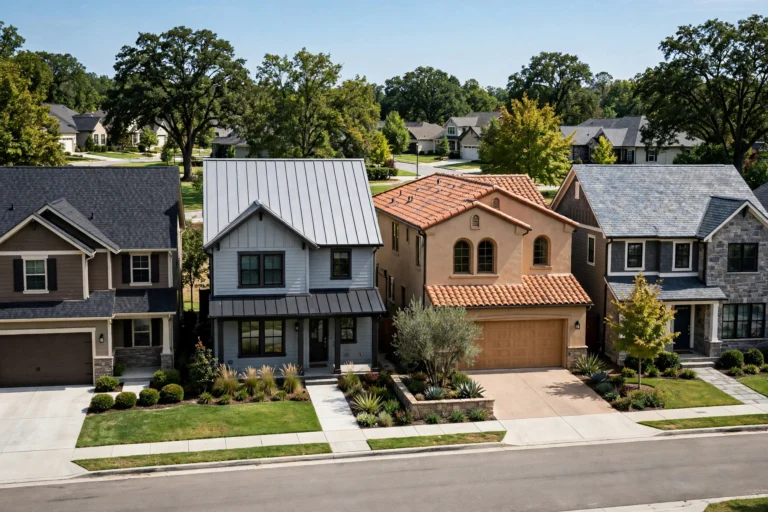
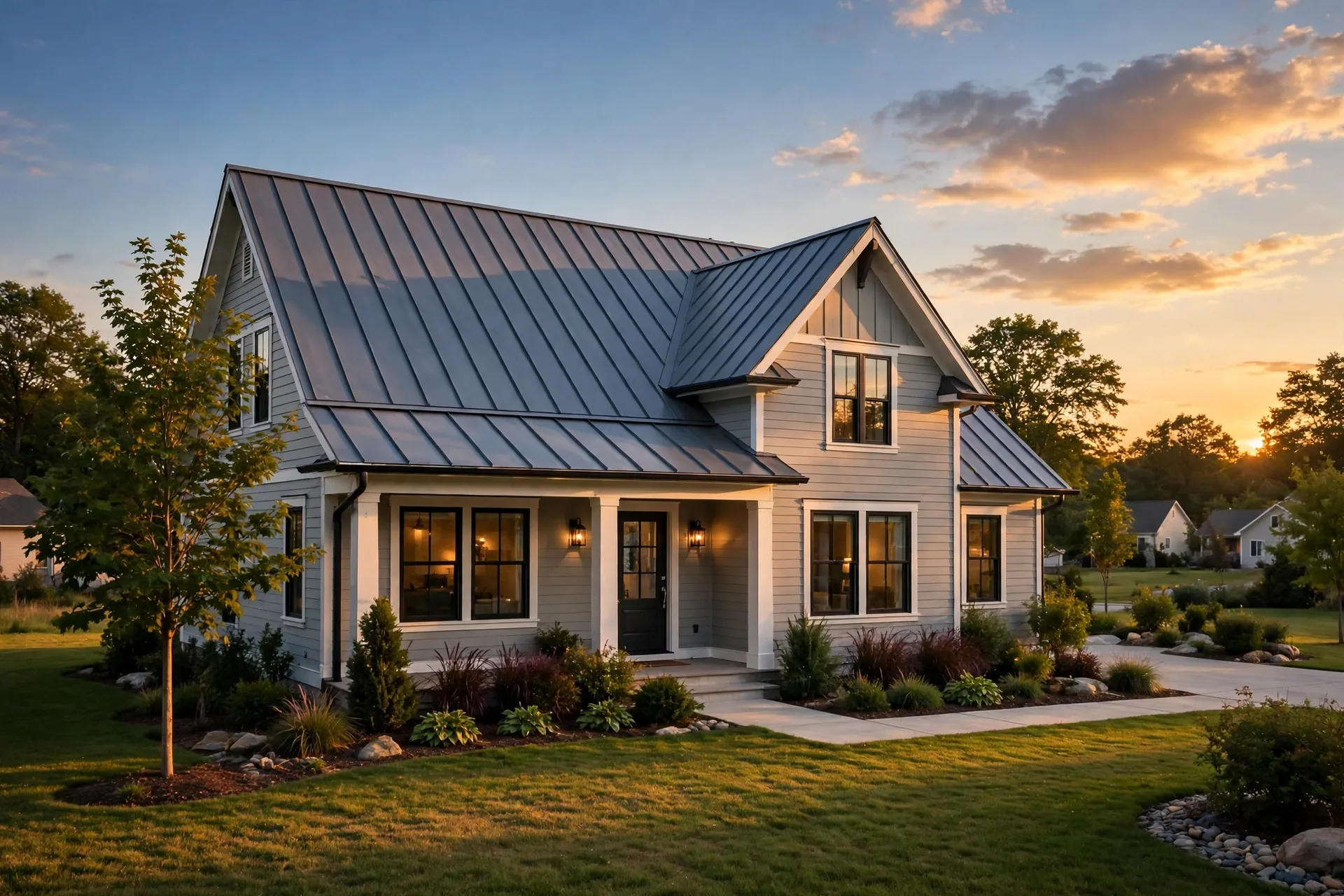
Standing-seam metal has shed its industrial-barn image — on modern and farmhouse homes it looks sharp, and metal shingle profiles now mimic slate, cedar shake, and tile convincingly. Asphalt still blends into more neighborhoods, which matters in uniform subdivisions.
HOAs are the wild card. Many restrict metal roofing — some ban exposed-fastener panels outright, others dictate colors or profiles. Check your HOA’s CC&Rs in writing before getting quotes. Contractors won’t check for you, and a forced removal costs more than either roof.
Installation: Where Metal Roofs Get Made or Ruined
This is what separates people who love their metal roof from people who curse it.
Shingle installation is a commodity skill — nearly any established crew does it well. Metal roofing is not. Panel layout, clip fastening, thermal expansion detailing, and penetration flashing require crews who do metal regularly; a crew that installs 200 shingle roofs and two metal roofs a year is not a metal crew. Bad installs produce oil-canning (panel waviness), leaks at poorly flashed penetrations, and buckling where thermal movement wasn’t accounted for.
PRO TIP
Ask each contractor: “How many standing-seam roofs did you install last year?” Fewer than 20 — keep shopping. Ask for the manufacturer’s installer certification (McElroy, Drexel Metals, and Englert all certify installers), and confirm panels come from a reputable fabricator. For metal, the right crew matters more than the brand on the box.
Best For: Which Roof Fits Your Situation
Choose shingles if you are selling within 10–15 years, need the lowest upfront cost, live under an HOA that restricts metal, or own a rental with a short ROI horizon.
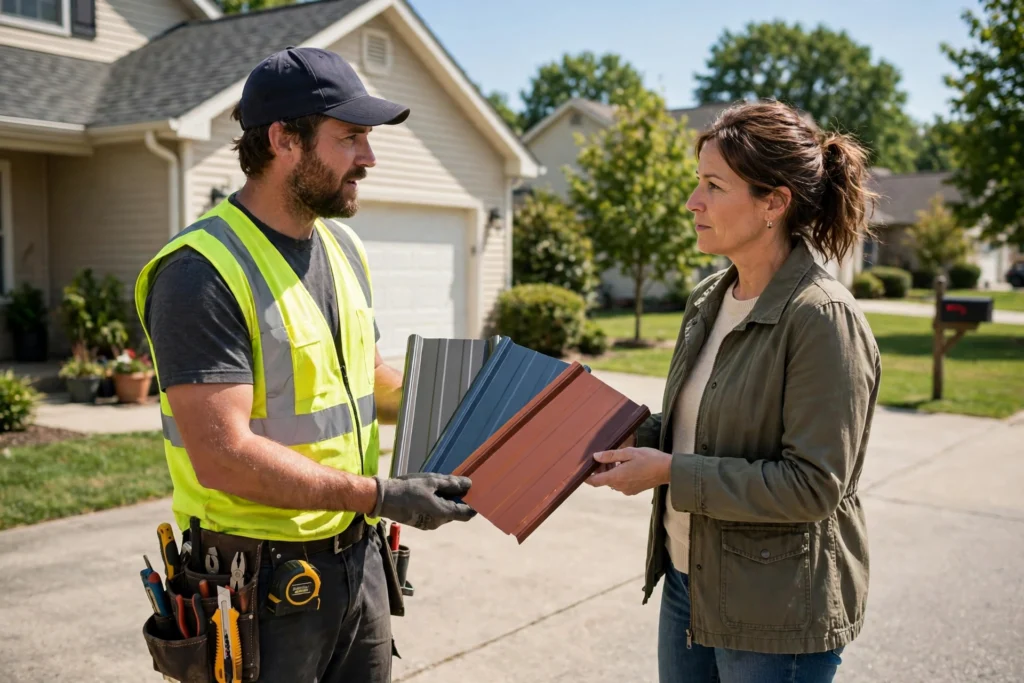
Choose metal if you are staying 20+ years, live in hail, hurricane, or wildfire country, run AC most of the year, or want the lowest lifetime cost and to never re-roof again. Caveat: don’t finance the premium at punishing rates — interest erodes the lifetime savings.
Middle path: Exposed-fastener panels ($6–$10/sq ft) or stone-coated steel shingles ($10–$18/sq ft) offer better longevity than asphalt at less than standing-seam prices. Quirk: exposed-fastener screws need inspection and retightening roughly every decade.
And if your current roof is already failing in spots, settle the repair question first: should I repair or replace my roof?
Bottom line
- Upfront: Shingles cost roughly half as much installed — $4.50–$8.50/sq ft vs $9–$16/sq ft for standing seam in 2026.
- Lifetime: One metal roof (40–70 years) outlasts two or more shingle roofs (20–30 years each) — metal wins over 20–50 years of ownership.
- Storm protection: Class 4 impact ratings and 140+ mph wind ratings make metal the durability winner; shingles lose badly in hail country.
- Money back: Insurance discounts of 5–25% and cooling savings of up to ~25% exist only on the metal side.
- The noise myth: With proper underlayment and insulation, a metal roof sounds the same as shingles.
- Your timeline decides: Staying 20+ years or living in storm country → metal. Selling soon or budget-constrained → shingles.
- Installer > brand: Metal only performs if the crew specializes in it. Vet them like you’d vet a surgeon.
Frequently Asked Questions
Is a metal roof really twice as expensive as shingles?
Upfront, roughly — $18,000–$32,000 for 2,000 sq ft of standing seam versus $9,000–$17,000 for architectural shingles in 2026. But over 50 years you’d buy two shingle roofs versus one metal roof, which flips the lifetime math — especially where insurance discounts compound.
How long does a metal roof last compared to shingles?
Architectural shingles realistically last 20–30 years (many die closer to 20 in hot or hail-exposed climates), while quality standing-seam metal lasts 40–70 years with minimal maintenance. Metal roofs pushing 100 years aren’t unheard of.
Are metal roofs too noisy in the rain?
No — not on a properly built home. Rain noise is a real issue only with no solid decking, minimal underlayment, or no attic insulation (think barns and sheds). With standard decking, quality underlayment, and normal insulation, indoor noise matches shingles.
Does a metal roof lower homeowners insurance?
Often, yes. Many insurers discount premiums 5–25% for Class 4 impact-rated roofs (UL 2218), which most standing-seam and steel roofs earn. The biggest discounts appear in hail-prone states like Texas, Colorado, and Oklahoma. Ask your agent before you buy — some require the manufacturer’s rating documentation.
Will a metal roof make my house hotter?
The opposite — in summer. Reflective metal bounces solar heat away instead of absorbing it like dark asphalt, cutting cooling costs up to about 25% in hot climates. In winter, neither roof type provides meaningful insulation; that’s your attic insulation’s job.