Mini Split vs Central Air: Pros, Cons and Costs Compared
Your old central air conditioner just died — or your summer electric bill made you wince — and a contractor is quoting you both sides of the mini split vs central air question: central air with ducts, or a ductless mini split with sleek wall-mounted heads and a promise of lower bills. Picking the wrong one can cost you thousands in installation work you’ll never get back.
Heating and cooling are roughly half of the average US home’s energy bill (US Department of Energy) — a 15-to-20-year commitment, not a coin flip. Once you understand how each system actually works, the right choice is usually obvious.
TL;DR
Central air wins when your home already has usable ductwork — installed costs run $5,000–$12,000 for whole-home cooling. Mini splits win in homes without ducts, additions, and older homes — roughly $2,000–$8,000+ per zone installed, with built-in room-by-room zoning and SEER2 ratings that often top central air. There’s no single winner; there’s the right system for your house.
How Each System Actually Works
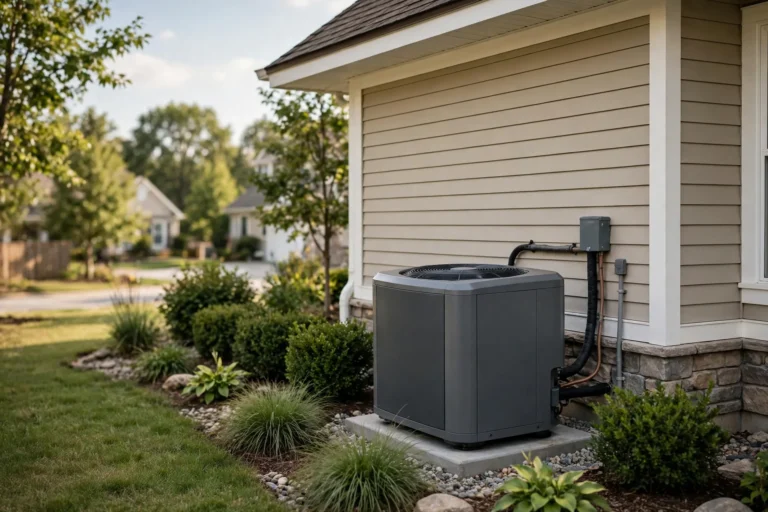
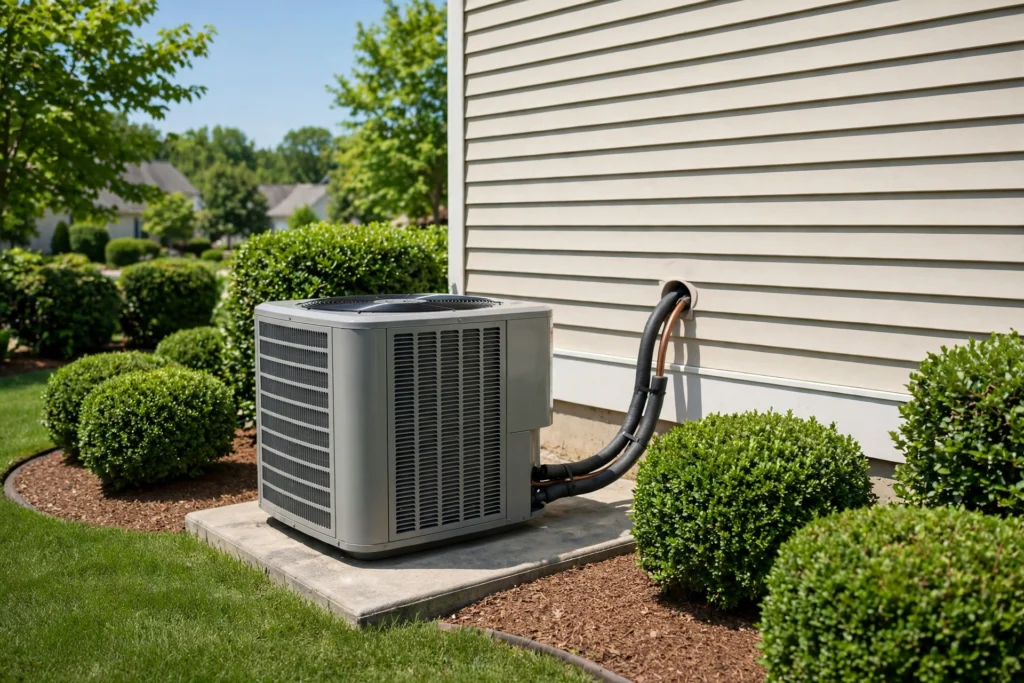
Central air pairs one outdoor condenser with one indoor air handler. Refrigerant gets chilled outside, the air handler blows your home’s air across the coil, and a network of ducts delivers cooled air to every room through vents — one engine feeding an air highway system. If your home already has ducts in good shape, central air is simple: one outdoor unit, one indoor unit, done. If ducts are leaky, crushed, or nonexistent — common in pre-1970s homes — they become the weak link: the DOE estimates typical duct systems lose 25–40% of heating and cooling energy to leaks and poor insulation.
Mini splits also use an outdoor condenser, but instead of ducts, thin refrigerant lines run to individual indoor heads mounted on walls or ceilings, each with its own thermostat. No ducts means no duct losses — cooled air is produced exactly where it’s needed. One outdoor unit can serve up to four or five heads (a multi-zone system), and each zone runs independently: cool the sun-blasted master bedroom to 70°F while the guest room stays at 78°F. That per-room control is the mini split’s superpower — and the reason its efficiency numbers look so good.

The 2026 Cost Breakdown
Ductless mini-split costs
- Single-zone (one indoor head): roughly $2,000–$4,500 installed — brand, capacity, and line-set length drive the spread.
- Multi-zone (2–4 heads): roughly $4,500–$8,000+ installed; 5+ heads or complex routing can pass $10,000.
- Premium brands (Mitsubishi, Daikin) typically run 20–30% above budget brands; panel upgrades and long line runs add more. (Those extras are where quotes really diverge — our heat pump installation cost guide itemizes all six cost drivers.)
Central air costs
- Replacement using existing ducts: roughly $5,000–$9,000 installed for a mid-efficiency 3-ton system.
- New system plus new ductwork: roughly $8,000–$12,000+ installed — and some older homes can’t take ductwork at any sane price, which is exactly where mini splits take over.
- High-efficiency variable-speed systems (20+ SEER2) run $8,000–$14,000.
The tax credit reality in 2026
One critical correction to older articles: the federal 25C and 25D residential energy tax credits expired for equipment placed in service after December 31, 2025 — no federal credit exists for systems installed in 2026. Check your state energy office and local utility instead: many utilities still offer rebates of $300–$2,000+ on high-efficiency heat pumps and mini splits. Ask your contractor what’s available in your zip code before you sign.
Efficiency and Your Electric Bill
Efficiency is rated in SEER2 (Seasonal Energy Efficiency Ratio 2) — higher means cheaper to run.
- Mini splits: 18–24 SEER2, with premium models reaching 25+. No duct losses, and each zone cools only occupied space — real-world operating costs run 30–50% lower than a comparable central system for the same cooled area.
- Central air: 14–18 SEER2 for standard models (14.3 is roughly the federal minimum); premium variable-speed models reach 20–22 SEER2. But a 16-SEER2 system with leaky ducts can perform like a 12 in practice.
What this means in dollars: for a home spending $1,200/year on cooling, upgrading from an old 10-SEER unit to a 20-SEER2 mini-split setup could save roughly $500–$700 a year. Central air rarely closes that gap unless ducts are sealed and insulated — a $1,000–$4,000 job on its own.
PRO TIP
Whatever system you choose, ask for a Manual J load calculation before the quote is finalized. It’s the industry-standard sizing method, and roughly half of residential systems are oversized — an oversized system short-cycles, cools unevenly, and wastes money. A contractor who sizes “by square footage alone” is guessing with your money.
Installation Disruption: What It Actually Feels Like
Existing ducts: the least disruptive — 1–2 days to swap the outdoor unit and indoor coil. New ductwork: the most disruptive — 3–5 days of cutting drywall, running trunk lines through closets and attics, then patching and painting. Mini splits: 1–3 days total. The installer drills a 3-inch hole through the exterior wall per head, runs slim refrigerant lines (usually hidden in a conduit cover that looks like a rain gutter), and wires it up. No drywall demolition, no painting — but the wall-mounted heads will be visible in your rooms.
Zoning, Comfort, and Aesthetics
Zoning: mini splits dominate. Each room gets its own temperature, schedule, and on/off switch. Central air can be zoned with motorized dampers ($2,000–$4,000+), but closed dampers raise static pressure, which is why many zoning retrofits underwhelm. If room-by-room control is your priority, mini splits win outright.
Aesthetics: central air is virtually invisible indoors — just discreet floor or ceiling registers, with the noisy equipment outside. Mini splits mount a head in each zone (typically 2–3 feet wide), sleek and quiet at under 25 decibels, but undeniably visible. Floor-standing and recessed ceiling-cassette options blend better but cost more. Know which one would bother you every time you walk in.
Maintenance Differences
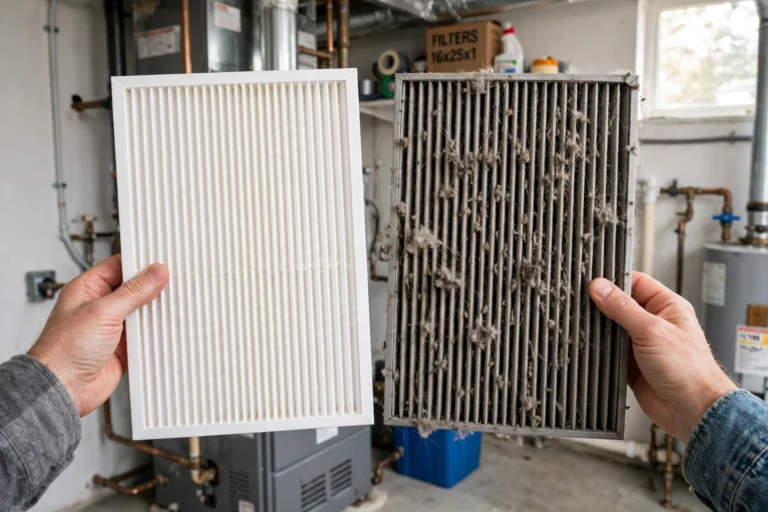
- Central air: change filters every 1–3 months, get an annual tune-up ($100–$200), and budget $300–$600 for a duct cleaning every few years if allergies run in the family.
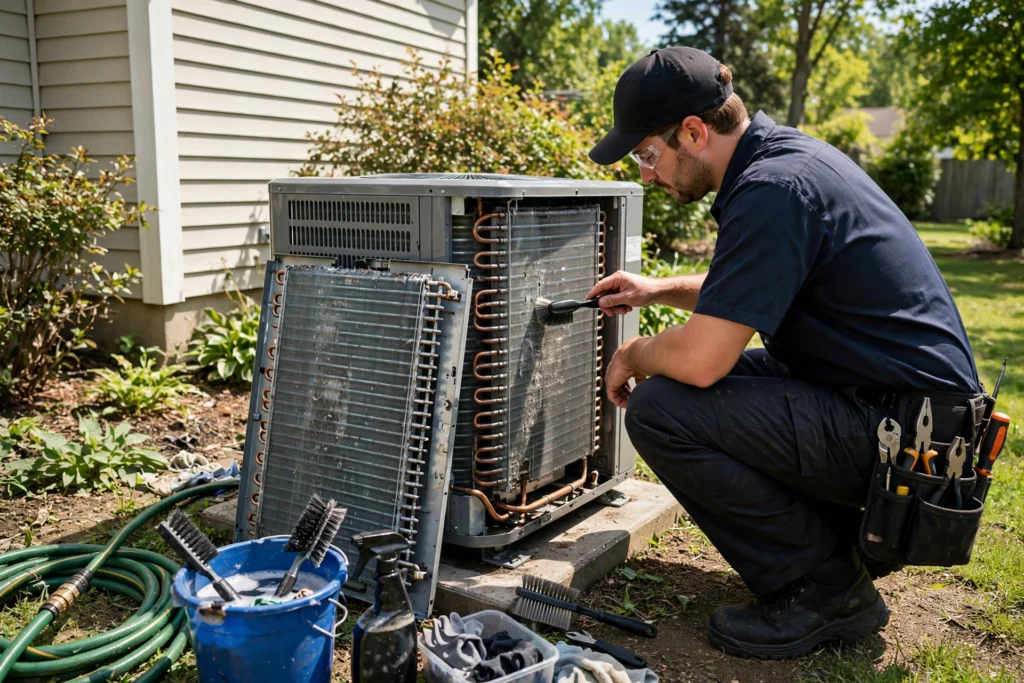
- Mini splits: rinse each head’s washable filter every 2–4 weeks (five minutes under the sink — skip it and airflow drops fast) and schedule annual pro service ($150–$250 per system). No ducts to clean, ever. The outdoor unit needs the same coil attention as any condenser.
Lifespan is a wash if maintained: 15–20 years for either system.
When Each One Wins
Mini splits win when:
- Your home has no ductwork — pre-1970s homes, radiant heat, baseboard heat
- You’re cooling an addition, sunroom, or garage conversion without upsizing the whole system
- You want room-by-room control, the lowest operating cost, or an end to chronic hot/cold spots
Central air wins when:
- Your home already has good ductwork — a straight changeout is the cheapest path to whole-home cooling
- You want even, whole-house cooling with one thermostat and invisible equipment
- Resale matters: central air is still the expected standard in most US markets
The Hybrid Approach
Keep your existing central system for the main floors and add a single-zone mini split for the problem area — the hot bonus room over the garage, the finished basement, the new addition. At $2,000–$4,500 installed, it’s often cheaper than upsizing a central system or forcing ductwork into a space that resists it.

Mini Split vs Central Air: Head-to-Head
| Factor | Ductless Mini Split | Central Air |
|---|---|---|
| Installed cost (2026) | ~$2,000–$4,500 single zone; ~$4,500–$8,000+ multi-zone | ~$5,000–$9,000 with existing ducts; ~$8,000–$12,000+ with new ductwork |
| Efficiency (SEER2) | 18–24+ SEER2; no duct losses | 14–22 SEER2; duct losses of 25–40% possible |
| Operating cost | 30–50% lower for same cooled area | Higher per square foot; offset if ducts are sealed |
| Installation disruption | 1–3 days; 3-inch wall hole per head, no drywall work | 1–2 days with existing ducts; 3–5 days + drywall repair with new ducts |
| Zoning | Built-in; each room independent | Add-on dampers ($2,000–$4,000+); less effective |
| Aesthetics | Visible wall heads in each room | Invisible indoors except registers |
| Maintenance | Rinse filters every 2–4 weeks; no ducts | Change filters 1–3 months; annual tune-up; duct cleaning as needed |
| Lifespan | 15–20 years with maintenance | 15–20 years with maintenance |
| Best for | No-duct homes, additions, zoning, older homes | Existing ducts, whole-home even cooling, resale familiarity |
Bottom line
- Have good ducts? Replace with central air — cheapest whole-home option, invisible, and what buyers expect.
- No ducts, addition, or chronic hot/cold spots? Mini splits win on cost, efficiency, and disruption — roughly $2,000–$8,000+ per zone with no drywall demolition.
- Efficiency favors mini splits: 18–24+ SEER2 ratings and zero duct losses typically cut cooling costs 30–50% versus comparable central systems.
- Aesthetics is a real tiebreaker: invisible registers (central) versus visible wall heads (mini split). Know which bothers you.
- No federal tax credit in 2026 — 25C/25D expired Dec 31, 2025. Chase state and utility rebates instead ($300–$2,000+ in many areas).
- Consider the hybrid: central for the main house plus one mini split for the problem room is often the cheapest total solution.
Frequently Asked Questions
Are mini splits cheaper to run than central air?
Yes, typically 30–50% cheaper for the same cooled space — higher SEER2 ratings (18–24+), zero duct losses, and cooling only the rooms you’re using. Central air narrows the gap with sealed, insulated ducts and a variable-speed compressor, but rarely closes it.
How many mini-split zones do I need?
One indoor head per room or open area, covering about 400–600 sq ft each depending on ceiling height and climate. A typical 3-bedroom home needs 3–4 zones. Slight oversizing is fine; undersizing means poor cooling on the hottest days.
Can a mini split replace my furnace too?
Many mini splits are heat pumps, so they heat as well as cool — excellent in mild-to-moderate climates. Our heat pump vs furnace comparison goes deeper on cold-climate heating. Cold-climate models (rated to -13°F or lower) handle most northern winters, though extreme-cold regions often keep a furnace or baseboards as backup.
Will a mini split increase my home value?
It adds value over no AC or window units. In ductless-heavy markets (Pacific Northwest, older Northeast homes) buyers expect them; where central air is the norm, central still appraises slightly better.
Do mini splits work in freezing climates?
Cold-climate-rated mini-split heat pumps operate down to -13°F or colder and carry the house through winter in most of the northern US. Below their rated temperature, capacity drops and backup heat kicks in — so northern installs often pair them with existing baseboards or a furnace.