Get a Splinter Out Safely: A Step-by-Step Home Guide
TL;DR
A splinter hurts out of proportion to its size, but most come out in two minutes with clean hands, soap and water, and fine-tipped tweezers. This guide shows how to remove a splinter with tweezers, a needle, tape, glue, or baking soda paste — and when to see a doctor instead.
Splinters find you in ordinary moments: a rough deck board, a fence rail, a garden stake, or a bare foot on a wood floor. The sting is instant, the splinter is tiny, and the urge to dig it out with whatever is closest is strong. Learning how to remove a splinter the right way takes two minutes and saves you the swelling, the broken fragment, and the infection that come from digging blind.
This guide covers how to remove a splinter in every common situation: sticking out, buried under the skin, no tweezers in the house, a child who will not sit still, and a splinter in your foot. It also covers the drawing-out pastes, the viral syringe trick, and the signs that mean the job belongs to a doctor.
This is general home first-aid information, not medical advice. Most splinters are minor and safe to remove at home, but deep, large, or infected ones are not a DIY job. When in doubt, stop and get care.
How to remove a splinter with tweezers?
Wash your hands and the skin with soap and warm water, then clean fine-tipped tweezers with rubbing alcohol and let them dry. Grip the end of the splinter firmly and pull it out slowly at the same angle it went in, without squeezing the skin around it. Clean the spot again and cover it with a bandage.
Wash your hands and the skin around the splinter with soap and warm water. Sterilize the tweezers with rubbing alcohol and let them dry — wet tweezers slip. Grip the exposed end firmly, close to the skin, and pull slowly at the same angle the splinter went in. That angle rule is the heart of how to remove a splinter without breaking it: pulling straight up on a slanted splinter snaps the tip off under the skin.
PRO TIP
Pull along the same angle the splinter went in — never straight up, and never squeeze the skin around it. Squeezing pushes it deeper and can snap it into pieces.
Once the splinter is out, wash the spot again with soap and water, dab on petroleum jelly or antiseptic ointment, and cover it with a bandage. A little redness that fades is normal, but redness that spreads, swelling, warmth, or pus means infection — see a doctor.
What if the splinter is under the skin and I can’t grab it?
If the splinter is fully under the skin, soak the area in warm soapy water for 10 minutes to soften the skin, then use a sterilized needle to gently lift the skin over the end nearest the surface. Once a tip is exposed, grab it with tweezers and pull along the entry angle. Never dig blindly or squeeze the area.
Soak the area in warm soapy water for ten minutes first — it softens the skin and often brings a buried splinter into view. Dry the area, sterilize a sewing needle, and use the tip to gently lift the skin over the end nearest the surface. The needle step is the part of how to remove a splinter that people rush — go slowly and stop as soon as you can see the tip.
Once the tip is visible, switch to the tweezers and pull along the entry angle. If you cannot see the splinter at all after soaking, or you find yourself digging deeper, stop. A splinter you cannot see is a job for a doctor, not a deeper hole — every extra poke raises the infection risk. That restraint is part of how to remove a splinter without making things worse.
How do I get a splinter out without tweezers?
Yes — tape, glue, and a baking soda paste can all work when no tweezers are handy. Press a strip of tape over a shallow splinter and peel it off in the entry direction, or spread craft glue, let it dry, and peel the film away. Both methods only work when part of the splinter is near the surface.
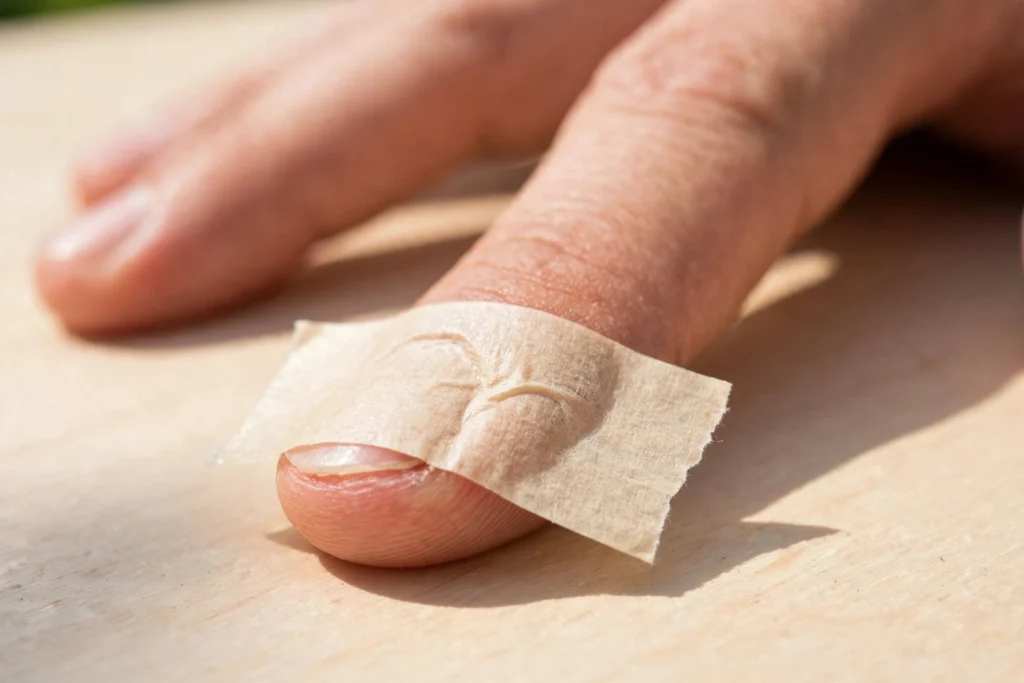
If you want to know how to remove a splinter without tweezers, start with tape. Press a strip of strong tape firmly over the splinter and peel it off slowly in the direction it entered. It works best on tiny, shallow splinters too small for tweezers to grip.
| Method | Best for | What you need | Time |
|---|---|---|---|
| Tweezers | Splinter sticking out | Tweezers, alcohol | 2 minutes |
| Needle + tweezers | Buried splinter | Needle, tweezers | 5–10 minutes |
| Tape | Tiny, shallow splinters | Strong tape | 1 minute |
| Glue film | Shallow, kids | Craft glue | 20–30 minutes |
| Baking soda paste | Deep splinter | Baking soda, bandage | 24 hours |
Tape and glue are the gentlest answers to how to remove a splinter when there are no tools in the house, and both are painless enough for children. For glue, spread a thin layer of plain craft glue over the splinter, let it dry into a film, then peel it off. Never use super glue on skin — it bonds to the skin itself.
Can baking soda paste really draw out a splinter?
A baking soda paste can help bring a deeper splinter closer to the surface, but it does not dissolve one or pull it out by itself. Mix one tablespoon of baking soda with one tablespoon of water, spread the paste over the splinter, cover it with a bandage, and leave it for 24 hours. Then try tweezers again.
Baking soda paste is the home remedy people ask about most when they search how to remove a splinter, and the honest answer is that it helps but does not finish the job. The paste softens the skin and can draw a deeper splinter closer to the surface overnight. After 24 hours, the splinter is usually visible enough for tweezers.

Ichthammol ointment, sold as drawing salve at most pharmacies, works the same way: it lubricates the skin and helps a deep splinter slide toward the surface. Spread a thin layer over the splinter, cover it, and check it after 12 to 24 hours. A small tube costs roughly $8 to $15. Paste and salve are helpers in how to remove a splinter, not replacements for tweezers — if the splinter is still deep and invisible after a day, see a doctor.
How do I remove a splinter from a child who won’t sit still?
Stay calm, because a scared child copies your tension, then soak the hand in warm soapy water while you talk them through it. Let the child hold the magnifying glass or pick the bandage, and work quickly once they are still. If they will not let you touch it, a warm bath often brings the splinter up on its own.
The hardest part of how to remove a splinter from a child is not the splinter — it is the fear. Sit the child on your lap and keep your voice calm. A warm soak doubles as a distraction: ten minutes splashing in warm soapy water softens the skin, and many shallow splinters rise close enough to grab.

PRO TIP
Give the child a job — holding the magnifying glass or choosing the bandage. A child with a job keeps their hand still, and choosing the bandage gives them something to look forward to.
If the child will not let you touch the area at all, do not pin them down and dig. Try a warm bath with the hand fully under the water, which often brings the splinter to the surface by itself, or the craft-glue film method, which feels like a game. If the splinter is deep, the child is in real pain, or one calm try fails, let a doctor or urgent-care nurse do it.
How do I remove a splinter from my foot?
Sit down, wash the foot with soap and warm water, and look at the splinter under a bright light with a magnifying glass. Foot splinters are often wood or glass from bare feet on decks and floors, so check whether you can see the end. If you can, use clean tweezers, pull along the entry angle, and bandage it.
Foot splinters hurt more than finger ones, and how to remove a splinter from your foot starts with sitting down somewhere comfortable with good light — never balance on one foot in a bathroom. Wood and glass are the usual culprits. Soak the foot in warm soapy water for 10 minutes first; the soak softens thick foot skin and often lifts the splinter into view.
Thick heel skin can hide a splinter completely, and that is where people get into trouble by digging. If you can see the end, use clean tweezers and pull along the entry angle. If you cannot see it, or the splinter is glass you cannot feel, stop and see a doctor — glass shards are nearly invisible once coated in blood. After removal, wash the foot, apply petroleum jelly, and bandage it. That aftercare is the final step in how to remove a splinter from your foot.
When should I leave a splinter alone instead of removing it?
Leave a tiny, painless splinter near the surface alone if it does not hurt, because the skin often pushes it out on its own within a few days. Keep the area clean, cover it with a bandage, and check it daily. If it starts to hurt, swell, or turn red, take it out or get help instead of waiting longer.
Knowing when not to act is part of how to remove a splinter safely. A tiny, painless wood splinter just under the surface often works its way out within a few days as the skin sheds. Keep it clean and covered, and check it once a day. The moment it hurts, swells, or reddens, the waiting is over.
Never leave in a splinter made of glass, metal, or fiberglass, and never leave one that is deep, painful, or under a nail. Wood, thorns, and plant spines carry the highest infection risk because they are not sterile. A good rule: if it hurts, it comes out. When in doubt, the safest version of how to remove a splinter is to take it out the same day.
When should I see a doctor for a splinter?
See a doctor if the splinter is deep, large, or under a fingernail, if it breaks while you are removing it, or if you cannot get all of it out. Also seek care for spreading redness, swelling, warmth, pus, red streaks, fever, or pain that keeps getting worse. A doctor can remove it cleanly and check your tetanus protection.
The same first-aid basics that apply to how to remove a splinter apply to bites and stings too — wash with soap and water, apply ice, elevate, and seek care promptly. Our guide to brown recluse spiders in your house covers those same first-aid steps for bites, including when a bite needs a doctor the same day.
| Option | Rough cost | When to use it |
|---|---|---|
| Tweezers + alcohol + bandages | $5–$15 total | Most splinters |
| Drawing salve (ichthammol) | $8–$15 | Deep splinter |
| Urgent care | $100–$200 without insurance | Deep or infected splinter |
| Emergency room | $500–$1,500+ | Near the eye, heavy bleeding |
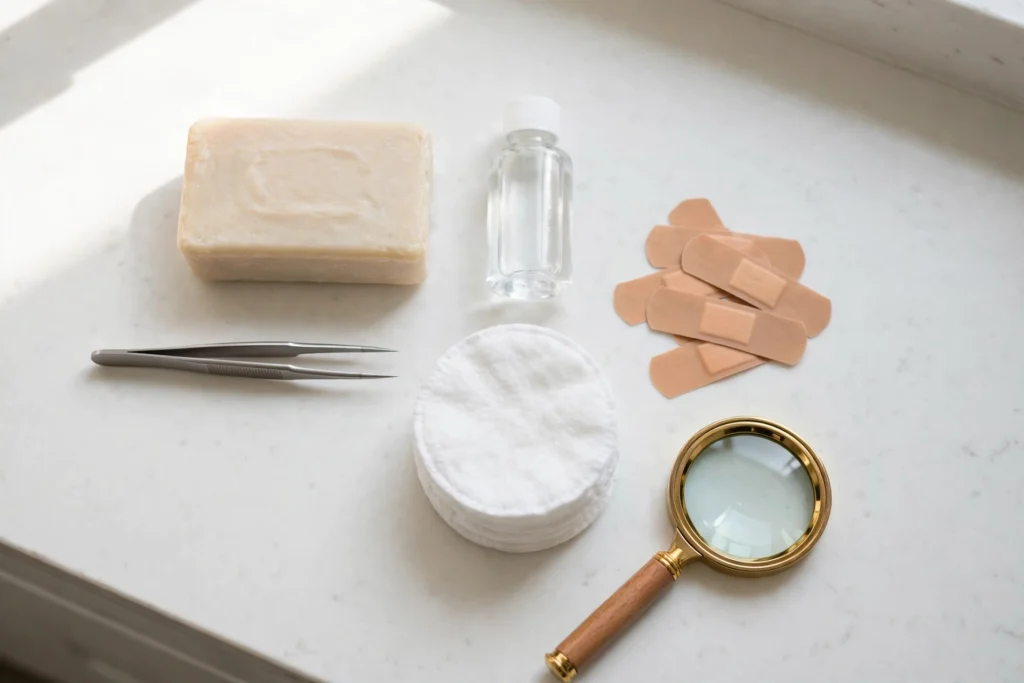
All costs are rough planning estimates, not quotes; prices vary by store, clinic, and insurance. The home kit — tweezers, rubbing alcohol, bandages, and a magnifying glass — costs less than $15 total. Check your tetanus shot too: if it has been more than 10 years since your last one, or you cannot remember, ask your doctor.
Frequently Asked Questions
A tiny, painless splinter can stay for a few days, but most guides on how to remove a splinter say not to wait longer than that. If it starts to hurt, swell, or turn red, take it out the same day. Glass or metal splinters should never be left in.
Yes, small surface splinters often work their way out within a few days as the skin sheds — but only if they are tiny and painless. Leaving one alone is sometimes the right call, and it is still part of knowing how to remove a splinter safely: watch it daily and act the moment it hurts or reddens.
Yes — plain craft glue, not super glue. Craft glue is one of the gentlest answers to how to remove a splinter from a child: spread a thin layer over the area, let it dry into a film, and peel it off in the direction the splinter entered. It only works when part of the splinter is close to the surface. Never use super glue on skin.
Sometimes, for shallow splinters. The syringe trick shows up in every search for how to remove a splinter now: cut the tip off a plastic syringe, press the open end over the splinter, and pull the plunger to create suction. It can lift a shallow splinter enough to grab with tweezers, but it often fails, and it never replaces tweezers or a doctor visit.
Spreading redness, swelling, warmth, pus, red streaks, or fever all point to infection. A little redness that fades in a day is normal. Redness that grows, or any pus at all, means see a doctor the same day.
Maybe — check your records. Tetanus lives in soil and on dirty wood, so a splinter from a garden stake or deck carries some risk. If it has been more than 10 years since your last tetanus shot, or you are not sure when it was, ask your doctor. A deep or dirty wound shortens that window to 5 years.
Final Thought
Most splinters are a two-minute job with clean hands and the right angle — wash, sterilize, grip, pull along the entry path, and bandage. Once you know how to remove a splinter calmly, you will know exactly when to hand the job to a doctor instead. Keep tweezers, rubbing alcohol, and bandages in one small kit at home.