Cabinet Refacing vs Repainting: Which Kitchen Upgrade Is Worth It?
TL;DR
Cabinet refacing vs repainting is a choice between new doors and a new coat of paint. Repainting costs $2,000–$5,000 professionally ($300–$800 in materials if you DIY) and keeps your old doors — it lasts 5–10 years before chips and peeling show. Refacing costs $4,000–$9,500, replaces the doors, drawer fronts, and veneer entirely, and lasts 15–20 years. Paint when the doors are in great shape and the budget is under $5,000; reface when the doors are dated, damaged, or the wrong style.
Cabinet refacing vs repainting is the question every homeowner with dated oak cabinets asks first, because paint looks like the cheap answer — and sometimes it is. A good paint job can transform a kitchen for a few thousand dollars in a week. But paint is a coating on old doors, and coatings wear, chip, and peel, especially on the doors you open fifty times a day. Refacing replaces those doors altogether, which is why it costs roughly twice as much and lasts roughly twice as long. This guide compares the two on what changes, cost, lifespan, home value, and downsides, then gives you a quick decision guide.
What Is the Difference Between Refacing and Repainting?
Repainting coats your existing doors; refacing replaces doors, drawer fronts, and veneer entirely — and that one difference decides everything else, from cost to lifespan to what your kitchen can look like when it is done. Paint changes colour only, while refacing changes the style, the profile, and the hardware too.
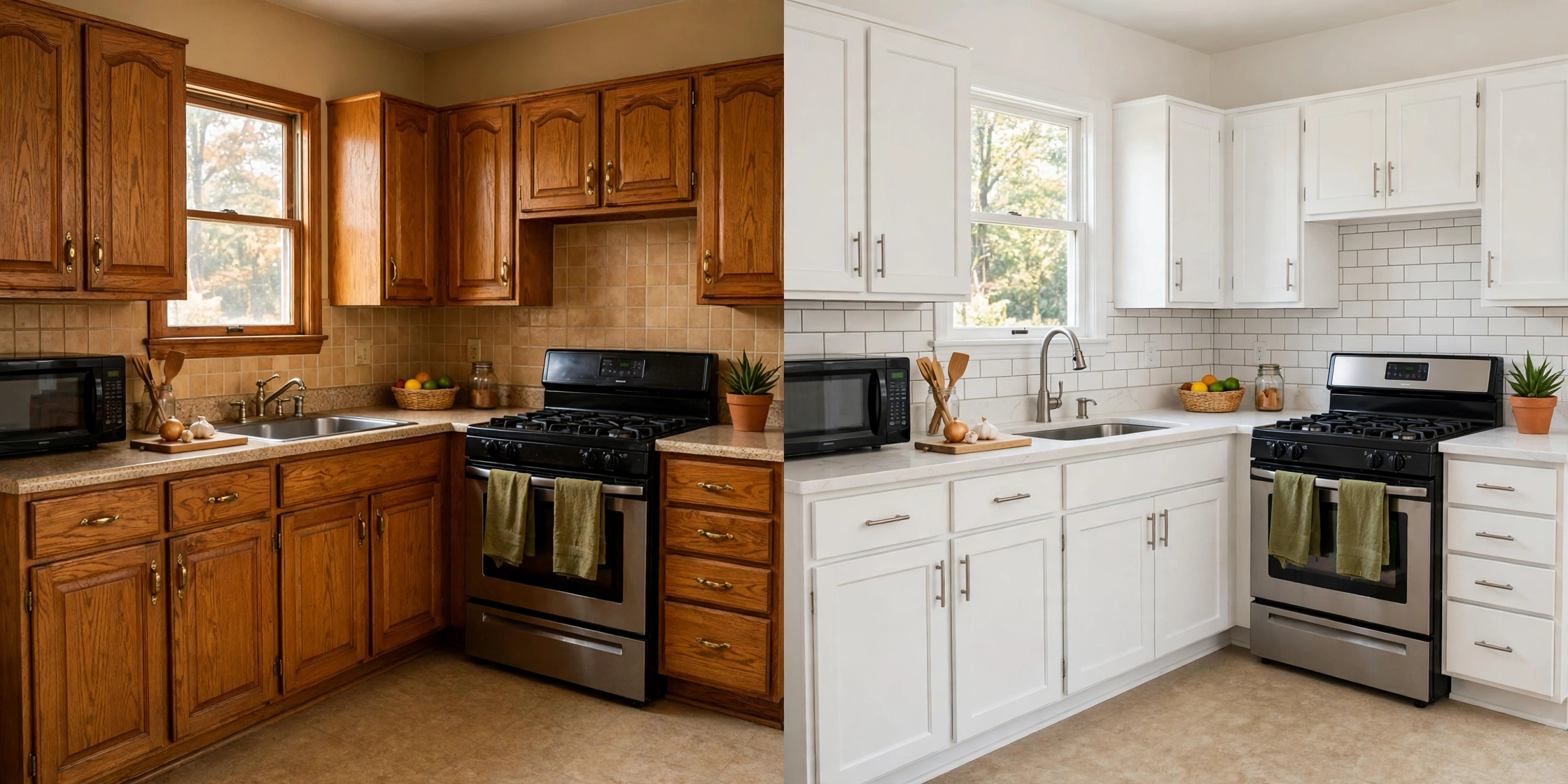
Repainting — refinishing, in the trade’s language — keeps everything you already have. The crew (or you) removes the doors, sands them, primes them, and sprays or brushes on two or three coats of cabinet paint; only the colour changes. Refacing is a rebuild of the visible kitchen: new doors and drawer fronts in a style you choose, a matching veneer skin on the frames, and new hardware. That is why repainting can fix a colour problem but never a style problem — a raised-panel oak door painted white is still a raised-panel oak door — while refacing can turn that kitchen into flat-front modern or classic Shaker.
Cabinet Refacing vs Repainting: Is It Cheaper to Paint or Reface Kitchen Cabinets?
Cabinet refacing vs repainting on cost is clear: painting is cheaper — a professional paint job runs $2,000–$5,000, while refacing runs $4,000–$9,500 for a typical kitchen, roughly double the price for roughly double the lifespan. That gap is the doors themselves: paint buys labour and paint, while refacing buys brand-new doors, veneer, and hardware.
A pro spray job at $2,000–$5,000 covers removal, sanding, priming, spraying, and rehanging; a DIY paint job costs $300–$800 in materials plus your weekends. Refinishing runs $5–$10 per sq ft. The reface numbers come from the kitchen cabinet refacing cost guide: $4,000–$9,500 typical, with premium 10×10 jobs reaching $6,500–$13,000 in wood veneer. Compare cost per year: paint at $3,500 lasting 7 years is about $500 a year; a reface at $7,000 lasting 17 years is about $410 a year. Work out how much paint you need with our paint coverage calculator.
| Factor | Repainting | Refacing |
|---|---|---|
| Pro cost | $2,000–$5,000 | $4,000–$9,500 |
| DIY materials | $300–$800 | Not a DIY job for most people |
| Refinishing rate | $5–$10 per sq ft | — |
| What changes | Colour only | Doors, drawer fronts, veneer, hardware |
| Lifespan | 5–10 years | 15–20 years |
| Cost per year (typical) | ~$500 | ~$410 |
| Best for | Great doors, tight budget | Dated or damaged doors, long-term home |
All prices are rough planning estimates, not quotes — get three itemized quotes before deciding, and compare them line by line.
Which Lasts Longer: Painted or Refaced Cabinets?
Refacing lasts longer — 15–20 years against 5–10 years for pro paint — because a new door cannot chip the way a painted old door can, and the difference shows up first exactly where you touch the kitchen most: the sink door, the stove-side drawer, and the handles you grab with wet hands.
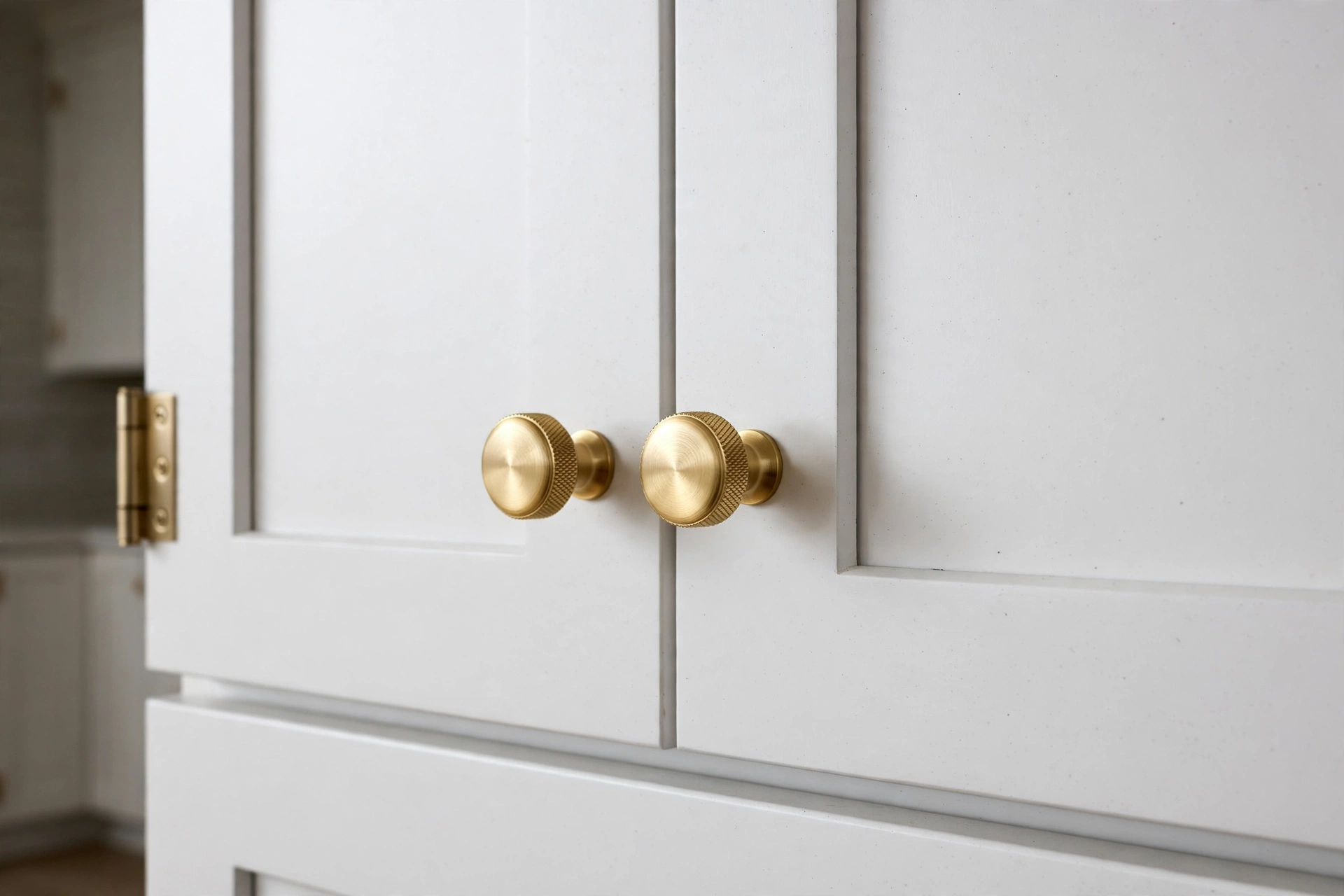
Paint fails at the edges and touch points: the finish by the sink, the stove, and the handles is flexed, knocked, and steamed daily, and after five years the chips appear, then the peeling. A Facebook thread with 98 comments on worn oak cabinets put it bluntly — professionally painted cabinets can peel, and DIY painting can be a crapshoot, with the result depending entirely on prep and product. A pro who sands, bonding-primes, and sprays two coats of catalyzed cabinet paint gets eight to ten years; a weekend brush job over glossy varnish without sanding gets two. Refacing sidesteps the problem because the wear surface is new: a factory-finished door with a cured coating, hung on new hinges. It still needs gentle cleaning, but it does not depend on your sanding technique.
Can You Paint Over Refaced Cabinets Later?
Yes, most veneer and laminate can be painted — but it may void the warranty, so check the warranty in writing before you pick up a brush, because a voided warranty is a high price for a colour change. The paint itself is the easy part; the contract is the part that catches people out.
Veneer takes paint well with light sanding, a bonding primer, and thin coats; laminate needs the same prep plus a primer made for slick surfaces, or the paint peels in sheets. But many pro warranties cover the material as installed — change the surface and the installer can reasonably say the failure is yours. So first read the warranty, then call the installer and ask whether painting voids it. If the warranty has expired, painting is a sensible way to buy another five years from sound doors; if it is still live, ask about a warranty-safe refresh instead.
Does Repainting or Refacing Add More Home Value?
Refacing adds more home value, because it reads as “new cabinets” to buyers while paint reads as a cosmetic refresh — and buyers pay for new, not for repainted. A buyer opens a refaced door and files the kitchen under done; a buyer opens a painted door and sees the same old profile underneath.
The numbers follow the perception: a reface typically recovers 70–80% of its cost at resale, while a paint job recovers less as a percentage — and because the spend is smaller, the absolute return is smaller too. Selling within a year with sound cabinets, a $3,000 paint job that makes the listing photos pop is excellent money. Staying five years or more, the reface is the value play — the upgrade you live with and the upgrade the buyer pays for. The same logic applies one step up in cabinet refacing vs replacement, where the boxes, not the doors, decide the call.
What Are the Downsides of Each Option?
Paint chips and wears fastest on high-touch areas; refacing locks you into your current layout — and knowing both downsides honestly is what stops either choice from becoming a regret. Paint cannot fix a warped door or a dated profile, and refacing cannot move a sink or add an island.
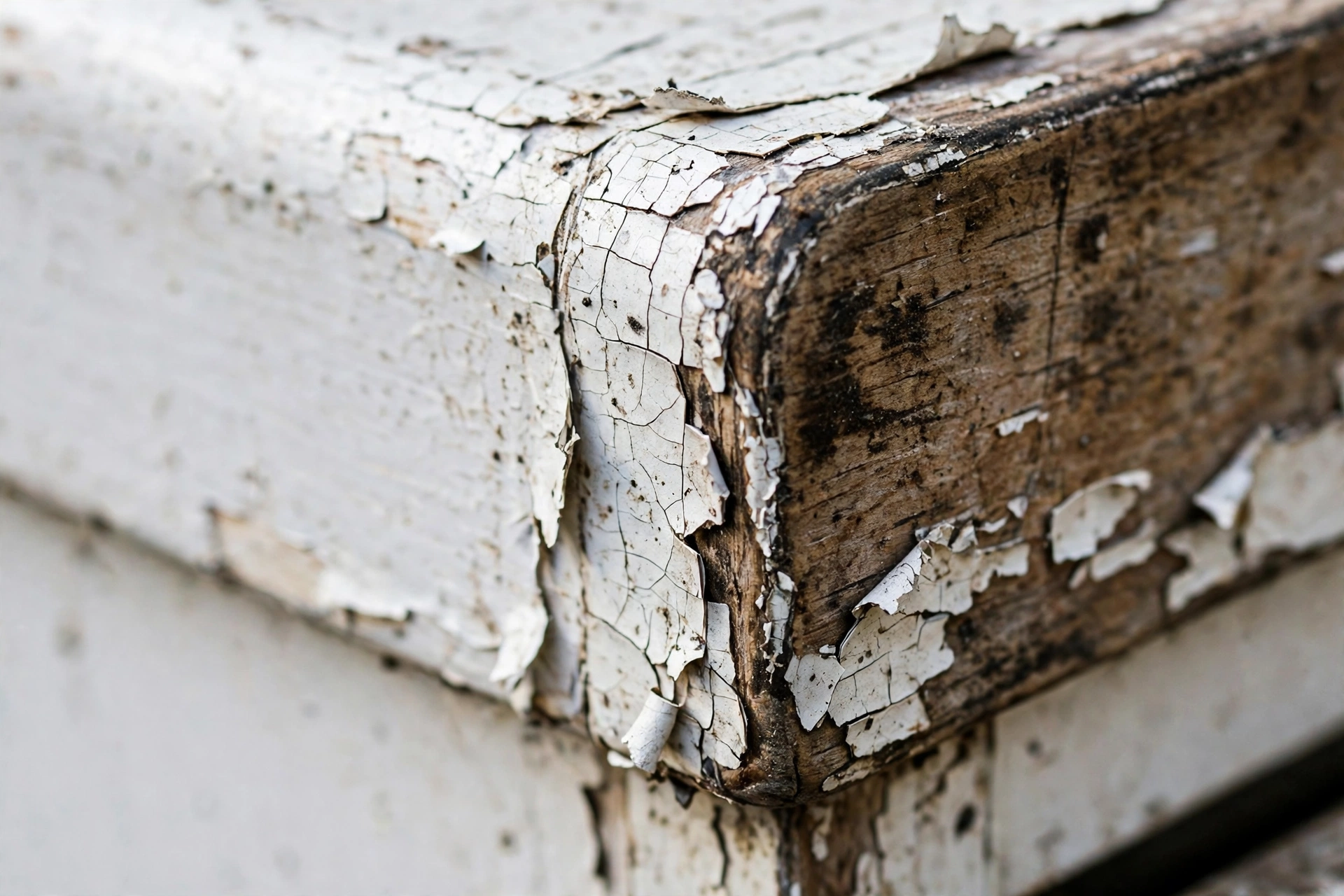
Paint’s downsides are durability: it chips on edges, peels near steam and heat, shows brush marks if brushed instead of sprayed, and needs touch-ups every year or two in a busy kitchen. A warped door stays warped and a dated profile stays dated under two coats of paint. Refacing’s downsides are different: it costs twice as much, needs a pro crew, locks you into your current layout, and the box interiors stay old. Premium choices can creep the price toward replacement territory — if the reface quote climbs past $13,000, get a replacement quote before you sign. Neither option is wrong; each is wrong for the wrong kitchen.
Should You DIY Paint or Hire a Pro to Reface?
DIY paint saves the most money but risks peeling; refacing is almost always a pro job — and the reason is not snobbery, it is that the two jobs demand completely different skills. Painting rewards patience and prep; refacing rewards millimetre-accurate measuring and veneer work done daily.
DIY painting is doable if you are patient: remove and label every door, degrease, sand, bonding-prime, spray or roll two thin coats, let each coat cure, and rehang level. Skip any step — paint over grease, skip the primer, brush thick coats in a humid week — and the finish peels, which is why the Facebook thread warned DIY painting can be a crapshoot. Budget $300–$800 and two to three weekends, and be honest about whether you will actually do the prep; most DIY paint failures are prep failures. Refacing is a measurement and veneer job: doors measured to the millimetre, veneer cut, glued, and trimmed flush without bubbles, hinges set so twenty doors hang with even gaps. A first-timer can learn it, but the learning happens on your kitchen, visibly, every day.
Which Option Fits Your Kitchen? A Quick Decision Guide
Paint if the boxes and doors are in great shape and the budget is under $5,000; reface if the doors are dated or damaged — and if you are still torn, the five questions below settle it in two minutes. Answer them honestly, and the right option usually picks itself.
1. Are the doors in great shape? Flat, solid, hinges tight, no warping, and a style you can live with once the colour changes — paint. Warped, damaged, or a style you dislike even in a new colour — reface.
2. What is the budget? Under $5,000 points to paint, professionally done. $4,000–$9,500 is reface territory, and if the reface quote comes in above $13,000, get a replacement quote as a baseline too.
3. How long will you stay? Selling within a year — paint. Staying five years or more — reface, and enjoy the extra decade of life.
4. Can you live with the layout? Both options keep the layout, so this question does not separate them — but if the layout is the real problem, neither is the answer, and replacement is the honest next step.
5. How much disruption can you take? Paint takes a week of doors off and drying time; refacing takes 3–5 days with a crew in the house. Both beat replacement for disruption, so pick on the doors, not the diary.
Score it simply: mostly paint answers, paint — and do the prep properly or hire it out. Mostly reface answers, reface — and get three itemized quotes first, starting with an online cabinet refacing quote so you can compare the same spec across companies. Either way, price the job by the door before you commit: the cabinet refacing cost per door breakdown shows how door count drives the total.
Frequently Asked Questions
Is it cheaper to paint or reface kitchen cabinets?
Painting is cheaper upfront — $2,000–$5,000 professionally, or $300–$800 in materials DIY, against $4,000–$9,500 for refacing. Per year of use, refacing often wins: roughly $410 a year over 17 years versus roughly $500 a year for paint over 7 years.
How long do painted cabinets last compared to refaced cabinets?
Pro paint lasts 5–10 years before chips and peeling show, with the lifespan depending heavily on prep — sanding, bonding primer, and sprayed coats last longest. Refaced cabinets last 15–20 years, because the wear surface is a brand-new, factory-finished door rather than a coating on an old one.
Can you paint over refaced cabinets later?
Yes, most veneer and laminate can be painted with light sanding and a bonding primer — but check the warranty first, because painting can void it. If the warranty is still live, ask the installer before painting; if it has expired, painting is a sensible way to refresh the colour.
What is refinishing, and is it the same as repainting?
Refinishing is the industry term for the same process family: stripping or sanding the old finish and applying a new one, whether paint or stain. Repainting is the most common form of refinishing; restaining is the other. Both keep your existing doors — neither replaces them the way refacing does.
Does refacing or repainting add more home value?
Refacing adds more, because buyers read it as “new cabinets” and it typically recovers 70–80% of its cost at resale. Paint is the better value play only when you are selling soon and the cabinets are structurally fine — a $3,000 paint job that transforms listing photos is excellent money for a one-year horizon.
Should I DIY paint or hire a pro?
DIY paint if you will genuinely do the prep — degrease, sand, bond-prime, and let coats cure — and budget $300–$800 plus two to three weekends. Hire a pro if the prep sounds like a chore you will skip, because skipped prep is the reason DIY paint peels. Refacing is almost always a pro job either way.
Final Thought
Cabinet refacing vs repainting is not a question with one right answer — it is a question about your doors. Great doors and a tight budget mean paint: $2,000–$5,000, done in a week, five to ten good years. Dated or damaged doors and a longer stay mean reface: $4,000–$9,500, new doors and veneer, fifteen to twenty years, and a kitchen buyers read as new. Pick on the doors, price it per year as well as per job, and get three quotes for the winner. For the numbers, the kitchen cabinet refacing cost guide breaks down the job by size, material, and region.