What Do Squirrel Droppings Look Like — and What Should You Do?
TL;DR
Squirrel droppings are small barrel-shaped pellets, about 3/8 to 1/2 inch long (8–12 mm), thicker in the middle with rounded ends, dark brown when fresh and fading to tan as they dry. They turn up most often in attics, near a chewed entry point, scattered on beams. Never touch them barehanded and never dry-sweep them — wet them down, wear gloves and a mask, and call a pro for an attic pile.
Squirrel droppings are one of those finds that stops you mid-step in the attic: a scatter of small brown pellets on the insulation, and suddenly you need to know whether you have squirrels, rats, or mice — because the answer decides everything that comes next. The three look alike at a glance, but they differ in size, shape, and where they turn up, and those differences are reliable enough to identify with a ruler and a careful look. This guide walks through what the pellets look like, how they compare with rat and mouse droppings, what a pile in the attic means, whether they are dangerous, how to clean them up safely, and when the job belongs to a professional.
What Do Squirrel Droppings Look Like?
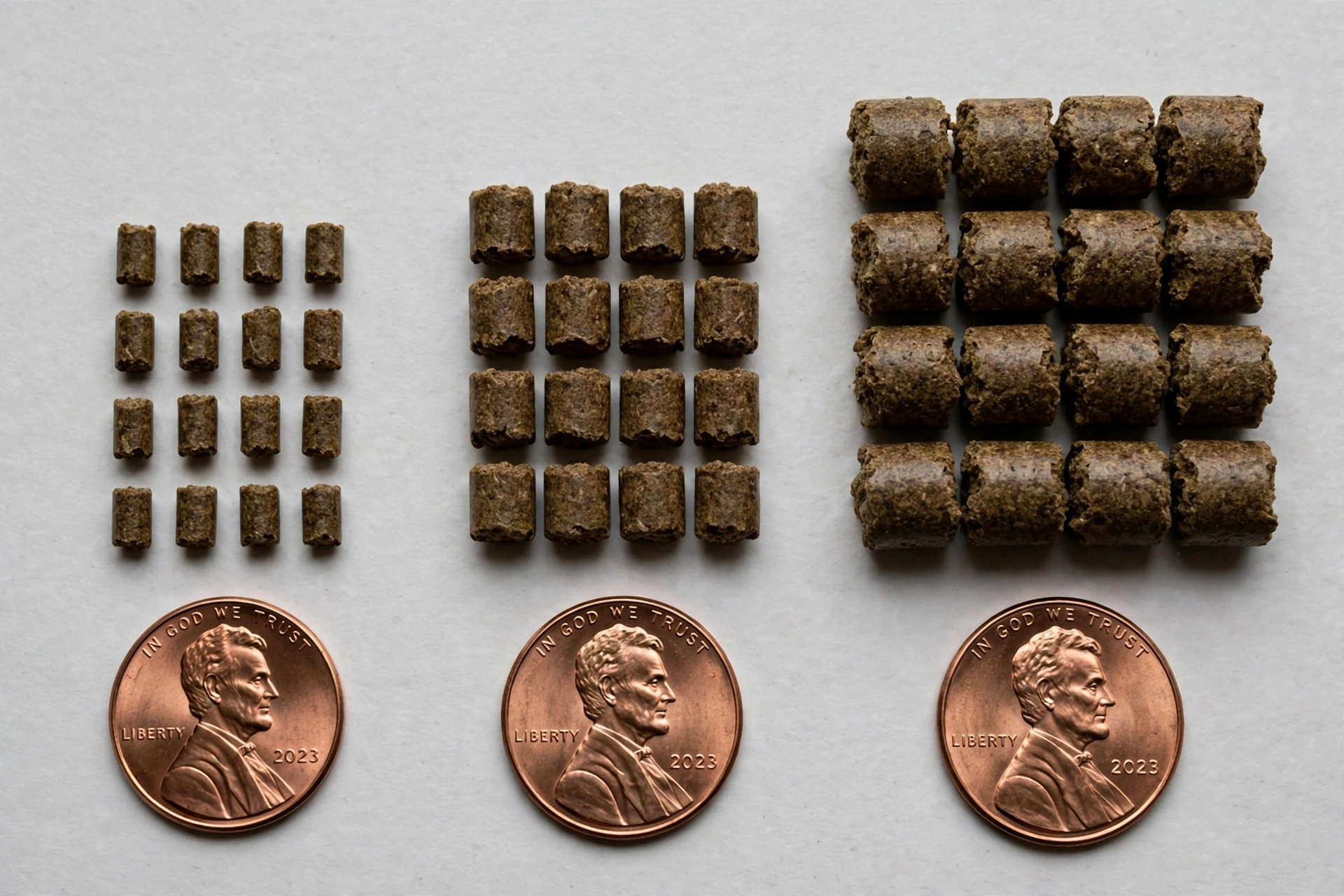
Squirrel droppings are small, barrel-shaped pellets about 3/8 to 1/2 inch long (roughly 8–12 mm), thicker in the middle with rounded ends, like tiny sausages or oversized beans. Fresh pellets are dark brown or black and slightly moist; as they dry they lighten to pale brown or tan and may crumble when prodded.
Size is your first clue, and shape is the one that settles it. The pellets are about the size of a large bean, noticeably fatter than rat droppings of a similar length. Their color varies more than rat droppings do — dark brown, reddish brown, or tan depending on diet — and older pellets fade while rat pellets tend to stay dark. Squirrels scatter their pellets on beams, joists, and insulation near a nest or entry point, rather than laying them in the neat lines rats leave along a nightly route. Take a photo with a coin or ruler beside the pellets before you touch anything — the photo helps a professional confirm the identification later.

How Are They Different From Rat Droppings?
Rat droppings are longer, thinner, and pointed or tapered at the ends, while squirrel pellets are shorter, fatter, and barrel-shaped with rounded ends. Roof rat pellets run about 1/2 inch with pointed ends; Norway rat pellets run about 3/4 inch, thick capsules with blunt ends; squirrel pellets sit between mouse and rat in length but are distinctly rounder.
Use all three columns together — size alone can mislead you, since young rats leave smaller pellets and diet changes color and shape. The ends are the most reliable single detail: pointed ends point to rat or mouse, rounded ends point to squirrel. Location is the second check: squirrel pellets turn up mostly in attics and near the roofline, while rat pellets at the same size are more often found at ground level, in basements, crawl spaces, and garages. Timing is a third clue: squirrels are noisy at dawn, rats after dark.
| Animal | Typical length | Shape and ends | Where you usually find them |
|---|---|---|---|
| Squirrel | 3/8–1/2 in (8–12 mm) | Fat oval barrels, rounded ends | Attics, rooflines, near chewed entries |
| Roof rat | About 1/2 in | Slim spindle, pointed ends, often curved | Up high: attics, rafters, tops of walls |
| Norway rat | About 3/4 in | Thick capsule, blunt rounded ends | Low: basements, crawl spaces, garages |
| House mouse | 1/8–1/4 in (3–6 mm) | Thin rods, pointed at both ends | Scattered along walls, cabinets, drawers |
If the pellets are in a line along a wall base or a regular run, that pattern favors rats, which reuse the same route every night. If they are scattered across beams with no clear trail, and you hear scampering in the morning, that favors squirrels. When in doubt, do not guess from one pellet — compare several, and weigh shape and location together.
How Are They Different From Mouse Droppings?
Mouse droppings are much smaller — only 1/8 to 1/4 inch long, about the size of a grain of rice — with pointed ends, while squirrel pellets are roughly twice as long and far fatter, with rounded ends. If you need a ruler to tell whether a pellet is a mouse dropping, it is probably not a mouse dropping.
The other difference is quantity and spread. A mouse produces 50 to 75 pellets a day, so mouse droppings build up fast and scatter widely: dozens of tiny rice-grain pellets in drawers, cupboards, along baseboards, and behind appliances. Squirrel pellets are fewer, larger, and concentrated where the animal nests — in the attic, near insulation, or along a beam. Cockroach droppings are cylindrical with ridges, and bat guano crumbles into glittery dust with shiny insect fragments, while squirrel pellets are smooth, solid, and oval. If the pellets are tiny, pointed, and everywhere in the kitchen, think mouse first; if they are fat, rounded, and in the attic, think squirrel first.
What Do Droppings in the Attic Mean?
Droppings in the attic usually mean squirrels are nesting there, or were recently — most often gray squirrels in the daytime, or flying squirrels at night in loose family groups. The pellets alone do not prove the animals are still there, but fresh, dark, moist pellets plus noise, nesting material, and a chewed entry point together mean an active infestation.
Listen before you climb up. Squirrels are noisy at dawn and during the day: scampering, rolling nuts, and chewing. Rats, by contrast, are heard after dark. Look for the supporting signs: shredded insulation used as nesting material, chewed wood around the eaves or vents, gnawed wires, stored nuts, and urine stains. Squirrels can fit through a gap of about an inch and a half, so the entry point is often a small chewed hole at the roofline or a vent cover pushed aside. A few old, pale, crumbly pellets with no noise may mean the animals have already left — but do not assume that from the pellets alone. The cleanup rules below apply either way, because dried pellets still carry germs, and the entry point still needs sealing.
Are Squirrel Droppings Dangerous?
Yes, they can be — droppings and urine from squirrels can carry germs, including Salmonella bacteria, which cause salmonellosis, and Leptospira bacteria, which cause leptospirosis. The risk is low for a healthy adult who follows the safety steps, and higher for small children, pregnant people, and anyone with a weakened immune system.
The main danger is not touching a pellet — it is breathing the dust. When pellets dry out, they crumble into fine particles, and disturbing them by sweeping or vacuuming sends those particles into the air, where they can be inhaled. That is why the cleanup rules matter more than the identification: never dry-sweep, never use a regular vacuum, and never touch pellets barehanded. Squirrels are also hosts for fleas and ticks, so treat nesting material with the same caution. Small rodents including squirrels are rarely infected with rabies and have not been known to transmit it to humans, per CDC guidance — the concern here is the bacteria in the waste. If anyone develops fever, diarrhea, or flu-like symptoms after contact, they should speak to a doctor and mention the exposure.
How Do You Clean Up Droppings Safely?
Clean up droppings safely by gearing up first, wetting the pellets down so no dust rises, lifting them with paper towels or a shovel into a sealed bag, and disinfecting the area — never dry-sweep them and never use a household vacuum, which blows fine particles back into the air.
Follow these steps in order, and only for a small, accessible pile outside an attic. First, make sure the animals are gone — do not clean a nest while squirrels are still living in it. Second, gear up: disposable gloves, an N95 or P100 respirator (not a cloth mask), safety goggles, long sleeves, long pants, boots, and a hat, with children and pets kept out of the area. Third, ventilate the space and mist the pellets lightly with water from a spray bottle until damp. Fourth, pick the pellets up with paper towels or a shovel and put them straight into a heavy-duty bag, then double-bag it and put it in an outdoor trash bin, following local waste rules. Fifth, spray the area with a household disinfectant or diluted bleach solution, let it soak for about five minutes or as the label directs, and wipe it up with paper towels. Sixth, wash your hands with soap and hot water, launder your clothes in hot water, and shower before touching food or children. If the insulation is soaked with waste, it cannot be cleaned — it needs to be removed and replaced, which is professional work. A HEPA-filtered vacuum made for this kind of cleanup is the only vacuum that belongs near the job; a standard vacuum spreads the contamination.

How Do You Stop Squirrels From Coming Back?
Stop squirrels by removing the food that draws them and sealing every entry point after the animals are out — trim branches that touch the roof, secure bird feeders, and cover vents, eaves, and roof gaps with quarter-inch galvanized hardware cloth screwed down every few inches.

Start outside: cut back any tree branch within about eight feet of the roof, move bird feeders away from the house, bring pet food indoors at night, and pick up fallen fruit and nuts promptly. Then seal the house, but only after you are sure no squirrel is trapped inside. Check the roofline, the eaves, the vents, and the chimney cap, and cover every gap larger than an inch and a half with hardware cloth, not foam or caulk, which squirrels chew through. Clean the nesting site with an enzyme cleaner made for wildlife waste, which breaks down the urine smell that draws other squirrels back. Repellents and ultrasonic devices are not reliable on their own. Removing the food and sealing the entries is what works.
When Should You Call a Professional?
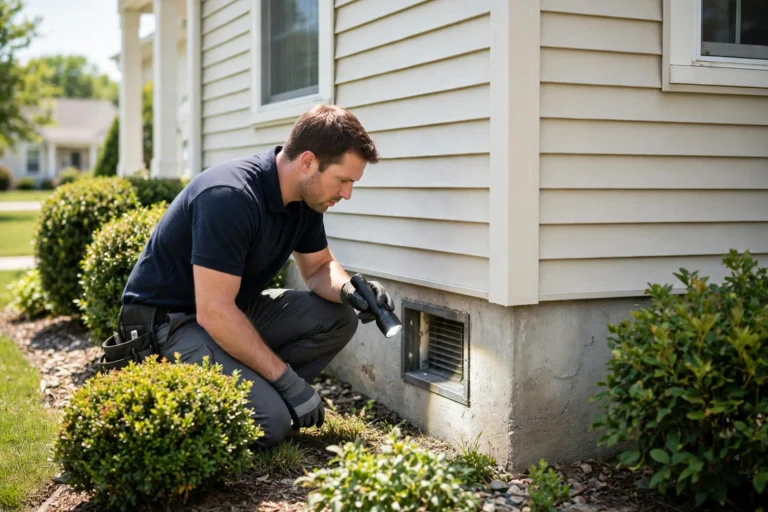
Call a professional if the pile is in an attic or crawl space, if it is large or has been there for weeks, if anyone in the household is pregnant, very young, or immunocompromised, or if squirrels keep returning after you have sealed the entries and removed the food. An attic pile is the clearest call-a-pro case.
An attic cleanup needs respirators, the insulation underneath may be contaminated and need removing, and the squirrels themselves may still be living there — and a trapped squirrel in an attic is a job for someone with the right equipment and the local wildlife rules. A professional can also find the entry point you missed, because squirrels use the same routes again and again, and a route you cannot see is the one they will use again. If you need a pro, have a licensed pest professional inspect it — they can confirm the identification from your photos, remove the animals humanely, clean the space, and seal the entries in one visit. For a larger, tubular lookalike, our raccoon scat guide covers the 2–3-inch pellets raccoons leave in latrines, which carry a different and more serious risk and always belong to a professional when they are in an attic.

Frequently Asked Questions
How big are squirrel droppings?
About 3/8 to 1/2 inch long (8–12 mm), roughly the size of a large bean, and thicker in the middle with rounded ends. That makes them about twice as long as mouse droppings and shorter and fatter than most rat droppings.
Are they dangerous to touch?
They can carry Salmonella and Leptospira bacteria, so never touch them barehanded. Wear disposable gloves and a mask, wet them down first, and wash your hands with soap and hot water afterward. Dried pellets are the bigger risk, because they crumble into dust that can be inhaled.
Do squirrels poop in the same spot?
Squirrels scatter their pellets on beams and insulation near a nest or entry point, rather than laying them in neat lines the way rats do along a nightly route. Flying squirrels may leave loose piles where a family nests, but they do not build the large latrines raccoons do.
How do I know if squirrels are still in my attic?
Listen at dawn for scampering, rolling, and chewing — squirrels are daytime animals, while rats are heard after dark. Fresh dark moist pellets, shredded insulation, chewed wood at the eaves, and gnawed wires together mean the animals are likely still there.
Can I vacuum up the pellets?
No — not with a household vacuum, which blows fine particles back into the air. Use a HEPA-filtered vacuum made for this kind of cleanup, or pick the pellets up by hand with gloves and paper towels after wetting them down. Never dry-sweep them.
Will the squirrels leave on their own?
Rarely, while the attic still offers warmth, shelter, and a nearby food source. Removing bird-feeder access and fallen fruit helps, but sealing the entry points after the animals are out is what keeps them from coming back.
Final Thought
The identification is the easy part: fat little barrels with rounded ends, about 3/8 to 1/2 inch long, scattered in the attic near a chewed entry, mean squirrels — not the pointed rice grains of mice or the long thin spindles of rats. The cleanup is where the care belongs: gloves, a proper mask, wet the pellets down, never dry-sweep, and double-bag everything. A small pile on a porch or in a garage is a careful DIY job; a pile in the attic, a large pile, or any pile in a home with a pregnant person, a small child, or someone immunocompromised belongs to a professional. Seal the entry, clean the scent away, and the next squirrel will look elsewhere.