How to Unclog a Drain: The Step-by-Step Method Ladder
TL;DR
How to unclog a drain comes down to climbing a ladder: start at the cheapest rung and climb only when the rung below fails. Try hot water with soap first for grease, then a plunger, then a hair wand, then a drain snake. Call a plumber for main-line signs — several slow drains, gurgling toilets, or sewage smells. Do-it-yourself tools cost $0–$25.
A slow drain is the most common plumbing complaint in any home, and most do not need a plumber — they need the right method in the right order. How to unclog a drain is a question of climbing a ladder: start at the cheapest rung, and climb only when the rung below fails. About 80% of drain calls could have been do-it-yourself jobs. This guide covers the diagnosis, the five rungs, and when to call a pro.
How to Unclog a Drain: Where Do You Start?
Start by figuring out which drain is slow and whether others are slow too: one slow drain means a local clog you can fix yourself, while several slow drains mean a main-line problem that needs a plumber. Then try the cheapest fix first — hot water and soap — and climb the method ladder only if it fails.
How to unclog a drain starts with diagnosis, not with a tool. Test every drain in the house. If only one is slow, the clog is local. If several are slow at once, or the toilet gurgles when the washer drains, the problem is in the main line, and no plunger will fix it.
The second check is what is coming back up. Clear water that drains slowly is a simple clog. Dirty water, sewage smells, or water backing up into a tub is a main-line blockage — stop, do not pour chemicals in, and call a plumber. How to unclog a drain safely means knowing which problem you have before you pick up a tool.
What Is Clogging Your Drain?
Most bathroom clogs are hair and soap scum, kitchen sink clogs are grease and food, and toilet clogs are paper and waste. A drain that smells like sewage or backs up with dirty water is a different problem, a main-line blockage or a vent issue. Knowing what is clogging the drain decides which rung of the ladder to start on.
The clog tells you the rung in how to unclog a drain. Bathroom sinks and tubs clog with hair and soap scum: hair catches, soap scum glues it together, and the mass grows until water barely passes. Kitchen sinks clog with grease and food: hot grease goes down liquid, cools and hardens, and catches everything that follows. Toilets clog with too much paper or things never meant to be flushed — wipes, cotton, dental floss.
Smell is the other diagnostic. A drain that smells like rotten eggs or sewage, or one that gurgles when another fixture drains, is a vent problem or a main-line blockage, and the ladder below will not help. A musty-smelling drain that runs fine is usually a dry P-trap: run water for a minute.
Does Boiling Water Unclog a Drain?
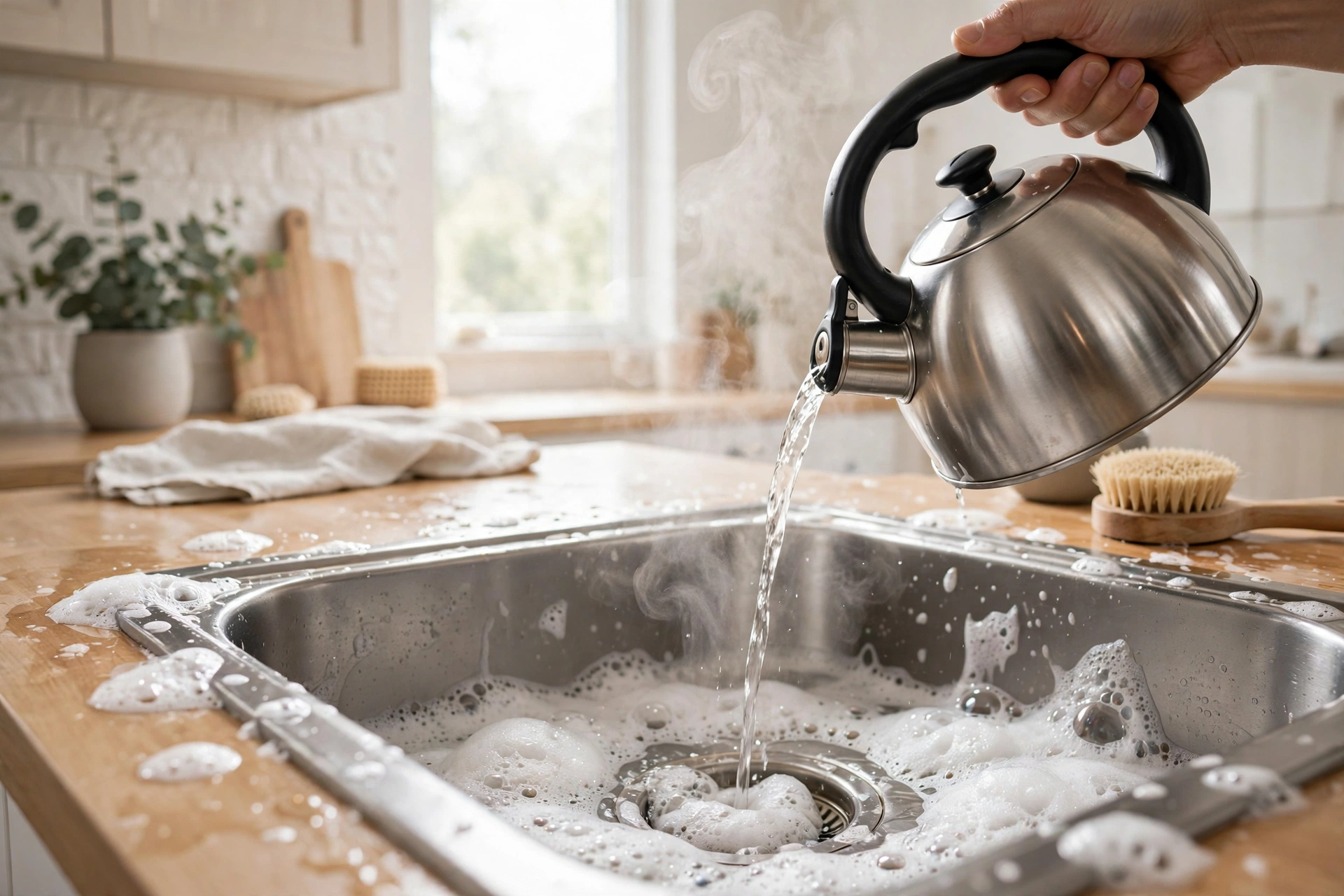
Boiling water can unclog a drain when the clog is kitchen grease: pour it slowly with dish soap and it melts the fat away. It does nothing for hair clogs, and it can damage PVC pipes — hot tap water is the safe choice for plastic. Never pour boiling water into a drain that already has chemical cleaner in it.
How to unclog a drain with boiling water works only when the clog is grease, and only in a metal pipe. Boil a kettle, add a squirt of dish soap, and pour slowly in two or three rounds, waiting a minute between each. The hot water melts the grease and the soap carries it away, and a slow kitchen sink often clears completely.
Never pour boiling water into a PVC drain — the heat softens the joints, and a softened joint leaks. For plastic pipes, use hot tap water instead. Boiling water does nothing for a hair clog, because hair does not melt. And never pour boiling water into a drain with chemical cleaner in it — it can splash back and burn. How to unclog a drain starts here for grease, and nowhere else.
How Do You Use a Plunger on a Drain?
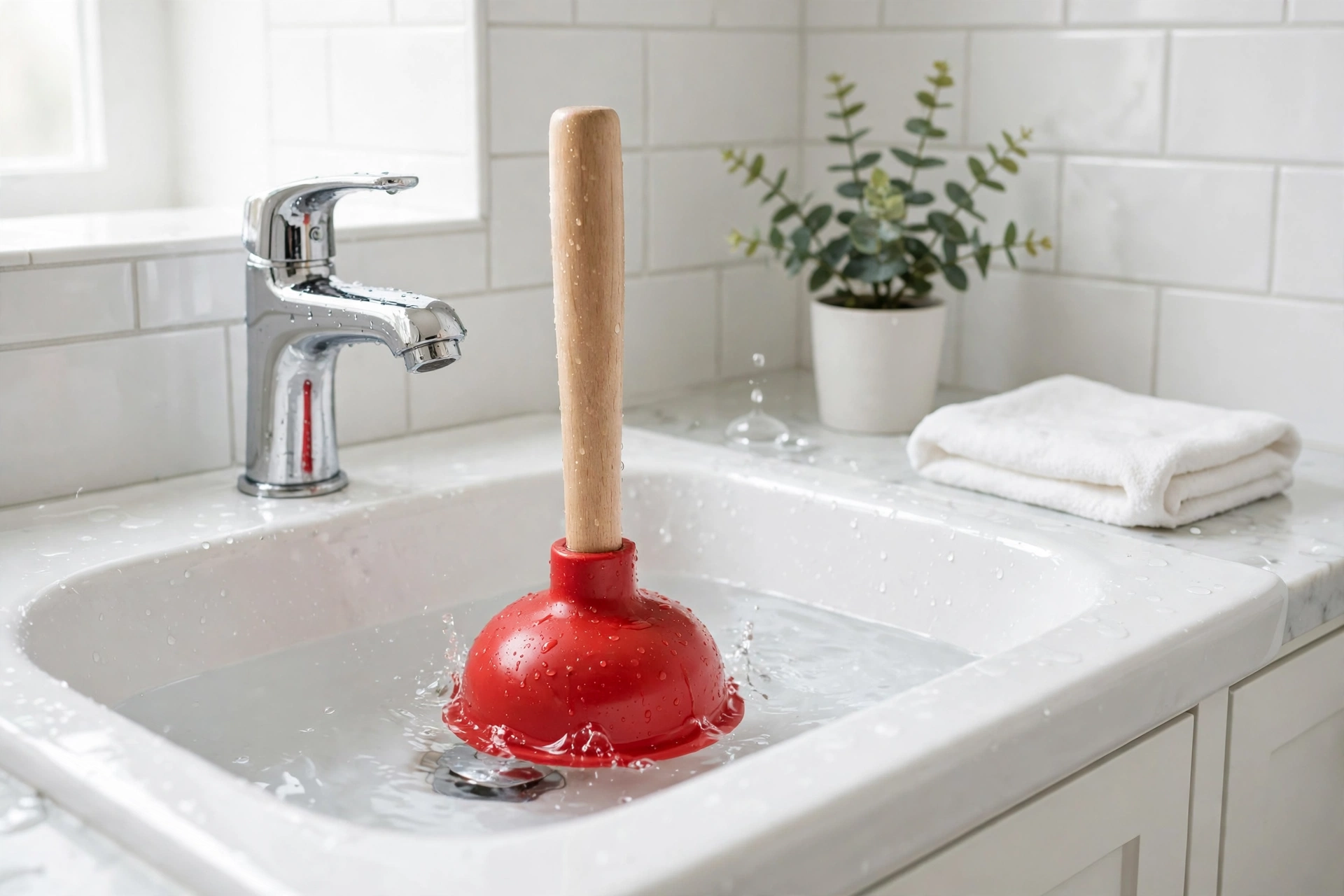
Use a cup plunger on a sink drain: cover the overflow hole, add enough water to cover the cup, and push and pull firmly for 15–20 seconds without breaking the seal. The push-pull motion, not brute force, moves the clog. Check the drain after a few rounds — if the water drops, the clog is moving.
The plunger is the most misunderstood tool in the house. Use a cup plunger for sinks and tubs — the flat cup, not the flange plunger made for toilets. Cover the overflow hole with a wet rag so pressure goes down the drain, not out the overflow. Add water to cover the cup, seat the plunger firmly, and push and pull for 15–20 seconds without breaking the seal.
Check after a few rounds. If the water drops, the clog is moving — keep going until it drains freely, then run hot water for a minute to flush the debris. If the water does not move after three or four rounds, the clog is past the plunger: climb to the next rung. How to unclog a drain with a plunger is a skill worth learning, because a plunger used right clears more clogs than any chemical.
How Do You Remove Hair From a Drain?
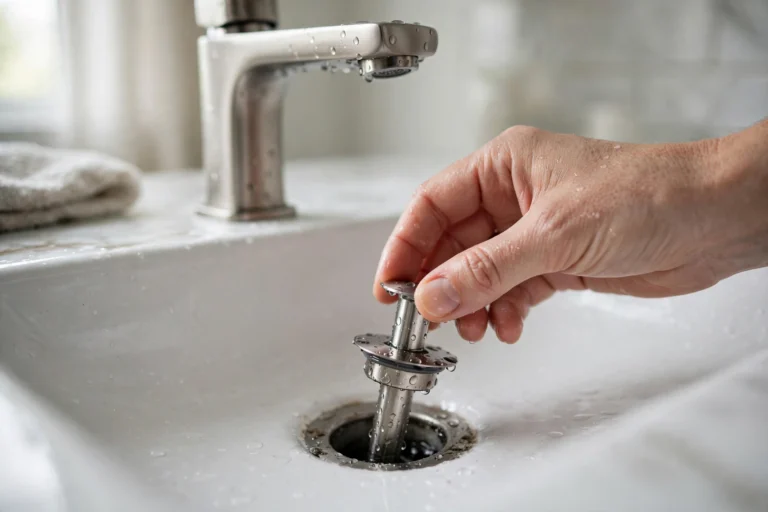
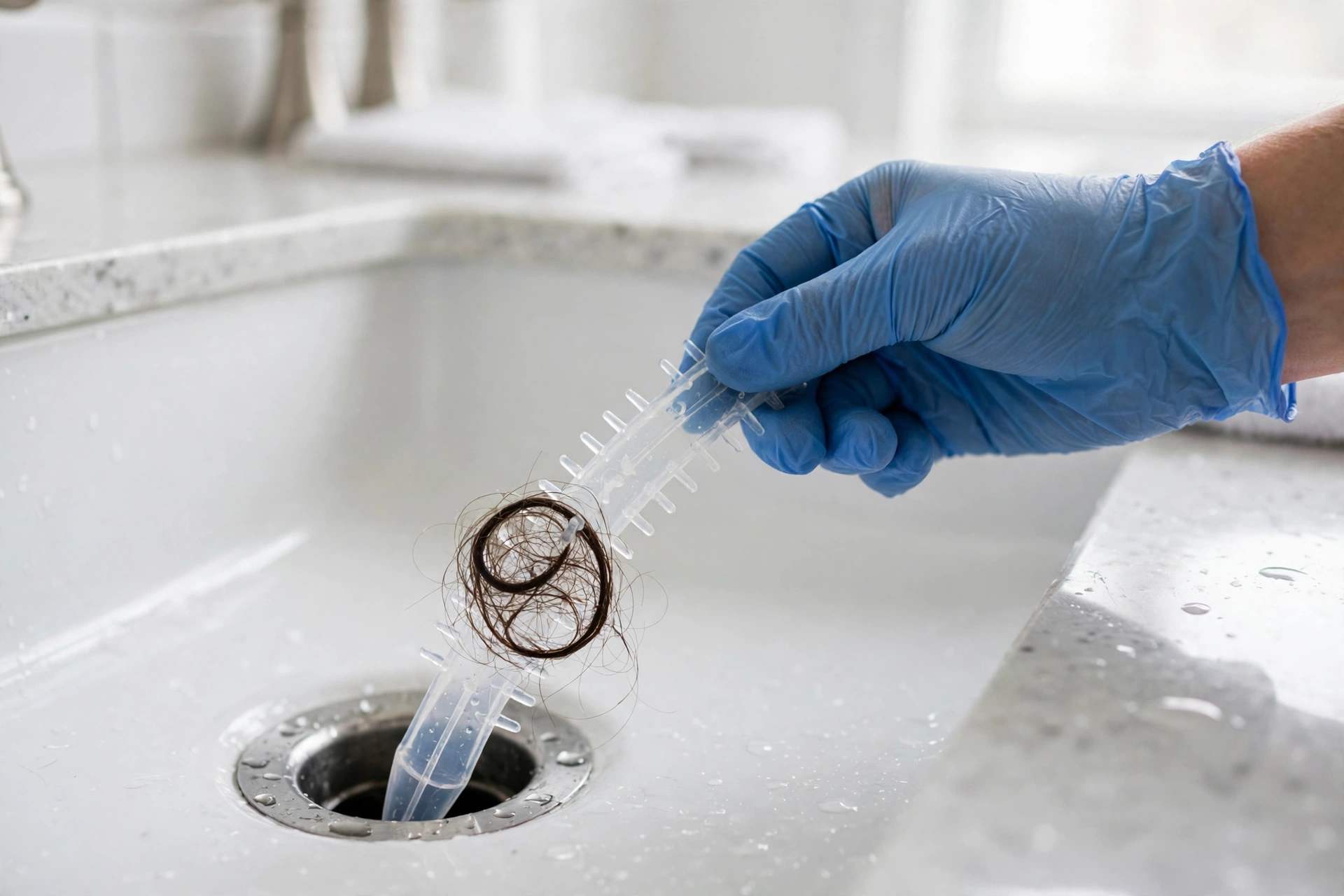
Remove hair from a drain with a plastic hair wand: push it down the drain, twist it, and pull it out slowly — the barbs catch the hair and pull the whole clog out in one piece. It takes about two minutes and costs $5–$20. A hair catcher in the drain stops the next clog before it starts.
How to unclog a drain in a bathroom is almost always a hair problem, and the hair wand is the tool built for it. A plastic hair wand — sometimes called a Zip-It — is a long, thin barbed strip, about $5–$20. Push it down, twist a few times, and pull it out slowly: the barbs catch the hair and pull the whole clog out.
For how to unclog a drain in a bathroom, the wand beats every chemical for a hair clog, because chemicals cannot dissolve a solid mat of hair — they flow around it. Baking soda and vinegar fizz impressively but do not dissolve hair clogs; they are maintenance, not a fix. After the clog is out, fit a hair catcher: a $5–$10 mesh or silicone cup that catches hair before it goes down. The catcher is the cheapest plumbing in the house.
How Do You Use a Drain Snake?
Use a 25-foot drum auger by feeding the cable into the drain slowly, turning the handle clockwise as you push, until you feel resistance. Crank through the clog, then pull the cable back while it is still turning. Run hot water afterwards to flush the loosened debris away.
The drain snake — a 25-foot drum auger, about $25 — is the rung in how to unclog a drain for clogs that survive the plunger and the wand. Feed the cable in slowly, turning the handle, until you feel resistance: that is the clog. Keep turning and push gently through it, then pull the cable back while turning. Run hot water afterwards to flush what is left. The snake reaches clogs 10–20 feet down the pipe.
Two rules keep the snake safe. First, never run a snake through a drain that has chemical cleaner in it — the cable will splash the chemical back at you. Second, do not force it: if the cable will not advance, pull it back and try again. How to unclog a drain with a snake is the last do-it-yourself rung, and it clears most of the clogs that reach it. After the snake, the next step is a plumber.
PRO TIP
Feed the snake slowly and let the cable do the work — forcing it kinks the cable, and a kinked cable never feeds straight again.

What Should You Never Pour Down a Drain?
Never pour grease, coffee grounds, or chemical drain openers down a drain, and never mix two chemical cleaners — mixing them can release toxic gas. Baking soda and vinegar fizz impressively but do not dissolve hair clogs. Grease belongs in the trash, not the pipes, where it hardens and catches everything else.
How to unclog a drain safely means knowing what never goes down it. Grease is the worst offender: it goes down hot and liquid, cools in the pipe, hardens, and catches everything that follows until the pipe is blocked solid. Pour it into a jar for the trash. Coffee grounds do the same — they settle and pack into a dense sludge. Wipes, cotton, floss and cat litter all belong in the trash, not the toilet.
Chemical drain openers are the most dangerous item on the list. They can burn skin and eyes, damage older pipes, and release toxic gas if mixed. Never mix two chemical cleaners, and never snake a drain that has chemicals in it. In how to unclog a drain, enzyme cleaners are the safe exception: about $13 a bottle, they use bacteria to eat organic buildup slowly — maintenance for a clear drain, not a fix for a blocked one.
| Rung | Method | Rough cost (planning estimate, not a quote) | Best for |
|---|---|---|---|
| 1 | Hot water + dish soap | Free | Kitchen grease |
| 2 | Cup plunger | $5–$15 | Sink and tub clogs |
| 3 | Hair wand / Zip-It | $5–$20 | Bathroom hair clogs |
| 4 | 25-ft drum auger (snake) | ~$25 | Deep clogs |
| 5 | Enzyme maintenance | ~$13 | Keeping clear drains clear |
| — | Plumber visit | $150–$350 (up to $600 main-line) | Main-line and failed DIY |
When Should You Call a Plumber for a Clogged Drain?
Call a plumber for a clogged drain when several drains are slow at once, when sewage backs up, when the same drain clogs every few weeks, or when the snake and plunger have both failed. A typical visit costs $150–$350, up to $600 for main-line work. Stop and call sooner if you smell sewage.
How to unclog a drain ends at the plumber when the problem is bigger than the ladder. Several slow drains, a gurgling toilet, or sewage backing up into a tub are all main-line signs, and no do-it-yourself method will fix a main line. The same applies when the same drain clogs every few weeks — a damaged pipe that needs a camera inspection. When the snake and plunger have both failed, the clog is past homeowner tools.
Stop and call sooner if you smell sewage. Sewage in the home is a health hazard, not a plumbing inconvenience, and it needs a professional the same day. A typical visit costs $150–$350, and main-line work runs up to $600 as a planning estimate. If sewage has backed up into the home, that is water damage as well as a clog — see waterdamagerestorationdallas.net for professional water-damage help. How to unclog a drain is a ladder worth climbing, but knowing when to stop is the skill that saves the house.
| Symptom | Likely cause | Action |
|---|---|---|
| One slow drain | Local clog (hair, grease, food) | Climb the ladder: water, plunger, wand, snake |
| Several slow drains | Main-line blockage | Call a plumber |
| Toilet gurgles when washer runs | Main-line or vent problem | Call a plumber |
| Sewage smell or backup | Main-line blockage, health hazard | Stop, call a plumber today |
| Same drain clogs every few weeks | Damaged or misaligned pipe | Camera inspection by a plumber |
| Drain smells musty but runs fine | Dry P-trap | Run water for a minute |

PRO TIP
After every fix, run hot water for a full minute and watch the drain — a drain that clears slowly is a clog only half gone, and it will be back within days.
Frequently Asked Questions
Does baking soda and vinegar unclog a drain?
No, not a real clog. Baking soda and vinegar fizz impressively, but the fizz does not dissolve a hair clog or a grease blockage — they are maintenance for a clear drain, not a fix. Use a hair wand for hair, hot water for grease.
Can boiling water damage PVC pipes?
Yes. Boiling water can soften PVC joints, so use hot tap water for plastic pipes. Boiling water is safe for metal pipes and the right first step for a kitchen grease clog. Never pour it into a drain that already has chemical cleaner in it.
How do you unclog a drain with a plunger?
How to unclog a drain with a plunger: use a cup plunger on a sink drain, cover the overflow hole, add enough water to cover the cup, and push and pull firmly for 15–20 seconds without breaking the seal. If the water does not drop after three or four rounds, climb to the next rung — a hair wand or a drain snake.
Why does my drain keep clogging?
In how to unclog a drain, a drain that clogs every few weeks usually has a deeper problem: a damaged or misaligned pipe, a partial blockage the snake cannot reach, or a vent problem. That needs a plumber’s camera inspection. A hair catcher prevents most bathroom repeat clogs.
How much does a plumber cost to unclog a drain?
A typical plumber visit costs $150–$350 as a planning estimate, and main-line work runs up to $600. Do-it-yourself tools cost $0–$25 in total: hot water free, a plunger $5–$15, a hair wand $5–$20, a 25-foot snake about $25.
When should you not try to unclog a drain yourself?
Do not try when several drains are slow at once, when sewage backs up, or when you smell sewage — those are main-line problems and health hazards. Stop, do not pour chemicals in, and call a plumber the same day. How to unclog a drain safely means knowing when the ladder ends.
Final Thought
Most clogged drains are small problems with cheap fixes, and the ladder turns a frustrating afternoon into a ten-minute job. The trick is the order: cheapest first, climb only when the rung below fails, and stop at main-line symptoms. How to unclog a drain is a skill every homeowner should have, because the drain will clog again.