Water Heater Temperature for Baby Baths: The 120°F Rule
The right water heater temperature for baby bath time is the single cheapest safety fix in a home getting ready for a newborn, and it’s the one most parents never think about until the baby is already home. I’m Mike Harrington, and I’ve spent years inside utility closets and under sinks — and I can tell you the number that matters is 120°F at the tap. Not 140, not “whatever the dial came set on,” and definitely not the scalding-hot default most heaters ship with. This guide gives you the scald times, the dishwasher argument settled, and the exact steps for your heater — gas or electric — so bath time is safe from night one.
TL;DR
Set your water heater so the tap delivers 120°F. At 140°F a baby can suffer a serious burn in under 5 seconds; at 120°F it takes more than 5 minutes. Gas heaters change with the bottom dial; electric heaters need both thermostats set with the breaker off. Wait 3 hours, re-test at the farthest faucet.
What Is the Right Water Heater Temperature for Baby Baths?
The right water heater temperature for baby baths is 120°F at the tap. The U.S. Consumer Product Safety Commission urges 120°F, and the Department of Energy agrees it is adequate for household needs. At that temperature, bath water is warm enough for comfort and cool enough that a slip doesn’t become an emergency.
That “at the tap” phrase does real work, and it’s where most advice gets sloppy. The temperature your heater is set to and the temperature that comes out of your tub faucet are not always the same number. Long pipe runs cool water slightly, and a heater with a cold pocket in the tank can deliver uneven temperatures. That’s why this guide doesn’t stop at “turn the dial” — it ends with testing the water at the tub itself, which is the only number that touches your baby.
How Hot Is Too Hot? The Scald Clock Every Parent Should See
At 140°F, a serious burn takes less than 5 seconds — faster than you can lift a baby out of the tub. At 120°F, it takes more than 5 minutes. Baby skin makes it worse: thinner skin burns faster and deeper than adult skin at the same temperature, and a baby can’t pull away.
| Water temperature | Time to a serious burn |
|---|---|
| 140°F (60°C) | Less than 5 seconds |
| 135°F (57°C) | About 10 seconds |
| 130°F (54°C) | About 30 seconds |
| 125°F (52°C) | 1.5–2 minutes |
| 120°F (49°C) | More than 5 minutes |
Read that table again with a real bath in mind. A parent who turns away to grab a towel, a toddler who bumps the hot tap — at 140°F the damage is done before anyone reacts. At 120°F you have time. The Consumer Product Safety Commission’s Safety Alert 5098 puts it bluntly: the majority of injuries and deaths involving tap-water scalds are to the elderly and to children under the age of five. Babies are the highest-risk group in the house for this exact hazard, and the fix costs nothing.
One more number worth knowing: most water heaters ship from the factory set at 140°F, and many landlords and builders never touch the dial. If you’ve never changed yours, assume it’s at 140°F until you check. That single check is the most important five minutes of this guide.
What About the Dishwasher — Doesn’t It Need 140°F?
No — not from your water heater, not anymore. Modern dishwashers have their own booster heaters: they take in 120°F water and raise it to 140°F or higher inside the machine for the sanitize cycle. Your dishwasher does its own heating; it doesn’t need your whole house’s hot water to run at scalding temperatures.
So the rule is simple: if your dishwasher has a sanitize or heat-boost cycle — check the manual or the cycle buttons on the door — set the heater to 120°F and let the machine do its job. If you have an older dishwasher with no booster and you rely on it for sanitizing baby bottles, you have two honest options: keep the heater at 140°F and fit a thermostatic mixing valve on the house line (explained below), or run the dishwasher’s hottest cycle and accept that 120°F water with a good detergent still cleans — it just may not sanitize the way a booster cycle does.
| Your situation | Water heater setting |
|---|---|
| Modern dishwasher with its own heat-boost | 120°F — the dishwasher handles sanitizing itself |
| Old dishwasher with no booster | Keep 140°F + install a thermostatic mixing valve on the house line |
| Renting / can’t change the heater | Mixing valve or anti-scald faucet device at the tub |
One practical note at 120°F: thick, greasy food soil dissolves more slowly at lower temperatures. If your dishes come out filmed, switch to a liquid detergent or run the dishwasher’s sanitize cycle — both fix the problem without touching the heater dial. Detergent choice beats dial-turning every time.
Is 120°F Safe From Bacteria? The Legionella Question, Answered Honestly
Yes, 120°F at the tap is safe for a normal household — but don’t go lower chasing extra safety. The bacteria people worry about, Legionella, grows in lukewarm, stagnant water (roughly 77°F to 113°F). A tank set below 120°F can develop cool pockets in that danger range.
Here’s the tap-versus-tank distinction that clears up the confusion: the Department of Energy’s 120°F recommendation is about water at the tap. The tank itself should never sit below 120°F, and some plumbing guidance suggests tanks run hotter than that. In practice, for a normal family home with regular hot-water use, 120°F at the tap is the accepted safe point — water moves through the system daily, nothing sits stagnant for long.
The honest exception: if someone in the household is immunocompromised, has a chronic lung condition, or is on immune-suppressing medication, talk to your doctor before settling the number. In that case the mixing-valve route below is the answer — a hotter tank for bacteria control, with every tap still delivering a safe 120°F. Don’t set the heater to 110°F or 100°F “to be extra safe.” Lower than 120°F doesn’t make baths safer in any meaningful way, and it trades a scald risk you can control for a bacteria risk you can’t see.
How Do I Change My Water Heater Temperature?
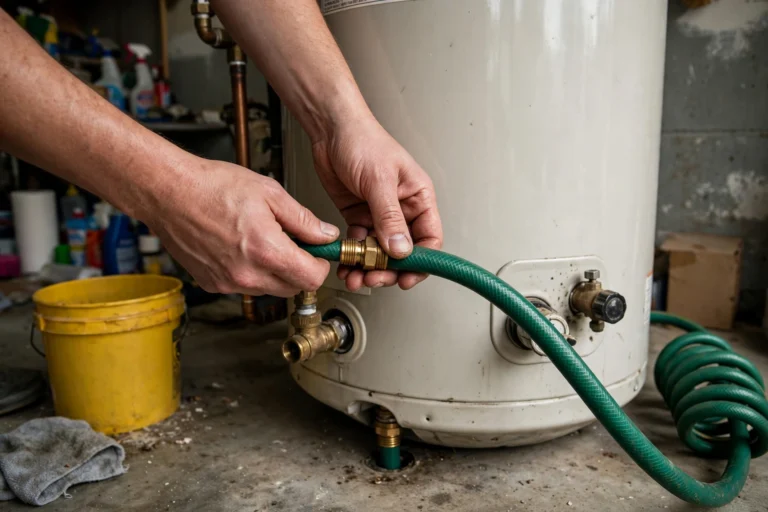
Changing the setting takes ten minutes of work and three hours of waiting, and the steps depend on your heater type. A gas heater has a vent pipe on top and a burner area at the bottom; an electric heater has a power cable and two access panels on its side.
Gas water heater: turn the bottom dial
Gas heaters have a temperature dial at the bottom front, near the burner. The markings are often vague — some say “Hot,” “Warm,” and “Vacation,” others show a range of numbers. Turn the dial to the 120°F mark if it’s printed. If it isn’t, move it one small step cooler than where it sits now, then test — that’s the only reliable way with unmarked dials. Small moves, then re-test. Don’t guess and walk away.

Electric water heater: set BOTH thermostats
Electric heaters hide two thermostats — an upper and a lower — behind two access panels on the side of the tank, and both must be set to 120°F. Setting only one leaves the tank heating unevenly and the tap temperature wrong.

- Kill the breaker first. Find the water heater’s breaker in your electrical panel and switch it off. Verify with a non-contact voltage tester if you have one. This step is not optional — the thermostats sit next to live wiring.
- Remove both access panels. Unscrew the upper panel and the lower panel. Behind each is insulation and a thermostat with a small dial or screw slot.
- Set both thermostats to 120°F using a flathead screwdriver. Upper and lower, same number, no exceptions.
- Replace the insulation and panels, restore the breaker.
- Wait at least 3 hours. The tank needs time to settle at the new setting. This is the step everyone skips, and it’s why people re-test too early, panic, and crank the dial back up.
- Re-test at the farthest faucet from the heater. Run the hot tap for a few minutes first, then check with a cooking or meat thermometer under the running water. The farthest faucet is the honest reading — it’s the last stop on the pipe run.
If the reading is still above 120°F, nudge the setting down one step and repeat the wait-and-test cycle. If it’s below, nudge up. One adjustment per cycle. Patience here is the whole skill.
How Do I Test the Bath Water for My Baby?
Testing the bath is a two-minute habit that replaces all guesswork. Run the tub faucet for a full two minutes first — this clears cooled water standing in the pipes. Then hold a thermometer in the running water, or stir a filled tub before measuring, since hot and cold layers separate.
Aim for 120°F or below at the tub faucet. The bath itself should feel comfortably warm, not hot — most parents end up bathing babies at around 98–100°F, mixing hot and cold at the tap. The heater setting is your safety ceiling, not your bath recipe: it guarantees that even if the tap gets bumped to full hot, the water can’t scald.

Forget the wrist test as your only check. The inside of your wrist is a decent rough guide for adults, but adult hands are desensitized, tired parents misjudge, and “feels fine to me” is exactly how 130°F water ends up in a baby’s bath. A thermometer costs a few dollars and removes the argument entirely.
Do this test once after changing the setting, then again the first time you run a bath for the baby, and any time someone in the house touches the heater dial. After that, a quick thermometer dip before each bath becomes second nature — and it’s the kind of habit that makes grandparents and babysitters safer too, because the number is written on the thermometer, not in your head.
What Is a Thermostatic Mixing Valve?
A thermostatic mixing valve lets you have both: a hot tank and safe taps. Fitted on the hot-water line at the heater’s outlet, it blends cold water into the hot stream and caps every tap at 120°F, no matter how hot the tank runs. Tank at 140°F, taps at 120°F — that’s the whole trick.
It’s why plumbers recommend it in homes with newborns, elderly residents, or old dishwashers.

The valve itself is not expensive, but this is a job for a licensed plumber, not a first-timer with a wrench — it involves cutting into the main hot-water line, and a bad install can leave you with no hot water at all or, worse, a valve that fails open and passes full tank temperature to the taps. Have a licensed plumber install it; it’s typically a short job, and any plumber who does water heaters has fitted dozens. Once it’s in, test the taps with a thermometer to confirm the 120°F cap, and have it checked at your next water-heater service — the valve’s internal element wears over years and should be verified, not assumed.
If you’re renting and can’t touch the heater or the pipes, the tub-level version of this idea is an anti-scald faucet device or a thermostatic bath spout cover that caps the tub’s temperature. It doesn’t fix the whole house, but it fixes the room that matters most.
PRO TIP
After you set the heater, write “120°F — checked [date]” on a piece of tape and stick it on the tank. Houses get new babysitters, visiting relatives, and well-meaning handymen who “turn it up because the shower was lukewarm” — and nobody remembers what the dial was supposed to be. The tape is your memory, and it’s the cheapest safety device in this whole guide.
Frequently Asked Questions
How long after changing the setting is the water safe?
Wait at least 3 hours after adjusting, then test at the farthest faucet. The tank needs that long to settle at the new temperature — testing sooner gives you a stale reading and a false sense of security. If the reading is still off, adjust one step and wait another 3 hours.
Does setting the water heater to 120°F save money?
Yes. Every 10°F you turn a water heater down saves roughly 3–5% on water-heating costs, so dropping from 140°F to 120°F typically saves 6–10% — and it also slows mineral buildup in the tank, which extends the heater’s life. Safety first, but the savings are a genuine bonus.
Can I set the water heater lower than 120°F for extra safety?
No. Below 120°F you gain almost nothing on scald safety — 120°F already gives you more than 5 minutes — and you start creating the lukewarm conditions where bacteria can grow in the tank. 120°F is the floor, not a suggestion.
Does lowering the temperature affect shower pressure?
No. Temperature and pressure are unrelated. What changes is the mix: at 120°F you use a bit more hot water per shower to reach the same comfortable temperature, so the tank empties slightly faster on back-to-back showers. In a normal household, nobody notices.
I’m renting — what can I do if I can’t change the heater?
Two options that need no landlord permission: a bath thermometer (so you always know the real number) and an anti-scald device at the tub faucet that caps the tub’s temperature. Then ask your landlord in writing to set the heater to 120°F — many states advise or require residential heaters at no more than 120°F, and a written request with a baby on the way is hard to ignore.
The Bottom Line
Set the heater to 120°F at the tap, test it at the tub with a thermometer, and stop worrying about the dishwasher — modern machines boost their own water. If your home has an old dishwasher, an immunocompromised family member, or a heater you can’t adjust, the mixing valve is your answer, fitted by a licensed plumber. Do this before the baby’s first bath, tape the setting to the tank, and move on to the rest of the prep: the room-by-room babyproofing checklist covers the 120°F setting alongside every other hazard in the house, and the deep cleaning before the baby arrives guide pairs with it for a home that’s ready in every sense. Bath time should be the calm part of the day — and with the dial set right, it is.