How to Unclog a Kitchen Sink
TL;DR
Learning how to unclog a kitchen sink starts simple: plunge first, then check the P-trap, then use a hand drain snake. Skip caustic chemical cleaners — they rarely clear a grease clog and can damage pipes. Most sink clogs clear in under an hour, and a pro drain-clearing visit runs roughly $150–$350. If more than one drain backs up at once, stop and call a plumber: that points to a main-line problem, not a sink problem.
Learning how to unclog a kitchen sink is one of the most useful DIY skills a homeowner can have, because kitchen sinks clog more than any other drain in the house. Grease goes down liquid and hardens in the pipe, food scraps pile up behind it, and before long the water drains slowly — or not at all. The good news: about 8 out of 10 kitchen sink clogs sit within the first few feet of pipe, so you can reach them with simple tools and no plumbing experience. This guide covers those methods in a plumber’s order, plus costs and when to call a professional.
PRO TIP
Bail out standing water until only an inch or two is left. You will make less mess and get a better seal with the plunger.
Why Is My Kitchen Sink Clogged?
A kitchen sink clogs because grease, starch, and food particles build up inside the drain pipe over months until water can no longer pass freely. Cooking grease is the biggest culprit: it enters the drain as a liquid, cools, and coats the pipe walls. Coffee grounds, rice, pasta, potato peels, and eggshells add to the blockage, and a jammed or underpowered garbage disposal pushes half-ground food into the trap instead of flushing it away. Slow draining means a partial buildup; standing water means a complete blockage, usually in the P-trap or the first feet of line. (If water runs weakly from the tap itself rather than draining slowly, that is low water pressure in your house — a different problem.) The one exception: if your kitchen sink backs up at the same time as a bathtub, toilet, or floor drain, the clog is probably in the main sewer line, and no plunging at the sink will fix it.
How to Unclog a Kitchen Sink Step by Step
The first rule of how to unclog a kitchen sink: work in order, easiest first, and stop as soon as water drains freely. You need a cup plunger, bucket, towels, gloves, and a flashlight.
Method 1: Plunge it properly
When people ask how to unclog a kitchen sink fast, plunging is the honest first answer — it works more often than expected, because most sink clogs are soft grease and food, not a solid object. Use a cup plunger — not a toilet plunger with a flange, which will not seal flat on a sink bottom. With a double sink, seal the second drain with a wet rag or stopper so pressure goes toward the clog. If you have a garbage disposal, switch it off at the wall first, and never put your hand in it.

Cover the drain with the plunger cup, add enough water to cover the cup by an inch, and pump firmly 15 to 20 times without breaking the seal. Pull off sharply, then run the tap; if water drops quickly, run hot water for 60 seconds to flush loose grease. If nothing changes after three rounds, move on; repeated plunging will not dissolve a hard grease plug. (For toilets the technique is a little different — see our guide to unclogging a toilet without a plunger.)
Method 2: Boiling water and dish soap (grease clogs only)
The second step in how to unclog a kitchen sink with a grease clog costs nothing: squirt a generous amount of dish soap down the drain, wait five minutes, then pour a full kettle of boiling water down in two or three stages, pausing between pours.
One warning: skip boiling water if you have PVC drain pipes and the clog is already complete, because a long column of boiling water sitting on a blockage can soften plastic pipe joints. Homes built after about 1970 almost certainly have PVC drains — use very hot tap water instead.
Method 3: Check and clean the P-trap
The third step of how to unclog a kitchen sink is the P-trap, the U-shaped pipe directly under the sink. Its bend holds water to block sewer gas — a dry or leaking trap is also a common cause of a sewer smell in the house — and that is exactly where food and grease settle.
Put a bucket under the trap, loosen the slip nuts by hand (pliers if stuck), and let the water drain out. Pull the trap off, dump it, and scrub inside with an old brush.
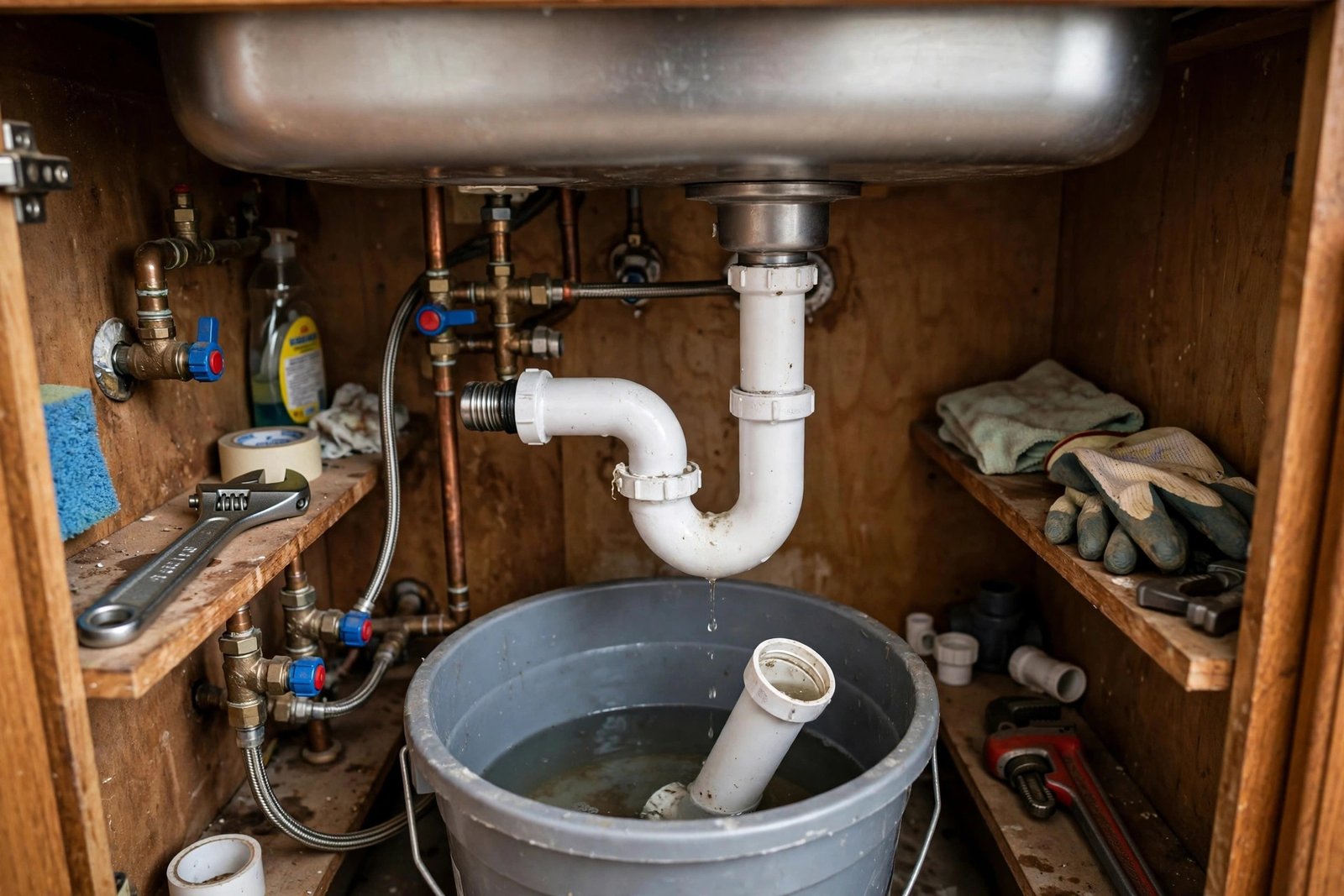
While it is off, check the wall pipe with a flashlight; a visible clog can often be pulled out by gloved hand. Reassemble, hand-tighten plus a quarter-turn with pliers, and run water while checking joints for drips — an ignored drip rots the cabinet floor over weeks. Learn the signs of a hidden water leak so a slow drip never becomes a major repair.
If the cabinet floor is already soft, swollen, or stained, that is past DIY: water damage restoration is the right next step, not another round of plunging.
Method 4: Use a hand drain snake
For deeper blockages, how to unclog a kitchen sink means reaching past the trap with a hand drain snake, also called a drain auger — a coiled cable 15 to 25 feet long that breaks up the clog or hooks it so you can pull it out. Feed it slowly into the drain (or the open pipe with the trap removed), turning clockwise. At resistance, crank and push gently to break up the clog, then pull back slowly, wiping the cable.

Never force the cable or run a powered auger in a sink drain without experience — it can kink, scratch porcelain, or punch through an old pipe. If the snake cannot get past solid resistance after several tries, the blockage may be a collapsed pipe, root intrusion, or a foreign object: a plumber’s diagnosis, not a bigger tool.
Method 5: Enzyme drain cleaner (the only cleaner worth using)
If you want a chemical-free option for how to unclog a kitchen sink, enzyme cleaners use bacteria that eat grease, soap scum, and food over several hours instead of burning through the clog. Pour the recommended amount down the drain in the evening, do not use the sink overnight, and flush with hot tap water in the morning. They work best on partial clogs and as maintenance after a mechanical clearing. Do not use caustic chemical drain cleaners: they rarely dissolve a solid grease plug, can burn skin and eyes, damage older pipes and seals, and leave residue that endangers any plumber who later opens the drain. If you already poured one, tell the plumber before they start.
Method 6: Free a jammed garbage disposal
If the sink has a garbage disposal that hums but does not spin, or does nothing at all, the disposal itself may be the clog — not the drain. Switch it off at the wall, then press the small red reset button on the bottom. If it still hums, insert the hex wrench that came with it (usually 1/4-inch) into the socket on the bottom and work it back and forth to free the jammed flywheel. Remove the jamming item — a bottle cap, bone fragment, or silverware — with tongs, never your fingers.

Run cold water and switch it on for 30 seconds. Cold water keeps grease solid for grinding; hot water melts grease that re-hardens further down the pipe. Leaking from the bottom, metal-on-metal grinding, or repeated breaker trips mean the unit is worn out: replace it, don’t reset it again.
How Much Does It Cost to Unclog a Kitchen Sink?
When budgeting for how to unclog a kitchen sink, expect very little for DIY and a few hundred dollars for a plumber, depending on method and clog depth. The table gives rough planning estimates for a typical US home — not quotes; local rates, after-hours callouts, and pipe condition all move the final price.
| Method | DIY cost (rough estimate) | Pro cost (rough estimate) | Best for |
|---|---|---|---|
| Plunger | $10–$20 for a cup plunger | Included in a service call | Soft, recent clogs |
| Boiling water + dish soap | $0–$5 | Not a pro service | Light grease buildup |
| P-trap cleanout | $0 (bucket + gloves) | $100–$180 | Clogs sitting in the trap |
| Hand drain snake | $25–$50 for the tool | $150–$350 for drain clearing | Clogs past the trap |
| Enzyme cleaner | $10–$20 per bottle | Not a pro service | Partial clogs + maintenance |
| Garbage disposal replacement | $100–$250 for the unit | $250–$450 installed | Dead or leaking disposal |
| Main-line clearing (if it is not the sink) | Not a DIY job | $300–$600 | Multiple drains backing up |
Two cost traps: a flat-rate quote given before checking whether the clog is in the sink or the main line (different jobs, different prices), and a second visit because the first fix only poked a hole through the grease. Ask the plumber to run full-flow water for a full minute before leaving.
When Should You Call a Plumber Instead of DIY?
Knowing when to stop trying how to unclog a kitchen sink yourself matters as much as the methods. Call a plumber when more than one drain backs up at once, when sewage comes up in the sink, or when the same sink clogs again within weeks. Recurring clogs point deeper: a sagging pipe section (a belly), a grease-narrowed pipe, or roots in an older line. A camera inspection, usually $150–$300, shows exactly what is wrong. Stop and call a pro if you see water damage under the sink, a cracked or corroded pipe, or a clog unmoved by chemical cleaner. Very old galvanized or cast-iron pipes are brittle — aggressive snaking can crack them and turn a $200 call into a pipe-replacement job.
How Do You Keep a Kitchen Sink From Clogging Again?
The long-term answer to how to unclog a kitchen sink is prevention: keep grease and problem foods out of the drain in the first place. Pour used grease into a jar, let it solidify, and trash it — never down the drain, even with hot water running. Scrape plates before rinsing, and keep coffee grounds, rice, pasta, peels, and eggshells out of the disposal; grinding food smaller does not make it disappear.
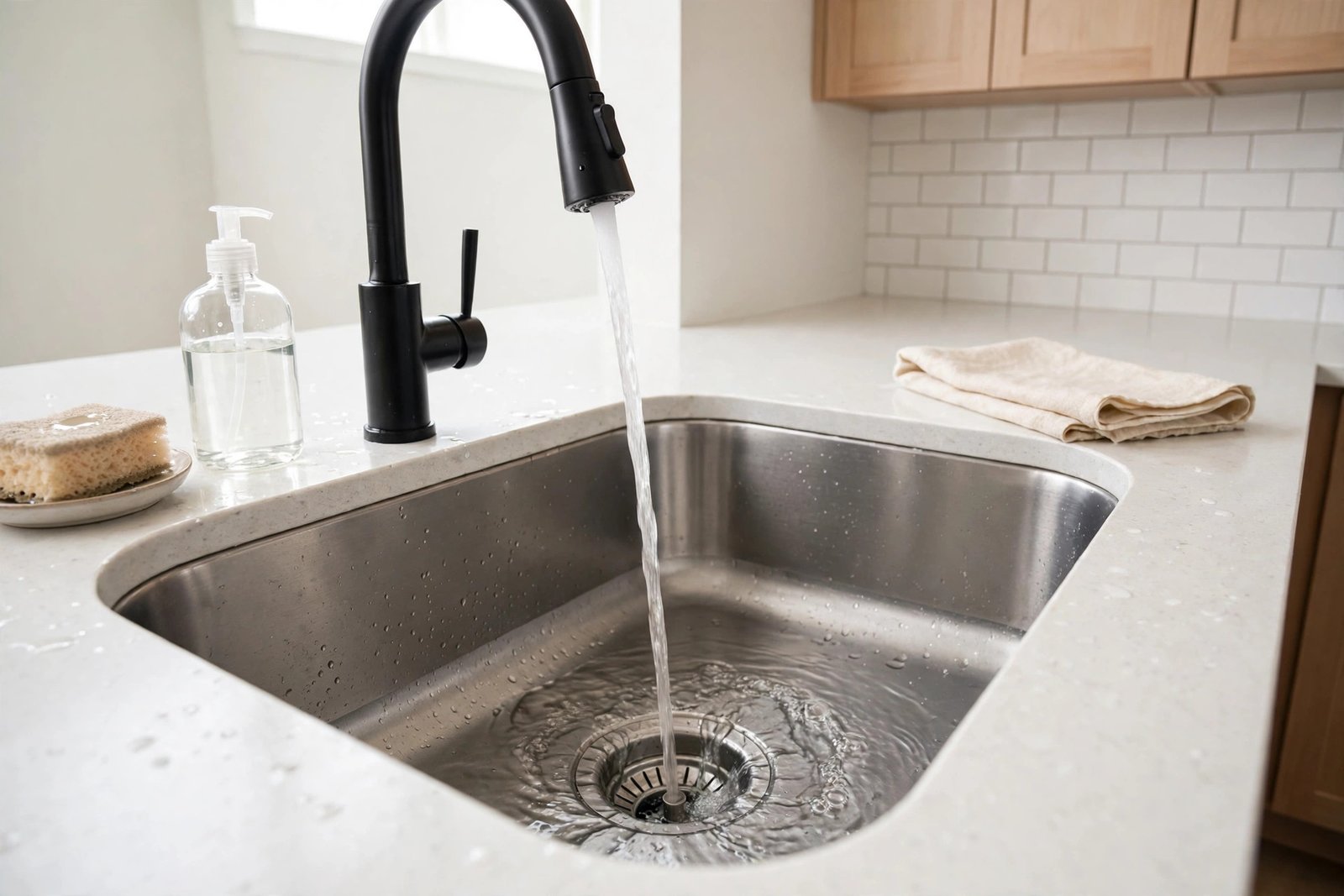
Fit a mesh strainer — it catches missed food and empties in seconds — and monthly, flush with very hot tap water and dish soap to melt light grease before it hardens; enzyme cleaner works the same way. Finally, never run the disposal without a strong stream of cold water before, during, and for 30 seconds after grinding — without it, ground food hardens in the trap into the clog you just cleared.
Frequently Asked Questions
Can I use baking soda and vinegar for how to unclog a kitchen sink?
Baking soda and vinegar fizz impressively, but the fizz is mostly theatre: it neutralizes into salty water and does not dissolve a grease plug. It can freshen a smelly drain and will not damage pipes — just do not count on it for a real clog. A plunger or snake will do what the fizz cannot.
Is it safe to use a plunger when learning how to unclog a kitchen sink with a garbage disposal?
Yes, as long as the disposal is off at the wall and you never put your hand inside it. If it is jammed, free it first with the hex wrench method, then plunge if the drain is still slow.
How long does it take to learn how to unclog a kitchen sink?
Most clear in 20 to 60 minutes with a plunger or P-trap cleanout; a snake job takes 45 to 90 minutes, enzyme cleaner needs overnight. Past two hours without progress, a plumber’s camera inspection will save you time.
Can a clogged kitchen sink cause water damage?
Yes. A trap-joint leak, an overflowing sink, or water forced into the cabinet can swell cabinets, grow mold, and damage flooring within days. Wipe the cabinet dry after any clog job, check joints for drips for a week, and act fast on soft or discolored wood.
Should I call a plumber for a kitchen sink that keeps clogging?
Yes — a sink that reclogs within weeks has an underlying cause a plumber cannot fix: a sagging pipe, deep grease buildup, or a damaged section. A camera inspection, roughly $150–$300, finds it so you pay for one real fix, not repeated visits.