How Long Does Cabinet Refacing Last? Lifespan, Warranties & Care Tips
TL;DR
How long does cabinet refacing last? Expect 15–20 years with quality materials and professional installation, and real wood veneer can push past 20 years with good care. Budget laminate and thermofoil usually land at 10–15 years. What cuts that short is moisture, steam, peeling veneer edges, and harsh cleaners — all of it preventable. Wipe spills fast, use gentle cleaners, fix a peeling edge the week you spot it, and get the warranty in writing before you sign.
How long does cabinet refacing last is the question to ask before you spend $4,000–$9,500 on new doors and veneer — because a reface that dies in eight years is a bad buy, and one that holds for twenty is one of the best value upgrades a kitchen can get. The honest answer is 15–20 years, roughly the same as brand-new cabinets, because lifespan depends on the doors and veneer, not the old boxes underneath. The boxes are hidden; the surfaces you touch every day are new. This guide covers lifespan by material, what shortens it, the care routine, warranties, and the signs it is time to reface again.
How Long Does Cabinet Refacing Last on Average?
How long does cabinet refacing last on average? Fifteen to twenty years with quality materials and professional installation, and real wood veneer can last 20 years or more with normal use and basic care. That range covers most kitchens, from a quiet couple’s kitchen to a busy family one, provided the veneer went onto properly prepared frames.
That 15–20 year figure is the one refacing guides converge on, and it matches what homeowners actually experience: doors that still open cleanly and veneer that still lies flat a decade and a half after install. The spread exists because “refacing” is not one product. A kitchen refaced with real wood veneer and solid-wood doors sits at the top of the range; a kitchen refaced with budget laminate sits at the bottom. Installation matters just as much as material — veneer applied to a properly sanded, clean frame by a crew that does this every week will outlast the same veneer applied over grease and dust by a first-timer. Budget for the middle of the range, 15 years, and treat anything beyond that as a bonus your care routine earned.
Does the Material Change How Long Refacing Lasts?
Yes — the material changes lifespan more than any other single factor: wood veneer lasts 15–20+ years, while laminate and thermofoil typically last 10–15 years in a kitchen that gets heavy daily use. Veneer is real wood, so it can be touched up and repaired; laminate and thermofoil are surface layers that cannot be refinished once they fail.
The table below is the quick version of that decision. Wood veneer is real wood sliced thin, so it ages like wood and can be touched up; a scuff is a scuff, not a failure. Laminate is a printed plastic layer — tough and easy to wipe, but once it chips or peels, there is no repairing the print underneath. Thermofoil looks seamless on day one, but heat and steam are its enemies, and a peeling corner near the oven is the classic failure. Staying 15 years or more, veneer earns its higher price; for a five-to-ten-year refresh before a sale, laminate or thermofoil is the rational cheaper choice.
| Material | Typical lifespan | Best for | Watch out for |
|---|---|---|---|
| Laminate | 10–15 years | Budget jobs, rentals, quick refresh | Chipped edges can’t be refinished |
| Thermofoil | 10–15 years | Clean modern look on a budget | Heat and steam near ovens can peel it |
| Wood veneer | 15–20+ years | Long-term homes, real-wood look | Needs gentle cleaners; repair kits fix small damage |
| Solid wood doors (with veneer frames) | 15–20+ years | Best durability and repairability | Highest upfront cost |
All prices in this post are rough planning estimates, not quotes — get three itemized quotes before deciding, and compare them line by line.
What Shortens the Life of Refaced Cabinets?
Moisture, steam, peeling veneer edges, and harsh cleaners are the four things that shorten a reface’s life by years — and three of the four are within your control once you know to watch for them. Damage starts small — a lifted corner, a dull patch — and spreads if ignored, so catching each cause early protects the lifespan.
Water is the biggest killer. A slow leak under the sink swells the frame, a kettle boiled under wall cabinets every morning steams the veneer above it, and a dishwasher that vents hot, wet air onto the door next to it will lift an edge within a couple of years. The second killer is the peeling edge: it starts as a corner lifting a millimetre, and if ignored, steam and grease work underneath and the lift spreads. The third is cleaning: abrasive powders, scouring pads, and ammonia-based sprays strip the finish a little every time, until the surface looks tired and dull years early. The fourth is heat: slow cookers, toasters, and kettles pushed hard against a veneer end panel cook the adhesive from behind. Pull heat-producing appliances a few inches out from the cabinets and the problem mostly disappears.
How Do You Make Refaced Cabinets Last Longer?
Wipe spills fast, use gentle cleaners, fix peeling edges early, and keep humidity in check — four small habits that together add years to a reface, and none of them costs more than a few minutes a week. Together they separate a reface that looks tired at ten years from one that still looks new at fifteen.
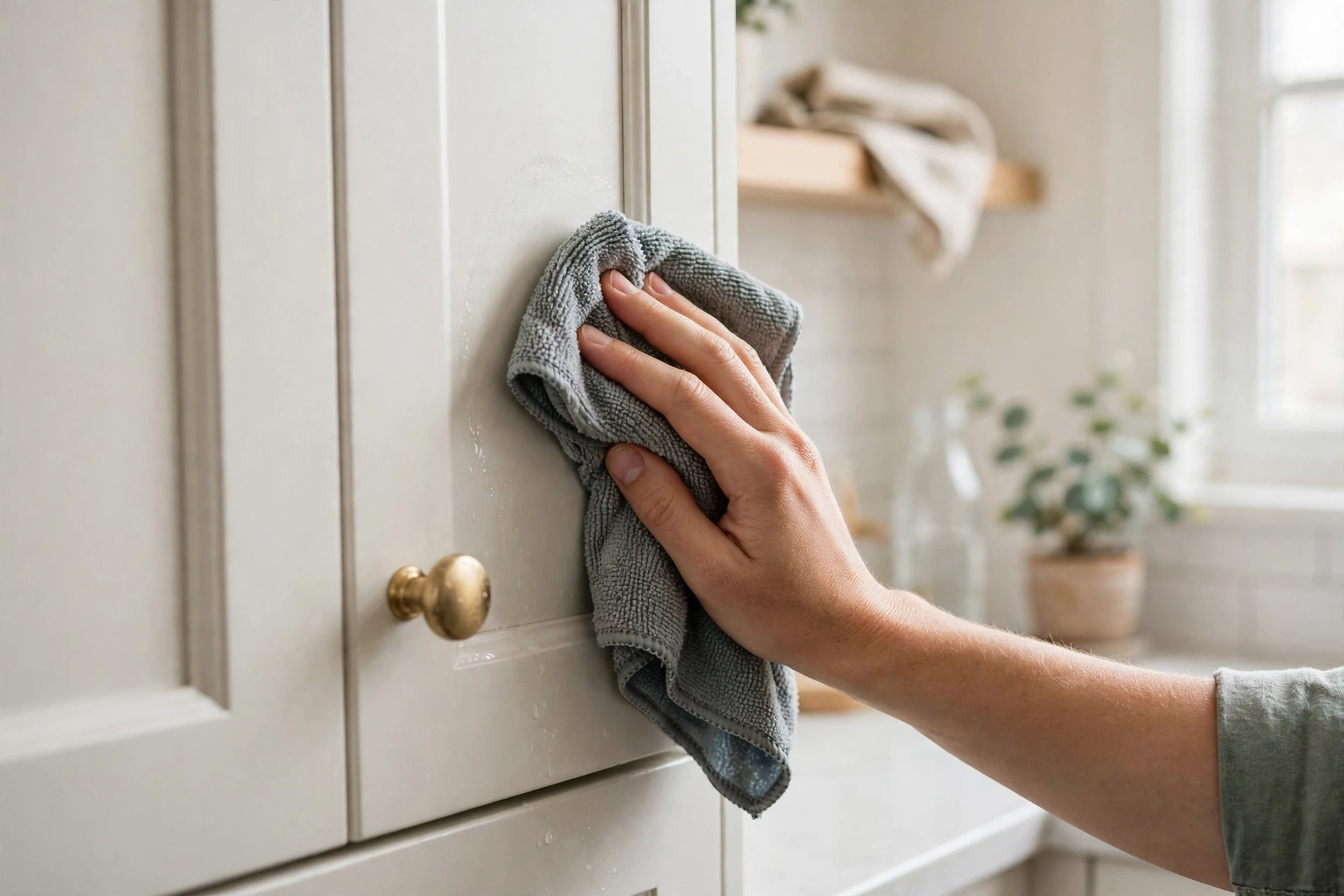
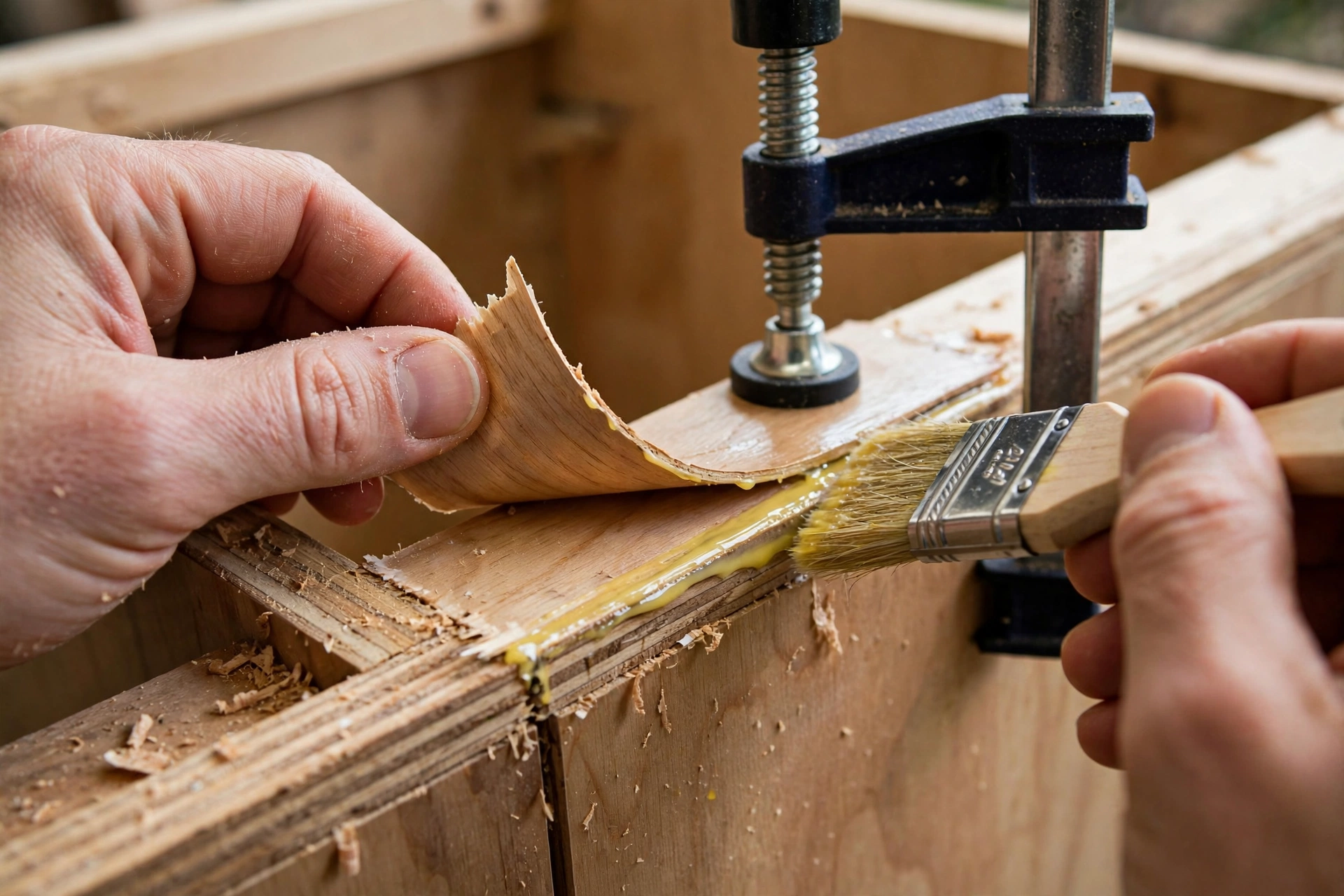
Start with the daily wipe: a damp microfiber cloth, a drop of mild dish soap, then a dry pass. That is the whole routine for most days, and it is enough, because the finish on refaced doors is designed to be wiped, not scrubbed. Never use abrasive pads, bleach, or ammonia cleaners — they dull the finish permanently, and no amount of polishing brings it back. Keep a small repair kit in the house for the day an edge lifts: a dab of wood glue under the veneer, a clamp or painter’s tape overnight, and the problem is solved for the price of a coffee.
Humidity is the quiet one. Kitchens swing between steamy and dry, and veneer moves with it. Run the range hood every time you cook, not just when something is frying, and if the house is very dry in winter, a small humidifier in the kitchen keeps the wood from shrinking and cracking. Finally, tighten a loose hinge the week it sags — a crooked door rubs its neighbour every time it closes and wears the finish off both. Five minutes with a screwdriver now saves two refinished doors later.
Do Refaced Cabinets Last as Long as New Cabinets?
Yes — refaced cabinets last about as long as new cabinets, 15–20 years, because lifespan depends on the doors and veneer, not on the old boxes hiding behind them. The boxes do almost nothing except hold shelves and carry weight, and a solid box does that job for fifty years, so keeping it costs nothing in lifespan.
What actually wears out is what you touch: doors opened a dozen times a day, drawer fronts pulled and pushed, veneer facing steam and splashes. A solid plywood or hardwood box does its holding job for fifty years. When you reface, you replace exactly the parts that wear out and keep exactly the part that does not. The comparison with new cabinets is therefore apples to apples: a new cabinet’s doors and a refaced cabinet’s doors are made of the same materials, finished the same way, and hung on the same hinges. The full cost side of that comparison is in the kitchen cabinet refacing cost guide, and the head-to-head decision is in cabinet refacing vs replacement — both agree that the boxes are rarely the weak link.
What Warranties Come With Cabinet Refacing?
Many refacing jobs carry 5-year to lifetime warranties on materials and workmanship — but the length matters less than the wording, so get the warranty in writing before you sign anything. Ask what is covered, for how long, what voids it, and whether it transfers to the next owner, because those answers matter more than the number of years.
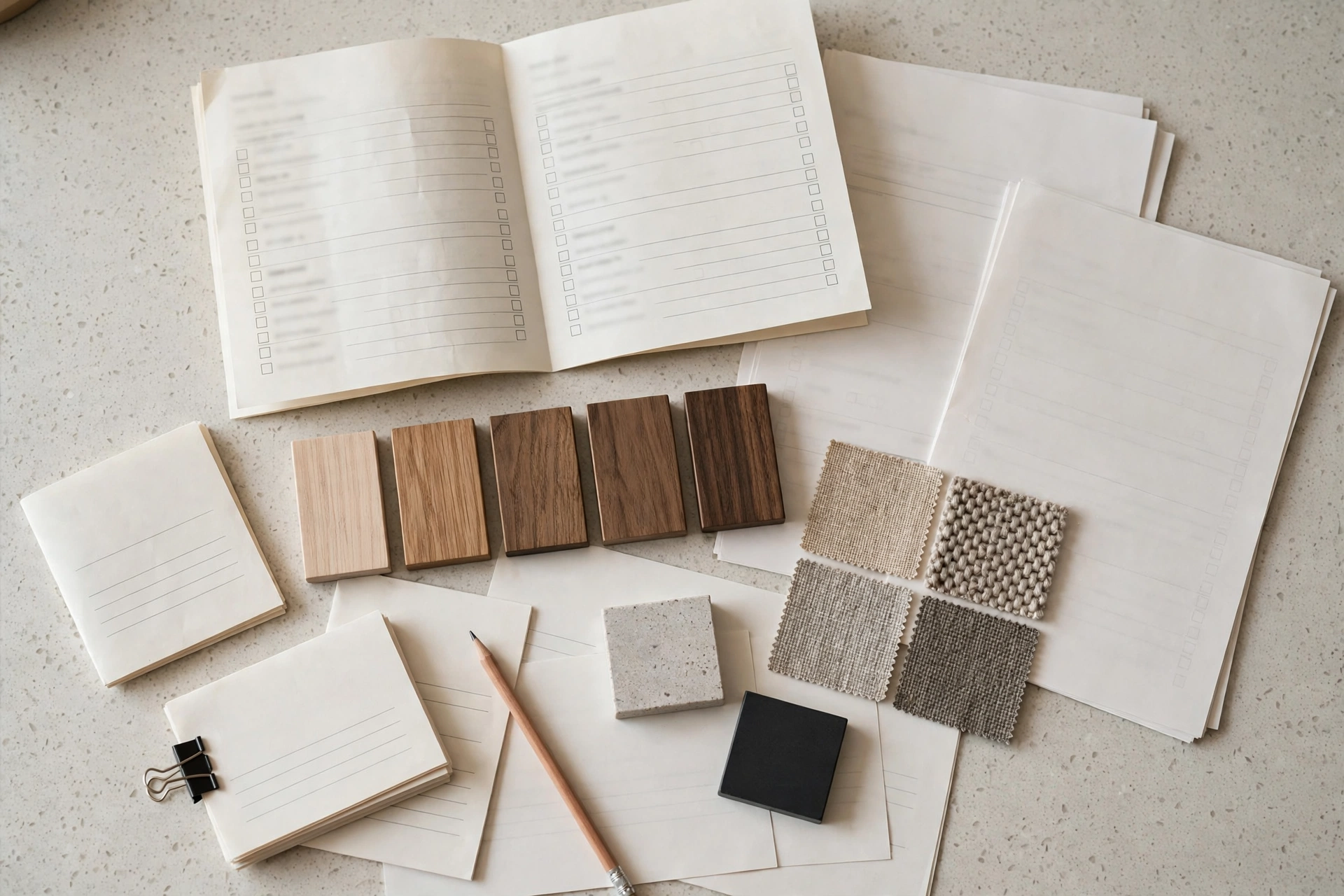
A good warranty names three things: what is covered (doors, veneer, hardware, and labour), for how long (material and workmanship often have different terms), and what voids it (painting over veneer, unapproved cleaners, or DIY repairs can void some warranties — ask before you paint). Lifetime warranties sound generous, but read the fine print: many cover the material only, or are limited to the original homeowner, or require you to use the same company for repairs. A five-year warranty from a twenty-year-old company beats a lifetime warranty from a new one. Before you sign, ask: is it transferable, who does repairs and how fast, does painting void it, and what happens if veneer peels in year three? Get answers in the contract, and keep the warranty, spec sheet, and installer’s name in one folder.
When Should You Reface Again Instead of Replacing?
Reface again if the boxes are still solid after 15+ years; replace if the boxes have failed — the same test as the first time, because the boxes are still the whole decision. A second reface is a familiar project, and it buys another 15–20 years for roughly the price of the first.
A second reface is a real option. If the boxes are still square, dry, and solid after fifteen or twenty years, there is no structural reason to tear them out. New doors and fresh veneer give you another 15–20 years for roughly the same $4,000–$9,500 a first reface costs — again, a rough planning estimate, not a quote. The numbers to plan around: a re-reface after 15–20 years, $4,000–$9,500; a veneer repair kit for small peeling edges, $10–$25; a professional veneer repair visit, $150–$400. Compare that with replacement at $15,000–$50,000+ and the maths is obvious whenever the boxes are sound. Replace instead when the boxes have failed: water damage under the sink, swollen MDF, warped sides, or drawers that will not stay on their runners. Veneer covers faces; it does not repair structure, and paying for a second reface over failing boxes is the most expensive way to learn that lesson twice.
| Option after 15–20 years | Rough cost | When it makes sense |
|---|---|---|
| Reface again | $4,000–$9,500 | Boxes still solid, layout still works |
| Veneer repair kit (DIY) | $10–$25 | One or two small peeling edges |
| Pro veneer repair visit | $150–$400 | Several edges lifting, or a warped door |
| Full replacement | $15,000–$50,000+ | Boxes water-damaged, warped, or failing |
Signs Your Refacing Is Reaching the End of Its Life
Peeling veneer, warped doors, and loose hinges that will not stay adjusted are the three signs that a reface is reaching the end of its life — and the difference between a repair and a re-reface is how many of them show up at once.
Peeling is the first sign and the most common: edges lifting at the corners, veneer bubbling near the dishwasher or the kettle, a seam opening along the frame. One lifting edge is a repair; veneer lifting on half the doors is a reface. Warping is the second: doors that no longer sit flat, gaps that change with the seasons, a drawer front that bows outward. Some movement after fifteen years of humidity swings is normal — but a door that will not close flush has run out of adjustment. Loose hinges are the third: screws that spin in stripped holes, hinges that pull away from the frame, doors that sag within weeks of tightening. When you see one sign, repair it and keep going. When you see all three across the kitchen, stop repairing and start pricing the next reface — and get an online cabinet refacing quote early, so you can compare three itemized estimates before the old doors force the decision for you. If you want the per-door maths behind that next estimate, the cabinet refacing cost per door breakdown shows how door count drives the total.
Frequently Asked Questions
How long does cabinet refacing last on average?
Fifteen to twenty years with quality materials and professional installation. Real wood veneer can last 20 years or more with normal use and basic care, while budget laminate and thermofoil typically last 10–15 years. The doors and veneer decide the lifespan, not the old boxes.
Does cabinet refacing last as long as new cabinets?
Yes, about the same — 15–20 years — because both depend on the same doors, veneer, and hinges. A solid box lasts fifty years, so keeping it costs nothing in lifespan.
What is the shortest-lived refacing material?
Budget laminate and thermofoil, at 10–15 years, with thermofoil the most vulnerable near heat and steam — a peeling corner by the oven is the classic failure. Wood veneer lasts longest at 15–20+ years and can be repaired and touched up along the way.
Can you make refaced cabinets last longer?
Yes. Wipe spills the same day, clean with a damp microfiber cloth and mild dish soap only, run the range hood while cooking, and fix a peeling edge the week you spot it. Those habits routinely add years.
Does painting refaced cabinets void the warranty?
It can — some warranties exclude painted-over veneer, so check the warranty in writing before you paint. Most veneer and laminate can be painted, but if the warranty is the reason you chose a pro installer, do not risk it without asking first.
When should I reface again instead of replacing?
Reface again when the boxes are still solid after 15+ years and the layout still works — another $4,000–$9,500 buys another 15–20 years. Replace when the boxes are water-damaged, swollen, or warped, because veneer covers faces and cannot repair structure.
Final Thought
A reface is a fifteen-to-twenty-year decision, not a five-year cosmetic fix — choose the material with lifespan in mind, hire a crew that preps frames properly, and keep up the small care habits. Wood veneer is the long-life pick at 15–20+ years; laminate and thermofoil are the budget pick at 10–15 years. Fix peeling edges early, keep the warranty paperwork, and after fifteen years, check the boxes first — solid boxes mean reface again, failed boxes mean replace. For the numbers, the kitchen cabinet refacing cost guide prices the job by size, material, and region.