DIY HVAC Maintenance vs Hiring a Pro: What’s Safe to Do Yourself
The YouTube video makes it look easy. A guy in a garage, fifteen minutes, a $30 part from Amazon, and his AC is blowing cold again. You’re standing in front of your own outdoor unit with a screwdriver, thinking about the $180 service call you’d save — and that’s exactly the moment to pause. Because HVAC is the one home system where the line between “satisfying DIY” and “dangerous mistake” is thinner than most people realize, and it’s drawn by federal law, 240 volts, and natural gas.
When it comes to DIY HVAC maintenance, some jobs are genuinely easy, safe, and save real money. Other jobs can void your warranty, break federal law, or put your household at risk. Here’s the honest map of where the line sits.
TL;DR
Safe DIY: changing filters, thermostat batteries and programming, clearing debris around the outdoor unit, flushing the condensate drain, and keeping vents unblocked. Never DIY: anything involving refrigerant (federal law requires EPA certification), capacitors (they hold a lethal charge even with power off), high-voltage electrical work, gas lines and heat exchangers (carbon monoxide risk), and brazing or ductwork modifications. When in doubt, a $100–$200 maintenance visit is cheaper than a voided warranty or a $2,000 compressor.
Why HVAC Has a Harder DIY Boundary Than Most Trades
Plumbing and electrical both have DIY-friendly zones, but HVAC stacks three hazards that rarely appear together elsewhere:
Refrigerant is federally regulated. Under EPA Section 608, it’s illegal for uncertified individuals to handle refrigerants. Violations carry fines up to $44,539 per day — your system is a sealed circuit, and the law treats it that way.
The electrical will hurt you. Outdoor units run on 240-volt circuits, and capacitors store a charge that can shock you severely even with the breaker off.
Combustion can kill silently. A cracked heat exchanger or misadjusted burner leaks odorless carbon monoxide into your ductwork with no warning. Gas work belongs to licensed technicians, full stop.
Warranties have fine print. Most 10-year parts warranties require professional installation and annual pro maintenance. DIY repairs on sealed components can void coverage on a system worth thousands.
Spend your DIY energy on the safe, useful jobs and hand the rest to someone licensed. Here’s the full breakdown:
The Complete DIY vs. Pro Task Table
| Task | DIY safe? | Why |
|---|---|---|
| Change the air filter | ✅ Yes | No tools, no risk — the highest-value DIY in HVAC |
| Replace thermostat batteries / program thermostat | ✅ Yes | Low-voltage, safe; just photograph wiring before swapping a thermostat |
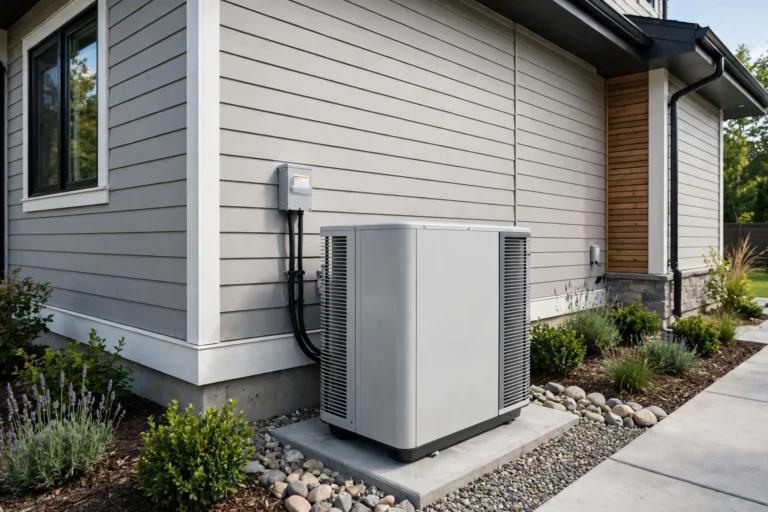
| Clear leaves, snow, debris around outdoor unit | ✅ Yes | Maintain 2 ft clearance; no need to open anything |
| Flush the condensate drain line | ✅ Yes | Vinegar + water prevents clogs and shutdowns |
| Keep supply/return vents unblocked and clean | ✅ Yes | Furniture and dust are the enemy, not the ductwork |
| Gently rinse outdoor coil with a garden hose | ⚠️ Careful | Power off first, gentle spray only — never a pressure washer |
| Replace a thermostat (basic swap) | ⚠️ Careful | Turn off power, label every wire; smart thermostats may need a C-wire check |
| Add refrigerant / “top off” the system | ❌ No | Federal law (EPA 608); also, low refrigerant means a leak that must be found |
| Replace a capacitor or contactor | ❌ No | Capacitors hold charge with power off; miswiring can destroy the compressor |
| Any high-voltage electrical work | ❌ No | 240V circuits; one mistake can injure you or fry the control board |
| Gas line, burner, or heat exchanger work | ❌ No | Carbon monoxide and explosion risk; also voids warranties |
| Brazing, ductwork modification, system charging | ❌ No | Requires licenses, torches, vacuum pumps, and gauges most homeowners don’t own |
DIY HVAC Maintenance: The Safe List (Do These With Confidence)
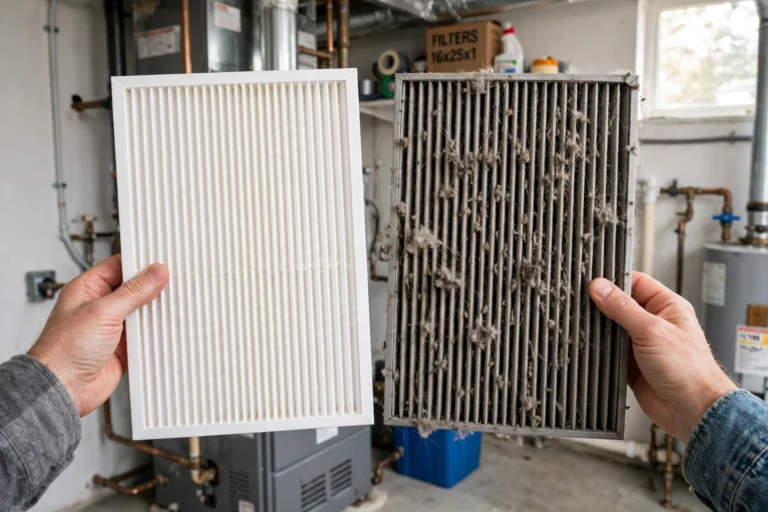
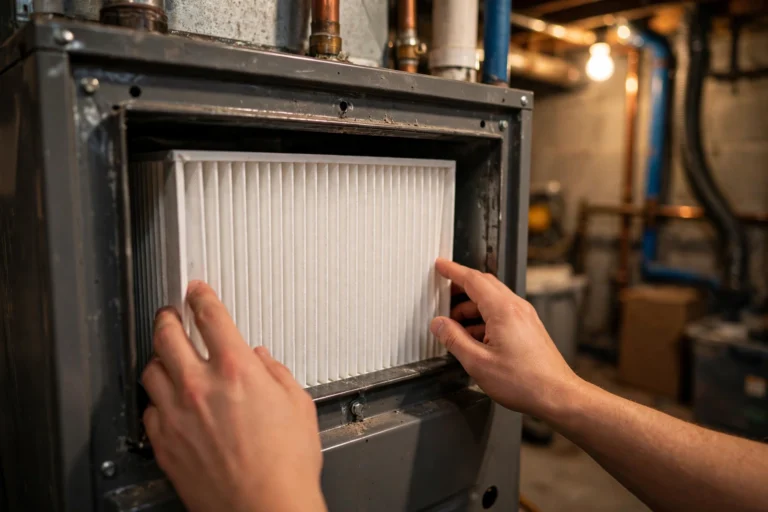
Change your filter on schedule. The highest-value ten minutes in home maintenance. Check it monthly, replace every 1–3 months depending on pets and allergies, and always install with the airflow arrow pointing toward the furnace — full technique in our guide to changing a furnace filter.
Thermostat batteries and programming. A “dead” thermostat is often just dead AA batteries — a $5 fix. Proper setback programming saves roughly 10% on annual heating/cooling per DOE estimates.
Clear the outdoor unit. Two feet of clearance on all sides — leaves, snow, weeds. Don’t stack firewood against it or let the dryer vent blow lint into it.
Flush the condensate drain. Your indoor unit’s PVC drain line clogs with algae — once a season, pour a cup of white vinegar into the access port, wait 30 minutes, flush with water. A clogged drain trips the overflow switch and shuts the system down, usually on the hottest day of the year.
Keep vents open and unblocked. Closing vents doesn’t save energy — it raises static pressure and strains the blower. Keep vents open, move furniture off them, vacuum return grilles.
PRO TIP
Put a recurring phone reminder for the first Saturday of every month: “HVAC 5-minute check.” Filter glance, thermostat batteries, walk around the outdoor unit. Five minutes, twelve times a year, and you’ll catch 90% of preventable problems before they become service calls.
The Never-DIY List (And Why Each One Is There)
Refrigerant. It doesn’t get “used up” — low charge means a leak. Topping off without finding it is like refilling a flat tire without patching the hole, except the “air” costs $100+/lb and venting it is a federal violation. A tech finds the leak, repairs it, evacuates the system, and charges to exact specs.
Capacitors and contactors. The #1 failed part — and the #1 video-inspired DIY. What the video skips: a capacitor holds a charge that can injure you even with the breaker off, and miswiring the new one can destroy a $2,000 compressor in seconds. This is a $150–$250 pro repair. Pay it.
High-voltage electrical. The disconnect, breaker wiring, and control board run at lethal voltages. One misprobed 240V contact ends the lesson permanently — “unit won’t start” diagnosis is pro territory.
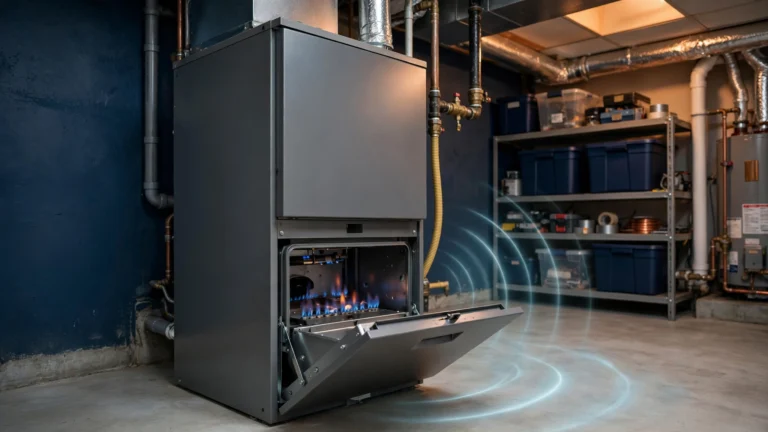
Gas and combustion. Smell gas? Leave and call the gas company — don’t troubleshoot. Burner adjustments, gas valves, and heat exchanger inspections belong to licensed techs; pros check for CO leaks with combustion analyzers during maintenance.
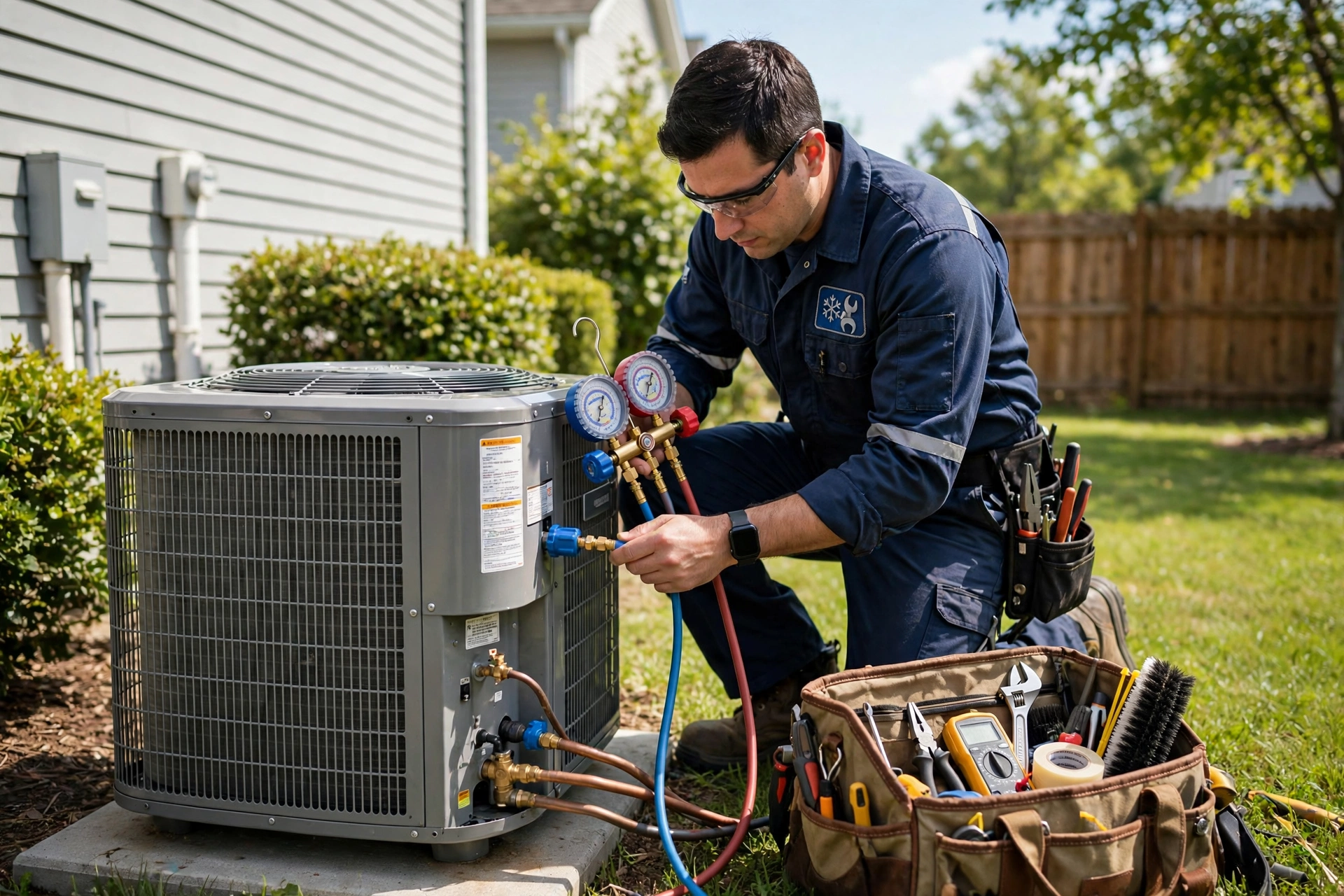
Anything that requires opening the sealed system. Brazing torches, vacuum pumps, manifold gauges, nitrogen purges — if the job needs this equipment, it’s not a homeowner job. Full stop.
PRO TIP
Here’s a useful rule of thumb: if the job requires you to remove more than the outer access panel — or if you find yourself thinking “I wonder which wire this is” — stop. That’s the boundary. Close the panel and call someone.
How to Tell You’re In Over Your Head
Even on the safe list, know your exit ramps. Stop and call a pro if:
- You smell gas, burning, or anything acrid — shut the system off and call immediately
- You see scorched wiring, melted insulation, or water where it shouldn’t be
- The breaker trips repeatedly when the system runs
- You’ve tried the obvious fixes (filter, thermostat, breaker reset) and nothing changed
- The repair requires a part you can’t identify with certainty
There’s no shame in any of this. The most expensive HVAC disasters I know of started as $30 DIY attempts.
When to Call a Professional (and What It Should Cost)
Annual maintenance — a spring cooling tune-up and fall heating check at $100–$200 per visit — is the best money in HVAC. The tech cleans unreachable coils, checks refrigerant charge, tests capacitors before they fail, and inspects the heat exchanger. Most manufacturers require it to keep your parts warranty valid.
Typical repairs: capacitor/contactor $150–$300, blower motor $400–$700, refrigerant leak repair plus recharge $400–$1,500, control board $300–$600. If a quote exceeds half the cost of a new system on a 12+ year old unit, ask about replacement.
If you’re weighing a repair against a replacement — or wondering whether your system is even the right type for your climate — our heat pump vs. furnace comparison walks through the tradeoffs with real numbers.
When something’s beyond the DIY line — strange noises, weak airflow after a fresh filter, ice that won’t clear, or anything involving refrigerant, electrical, or gas — call (380) 273-8167 or have a licensed HVAC technician take a look. A $75–$150 diagnosis (often credited toward the repair) beats guessing with parts.
Frequently Asked Questions
Is it illegal to add refrigerant to my own AC?
Yes, effectively. EPA Section 608 requires certification, and proper equipment (gauges, vacuum pump, recovery machine) isn’t homeowner gear. Fines reach tens of thousands per violation per day.
Can I replace my own thermostat?
Usually yes — it’s low-voltage. Turn off power first, photograph and label every wire, and check whether your smart thermostat needs a C-wire. If your setup lacks one, call a pro rather than improvising.
Will DIY maintenance void my warranty?
Basic maintenance (filters, clearing debris) never voids a warranty. But opening sealed components, DIY refrigerant/electrical work, or skipping required annual pro service can void parts coverage.
How much does an HVAC service call cost?
A diagnostic visit typically runs $75–$150, often applied to the repair cost if you proceed. Annual maintenance plans run $150–$300/year for two tune-ups and usually include priority scheduling and repair discounts.
What’s the most common DIY mistake?
Replacing a capacitor after watching a video — without discharging it first, or wiring the new one incorrectly. It’s the most common “simple” repair and the most common source of DIY-created compressor damage.
Should I cover my outdoor unit in winter?
Heat pumps: never fully cover — they run all winter and need airflow. AC-only condensers: a breathable top-only cover is fine; full wraps trap moisture and invite rodents.
Key Takeaways
- Safe DIY: filters, thermostat batteries/programming, clearing debris, condensate drain flushes, and keeping vents open.
- Never DIY: refrigerant (federal law), capacitors (stored lethal charge), 240V electrical, gas/combustion work, and anything requiring sealed-system tools.
- Annual professional tune-ups ($100–$200) protect your warranty and catch failures before they cascade.
- The exit-ramp rule: gas smells, scorched wiring, repeated breaker trips, or “I wonder which wire this is” — stop and call a pro.
- A $75–$150 diagnosis is always cheaper than guessing with parts or creating a bigger problem.