Nursery Temperature & Air Quality: What Actually Matters
TL;DR
Keep the nursery at 68–72°F and 40–60% humidity, measured at crib height — not at the hallway thermostat. Run a cool-mist humidifier only (warm mist is a burn risk), use distilled water, and clean it every 1–3 days or it mists mold into the room. Swap to a MERV-13 filter before the baby arrives, and never point a vent or fan directly at the crib.
Nursery Temperature and Humidity: Introduction
Every parenting blog quotes the same two numbers for nursery temperature and humidity — 68–72°F and 40–60% — and then stops. But nobody on the search results writes with trade authority, and that is exactly where parents get stuck: knowing the numbers is easy, but getting a real house to actually deliver them, day and night, in winter and summer, is an HVAC problem. Newborns breathe 30–60 times per minute (adults: 12–20), their alveoli are still developing and their immune systems are inexperienced, which is why air quality hits babies harder than adults. This is the HVAC technician’s guide to nursery air: the numbers, how to measure them honestly, what your heating and cooling system has to do with them, and the humidifier truth nobody selling one will tell you. If you have not babyproofed the room yet, start with our babyproofing checklist — temperature and air come after the room itself is safe.
What Temperature Should a Nursery Be?
The AAP-aligned consensus is 68–72°F (20–22°C) for a baby’s room. Overheating is a recognized SIDS risk factor, which is why the range skews cooler than most adults would choose for themselves — a slightly cool room with proper sleepwear is safer than a warm one. But here is the part no parenting blog tells you: your wall thermostat lies. It reads hallway air at five feet, in a different room, at a different height. The crib microclimate is what matters — the air your baby actually breathes, at crib height, in the corner where the crib sits. A room that reads 70°F at the hallway thermostat can easily be 74°F near a sunny window or 66°F beside a drafty exterior wall. Measure at the crib, dress for the crib, and let the thermostat be a rough guide, not the truth.
What Humidity Level Is Best for a Baby’s Room?
For nursery temperature and humidity, the humidity half of the pair is 40–60% (the EPA’s general indoor guidance is 30–50%, and the parenting consensus runs slightly higher for babies). Humidity and temperature are linked in a way that matters: high humidity makes a room feel warmer, which raises overheating risk even when the thermostat reads correctly, while low humidity makes the same room feel cooler and dries out tiny nasal passages. That is why a single number never tells the whole story — a room at 71°F and 65% humidity is a different, riskier room than the same 71°F at 45%. In winter, heating dries indoor air and the humidifier earns its keep; in summer, air conditioning dehumidifies, but a musty smell is your mold warning signal. Keep humidity in range and the temperature number starts meaning what you think it means. Bath time is the other half of nursery comfort — our guide to water heater temperature for baby baths covers the 120°F rule.
| Measure | Target | How to hit it | Warning sign |
|---|---|---|---|
| Temperature | 68–72°F (20–22°C) | Thermostat + hygrometer at crib height; dress baby per TOG table | Sweaty neck/back = too warm (overheating is a SIDS risk factor — AAP) |
| Humidity | 40–60% (EPA: 30–50%) | Cool-mist humidifier in winter; ventilate/dehumidify if musty | Blocked nose, dry skin = too dry; condensation, musty smell = too humid |
| Air movement | Gentle circulation, never direct | Fan pointed at wall/ceiling (2008 study: 72% SIDS-risk association) | Stuffy room, CO₂ rebreathing concern |
| Air cleanliness | MERV-13 filter; vents vacuumed | Pre-baby filter swap; no air fresheners, no smoking indoors | Dust on vents, stale odor |
How Do I Actually Measure the Nursery’s Air?
Buy a small digital hygrometer/thermometer — about $12 — and put it at crib height, on the wall nearest the crib or on the crib-side furniture, not on the opposite wall and not near a vent or window. Check it twice a day (morning and before bedtime) for the first two weeks; after that, a glance at bedtime is enough unless the weather swings. Your baby will often tell you before the meter does — here is the diagnostic table I use:
| What you notice | What it usually means | What to do |
|---|---|---|
| Baby wakes coughing or with a blocked nose | Air too dry | Run the cool-mist humidifier; check humidity is above 40% |
| Baby sweaty at a “correct” thermostat reading | Too humid, or crib microclimate warmer than the hallway | Check the crib-height reading; ventilate; lighten sleepwear |
| Musty smell or condensation on windows | Too humid | Stop the humidifier; ventilate; check for leaks or mold |
| Eczema flaring | Either extreme | Bring humidity back into 40–60% and hold it steady |

What Does My HVAC System Have to Do With the Nursery?
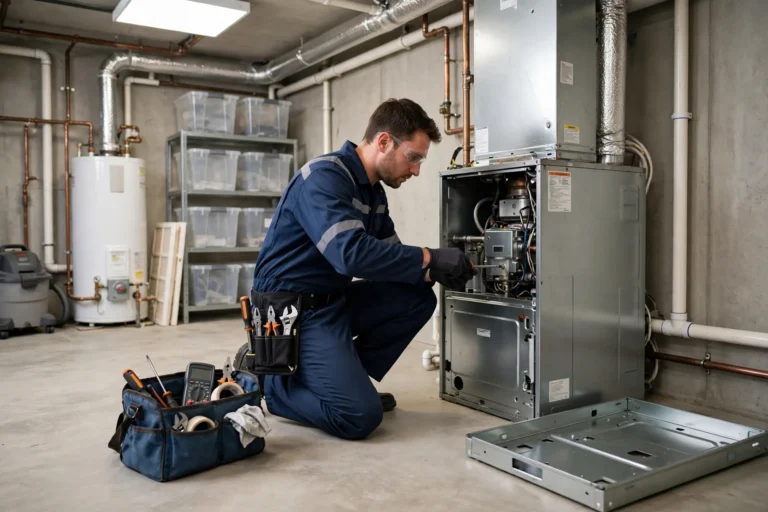
Everything — and this is the section no mommy blog can write, because it takes trade knowledge. Your HVAC system is what actually delivers nursery temperature and humidity, and four jobs done before the baby arrives make the difference:
1. The pre-baby filter swap. Change to a MERV-13 filter if your system supports it (check your system’s manual — some older systems struggle with the denser filter, and a struggling system helps nobody). Do it before the baby arrives, not after, so the first air your baby breathes in that room is already filtered. A 3-pack of MERV-13 filters runs about $30–$45 as a planning estimate.
2. Vacuum the supply vents. Pull the vent covers in the nursery and vacuum inside the first few feet of duct. Construction dust, renovation dust and years of settled dust live there, and the first heating cycle of the season blows it straight into the room. A full room reset pairs with our deep cleaning checklist before baby — vents and filters are part of that pass.
3. Redirect any vent blowing at the crib. Supply air blowing directly on a sleeping baby is a double problem: drafts that chill, and concentrated dust delivery. Vent direction is a design decision — use a vent deflector (about $10–$15) or redirect the airflow along the wall, and if the crib must move, move it away from the vent, not the vent toward it.
4. Close nursery supply vents during painting or renovation dust. When the room is being painted or worked on, close its supply vents so dust is not pulled into the duct system and redistributed later. This pairs directly with low-VOC nursery painting — ventilation during and after painting matters as much as the paint choice.

Seasonal reality check: winter heating dries air (that is when the humidifier earns its keep), and summer air conditioning dehumidifies but can mask a musty-smell mold signal in a damp corner. And if your system cannot hold the nursery steady, or you are unsure whether it supports MERV-13, that is exactly what a pre-baby HVAC checkup is for — call (380) 273-8167 or have a licensed HVAC technician inspect it before the due date, not after the first sleepless night.
Should I Run a Humidifier in the Nursery?
Yes, when the air is dry — but only under the rules below, because the humidifier is where nursery air advice gets dangerous. Real-world testing of humidifiers in children’s rooms found the same failure mode every time: every humidifier grew visible biofilm in the tank or base within 7–10 days without cleaning. A dirty humidifier does not just stop helping — it mists mold into the nursery. The machine is only as safe as its cleaning schedule, full stop. Buy the one that is easiest to take apart and clean, not the one with the biggest tank.
| Rule | Why |
|---|---|
| Cool-mist ultrasonic ONLY — never warm mist/steam | AAP: burn risk around babies |
| Distilled water, not tap | Ultrasonic + hard tap water = inhalable white mineral dust |
| Empty daily, deep-clean every 1–3 days (vinegar, rinse well) | Biofilm grows in 7–10 days uncleaned — then it mists mold INTO the nursery |
| 3+ feet from crib, mist aimed away, out of reach | Wet bedding + reachable hot/wet machine = hazard |
| Hygrometer-verified 40–60%, never above 60% | Above 60% grows mold and dust mites — babies do not need a rainforest |
Two more rules: never add essential oils to a nursery humidifier — a baby’s developing airways do not need them, and they coat the tank. And a good cool-mist humidifier with auto-shutoff runs about $30–$60 as a planning estimate; the auto-shutoff matters because a dry-running machine is a burned-out machine.

Is a Fan Safe in the Baby’s Room?
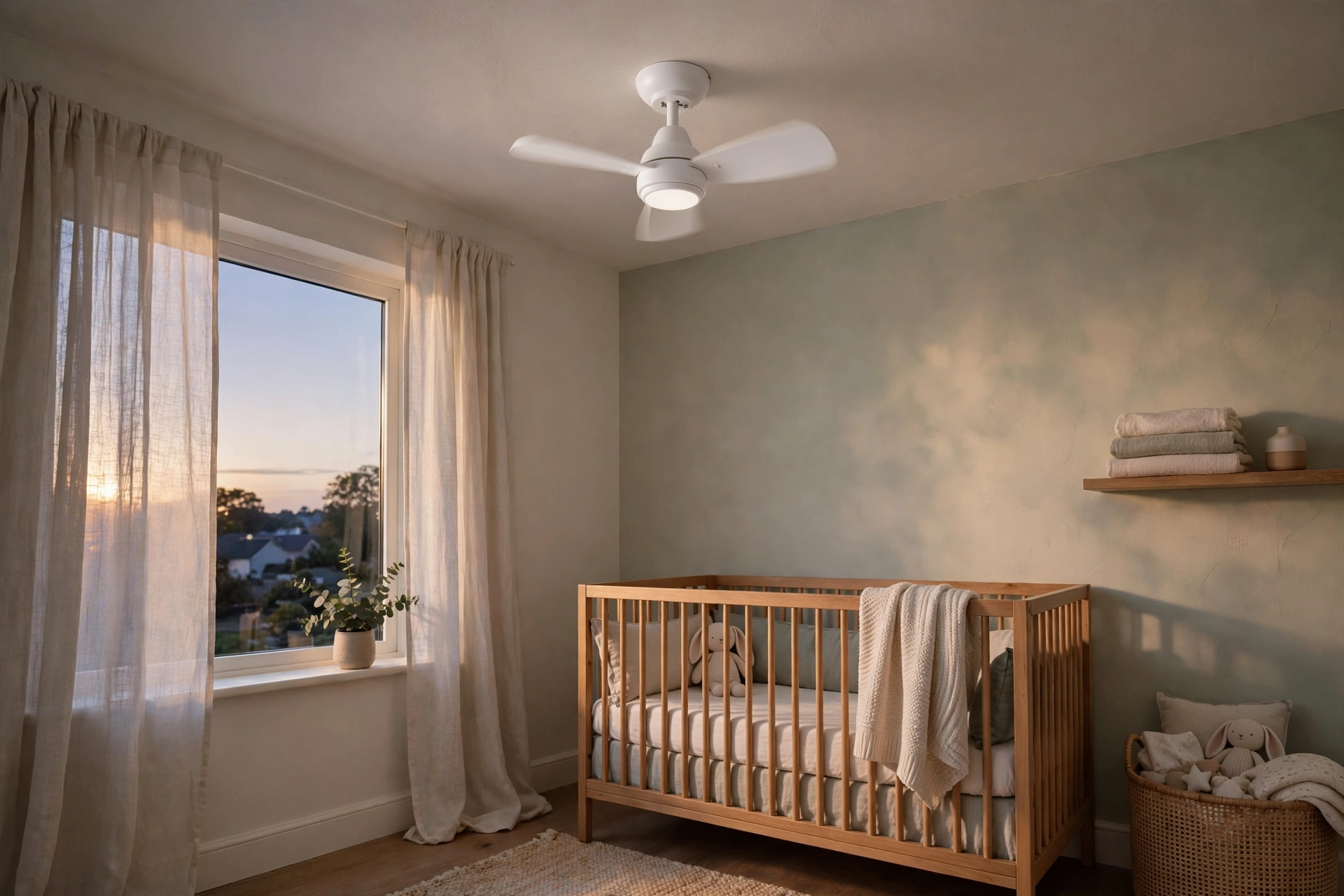
Yes, with one condition: point it at the wall or ceiling, never at the baby. A 2008 study published in the Archives of Pediatrics found fan use in the baby’s room was associated with a 72% reduction in SIDS risk — the AAP does not formally recommend fans but calls the evidence supportive. The mechanism is believed to be air circulation reducing the rebreathing of exhaled carbon dioxide in still air pockets around the baby’s face. Two honest caveats: a fan does not cool a room — it circulates whatever air is there, hot or not — and a fan pointed at the crib is a draft, not circulation. Gentle, indirect movement is the whole trick.
How Should I Dress the Baby for the Room Temperature?
Dress for the crib-height temperature, not the thermostat, and follow the one-extra-layer rule: no more than one layer more than a comfortable adult would wear in the same room. Sleep sacks, never loose blankets — the AAP safe-sleep guidance is unambiguous on blankets in the crib.
| Room temp | Dressing |
|---|---|
| 68–72°F | Short-sleeve onesie + 1.0–2.5 TOG sleep sack |
| 72–75°F | Short-sleeve onesie + 0.5–1.0 TOG sleep sack |
| Above 75°F | Diaper + light onesie or 0.5 TOG sack; remove a layer if sweaty |
| Below 68°F | Footie pajamas + 2.5 TOG sleep sack |
Check the baby’s chest or the back of the neck, not the hands — hands run cool and will fool you into overdressing. A good TOG-rated sleep sack runs about $25–$45 as a planning estimate, and one sack in each of two TOG weights covers nearly the whole year.

What About Air Purifiers?
An honest answer: a HEPA air purifier helps with particulates — pet dander, dust, pollen — but it does nothing for humidity and nothing for gases. If your nursery problem is dry air, a purifier will not fix it; if it is dust, the filter swap and vent vacuuming above matter more than any new machine. The one case where a purifier earns its place is chemical off-gassing (new paint, new furniture), where a carbon filter helps — which is also why low-VOC nursery paint and ventilation during painting matter so much. A bedroom HEPA purifier runs about $100–$250 as a planning estimate; buy it for dust, not for humidity, and do not let it substitute for the filter swap. If you are also planning the paintwork, read our guide on painting the nursery while pregnant.
Frequently Asked Questions
Can the nursery be 75°F?
Briefly, yes — dress the baby lighter (diaper + light onesie or a 0.5 TOG sack) and do not make it the norm. Sustained warmth raises overheating risk, so if the room sits above 72°F for hours, fix the cause (sun, vent direction, heating setting) rather than dressing down permanently.
Do I need the humidifier all night?
If the air is dry, yes — with auto-shutoff on and the hygrometer verifying 40–60%. A humidifier that runs dry overnight is a burned-out machine, and a room that swings from 35% to 65% overnight is worse than one held steady. The hygrometer decides, not the clock.
What if our house runs hot or cold?
Dressing adjustments beat chasing the thermostat. A house that runs warm needs lighter sleepwear and better circulation; a house that runs cold needs the higher TOG sack and a check for drafts at the crib. Move the crib before you fight the whole heating system.
Is the crib near the window OK?
Move it if you can. Windows bring drafts and temperature swings — the crib microclimate near a window can be several degrees off the room reading, in either direction, and condensation on cold glass raises local humidity. An interior wall is the steadier choice.
When do I stop using the humidifier?
Seasonally — and the hygrometer decides, not the calendar. When indoor humidity holds 40–60% without it (usually late spring through early fall in most climates), put it away clean and dry. A humidifier stored wet grows the same biofilm it would have misted into the room.
The numbers are simple — 68–72°F, 40–60%, measured at crib height. The work is everything around them: the filter swapped before the baby arrives, the vent that does not blow on the crib, the humidifier cleaned every 1–3 days without exception. Get those right and nursery temperature and humidity stop being something you worry about at 2 a.m. — they become something the house just does.
General information only, not medical advice — your pediatrician’s guidance comes first.