AC Replacement Cost in 2026: What a New System Really Costs
TL;DR
AC replacement cost in 2026 averages $5,978 nationally, with most homeowners paying $3,887 to $8,073 for a central system installed. A straightforward 3-ton swap typically runs $5,500 to $10,000, while new ductwork, a high SEER2 rating or a combined AC and furnace job can push the total past $14,000. Get three to six itemised quotes before you sign anything.
If your air conditioner died in a heatwave, you know the feeling: one phone call, one quote, and a number far bigger than you expected. The ac replacement cost for a typical American home in 2026 sits near $6,000, but real quotes run from under $4,000 to well over $20,000 — and the difference is rarely the brand on the box. This guide lays out the real ranges, the two 2026 rule changes that affect every quote, and the exact steps that stop a $10,000 surprise.
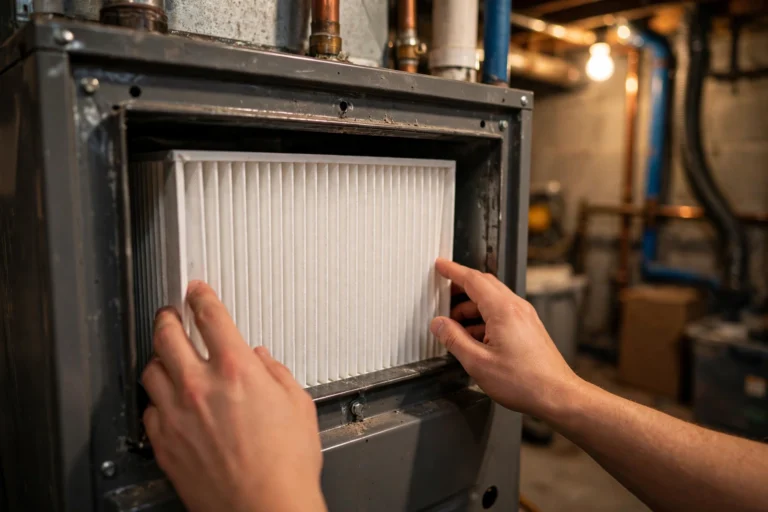
Before you price a new system, check whether your current one is simply starved of airflow. A clogged filter makes a healthy AC work twice as hard, and many homeowners replace a unit that only needed basic care — learn how often to replace a furnace filter before you call a contractor. If the system is genuinely old, noisy, or leaking refrigerant, the numbers below will tell you what a fair replacement should cost.
How Much Does AC Replacement Cost in 2026?
The average AC replacement cost in 2026 is $5,978 nationally, based on 24,979 projects tracked by Angi, with most homeowners paying between $3,887 and $8,073. A straightforward central-air swap lands near the middle of that range, while larger homes and new ductwork push the total well above it.
The national picture comes from Angi’s October 2026 data, averaging 24,979 real projects at $5,978, with most homeowners paying $3,887 to $8,073. That ac replacement cost average hides a wide spread: a simple like-for-like swap in a small home can come in under $4,000, while a large home with new ductwork and a top-efficiency system can pass $13,500. This Old House’s 2026 survey found a higher average of $8,460 for central air.
Texas homeowners should budget higher: the ac replacement cost in Texas typically runs $7,500 to $12,000, and summer demand pushes quotes up further. A full AC and furnace replacement together usually costs $8,000 to $14,000 or more, so a combined quote near the top of that range is not automatically a bad deal — but get a second opinion.
What Does a New Central AC System Cost by Size?
The AC replacement cost for a new central system typically runs $3,500 to $13,500 installed, and size is the biggest driver of that spread. A 1.5-ton unit suits a small home of 600 to 900 square feet, a 3-ton unit covers 1,500 to 1,800 square feet, and a 5-ton unit serves homes over 2,500 square feet.
| Size | Home | Typical range |
|---|---|---|
| 1.5 ton | 600–900 sq ft | $3,500–$5,500 |
| 2 ton | 900–1,200 sq ft | $4,000–$6,500 |
| 2.5 ton | 1,200–1,500 sq ft | $4,500–$7,500 |
| 3 ton | 1,500–1,800 sq ft | $5,500–$10,000 |
| 4 ton | 1,800–2,200 sq ft | $6,500–$11,000 |
| 5 ton | 2,500+ sq ft | $8,000–$13,500 |
All figures above are rough planning estimates, not quotes — the installed range for your home depends on the unit, the labour, and what else the job needs.
Size is set by your home, not your preference: an oversized unit short-cycles, leaves humidity behind and wears out early, while an undersized one runs all day and never catches up. A proper load calculation — Manual J — is how a good contractor picks the tonnage, and our furnace size calculator uses the same sizing logic for heating. Never accept a size chosen from the old unit’s label.
That sizing step is where the ac replacement cost is really decided: a unit one ton too large costs more to buy, more to run, and dies sooner.
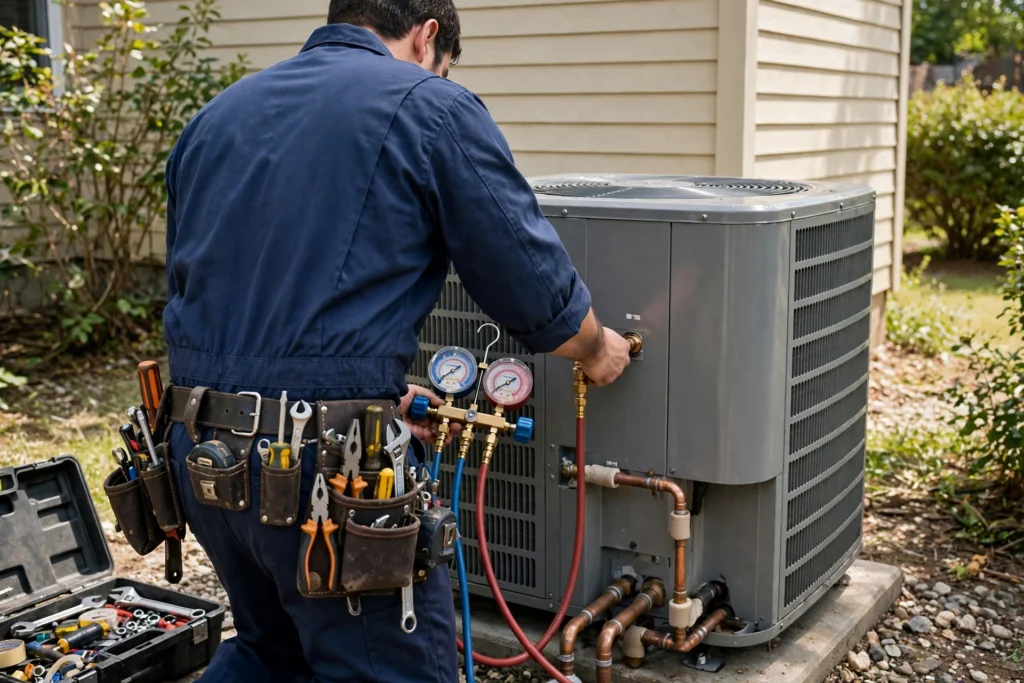
What Makes One Quote Double Another?
One quote can double another because AC replacement cost depends on far more than the box outside. System size, SEER2 efficiency rating, ductwork condition and electrical upgrades each add thousands, and labour rates vary sharply by region and season. Brand matters far less than correct sizing, efficiency and sound ducts.
| Price driver | Typical extra cost |
|---|---|
| Larger system | $1,000–$3,000 per extra ton |
| Higher SEER2 rating | $1,000–$3,000 |
| Ductwork repair or replacement | $2,500–$7,500 |
| Electrical upgrade | $500–$2,000 |
| Smart thermostat | $150–$500 |
| Summer booking | 20–30% premium |
All figures above are rough planning estimates, not quotes.
Brand sits at the bottom of this list on purpose: homeowners online compare $12,000 and $45,000 quotes for similar work, and the gap is almost never the nameplate — it is size, efficiency, ducts and the season. One Texas homeowner’s $24,000 quote for a budget-range Goodman system drew more than 170 comments calling it inflated, which is why every quote needs exact model numbers.
That is why the ac replacement cost on paper means little until you see the model numbers behind it.
PRO TIP
Ask every contractor for the exact outdoor and indoor model numbers in writing — two quotes for “a 3-ton system” can hide a $3,000 equipment gap.
How Much Extra Does Ductwork Add?
Ductwork changes typically add $2,500 to $7,500 to the AC replacement cost, depending on how much ducting must be repaired or replaced. Sealing and insulating existing ducts costs far less than a full replacement, while leaky or undersized ducts can waste a third of your new unit’s cooling before it reaches a room.
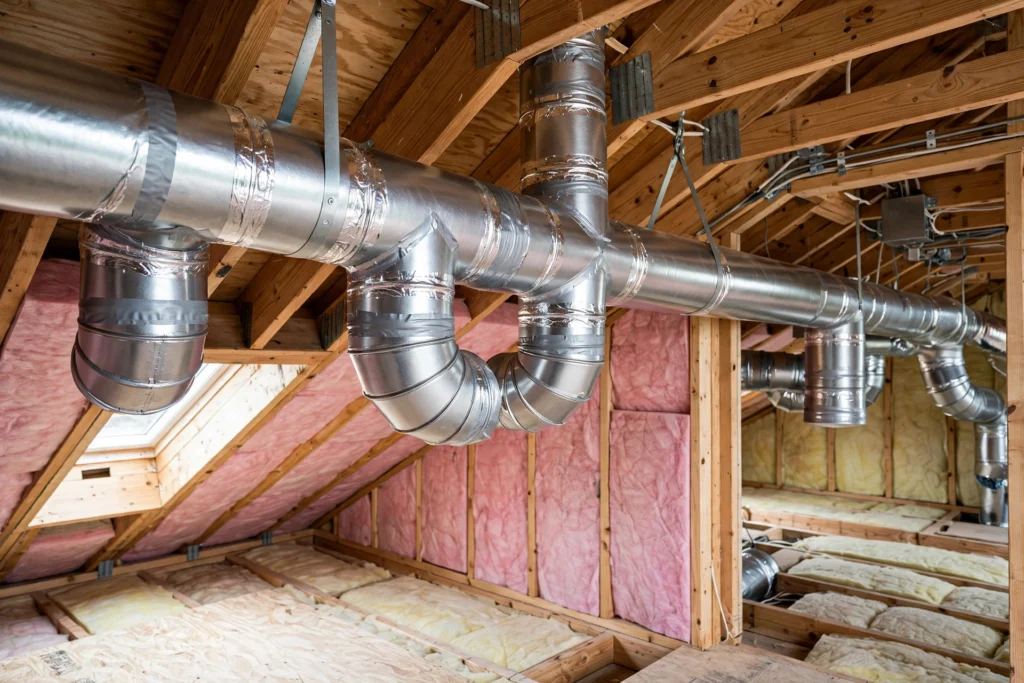
Ducts are the hidden half of the job. Leaky, crushed or undersized ducts can waste a third of the cooling your new unit produces, so a contractor who finds bad ducts is not automatically upselling you — but fixing them deserves its own line on the quote. Sealing and insulating existing ducts is the cheaper fix; a full replacement runs $2,500 to $7,500 depending on home size and how much ducting is reachable.
Ask whether the ac replacement cost you were quoted includes duct testing, or whether ducts are a separate line item.
One homeowner’s $9,500 follow-up quote for a coil and duct job drew the same advice: wait on full duct replacement unless the ducts leak, and get the ductwork priced separately. Ductwork is often the quiet surprise inside the ac replacement cost — the unit price looks fair until the ducts are added. If your home has hot and cold rooms, noisy vents or dust at the registers, test the ducts first — not last.
Is There Still a Federal Tax Credit for a New AC?
No — the federal 25C energy tax credit for a new air conditioner ended for property placed in service after December 31, 2025. That means no federal credit is available on a 2026 AC replacement, whatever a salesperson implies. Never let a quote bake a credit into the price — check your state’s utility rebates instead.
The 25C credit covered up to 30 percent of qualifying equipment, capped at $2,000 a year, and many homeowners planned around it. That credit ended for property placed in service after December 31, 2025, so a system installed in 2026 gets no federal credit at all. If a quote shows a credit subtracted, ask the contractor to remove it and show the real total.
The ac replacement cost you budget for 2026 should assume zero federal help.
State and utility rebates still exist in many areas, so check your utility’s rebate page and your state’s energy office before you sign. Those rebates are smaller than the old federal credit and usually arrive after the work, so they do not lower the ac replacement cost on the quote itself — never let a contractor promise one as a discount.
What Is the 2026 Refrigerant Rule — and What Does It Cost You?
From 2026, new residential AC equipment can no longer be made with R-410A refrigerant. New systems use A2L refrigerants — R-454B or R-32 — with a global warming potential under 700, and that switch adds roughly an 8 to 15 percent equipment premium. Your existing R-410A system can still be repaired and recharged.
The EPA’s rule means new residential equipment can no longer be manufactured with R-410A, the refrigerant in most systems installed over the last fifteen years. New systems use A2L refrigerants — R-454B or R-32 — with a global warming potential under 700, and carry roughly an 8 to 15 percent premium over the old R-410A models. That premium is already baked into 2026 quotes.
It is one more reason the ac replacement cost in 2026 runs higher than the same job cost two years ago.
Your existing R-410A system is not banned and can still be repaired — parts and refrigerant remain available, and a repair that buys a few more years can be the right call. What you cannot buy any more is a brand-new R-410A system, so any “new” unit quoted today should be an A2L model that names its refrigerant. Every ac replacement cost quoted in 2026 already includes the A2L premium, so a quote that looks cheap next to a 2024 price is probably missing something.
PRO TIP
Check the quote for the refrigerant name — R-454B or R-32. If a 2026 quote still lists R-410A on a brand-new system, ask for an explanation in writing before you sign.

Should You Repair or Replace Your AC?
Replace your AC when the repair math stops working: if age multiplied by the repair cost tops $5,000, or the repair costs more than half of a new system, replacement usually wins. A system over 12 to 15 years old with a failed compressor, rising bills or R-22 refrigerant is also a strong candidate for replacement.
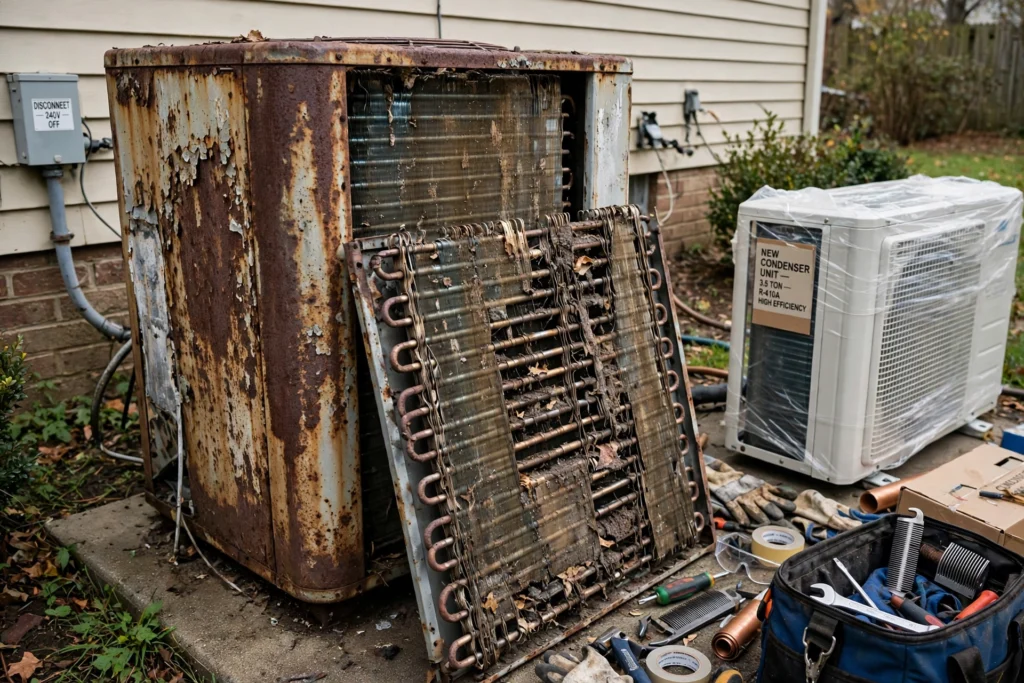
The $5,000 rule is the quickest test: multiply your system’s age by the repair cost, and if the result tops $5,000, replacement usually beats another repair. A 12-year-old system with a $500 repair scores $6,000 — replace it. A 6-year-old system with the same repair scores $3,000 — fix it.
The 50 percent rule is the second test: if a repair costs more than half of a new system, put the money toward the new one. A failed compressor on a 14-year-old unit, a leaking R-22 coil, or repair bills that keep climbing all point the same way. The ac replacement cost stings once; a dying system bills you every summer.
How Do You Avoid Overpaying for a New AC?
Get three to six itemised quotes with model numbers, compare them line by line, and book the work in the shoulder season — March to April or October to November — when prices run 20 to 30 percent lower than in summer. Homeowners who skip this step post $15,000 to $20,000 quotes and ask whether they are being ripped off.
Start with three to six itemised quotes with model numbers — and compare the same system, not the same brand. Facebook groups are full of homeowners posting $10,000 to $20,000 quotes and asking whether they are being ripped off — and the consistent answer is that one quote proves nothing. One thread reported $12,000 to $45,000 for similar work, which is why the second and third quotes matter more than the first.
No single number defines the ac replacement cost for your home — the spread between three honest quotes does.
Book in the shoulder season — March to April or October to November — when contractors have open calendars and summer premiums of 20 to 30 percent disappear. Ask for the total in writing — permits, disposal of the old unit, and any electrical or ductwork included — and never sign a quote that still shows a federal tax credit. A contractor who rushes you, refuses model numbers, or prices only by phone has told you all you need to know.
Need a pro to look at your system before you decide? If you are in the Columbus area, call (380) 273-8167 or have a licensed HVAC technician inspect it — an honest inspection beats a phone quote.
What is the average AC replacement cost?
The average AC replacement cost in 2026 is $5,978 nationally, based on Angi’s data from 24,979 projects, with most homeowners paying $3,887 to $8,073. A 3-ton changeout runs $5,500 to $10,000; a full AC and furnace job runs $8,000 to $14,000 or more. All figures are rough planning estimates, not quotes.
How long does an AC replacement take?
Most straightforward replacements take one day — 4 to 8 hours for a like-for-like swap of the outdoor and indoor units. Jobs adding ductwork or a new furnace take two to three days. Ask for a written schedule before the crew arrives.
What is the best time of year to replace an AC?
Spring or autumn — March to April or October to November — when demand is low and calendars are open. Summer quotes run 20 to 30 percent higher, while emergency replacements in a heatwave leave no room to compare prices. If your system is limping, get quotes in autumn.
What does SEER2 mean for the price?
SEER2 is the efficiency rating — higher SEER2 means lower running costs and a higher price, typically $1,000 to $3,000 more. In hot climates the savings can pay that premium back; in mild climates a mid-range SEER2 is usually better value. Size and ductwork matter more than the highest rating.
Does a new AC need a new furnace too?
Not always. If your furnace is under 12 years old and running well, the AC can be replaced on its own — but the indoor coil must match the new outdoor unit, and a mismatched pair loses efficiency. A combined AC and furnace job runs $8,000 to $14,000 or more, so replace the furnace too only when it is old or failing.
How long does a new AC last?
A new central AC typically lasts 15 to 20 years with regular maintenance — yearly servicing, clean filters and clean coils. Units in hot climates wear out sooner, while a well-sized system in a mild climate can pass 20 years. Today’s A2L systems are a long-term choice, not a stopgap.
Final Thought
An AC replacement cost is a big number, but a knowable one: the national average is $5,978, the range is $3,887 to $8,073 for most homes, and three itemised quotes will tell you where your home falls. Get the size right, check the refrigerant, book in the shoulder season — then let the new system work quietly for the next fifteen years.