Are Permanent Outdoor Lights Worth It? The Honest Math
So, are permanent outdoor lights worth it? For most homeowners who currently pay someone to hang lights — or who dread the ladder every December — yes, and the math isn’t close: a good DIY kit costs less than a single season of hired hanging. But “worth it” depends on how long you’ll stay in the house, what you’d otherwise spend, and whether you’ll actually use the lights beyond December. Here’s the honest version, including the cases where the answer is genuinely no.
Disclosure
SilkStoneHome is reader-supported. When you buy through links in this article, we may earn a small commission at no extra cost to you.
TL;DR
Paying for yearly hanging ($500–950 a season is common) makes a $280–650 permanent kit pay for itself in one season. DIY-ing seasonal lights makes the payback about time, safety and dead strands instead — still worth it if you’ll stay 3+ years. Skip permanent lights if you’re moving within two years, renting, or your HOA says no.
The Real Math: 4 Ways to Light a Roofline
Take a typical home with about 150 feet of front roofline and compare five years of each option:
| Option | Year 1 | 5-year total | What you get |
|---|---|---|---|
| Hire hangers every season | $500–950 | $2,500–4,750 | Lights up in December, gone in January, forever |
| DIY seasonal lights | $100–250 in lights | $300–700 + ~6 hrs/yr | Tangles, storage deaths, annual ladder time |
| DIY permanent kit | $280–650 | $280–650 | Up once; every holiday, all year |
| Kit + hired installer | $900–1,500 | $900–1,500 | Same kit, professionally mounted |
| Dealer track system | $3,000–6,000+ | $3,000–6,000+ | Nearly invisible by day, dealer warranty |
The hired-hanging numbers aren’t exaggerated: homeowners in community groups routinely share quotes of $800–950 for a single line of seasonal lights from established companies (cheaper quotes exist, usually from uninsured one-person operations). Our permanent Christmas lights cost guide breaks down professional permanent pricing by the foot, and this breakdown of Christmas light installation costs covers the seasonal market.
The headline: if you currently hire the job out, a permanent kit isn’t a splurge — it’s the cheapest option on the table within twelve months. The premium track systems are the ones that need 4–6 years of avoided hanging fees to break even, and they earn it mostly on looks and warranty, not arithmetic.
The Costs Nobody Puts in the Brochure
For permanent lights, honestly: the kit is not the only cost. Budget for a box of proper screws (the included ones are widely mocked), possibly a mounting track if you want the clean look, and a replacement controller someday — the control box and power adapter are the parts that age, not the LEDs. Installation is a half-day of ladder work, or roughly $500–600 if you hire it out. Like any roofline gadget, it’s also technology: apps change, and a brand that folds takes its app support with it, which argues for established brands.
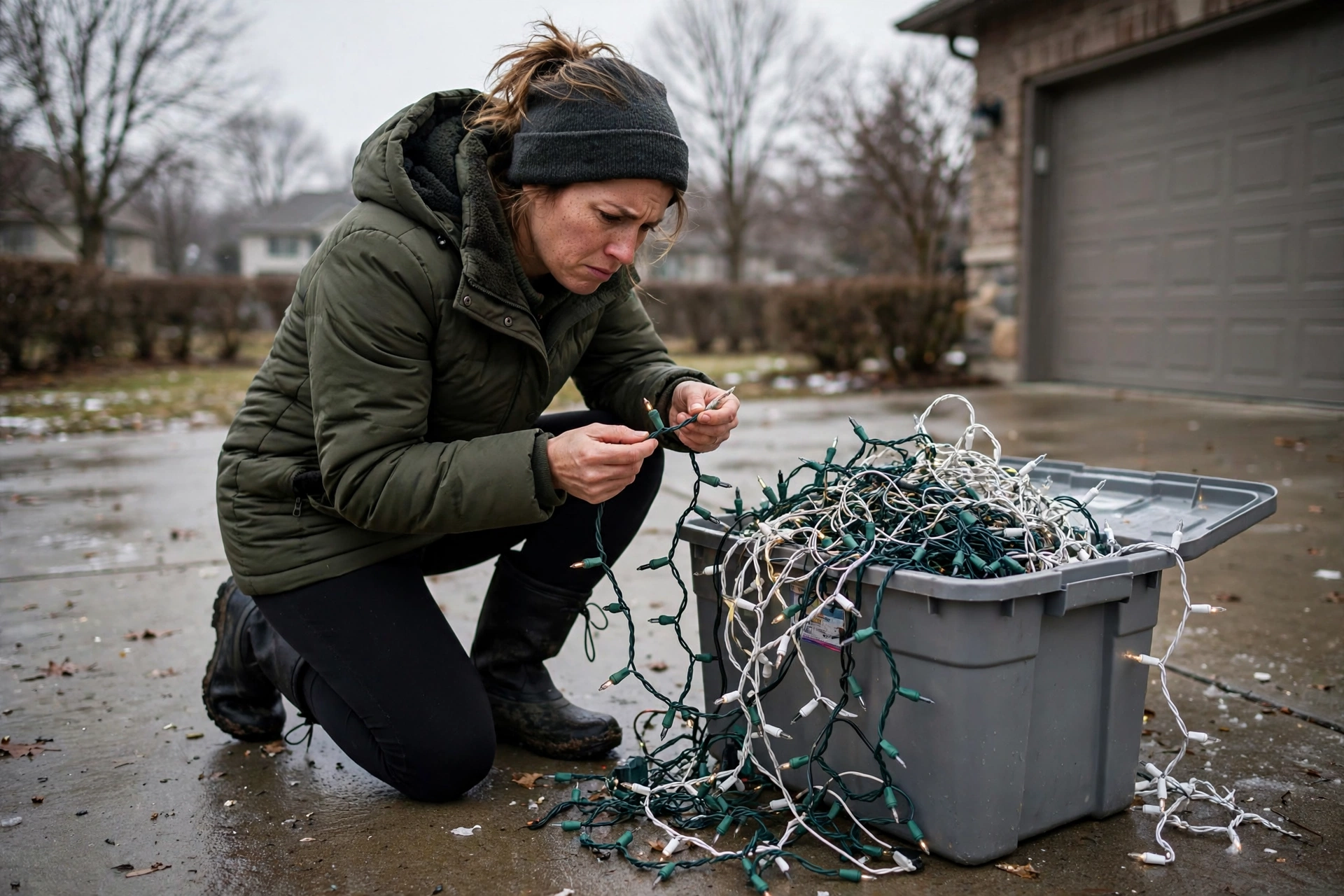
For seasonal lights, honestly: the hidden tax is failure. Owner forums and homeowner groups are full of the same story — strands that worked in January are half-dead by November after a summer cooking in the attic; one popular poster’s estimate was that most of his strands failed each year. Add clips, extension cords, timers, storage bins, and the hour of bulb-checking on a cold driveway, every single year. None of it is expensive; all of it is forever.
The Returns That Aren’t Money
Your December back. The real product here is a Saturday. Permanent lights turn a half-day of ladder work in the cold into opening an app — and the same goes for taking them down in January, which is the part everyone actually hates more.
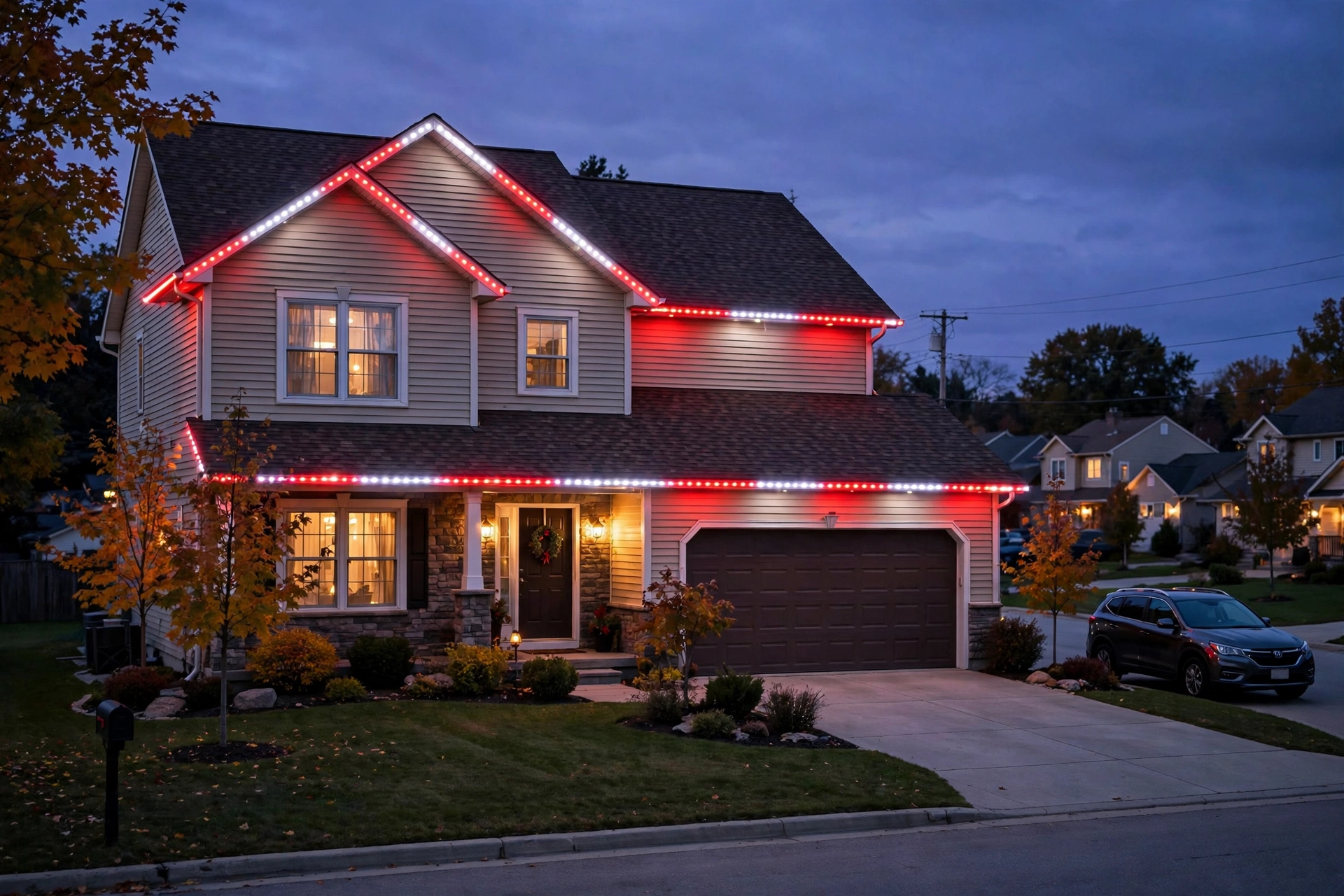
Every holiday, not just one. This is the benefit owners mention most after installing: Halloween orange, team colors on game day, red-white-and-blue in July, pink for a birthday, then warm white the other 300 nights. A system you use weekly earns its keep differently from one that shines for five weeks. Browse any homeowner group and the pattern is clear — people buy them for Christmas and fall in love with them for everything else.

Safety, stated plainly. Most ladder accidents at home happen on exactly this kind of job: reaching sideways from the top of an extension ladder in cold weather. Installing once means climbing once. If your roofline is two stories and steep, that single fact may settle the question — or argue for hiring the install and keeping the permanence.
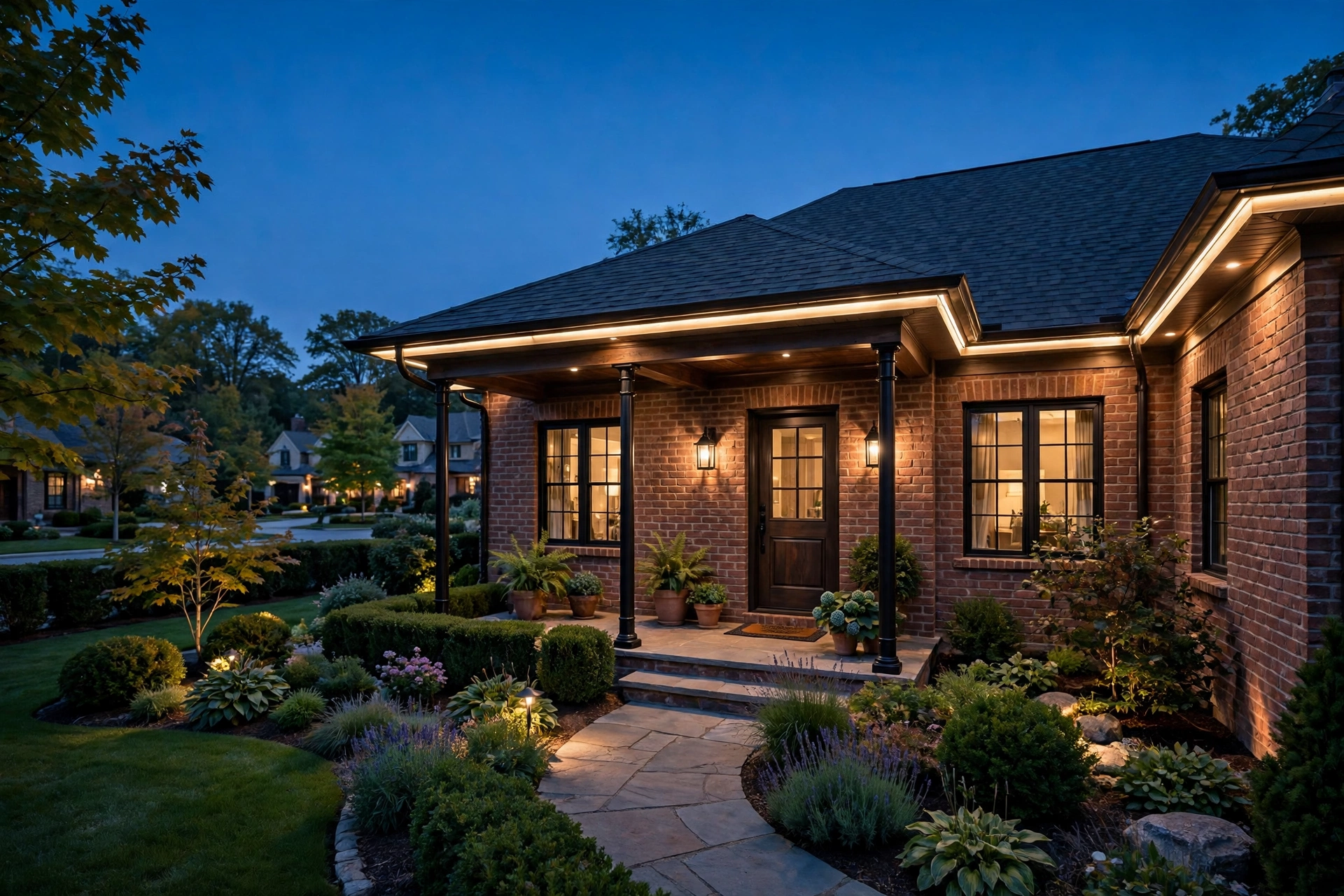
How the house feels at night. Warm-white roofline light is the same trick hotels and builders use: the house looks cared for, arrivals feel safer, and dark corners disappear. It won’t add a line item to an appraisal — anyone who promises you a specific resale bump is selling something — but “the house that looks loved” is a real effect buyers respond to.

The electricity is a non-issue. A 100 ft LED kit draws roughly what a couple of old light bulbs did. Running it every evening costs a few dollars a month at most; our guide to what Christmas lights cost to run has the full breakdown.
How Long Do They Actually Last?
The LEDs are rated around 50,000 hours — at dusk-to-midnight use, that’s two decades of evenings on paper. Be skeptical of the paper: in real installs, UV exposure, heat and the controller electronics set the true lifespan, and a realistic expectation for a well-mounted kit is 7–12 years before you replace a component. That still beats the seasonal alternative easily, and it’s why mounting quality matters — lights that fall down in year two are worth it at no price. Our installation guide covers the mounting rules that decide this.
When Permanent Outdoor Lights Are NOT Worth It
- You’re moving within 1–2 years. The next owner gets the benefit; you get a weekend on a ladder. Spend the money on the new house.
- You rent. Even adhesive mounting marks you as the tenant who drilled the soffit.
- Your HOA restricts exterior fixtures. Some do. Check before you buy — this is the most avoidable disappointment in the category.
- You genuinely love the ritual. Some people enjoy the annual hanging day with family more than they’d enjoy an app. That’s not a problem to solve.
- Your roofline is one short, simple run you can reach from a step stool in 20 minutes. Permanent lights solve a problem you don’t have.
- You hate app-controlled things on principle. These systems live in an app. If that sentence annoys you, believe it.
The Verdict, by Homeowner
| You are… | Verdict |
|---|---|
| Paying $500+/yr for hanging | Worth it immediately — kit pays back in season one |
| DIY hanger, staying 3+ years, two-story house | Worth it — mostly for safety and time |
| DIY hanger, one story, simple roofline | Worth it if you’ll use year-round scenes; optional otherwise |
| Track-system shopper who wants invisible-by-day | Worth it if the budget is comfortable and you’ll stay 5+ years |
| Moving soon / renting / HOA-restricted | Not worth it — revisit at the next house |
If you’re in one of the “worth it” rows, the next step is picking the right kit — our comparison of the best permanent outdoor lights covers the four worth buying, including which ones can be cut to fit and which can’t. And if the answer for your house is “not yet,” no hard feelings: a well-hung seasonal display still beats a permanent one you resent paying for.
Frequently Asked Questions
Are permanent outdoor lights worth it for a small house?
If you currently pay for hanging, yes — small rooflines mean cheaper kits, so payback is fast. If you hang a single short run yourself from a step stool, the honest answer is “only if you want the year-round colors,” because your current system costs you almost nothing.
Do permanent outdoor lights increase home value?
Not in any way an appraiser will credit you for. What they do is contribute to the “well-kept house” impression — the same category as fresh mulch and a clean driveway. Treat any claimed percentage increase as marketing, not data.
How much do permanent outdoor lights cost to run?
Very little. LED pucks draw a fraction of a watt each; a typical 100 ft kit running every evening adds roughly $2–5 a month depending on your electricity rate and brightness settings. Timers and schedules keep it at the low end.
What happens when one light dies?
Sections are replaceable. Strands connect in segments so a failed run can be swapped without touching the rest, and some brands sell individual modules. This is a real advantage over seasonal strands, where one bad section usually means buying a new string.
Can permanent lights get me in trouble with my HOA or city?
Possibly — rules vary. Some HOAs require architectural approval for anything attached to the exterior, and a few cities restrict colored lighting outside holiday periods (warm-white accent lighting is rarely an issue). A two-minute check of your HOA rules before ordering saves a very annoying letter later.
The Bottom Line
Permanent outdoor lights are worth it when three things line up: you’ll stay in the house for several years, you’re currently spending money or weekends on seasonal lights, and you’ll use the year-round colors at least a little. When those hold, the kit is not a luxury — it’s the cheapest line in the table. When they don’t, the ladder and the storage bins win another year, and that’s a perfectly respectable answer too.