Best Basement Dehumidifier: How to Pick the Right One for Your Home
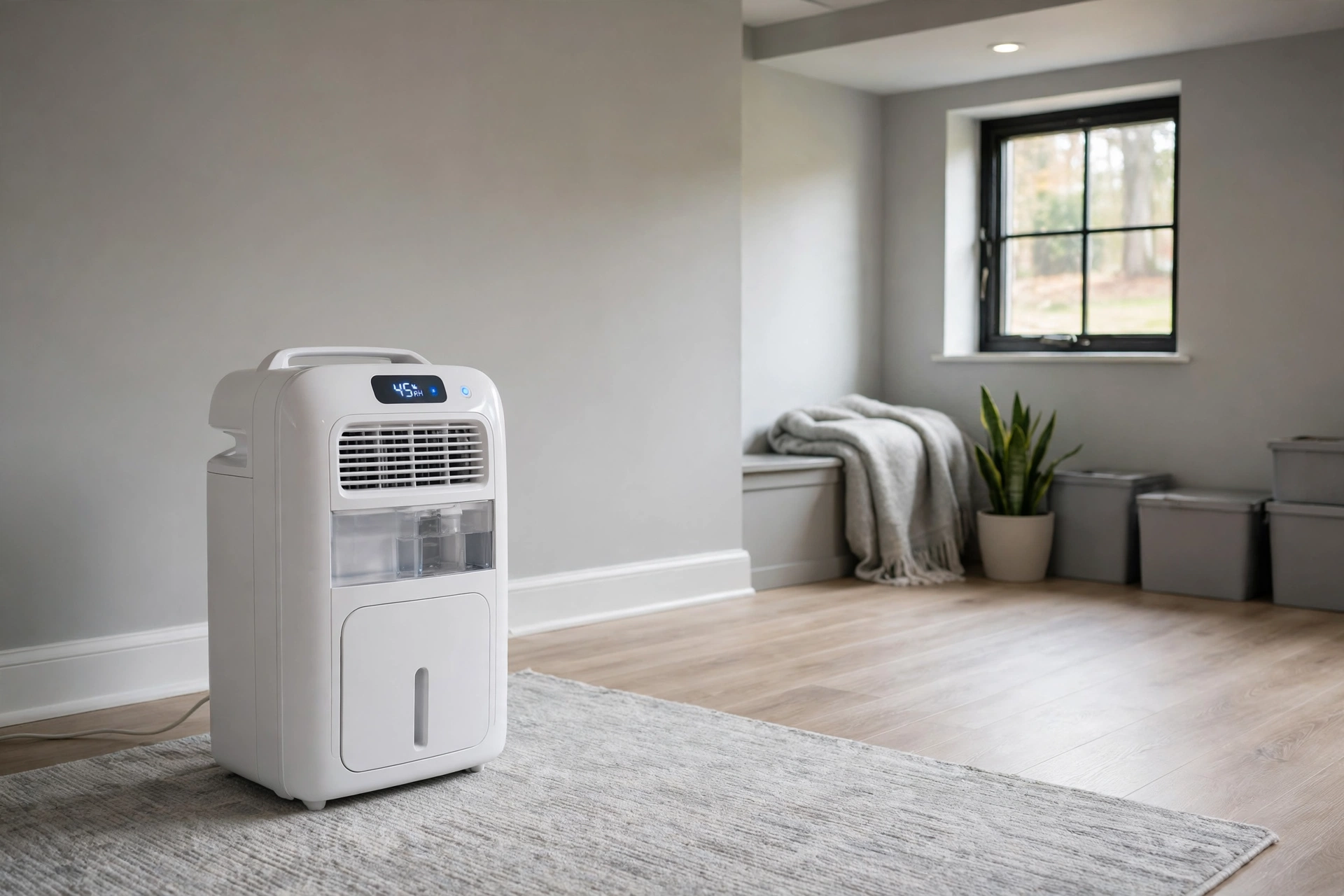
The best basement dehumidifier for most homes is a top-rated 50-pint ENERGY STAR model with a built-in pump or a drain hose, because a damp basement fills a bucket in hours and a machine that stops on a full bucket is not controlling humidity at all. Size it by how damp the basement is, not by the square footage on the box, and buy the drain plan first: pump if the water has to go up to a sink or out a window, gravity hose if there is a floor drain nearby, and a bucket only if you walk past the machine every day.
Basements are the hardest room in the house to keep dry. Cool air, concrete walls that sweat, laundry drying downstairs, and groundwater pressing in from outside all push humidity up, and the EPA says indoor humidity should stay below 60%, ideally between 30% and 50%. Above that, musty smells set in, mold gets a foothold, and stored boxes, tools and furniture start to suffer. A damp basement also attracts pests — our guide to how to get rid of silverfish starts with moisture control for exactly this reason.
TL;DR — Best Basement Dehumidifier in 5 Steps
1. Size by dampness, not the box: most damp basements under 2,000 sq ft need 25–40 pints a day; wet ones need 50+.
2. Buy a 50-pint ENERGY STAR model: it is the largest portable size under the current DOE test, and it covers nearly every basement.
3. Pick the drain first: built-in pump if water must go up, gravity hose if a floor drain is nearby, bucket only if you empty it daily.
4. Check the cold rating: if the basement drops below 41 °F, you need a low-temperature model or the coils will frost over.
5. Set it and leave it: aim for 45–50% humidity, run it continuously through the drain, and clean the filter monthly.
That is the short version — the sections below explain each step in full.
What Size Dehumidifier Do I Need for My Basement?
A basement dehumidifier is sized by how damp the space is and how big it is: for a moderately damp basement under 2,000 sq ft, ENERGY STAR calls for 20–30 pints a day; for a very damp one, 25–40 pints; and for a wet basement with sweating walls or seepage, 30–50 pints. Over 2,000 sq ft, add at least 10 pints to each band. ENERGY STAR’s own advice is to oversize rather than undersize, because an undersized machine runs non-stop and never reaches the target.
The pint number itself changed in 2019, and this is the trap most buyers fall into. Portable dehumidifiers are now tested at 65 °F instead of 80 °F, closer to real basement conditions, so the same machine reports a smaller number than it used to — an old 70-pint rating is roughly a 40–45-pint rating today. Ignorethe “80, 120 or 150 pints” in listing titles: those are measured in hot, humid air, not in a basement. The only number that means anything is the DOE pints-per-day rating on the ENERGY STAR list./

| Basement condition before dehumidifying | Relative humidity | Under 2,000 sq ft | Over 2,000 sq ft |
|---|---|---|---|
| Slightly to moderately damp: musty smell at times | 50–75% | 20–30 pints/day | 30+ pints/day |
| Very damp: always smells damp, damp spots on walls or floor | 75–90% | 25–40 pints/day | 40+ pints/day |
| Wet: walls or floor sweat, seepage, laundry drying | 90–100% | 30–50 pints/day | 50+ pints/day |
Source: ENERGY STAR dehumidifier buying guidance. All values are rough planning guidance, not quotes.
PRO TIP: Buy a Hygrometer Before You Buy a Dehumidifier
A $10–$15 hygrometer tells you the truth about your basement in a day. If it reads under 60% most of the time, a 30-pint unit is plenty. If it sits above 75%, skip straight to a 50-pint model with a pump — a small unit in a wet basement is money spent twice.
What Is the Best Basement Dehumidifier for Most Homes?
The best basement dehumidifier for most homes is a 50-pint ENERGY STAR model with a built-in pump, because it covers the largest portable capacity, works in cool basement air down to about 41 °F, and never needs its bucket emptied. The Midea Cube 50 with pump is the best all-round pick in current roundups at 49.67 DOE pints a day, with the Frigidaire 50-pint pump model as the best alternative and the LG PuriCare 50-pint as the quietest pick. For a cold basement or crawl space, the AlorAir Sentinel HD55S is the pick, rated down to about 34 °F.
Every pick below is rated at about 50 pints a day on the DOE test, so one unit covers every ENERGY STAR sizing band except a wet basement over 2,000 sq ft — there, run two units at opposite ends or look at a whole-home unit. Prices are ranges seen in Nov 2026 editorial roundups; verify the live price at insertion.
| Pick | DOE pints/day | Drain | Best for | Rough price |
|---|---|---|---|---|
| Midea Cube 50 with pump | 49.67 | Built-in pump, hose or bucket | Most basements, no floor drain | $220–$240 |
| Frigidaire 50-pint with pump | 49.95 | Built-in pump, hose or bucket | Best pump alternative, rated to 41 °F | $260–$280 |
| LG PuriCare 50-pint | 49.81 | Gravity hose or bucket | Quietest pick, 40 dB | $280–$300 |
| Midea EasyDry 50 | 49.74 | Gravity hose or bucket | Best value with a floor drain | $200–$220 |
| AlorAir Sentinel HD55S | 36.33 | Gravity drain | Cold basements, crawl spaces | $500–$540 |
All prices are rough planning estimates, not quotes. Verify at insertion.
The Midea Cube 50 with pump is the best basement dehumidifier for most homes because the pump solves the most common basement problem: there is no floor drain, or the only drain is a laundry sink across the room. The pump lifts water up to a sink or out a window, so the machine runs to its humidity target instead of stopping on a full bucket at 2 a.m. It is ENERGY STAR rated at 49.67 pints a day and holds a 4.26-gallon bucket as backup.
The Frigidaire 50-pint pump model is the best alternative, and the one contractors and homeowner forums recommend most often. It is rated at 49.95 DOE pints a day, runs down to 41 °F, and its pump discharges water upward into a sink or out a window. If the Midea is out of stock, buy this one — same capacity, same drain options, a longer track record.
The LG PuriCare 50-pint is the quietest of the top picks at a published 40 dB, which matters if the basement is finished and used as a bedroom, office or playroom. It is rated at 49.81 DOE pints a day and drains by gravity hose or bucket — buy this one only if there is a floor drain nearby, because it has no pump.
The AlorAir Sentinel HD55S is the pick for basements that stay cold: rated down to about 34 °F with auto defrost, 36.33 DOE pints a day, gravity drain only. It costs roughly twice a standard 50-pint portable, so buy it only if your basement actually gets that cold.
Should I Get a Pump, a Drain Hose or a Bucket?
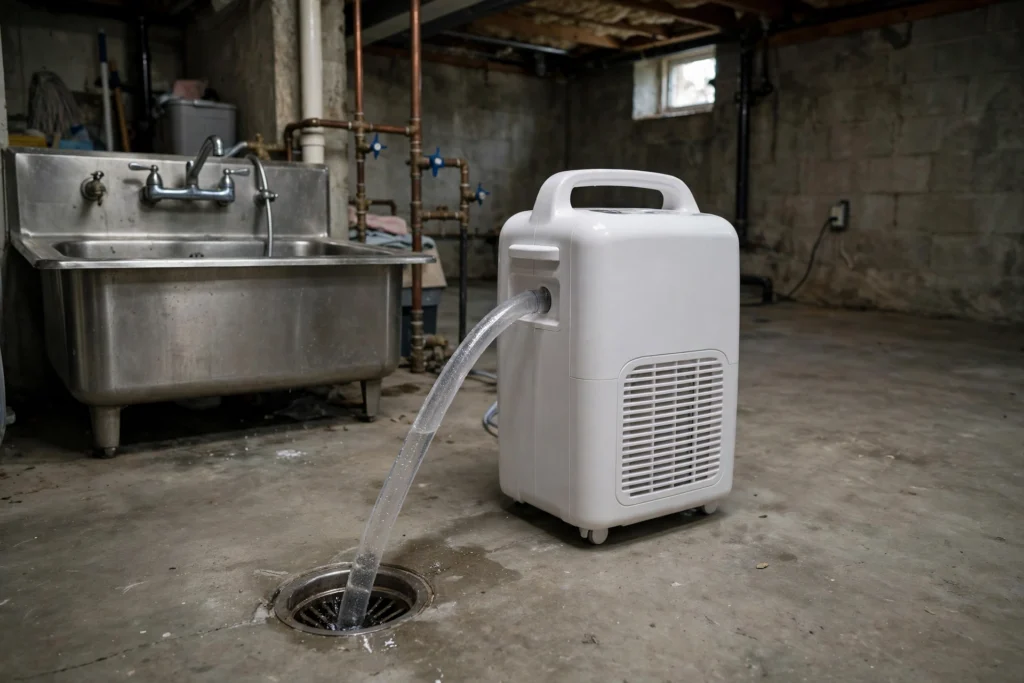
Get a built-in pump if the water has to go up or across the room, a gravity drain hose if a floor drain or sump is nearby and lower than the machine, and a bucket only if you walk past the dehumidifier every day and do not mind emptying it. The drain plan decides whether the machine actually controls humidity: a bucket is a shut-off timer, and a unit that stopped on a full bucket at 2 a.m. is not holding anything at the target.
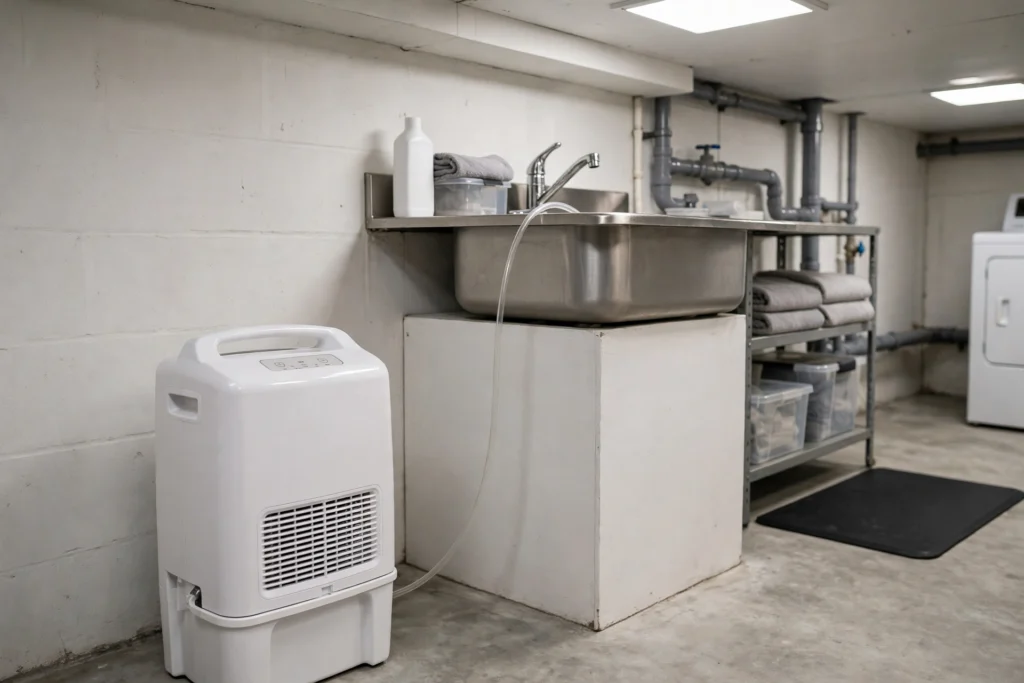
The gravity hose has one rule that catches most people: the drain has to be lower than the drain port on the machine, and the hose has to fall the whole way there. A 50-pint unit standing on the floor has its port about 8 inches up; a laundry sink rim is about 32 inches up, so a hose to that sink will never drain. The fixes are to raise the unit on blocks until the port clears the rim, pick a lower drain, or add a pump. Also check inside the fitting before blaming the hose: some models ship with a rubber plug seated inside the port, and the water keeps going to the bucket until it is removed.
| Drain option | How it works | Rough cost | Best when |
|---|---|---|---|
| Built-in pump | Pushes water up and away through a long hose | Included in $220–$300 models | No floor drain, or water must go up |
| Gravity drain hose | Water runs downhill to a drain | $8–$20 for the hose | Floor drain or sump nearby and lower |
| External condensate pump | Adds a pump to a hose-only unit | $45–$80 plus tubing | Drain is well above the port |
| Bucket | Empty by hand | $0 | You pass the machine daily |
All prices are rough planning estimates, not quotes.
Will a Dehumidifier Work in a Cold Basement in Winter?
A standard compressor dehumidifier works in a cold basement down to about 41 °F, but below 65 °F frost can form on the coils and the machine pulls less and less water — and below its rated temperature it may cycle without dehumidifying at all. If your basement regularly drops below 41 °F in winter, buy a low-temperature model like the AlorAir, rated to about 34 °F with auto defrost. If the basement stays above 41 °F, a standard 50-pint ENERGY STAR model is fine all winter.
Winter is also condensation season, which is why a basement dehumidifier earns its keep in the cold months. Cold walls and windows pull moisture out of the air, so water shows up at humidity levels that would be fine in July. Aim for the low end of the EPA’s 30–50% range once it gets cold, and keep the machine running through the drain rather than switching it off for the season — a basement that goes damp all winter grows mold all winter.
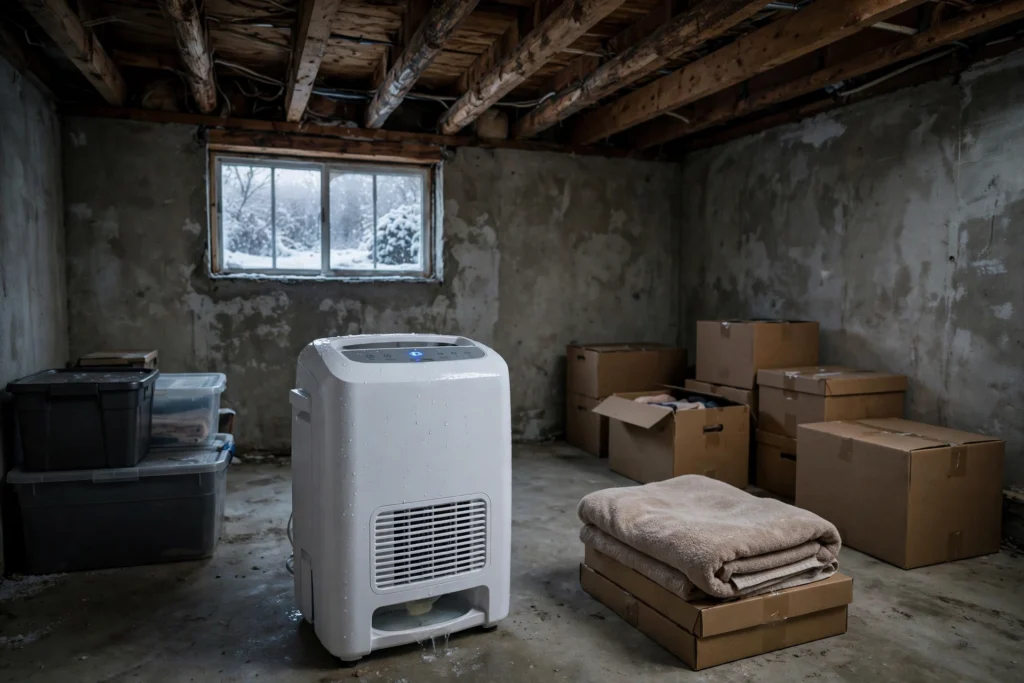
PRO TIP: Do Not Switch the Dehumidifier Off All Winter
The most common winter mistake is unplugging the dehumidifier in November and finding a musty, moldy basement in March. If the basement stays above 41 °F, leave it running on its drain at 45–50% all winter. The electricity it uses is far cheaper than the mold cleanup it prevents.
How Much Does It Cost to Run a Basement Dehumidifier?
A certified 50-pint basement dehumidifier uses about 515–530 kWh a year on ENERGY STAR’s basis, which works out to roughly $90–$100 a year at the US average residential electricity price — about $8 a month. A smaller 30-pint unit costs less to run but may never reach the target in a wet basement, so it runs longer and costs more per pint removed. The cheapest machine to run is the one that is big enough to cycle off.
| Item | Rough cost |
|---|---|
| 50-pint ENERGY STAR portable (buy) | $200–$300 |
| AlorAir low-temperature model (buy) | $500–$540 |
| Electricity, 50-pint, per year | $90–$100 |
| Drain hose | $8–$20 |
| External condensate pump (if needed) | $45–$80 |
| Replacement filter (yearly) | $10–$20 |
All prices are rough planning estimates, not quotes.
What Should I Avoid When Buying a Basement Dehumidifier?
Avoid three things: buying by the square footage on the box instead of by dampness, buying a unit with no drain plan, and trusting the pint number in a listing title. Room-size claims have no standard behind them — ENERGY STAR sizes by dampness, not by the maker’s square-foot claim. A unit with no hose or pump will stop on a full bucket, and the “80, 120 or 150 pints” in listing titles are measured in hot, humid air, not in a basement, so they are not comparable to DOE ratings. Also skip a dehumidifier rated only to 65 °F if your basement gets cold, skip no-name units with no ENERGY STAR listing, and skip the idea that a dehumidifier fixes a leak — fix the water entry first, then dry the air. A damp, cluttered basement also draws pests; our guide to how to get rid of mice covers why sealing and drying the basement matters as much as trapping.
How Do I Set Up and Maintain a Basement Dehumidifier?
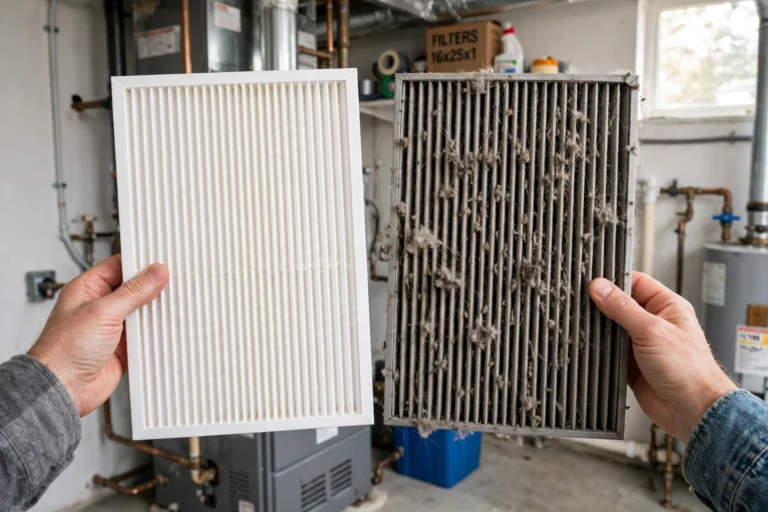
Set the dehumidifier in the dampest part of the basement with at least 6–12 inches of clear air around it, set the humidistat to 45–50%, connect the drain hose or pump before the first run, and leave it running continuously. Do not push it against the wall or bury it behind boxes — it needs airflow to pull moisture. If the drain is a floor drain, run the hose downhill the whole way with no kinks or uphill loops.
Maintenance is simple: clean or rinse the filter monthly, wipe the bucket and drain port every few months so they do not grow slime, and check the hose for kinks each season. If you want a sense of what a damp basement costs in other ways, our guide to how much pest control costs breaks down typical prices by pest and by visit type — moisture control is the cheapest pest control there is.
What size dehumidifier do I need for a 1,000 sq ft basement?
For a 1,000 sq ft basement that feels damp, a 30-pint unit is the minimum and a 50-pint unit is the safer buy. ENERGY STAR calls for 20–30 pints a day for a moderately damp space under 2,000 sq ft, and 25–40 pints if it is very damp. Buy the 50-pint model if the walls sweat or the smell is always there — ENERGY STAR says it is better to oversize than undersize.
Do basement dehumidifiers use a lot of electricity?
No — a certified 50-pint model uses about 515–530 kWh a year, roughly $90–$100 a year at the US average electricity price. That is about $8 a month. A unit that is too small costs more in practice, because it runs non-stop without ever reaching the target humidity.
Should I run a dehumidifier in the basement in winter?
Yes, if the basement stays above 41 °F. Winter is condensation season: cold walls pull moisture out of the air, and a basement that goes damp all winter grows mold all winter. Set it to 45–50% and leave it running on its drain. Switch it off only if the basement drops below the machine’s rated temperature.
Is a 50-pint dehumidifier enough for a basement?
Yes, for nearly every basement. Fifty pints a day is the largest portable size under the current DOE test, and it covers every ENERGY STAR sizing band except a wet basement over 2,000 sq ft. There, run two units at opposite ends or look at a whole-home dehumidifier.
What humidity should a basement be?
Keep a basement between 30% and 50% relative humidity, and never above 60% — that is the EPA’s guidance. Most owners aim for 45–50%: dry enough to stop mold and musty smells, not so dry that wood and stored items crack.
Do I need a pump on my basement dehumidifier?
You need a pump if the water has to travel up or across the room to reach a drain — for example, up to a laundry sink or out a window. If a floor drain or sump sits nearby and lower than the machine, a gravity hose is enough and a pump is money you do not need to spend.