Wash Your Wool Blanket at Home Without Ruining It
TL;DR
Yes — a wool blanket can be washed at home without shrinking it, as long as you use cold water, a wool-safe detergent, and almost no agitation. This guide covers how to wash wool blanket by hand and in the machine, dry clean only labels, vinegar, and flat drying that keeps its size and softness.
A wool blanket feels indestructible until wash day, when one wrong setting can turn it into a stiff, shrunken mat. Wool fibers have tiny scales that lock together when heat, agitation, and temperature changes hit them at once, and once they felt, there is no way back. The good news is that learning how to wash wool blanket the safe way is simple, and most blankets only need washing two or three times a year.
The forums are full of this exact worry. Reddit threads in r/laundry and r/Bushcraft argue about dry cleaners versus the bathtub, and Quora’s most-answered wool question (30+ answers) asks for the best way to wash a 100% wool blanket. Every answer circles the same rules: cold water, wool detergent, never wring, dry flat.
Before you start, check the care label and give the blanket a good shake outside — airing alone often makes a wash unnecessary. If you are freshening the guest bed before visitors arrive, our Guest Room Ready in a Day: The Holiday Visitors Checklist covers the rest of the room. This guide covers the hand-wash steps, the machine settings that are actually safe, and the drying method that protects the shape. Here is how to wash wool blanket without ruining it.
Can I wash a wool blanket in a washing machine?
Yes, if the care label allows it and your machine has a gentle or wool cycle. The safe way for how to wash wool blanket in a machine is cold water, wool-safe detergent, and a low spin — never hot water or a regular cycle. If the label says dry clean only, skip the machine and hand wash it instead.
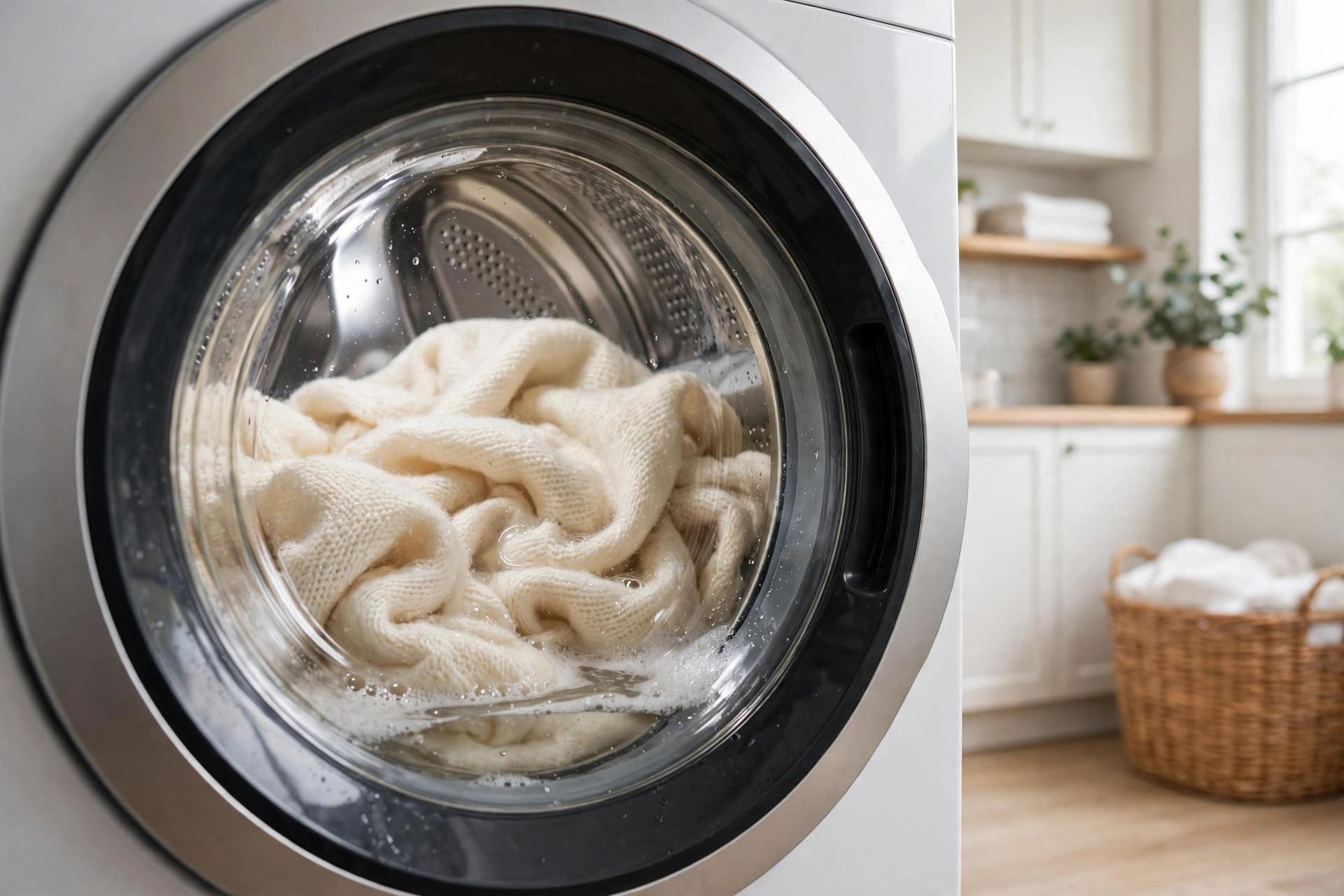
Machine washing is safe only when the label allows it and your machine has a wool, hand-wash, or delicate cycle with a low spin. Top-loaders with a central agitator are the risky ones — the twisting motion felts wool — so use a front-loader or one without an agitator.
Shake and brush the blanket first, put it in a large mesh laundry bag if you have one, add wool-safe detergent, and run the wool or delicate cycle on cold with the lowest spin. Stop the cycle after two or three minutes if your machine allows it, then run the rinse. The whole point of knowing how to wash wool blanket in a machine is doing less, not more.
How to wash wool blanket by hand?
For how to wash wool blanket by hand, fill a clean bathtub with cold or lukewarm water under 30°C (86°F), add a small amount of wool-safe detergent, and submerge the blanket. Soak it for 10 to 15 minutes, press it gently, then drain and rinse with water at the same temperature until the water runs clear.
Start with a clean bathtub — wipe it first so grit cannot scratch the fibers — and fill it with cold or lukewarm water to cover the blanket. Add the detergent first so it dissolves evenly, then lower the blanket in and press it gently under the water. Soak for 10 to 15 minutes without stirring.
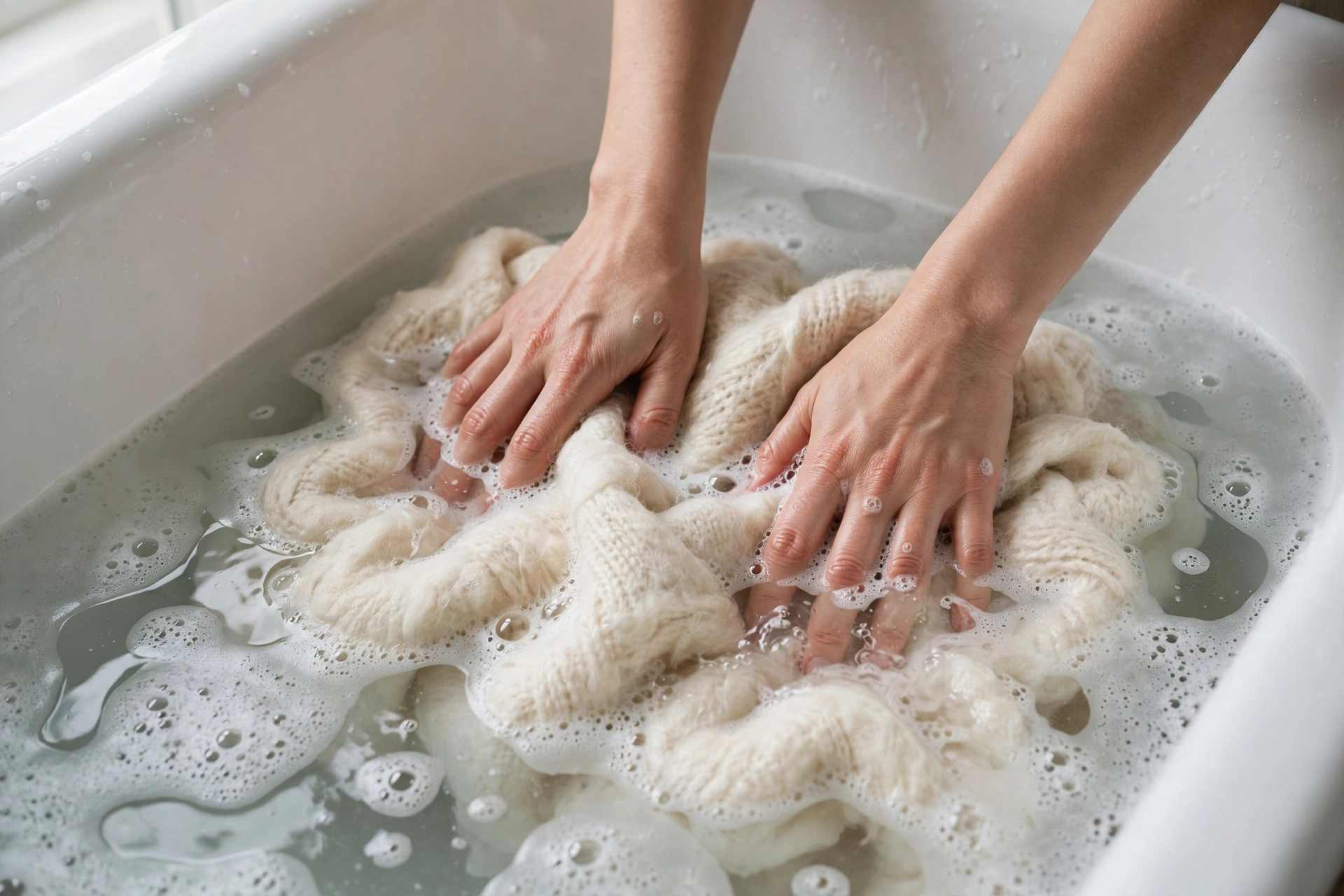
To rinse, drain the tub and refill with clean water at the same temperature — a sudden change from warm to cold is one of the felting triggers. Press gently, drain, and repeat until the water runs clear. Lift the blanket out with both hands; wet wool is heavy and stretches easily. That steady-temperature rule is the heart of how to wash wool blanket safely by hand.
PRO TIP
Wash the blanket on a warm, breezy day and do the whole job in the morning, so it has the full day to dry flat before night.
How to wash wool blanket without shrinking it?
Shrinking is the fear in how to wash wool blanket care, and it happens when wool meets heat, agitation, and temperature changes together, so keep all three out of the wash. Use cold or lukewarm water at one steady temperature, a wool-safe detergent, and the gentlest handling possible. Never wring the blanket, never use hot water, and never tumble-dry it.
Felting has three triggers, and shrinking needs at least two at once: heat, agitation, and a sudden temperature change. Hot water opens the fiber scales, agitation rubs them together, and a cold rinse slams them shut. Keep the water cold or lukewarm from start to finish, keep handling to gentle pressing, and you remove all three triggers at once.
| Method | Best for | Water | Risk if done wrong |
|---|---|---|---|
| Hand wash | Most wool blankets, vintage, Pendleton | Cold or lukewarm, under 30°C | Low |
| Machine, wool cycle | Label says machine washable | Cold only | Medium |
| Dry clean | Valuable, structured, dry clean only | None | None at home |
The common shrinking mistakes: washing on a normal cycle, adding hot water halfway through, wringing the blanket like a towel, and tumble-drying it even on low. A dryer is the worst — heat plus tumbling felts wool fastest. A slightly shrunken blanket can sometimes be reshaped after a lukewarm soak with hair conditioner, but a fully felted one cannot be saved. Prevention beats repair, and that is why every step of how to wash wool blanket without shrinking comes back to cold water and gentle hands.
Can I wash a wool blanket that says dry clean only?
A dry clean only label is the maker’s safest instruction in how to wash wool blanket care, so obey it for valuable, vintage, or heavily structured blankets. For a sturdy everyday wool blanket, a cold hand wash is usually safe, but the risk is yours: if it felts, it cannot be undone. When in doubt, take it to a cleaner.
Read the label first: some blankets have dyes that bleed, some have linings that shrink at different rates, and some are too large for a home tub. A small, sturdy, single-layer wool blanket is the best candidate for a home wash; a lined, fringed, or heirloom blanket is not.
If you decide to hand wash a dry clean only blanket, test first: dab a hidden corner with cold water and wool detergent, wait ten minutes, and check for dye transfer or stiffness. If the corner is unchanged, wash it like any other wool blanket — cold water, gentle pressing, dry flat. If the test changes the wool at all, stop and take it to a cleaner. Cleaning costs roughly $15–$40 per blanket, a rough planning estimate, not a quote. Knowing how to wash wool blanket labels, when to obey them and when a careful hand wash is safe, saves both the blanket and the bill.
Can I use vinegar when I wash a wool blanket?
Yes, vinegar is safe for wool and useful in two places: some in the rinse softens the fibers and cuts soap residue, and a diluted vinegar solution blots out fresh stains. Both are part of how to wash wool blanket with vinegar. Use half a cup in the rinse water, never use it undiluted, and never mix it with bleach.
Vinegar works because it is mildly acidic: it dissolves soap residue, softens the fibers, and helps colours stay put. Add about half a cup of distilled white vinegar to the rinse water, never to the wash water, and never pour it on the blanket undiluted. A vinegar rinse also helps with the musty smell blankets pick up in storage.

For stains, mix one part white vinegar with two parts cold water, dab from the outside in, and blot — never rub. Fresh spills usually lift with cold water and a little wool detergent; use the vinegar mix for dried or oily marks. Skip vinegar on blankets with silk trim or metallic thread, and never mix it with bleach. Used this way, vinegar is a helper in how to wash wool blanket care, not a substitute for detergent.
How do I dry a wool blanket after washing?
Dry a wool blanket flat, never hung and never in a dryer. Drying is half of how to wash wool blanket properly: roll it in towels to press out the water, lay it flat on dry towels or a mesh rack, reshape it, and air-dry it away from heat and direct sunlight. Flip it once so both sides dry evenly.
The towel roll is the fastest way to get the water out. Lay the blanket flat on two or three dry bath towels, roll everything up, and press or step on the roll to push the water into the towels. Unroll, swap in dry towels, and repeat once if it is still dripping. Never wring or twist — wringing stretches the fibers out of shape.

Lay the blanket flat on dry towels or a mesh rack and pull it back to its original measurements. Keep it away from radiators and direct sunlight, and flip it after a few hours so the underside dries too. A thick blanket can take a day or two to dry. The flat-dry step is where most people undo a perfect wash, so give how to wash wool blanket drying the same care as the wash itself.
PRO TIP
If you have no mesh rack, lay the blanket flat across two parallel clotheslines or a clean sheet on the floor — the air flows underneath and it dries faster without stretching.
How often should I wash a wool blanket?
Wash a wool blanket only two or three times a year — the first rule of how to wash wool blanket care, because wool resists odour and dirt on its own. Air it outside on a dry, breezy day and spot-clean small marks instead of washing the whole blanket. Over-washing strips the natural lanolin and wears the fibers out faster.
Wool is naturally odour-resistant because lanolin, the oil in the fibers, repels dirt and moisture, so a blanket that looks clean usually is clean. Shake it outside every few weeks and brush it in one direction to lift embedded dust. Spot-clean spills the day they happen and the blanket may go a whole season without a full wash.
Wash it when it smells musty after airing, when a stain will not spot-clean out, or before you store it for the summer — never put a dirty blanket away, because moths find food stains first. If you run a seasonal deep clean before the holidays, add the blanket to the list; our Deep Clean Your Kitchen Before the Holidays plan shows the same once-a-season rhythm for the house. That rhythm — air often, wash rarely — is the simplest version of how to wash wool blanket care.
| Item | Rough cost | Notes |
|---|---|---|
| Wool-safe detergent (1 bottle) | $8–$15 | Lasts many washes |
| Mesh laundry bag (large) | $8–$12 | Optional, machine wash only |
| White vinegar (1 gallon) | $3–$5 | Rinse and stain use |
| Dry cleaning (per blanket) | $15–$40 | For dry clean only labels |
| Cedar blocks (pack) | $8–$12 | Storage, moth protection |
All costs are rough planning estimates, not quotes; prices vary by store and region.
How do I store a wool blanket so moths stay away?
Store a clean, fully dry wool blanket folded in a sealed bin or a heavy cotton storage bag with cedar blocks or lavender sachets to keep moths away. Never store a damp or dirty blanket, and never use mothballs in a bedroom closet. Check the bin once a season — good storage finishes how to wash wool blanket care properly.
Moths eat the keratin in wool, and they find blankets through food stains, sweat, and dampness — so storage starts with a clean, bone-dry blanket. Fold it loosely and slip cedar blocks or lavender sachets between the folds. Sand cedar once a year to refresh its scent; replace lavender sachets each season.
Avoid vacuum-sealed bags for long storage: they crush the loft and trap dampness inside. A breathable cotton bag or a sealed plastic bin with a tight lid is better. Keep the bin in a cool, dry place, never in a damp basement or a hot attic. Check it once a season, and rewash before use if it smells musty. Good storage is the quiet half of how to wash wool blanket care — the wash only counts if the blanket survives the summer.
Frequently Asked Questions
Yes, if the care label allows it. Use the wool or delicate cycle, cold water, wool-safe detergent, and the lowest spin. Skip the machine if the label says dry clean only or your machine has a central agitator.
Only when heat, agitation, or a sudden temperature change felts the fibers. Cold water at one steady temperature, gentle handling, and flat drying keep a wool blanket its full size.
Shake it outside, hang it in fresh air on a dry day, and brush it in one direction. Spot-clean spills with cold water and wool detergent, and wash the whole blanket only when airing and spot-cleaning are not enough.
Pendleton’s own care advice is to dry clean its wool blankets. A careful cold hand wash works for sturdy everyday Pendleton blankets, but for a new or valuable one, follow the label and dry clean it.
Yes — alpaca is a wool fiber and follows the same rules: cold water, wool-safe detergent, no agitation, dry flat. Alpaca felts more easily than sheep’s wool, so be even gentler and never machine-wash it unless the label says so.
The safest answer is to dry clean it. If it is a sturdy everyday blanket, test a hidden corner with cold water and wool detergent; if nothing changes, hand wash it gently and dry it flat. For valuable blankets, obey the label.
Final Thought
A wool blanket is not fragile — it is particular. Cold water, wool-safe detergent, gentle hands, and flat drying are the whole method, and they work for hand washing, machine washing, and every blanket from a thrifted Pendleton to a new alpaca throw. Wash it rarely, air it often, and store it clean and dry. Learn how to wash wool blanket once, and it will outlast the winter — and the next ten.