How to Remove Coffee Stain From Carpet (Fresh or Dried, Any Carpet)
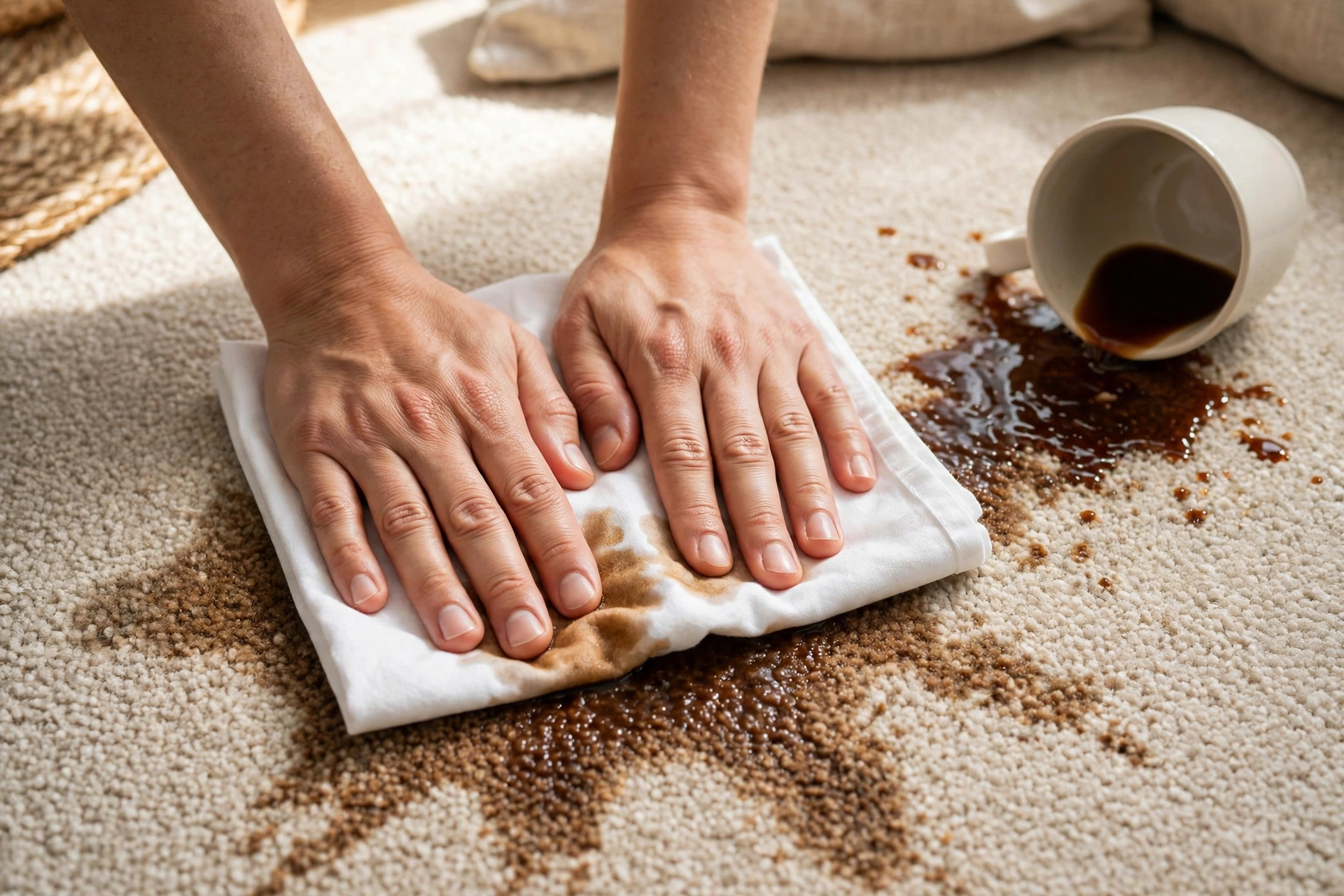
Wondering how to remove coffee stain from carpet? Blot the spill right away with a clean white cloth, then treat the spot with 1 tablespoon of clear dish soap and 1 tablespoon of white vinegar mixed into 2 cups of warm water. Blot, rinse with plain water, and dry the spot under a weighted towel.
Coffee on the carpet is the kind of accident that feels worse than it is. The brown mark looks permanent, the panic sets in, and the first instinct — scrubbing hard — is the one thing that makes it worse. Coffee stains with tannins, the same brown compounds in tea and red wine, and tannins bond to carpet fibers fast. Speed matters, but method matters more: the right order is blot, dilute, treat, rinse, and dry. Get that order right and the stain comes out. Get it wrong — hot water, scrubbing, or soaking the carpet — and the stain sets, spreads, or comes back after drying.
The good news is that you almost certainly have everything you need already. The dish soap and vinegar solution below handles black coffee on most synthetic carpets, and this guide also covers the cases that trip people up: a stain that dried hours ago, a latte with milk, a white carpet, and a wool carpet that cannot take the standard treatment. Wool needs the same gentle, cool-water touch as washing a wool blanket, and the wool section below follows the same rules.
TL;DR — How to Remove Coffee Stain From Carpet
• Blot the spill immediately with a clean white cloth. Never rub or scrub.
• Mix 1 tbsp clear dish soap + 1 tbsp white vinegar + 2 cups warm water.
• Dab the solution on, let it sit 5 to 10 minutes (15 to 20 for dried stains), blot until no more brown transfers.
• Rinse by blotting with plain cool water, then dry the spot under a weighted stack of white towels overnight.
• White carpet: 3% hydrogen peroxide is an option only after a hidden-spot test. Wool carpet: cool water and a gentle neutral cleaner only — no peroxide, no hot water, no oxygen bleach.
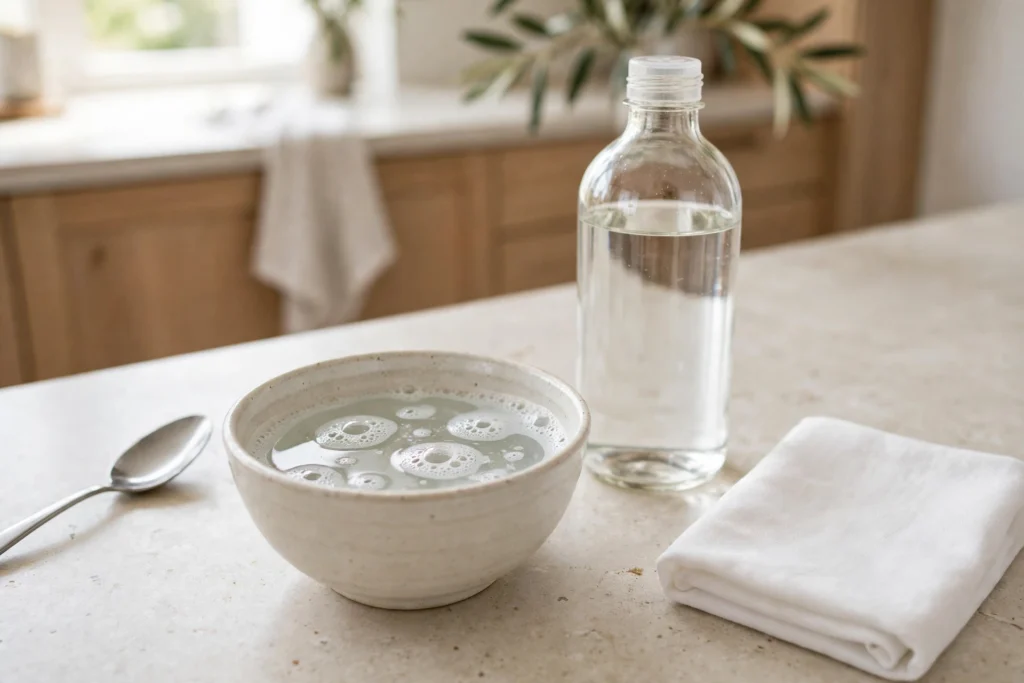
What You Need to Remove a Coffee Stain From Carpet
- Clean white cloths or white paper towels (white, so no dye transfers to the carpet)
- Cool or lukewarm water
- Clear liquid dish soap (clear, not blue or green — dyed soap can tint pale carpet)
- White vinegar
- A small bowl and a spray bottle (optional, for the solution)
- Baking soda (for dried stains and odour)
- 3% hydrogen peroxide (light-coloured synthetic carpet only — see the white carpet section)
- A dry towel and something heavy, like a stack of books, for the weighted drying step
Before you start, test any solution on a small hidden patch of carpet, inside a closet or under a sofa, and let it dry before you treat the visible stain. A test takes 10 minutes and is the difference between a clean carpet and a bleached patch. Also check the carpet maker’s care label: the wrong method can void some carpet warranties.
How to Remove a Fresh Coffee Stain From Carpet
A fresh coffee stain comes out fastest, and the first minute decides the outcome. Blot the spill immediately and you lift most of the coffee before the tannins bond. Everything after that is cleanup. Work from the outside of the spill toward the centre so the stain cannot spread, and switch to a clean part of the cloth every time it turns brown.
- Blot up as much coffee as you can. Press a clean, dry white cloth firmly onto the spill and lift straight up. Repeat with fresh sections of cloth until no more liquid transfers. Do not rub.
- Dilute with cool water. Dampen a clean white cloth with cool water and blot the spot again. This thins the coffee left deep in the pile. Use cool or lukewarm water only — hot water tightens the tannin bond and can set the stain for good.
- Mix the solution. Stir 1 tablespoon of clear dish soap and 1 tablespoon of white vinegar into 2 cups of warm water.
- Dab the solution on. Dampen a clean white cloth with the solution and press it onto the stain. Let it sit for 5 to 10 minutes, then blot until the brown stops transferring to the cloth.
- Rinse with plain water. Blot with a cloth dampened in plain cool water to remove the soap and vinegar. Soap residue left behind attracts dirt and re-soils the spot within weeks, so rinse twice.
- Dry it under weight. Place a dry towel on the spot, stack a few heavy books on top, and leave it for a few hours or overnight. The weight pulls the last moisture — and any remaining pigment — up into the towel instead of letting it sink back into the carpet.
A fresh stain usually lifts in 10 to 15 minutes of active work, plus drying time. If a faint shadow remains after the spot dries fully, repeat the treatment once rather than scrubbing harder. A second gentle round beats one aggressive one every time.
PRO TIP
Never rub a coffee spill. Rubbing frays the carpet pile, pushes the coffee deeper toward the pad, and spreads the stain wider — and a frayed patch stays visible even after the colour is gone. Press and lift, always. This is also the mistake people make most on video: one popular cleaning reel shows a man stopping someone mid-scrub for exactly this reason, because scrubbing fuzzes the carpet fibres.
How to Remove an Old or Dried Coffee Stain From Carpet
Yes, a dried coffee stain can still come out of carpet — it just needs more patience than a fresh spill. Dried coffee has already bonded to the fibres, so the job is to loosen it first, then run the same treatment with a longer dwell time. Expect 2 to 3 rounds, and let the carpet dry fully between rounds so you can see the real result instead of a wet patch that looks darker than it is.
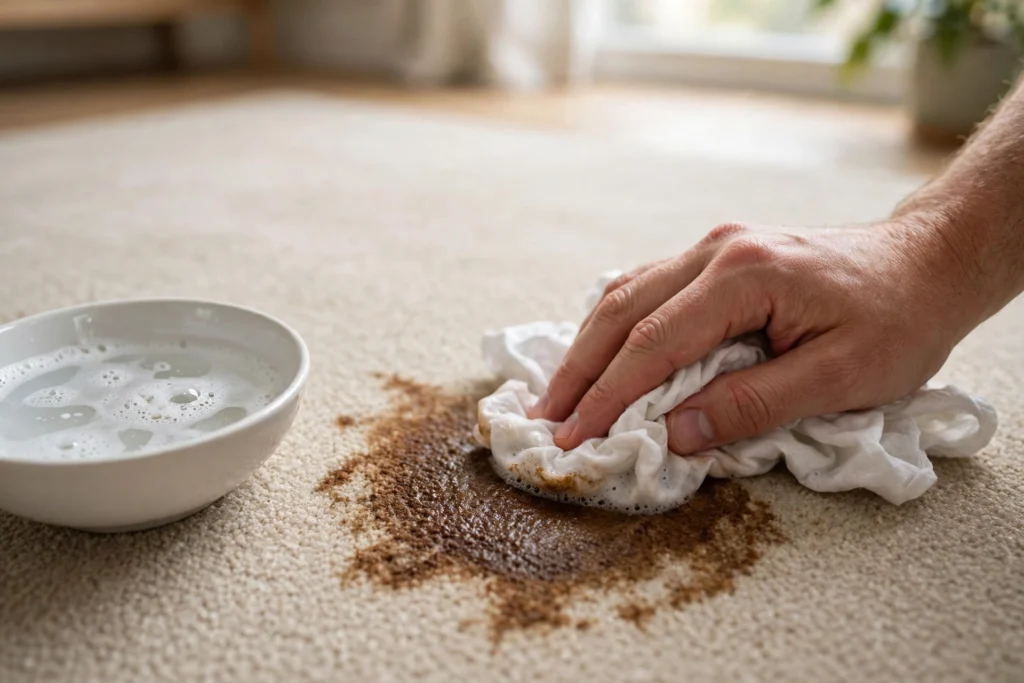
- Loosen the stain. Dampen the spot with a little cool water and let it sit for 1 to 2 minutes. If the spill left a dry crust, lift it gently with a blunt edge or vacuum it away first — do not brush it into the pile.
- Apply the dish soap and vinegar solution. Use the same mix as the fresh stain: 1 tablespoon of clear dish soap and 1 tablespoon of white vinegar in 2 cups of warm water. Dab it on and let it sit for 15 to 20 minutes so it can dissolve the set-in stain.
- Blot in rounds. Blot with a clean white cloth until the colour stops transferring, then reapply and repeat. Old stains usually fade a little more with each round.
- Treat the shadow. If a brown shadow survives two rounds, switch to an oxygen-based carpet cleaner and follow the package directions. Use it only on colourfast carpet, and test a hidden spot first.
- Rinse and dry under weight. Rinse by blotting with plain cool water, then dry the spot under a weighted stack of white towels overnight, as in the fresh-stain method.
Do not reach for hot water or steam on a dried stain. Heat sets tannins permanently, especially on synthetic fibres, and a steam cleaner on a dried coffee stain can finish the job of making it permanent. Cool water, longer dwell time, and repeat rounds are what work.
How to Remove Coffee Stain From Carpet Without Vinegar
No vinegar in the cupboard? The stain still comes out. Vinegar helps break down tannins, but it is not the only way — the dish soap does most of the work on the coffee’s oils, and baking soda handles the rest. This is also the method to use if the vinegar smell bothers you, or if you are treating a carpet the maker warns against acidic cleaners.
- Blot and dilute exactly as for a fresh stain: white cloth, outside in, then cool water.
- Make a baking soda paste. Mix 1 tablespoon of baking soda with just enough warm water to form a thick paste.
- Apply the paste over the stain and let it sit for 15 to 30 minutes. Baking soda absorbs both colour and odour.
- Blot with dish soap water. Dampen a clean cloth with a few drops of clear dish soap in a cup of cool water and blot the paste away, working from the outside in.
- Rinse and dry under weight as above, with plain cool water and a weighted towel.
For a stubborn dried stain without vinegar, follow the paste with a commercial carpet spotter, used exactly as the label directs. One product at a time, with a rinse between products: layering cleaners on top of each other without rinsing is how stains get locked in.
How to Remove a Coffee Stain From Carpet With Baking Soda
Baking soda is the gentlest tool in this guide, and the best one for two jobs: lifting a dried stain and removing the sour smell a milk coffee leaves behind. It does not dissolve tannins as fast as the vinegar solution, so treat it as a first pass or a follow-up, not a replacement for the full method on a bad stain.
- Blot the spill and dilute with cool water, as above.
- Make the paste. Stir 1 tablespoon of baking soda into a little warm water until it is thick enough to spread.
- Spread it over the stain and work it gently into the fibres with your fingers or a soft cloth. Leave it for 15 to 30 minutes.
- Vacuum or blot it away, then follow with the dish soap and vinegar solution if any brown remains.
- Rinse and dry. Blot with plain cool water, then dry under a weighted towel.
Baking soda also absorbs odour, which matters when the spill was a latte: milk residue left in carpet turns sour as it dries. A baking soda pass after the main treatment takes the smell with it. Vacuum the dried paste thoroughly — leftover powder in the pile attracts dirt just like leftover soap does.
How to Remove a Coffee Stain From White Carpet
A coffee stain on white carpet is the nightmare scenario, because every brown trace shows and every cleaning mistake shows too. The method is the same as the fresh-stain method, with two extra rules: use clear soap only, and save the stronger treatment for last. Coloured dish soap can leave a tint on pale carpet, so check the bottle before you start.
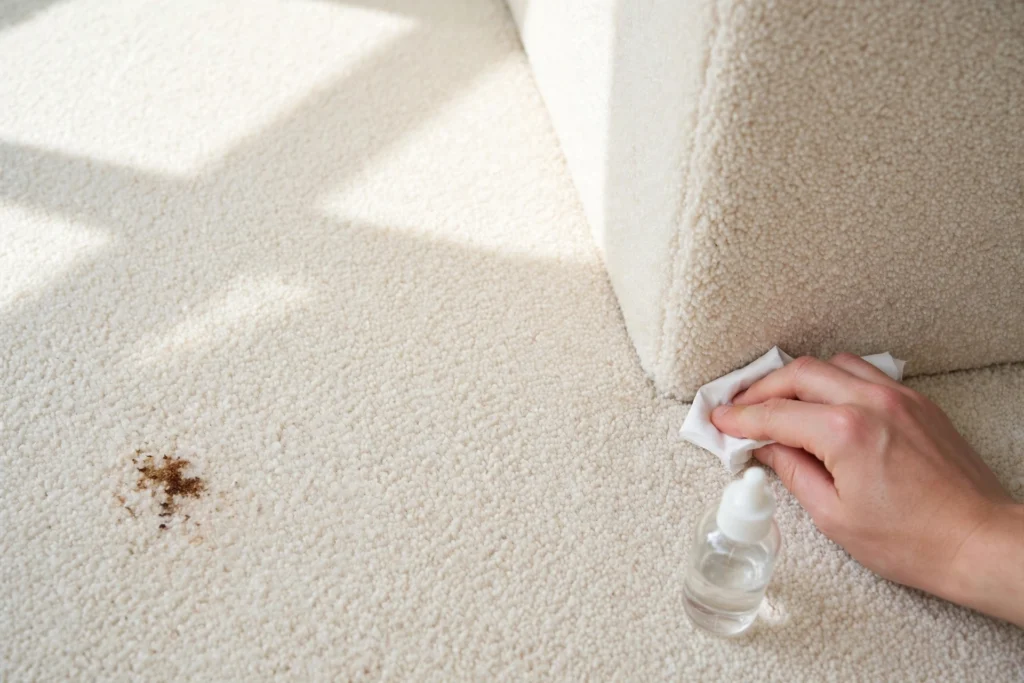
- Blot and treat with the dish soap and vinegar solution exactly as for a fresh stain, and repeat for a second round if needed.
- If a shadow remains, use 3% hydrogen peroxide — carefully. Mix equal parts 3% hydrogen peroxide and cool water with a few drops of clear dish soap. Dampen the stain, let it sit for 10 to 15 minutes, then blot and rinse. A professional cleaner on Quora notes peroxide takes about 8 hours for its full effect, so judge the result the next day, not the same hour.
- Test a hidden spot first, every time. Peroxide is a mild bleach. It can lighten dyed carpet, so test inside a closet or under furniture and let the test spot dry fully before you touch the visible stain.
- Never use chlorine bleach. Bleach on carpet risks permanent colour loss and fibre damage, and bleach mixed with vinegar releases chlorine gas. If peroxide does not lift the shadow, stop and call a professional rather than reaching for bleach.
White carpet also shows the weighted-towel step at its best: drying the spot under a stack of white towels pulls the last pigment up into the towels instead of letting it settle back into the fibres as the carpet dries.
How to Remove a Coffee Stain From Wool Carpet
Wool carpet follows different rules from synthetic carpet, because wool is a protein fibre. Anything that damages protein damages wool: hot water, ammonia, oxygen bleach, chlorine bleach, and any cleaner above pH 8. The safe approach is slower and gentler, and it works — but the standard vinegar soak and peroxide treatment do not belong on wool. Treat wool the way you would treat a wool garment: cool water, a neutral cleaner, and no harsh chemistry. The same gentle rules apply when you wash a wool blanket — cool water, mild soap, and no heat.
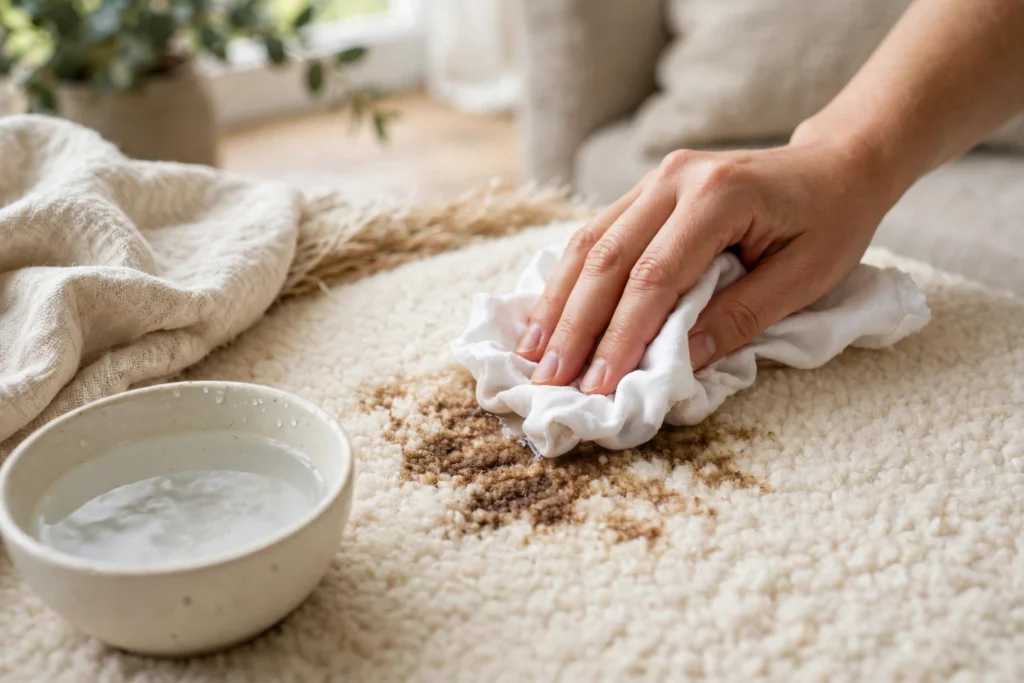
- Blot immediately with a clean white cloth, outside in. Do not rub — wool fibres felt and fuzz when rubbed wet.
- Dilute with cool water only. Dampen a white cloth with cool water and blot. Never use hot water on wool.
- Use a gentle, neutral cleaner. A few drops of clear dish soap in cool water is the safest DIY option. Dab it on, let it sit for 5 minutes, and blot.
- Rinse by blotting with plain cool water, then dry the spot fully under a weighted towel. Wool holds moisture, and a damp wool carpet is a mildew risk.
- Do not use vinegar soaks, oxygen bleach, ammonia, or peroxide on wool. If the stain survives two gentle rounds, call a carpet cleaner who works with wool and say so when you book — wool needs a pro who knows the fibre, not a general steam clean.
If you are unsure whether the carpet is wool, check the care label or the maker’s guide before you treat it. A wool-blend carpet follows wool rules too.
Black Coffee vs Coffee With Milk: Does the Method Change?
Yes — and this is the detail most short guides skip. Black coffee is a tannin stain: brown pigment that the dish soap and vinegar solution breaks down well. Coffee with milk, cream, or sugar adds protein, fat, and sticky residue on top of the colour, and those need different handling.
- Black coffee: the standard solution works. Blot, dilute, treat, rinse, dry.
- Coffee with milk or cream: treat the colour first with the standard solution, then deal with the milk. Milk protein sets with heat, so keep the water cool throughout. Finish with an enzyme cleaner, which digests milk proteins with lipase and protease enzymes — cleaning pros call it the secret weapon for organic stains. Rinse thoroughly: milk residue left in carpet turns sour as it dries and leaves a smell long after the colour is gone.
- Coffee with sugar: sugar leaves a sticky residue even after the brown is gone, and that residue attracts dirt and slowly turns grey. Rinse twice with plain cool water and make sure no soap or sugar is left behind.
- Latte or cappuccino: expect the longest job of the three. Colour, protein, fat, and sugar are all in the spill, so run the standard treatment, follow with an enzyme cleaner, and finish with a baking soda pass for the smell.
Coffee Stain on a Rug vs Wall-to-Wall Carpet: What’s Different?
A rug and a fitted carpet are not the same job. A rug can be lifted, turned, and treated from both sides; a wall-to-wall carpet cannot, and its backing and pad are the weak point. The wrong move on fitted carpet is soaking it: liquid that reaches the pad stays damp, wicks the stain back up as it dries, and can affect the backing adhesive.
On a rug:
- Protect the floor underneath with a towel or plastic sheet before you start.
- Check the care label and test for colour run on a hidden corner first.
- Treat the stain from the top, and if it has soaked through, treat the back as well.
- Wool and silk rugs follow wool rules — cool water, neutral cleaner, no peroxide, no oxygen bleach. When in doubt, treat a rug as wool.
On wall-to-wall carpet:
- Use as little liquid as you can. Dampen the cloth, not the carpet — never pour solution directly onto fitted carpet.
- Never soak the backing or pad. If the spill was large, blot hard first and work in small, damp rounds.
- Dry the spot under a weighted towel so moisture wicks up into the towels instead of down into the pad.
- If the stain keeps returning after drying, the residue is in the pad, not the fibres — that is a professional extraction job, not another round of blotting.
Which Coffee Stain Method Should You Use?
| Situation | Best method | Time | Avoid |
|---|---|---|---|
| Fresh black coffee spill | Blot, then dish soap + vinegar solution | 10–15 minutes | Rubbing, hot water |
| Dried or old stain | Re-wet, solution with 15–20 min dwell, repeat rounds | 30–60 minutes over 2–3 rounds | Steam, hot water |
| No vinegar at home | Baking soda paste + dish soap water | 20–30 minutes | Skipping the rinse |
| White or light carpet | Standard solution, then 3% peroxide after a patch test | 15 minutes + overnight check | Chlorine bleach |
| Wool carpet | Cool water + gentle neutral cleaner only | 15–20 minutes | Peroxide, oxygen bleach, ammonia, hot water |
| Latte or milky coffee | Standard solution, then enzyme cleaner | 20–30 minutes | Hot water (sets milk protein) |
| Stain came back after drying | Weighted-towel drying + repeat treatment | Overnight | Soaking the carpet again |
| Rug (not fitted carpet) | Treat top and back, protect the floor | 20–30 minutes | Soaking a wool rug |
PRO TIP
If the stain came back after drying, you did not fail — you met wicking. Carpet dries from the bottom up, so residue left in the pad travels to the surface as the carpet dries and the brown mark returns. The fix is the weighted-towel method: treat the spot, stack a half-inch pad of white paper towels on it, put a heavy book on top, and leave it overnight. The stain wicks up into the towels instead of back into your carpet. Check the towels in a few hours — if they picked up brown, repeat once. This is the answer to the most common complaint on Quora and Reddit about coffee stains: “I cleaned it, it looked fine, and then it came back.”
When Should You Call a Professional Carpet Cleaner?
Most coffee stains come out at home. Call a professional when the stain has been on the carpet for several weeks or months and has resisted two or three careful rounds, when the carpet is wool or silk, or when the spill was large enough to soak the pad. A single-room professional clean typically costs roughly $75–$200 (a planning estimate, not a quote — prices vary by area, company, and carpet type, so get a local quote before booking).
Stop cleaning and call a pro sooner if you see any of these: the treated area is coming out cleaner and brighter than the rest of the carpet, the fibres are rippling or wrinkling, or the colour is changing. Continuing past that point can do more damage than the stain. And if you are moving out and the carpet has to pass a landlord inspection, a pro clean plus the move-out cleaning checklist covers the whole handover in one pass. For stains that survive home treatment, a portable carpet cleaner can also bridge the gap before you pay for a pro — it extracts the dirty water instead of pushing it deeper.
PRO TIP
Never mix bleach with vinegar, or bleach with any other cleaner. Bleach mixed with vinegar releases chlorine gas, and health authorities warn against combining bleach with acids or ammonia. Keep each product separate, rinse thoroughly between any two different cleaners, and never pour one cleaner on top of another hoping for a stronger result.
Frequently Asked Questions
Yes. Dampen the dried stain with a little cool water, then treat it with the dish soap and vinegar solution and let it sit for 15 to 20 minutes. Blot in rounds until the colour stops transferring. If a shadow survives two rounds, use an oxygen-based carpet cleaner on colourfast carpet. Old stains usually fade a little more with each round.
For a DIY fix, the dish soap and vinegar solution — 1 tablespoon of clear dish soap and 1 tablespoon of white vinegar in 2 cups of warm water — is the best all-round remover for fresh and dried stains. For a store-bought option, Folex Carpet Spot Remover is the one cleaning professionals name most often for coffee on carpet, and an oxygen-based cleaner such as OxiClean is the best follow-up for a dried stain’s shadow.
Usually not, if you act before heat sets it. Coffee tannins bond to fibres, but the dish soap and vinegar solution lifts them on most synthetic carpets. A stain becomes permanent when it is scrubbed in, treated with hot water or steam, left for months, or layered with the wrong chemicals — especially bleach. Wool and silk are the exceptions: treat them gently or call a pro.
Yes — Dawn is a clear dish soap, and a few drops diluted in cool water is exactly the soap part of the method in this guide. Use the clear original formula, not a coloured or scented variant, because dyed soap can tint pale carpet. Dawn alone handles a fresh spill; add the white vinegar step for a dried stain.
No, not normally. Most coffee stains come out with blotting and the dish soap and vinegar solution, even after drying. They turn permanent mainly through heat, scrubbing, or bleach — or when the stain sat for months and the tannins bonded deep into the fibres. If two or three careful rounds do not lift it, a professional extraction clean is the next step.
Yes, together they work well on old stains. Re-wet the stain with cool water, apply a baking soda paste for 15 to 30 minutes, blot it away, then follow with the dish soap and vinegar solution and let it sit for 15 to 20 minutes. Repeat in rounds and dry under a weighted towel. The combination handles both the colour and the smell.
Yes, but only 3% hydrogen peroxide, only on light-coloured synthetic carpet, and only after a hidden-spot test. Mix equal parts 3% peroxide and cool water with a few drops of dish soap, let it sit for 10 to 15 minutes, then blot and rinse. It can bleach dyed carpet, and it takes about 8 hours for the full effect, so judge the result the next day. Never use peroxide on wool carpet.
That is wicking. Moisture left in the carpet pad pulls leftover coffee residue back up to the surface as the carpet dries from the bottom up. Treat the spot again, then dry it under a weighted stack of white towels overnight so the residue wicks into the towels instead of the carpet. If it returns a second time, the residue is in the pad and a professional extraction clean is needed.
Final Thought
A coffee stain on carpet looks like a disaster for about a minute, and then it becomes a method problem — and method problems have answers. Blot first, keep the water cool, use the dish soap and vinegar solution, rinse properly, and dry the spot under weight. Handle the exceptions — dried stains with longer dwell time, milk coffee with an enzyme cleaner, white carpet with a patch-tested peroxide step, wool with nothing stronger than cool water and a neutral cleaner — and the stain comes out. And once the carpet is clean, keep the momentum: the kitchen tile next to the carpet takes the same kind of spill, and our guide to how to clean grout covers it.