Toilet Won’t Flush? Here’s How to Fix It
A toilet won’t flush when something in the chain between the handle and the drain breaks down — most often a slack flapper chain, a worn flapper, or a tank that is not filling high enough. Check the chain first, then the flapper, then the water level, and only then think about a clog or a vent. Most of these fixes cost under $15 and take less than 15 minutes.
There is no worse time for a toilet to stop flushing than the day guests arrive. The guest bathroom gets used more in one evening than it does in a normal week, and a weak or dead flush turns into an embarrassment fast — especially on Thanksgiving eve, when the house is full and every plumber in town is booked. The good news is that a toilet won’t flush for a small number of reasons, and they line up in a clear order from cheapest to most serious. Work through them in the order below and you will find the problem in ten minutes, usually without spending more than the price of a flapper.
This guide walks through the full diagnosis: the flapper chain, the flapper itself, the tank water level, the handle, the fill valve, the rim jets and the vent — plus the one test that tells you in seconds whether the problem is in the tank or in the drain. If the diagnosis points to a clog, our guide to how to use a plunger covers the exact plunging technique for toilets, including which plunger to use and how long to pump.
TL;DR — Toilet Won’t Flush: Fix It in Order
1. Lift the tank lid and watch a flush. The chain should pull the flapper up fully.
2. Fix a slack chain first: about 1/2 inch of slack when closed. Too much slack and the flapper never lifts; too little and it never seals.
3. Test the flapper: put food colouring in the tank. Colour in the bowl within 20 minutes means the flapper seal has failed — replace it (under $15).
4. Check the water level: it should sit about 1 inch below the overflow tube. Low water means a weak flush.
5. Do the bucket test: pour a bucket of water into the bowl fast. If it clears in one rush, the tank is the problem. If the water rises or stalls, the drain is the problem.
6. Clog path: flange plunger for 10–20 seconds, then a toilet auger if that fails.
7. Call a plumber if the bucket test points to the main line, or if several fixtures drain slowly at once.
That is the short version of how to fix a toilet that won’t flush — the sections below explain each step in full.
Why Your Toilet Won’t Flush: The 6 Usual Causes
A toilet won’t flush because of one of six things: a slack or disconnected flapper chain, a worn flapper that drops too early, a tank water level that is too low, a broken or loose handle, a failing fill valve, or a clogged rim jet or vent. The chain is the most common and the cheapest fix, so it goes first. The vent is the rarest and the hardest, so it goes last.
| Cause | What you see | Fix | Rough cost |
|---|---|---|---|
| Slack/disconnected flapper chain | Handle moves, flapper barely lifts | Re-hook or shorten the chain | $0–$5 |
| Worn or warped flapper | Flush is weak, tank refills often | Replace the flapper | Under $15 |
| Low tank water level | Weak swirl, bowl never clears | Adjust the fill valve | $0 |
| Broken or loose handle | Handle spins or feels floppy | Tighten or replace the handle | $5–$15 |
| Failing fill valve | Tank fills slowly or not at all | Replace the fill valve | $15–$30 |
| Clogged rim jets or vent | Slow flush, gurgling, bad smell | Clean jets; vent needs a pro | $0–$300 |
All prices are rough planning estimates, not quotes. Parts are available at any hardware store.
How Do I Know If It’s the Tank or the Drain?
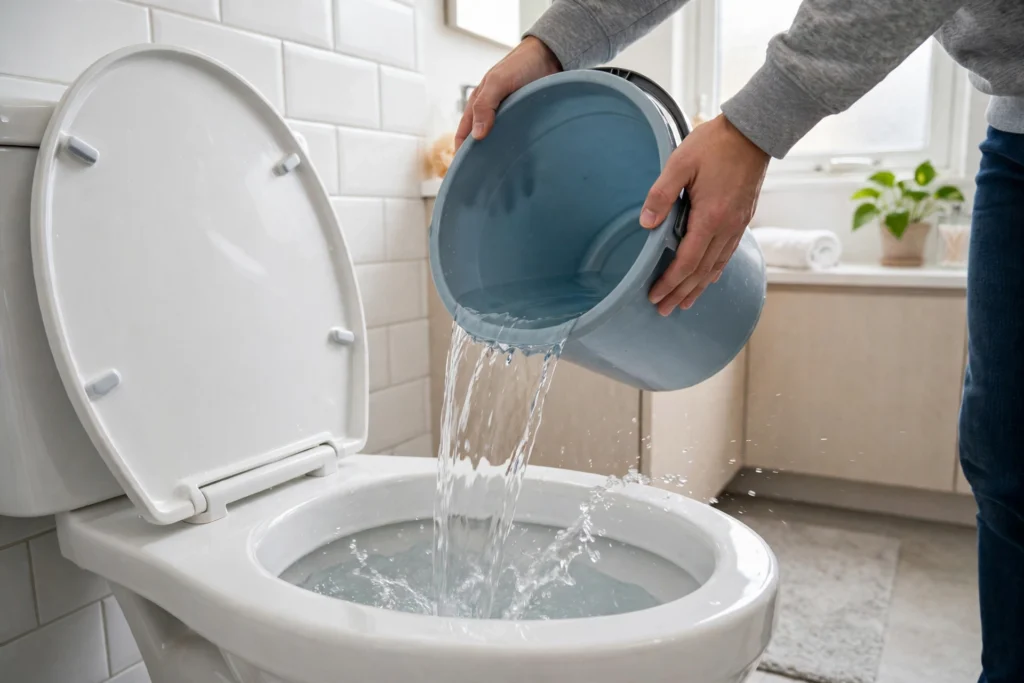
Do the bucket test before you take anything apart: pour a full bucket of water into the toilet bowl as fast as you can. If the bowl clears in one strong rush, the drain is fine and the problem is in the tank — the flapper, chain or water level. If the water rises, stalls or drains slowly, the problem is in the trap, the vent or the main line, and no tank part will fix it.
The bucket test is the single most useful minute you will spend on this job. It splits the whole problem in half. A toilet that flushes fine with a bucket of water has a working drain, so the tank is not delivering enough water fast enough. A toilet that will not clear even with a bucket poured in has a blockage or a vent problem downstream, and the tank is innocent. Do this test first and you will not waste money on a flapper when the real problem is a clog — or the other way round.
Do the Bucket Test Before Buying Parts
A bucket of water costs nothing and tells you which half of the toilet is broken. Skip it and you can easily buy a new flapper for a toilet that actually has a clogged vent — or buy an auger for a toilet that only needed a chain adjustment. Test first, spend second.
How Do I Fix a Loose Flapper Chain?
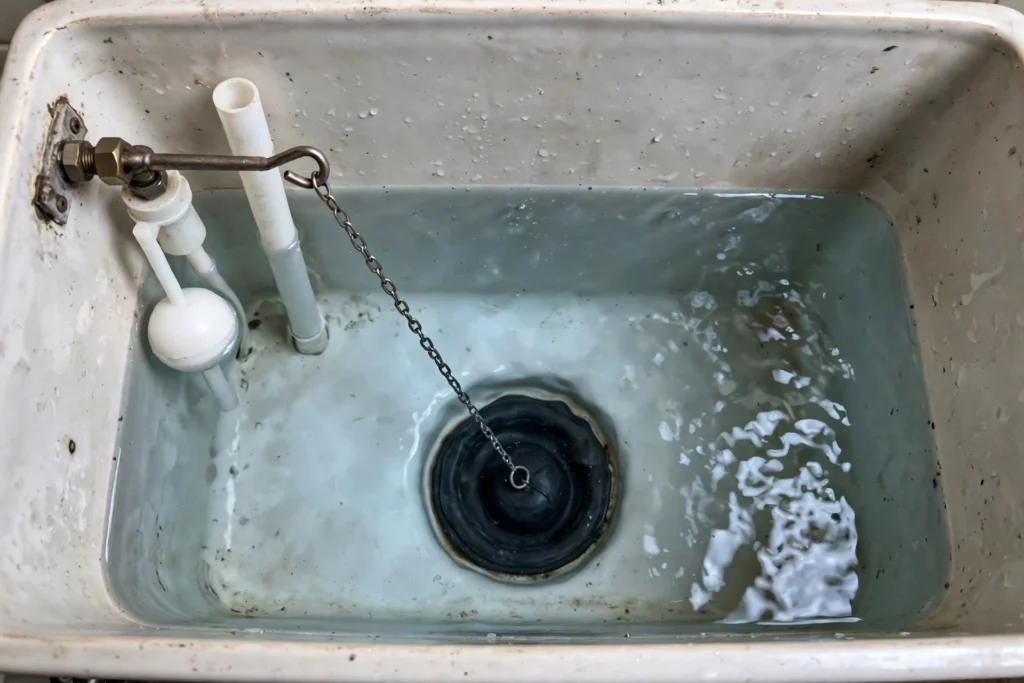
A loose flapper chain is the most common reason a toilet won’t flush, and it takes about two minutes to fix. Lift the tank lid, find the chain that runs from the flush handle arm down to the flapper, and check the slack. When the flapper is closed, the chain should have about 1/2 inch of slack — just enough to hang slightly, not so much that it pools on the flapper. If the chain is too long, move the hook up a link or two. If it has come off entirely, re-hook it to the handle arm.
The test is simple: press the handle and watch. The chain should pull the flapper straight up and hold it open for a second or two. If the chain is so slack that the flapper only lifts halfway, the tank dumps half its water and the flush dies. If the chain is too tight, the flapper never seals, water leaks into the bowl constantly, and the tank keeps refilling — which also weakens every flush. Half an inch of slack is the sweet spot. If the chain is kinked, rusted or tangled, replace it — a new chain costs about $5 and clips on with no tools.
How Do I Tell If the Flapper Is Worn Out?
The flapper is the rubber disc that seals the tank to the bowl, and it wears out every 3 to 5 years. Test it with food colouring: put a few drops in the tank, do not flush, and wait 20 minutes. If colour shows up in the bowl, the flapper seal has failed and water is leaking through around the clock. A failed flapper drops too early during a flush, so the tank never empties fully, and the bowl never gets the rush of water it needs.
Replacing a flapper costs under $15 and takes about five minutes. Turn off the water at the supply valve behind the toilet, flush once to empty the tank, unhook the old flapper from the pegs on either side of the flush valve, and clip the new one on. The one detail that matters is size: flappers come in 2-inch and 3-inch versions, and they are not interchangeable. Measure the flush valve opening, or take the old flapper to the store and match it. Hook the chain to the new flapper with about 1/2 inch of slack, turn the water back on, and test the flush.
What If the Tank Water Level Is Too Low?
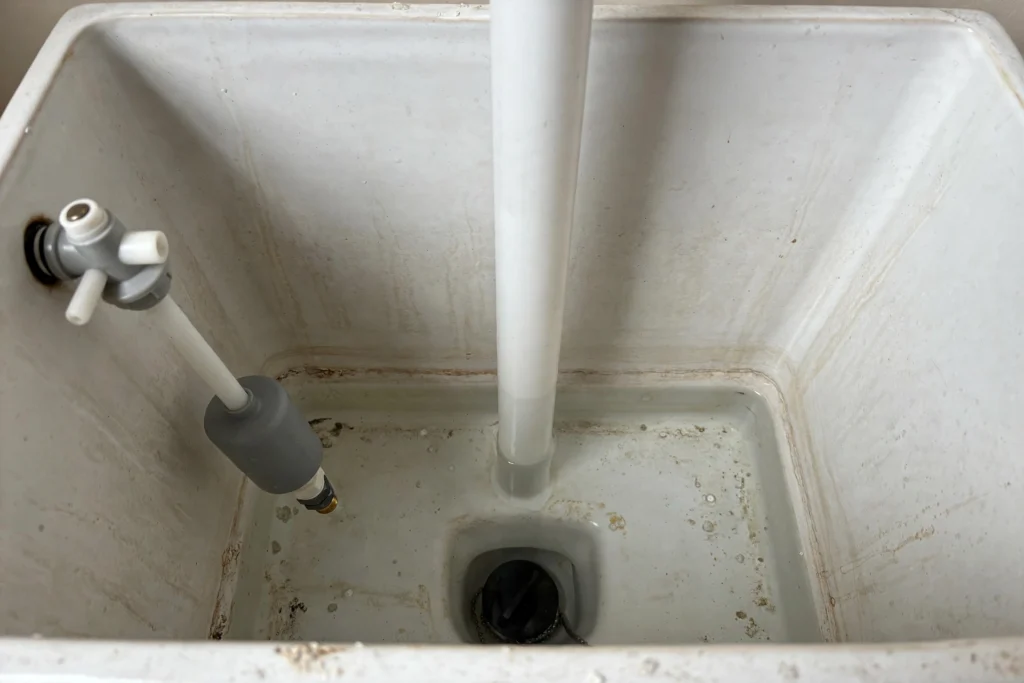
Low tank water is the quiet cause of a weak flush — the toilet looks fine, the chain works, the flapper lifts, but there simply is not enough water in the tank to push the bowl clean. The water level should sit about 1 inch below the top of the overflow tube. If it is well below that, the flush will always be weak, no matter what else you fix.
Finding the cause takes a minute. First, check the fill valve: the float should rise freely and shut the water off at the right height. If the float is set too low, adjust it — most modern fill valves have a screw or a clip on the float arm. If the water level is correct but the tank keeps dropping between flushes, the flapper is leaking (run the food colouring test above). And one quick check from the handle: hold the handle down for a few extra seconds during a flush. If the flush is suddenly strong, the flapper is dropping too early — a volume problem, not a blockage. If your home has generally weak water pressure, our guide to low water pressure causes and fixes covers the supply-side reasons a tank can fill slowly.
How Do I Fix a Broken Toilet Handle?
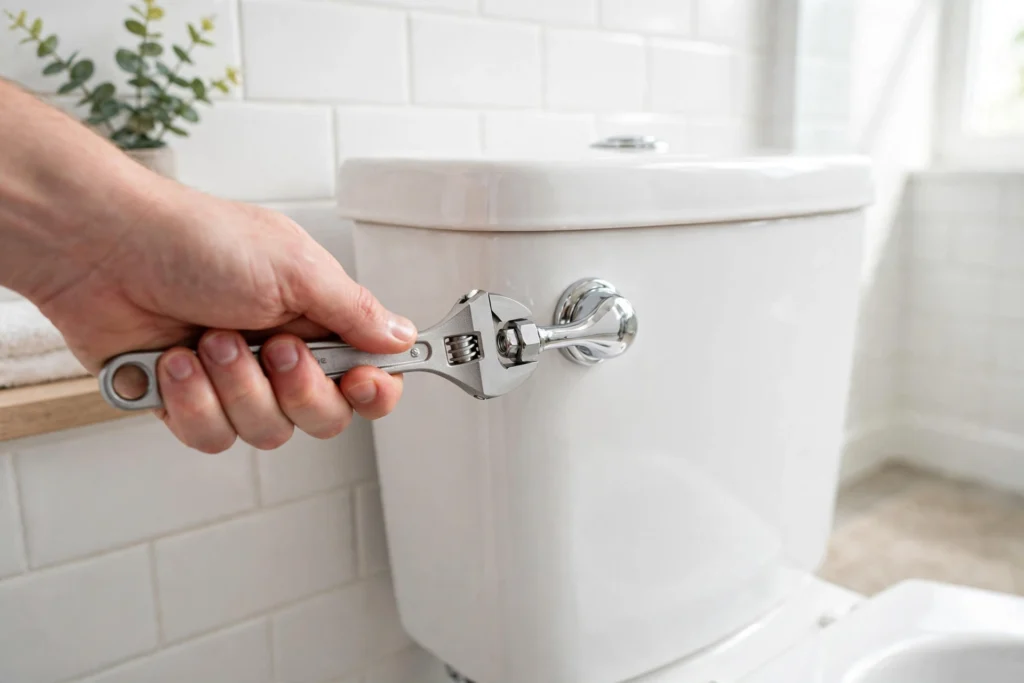
A broken toilet handle usually announces itself: the handle spins freely, feels floppy, or stays down after you press it. The handle connects to the flapper chain through a lever arm inside the tank, and that arm can loosen, corrode or snap. Lift the lid and watch the arm while you press the handle. If the arm does not move, the handle is disconnected inside. If the arm moves but the chain does not pull, the chain has come off the arm.
Most handle problems are fixed with a wrench and a $5–$15 replacement handle. The nut that holds the handle to the tank is reverse-threaded — turn it clockwise to loosen it, which is the opposite of what your hands expect. Fit the new handle, hook the chain to the arm with about 1/2 inch of slack, and test. One caution: do not overtighten the nut. The tank is porcelain, and a cracked tank costs far more than a handle.
What If the Toilet Won’t Flush Because of a Clog?
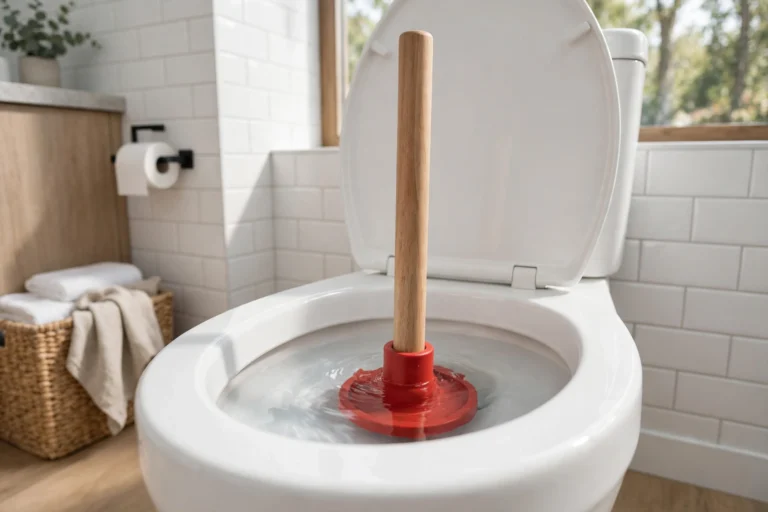
If the bucket test says the drain is the problem, the fix is a flange plunger — the kind with the extra rubber flap that seals into the toilet drain. A cup plunger will not seal a toilet bowl properly. Make sure there is enough water in the bowl to cover the rubber cup, press once gently to push the air out, then pump push-pull for 10–20 seconds. If the water drops, flush to test. Our full guide to how to use a plunger walks through the technique step by step, including the angle that keeps the seal from breaking.
If plunging does not clear it, the next tool is a toilet auger — a hand-cranked snake made for toilets, about $25–$50 at a hardware store. Feed it into the bowl, crank it through the trap, and pull the blockage back out. Never use a regular drain snake in a toilet: the bare metal cable scratches the porcelain. And never flush “flushable” wipes — they catch in the trap and build the exact clog you are fighting. They are the most common cause of a recurring toilet clog in homes that otherwise flush fine.
Never Flush “Flushable” Wipes
Wipes labelled flushable do not break apart like toilet paper. They snag on the trap, collect paper behind them, and build a clog that a plunger often cannot clear. The only things that belong in a toilet are waste and toilet paper — everything else goes in the bin.
Can a Blocked Vent Stop a Toilet Flushing?
Yes — a blocked vent can stop a toilet flushing properly, and it is the cause to check when everything in the tank is fine and plunging does not help. The vent pipe runs from your plumbing up through the roof and lets air into the drain system. When it is blocked — by leaves, a bird’s nest, or ice in winter — the drain cannot pull air, so water moves slowly and the toilet gurgles, flushes weakly, or fills the bathroom with a sewer smell.
You can also check the rim jets, the small holes under the rim of the bowl. Mineral deposits clog them over time, and when they are blocked the water does not swirl around the bowl with enough force. Clean them with a small brush and white vinegar. The vent itself is a roof job, and a fall from a roof costs far more than a plumber’s visit — if the rim jets are clean, the tank is fine, and the toilet still flushes weakly or gurgles, call a professional. A vent clearing typically runs $150–$300, rough estimate, not a quote.
When Should I Call a Plumber?
Call a plumber when the bucket test points to the main line, when several fixtures drain slowly at the same time, or when you have worked through the chain, flapper, water level, handle and clog steps and the toilet still will not flush. Those signs point to a problem beyond the toilet itself — a main-line blockage, a broken vent, or a failing fill valve that needs a pro’s tools. A single slow toilet is usually a $15 part. A house full of slow drains is a main-line problem, and that is not a DIY job.
Also call a plumber if you find water on the floor around the base of the toilet. That usually means the wax ring seal has failed, and the toilet needs to be lifted and reseated — a job that needs two people and a new wax ring, not a plunger. Do not keep flushing a toilet that leaks at the base: the water damages the floor underneath, and the repair only gets more expensive.
FAQ — Toilet Won’t Flush
Why does my toilet flush weakly but not clog?
A weak flush with no clog almost always means the tank is not delivering enough water: a slack flapper chain, a flapper that drops too early, or a water level set too low. Check the chain slack (about 1/2 inch), run the food colouring test on the flapper, and confirm the water sits about 1 inch below the overflow tube.
How do I know if my toilet flapper needs replacing?
Put food colouring in the tank and wait 20 minutes without flushing. If colour appears in the bowl, the flapper seal has failed. Other signs: the tank refills by itself every few minutes, the flush feels weaker than it used to, or the flapper looks warped, swollen or rough to the touch. Flappers last 3 to 5 years and cost under $15.
Why won’t my toilet flush after I plunge it?
If plunging does not clear it, the blockage may be past the trap, or the problem may not be a clog at all. Do the bucket test: if a fast bucket of water clears the bowl, the drain is fine and the tank is the problem. If the water rises or stalls, try a toilet auger, then call a plumber — the blockage may be in the vent or the main line.
Can low water pressure cause a toilet not to flush?
Low water pressure does not stop a toilet flushing directly, but it slows how fast the tank refills, so the next flush can be weak if someone flushes again too soon. If the tank takes a long time to fill, check the supply valve is fully open and the fill valve is working. Our guide to low water pressure causes and fixes covers the supply-side checks.
How much does it cost to fix a toilet that won’t flush?
Most fixes are cheap: a chain costs about $5, a flapper under $15, a handle $5–$15, and a fill valve $15–$30. A toilet auger runs $25–$50. A plumber’s visit for a vent or main-line problem typically runs $150–$300. All prices are rough planning estimates, not quotes.
Should I hold the handle down to flush?
Holding the handle down keeps the flapper open longer, so the tank empties fully. If holding the handle down makes the flush strong, the flapper is dropping too early — replace it, or shorten the chain slightly. It is a useful diagnostic, but it is not a permanent fix: a flapper that needs the handle held down is a flapper that needs replacing.