Garage Refrigerator: Will a Regular Fridge Work in the Garage?
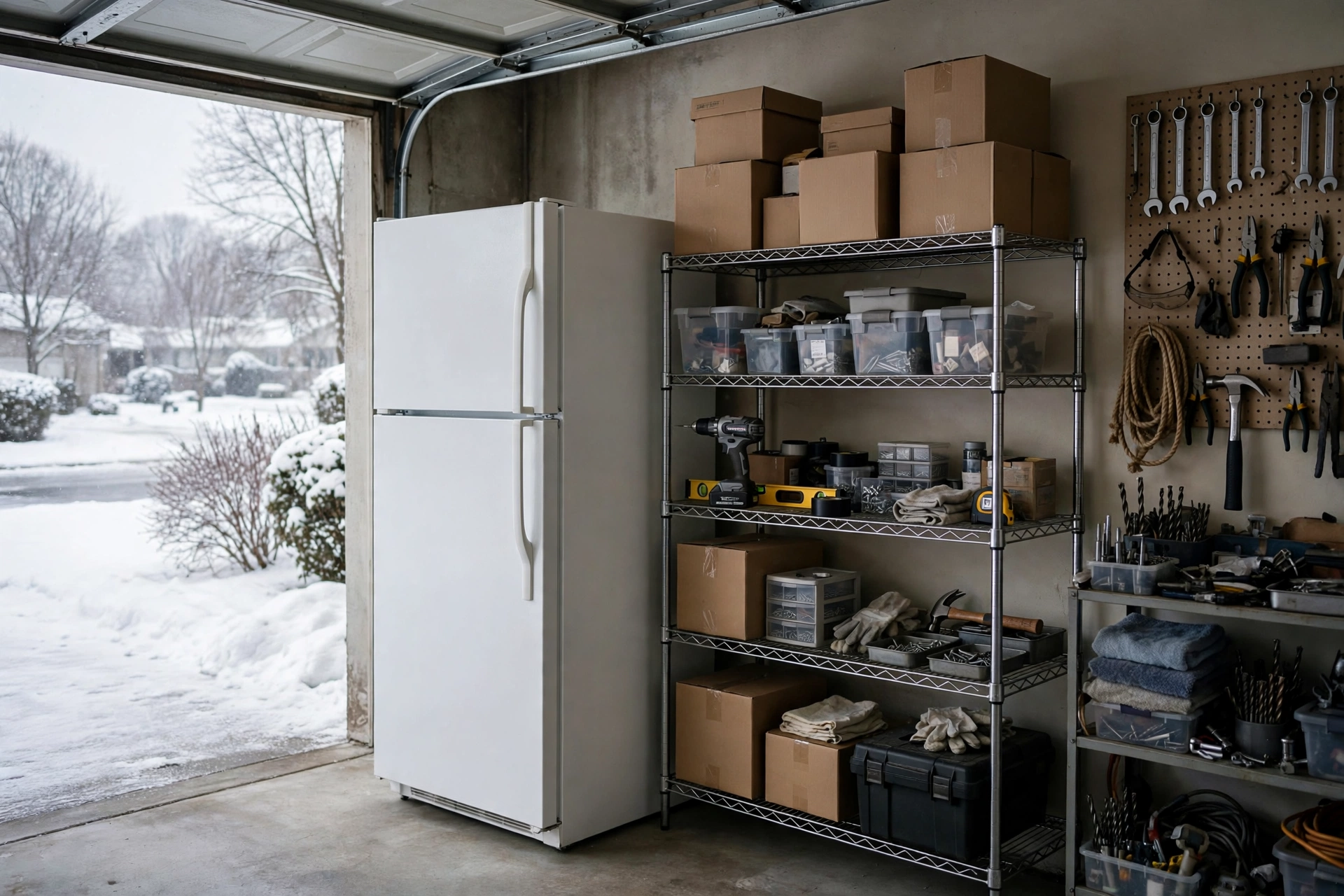
A garage refrigerator is a different machine from the one in your kitchen, even when it looks identical: a regular fridge is built for a 60–90°F kitchen, and a cold garage breaks the way it decides when to run. Below about 50–60°F outside air, the thermostat thinks the cabinet is already cold, the compressor stops cycling — and the freezer quietly thaws while the fridge section still feels cold. If you are planning a second fridge for the garage this winter, read this before you move one out there.
The second fridge in the garage is an American classic. It holds the Thanksgiving turkey, the extra drinks, the bulk buys, the venison, the ice cream — the overflow a single kitchen fridge cannot hold. It usually starts life as the old kitchen fridge, wheeled out to the garage when the new one arrives, and for half the year that works perfectly. Then the first cold snap hits in late November, and the frozen food goes soft, the ice cream turns to soup, and nobody notices until the smell gives it away. The fridge is not broken. It is doing exactly what it was designed to do — in the wrong room.
This guide explains how a fridge in the garage actually works, why a regular fridge fails in cold weather, the free fix to try first, the $30 fix that solves it for most people, and when to stop patching and buy a garage-ready model instead. It also covers sizing, energy, and the food-safety rules that decide whether thawed food is still safe to eat.
TL;DR — The Short Version
1. A regular fridge is built for 60–90°F. Below ~50–60°F in the garage, its thermostat is fooled and the compressor stops running.
2. The freezer thaws first. Most fridges have no thermostat in the freezer — it only stays frozen because the compressor runs for the fridge section.
3. Free fix first: turn the thermostat to its warmest setting (dial 1) so the compressor runs longer.
4. Check the GFCI outlet first if the unit is dark or silent — a tripped outlet is the most common “dead fridge” in a garage.
5. The $30 fix: a garage heater kit warms the thermostat so the compressor keeps cycling in cold weather.
6. The real fix: a garage-ready model rated to 0°F, with a second thermostat or a built-in heater.
7. Food safety: food with ice crystals or at 40°F or below can be refrozen or cooked; anything warmer for over 2 hours should go out.
8. Never put a heater, lamp or bulb inside or under the fridge — that is a fire risk, not a fix.
That is the cold-garage story in short — the sections below explain each point in full.
Why Does a Garage Refrigerator Fail in Winter?
A regular fridge fails in a cold garage because of a design assumption nobody thinks about until it breaks: the thermostat lives in the fridge section, not the freezer. In a 70°F kitchen, warm air leaks into the fridge every time the door opens, the thermostat calls for cooling, the compressor runs — and because the freezer shares the same compressor, the freezer stays frozen as a side effect. The freezer has no thermostat of its own on most models. It is frozen only because the fridge keeps asking for cold.
Take that same fridge into a garage at 45°F, and the logic falls apart. The air around the fridge is already colder than the fridge section needs to be, so the thermostat is satisfied, the compressor barely runs — and the freezer, with no thermostat to speak for it, slowly warms up. The fridge section still feels cold because the garage is cold, so everything looks fine from the outside. Meanwhile the ice cream softens, the meat thaws, and the frozen vegetables go limp. Below about 35°F, some units stop the compressor entirely, and the freezer becomes nothing more than an insulated box slowly warming toward the temperature of the garage.
The cruel part is the timing. This failure does not happen on a hot August afternoon when you would notice a warm fridge. It happens on a cold night in late November or December, when the garage is coldest and nobody is checking the freezer — exactly the season when the garage fridge is loaded with holiday food. A late-November cold snap is the worst-case moment for a fridge in an unheated garage, and it is also the most common one.
Check the Freezer, Not the Fridge
When you suspect a cold-weather problem, do not judge by the fridge section — it will feel cold because the garage is cold. Open the freezer and squeeze a bag of frozen vegetables or check the ice cream. If the vegetables are soft or the ice cream scoops like soft-serve, the freezer has already thawed even though the fridge feels fine. That mismatch is the signature symptom of a garage refrigerator in winter.
How Do You Fix a Fridge That Stops Working in a Cold Garage?
Fix a cold-weather fridge problem in this order — free fixes first, then the cheap kit, then a replacement only if the first two do not work. Most garage fridges can be saved for nothing or for about $30, and the expensive answer is only needed when the unit is old, the garage is unheated and very cold, or the food inside is worth more than the fix.
Step 1: Turn the thermostat to its warmest setting
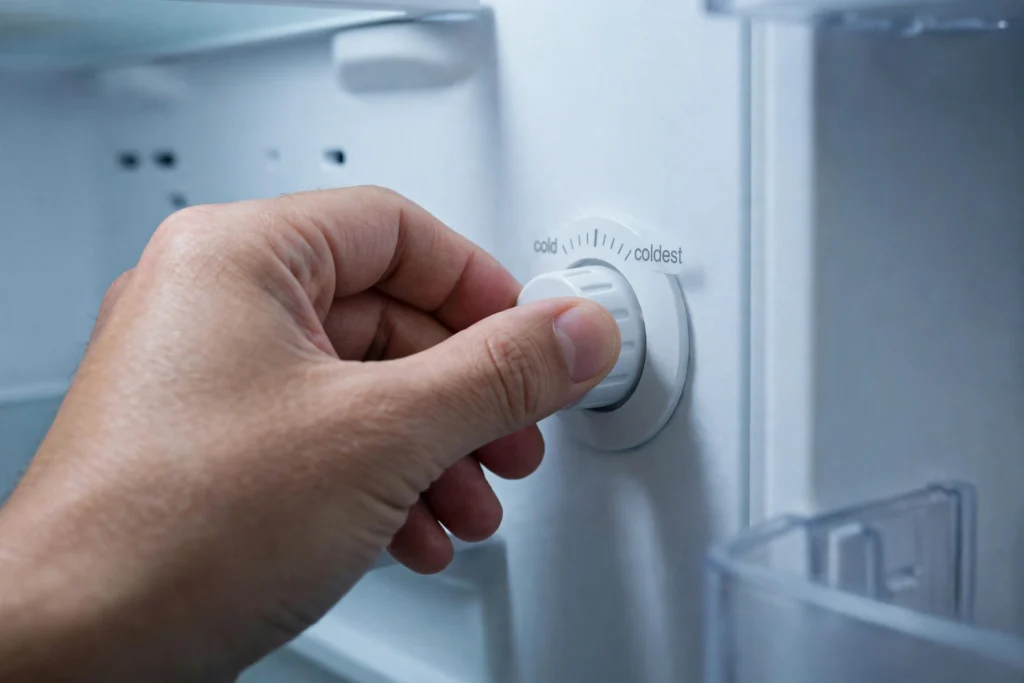
This sounds backwards, and it is the first thing to try because it costs nothing. Turn the fridge thermostat to its warmest setting — usually dial 1, or the lowest number on the control. A warmer thermostat setting makes the fridge section call for cooling more often, which makes the compressor run longer, which keeps the freezer frozen. It is a workaround, not a repair: you are tricking the thermostat into running the compressor in weather that would otherwise leave it idle. Try this first and give it 24 hours, then check the freezer with a thermometer — it should read 0°F.
Step 2: Check the GFCI outlet
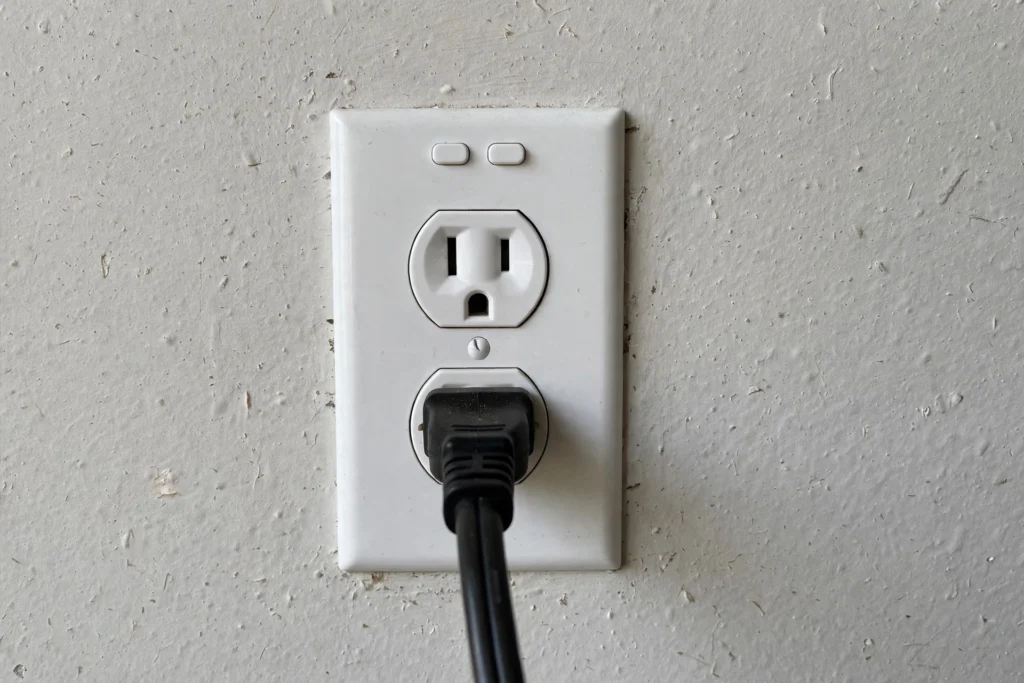
If the fridge is completely dark and silent — no light, no hum, nothing — check the outlet before you check anything else. Garages are wired with GFCI outlets, and they trip easily in cold, damp weather or after a power flicker. Press the reset button on the outlet and listen for the compressor. A tripped GFCI is the most common cause of a “dead” garage fridge, and it takes ten seconds to fix. While you are there, make sure the fridge is plugged directly into the wall, not into an extension cord or a power strip — compressors pull a heavy startup load, and a long cord can starve them and shorten the motor’s life.
Step 3: Add a garage heater kit (about $30)
A garage heater kit is a small heating coil that wraps around the thermostat housing and gently warms it, so the thermostat thinks the fridge section is warmer than it is and keeps the compressor cycling. It costs roughly $30, takes under an hour to install on most top-freezer models, and solves the cold-weather problem for most garages that stay above freezing. It is the standard fix that appliance technicians reach for first, and it is far cheaper than replacing a fridge that is otherwise fine. Check your model’s parts list for a compatible kit before ordering — the kit is model-specific, and a universal one rarely fits well.
Step 4: Replace it with a garage-ready model
If the garage regularly drops below freezing, the heater kit is not enough and the honest answer is a garage-ready refrigerator — a model rated to run in ambient temperatures down to 0°F. Garage-ready models solve the problem properly, with a second thermostat or a built-in heater that keeps the compressor cycling no matter how cold the garage gets. They cost more than a basic fridge — roughly $100–$300 more for a comparable size, as a rough planning estimate — but they protect the food inside them, and the food in a full garage freezer is often worth more than the price difference. If you are buying new for the garage, buy garage-ready from the start and skip the kit entirely.
Garage Refrigerator vs Regular Fridge: What Is Different?
| Feature | Regular fridge | Garage-ready fridge |
|---|---|---|
| Rated ambient range | About 60–90°F | Down to 0°F |
| Freezer in cold weather | Thaws below ~50–60°F ambient | Stays frozen — second thermostat or built-in heater |
| Thermostat | Single, in the fridge section | Second thermostat or heater for the freezer |
| Cost (comparable size) | Baseline | Roughly $100–$300 more (planning estimate, not a quote) |
| Best for | Kitchen, heated rooms | Unheated garage, shed, cold basement |
| Fix if it fails in cold | Thermostat to warmest, then ~$30 heater kit | Rarely needed |
The other differences are practical rather than mechanical. Garage-ready models usually have thicker insulation and a more powerful compressor, which also helps in summer — a garage in July can hit 100°F, and a regular fridge works hard and burns more electricity in that heat. Energy use in a garage is higher than in a kitchen either way: the wider the gap between the garage temperature and the temperature inside the fridge, the harder the compressor works. In a hot garage that means a bigger electric bill; in a cold garage it means a compressor that barely runs at all.
What Size Fridge Do You Need for the Garage?
Size a garage refrigerator by what it will actually hold, not by what fits the space — and then measure the space anyway, because garages are full of surprises. A 14 to 18 cubic foot top-freezer is the sweet spot for most households: big enough for a turkey, a case of drinks and a few bulk boxes, small enough to run cheaply and to fit through the garage door. A chest freezer holds more per dollar and keeps food frozen longer in a power cut, but it is a freezer only — if you want fridge space in the garage, you need a refrigerator, not a chest.
Measure three things before you buy: the width of the spot, the depth with the door open, and the height under any shelf or opener rail above it. Leave at least an inch of air on the sides and two inches behind for the coils to breathe, and leave room for the door to swing fully open — a fridge wedged against a shelf is a fridge you cannot load. And measure the path in, not just the spot: a 36-inch fridge does not fit through a 32-inch side door, and garages are famous for narrow side doors.
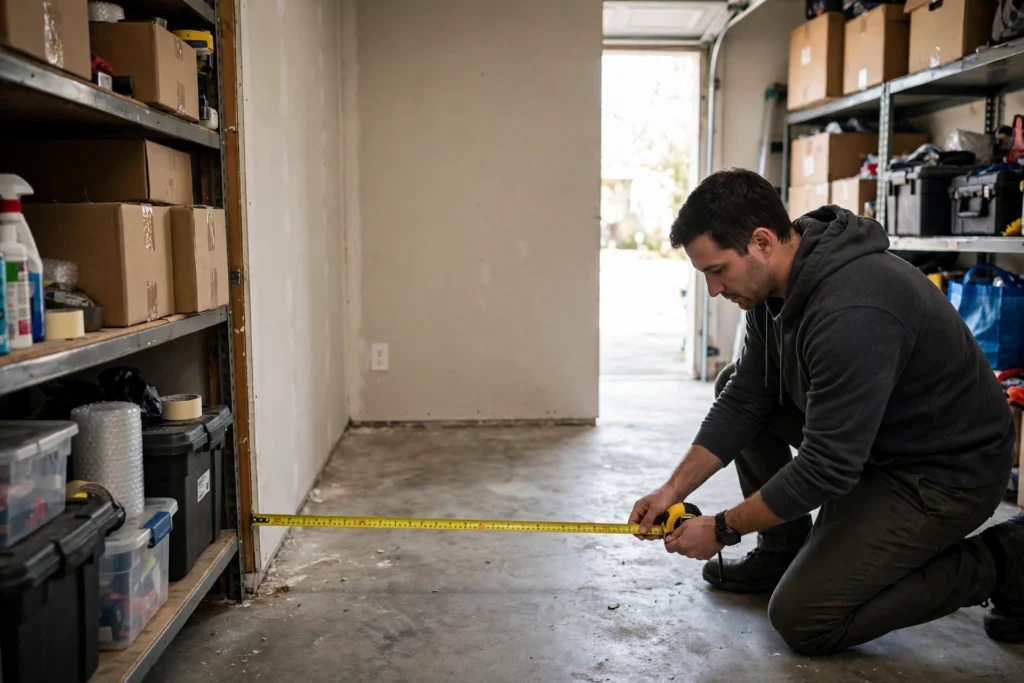
Measure the Door Swing, Not Just the Fridge
The most common sizing mistake is measuring the fridge and forgetting the door. A top-freezer door needs a clear arc of about 30 inches, and a French-door model needs room on both sides. Stand in the spot, swing your arms wide, and check for shelves, bikes, the garage door track and the workbench — if your elbows hit it, the fridge door will too.
Is the Food Still Safe After the Freezer Thaws?
Food safety after a garage freezer thaws follows one rule from the FDA: food that still has ice crystals, or that measures 40°F or below, can be refrozen or cooked safely. Food that has warmed above 40°F for more than 2 hours should be thrown out. The 2-hour clock is the one that matters — bacteria grow fastest between 40°F and 140°F, and a freezer full of food that sat warm overnight is not a gamble worth taking, however expensive the contents were.
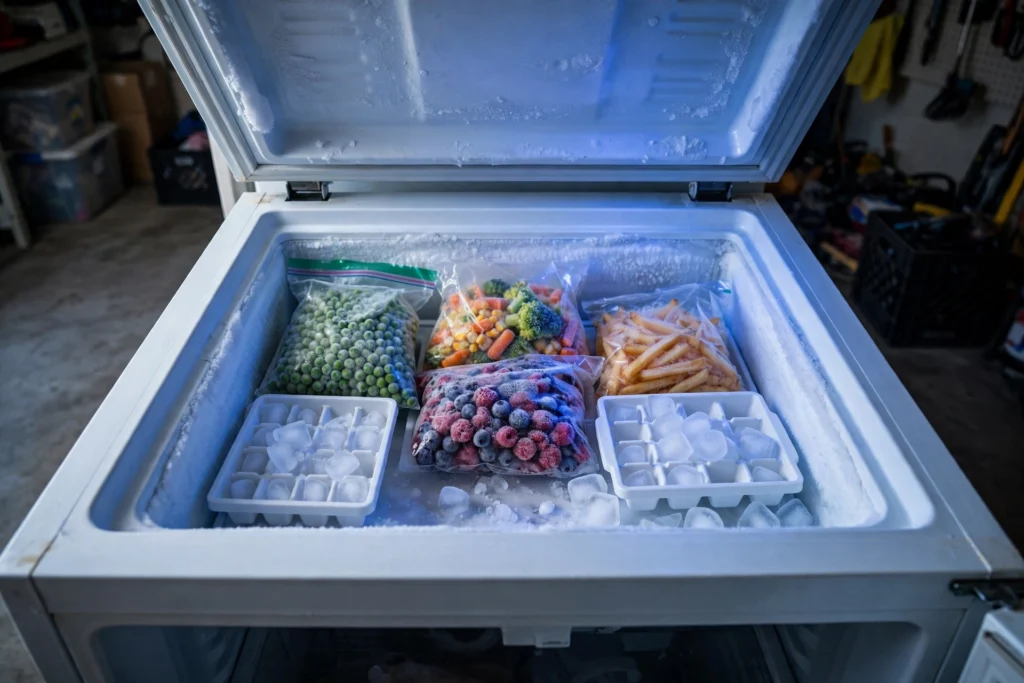
When you find a thawed garage freezer, work through it fast and cold. Check the temperature of the food with a thermometer, not your hand — food can feel cold and still be above 40°F. Anything with ice crystals goes back in the freezer or straight into the oven. Anything soft, warm, or smelling off goes in the bin. And if the power is out rather than the thermostat, keep the freezer closed: a full freezer holds its temperature for about 48 hours without power, and a half-full one for about 24 — every opening lets the cold out and shortens that window.
Never try to warm a garage fridge with a heater, a lamp or a bulb placed inside or under it. It is a fire risk, it warms the food unevenly, and it does not fix the thermostat problem — the heater kit is the safe version of the same idea, built for the job and wired for the appliance. If you are clearing the garage before the holidays anyway, our Thanksgiving cleaning checklist is a good moment to check the garage fridge too, before it is loaded with the turkey.
Garage Refrigerator — Frequently Asked Questions
Can I put a regular refrigerator in the garage?
Yes, in warm weather — but below about 50–60°F the thermostat stops the compressor and the freezer thaws while the fridge still feels cold. In a cold climate, use a garage-ready model or add a garage heater kit (about $30).
What temperature is too cold for a garage refrigerator?
Below about 50–60°F a regular fridge starts to struggle, and below 35°F some units stop the compressor entirely. Garage-ready models are rated to run down to 0°F.
Why is my garage freezer thawing but the fridge is cold?
The freezer has no thermostat of its own on most models — it only stays frozen because the compressor runs for the fridge section. In a cold garage the fridge thermostat is satisfied, the compressor stops, and the freezer thaws while the fridge still feels cold.
How do I keep my garage fridge running in winter?
Turn the thermostat to its warmest setting (dial 1) first — free. If that is not enough, add a garage heater kit for about $30. For garages that drop below freezing, buy a garage-ready model rated to 0°F.
Is food safe after a garage freezer thaws?
Food with ice crystals or at 40°F or below can be refrozen or cooked. Food above 40°F for more than 2 hours should be thrown out — when in doubt, throw it out.
Does a garage refrigerator use more electricity?
Usually, yes. In a hot garage the compressor works harder, and in a cold garage it cycles oddly. A garage-ready model with thicker insulation handles both extremes better than a regular fridge.
Final Thought
A second fridge in the garage is a great idea until the first cold snap exposes the one thing it was never designed for: winter. The fix is usually free — turn the thermostat to its warmest setting — and if that is not enough, a $30 heater kit solves it for most garages. Only when the garage drops below freezing for weeks at a time is a garage-ready model the honest answer. Check the freezer tonight, before the cold arrives: squeeze the ice cream, read the thermometer, and press the GFCI reset button. Five minutes now is worth more than a freezer full of thawed food in December. And when you wipe the fridge down for the season, the stainless exterior cleans up the same way — our guide to how to clean a stainless steel sink covers the same stainless-care routine.