How to Clean a Stainless Steel Sink: Remove Stains, Hard Water & Restore Shine
A stainless steel sink is easy to maintain, but water spots, food residue, grease, and mineral deposits can make it look dull. The good news is that you usually do not need expensive cleaning products to restore its appearance.
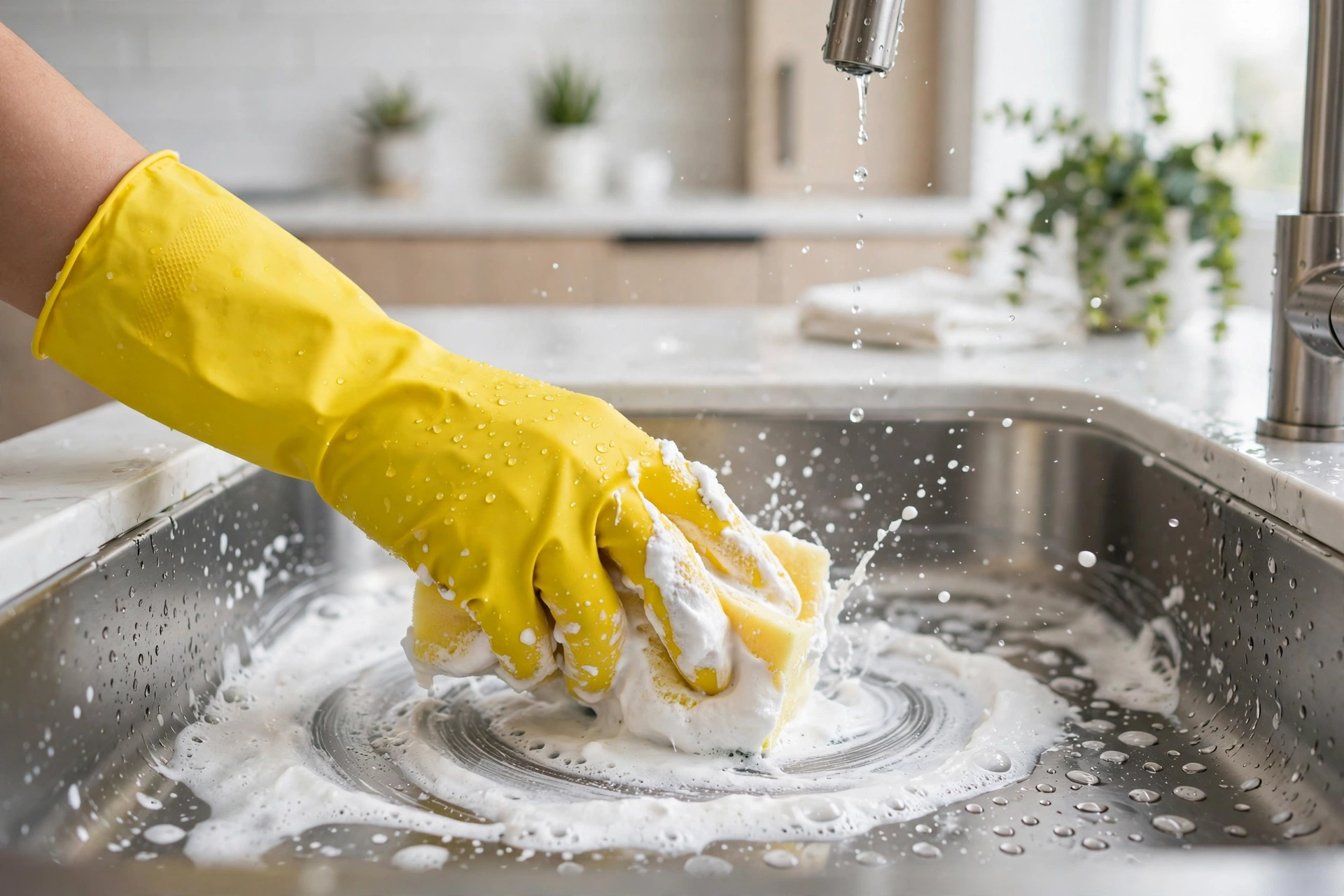
The best way to clean a stainless steel sink is to use warm water, mild dish soap, and a soft sponge for everyday cleaning. For deeper cleaning, apply a paste of baking soda and water, gently scrub in the direction of the steel grain, rinse thoroughly, and dry with a microfiber cloth.
For tougher problems, such as hard water deposits and rust-colored marks, you may need a different cleaning method.
This guide explains how to clean stainless steel sink surfaces safely, remove stubborn stains, restore shine, and prevent scratches. If the whole kitchen needs attention around the sink, our deep-cleaning guide for the holidays covers the rest of the room in the same session.
TL;DR — How to Clean a Stainless Steel Sink
Daily: warm water + mild dish soap + soft sponge, then dry with a microfiber cloth.
Deeper clean: baking soda paste, scrub with the grain, rinse, dry.
Hard water spots: diluted white vinegar, 5–10 minutes, rinse, dry.
Stubborn stains: a stainless-steel-safe cleaner such as Bar Keepers Friend (right version, label first).
Never use: steel wool, wire brushes, chlorine bleach left on the surface, or harsh abrasive powders.
What Is the Best Way to Clean a Stainless Steel Sink?
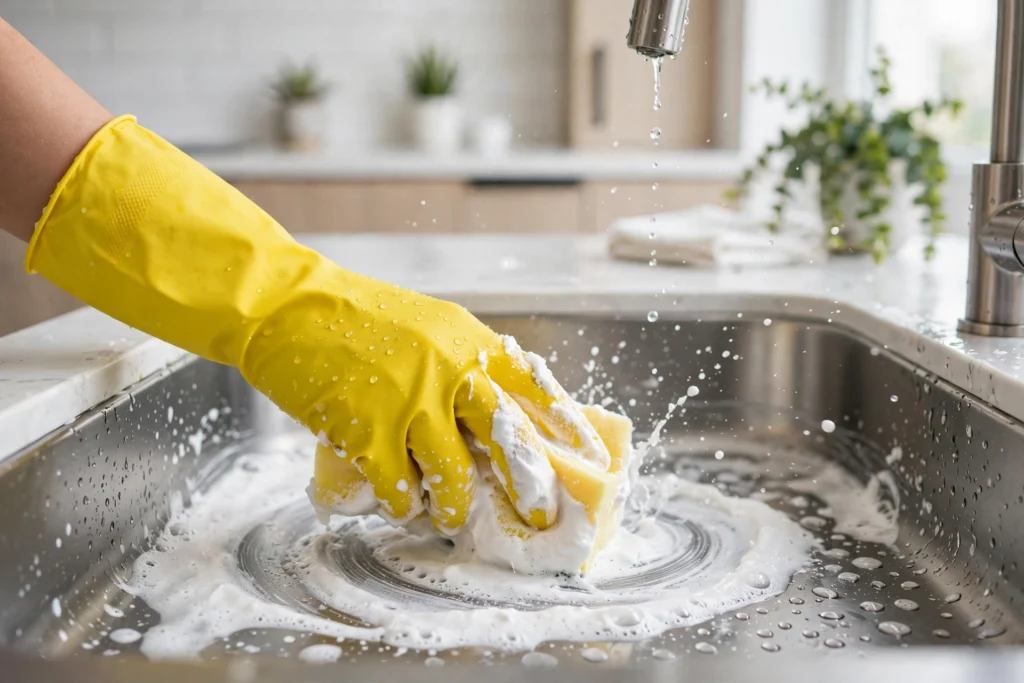
The easiest method is to clean the sink with baking soda, dish soap, and a soft sponge. These household supplies can remove everyday grime without requiring harsh scrubbing.
What You Will Need
- Baking soda
- Mild dish soap
- Warm water
- Soft sponge or microfiber cloth
- Soft-bristled toothbrush
- Clean microfiber towel
Step-by-Step Cleaning Instructions
Step 1: Remove Everything From the Sink
Take out dishes, food scraps, sponges, sink accessories, and other items. Check around the drain and corners for trapped debris.
Rinse the entire sink with warm water to loosen food residue.
Step 2: Sprinkle Baking Soda Over the Surface
Lightly sprinkle baking soda across the damp sink. Pay attention to areas around the drain, corners, and visible stains.
Baking soda provides mild cleaning action and helps loosen everyday grime.
Step 3: Add Dish Soap
Apply a small amount of mild dish soap to a soft, damp sponge.
Gently work the baking soda into a paste. Avoid aggressive scrubbing, especially if your sink has a delicate or specialty finish.
Step 4: Scrub in the Direction of the Grain
Look closely at your sink’s surface. Most brushed stainless steel sinks have fine lines running in one direction.
Move your sponge along those lines instead of scrubbing randomly in circles. This helps preserve the original finish and reduces the risk of visible scratches.
Step 5: Clean the Corners and Drain
Use a soft-bristled toothbrush to reach around the drain, faucet base, and corners.
Do not use metal brushes or steel wool.
Step 6: Rinse and Dry
Rinse away all baking soda and soap with clean water.
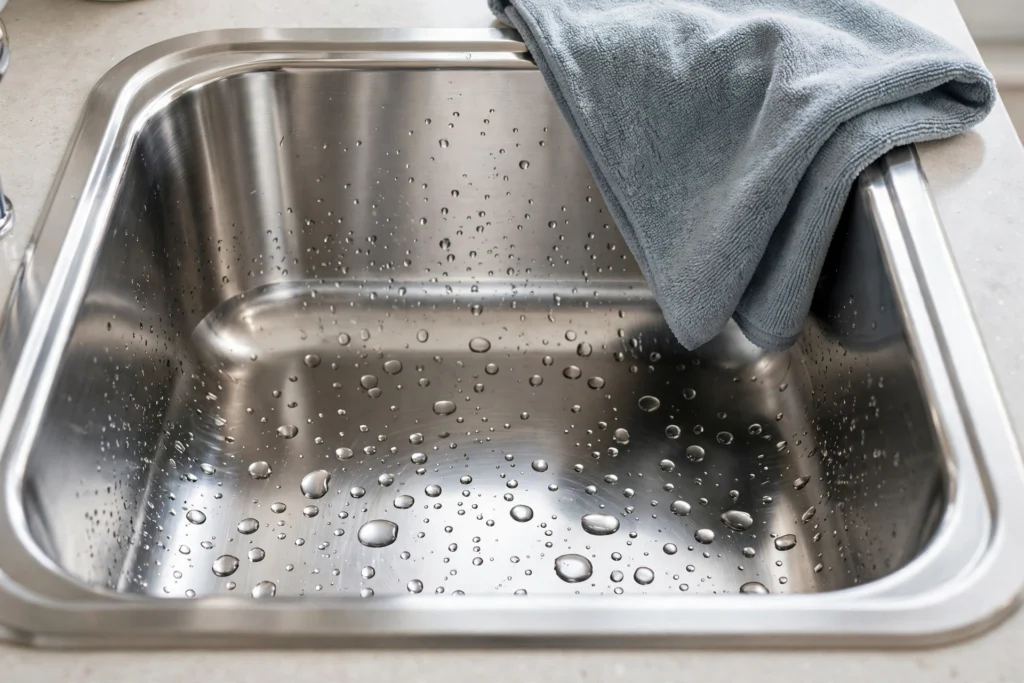
Dry the entire sink using a clean microfiber cloth. This final step helps prevent water spots and mineral deposits.
PRO TIP
Dry the sink after every use. Thirty seconds with a microfiber cloth stops most water spots before they form — and it is the single easiest habit in this whole guide.
How to Clean a Stainless Steel Sink With Baking Soda
Baking soda is a useful household cleaner for removing light stains, food residue, and everyday grime.
It works as a mild abrasive, so use it gently rather than applying excessive pressure.
Method
- Rinse the sink with warm water.
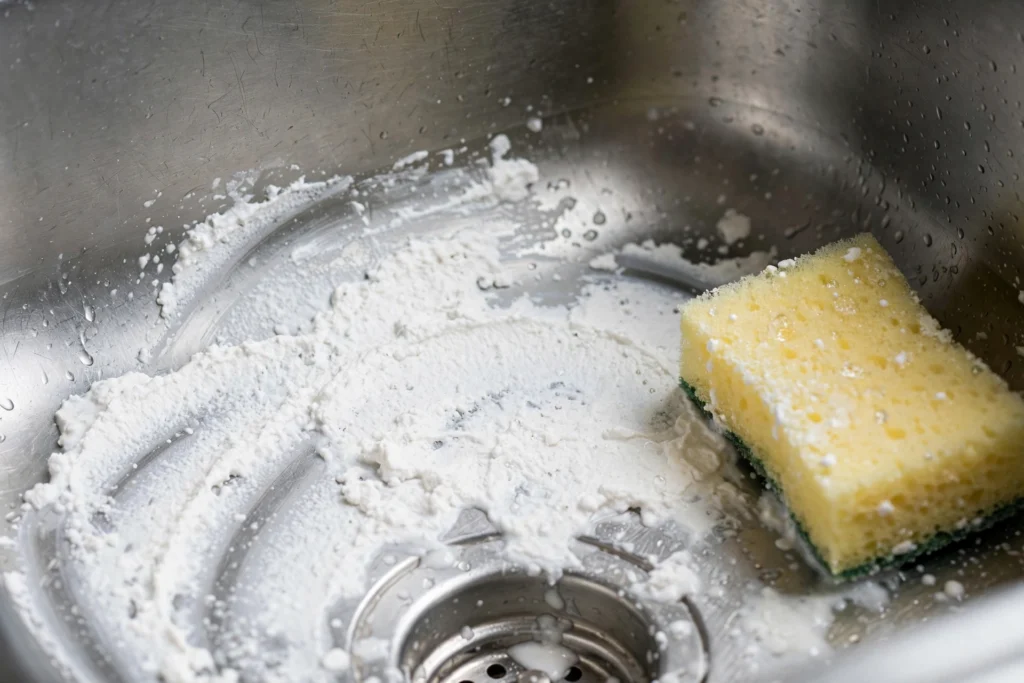
- Sprinkle a thin layer of baking soda over the surface.
- Add a little water to create a paste.
- Gently scrub with a soft sponge.
- Follow the direction of the stainless steel grain.
- Rinse thoroughly.
- Dry with a microfiber towel.
For stubborn spots, apply the paste to the affected area and work gently.
Can baking soda remove scratches from stainless steel?
No. Baking soda may help clean residue that makes a surface look scratched, but it cannot reliably repair actual scratches in the metal. Avoid treating scratch removal as ordinary cleaning.
How to Clean a Stainless Steel Sink With Vinegar
White vinegar can help remove hard water spots and mineral deposits because its acidity dissolves mineral buildup.
However, check your sink manufacturer’s care instructions before using vinegar, particularly if the sink has a colored or specialty finish.
Method
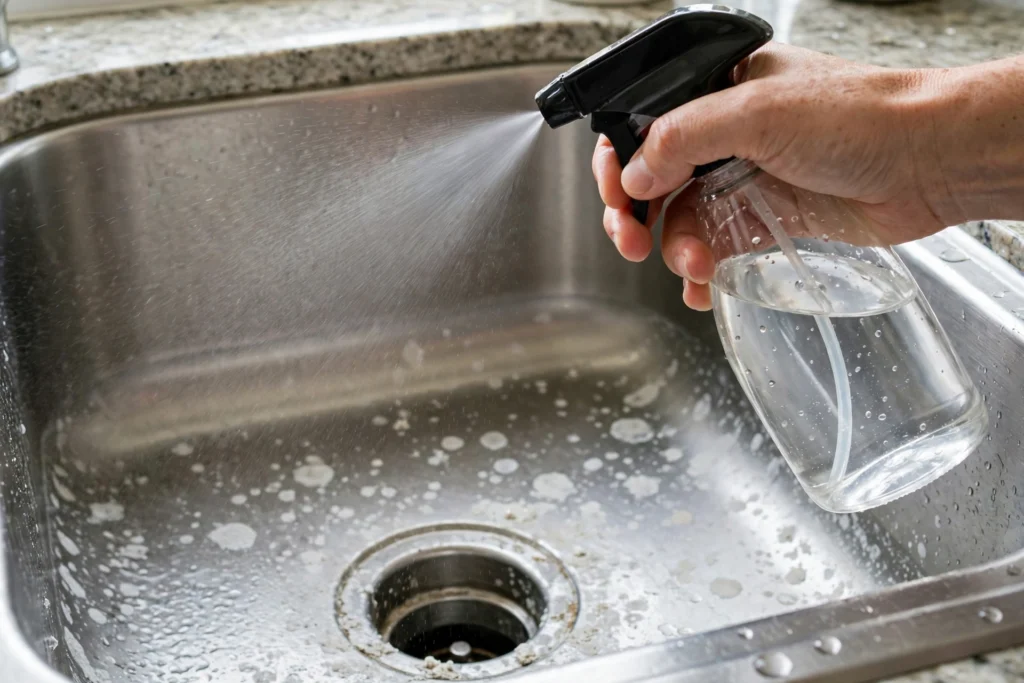
- Mix equal parts white vinegar and water in a spray bottle.
- Spray the solution over the affected areas.
- Let it sit for approximately 5–10 minutes, following the manufacturer’s guidance.
- Wipe gently with a soft microfiber cloth.
- Rinse thoroughly with clean water.
- Dry the sink completely.
For heavier mineral deposits, a longer contact time may be recommended by the sink manufacturer. Do not leave vinegar on the surface indefinitely.
Moen’s stainless steel sink care guide specifically recommends vinegar for hard water spots and scale. It also recommends rinsing afterward with a neutralizer, such as a baking soda solution, followed by clean water.
How to Clean a Stainless Steel Sink With Baking Soda and Vinegar
Baking soda and vinegar are popular household cleaning ingredients. When combined, they produce fizzing as the acid and alkaline ingredients react.
However, the fizz does not mean the mixture is automatically more effective than using each ingredient separately. Their reaction also neutralizes much of their cleaning action.
A better approach is to use them for different purposes:
- Use baking soda and water for gentle scrubbing and general grime.
- Use diluted white vinegar separately for mineral deposits and hard water spots.
- Rinse the sink thoroughly between cleaning methods.
Never mix vinegar with bleach or chlorine-based cleaning products. This can release dangerous chlorine gas.
What Is the Best Way to Remove Hard Water Deposits From a Stainless Steel Sink?
Hard water contains dissolved minerals, particularly calcium and magnesium. When water evaporates, these minerals can remain on the sink as white, cloudy, or chalky marks.
White vinegar is often effective against this type of buildup.
How to Remove Hard Water Stains
- Remove loose dirt and rinse the sink.
- Apply a diluted white vinegar solution to the mineral deposits.
- Allow it to sit for a short period, following your sink manufacturer’s instructions.
- Wipe gently with a soft cloth.
- Rinse thoroughly with clean water.
- Dry the surface.
For heavy buildup, repeat the process rather than using aggressive scrubbing.
If the deposits remain, use a cleaner specifically approved for stainless steel.
How to Clean Stainless Steel Sink Stains
Different stains require different treatments. Before applying any cleaner, identify what caused the mark.
Food and Grease Stains
Food residue and grease can usually be removed with warm water and mild dish soap.
Apply the soap with a soft sponge, wipe along the grain, rinse, and dry.
White Water Spots
White spots are often caused by minerals left behind when water evaporates.
Use a diluted vinegar solution, rinse thoroughly, and dry the surface.
Brown or Rust-Colored Marks
Brown marks may come from iron-containing water or metal particles transferred from cookware, cans, or other objects.
Clean the area with an appropriate stainless-steel-safe cleaner. A manufacturer-approved vinegar treatment may also help with some surface deposits.
If the mark persists, the steel may have actual corrosion or surface damage rather than removable residue.
Black or Dark Discoloration
Dark marks can have several causes, including chemical exposure, deposits, or damage to the finish.
Avoid trying multiple strong cleaners. Start with mild soap and water, then consult the sink manufacturer’s care instructions before using a stronger product.
What Is the Best Cleaner for Stainless Steel Sinks?
The best cleaner depends on the type of dirt or stain you want to remove.
| Cleaner | Best use | Important consideration |
|---|---|---|
| Mild dish soap | Daily cleaning and grease | Safe starting point for most finishes |
| Baking soda | Light grime and general cleaning | Use gently to avoid abrasion |
| White vinegar | Hard water deposits | Check finish compatibility and rinse well |
| Stainless steel cleaner | Persistent marks and polishing | Follow the product label |
| Bar Keepers Friend | Certain stubborn stains and deposits | Use only the appropriate product version and follow its instructions |
For routine maintenance, mild dish soap and water are usually enough. Stronger products should be reserved for specific problems.
Can You Use Bar Keepers Friend on a Stainless Steel Sink?
Some Bar Keepers Friend products are designed for stainless steel, but not every formulation is suitable for every sink finish.
If you choose this cleaner:
- Read the product label.
- Confirm that it is suitable for your sink.
- Test it on a small, inconspicuous area.
- Follow the recommended contact time.
- Rinse thoroughly.
Do not allow cleaning powder or residue to dry on the sink.
How to Clean a Stainless Steel Sink Without Scratching
Stainless steel is durable, but its finish can still become scratched by unsuitable cleaning tools or abrasive products.
Follow these precautions:
- Use a soft sponge or microfiber cloth.
- Clean in the direction of the grain.
- Avoid steel wool and wire brushes.
- Do not use harsh scouring pads.
- Remove food particles before scrubbing.
- Avoid excessive pressure.
- Rinse away cleaning products completely.
What Causes Scratches on Stainless Steel Sinks?
Common causes include:
- Scrubbing with steel wool.
- Using abrasive cleaning pads.
- Dragging heavy cookware across the surface.
- Scrubbing trapped food particles into the finish.
- Using an unsuitable abrasive cleaner.
Many brushed stainless steel sinks develop fine surface marks through normal use. These marks do not necessarily mean the sink is damaged.
How to Clean Scratches on a Stainless Steel Sink
First, determine whether the marks are actual scratches or simply dirt and residue.
Clean the surface using mild dish soap and a soft cloth. If the marks disappear, they were likely surface residue.
If scratches remain, cleaning alone may not remove them.
Some brushed stainless steel finishes can be refinished using manufacturer-approved polishing methods. However, the wrong abrasive or polishing direction can make the damage more visible.
Deep scratches, pitting, and damaged specialty finishes may require professional attention.
Do not use steel wool or an aggressive sanding pad as a quick fix.
How to Polish a Stainless Steel Sink and Restore Its Shine
Once the sink is clean, polishing can improve its appearance.
Polishing Method
- Wash the sink with mild dish soap.
- Rinse away all cleaning residue.
- Dry the surface completely.
- Apply a small amount of stainless steel polish suitable for your finish.
- Follow the product’s instructions.
- Buff gently with a clean microfiber cloth.
Some manufacturers recommend specific polishing products, while others advise against certain oils or coatings. Always check your sink’s care guide.
Avoid leaving oily residue on surfaces used for food preparation.
How to Clean Stainless Steel Sink Grates and Racks
Sink grids and racks can collect grease, food particles, and mineral deposits underneath their surfaces.
To clean them:
- Remove the grid or rack from the sink.
- Rinse away loose debris.
- Wash with warm water and mild dish soap.
- Use a soft brush to clean corners and joints.
- Rinse thoroughly.
- Dry before placing it back in the sink.
Check the accessory manufacturer’s instructions before using vinegar or stronger cleaning products.
Also clean the area underneath the grid. Trapped moisture and food particles can cause discoloration.
How to Clean a Stainless Steel Sink Drain
The area around the drain can collect grease, soap residue, and food particles.
For routine cleaning:
- Remove visible food debris.
- Apply mild dish soap around the drain opening.
- Scrub the surrounding surface with a soft toothbrush.
- Rinse thoroughly.
- Dry the surrounding stainless steel.
If the drain itself has an odor or blockage, that is a separate plumbing issue. Cleaning the stainless steel surface will not necessarily resolve a clogged or dirty drainpipe — see our guide on how to unclog a kitchen sink if the drain is slow or blocked.
Never mix drain cleaners with vinegar, bleach, or other household cleaning chemicals.
How Often Should You Clean a Stainless Steel Sink?
Regular maintenance prevents stains and mineral deposits from becoming difficult to remove.
A practical cleaning schedule is:
| Frequency | Cleaning task |
|---|---|
| After use | Rinse away food and soap residue |
| Daily | Wipe and dry the surface |
| Weekly | Deep clean with mild soap or baking soda |
| When needed | Treat hard water spots and stubborn stains |
| Monthly | Inspect the drain, grid, corners, and accessories |
If your home has hard water, drying the sink after use is particularly helpful. For a full kitchen routine around this schedule, our deep-cleaning guide for the holidays lays out the rest of the job room by room.
What Should You Never Use on a Stainless Steel Sink?
Some cleaning products and tools can damage stainless steel or affect its appearance.
Avoid the following:
Steel Wool: Steel wool can scratch the surface and leave iron particles that may create rust-colored marks.
Chlorine Bleach: Prolonged exposure to bleach can cause corrosion. If bleach accidentally contacts the sink, rinse it away thoroughly and immediately.
Harsh Abrasive Cleaners: Aggressive powders and scouring products can damage the finish.
Wire Brushes: Metal bristles can scratch the surface and leave particles behind.
Unapproved Chemical Combinations: Never mix vinegar with bleach or combine different cleaning chemicals.
Always follow the sink manufacturer’s care instructions, especially for colored, coated, or specialty stainless steel finishes.
Frequently Asked Questions
Use baking soda and water to create a gentle cleaning paste. Scrub with a soft sponge in the direction of the grain, rinse thoroughly, and dry with a microfiber cloth. Diluted white vinegar can be used separately for suitable hard water deposits.
Mild dish soap and warm water are the best starting point for everyday cleaning. For stubborn stains, use a stainless steel cleaner approved for your sink’s finish.
Yes. White vinegar can help dissolve hard water deposits and mineral spots. Use it according to your sink manufacturer’s instructions, then rinse thoroughly and dry.
Yes. Baking soda mixed with water can help remove light grime and everyday residue. Use a soft sponge and gentle pressure to avoid damaging the finish.
They may help when used appropriately, but mixing them causes a chemical reaction that neutralizes much of their cleaning action. Use baking soda paste for general cleaning and vinegar separately for mineral deposits.
First, determine whether the mark is transferred iron residue or actual corrosion. Use a suitable stainless-steel-safe cleaner or a manufacturer-approved treatment. Rinse and dry thoroughly.
Clean the surface with mild dish soap, rinse away residue, and dry with a microfiber cloth. If necessary, use a stainless steel polish approved for your sink’s finish.
Avoid leaving bleach on stainless steel. Prolonged contact can cause corrosion. If bleach accidentally touches the surface, rinse it thoroughly with clean water.
Rinse away soap and food residue, then dry the sink with a clean microfiber towel. This helps prevent minerals from remaining on the surface after water evaporates.
Final Thoughts
Cleaning a stainless steel sink does not require complicated products or aggressive scrubbing. Mild dish soap, baking soda, white vinegar, and a soft microfiber cloth can handle many everyday cleaning problems.
The key is to use the right cleaner for the specific stain, follow the direction of the steel grain, and rinse and dry the sink properly.
With consistent maintenance and the correct cleaning techniques, your stainless steel sink can maintain its appearance for years.