Raccoon Scat: How to Identify It, What It Means, and When to Call a Pro
TL;DR
Raccoon scat is dark brown or black, tubular, about 2–3 inches long and half an inch wide, with blunt ends and visible bits of berries, seeds, or fur. Raccoons return to the same spot — a latrine — usually at the base of a tree, on a roof, in an attic, or on a deck. It is more dangerous than most animal droppings because it can carry raccoon roundworm eggs, so never touch it barehanded, never sweep it dry, and call a professional if the latrine is in an attic or near a play area.
Finding droppings in the yard is unpleasant; finding out they came from a raccoon changes the response completely. Raccoon scat is not just a mess to clean up — it can carry raccoon roundworm, a parasite whose eggs survive in soil for years and can make people, especially children, seriously ill. The good news is that raccoon scat is easy to identify once you know what to look for, and the cleanup is straightforward if you follow the safety steps. This guide covers what raccoon scat looks like, how to tell it from other droppings, where raccoons leave it, and when the job belongs to a professional.
What Does Raccoon Scat Look Like?
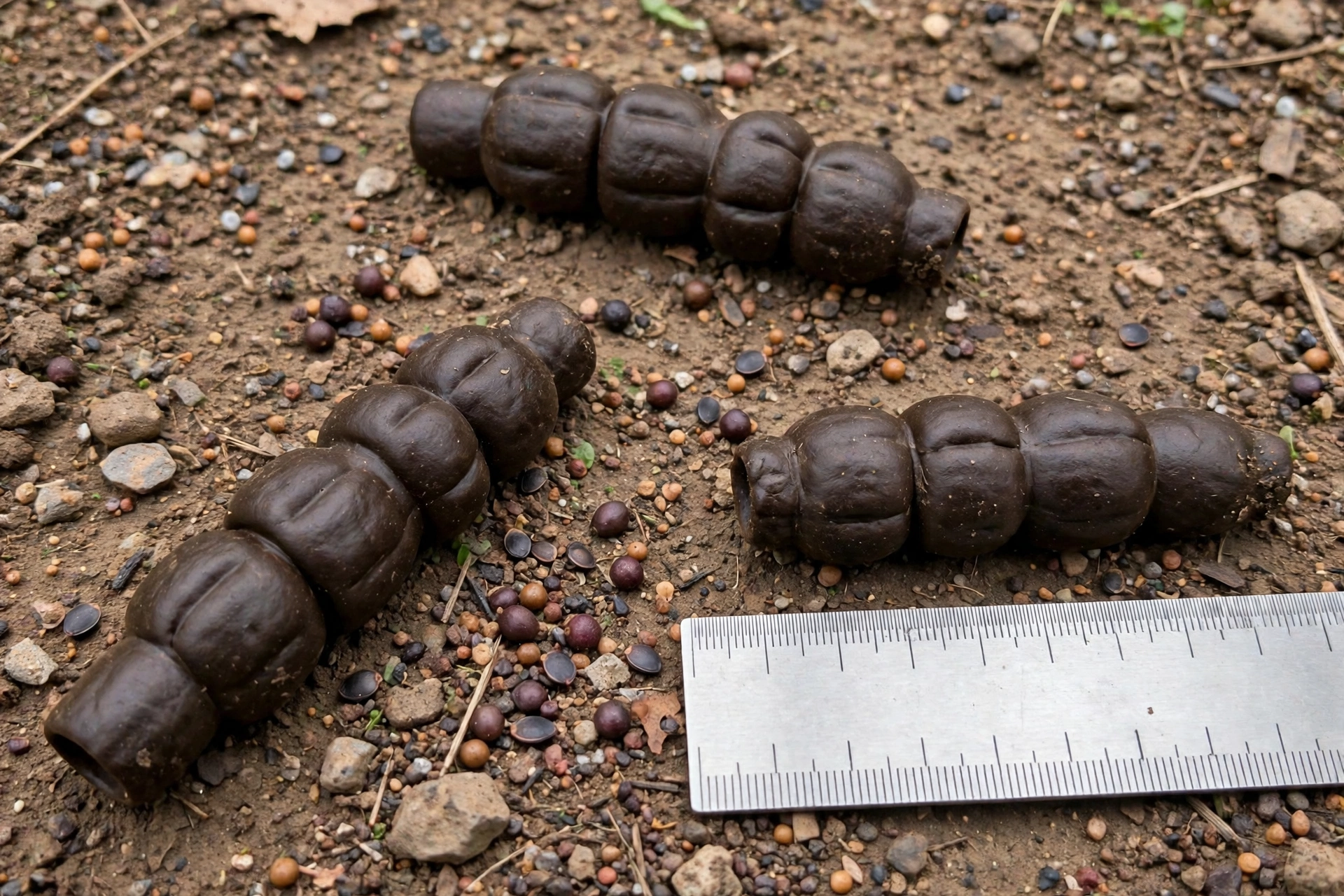
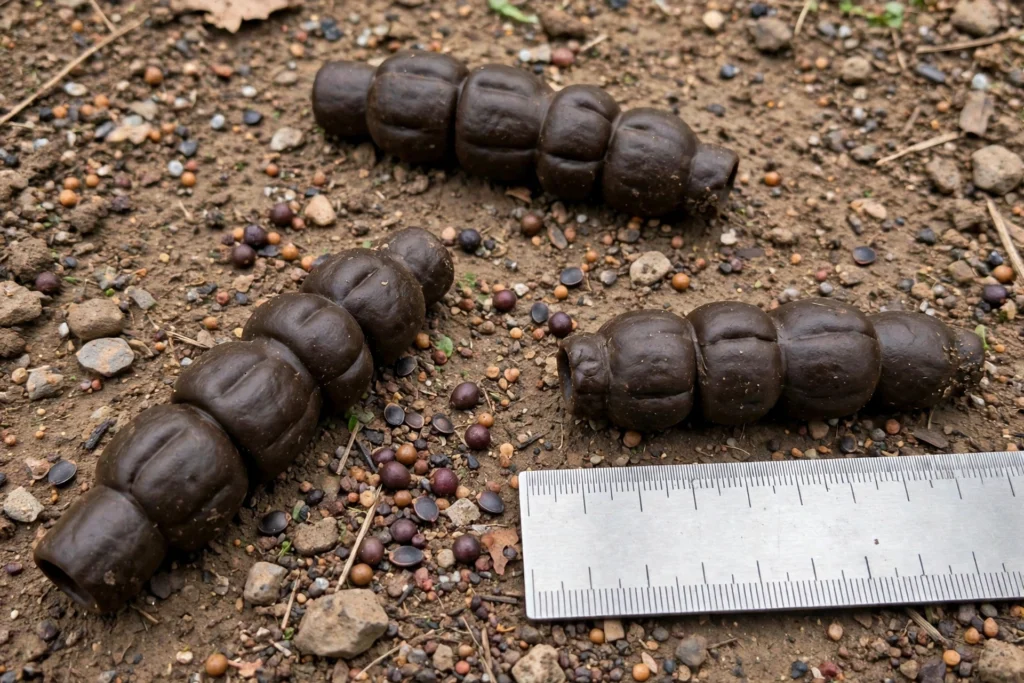
Raccoon scat looks like small dark tubes, 2–3 inches long and about half an inch wide, with blunt ends and a segmented, almost chunky shape. Fresh droppings are dark brown or black and slightly moist; older ones dry out, turn grey, and crumble. Look closely and you will usually see undigested bits — berry seeds, corn, insect parts, or fur — because raccoons eat almost anything.
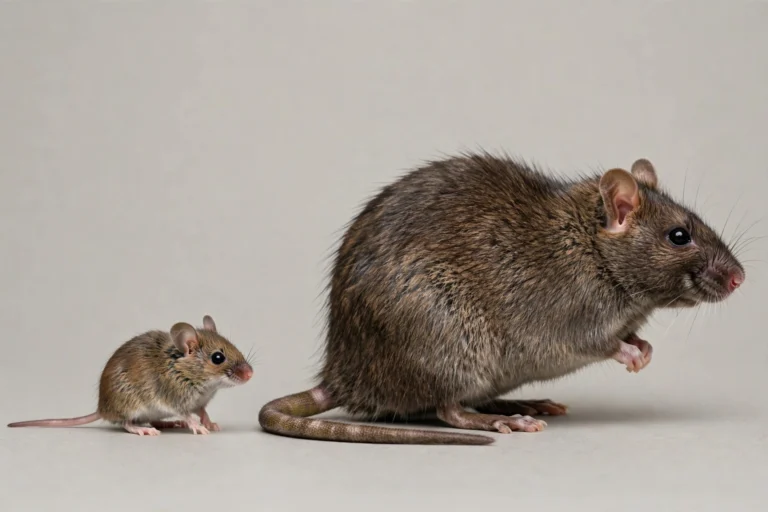
The blunt ends are the detail that separates raccoon scat from most other droppings. Dog droppings are larger and softer with tapered ends. Cat droppings are smaller and usually buried. Rat droppings are much smaller — the size of a grain of rice — and pointed at the ends. Raccoon scat sits in between: too big for a rat, too segmented and seedy for a dog, and almost never buried the way a cat buries its waste. The second clue is location: raccoons use latrines, returning to the same spot again and again, so you will usually find a pile, not a single dropping.
Where Do Raccoons Leave Scat?
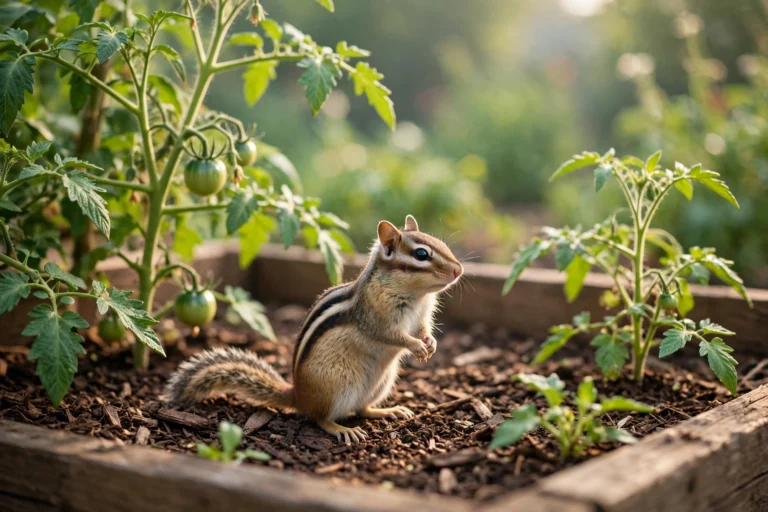
Raccoons leave scat in latrines — the same spot used over and over — at the base of large trees, on flat roofs, in attics, on decks, in woodpiles, and near vegetable gardens. A latrine can hold weeks or months of droppings, which is what makes it dangerous.

Latrines are the reason a small raccoon problem becomes a health problem. One night’s droppings are a nuisance; a latrine used for a month is a concentrated pile of roundworm eggs. Check the base of big trees first, then flat roof sections, then the attic — especially near the insulation, where raccoons nest. On a deck, look in the corners and under the stairs, where the spot is sheltered from rain. If you find a latrine near a vegetable garden, a sandbox, or a play area, treat it as urgent: those are the places where children and food meet contaminated soil.
| Location | Why raccoons choose it | Risk level |
|---|---|---|
| Base of a large tree | Shelter, near food, out of sight | Medium — soil contamination |
| Flat roof | Warm, dry, undisturbed | Medium — washes into gutters |
| Attic | Warm, dry, safe for nesting | High — eggs in insulation and dust |
| Deck or porch corner | Sheltered, near the house | High — near where people walk |
| Garden or sandbox | Near food, soft ground | High — children and food contact |
| Woodpile | Shelter, near insects and grubs | Medium — handle with gloves |
How Can You Tell Raccoon Scat From Other Droppings?
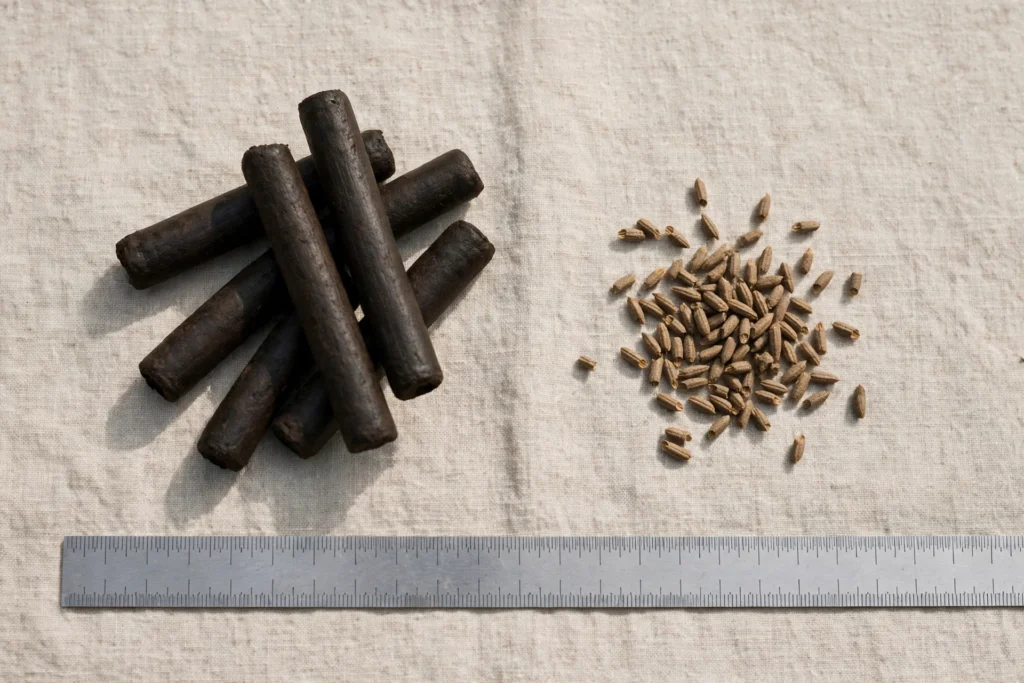
Tell raccoon scat from other droppings by size, shape, and contents: 2–3 inch dark tubes with blunt ends and visible seeds or berries means raccoon; small pointed pellets mean rat or mouse; larger soft tapered droppings mean dog; buried droppings mean cat. The latrine pattern — a pile in one spot — confirms raccoon.
Use this table before deciding what you are dealing with, because the cleanup and the risk are different for each animal.
| Dropping | Size | Shape | Contents | Buried? |
|---|---|---|---|---|
| Raccoon scat | 2–3 in long, ½ in wide | Tubular, blunt ends, segmented | Berries, seeds, fur, insect parts | No — piled in a latrine |
| Dog | 3–6 in, thicker | Soft, tapered ends | Kibble, undigested food | No |
| Cat | 1–2 in | Firm, tapered | Fur, small bones | Usually buried |
| Rat | ½–¾ in | Small pellets, pointed ends | Grain, seeds | No |
| Squirrel droppings | ⅜ in | Small pellets, rounded ends | Seeds, nuts | No |
| Opossum | 1–3 in | Similar tubes, tapered ends | Fruit, insects | No — but no latrine habit |
The opossum is the closest lookalike, and the difference is the latrine: opossums scatter their droppings, while raccoons pile them in one spot. If you find a single dropping, it could be either. If you find a pile that keeps growing in the same place, it is raccoons.
Is Raccoon Scat Dangerous?
Yes. Raccoon scat can carry raccoon roundworm eggs, which survive in soil for years and can cause serious illness if swallowed — especially in children, who put hands and soil in their mouths. It can also carry leptospirosis bacteria and, rarely, rabies virus in the animal’s saliva, though rabies does not survive in dried droppings.
Roundworm is the main risk, and it is a stubborn one: the eggs are not killed by cold, by most household cleaners, or by time — they can stay infective in soil for years. That is why the cleanup rules below matter, and why a latrine in a garden or play area is not a job to put off. The risk is low for a healthy adult who follows the safety steps, and much higher for a small child who plays in contaminated soil. If a child has played near a latrine, wash their hands and clothes thoroughly and call a doctor if they develop a fever, a cough, or eye problems in the following weeks.
How Do You Clean Up Raccoon Scat Safely?
Clean up raccoon scat safely by wearing gloves and a mask, wetting the droppings down first so no dust rises, picking them up with a shovel into a sealed bag, and disinfecting the area with boiling water — never sweep or vacuum dry droppings, and never use a household vacuum on them.
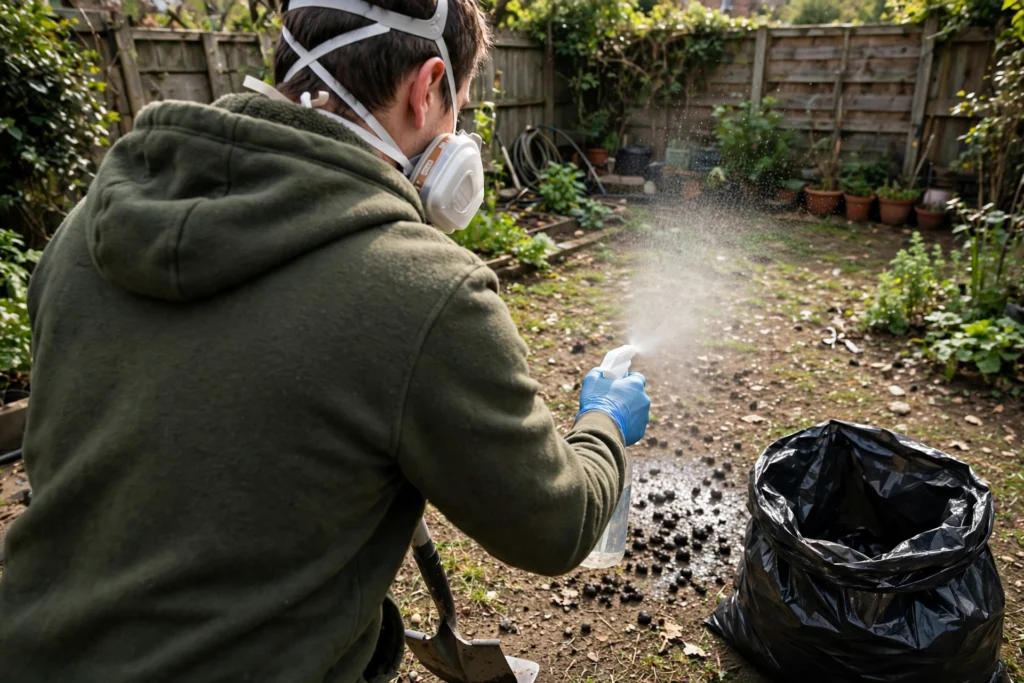
Follow these steps in order:
- Gear up. Wear disposable gloves, an N95 mask or respirator, and old clothes you can wash in hot water. Keep children and pets out of the area.
- Wet it down. Mist the droppings with water from a spray bottle until damp. Dry droppings turn to dust when disturbed, and the dust is how roundworm eggs get into the air.
- Pick it up. Use a shovel or an inverted plastic bag to lift the droppings, and put them straight into a heavy-duty trash bag. Do not use a broom, and never use a vacuum — it spreads the eggs through the air and contaminates the machine.
- Seal and dispose. Double-bag the waste and put it in an outdoor trash bin. Wash the shovel with boiling water.
- Disinfect the spot. Pour boiling water over the latrine area — heat is one of the few things that kills roundworm eggs. Household bleach does not reliably kill them. For soil, removing the top 2–3 inches and replacing it is the surest option.
- Wash up. Wash your hands with soap and hot water, launder your clothes in hot water, and shower before touching food or children.
For an attic latrine, do not attempt the cleanup yourself. Disturbing droppings in an enclosed space fills the air with contaminated dust, and the insulation underneath may need to be removed and replaced — that is professional work.
How Do You Stop Raccoons From Coming Back?
Stop raccoons by removing what attracts them: secure trash cans with locking lids, bring pet food indoors at night, pick up fallen fruit, close off the attic and crawl space, and cap the chimney. Then clean the latrine site so the scent that marks it is gone.
Raccoons return to a latrine because the scent tells them it is a safe spot. Cleaning with boiling water and removing the contaminated soil breaks that signal. After cleanup, seal the entry points: raccoons can squeeze through a gap of 4 inches, so check the roofline, the vents, and the chimney cap, and cover vents with heavy-gauge hardware cloth. Motion-activated lights help a little, but they are not a solution on their own — a raccoon that has learned your yard has food will ignore a light. Removing the food is what works.
When Should You Call a Professional?
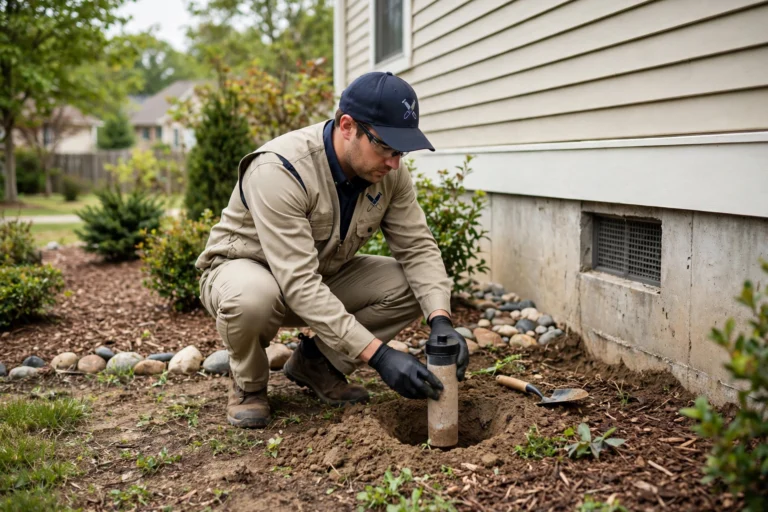
Call a professional if the latrine is in an attic, a crawl space, or inside the house; if the pile is large or has been there for weeks; if anyone in the household is pregnant, very young, or immunocompromised; or if raccoons keep returning after you have sealed the entry points and removed the food.

An attic latrine is the clearest call-a-pro case: the cleanup needs respirators, the insulation may be contaminated, and the raccoons themselves may still be living there — and a trapped raccoon in an attic is a job for someone with the right equipment and the local wildlife rules. A licensed pest professional can also find the entry point you missed, because raccoons use the same routes night after night, and a route you cannot see is the one they will use again.
FAQ
How long do raccoon roundworm eggs survive in soil?
Years. The eggs are extremely hardy — cold, drying, and most cleaners do not kill them. Boiling water and removing the contaminated soil are the reliable options.
Can you get sick from touching raccoon scat?
Yes, if roundworm eggs get onto your hands and then into your mouth. Always wear gloves, wash your hands with soap and hot water after any contact, and never touch droppings barehanded.
Does bleach kill raccoon roundworm eggs?
Not reliably. Bleach disinfects bacteria but does not reliably kill roundworm eggs. Boiling water works, and so does removing and replacing the top few inches of soil.
How do I know if raccoons are living in my attic?
Listen at night for heavy thumping, rolling, or chattering sounds, look for droppings near the insulation, and check for a latrine on the roof or near the entry point. Raccoons are nocturnal, so daytime silence means nothing.
Will raccoons leave on their own?
Rarely, while the yard still offers food and shelter. Removing trash access, pet food, and fallen fruit is what makes them move on — and sealing the attic entry is what keeps them out.
Is it safe to let my dog near a raccoon latrine?
No. Dogs can pick up roundworm from contaminated soil, and they can also be injured by a cornered raccoon. Keep dogs away from latrines and wash their paws if they walk through the area.
Do cayenne, ammonia, mothballs or coyote urine keep raccoons away?
Mostly, no. Home-remedy deterrents fail once raccoons learn your yard has food — they step over cayenne, ignore mothballs, and get used to coyote urine within days. What actually works is removing trash, pet food, and fallen fruit, and sealing the entries. Motion lights help only a little, and only before the raccoons get comfortable.