Thanksgiving Plumbing Tips: Stop the Holiday Clogs Before They Start
Thanksgiving plumbing tips are the least glamorous part of hosting — and the ones you will be most grateful for when the sink stays clear through dinner. The day after Thanksgiving is the busiest day of the year for plumbers: calls jump about 50%, and in one Angi survey 40% of post-Thanksgiving plumbing problems were clogged kitchen sinks. Nearly all of them were preventable.
The pattern is always the same. A kitchen drain that coped fine all year meets a turkey’s worth of grease, a mountain of potato peels, a disposal run like a trash can, a dishwasher going nonstop, and a guest bathroom doing a month of flushes in a single day. A drain that is 70% blocked works fine for a family of three — add twelve guests, and that last 30% disappears, usually right around dessert. If a drain is already slow today, fix it now — our guide on how to unclog a kitchen sink walks through the basics before the holiday rush.
TL;DR
Grease never goes down the drain. Cool it, pour it into a can or jar, and trash it. Hot water does not help.
Scrape plates into the trash first. Potato peels, turkey skin and bones, rice, pasta, stuffing, celery, and onion skins stay out of the disposal.
Run the disposal with cold water before, during, and for 15–20 seconds after grinding. Feed it a little at a time.
Space out water use. Run the dishwasher after the sink drains freely, and leave about 10 minutes between showers.
Guest bathrooms: only toilet paper gets flushed. Put a plunger and a trash can in every bathroom.
Know your shutoffs before guests arrive, and keep a sink plunger handy. If more than one drain backs up at once, stop using water and call a plumber.
What Are the Best Thanksgiving Plumbing Tips for the Week Before?
The best Thanksgiving plumbing tips start a week before the feast, not on the day itself, because most holiday clogs were building for weeks and the holiday is simply the day the pipe runs out of room. Walk through this list the weekend before Thanksgiving:/
- Run every sink, tub, and shower for a full minute. A slow drain, gurgling in a nearby fixture, or a bad smell means a partial clog is already there. Clear it now, while a plumber charges a normal rate — not on Brown Friday.
- Flush every toilet and watch it refill. A weak flush or a toilet that keeps running is easy to fix now and miserable to fix with a full house. Check the guest bathroom first.
- Look under every sink for drips, damp spots, or a musty smell, and put a small bucket under any joint you cannot fix before the holiday.
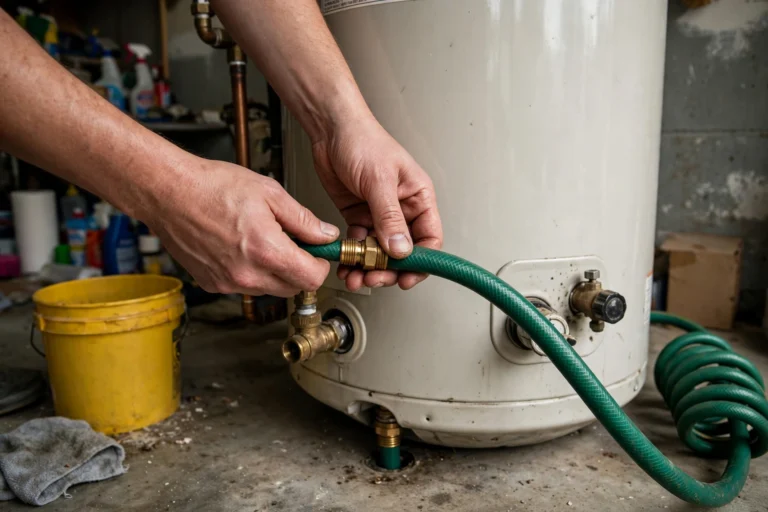
- Find your shutoffs. Locate the valve behind each toilet and under each sink, plus your home’s main water shutoff, and make sure each one turns. If a toilet overflows mid-dinner, the valve behind it stops the water in seconds.
- Test the garbage disposal with cold water and a few ice cubes. If it hums, rattles, or smells, deal with it now — not when it is full of turkey scraps.
- Stock the toolkit. One sink plunger, one toilet plunger, a drain strainer, a lidded can or jar for grease, paper towels, and a bucket — kept where you can grab them without a search.
PRO TIP
Put a plunger next to every toilet before guests arrive — especially the guest bathroom. Guests will quietly deal with a slow toilet themselves rather than ask you for one.
Can You Pour Turkey Grease Down the Drain?
Thanksgiving is hard on plumbing because it crams a week’s worth of cooking, dishwashing, flushing, and showering into one afternoon, through pipes that may already be partly narrowed by grease, scale, or roots — which is why plumbers call the day after Thanksgiving Brown Friday, their busiest day of the year.
No — never pour turkey grease, drippings, gravy, butter, or cooking oil down the drain, even with hot water running, because hot water only carries the grease further down the line before it hardens in a colder section of pipe where it is much harder to reach. A garbage disposal does not stop grease buildup either; it only chops food, and grease passes straight through it.
Here is the routine that works, every time:
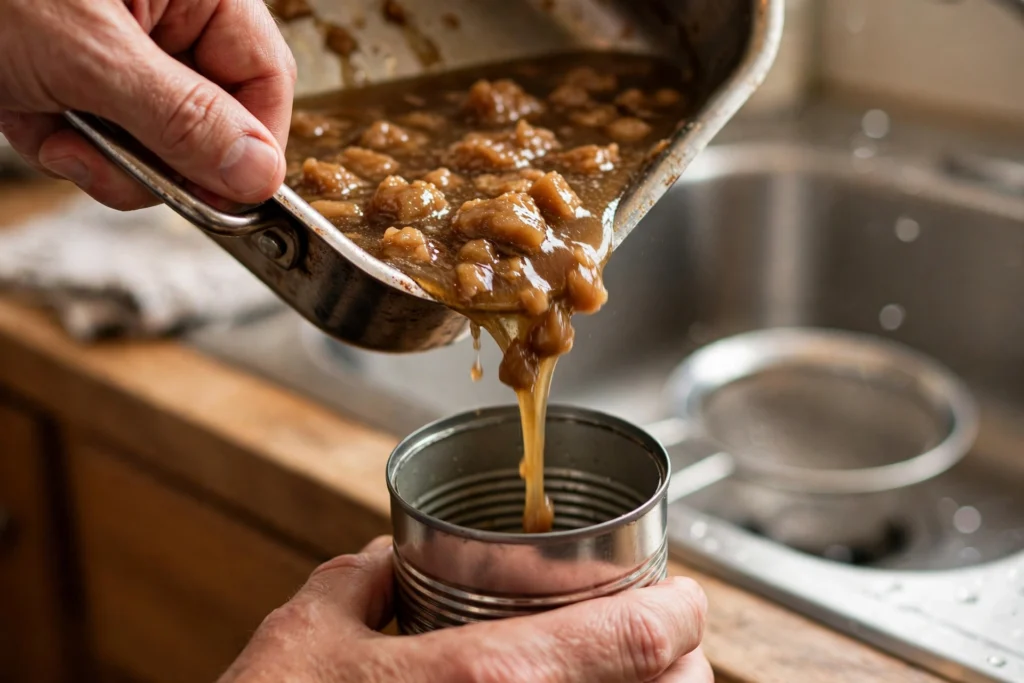
- Set a container by the stove before you start cooking. An empty coffee can, a metal can, or a lidded jar — before you pick up a hot roasting pan, not while you are holding one.
- Pour, cool, toss. Let drippings and frying oil cool in the pan, pour them into the container, let them set, and put the whole thing in the trash.
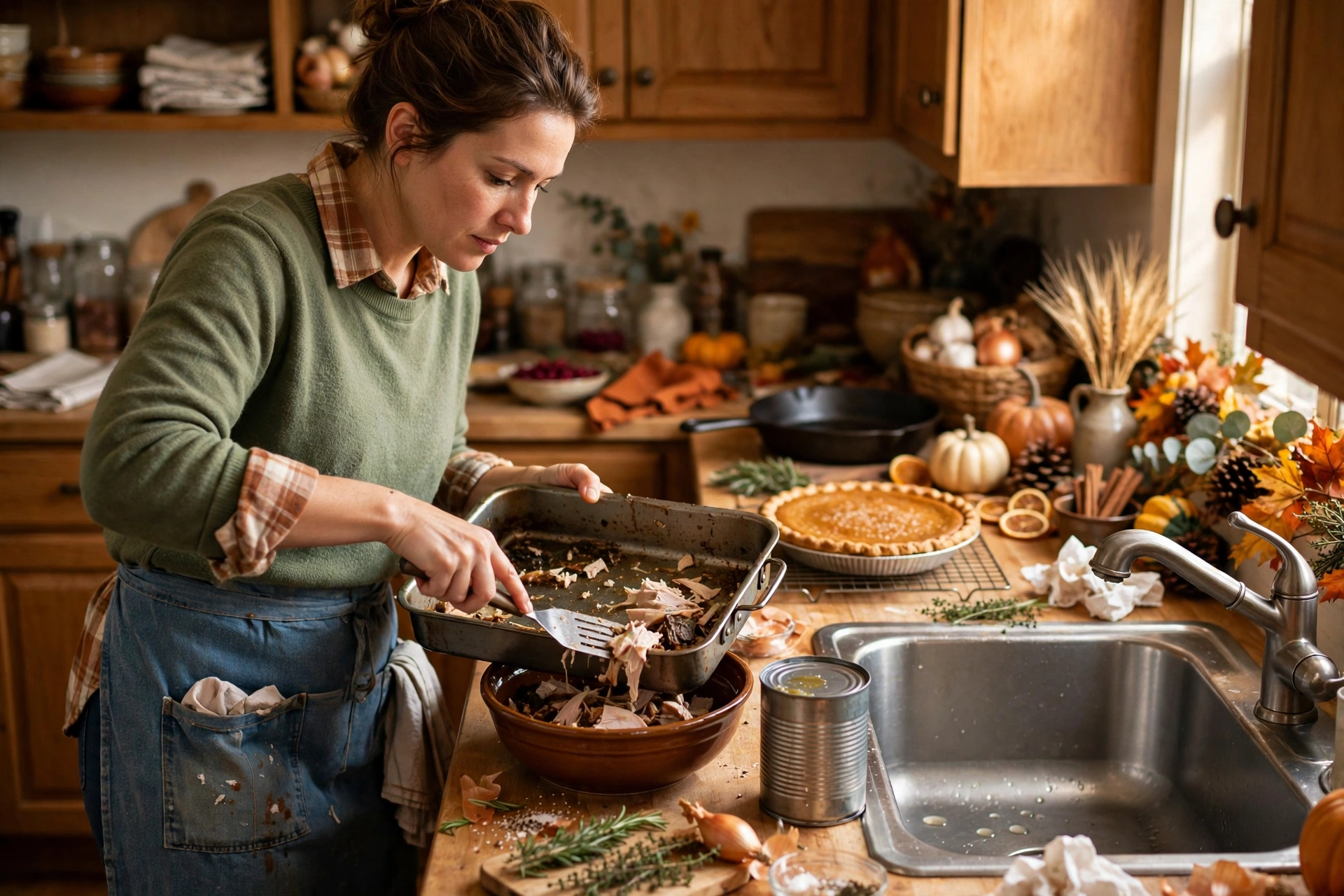
- Wipe before you wash. Wipe greasy roasting pans, baking sheets, and plates with a paper towel before they go in the sink or dishwasher. The towel goes in the trash.
- Soak up small amounts. A little oil left in a pan can be mixed with paper towels or used coffee grounds before it goes in the bin.
If you are deep-frying a turkey, you will have gallons of oil to deal with. Let it cool completely, strain it, seal it in a container, and check with your trash service or local hazardous-waste site for disposal.
PRO TIP
Keep the grease can visible on the counter all day, not hidden in a cabinet. Cleanup helpers — especially guests who offer to wash up — will use whatever is in front of them.
What Should Never Go in the Garbage Disposal on Thanksgiving?
A garbage disposal grinds food small; it does not make it disappear, and everything it grinds still has to travel through the same narrow 1½-inch pipe. It is built for the small bits left on a plate, not for a holiday meal’s worth of leftovers. Keep this list on the fridge for anyone helping with cleanup:
| Holiday Food | Down the Disposal? | Do This Instead |
|---|---|---|
| Turkey drippings, fat, butter, cooking oil | No | Cool in a can or jar, then trash it |
| Potato and sweet potato peels | No | Peel over the trash or compost |
| Turkey skin and bones | No | Trash (bones jam the motor) |
| Rice, pasta, stuffing, bread | No | Scrape into the trash — they swell with water |
| Celery, asparagus, onion skins, corn husks | No | Trash or compost — fibers wrap the blades |
| Pumpkin pulp and stringy squash | No | Trash or compost |
| Coffee grounds and eggshells | Better not | Trash — they settle into heavy sludge |
| Fruit pits | No | Trash — too hard to grind |
| Small soft scraps, a little at a time | Yes | Cold water running the whole time |
How Do You Use a Garbage Disposal the Right Way on Thanksgiving?
Used correctly, a garbage disposal is a helpful tool during Thanksgiving cleanup. Used like a trash can with blades, it becomes one of the fastest ways to ruin the evening:
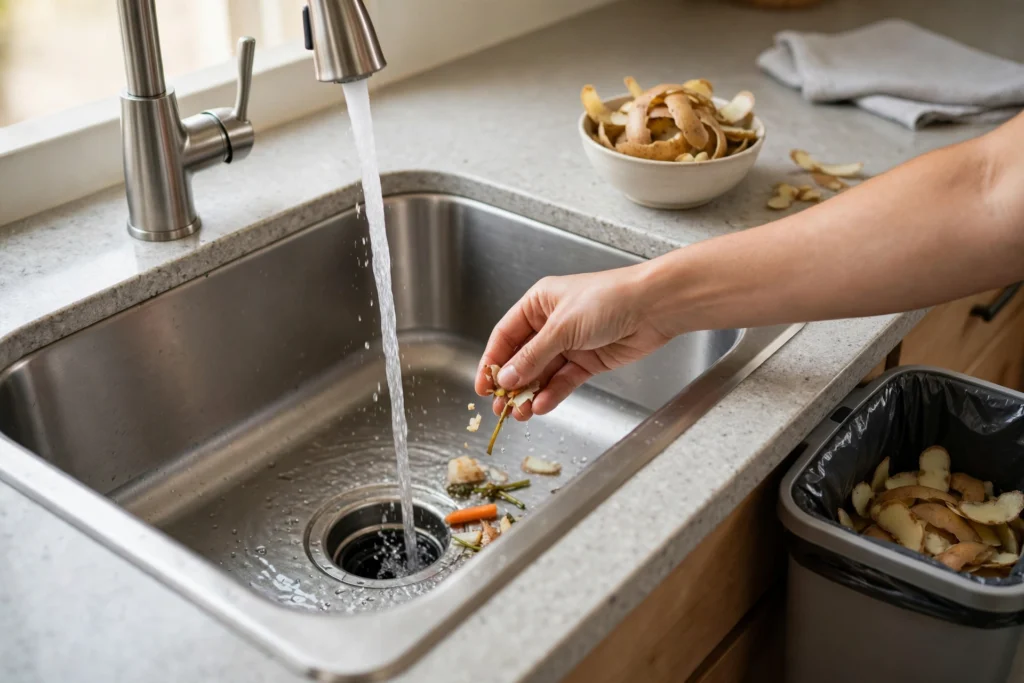
- Scrape plates into the trash first. The disposal should only handle what rinses off a plate, not the meal itself.
- Check for utensils. A stray fork or spoon can wreck a disposal in a second. Look before you switch it on.
- Turn on cold water first. Run cold water for a few seconds before you flip the switch. Cold water keeps any fat solid so it gets chopped up and carried away instead of coating the pipe.
- Switch the disposal on before adding food. Let it spin up, then feed scraps in small handfuls and let each batch clear before adding more.
- Keep the water running 15–20 seconds after the grinding stops. This flushes everything past the trap and into the main line.
- Do not run the disposal and the dishwasher at the same time. In most kitchens the dishwasher drains through the disposal. Let one finish before you start the other.
- Never put your hand inside. If it jams, switch it off and cut the power first — unplug it under the sink or flip its breaker.
How Do You Fix a Clogged Kitchen Sink on Thanksgiving?
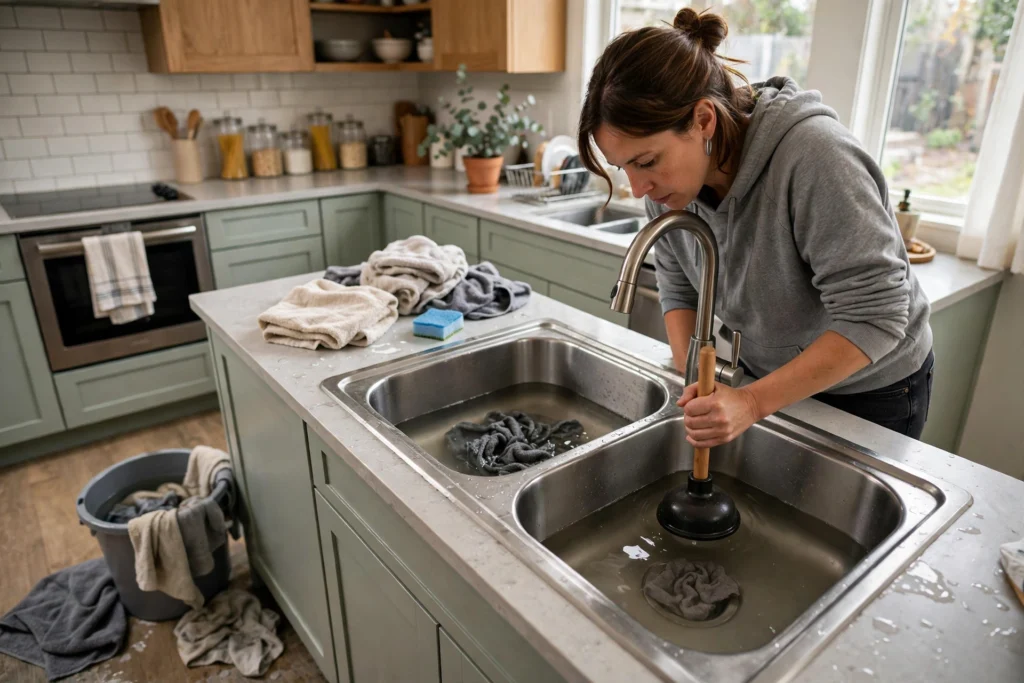
A clogged kitchen sink mid-feast feels like a disaster, but most holiday sink clogs are fixable in 15 minutes if you stay calm and work in order. The key rule: stop adding water first.
Step 1 — Stop running water, and don’t start the dishwasher. More water just raises the level. Turn the disposal off too; against a blocked drain it only stirs the water and heats the motor.
Step 2 — Work out whether it is a jam or a clog. A jam is in the grinding chamber: the motor hums or trips out and nothing spins, because something hard is wedged against the plate. A clog is past the disposal, in the P-trap or the drain line: the disposal runs and sounds normal, but the water just swirls and comes back up.
Step 3 — If it hums but doesn’t spin (a jam): switch it off immediately — running a jammed motor can trip its overload protector. Cut the power by unplugging the unit under the sink or flipping its breaker. Pull out anything visible with tongs — never your hand. Then fit the quarter-inch hex key into the socket on the bottom center of the disposal and work it back and forth until the plate turns freely. Press the red reset button, restore power, and try again with cold water running.
Step 4 — If the disposal runs fine but the water won’t drain (a clog): bail water into a bucket until two or three inches remain. Use a flat-bottomed sink plunger, not the toilet plunger. On a double sink, block the other drain with a wet rag or stopper held down firmly. Plunge firmly for 15–20 strokes, then lift and check the drain.
Step 5 — Skip the chemical drain cleaner. Don’t pour it into a sink full of standing water or into a disposal: it can’t reach the clog through the water, it attacks rubber seals, and the next person to plunge that sink gets splashed with caustic water. If you already poured some in, tell whoever comes to fix it. Baking soda plus vinegar can help a slow drain, but it won’t clear a fully blocked one.
Step 6 — Know when to stop. If the clog won’t move after plunging, or water is coming up in another fixture, the blockage is further down the line. Our guide on how to unclog a drain covers the next steps, but on a holiday, a plumber is the faster call.
Why Is the Dishwasher Backing Up Into the Sink?
When the dishwasher backs up into the sink, the problem is almost always a shared drain line that is partly blocked: in most kitchens the dishwasher drains through the garbage disposal into the same trap as the sink, and if that line is narrowed by grease or food, the water takes the easiest path — back up into the sink.
- Run the dishwasher only after the sink drains freely. If the sink is slow, the dishwasher will make it worse. Fix the sink first.
- Space out the loads. Don’t run the dishwasher during the big cleanup while the disposal is also working. Let the disposal finish, then start the dishwasher.
- Scrape dishes before loading. Food scraps on plates end up in the same drain line.
- If water backs up, stop the dishwasher. Bail the sink, plunge as described above, and don’t restart the dishwasher until the sink drains normally.
If the dishwasher and the sink back up together, and a toilet or tub is also slow, the blockage is in the main line, not the kitchen. Stop using water and call a plumber.
How Do You Keep Guest Toilets From Clogging With a Full House?
Guest toilets clog on Thanksgiving for two reasons: far more flushes than usual, and guests flushing things that should never go in a toilet. A house rule, set up quietly in advance, prevents almost all of it.
- Only the 3 P’s get flushed: pee, poop, and paper. Everything else — wipes (even ones labeled “flushable”), paper towels, tissues, dental floss, cotton swabs, and hygiene products — goes in the trash. “Flushable” wipes don’t break down like toilet paper. The Responsible Flushing Alliance’s 2026 survey found 45% of people admitted flushing something they knew they should not.
- Put a lidded trash can in every bathroom, in plain sight. A can tucked inside a cabinet gets ignored; a can sitting in a corner gets used. Empty it before guests arrive.
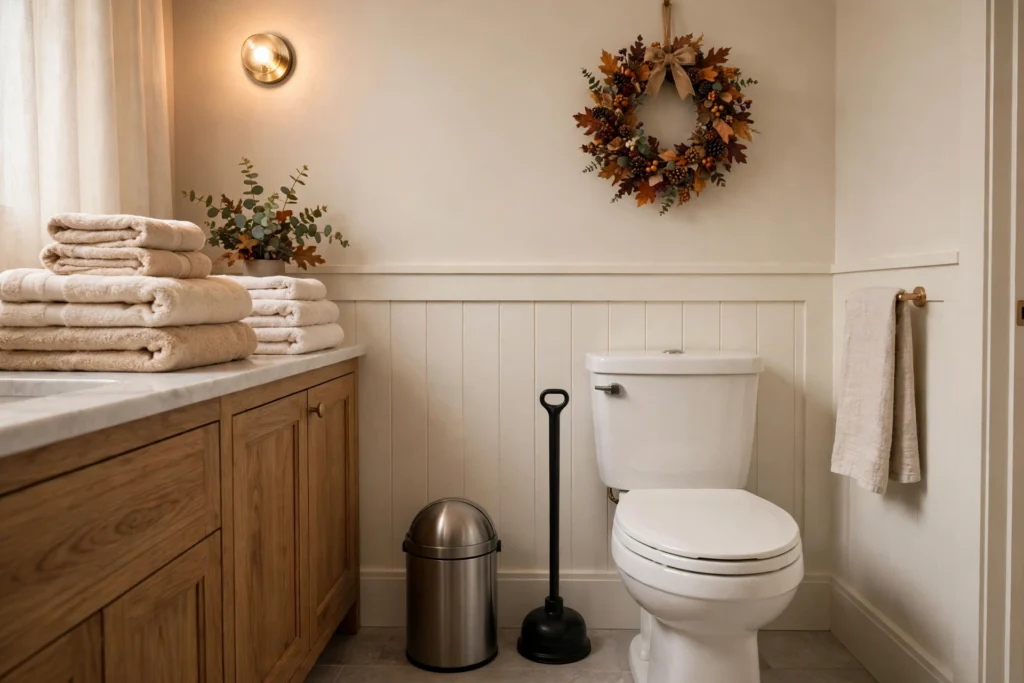
- Put a plunger next to every toilet. Guests would rather fix a slow toilet quietly than come and ask for one.
- Test-flush the guest toilet the day before. A weak flush now is a clog waiting for six extra guests.
- If a toilet does clog: stop flushing — a second flush is what sends water over the rim. Shut the valve behind the toilet if the water keeps rising, then plunge with firm, steady strokes. If the water level doesn’t drop after several tries, leave it and call a plumber.
How Do You Keep the Water Heater and Showers Running for Overnight Guests?
Overnight guests stress the water heater as much as the drains: back-to-back showers can drain a standard tank fast, and a cold shower at 7 a.m. is the kind of Thanksgiving memory nobody wants.
- Space showers about 10 minutes apart, and stagger the big water jobs. A standard 40-gallon tank needs roughly 30–60 minutes to fully reheat after heavy use, so don’t run the dishwasher, the washing machine, and the morning showers at the same time.
- Put drain strainers in the showers. A mesh strainer catches hair before it reaches the drain, and with four or five people showering in a row, hair is what turns a slow shower drain into standing water. Clean the strainer between showers.
- Turn the water heater up slightly — but not past 120°F. A small bump helps it keep up. Never go above 120°F (49°C) — hotter water scalds, especially children and older guests.
- Check for low water pressure before guests arrive. If the shower is already weak, it will feel worse with a full house. Our guide to low water pressure causes and fixes covers the common culprits.
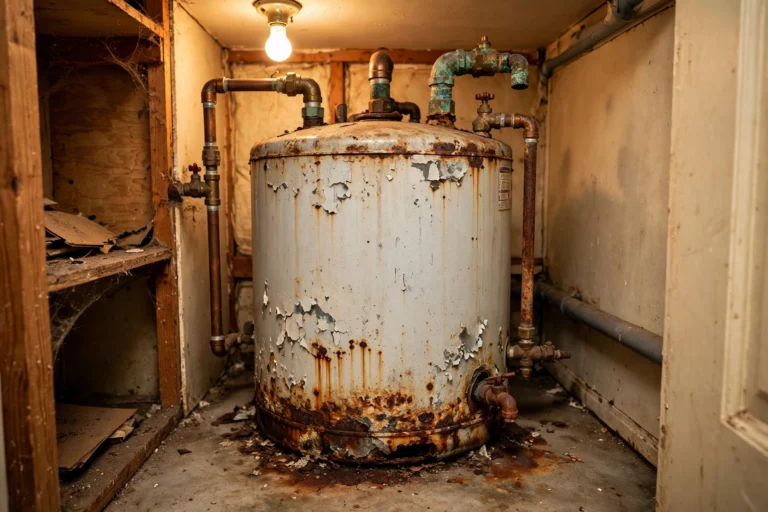
- Know the warning signs: rusty water, rumbling or popping sounds, or water that never gets fully hot. Any of those before the holiday means calling a plumber now, not a cold shower for your guests later.
What About Frozen or Cold Pipes Over Thanksgiving Weekend?
Thanksgiving falls in late November, and in much of the country that means the first real cold snap of the season — often arriving exactly when the house is full of guests. A frozen pipe can split and flood a home, and the first sign is often a faucet that gives nothing at all.
- Know where your pipes are exposed. Pipes in unheated garages, crawl spaces, attics, and exterior walls freeze first. Open the cabinet doors under kitchen and bathroom sinks on exterior walls so warm house air reaches the pipes.
- Keep the heat on and let a faucet drip on the coldest night. Don’t turn the thermostat down at night with guests in the house — a steady 65°F or higher protects pipes. A slow drip from the faucet furthest from the main line keeps water moving and relieves pressure.
- Disconnect outdoor hoses now. A hose left connected traps water in the outdoor faucet, which freezes, expands, and can crack the pipe inside the wall.
- If a pipe freezes: open the faucet it serves, then warm the pipe gently with a hair dryer, a heating pad, or warm towels — never an open flame or a torch. If a pipe has already burst, shut off the main water supply immediately. Our guide on how to prevent frozen pipes covers the full winter routine.
PRO TIP
The morning after Thanksgiving, do a 5-minute walk-through before the house empties: look under every sink, around every toilet base, and behind the washing machine for water, and sniff for musty or sewage smells. A small leak caught on Friday morning is a mop-up; the same leak found on Monday is water damage.
How Much Does a Thanksgiving Plumbing Problem Cost?
Prevention is cheap; a holiday emergency call is not. The table below gives rough planning estimates — not quotes — and real prices vary by city, time of day, and how bad the clog is. Holiday and after-hours calls can cost up to three times a normal visit.
| Problem | Typical DIY Cost (rough) | Typical Pro Cost (rough) | Notes |
|---|---|---|---|
| Sink plunger + drain strainer | $15–$30 | — | Buy before the holiday |
| Clogged kitchen sink, plunged out | $0 | $150–$300 | Holiday rate can be higher |
| Jammed garbage disposal reset | $0 | $150–$250 | Often just the hex key + reset |
| Garbage disposal replacement | $200–$450 parts + labor | $300–$600 total | If the motor is burned out |
| Clogged guest toilet | $0 | $150–$300 | Second flush causes the overflow |
| Main sewer line backup | — | $300–$800+ | Camera inspection may add $150–$350 |
| Burst frozen pipe + water damage | — | $1,000–$5,000+ | Damage repair dwarfs the pipe fix |
All dollar figures are rough planning estimates, not quotes. Get a real quote from a licensed plumber in your area before committing to a repair. A $20 plunger and a $5 can for grease are the cheapest insurance on this list — and a burst pipe, the most expensive item, is also the most preventable.
When Should You Call a Plumber Instead of DIY?
Some Thanksgiving plumbing problems are homeowner jobs and some are pro jobs, and the line between them is not just skill — it is risk. A burst pipe, a sewer backup, or water coming through a ceiling is a pro job, full stop. Those are the calls where waiting makes the damage worse and the bill bigger. For Dallas-area homes, water damage restoration can assess the damage once the leak is stopped. The disposal smells like burning, trips the breaker repeatedly, or leaks from the bottom? That is a failed seal or a dead motor — also a pro job.
Emergency visits typically run $100–$500, with most around $170 — but holiday calls can cost up to three times a normal one. That is the real price of waiting until Brown Friday.
Brown Friday is the day after Thanksgiving, Friday, November 27 in 2026, and the busiest day of the year for plumbers. Roto-Rooter reports about 50% more service calls that day than on an average Friday, mostly for clogged kitchen sinks, jammed disposals, main sewer line blockages, and overflowing toilets.
No. Hot water does not stop grease from clogging your drain — it only moves the grease further down the pipe before it cools and hardens. Let turkey drippings and cooking oil cool, pour them into a can or jar, and put the container in the trash.
Never put turkey grease or drippings, potato peels, turkey skin or bones, rice, pasta, stuffing, celery, onion skins, coffee grounds, eggshells, or fruit pits in a garbage disposal. Potato peels turn into paste, rice and pasta swell with water, fibrous scraps wrap around the disposal, and bones jam the motor. Only small, soft scraps go in — a little at a time, with cold water running.
A hum without grinding usually means the plate is jammed by something hard, like a bone or a utensil. Switch it off immediately, cut the power by unplugging it or flipping its breaker, and never put your hand inside. Pull out anything visible with tongs, then work the hex key in the socket on the bottom of the unit back and forth until the plate turns freely, and press the red reset button.
First, stop running water and don’t start the dishwasher. Bail out standing water, then use a flat-bottomed sink plunger — blocking the other basin on a double sink with a wet rag. Don’t pour chemical drain cleaner into a disposal or a sink full of water. If plunging doesn’t clear it, or another fixture backs up too, call a plumber.
Flush only toilet paper — no wipes, even “flushable” ones, no paper towels, floss, or hygiene products. Put a lidded trash can in plain sight in every bathroom and a plunger next to every toilet. If it clogs, don’t flush a second time — that is what sends water over the rim.
No. In most kitchens the dishwasher drains through the disposal into the same line, so running both at once pushes too much water through a line that may already be narrowed by grease. Let the disposal finish, then start the dishwasher — and only run the dishwasher after the sink is draining freely.
Open cabinet doors under sinks on exterior walls, keep the heat at 65°F or higher overnight, disconnect outdoor hoses, and let a faucet drip on the coldest night. If a pipe freezes, open the faucet and warm the pipe gently with a hair dryer — never an open flame. If a pipe bursts, shut off the main water supply immediately and call a plumber.
Final Thought
Thanksgiving plumbing tips boil down to one habit: keep the wrong things out of your drains, and give your plumbing a little slack on the busiest day of the year. Scrape plates into the trash, can the grease, run the disposal gently with cold water, space out the dishwasher and the showers, and put a plunger where your guests can find it. Twenty minutes of prep beats a holiday-rate emergency call every time.