How to Get Rid of Palmetto Bugs
To learn how to get rid of palmetto bugs, start by sealing the gaps they walk through, placing large-roach bait stations around the perimeter and in damp rooms, and removing the moisture and mulch that draw them close. Most homes see far fewer palmetto bugs within two to three weeks once entry points are closed and bait is working.
Few things ruin a quiet evening faster than a two-inch cockroach sprinting across the kitchen floor, then taking off. In the Southeast, that bug has a polite nickname: the palmetto bug. The name sounds almost charming; the insect is not. It is big, fast, reddish-brown, and, worst of all, it flies. If one has ever buzzed straight toward your head at 11 p.m., you already know why this is the pest story Southern homeowners tell at cookouts — and why searches for how to get rid of palmetto bugs spike every summer.
Here is the good news. Learning how to get rid of palmetto bugs is very doable, and a palmetto bug problem is a different — and much easier — problem than a German cockroach infestation. Palmetto bugs live outside and wander in by accident, or because rain, heat, or a dry spell pushed them toward your house. That means how to get rid of palmetto bugs comes down mostly to the outside of your home: the doors, the weep holes, the mulch beds, and the damp corners where they hide during the day. You do not need to fumigate your kitchen — close the doors they use and put bait where they travel.
If you are seeing small, half-inch roaches in your kitchen cabinets instead, that is a different insect and a different fight — see our guide on how to get rid of German cockroaches. German roaches breed indoors by the hundreds, while palmetto bugs are outdoor visitors that usually arrive one or two at a time. Knowing which one you have changes everything, so this guide starts with identification.
TL;DR — How to Get Rid of Palmetto Bugs in Brief
- Identify first: a palmetto bug is a 1.5–2 inch reddish-brown American (or smokybrown) cockroach; small roaches mean German cockroaches.
- Seal entry points: door sweeps, fresh weatherstripping, copper mesh in weep holes, repaired screens, caulked pipe gaps.
- Bait, don’t just spray: large-roach bait stations around the perimeter and in damp rooms beat indoor spraying.
- Dry it out: fix leaks, run a dehumidifier in damp rooms, keep mulch and firewood away from the foundation.
- Clean up the yard: trim branches touching the roof, clear leaf litter, and store firewood off the ground and away from the house.
- Call a pro if you see them daily, in several rooms, or after weeks of DIY.
How to Get Rid of Palmetto Bugs in 7 Steps
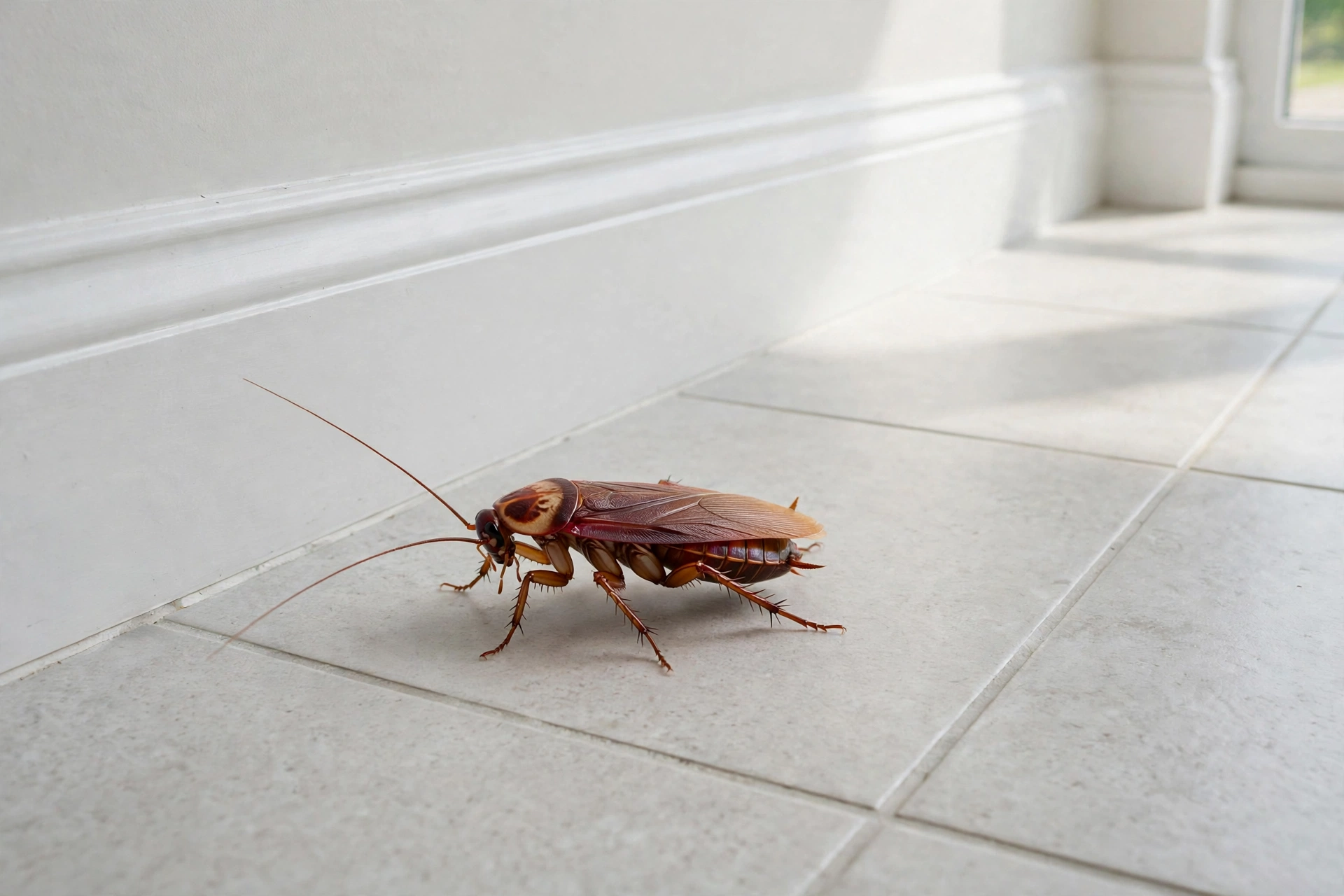
Learning how to get rid of palmetto bugs comes down to seven steps in order: identify the insect, find how it gets in, seal those gaps, place bait where it travels, dry out damp areas, clean up the yard, and watch for two to three weeks. Skip the sealing and baiting, and the bugs simply keep coming.
Step 1: Confirm what you are dealing with
Before you buy anything, confirm the bug is actually a palmetto bug — the first step in how to get rid of palmetto bugs is knowing exactly what you are fighting. Catch one (a glass and a stiff card work fine) or take a clear photo and compare it with the table below. A 1.5–2 inch reddish-brown roach with visible wings is a palmetto bug; a half-inch tan roach in the kitchen is a German cockroach, and it needs a completely different plan.
Step 2: Walk the outside of your house at dusk
Palmetto bugs are most active at night — a fact that shapes how to get rid of palmetto bugs — but you can find their daytime hiding spots in daylight. Walk the perimeter and look for gaps under doors, cracked weatherstripping, torn screens, open weep holes, and pipe and cable gaps. Note the garage door seal too, then write down every gap — step 3 fixes them all in one pass.
Step 3: Seal every entry point
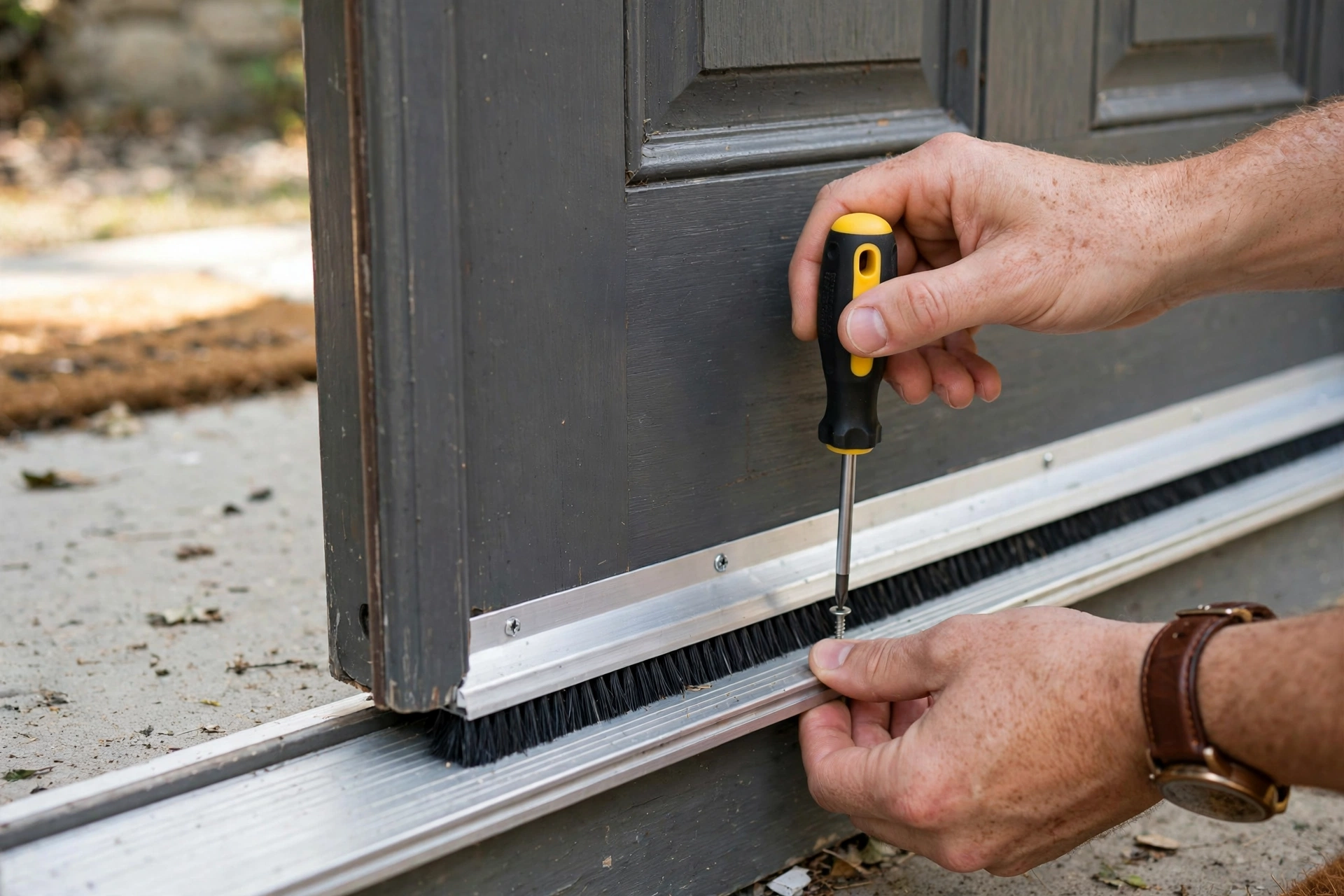
Sealing is the highest-value fix in any plan for how to get rid of palmetto bugs, so work through your list with the right material for each gap. Install door sweeps, replace flattened weatherstripping, push copper mesh (not steel wool, which rusts) into weep holes — never caulk them shut, they drain water out of brick walls — and caulk pipe and cable penetrations, repair torn screens, and seal the garage door gap. A door sweep costs roughly $10–$30, weatherstripping about $15–$40 per door (planning estimates, not quotes).
PRO TIP
Do the “light test” at night: have someone shine a flashlight from outside around each closed exterior door while you stand inside in the dark. Any light leaking through is a gap a palmetto bug can walk through — mark it with tape and fix it the next day.
Step 4: Place bait stations where they travel
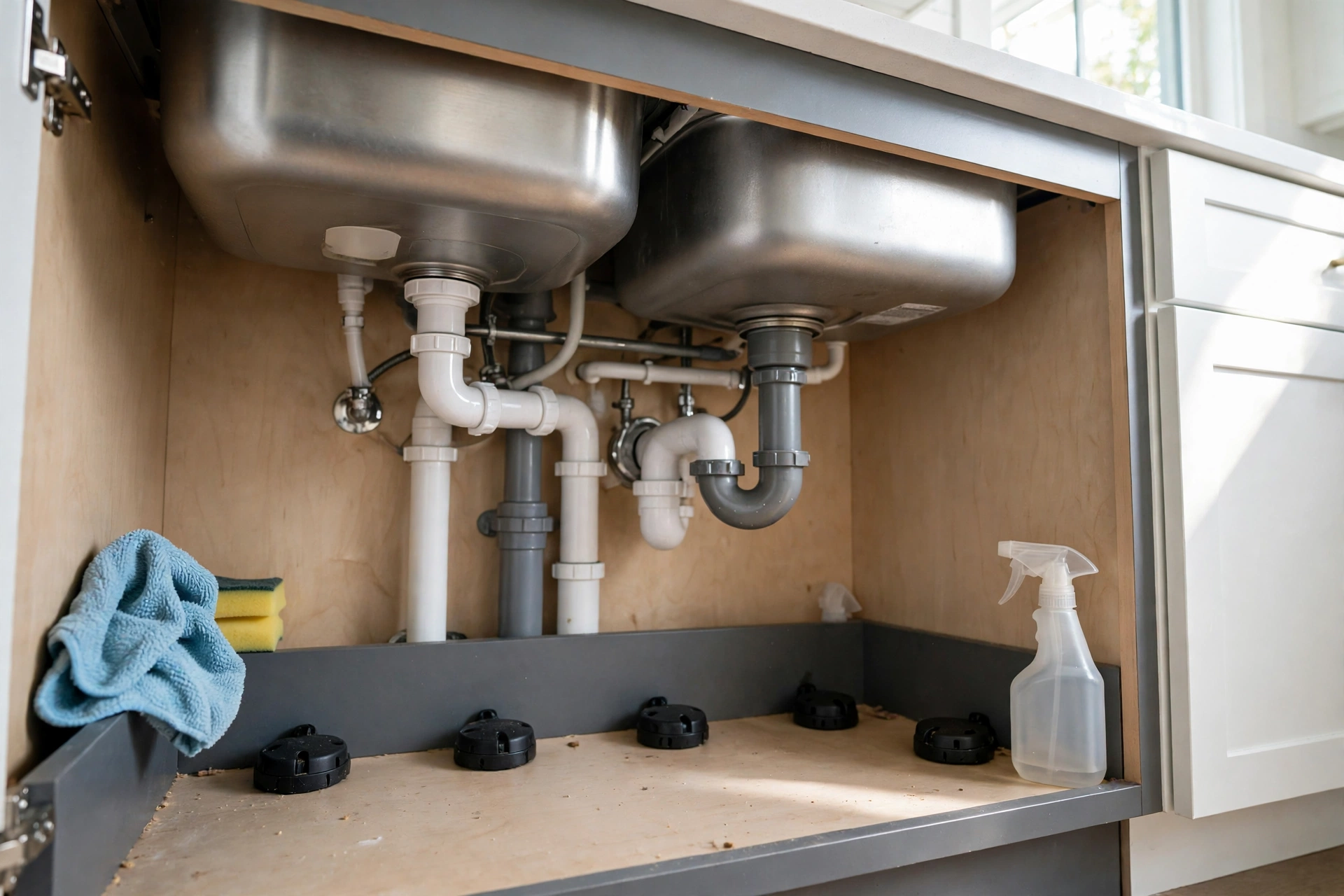
Put large-roach bait stations along the outside perimeter, near the foundation, and in the damp indoor spots palmetto bugs favour: bathrooms, laundry rooms, closets, under sinks, crawl spaces. Place them against walls and in corners, where roaches travel — bait placement is half of how to get rid of palmetto bugs. A pack costs roughly $10–$25 (planning estimates, not quotes). Add gel bait in cracks behind appliances and inside cabinet hinges, and replace bait every few months or when it is eaten or dried out.
Step 5: Use dusts in the voids they hide in
For wall voids, attic gaps, and the spaces behind baseboards, a light puff of boric acid or food-grade diatomaceous earth works well as a supporting step in how to get rid of palmetto bugs. Apply a thin, barely visible layer — a thick pile just gets avoided. Keep dusts away from food-prep surfaces and out of reach of children and pets; they support sealing, never replace it.
Step 6: Dry out the damp spots
Palmetto bugs need moisture, so drying out damp spots is a core part of how to get rid of palmetto bugs. Fix dripping faucets, sweating pipes, and slow drain leaks, run a dehumidifier in a damp basement or crawl space, keep indoor humidity under about 50 percent, and empty pet water bowls at night. A dry house is a house palmetto bugs walk past.
Step 7: Watch, count, and decide
Give the plan two to three weeks. Bait works slowly — roaches carry it back to their hiding spots before they die — so do not panic if you see one or two more in the first few days; no honest guide to how to get rid of palmetto bugs promises overnight results. Count sightings instead: falling numbers mean the plan is working, while daily sightings after three weeks, or bugs in several rooms at once, mean calling a professional.
What Is a Palmetto Bug, Really?
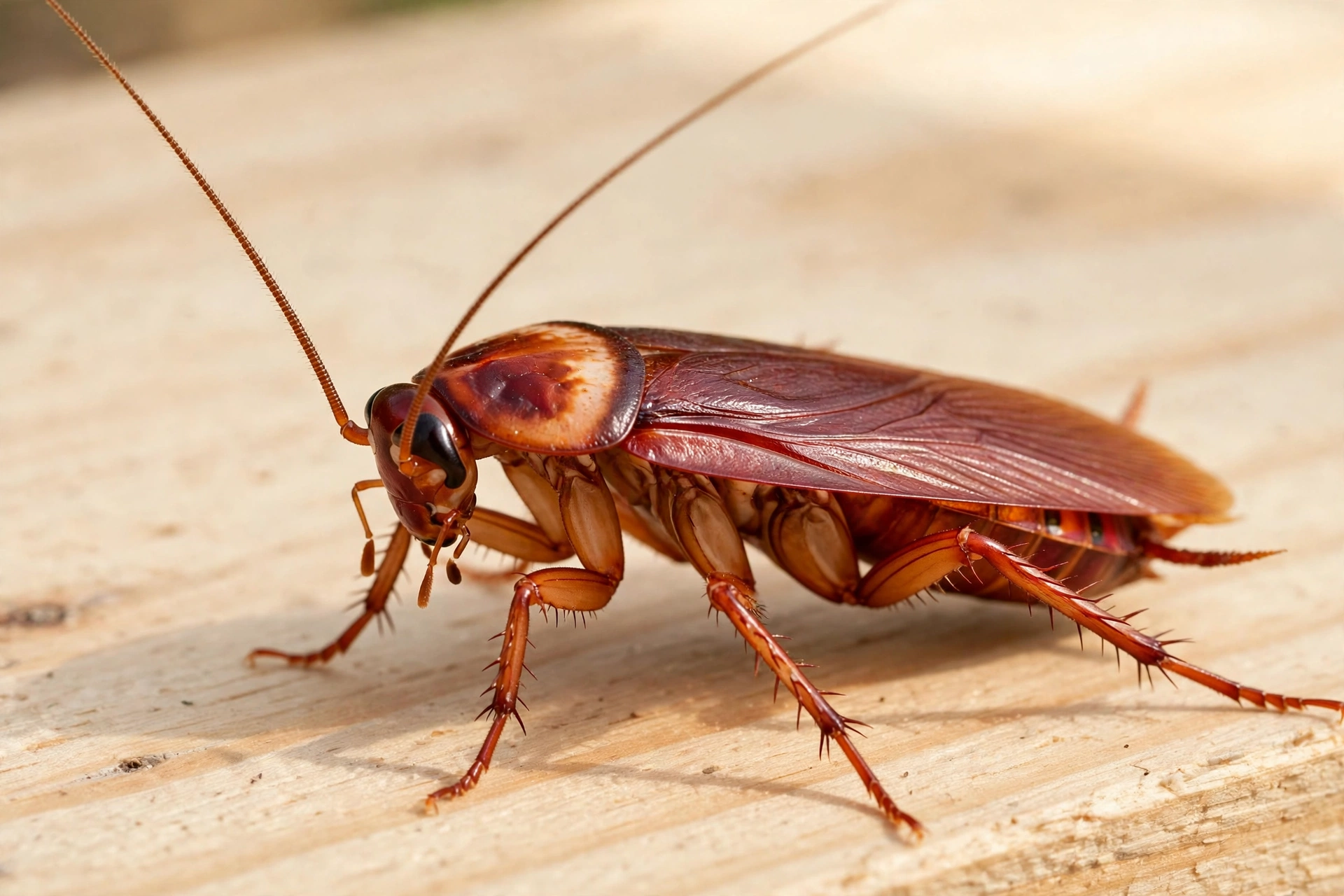
A palmetto bug is not a separate species at all — it is a regional nickname, used mostly in South Carolina, Georgia, Florida, and across the Gulf Coast, for a large outdoor cockroach, almost always the American cockroach and sometimes the smokybrown cockroach. The name comes from the palmetto trees the bugs live in and around.
The American cockroach is the largest common house-invading roach in the United States at 1.5–2 inches long, with a reddish-brown body, fully developed wings, and long antennae. It prefers warm, damp places: sewers, drains, mulch beds, palm trees, leaf litter, and crawl spaces. It does not want your pantry — it wants the damp, dark places near your house, and it comes inside when weather pushes it there. That tells you where to fight: outside, at the boundary of your home — and that outdoor focus is the key to how to get rid of palmetto bugs.
Smokybrown cockroaches look similar but darker, and the treatment is the same — telling them from German cockroaches matters more, since those small indoor breeders cause real infestations.
PRO TIP
If the bug you found is bigger than a quarter, it is almost certainly a palmetto bug, not a German roach — size alone settles most identification arguments in Southern homes.
Palmetto Bug vs American Cockroach vs German Cockroach: How to Tell Them Apart
Telling a palmetto bug from a German cockroach takes about ten seconds once you know what to check, and it is the first question any guide on how to get rid of palmetto bugs has to answer, because the two insects need opposite treatments. Use this table to identify your bug.
| Feature | Palmetto Bug (American Cockroach) | Smokybrown Cockroach | German Cockroach |
|---|---|---|---|
| Size | 1.5–2 inches — the big one | 1–1.5 inches | ½–⅝ inch — small |
| Colour | Reddish-brown with a pale yellow band behind the head | Dark mahogany brown, almost black | Light tan with two dark stripes behind the head |
| Where it lives | Outdoors: sewers, mulch, palm trees, drains | Outdoors: trees, gutters, woodpiles | Indoors: kitchens, bathrooms, appliances |
| Flight | Strong flier, especially on warm nights | Very strong flier, drawn to lights | Rarely flies, mostly runs |
| Breeding | Breeds outside; wanders in alone or in small numbers | Breeds outside, often in trees and shrubs | Breeds indoors — hundreds in one kitchen |
| Danger level | Carries bacteria, contaminates food; a nuisance and a health concern | Same as American — bacteria and allergens | The worst of the three — large indoor colonies, strong allergy and asthma trigger |
The key row is “where it lives.” A palmetto bug found indoors is a visitor from outside; a German cockroach found indoors is at home. That is why spraying the kitchen rarely solves a palmetto bug problem — the kitchen is not where they live — while baiting the perimeter does. German roach problems need an indoor-focused plan, covered in our guide to how to get rid of German cockroaches.
Why Do Palmetto Bugs Come Inside Your House?
Palmetto bugs come inside for three reasons: water, shelter from extreme weather, and food — in that order. Knowing which reason is driving them in is half of how to get rid of palmetto bugs, because it tells you which fix matters most.
Heavy rain is the number one trigger: palmetto bugs live in sewers, storm drains, and low mulch beds, and a hard rain floods those hiding spots. The bugs climb upward to escape the water, and the nearest dry, high ground is often your house — through a floor drain, a weep hole, or the gap under a door. If sightings spike right after a storm, rain is almost certainly the cause, and drain covers plus sealed gaps — the first moves in how to get rid of palmetto bugs after a storm — will help more than any spray.
Heat and dry spells push them inside too. When summer temperatures climb and mulch beds dry out, palmetto bugs move toward the cool, damp air leaking from your home — air conditioning is a magnet on a hot night, and they follow condensation around windows, pipes, and AC drains. That is why so many people first meet a palmetto bug in a bathroom or laundry room at night, and why moisture control belongs in every plan for how to get rid of palmetto bugs.
Firewood and cardboard boxes carry them in by hand, in a sense. A stack of firewood against the house is a palmetto bug apartment building, and every armload of logs can bring a hitchhiker indoors. Cardboard boxes in a damp garage are just as bad — roaches eat the glue in cardboard and hide in the corrugated layers. Part of how to get rid of palmetto bugs is simply not carrying them in yourself: bring firewood inside only as you burn it, and swap garage cardboard for sealed plastic bins.
Where Do Palmetto Bugs Get In?
Palmetto bugs get in through gaps most homeowners never notice, and finding those gaps is the highest-value hour you will spend learning how to get rid of palmetto bugs. Start with the most common entries, check them in this order, and fix every one you find.
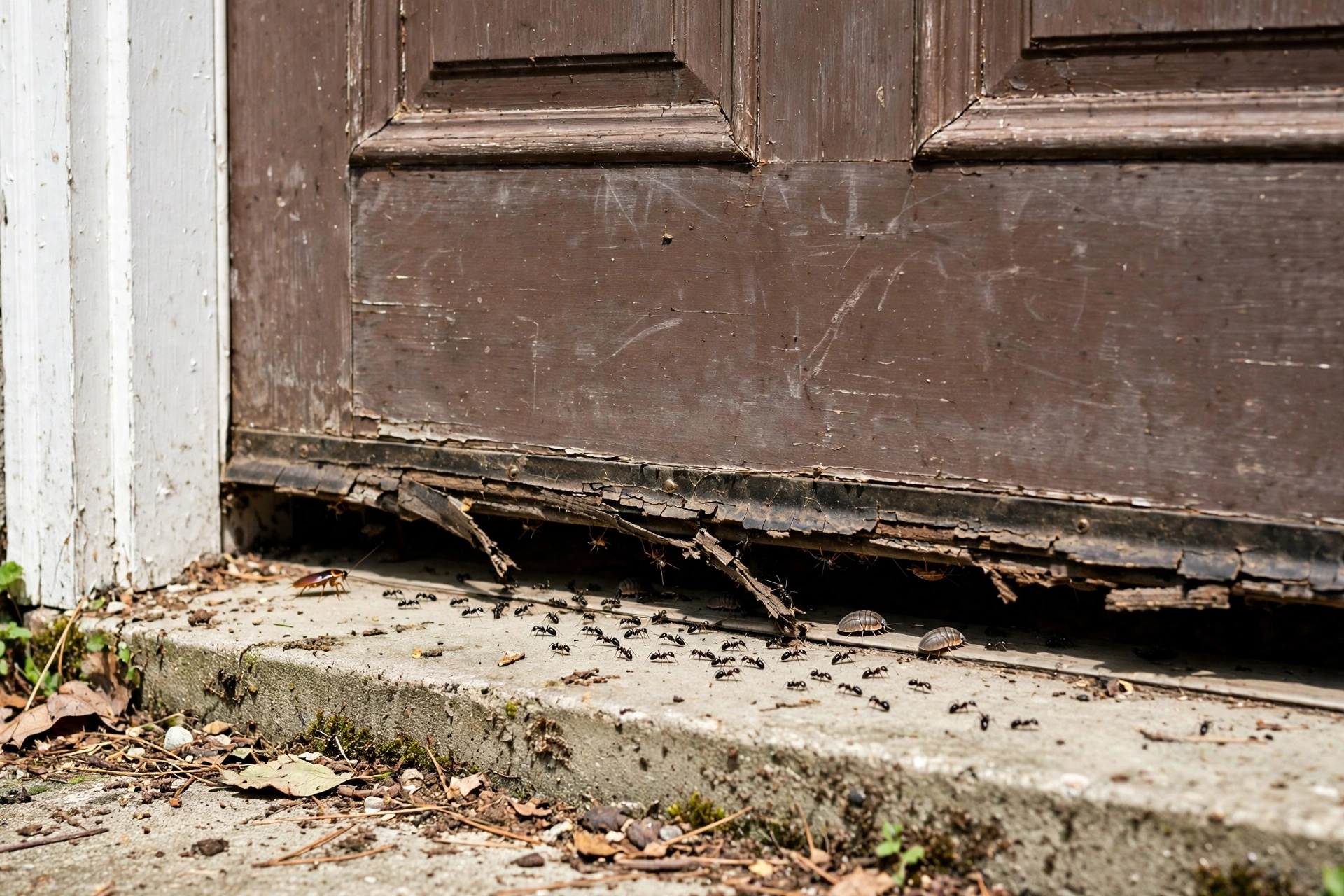
Under exterior doors. The gap under a front, back, or side door is the number one entry — if you can slide a coin under your closed door, a palmetto bug can walk through. Install a door sweep and replace worn weatherstripping on every exterior door, including the garage-to-house door.
Weep holes in brick walls. Weep holes are the small vertical slots near the bottom of a brick wall that let trapped water drain out — and palmetto bugs love them. Stuff copper mesh loosely into each hole to block insects while still letting water drain. Never caulk weep holes shut: every reliable guide on how to get rid of palmetto bugs repeats this warning, because blocking them traps moisture inside your walls and can cause rot and mould that costs far more than any bug problem.
Gaps around pipes and cables. Where the water line, gas line, AC lines, and cables pass through exterior walls, the holes are often bigger than the pipes. Seal them with caulk or expanding foam, and check the same penetrations under sinks and behind the washing machine.
Torn screens and open vents. A torn window screen is an open invitation on a warm night. Repair or replace damaged screens, and check that attic, crawl space, and dryer vents have intact mesh covers.
Branches touching the roof. Tree limbs touching the house are highways: palmetto bugs walk across a branch, drop onto the roof, and crawl in through a vent or a gap under the eaves. Trim branches off the roof and siding and keep shrubs a foot back from the walls.
PRO TIP
Check your weep holes every spring — copper mesh can shift or fall out over winter, and one open weep hole near a damp mulch bed is all a palmetto bug needs.
Should You Use Bait or Spray for Palmetto Bugs?
For palmetto bugs, bait beats spray — and it is not close. That single fact shapes most of what follows about how to get rid of palmetto bugs. Spraying the one you can see kills one bug; bait is carried back and poisons the rest. For an outdoor bug, that chain reaction is exactly what you want.
Bait stations are the easiest option for most homeowners. When you are working out how to get rid of palmetto bugs with bait, buy stations sized for large roaches — the small ant-sized stations are not built for a two-inch insect — and place them around the perimeter, near the foundation, and in the damp indoor rooms where you have seen bugs: bathrooms, laundry rooms, closets, and under sinks. Set them against walls and in corners, where roaches travel. A multi-pack costs roughly $10–$25 (planning estimates, not quotes); check them monthly and replace them when the bait is eaten or dried out.
Gel bait is the next step up in any plan for how to get rid of palmetto bugs. Apply small pea-sized dots in cracks behind the refrigerator, under the dishwasher, inside cabinet hinges, and along the pipes under sinks. Gel fits places a station will not, but reapply every few weeks in warm weather — heat dries it out fast.
Boric acid and diatomaceous earth are dusts, not baits, and they play a supporting role in how to get rid of palmetto bugs by damaging the roach’s outer shell so it dries out. Puff a thin layer into wall voids, behind baseboards, and around the attic and crawl space edges. Keep dusts away from food-prep surfaces and out of reach of children and pets — a thin layer works better than a thick pile, which roaches simply walk around.
Sprays have one good use in a plan for how to get rid of palmetto bugs: as a barrier. A residual perimeter spray around the foundation, door frames, and window frames kills bugs that cross it. But spraying inside the kitchen every time you see a bug is the least effective approach — it kills one bug, repels the rest deeper into hiding, and can contaminate nearby bait. Never spray on or near bait stations, and if you spray the perimeter, do it after the bait is in place, not instead of it.
| Method | Best for | How it works | Watch out for |
|---|---|---|---|
| Large-roach bait stations | Perimeter, bathrooms, closets, crawl spaces | Roaches eat bait and carry it back to hiding spots | Replace when eaten or dried out |
| Gel bait | Cracks behind appliances, cabinet hinges | Eaten in hiding spots; slow, thorough kill | Dries out faster in summer heat |
| Boric acid / diatomaceous earth | Wall voids, behind baseboards | Damages shell; roach dries out | Keep away from food surfaces, kids, pets |
| Perimeter spray | Foundation, door and window frames | Kills bugs crossing the treated line | Never spray on bait stations |
How Do You Control Moisture to Keep Palmetto Bugs Away?
Moisture control is the quiet half of how to get rid of palmetto bugs, and it is the half most people skip. Palmetto bugs lose water through their bodies quickly, so they need damp places to survive. Make your home and yard drier, and they pass through rather than settle in.
Start with leaks: a dripping faucet, a sweating cold-water pipe, a slow drain leak, or a running toilet all create the damp corners palmetto bugs love. Fix the drips, insulate pipes that sweat in summer, and check under every sink monthly.
Then look at the air. A basement or crawl space that smells musty is a palmetto bug invitation — run a dehumidifier in damp below-grade rooms, keep humidity under about 50 percent, vent the bathroom fan during and after showers, and make sure the dryer vents outside.
Outside, the rules are simple: grade soil so water runs away from the foundation, keep gutters clean and downspouts extended a few feet from the house, and do not let mulch pile up against the siding. Wet mulch touching brick is a palmetto bug nursery — keep a few inches between mulch and wall and keep the layer thin — and clear leaf litter and pine straw from the foundation, their daytime hiding spot.
Finally, check standing water: empty saucers under flower pots, clean bird baths, and clear clogged AC drain lines — a five-minute weekly check removes much of their habitat.
When Should You Call a Pest Control Professional?
Call a pest control professional when your own efforts at how to get rid of palmetto bugs have stalled — when you see palmetto bugs daily, find them in several rooms at once, or keep seeing them after three weeks of sealing gaps and baiting. Those signs mean the source is bigger than a few wandering bugs.
A professional visit for palmetto bugs usually runs about $150–$400 for an initial treatment, with follow-up visits often less (planning estimates, not quotes — the final price depends on your home’s size and the severity of the problem). Before you book, it helps to know roughly what pest control costs in your area, so read our guide on how much does pest control cost to see how one-time visits compare with quarterly plans. A good technician inspects the perimeter, finds the entry points and harbourage spots you missed, treats the outside, and tells you what to fix yourself — if they only spray the kitchen and leave, you hired the wrong company.
Need a pro? If the bugs keep coming despite your best DIY effort, have a licensed exterminator inspect it — a trained eye finds the sewer gap or hidden colony a homeowner can walk past for months. For professional help, see Pest Expert Pro.
PRO TIP
Before the technician arrives, write down where and when you have seen each bug — a sighting log (date, room, time) helps the pro find the source in one visit instead of three.
How Do You Keep Palmetto Bugs Away for Good?
Knowing how to get rid of palmetto bugs is only half the job — keeping them away for good is a maintenance routine, not a one-time project. The bugs live outside permanently — in the sewers, the mulch, and the palm trees — so keep your house harder to enter and less inviting than your neighbours’ houses.
Run a seasonal checklist, and the lessons of how to get rid of palmetto bugs keep working year after year. Every spring, check door sweeps and weatherstripping, clear gutters, and replace bait stations. Every summer, keep mulch thin and back from the foundation, trim branches off the roof, and store firewood away from the house. Every autumn, check weep-hole mesh, repair screens, and clear leaf litter from the foundation. Winter is the time to fix the gaps you found during the busy season.
Two habits matter all year. First, keep the kitchen routine tight: food sealed, crumbs swept, pet food picked up at night, garbage in a lidded bin. Second, keep cardboard out of the garage — sealed plastic bins neither feed roaches nor hide them. Homeowners who also battle fire ants in the yard can tackle both problems in one perimeter routine; see our guide on how to get rid of fire ants in Texas for the ant side of that job.
Do this routine and the occasional palmetto bug becomes what it should be: a rare visitor that wandered in through a door left open on a summer night — not a regular tenant.
Frequently Asked Questions
Are palmetto bugs dangerous?
Palmetto bugs are not venomous and they do not spread disease the way a mosquito does, but they are not harmless either. They walk through sewers and drains, then across counters and food, carrying bacteria such as Salmonella and E. coli, and their shed skins and droppings trigger asthma and allergies. The risk from one bug is low, but a steady stream of them in a kitchen is a real hygiene problem — which is why most advice on how to get rid of palmetto bugs treats occasional sightings as a prompt to seal gaps.
Do palmetto bugs bite?
Palmetto bugs almost never bite people. They may nibble if trapped against skin overnight, leaving a small red mark, but bites are rare and the bugs do not seek humans out. The real concern is contamination of food and surfaces.
Why do palmetto bugs fly at you?
Palmetto bugs do not fly at you on purpose — they are clumsy fliers drawn to light and warmth. On a warm night, you are often standing between the bug and the brightest light in the room, so a panicked bug flies straight toward you. It feels personal; it is bad navigation, not an attack.
Will palmetto bugs infest my house like German roaches?
No, not in the same way. Palmetto bugs breed outdoors and come inside one or a few at a time; they do not build a colony of hundreds in your kitchen the way German roaches do. But a damp home with easy entry can turn them into regular visitors, and a damp crawl space can hold a larger group. Sealing entry points and drying out damp areas stops the occasional visitor from becoming a regular one — the core of how to get rid of palmetto bugs before they settle in.
What kills palmetto bugs the fastest?
A vacuum cleaner or a direct spray kills the one in front of you in seconds, and a vacuum is the cleanest option. For lasting results, though, most guides on how to get rid of palmetto bugs recommend large-roach bait stations around the perimeter and in damp rooms, plus sealed entry points, doing the real work over two to three weeks. The fastest kill and the lasting fix are different tools — use both.
How do I keep palmetto bugs out of my kitchen?
Seal the gaps first: door sweeps, weatherstripping, caulked pipe penetrations, repaired screens. Place large-roach bait stations under the sink and behind the refrigerator, keep food sealed, sweep crumbs nightly, and take pet food up at night. Most kitchen visits stop once the gaps are closed and the bait is working — that is how to get rid of palmetto bugs where they bother people most.
Do palmetto bugs come out in winter?
Palmetto bugs slow down in cold weather but do not disappear. In the Deep South, where winters are mild, they stay active year-round, and a warm spell in January can bring a wave indoors. In cooler areas they retreat to sewers and crawl spaces and reappear in spring — winter is the best season to seal gaps, because the bugs are less active.
How long does it take to get rid of palmetto bugs?
Most homes see a clear drop in sightings within two to three weeks of sealing entry points and placing bait — the normal timeline for how to get rid of palmetto bugs. A single wandering bug can appear at any time after that — they live outdoors, so only a perfect seal stops them entirely — but regular sightings should fall to near zero. Daily sightings after three weeks mean calling a professional: the source is likely a sewer line or a hidden colony.
Final Thought
A palmetto bug in the kitchen feels like an invasion, but it is usually just a lost outdoor insect that found a gap. Close the gaps, put bait where the bugs travel, dry out the damp corners, and clean up the yard — that is how to get rid of palmetto bugs, and the visits stop. That is the whole plan, and it works in most Southern homes without a single can of indoor spray. Start with the door sweep and the weep holes this weekend and give the bait two to three weeks to do its quiet work; if the bugs still come daily after that, bring in a professional to find the entry you missed.