How to Get Rid of Mice: A House-Wide Plan That Actually Works
How to get rid of mice comes down to three steps in order: find where they are getting in, trap the ones already inside with snap traps, and seal every gap a mouse can fit through — which is any gap wider than 1/4 inch. Traps alone will not work if the entry points stay open, and sealing alone will not work while mice are already living in the kitchen.
Mice move indoors as the weather turns cold, and late November is their busiest season. A house mouse needs almost nothing: a gap the width of a pencil, a crumb under the stove, and a warm corner behind the pantry. By the time most people see a mouse, there are already several — mice breed fast, and one pair can become a dozen in a few months. The good news is that the fix is straightforward and does not need poison or a professional in most cases. Snap traps, steel wool and a careful walk around the house will solve most infestations in one to two weeks.
This guide to how to get rid of mice covers the whole house: how to confirm you have mice, where they get in, how to set snap traps so they actually catch, how to seal the entry points properly, what to skip, how to clean up safely, and when it is time to call a professional. If you are hearing scratching or scurrying inside the walls or the attic, that is a different job — our guide to mice in walls and attic removal covers that separately, and this post does not repeat it.
TL;DR — How to Get Rid of Mice in 3 Steps
1. Confirm it is mice: droppings the size of a grain of rice (1/8–1/4 inch, pointed ends), gnaw marks, and greasy rub marks along baseboards.
2. Trap first: set 6–12 snap traps with a pea-size chunk of chunky peanut butter, perpendicular to the wall with the trigger end touching it, 6–10 ft apart. Check daily.
3. Seal second: plug every gap 1/4 inch or wider with steel wool plus caulk, or hardware cloth — never foam, plastic or wood alone, because mice chew through all three.
4. Remove the food: store dry goods in sealed glass or metal containers, sweep crumbs nightly, and take the rubbish out before bed.
5. Clean up safely: wear gloves, spray droppings with disinfectant before touching them, and never sweep or vacuum them dry.
That is the short version of how to get rid of mice — the sections below explain each step in full.
How Do I Know I Have Mice?
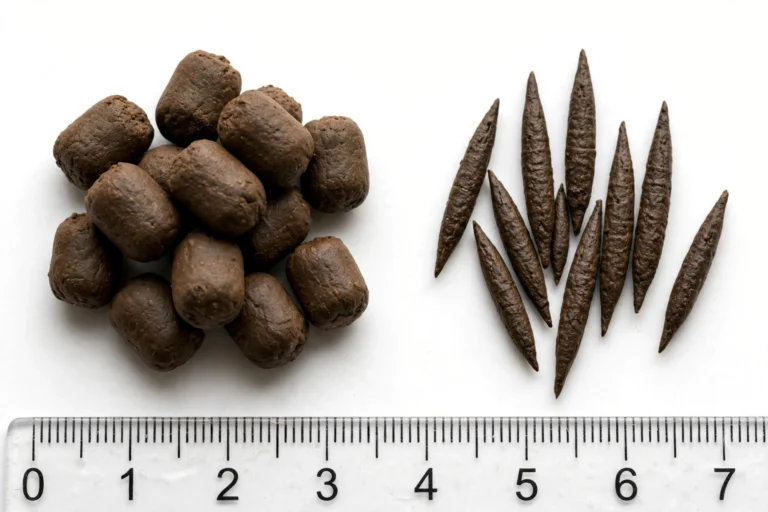
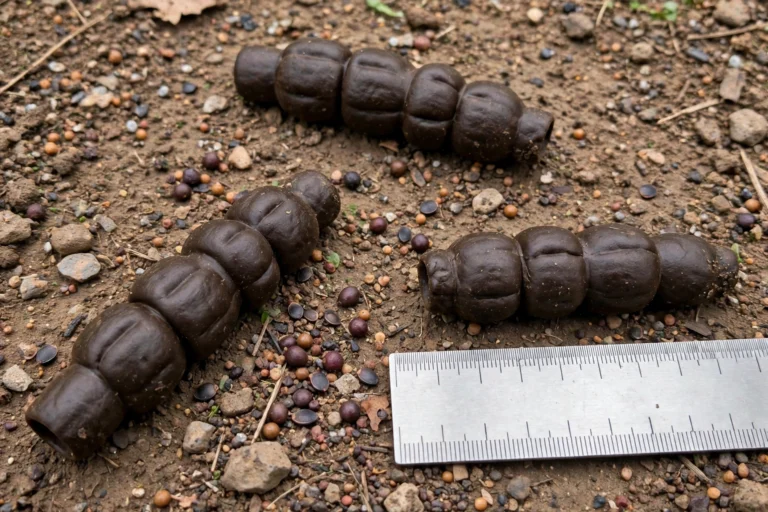
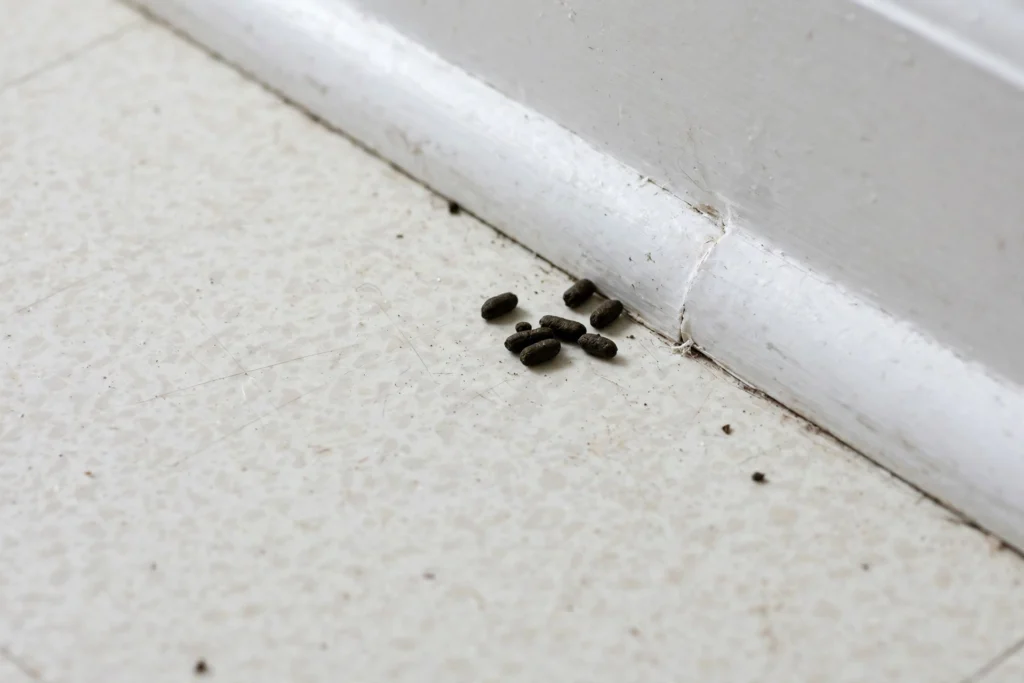
Mouse droppings are the surest sign: small, dark pellets about the size of a grain of rice, 1/8 to 1/4 inch long, with pointed ends, usually found in kitchen drawers, along baseboards, and behind the stove or fridge. Fresh droppings are dark and soft; old ones are grey and crumbly. Other signs include gnaw marks on food packaging and skirting boards, shredded paper or fabric in a hidden corner, and faint greasy rub marks where mice run the same route along a wall every night.
Check the kitchen first, because that is where the food is. Open the lowest cupboards and look in the back corners, under the sink, and behind the fridge. Mice leave droppings where they eat, so a cluster of droppings near a food source tells you where to put the traps. Also check the pantry: torn bags of flour, rice or pet food, and small holes chewed through cardboard boxes, are classic mouse signs. One mouse produces 50–75 droppings a day, so even a small infestation leaves plenty of evidence once you know where to look.
How Do Mice Get Inside My House?
Mice get inside through any gap 1/4 inch wide or larger — about the width of a pencil eraser, or the size of a dime. They squeeze through gaps around pipes, under doors, through vents, where cables enter the house, and through cracks in the foundation. A mouse can compress its body to fit a hole that looks far too small, because its skull is the widest part and the rest of the body follows.
Walk the outside of the house with a torch and look low, because mice enter at ground level. Check where the gas line, water pipes and air-conditioning lines pass through the wall, around the garage door seal, under the front and back doors, and where the dryer vent exits. Inside, check under the kitchen sink where the pipes come through, and behind the dishwasher. Every gap you find is a door a mouse can use — and if you find one, assume there are more. Sealing is the second half of this job, and it only works when you find all of them.
PRO TIP: The Dime Test Finds Every Entry Point
Carry a dime on your walk around the house. If a gap is as wide as the dime or wider, a mouse can get through it. Mark every gap you find with a strip of masking tape as you go, so you can come back with steel wool and caulk and seal them all in one pass.
How to Get Rid of Mice: The Method That Works Best
Snap traps are the gold standard for getting rid of mice, because they work fast, you can see the result, and there is no poison involved. Set 6–12 traps at once — one or two traps will not dent a population that is breeding — and place them where the mice actually travel: along walls, behind appliances, and near droppings. Check them daily, reset them, and keep going until a full week passes with no catches. That week of silence is how you know the house is clear.
Traps beat every other method on speed and certainty. Poison works slowly and the mice often die inside the walls, where they smell for weeks. Live-catch traps mean you have to release the mouse miles away or it comes straight back. Cats catch some mice and ignore the rest, and a cat cannot reach the mice inside the walls at all. Snap traps are cheap, reusable, and honest: you know exactly how many mice you have caught, and when you have caught the last one.
| Method | How it works | Rough cost | Verdict |
|---|---|---|---|
| Snap traps | Kills instantly, visible result | $10–$20 for a pack | Best — use this first |
| Tamper-resistant bait stations | Poison in a locked box | $15–$40 | Backup only, outdoors |
| Live-catch traps | Catches alive for release | $10–$25 each | Slow, mice return |
| Glue traps | Sticks the mouse in place | $5–$10 | Avoid — CDC advises against |
| Ultrasonic repellers | High-pitched sound | $20–$50 | Does not work |
| Peppermint oil | Strong smell as a deterrent | $10–$15 | Little evidence |
All prices are rough planning estimates, not quotes.
How Do I Set a Snap Trap the Right Way?
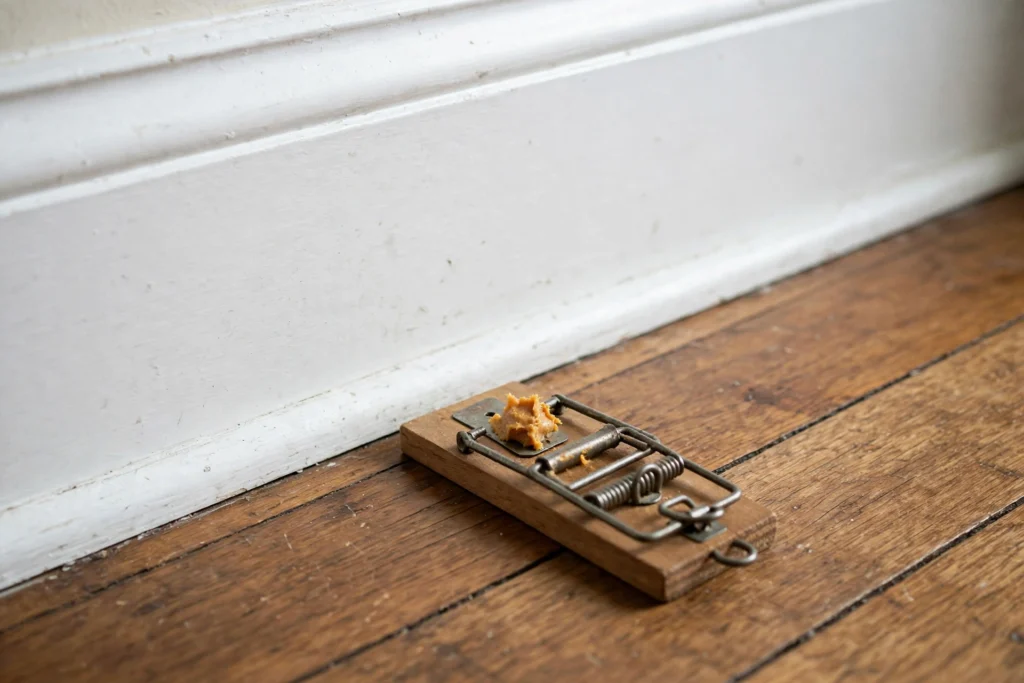
Set a snap trap perpendicular to the wall, with the trigger end touching the wall, because mice run along walls and will walk straight onto the trigger. Bait it with a pea-size chunk of chunky peanut butter pressed firmly onto the trigger — a smear they have to work at, not a loose blob they can snatch without setting the trap off. Space the traps 6 to 10 feet apart, and put them in pairs facing opposite directions along the same wall, so a mouse meets a trap whichever way it runs.
Placement matters more than bait. Mice rarely cross the middle of a room, so a trap in the open floor catches nothing. Put traps behind the stove, under the sink, along the back of the pantry shelves, and anywhere you found droppings. Wear gloves when you handle the traps: human scent puts mice off, and gloves also protect you when you empty them. Check every trap every morning, reset the ones that caught, and move any trap that has not caught anything after three days — it is in the wrong spot.
How Do I Seal My House Against Mice?
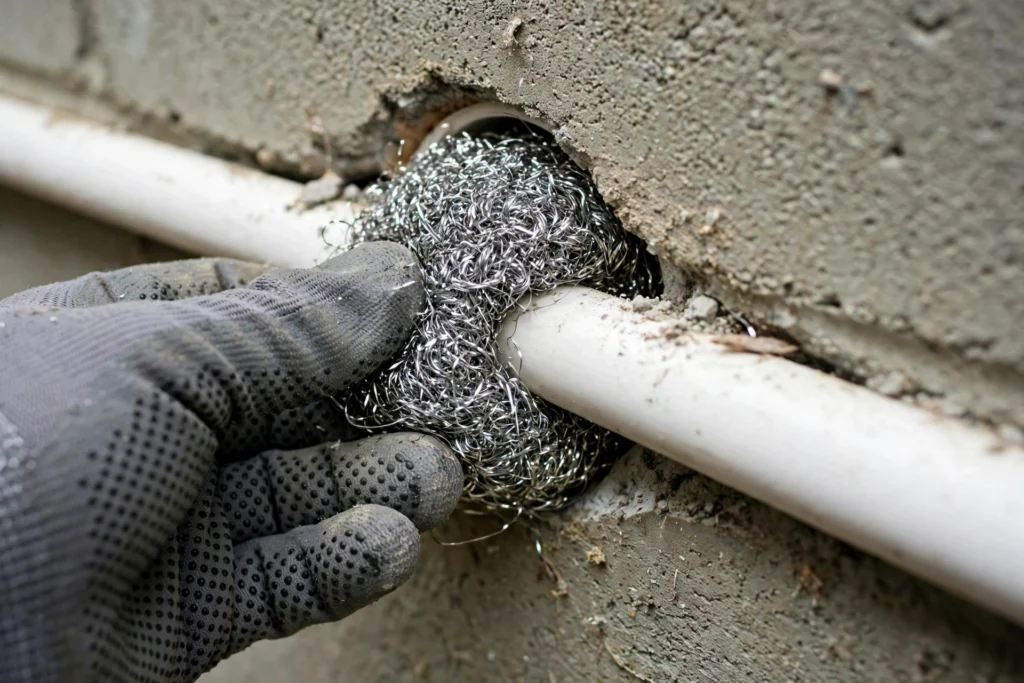
Seal every gap 1/4 inch or wider with steel wool packed tight, then caulk over it — the steel wool stops the chewing and the caulk holds it in place and keeps the weather out. For larger holes, use hardware cloth (fine metal mesh) screwed over the opening, or a metal flashing patch. Work from the outside in, and do the kitchen and pantry first, because that is where the food is.
The one rule that matters: never seal with foam, plastic or wood alone. Mice chew through spray foam in an evening, through plastic in minutes, and through soft wood without slowing down. Steel wool, copper mesh, hardware cloth and sheet metal are the only materials they cannot chew through. Check the door sweeps too — a worn sweep under an exterior door is a mouse highway, and a new one costs about $10–$15 and fits with a screwdriver. And seal while the traps are still working: trap first, seal second, so you do not trap mice inside the house with no way out.
Should I Use Poison or Bait Stations?
Use poison only as a last resort, and only in a tamper-resistant bait station — never loose pellets or blocks where children or pets can reach them. The EPA requires bait stations to be tamper-resistant for exactly this reason. Poison has two real problems indoors: the mouse often dies inside a wall cavity, where it smells for two to three weeks and cannot be removed without opening the wall, and a poisoned mouse can be eaten by a pet or an owl, passing the poison on.
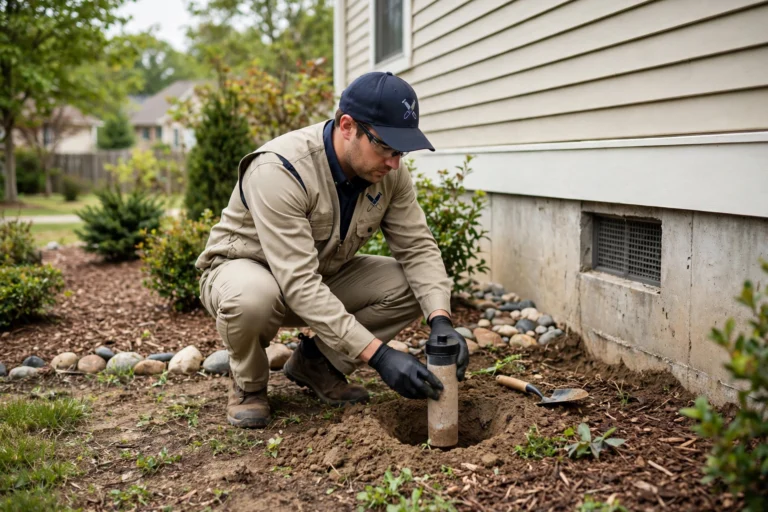
If you do use bait stations, put them outside the house along the foundation, not in the kitchen. The goal is to kill mice before they get in, not after. For most homes, snap traps plus sealing solve the problem without poison at all — and you never have to wonder where a dead mouse is rotting. If you are not comfortable handling poison, a professional can place and monitor stations for you.
What Should I NOT Use to Get Rid of Mice?
Skip glue traps, ultrasonic repellers, peppermint oil, and relying on a cat. Glue traps are cruel and the CDC advises against them: a trapped mouse panics and urinates, which spreads disease, and a live mouse stuck to a board is a problem nobody wants to deal with. Ultrasonic repellers sound like a neat fix, but the sound does not pass through walls, and mice get used to it within days. Peppermint oil has almost no evidence behind it — mice will walk straight past a cotton ball soaked in it if there is food on the other side.
The cat is the most common disappointment. Some cats hunt mice, most do not, and even a good hunter cannot catch the mice living inside your walls and under your floor. A cat is a pet, not a pest control plan. Spend the money on snap traps and steel wool instead — they work whether or not the cat feels like hunting today.
PRO TIP: Skip the Gadgets, Buy Traps and Steel Wool
Every year brings a new mouse gadget — ultrasonic plugs, peppermint sachets, electronic zappers. None of them has beaten a $15 pack of snap traps and a $5 bag of steel wool in any real test. The boring tools are the ones that work.
How Do I Clean Up Mouse Droppings Safely?
Clean up mouse droppings with gloves on, and never sweep or vacuum them dry. Spray the droppings with a household disinfectant or a bleach solution first, let it sit for five minutes, then wipe them up with paper towels and throw them in a sealed bag. Mopping after wiping is fine; dry sweeping is not — it throws contaminated dust into the air, and mouse urine and droppings can carry hantavirus and salmonella.
After the visible droppings are gone, wash the area with hot soapy water, then disinfect again. Wash your hands thoroughly when you finish, and wash any bedding, clothing or food containers the mice may have touched. In the pantry, throw out any food with gnaw marks or droppings in the packaging — it is not worth saving. Move the surviving dry goods into sealed glass or metal containers; mice chew through plastic bags and cardboard without effort.

When Should I Call a Pest Control Professional?
Call a professional when you have trapped mice for two weeks with no let-up, when you find droppings in several rooms, or when you hear scratching inside the walls or the attic — that last one needs the walls-and-attic approach, not more kitchen traps. A professional can also help when the entry points are on the roof or in a crawl space you cannot safely reach. If you want a sense of the cost first, our guide to how much pest control costs breaks down typical prices by pest and by visit type.
For a house-wide mouse problem, a professional inspection usually runs $100–$200, rough estimate, not a quote, and most companies include a sealing plan in the visit. If you would rather hand the whole job over, pestexpertpro.com can help with an inspection and a full exclusion plan. Either way, do not wait: mice breed year-round, and a small problem in November is a big problem by February.
How long does it take to get rid of mice?
Most house infestations clear in one to two weeks with 6–12 snap traps set correctly and the entry gaps sealed. Keep trapping until a full week passes with no catches — that is the sign the house is clear. If you are still catching mice after three weeks, there is an entry point you have not found yet.
What smell do mice hate most?
Mice dislike strong smells, but no smell reliably keeps them out of a house with food in it. Peppermint oil, cloves and ammonia are often suggested, and none of them has strong evidence behind it. Sealing the gaps and removing the food works far better than any scent.
Do mice come back after you get rid of them?
Yes, unless you seal the entry points. Trapping removes the mice that are inside, but the gaps stay open and new mice follow the same scent trails in. Sealing every gap 1/4 inch or wider with steel wool and caulk is the only step that keeps them out for good.
Is it safe to sleep in a house with mice?
Mice are a health risk, not an emergency: their droppings and urine can carry salmonella and hantavirus, and they chew electrical wiring, which is a fire risk. Do not sleep in a room with visible droppings until it has been cleaned with disinfectant, and do not ignore the problem — but you do not need to leave the house overnight.
How many mice are in my house if I see one?
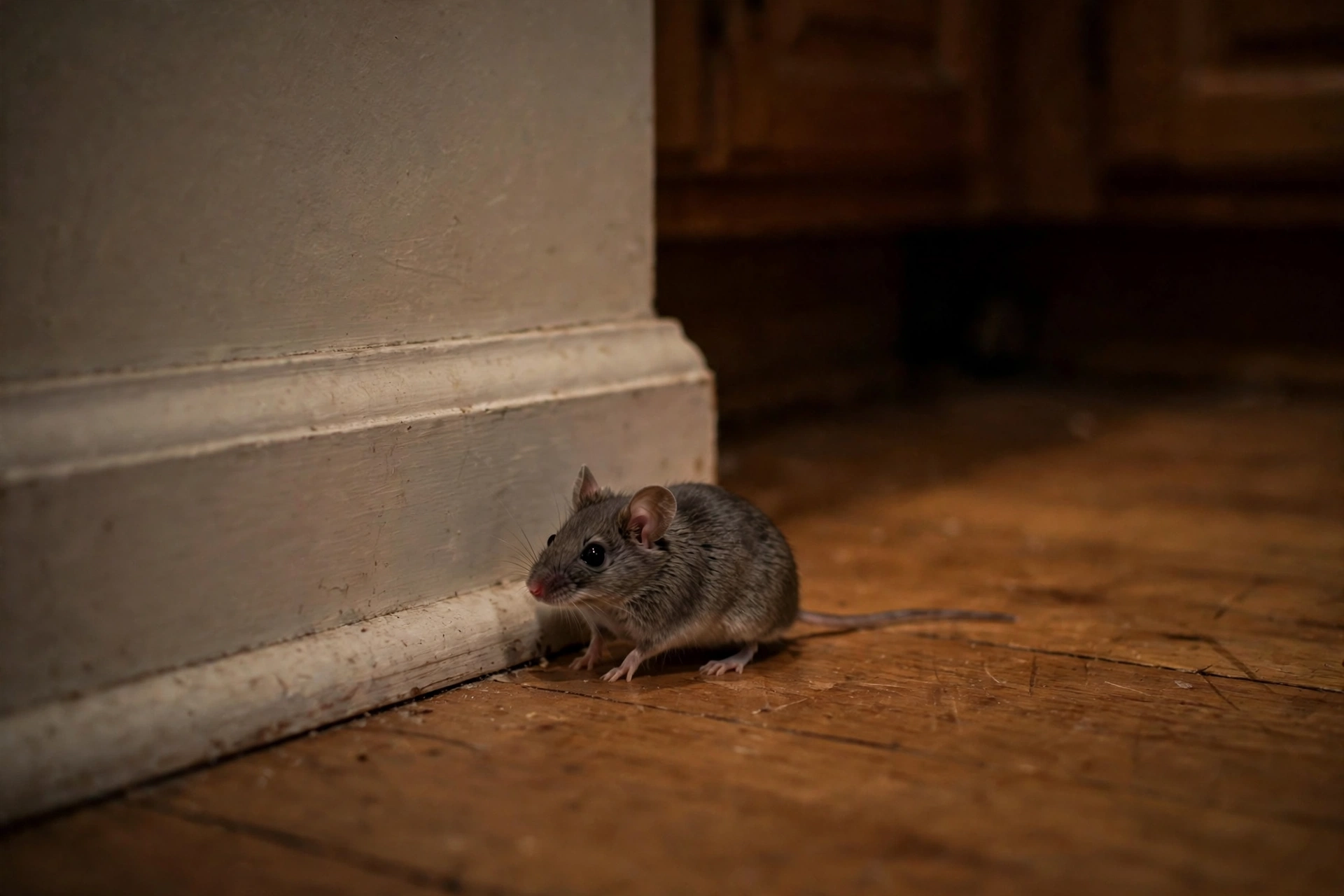
Assume there are more. Mice are nocturnal and cautious, so seeing one in daylight usually means the population is large enough that some are bold. One pair can produce 5–10 litters a year, with 5–6 pups per litter, so a small problem grows fast. Set at least 6 traps and count the catches — the number you catch tells you the real size of the problem.
What is the best bait for mouse traps?
Chunky peanut butter, pressed firmly onto the trigger in a pea-size amount, is the best bait for most homes. Chocolate, bacon, and nesting material like cotton balls also work well. Avoid cheese — it dries out fast and mice often ignore it. Whatever you use, press it on firmly so the mouse has to work at it and sets the trap off.