Signs of Snakes in Yard: 5 Clues, Safety Rules, and When to Call a Pro
TL;DR
Snakes rarely announce themselves. The five field signs worth checking are shed skins, S-shaped tracks in dust or sand, small dark droppings, burrows or holes near foundations, and a musky smell in enclosed spaces. If you find one, keep your distance, keep children and pets away, and photograph it from safety. Two or more fresh signs together mean snakes are actively using your yard — that is when identification and prevention matter most.
The signs of snakes in yard are easy to miss because snakes do their best work quietly: they hunt at dawn and dusk, slip through gaps you would never notice, and leave behind clues that look like ordinary yard debris.
Most homeowners only realize a snake has been around when they stumble on a shed skin near the porch or spot a strange trail in the dust. Learning to read those clues changes the whole situation. Instead of guessing, you can tell whether a snake passed through once, whether it is living nearby, and whether you need help — all before anyone gets close enough to be at risk.
What Are the Signs of Snakes in Yard?
The most reliable signs are shed skins, S-shaped tracks in dust or sand, small dark droppings with white tips, burrows or holes near foundations, and a musky smell in enclosed spaces. No single clue proves a snake is present, but two or more together — especially fresh ones — mean snakes are actively using your yard.
That last point matters. A single old skin in a woodpile could be months old, left by a snake that moved on long ago. A fresh skin plus fresh tracks near the same foundation gap tells a different story: something is coming and going right now. The sections below break down each clue, what it looks like, and how to judge whether it is fresh.
1. Shed skins
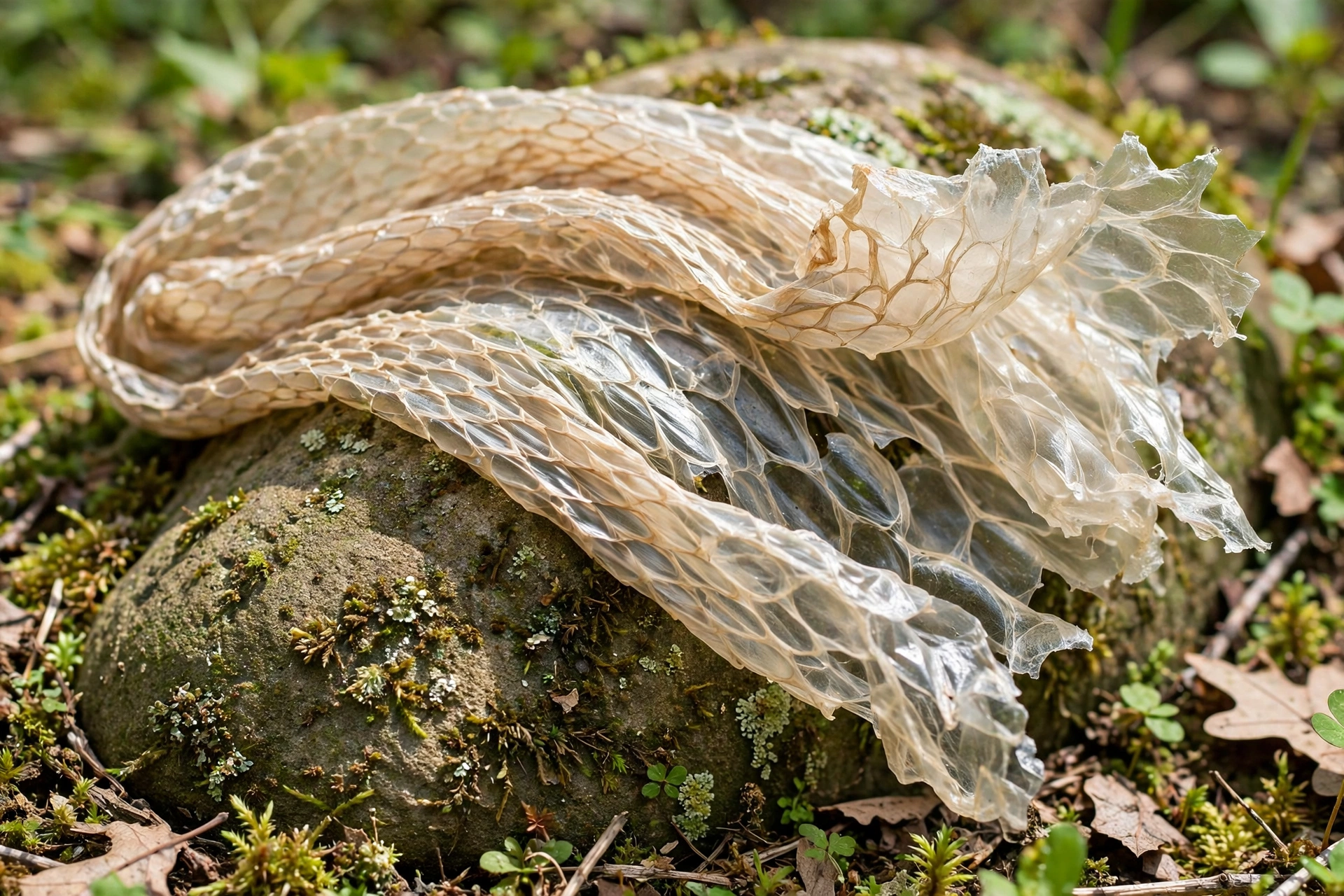
A shed skin is the single most recognizable snake sign. It looks like a thin, papery, translucent copy of the snake, often found draped over a branch, tucked into a woodpile, caught on a fence, or lying near a foundation gap. A complete shed can run the full length of the snake, though most finds are partial pieces.
Fresh sheds look shiny and flexible and tear easily when handled gently. Old sheds turn brittle, faded, and crumbly, and they fall apart at a touch. Finding a shed does not mean the snake is still there — snakes shed and move on — but a fresh shed near a shelter spot means the animal was there recently, and the same shelter is worth checking again.
2. S-shaped tracks in dust or sand
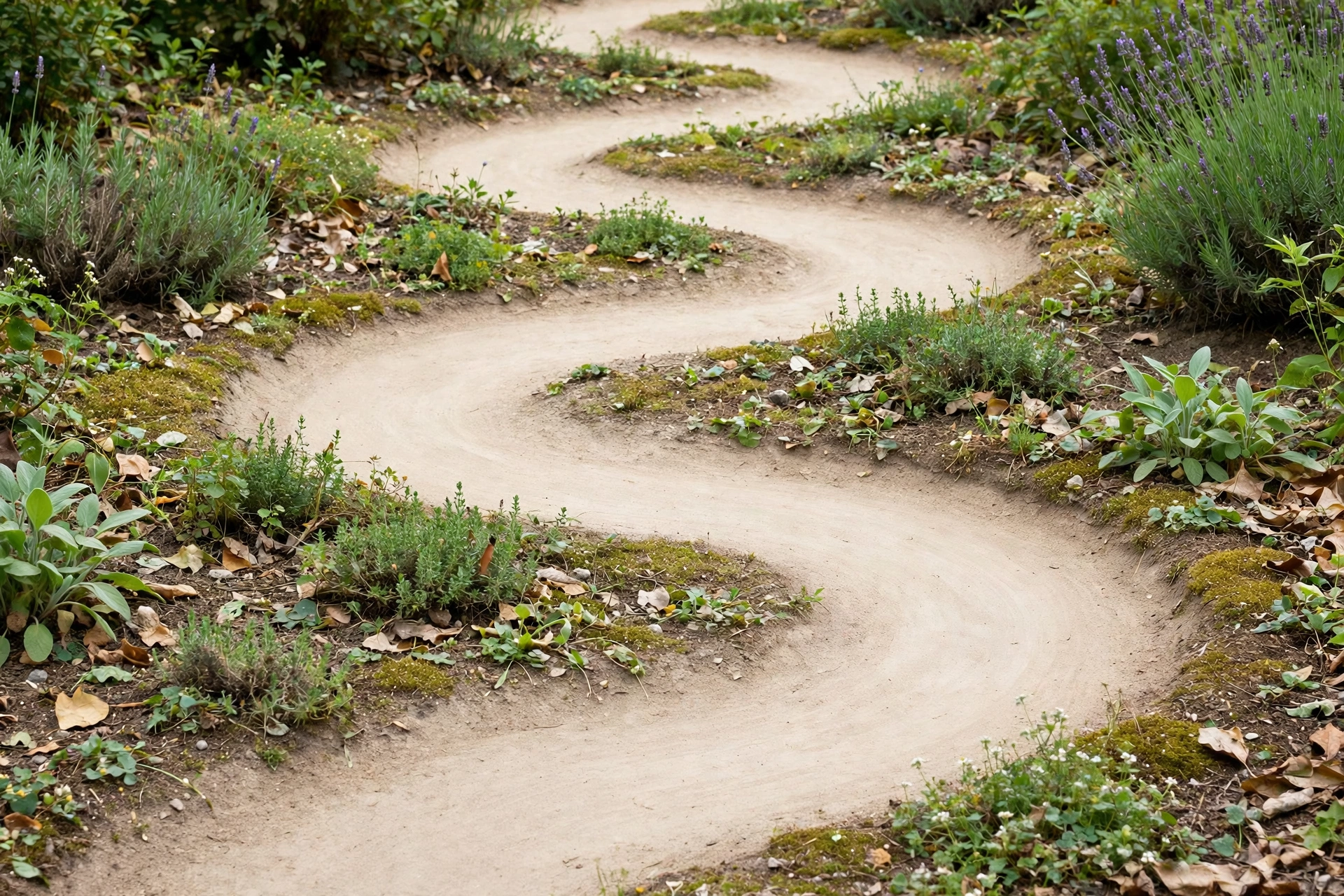
On soft ground, a snake leaves a winding, S-shaped trail. Look for these in dusty paths, sandy soil, garden beds, and the fine dust of a garage floor or shed. The trail is usually a smooth, continuous curve, quite different from the paired footprints of a lizard or the drag mark of a hose.
Fresh tracks have sharp, clean edges in soft dust or sand. Older tracks look softened, partially filled in, or crossed by rain marks and other animal prints. After rain, any clear track is recent, because rain erases older marks quickly. Tracks that lead toward a foundation gap, a woodpile, or dense shrubs are the ones to take seriously — they show where the snake goes, not just where it has been.
3. Droppings
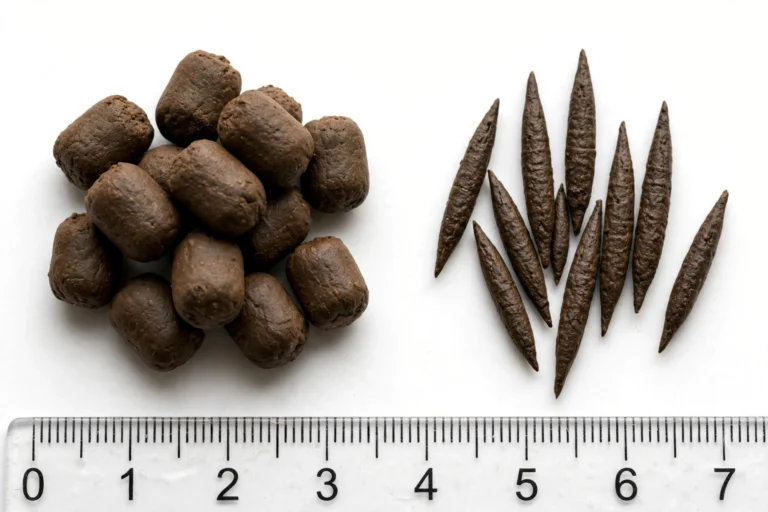
Snake droppings are small, dark, and tubular, often with a chalky white tip. That white tip is uric acid, and it is one of the easiest ways to tell snake droppings apart from rodent droppings, which are usually smaller, rounder, and lack the white cap.
You will most often find them along walls, near entry points, on patios, or inside sheds and garages. Fresh droppings look dark and moist; older ones dry out, turn chalky, and crumble. Never handle droppings with bare hands — use gloves and a sealed bag if you need to clear them, and wash your hands after.
4. Burrows and holes near foundations
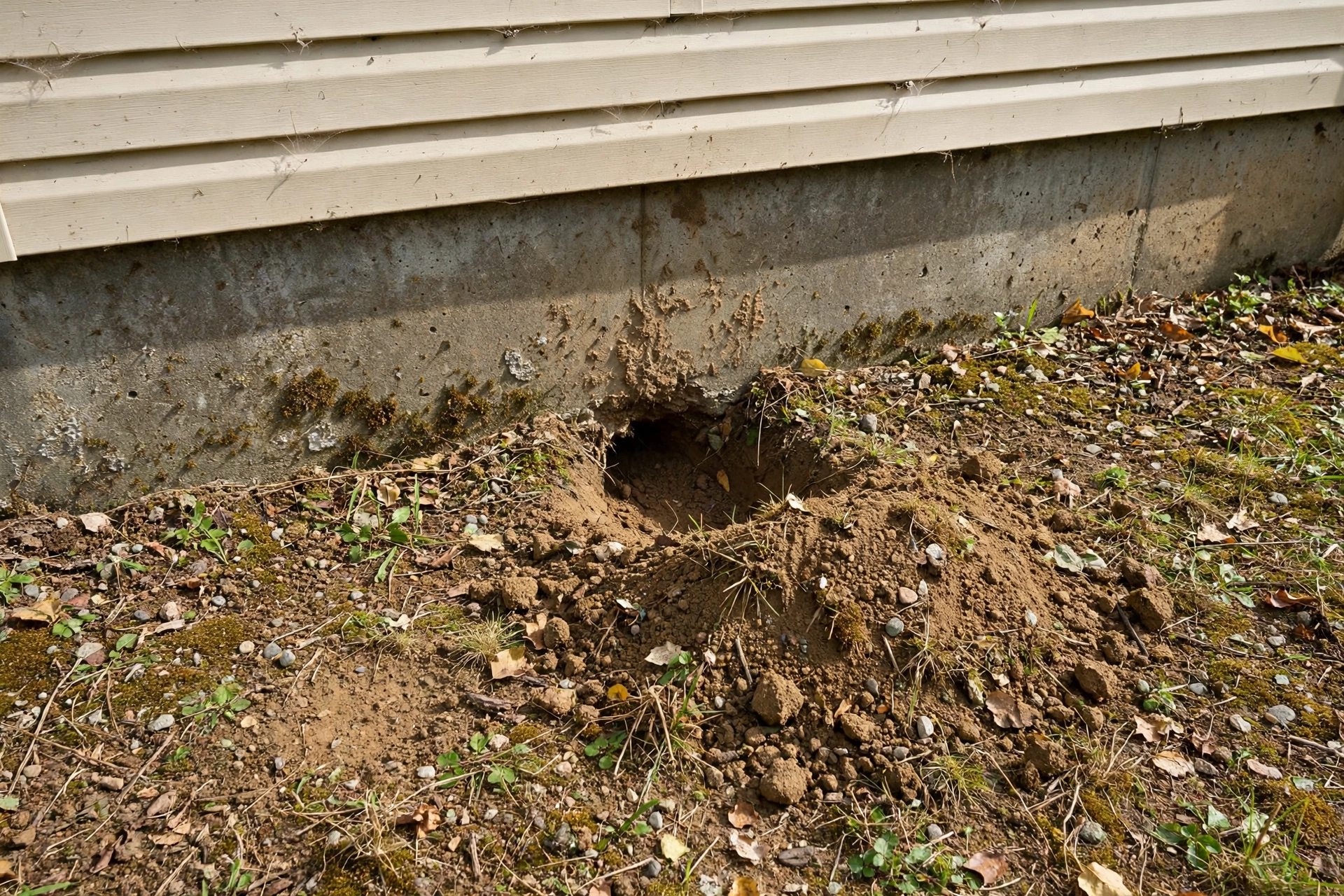
Snakes do not usually dig their own burrows. They move into holes made by rodents, chipmunks, or ground-dwelling animals, and into gaps around foundations, under porches, and beneath sheds. A hole worth investigating is one that sits near a food source or shelter: close to a woodpile, a compost heap, dense shrubs, or a rodent run.
Check whether the hole looks active. Freshly disturbed soil at the entrance, a clean opening without cobwebs or fallen leaves, and tracks leading in or out all point to recent use. A hole choked with leaves, webs, and debris is more likely abandoned. Never reach into a hole to check — that is exactly how bites happen.
5. A musky smell in enclosed spaces
Some snakes release a musky odor, especially when startled or cornered. In a garage, shed, crawl space, or basement, a sudden, sharp, musky smell with no obvious source is worth treating as a warning sign. It is the least specific clue on this list — other animals and damp materials can smell musty too — but combined with a skin, tracks, or a hole nearby, it strengthens the case that a snake is using the space.
How Can You Tell How Fresh a Snake Sign Is?
Fresh shed skins look shiny and flexible and tear easily, while old ones are brittle, faded, and crumbling. Fresh tracks have sharp edges in soft dust or sand, and fresh droppings are dark and moist rather than dry and chalky. After rain, any clear track or skin is recent, because rain erases older marks quickly.
Freshness is what turns a curiosity into a decision. Old signs mean a snake passed through at some point; fresh signs mean it is active now, and active snakes near a home deserve a response. The simplest freshness test is the rain test: if it rained in the last day or two and the sign is still crisp and clear, it was left after the rain. If the sign is faded, dusty, or half-buried, it predates it.
| Sign | Fresh | Old |
|---|---|---|
| Shed skin | Shiny, flexible, tears easily | Brittle, faded, crumbling |
| Tracks | Sharp edges in soft dust or sand | Softened, filled in, crossed by other prints |
| Droppings | Dark and moist | Dry, chalky, crumbling |
| Hole or burrow | Clean opening, disturbed soil, tracks in or out | Choked with leaves, webs, and debris |
What Should You Do If You Find a Snake Sign?
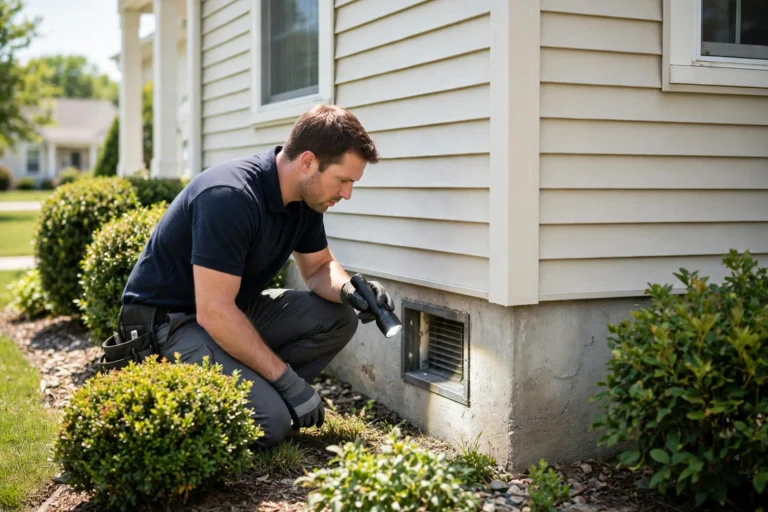
Stop, step back, and keep children and pets away from the area. Do not touch the skin, reach into the hole, or try to find the snake. Photograph the sign from a safe distance, note the exact location and time, and watch the area from indoors. Most snakes leave on their own once the shelter or food source is removed.
Those rules sound simple, and they are — but every one of them exists because someone broke it. The most important safety rules are:
- Never handle or corner a snake. A cornered snake is a defensive snake, and most bites happen when someone tries to catch, kill, or move one. Give it space and an escape route.
- Keep children and pets away. Children are curious and pets are fast — both are more likely than an adult to get close before noticing the danger. Move them indoors first, then deal with the sign.
- Do not try to identify a snake by color or head shape alone. Color varies widely within a species, and head shape is unreliable in the field. Treat every snake as if it could be dangerous and keep your distance.
- Photograph from a safe distance. A photo from several feet away, plus the location and time, is genuinely useful for identification later. You do not need a close-up, and a close-up is not worth the risk.
- Do not reach into holes, woodpiles, or dense shrubs. If a sign points to a hiding spot, that hiding spot is the last place your hand should go. Inspect with a flashlight from outside, not with your fingers.
When Should You Call a Professional?
Call a professional if a snake is inside your home, if anyone is bitten, if you suspect a venomous species, or if you find a nest near a play area or doorway. A licensed wildlife or pest professional can identify the species safely and remove it without putting your family at risk.
If someone is bitten, treat it as an emergency: call emergency services right away, keep the person calm and still, remove rings or tight clothing near the bite, and do not apply a tourniquet, cut the wound, or try to suck out venom. Note the time of the bite and, only if it can be done safely from a distance, the snake’s appearance.
For non-emergency cases, a professional visit is worth it when signs keep appearing in the same place, when you find a snake inside the house, or when you cannot make the yard unattractive to snakes on your own.
Still unsure whether you need a pro? If the signs keep coming back or a snake is inside your home, a licensed pest professional can identify the species and remove it safely.
How Do You Keep Snakes Out of Your Yard?
Remove what attracts snakes: mow regularly, clear woodpiles and debris, seal foundation gaps, and control rodents that snakes hunt. Keep grass short, store firewood off the ground and away from the house, and trim shrubs so no cool, hidden shelter sits against your walls.
Prevention works because snakes visit yards for only three reasons: food, shelter, and a cool, hidden place to rest. Take those away and most snakes move on without any confrontation:
- Mow and trim. Short grass removes cover, and trimmed shrubs keep a clear gap between plants and the house wall. Snakes avoid crossing open ground where they are exposed.
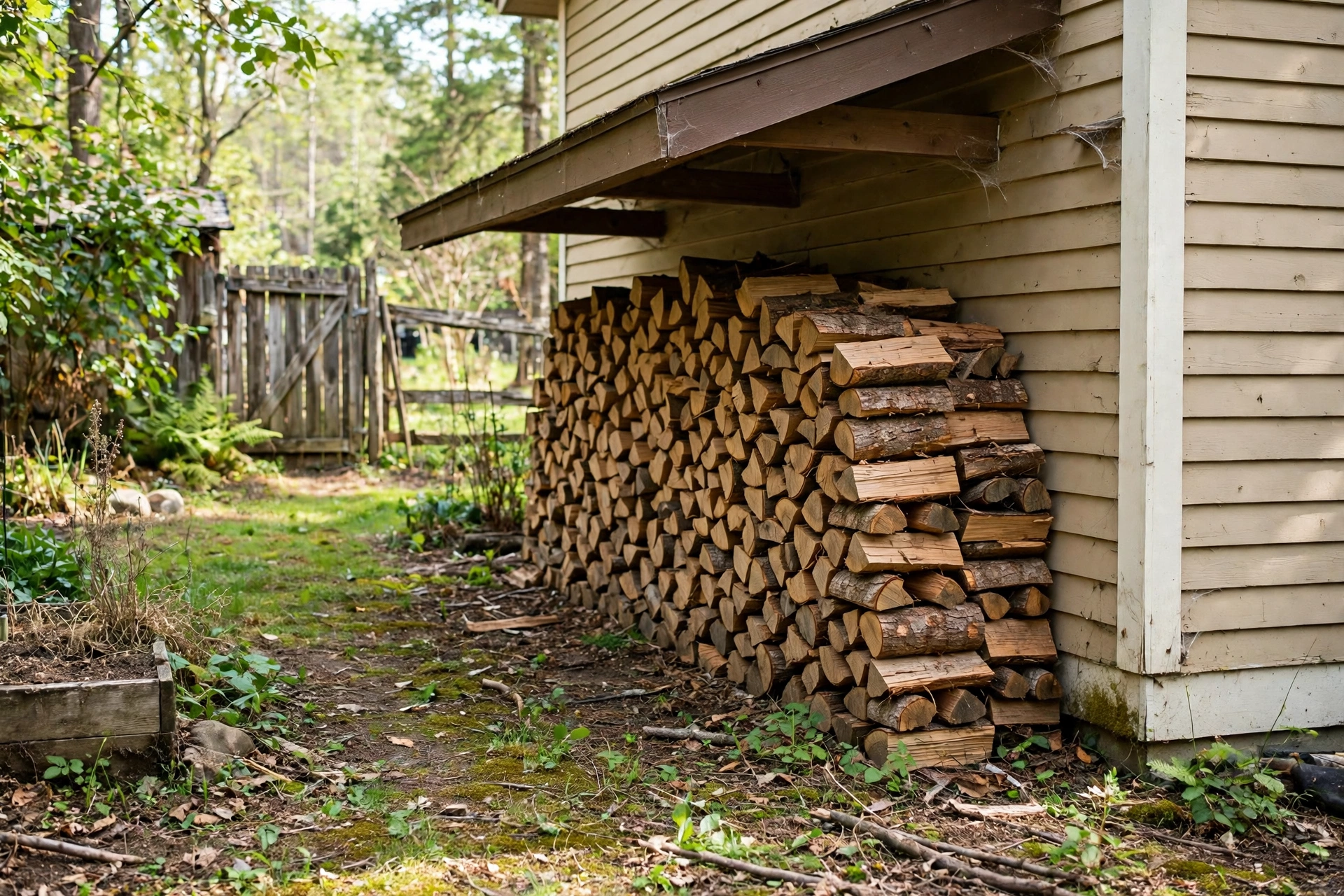
- Clear woodpiles and debris. Stack firewood off the ground, away from the house, and clear rock piles, lumber, and yard clutter. Every pile is a potential shelter.
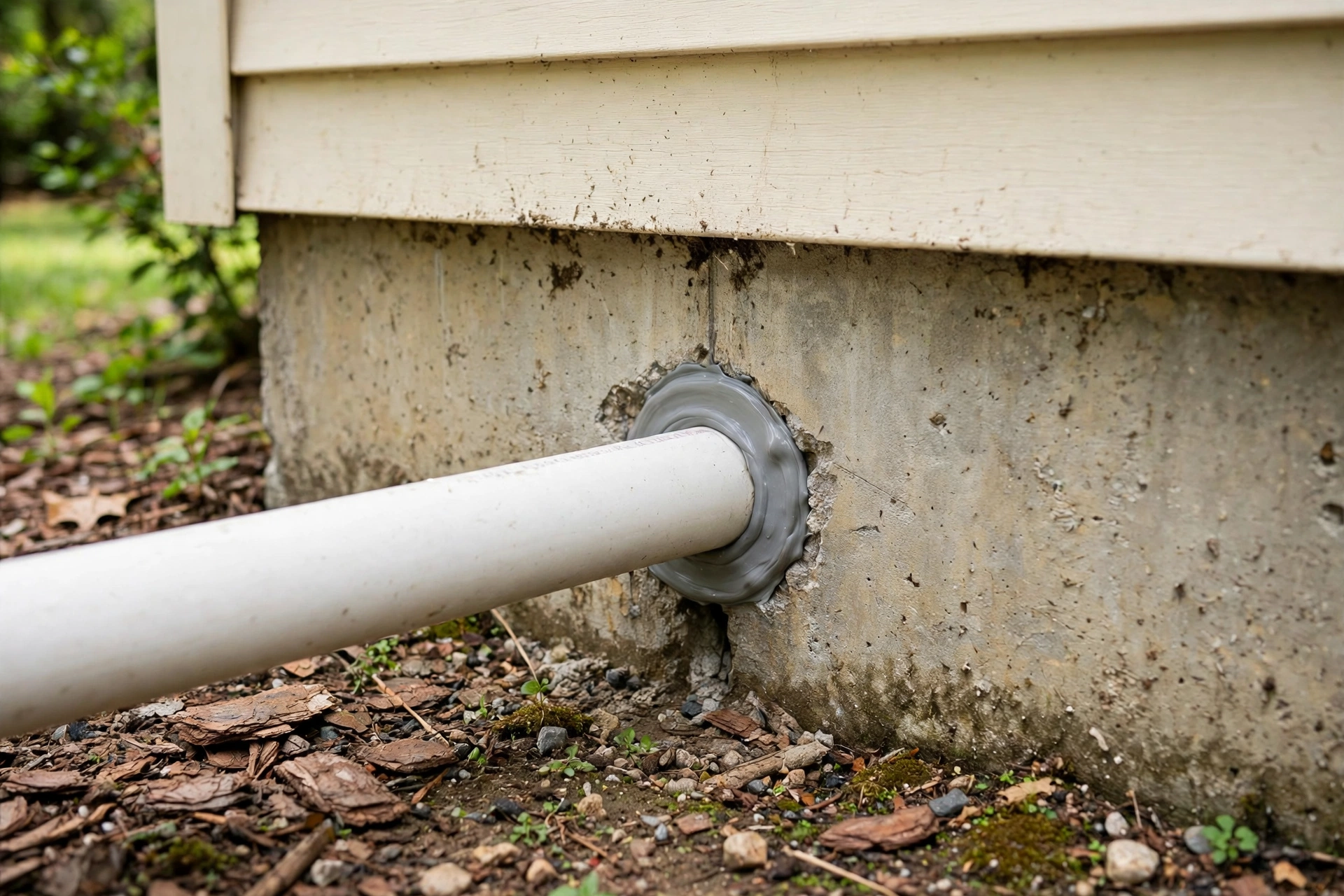
- Seal foundation gaps. Close gaps around pipes, vents, and doors, and repair cracks in the foundation. A gap the width of a pencil can be enough for a small snake.
- Control rodents. Mice and rats are the main food source that keeps snakes around. Sealed food storage, cleaned-up birdseed, and rodent control remove the reason to stay.
- Manage water and compost. Fix dripping taps, empty standing water, and keep compost bins sealed and turned. Damp, food-rich spots attract both rodents and the snakes that hunt them.
None of this requires chemicals or traps. Yard hygiene alone resolves most repeat visits, and it works permanently rather than for a single season.
FAQ
How do I know if a snake is living in my yard or just passing through?
A single old sign usually means a visit. Two or more fresh signs in the same area — a fresh skin plus tracks, or droppings near an active hole — point to a snake living nearby. Repeat signs in the same spot over several days are the strongest evidence of residence.
Are shed skins dangerous to touch?
A shed skin itself is not venomous, but it can carry bacteria and mites, so do not handle it with bare hands. Use gloves if you need to move it, bag it if you want it identified, and wash your hands after. The real risk is not the skin — it is the snake that may still be nearby.
Do snakes return to the same spot?
Yes, snakes return to places that offer food, shelter, and the right temperature. A woodpile, a warm foundation gap, or a rodent-rich garden can host the same snake repeatedly, or different snakes in turn. Removing the attraction is the only reliable way to stop repeat visits.
What time of year are snake signs most common?
Signs appear most often in the warm months, when snakes are active, hunting, and shedding. In cooler months, snakes in most US regions are inactive and sheltered, so fresh signs are rare. A fresh skin or track in mid-summer is normal activity; the same sign near a heated basement in winter deserves a professional check.
Should I kill a snake I find in my yard?
No. Most snakes are harmless, and many are legally protected in their state. Killing a snake also puts you at the highest risk of a bite, since bites most often happen during handling. Keep your distance, remove what attracted it, and call a professional if it will not leave or if it is inside your home.
What is the first thing to do if I see a snake?
Stop moving, back away slowly, and move children and pets indoors. Do not approach, corner, or try to photograph it up close. Once everyone is safe, note where it went and whether it had shelter or food nearby — that tells you what to fix so it does not come back.