How to Keep Rabbits Out of Your Garden Without Harming Them
TL;DR
If you are looking for a rabbit repellent that actually works, start with a low wire fence, then add a scent or taste spray on the plants rabbits hit hardest. Fencing does the heavy lifting, sprays and rabbit-proof plants add backup, and reapplying after rain keeps the protection going. Everything below is humane, pet-safe when used as directed, and cheap to try.

A rabbit in the garden looks harmless enough — small, quiet, and cute — until you find your lettuce chewed to stubs, your tulips beheaded, and neat little droppings all over the beds. If you are hunting for a rabbit repellent before the next planting gets eaten, the good news is that you can solve this without harming the animal at all.
The approach that works best is a sequence, not a single product: block them out first, then make the garden taste and smell unappealing, and only then worry about scare tactics. If you are weighing fencing against sprays, the same thinking applies — our guide to getting rid of moles in your yard follows the same remove, block, and monitor pattern.
This guide walks through the whole humane sequence step by step, with real costs, the methods that work, and the ones that waste your money. You will learn which sprays last longest, how to build a fence rabbits cannot beat, which plants they avoid, and how to keep everything safe around kids and pets.
What Is the Best Rabbit Repellent for a Vegetable Garden?
The best rabbit repellent for a vegetable garden is a layered one: a low mesh fence first, then a scent or taste spray on the plants rabbits target most. Fencing stops the rabbits, while the spray teaches them your beds are not worth a second visit. Use both together, and reapply the spray after rain.
Sprays and granules are the two main forms of rabbit repellent you will find at a garden center. Sprays coat leaves with a bitter or foul taste, while granules scatter scent around the soil and work for longer between applications. Ready-to-use sprays suit small beds and containers; granules and concentrates make more sense for a full garden perimeter.
Scent pouches are the third option, and they last the longest — some protect a small area for up to 90 days. Hang them near the beds rabbits raid first, and replace them when the smell fades. Whatever form you choose, remember that no spray or granule replaces a fence; the best results always come from pairing the two.
Does Rabbit Repellent Really Work?
Yes, rabbit repellent works, but only as part of a wider plan. Sprays and granules push rabbits away from a small area for one to three weeks, yet a hungry rabbit will test the boundary again once the smell fades. The honest result is fewer bites, not zero rabbits, unless a fence backs it up.
A trial by the Connecticut Agricultural Experiment Station tested eight repellents against a fence and an untreated control, and the fence won every round. The best rabbit repellent formulas slowed damage on lettuce and other tender plants, but none matched physical exclusion. Most repellents are also not labeled for use on produce meant for human consumption, so check the label before spraying anything you plan to eat.
Rain is the other honest limit. Scent-based products lose strength after a storm or a heavy watering, and rabbits adapt quickly once they learn the smell means no real danger. That is why gardeners who rely on sprays alone often report good results for two weeks, then find the rabbits back at the same lettuce bed.
| Type | Rough cost | How long it lasts | Best use |
|---|---|---|---|
| Ready-to-use spray | $10–$25 | About 3 weeks | Small beds, containers |
| Concentrate spray | $15–$30 | 3–4 weeks | Large gardens, refillable use |
| Granules | $15–$35 | Up to 5 weeks | Soil, bed perimeters |
| Scent pouches | $10–$20 | Up to 90 days | Small areas, near entry points |

How Do You Build a Rabbit-Proof Fence?
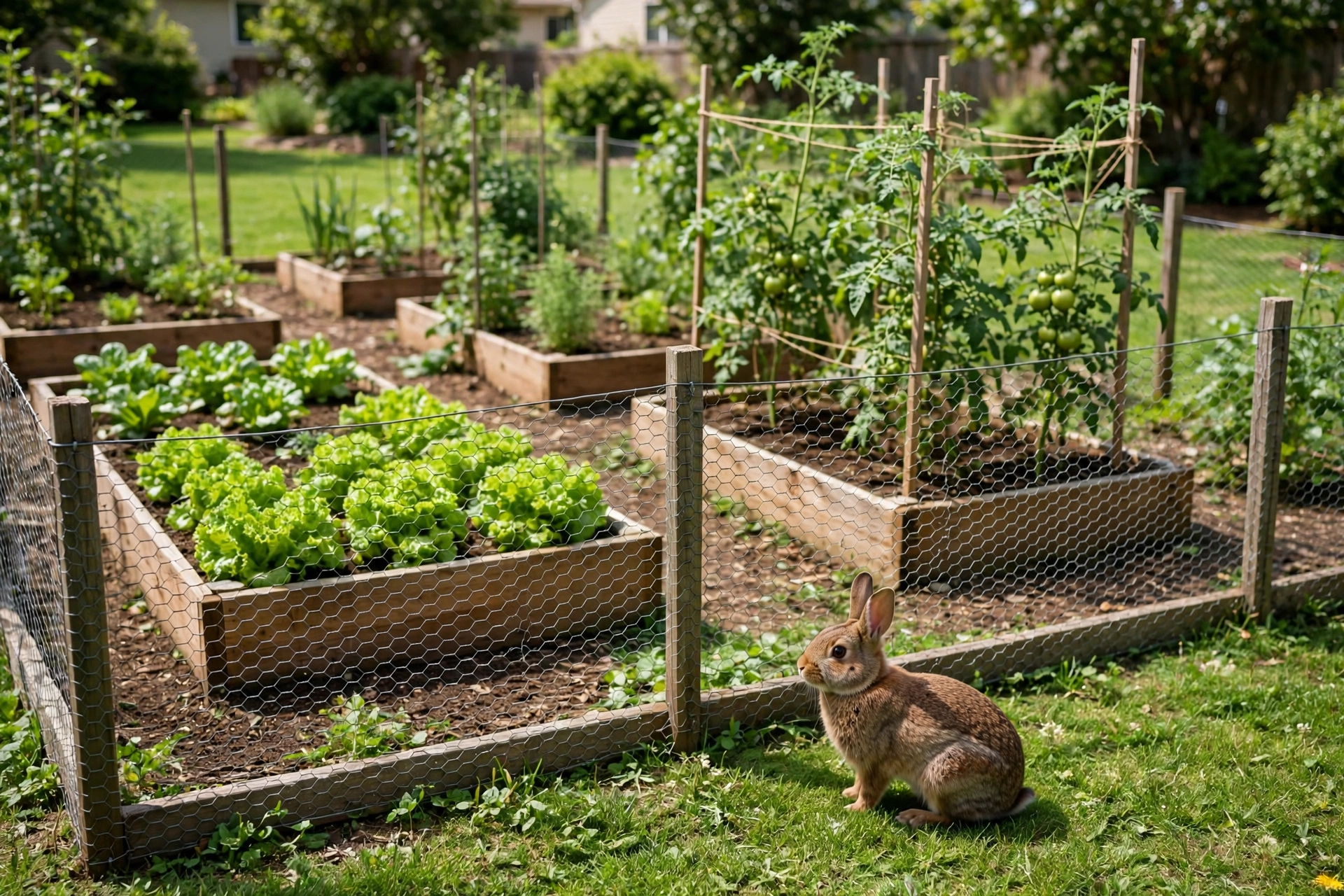
Build a rabbit-proof fence from 1/2-inch or 1/4-inch wire mesh, 2 to 3 feet high, with the bottom buried 6 inches deep and bent outward in an L-shape. Keep the mesh 2 inches away from stems so rabbits cannot press against it to nibble leaves. A fence built this way stops digging, squeezing, and jumping.
The buried L-shaped footer is the detail that makes or breaks a fence, because rabbits dig under shallow barriers within days. A rabbit repellent spray adds a second layer outside the fence, so a rabbit that tests the mesh meets a bad taste before it finds a gap. Check the fence line every spring for gaps, loose staples, and places where soil has washed away.
For raised beds, a simple wire cage does the same job on a smaller scale: bend hardware cloth over hoops or a wooden frame so it covers the bed completely, and lift it off for harvesting. Protect young trees the same way, with a cylinder of 1/4-inch mesh standing 1 to 2 inches out from the trunk and taller than a rabbit can reach while standing on snow.

What Plants Do Rabbits Avoid?
Rabbits avoid plants that taste bitter, smell strong, or feel rough: lavender, rosemary, marigolds, daffodils, alliums, lamb’s ears, and Russian sage top the list. Plant them as a border around beds rabbits raid most, so the first bite they meet is one they dislike. Resistant plants slow rabbits down, but they are not a fence.
The strongest choices are the ones with bitter sap, fuzzy leaves, or a powerful scent. Lavender and rosemary bring fragrance and pollinators, daffodils are poisonous to rabbits and rarely touched, and marigolds add color while discouraging nibbling. Alliums — onion, garlic, and chives — work well as a perimeter row, and a Quora answer on onion plants notes that rabbits steer clear of the onion family when other food is available.
Do not rely on plants alone, because a hungry rabbit in late winter will eat almost anything, including plants it normally avoids. Treat resistant planting as one layer of your rabbit repellent plan, behind the fence and beside the spray. The plants still earn their place — they look good, feed pollinators, and cut the damage on the beds behind them.
PRO TIP
Plant the rabbit-proof border before the tasty crops go in, not after the damage starts. Rabbits learn routes fast — if the border is already there when seedlings appear, they never learn your lettuce bed is an easy meal.

Is Rabbit Repellent Safe for Pets and Kids?
Most sprays and granules are safe around pets and kids once dry, because they work through smell and taste rather than poison. Still, read the label before use, keep dogs away from blood-meal products, and never spray anything directly on produce you plan to eat. When in doubt, choose a fence instead.
The main risk is not the rabbit repellent itself but the ingredients some products use. Blood meal and bone meal attract dogs, which may dig up the very beds you are protecting, so skip those if a dog uses the yard. Garlic and pepper sprays are gentler, but wash your hands after handling them and keep the bottle out of reach of small children.
For vegetable beds, the safest option is often no spray at all on the food itself — fence the bed, spray the border plants instead, and wash everything you harvest. If a product label says it is not for use on edible plants, believe it, even if a garden-center display suggests otherwise.
How Often Should You Reapply Rabbit Repellent?
Reapply rabbit repellent every two to four weeks, and always after heavy rain or watering, because scent and taste fade fast outdoors. Sprays usually last about three weeks on foliage, while granules on the soil can last up to five weeks. Mark the date on a calendar so the gap never stretches too long.
New growth needs a fresh coat too, because a spray only protects the leaves it actually touches. When seedlings shoot up after a spray day, the new leaves are unprotected until you treat them. Walk the beds once a week, look for fresh 45-degree cuts on stems, and touch up the spots where rabbits have been testing.
Season matters as well. Spring brings hungry rabbits and tender shoots, so reapply on the short end of the range; in late summer, when food is plentiful elsewhere, you can stretch the gap. In winter, switch the focus to protecting tree bark and shrubs, since rabbits turn to woody plants once the greens are gone.
What Is the Best Homemade Rabbit Repellent?
The best homemade rabbit repellent is a cayenne and garlic spray: a tablespoon of cayenne and two crushed garlic cloves steeped in a quart of water, strained, with a few drops of dish soap. Spray it on leaves and stems, never on food you will eat raw, and reapply after rain. It costs almost nothing to try.
Other homemade options include Irish Spring soap shavings tucked into small mesh bags around the bed, and a garlic-and-chili mix steeped in water and strained into a spray bottle. A homemade mix costs almost nothing, but it fades faster than a store-bought one, so expect to reapply every few days and after every rain.
Test any homemade mix on a few leaves first and wait a day — hot pepper can scorch tender seedlings in strong sun. Never use mothballs, which are poisonous if ingested, and skip ultrasonic stakes and owl decoys, which rabbits ignore within days once they learn the threat is fake.
PRO TIP
Spray in the evening, not at midday. The mix stays wet longer, soaks into the leaves, and is less likely to scorch plants in strong sun — and rabbits feed at dawn and dusk, so the fresh smell is strongest exactly when they arrive.

When Should You Call a Professional About Rabbits?
Call a professional when rabbits have moved under a shed or deck, when damage keeps returning despite fencing and sprays, or when you suspect a nest inside a structure. A wildlife pro can find entry points, install exclusion, and remove animals legally. Expect to pay for an inspection first, then the exclusion work.
A wildlife professional can also help when a rabbit repellent and fence have not stopped the damage after several weeks, which usually means the animals are nesting nearby. Ask any pro whether the quote includes exclusion and entry-point repair, not just trapping, and confirm the work follows your state’s rules for wild rabbits. Inspection usually runs $75–$150 (rough planning estimate, not a quote).
Do not trap and relocate rabbits yourself without checking the rules first. Wild rabbits are protected in some areas, and a relocated rabbit often dies quickly in unfamiliar territory. A pro knows the local law, the release rules, and the exclusion work that keeps the next rabbit from moving in.
| Option | Rough cost | What it covers |
|---|---|---|
| DIY spray or granules | $10–$35 | One bed or border, 3–5 weeks |
| Homemade cayenne spray | $3–$8 | Small areas, a few days |
| Mesh fence + buried footer | $25–$80 | Full bed or garden, all season |
| Motion-activated sprinkler | $35–$70 | High-traffic garden zones |
| Pro removal + exclusion | $150–$650 | Assessment, trapping, mesh, repair |
Most rabbit repellent sprays last about three weeks on foliage, granules last up to five weeks on soil, and scent pouches can last up to 90 days. Rain and watering shorten every one of these, so reapply after heavy rain. A fence, unlike any spray, protects all season once it is installed.
Rabbits hate strong, bitter smells: rotten egg, garlic, hot pepper, predator urine, and blood meal top the list. That is why most commercial sprays use putrescent egg solids or garlic oil as the active ingredient. The smell works best as a warning — once a rabbit learns it means no real danger, the effect fades.
Yes, and winter damage looks different: with greens gone, rabbits gnaw bark, buds, and twigs on young trees and shrubs. Wrap trunks with 1/4-inch mesh cylinders and protect low shrubs with netting before the first hard frost. A hungry rabbit in January will test plants it ignored all summer.
Some rabbit repellent products are safe for vegetables and some are not, so read the label before spraying anything you plan to eat. Most formulas are not labeled for use on produce meant for human consumption. The safest route is to fence the bed and spray the border plants instead of the food itself.
Look for clean 45-degree cuts on stems and leaves — rabbits slice, while deer tear and leave jagged edges. You will also find round, pea-sized droppings near the feeding area, and damage mostly at dawn and dusk, when rabbits feed. If the plants are eaten to the ground overnight, rabbits are a likely culprit.
Coffee grounds are sometimes suggested as a rabbit deterrent, but there is no solid evidence they work, and they can make soil too acidic for some plants. Garlic, hot pepper, and predator scents have far better track records. Spend the coffee grounds on the compost pile and use a proven spray or a fence instead.
Final Thought
The best rabbit repellent plan is the boring one: fence first, spray second, plant smart, and reapply after rain. Do those four things and most gardens stay rabbit-free without hurting a single animal. If the rabbits keep coming back, the fence has a gap or the yard is still offering easy shelter — fix the barrier, and the garden takes care of itself.
The same exclusion-first thinking works for other yard pests too — our guide to getting rid of chipmunks follows the same remove, block, and monitor pattern.