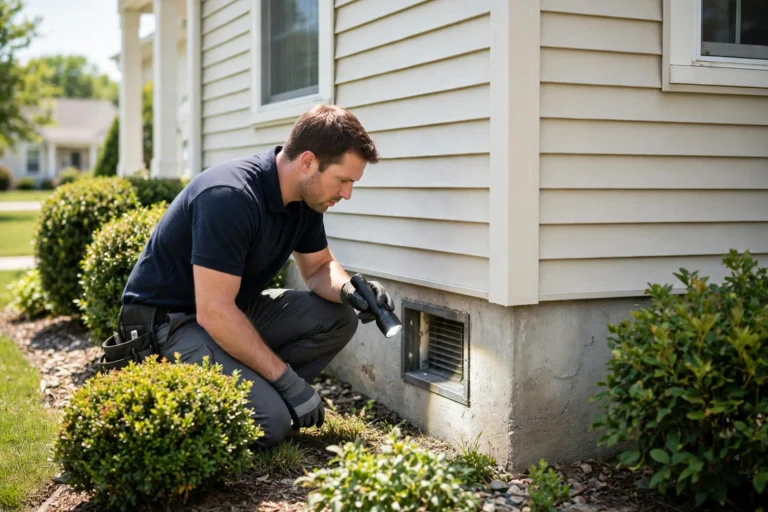
How to Get Rid of Moles in Your Yard (Without Wrecking Your Lawn)
TL;DR
The fastest reliable answer to how to get rid of moles in your yard is trapping in an active tunnel — Purdue’s Plant & Pest Diagnostic Lab says only trapping and worm-shaped bromethalin bait actually work. Home remedies mostly fail, and grub control alone will not fix it, because moles mainly eat earthworms.

Your lawn was fine last week, and now it looks tunnelled overnight. Learning how to get rid of moles in your yard starts with one surprise: moles are insectivores, not rodents. They hunt earthworms and grubs underground, and the ridges and little volcano mounds are the side effects. Prices below are rough planning estimates, not quotes.
How Do You Know You Have Moles in Your Yard?
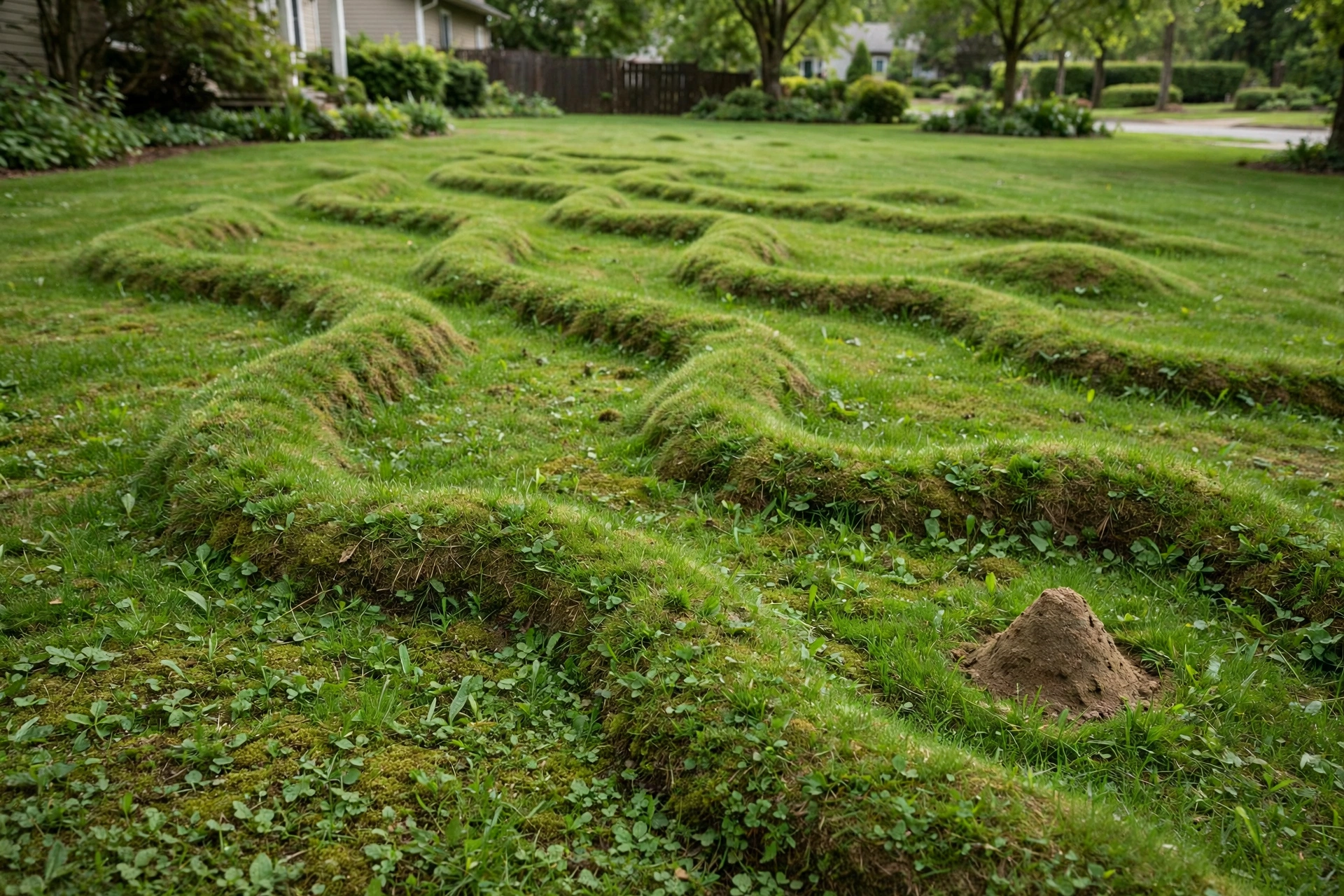
You have moles in your yard when you see raised, squishy tunnels running across the lawn, cone-shaped molehills about 2 inches high and 12 inches across, brown patches where roots were cut off from the soil, and ground that sinks slightly underfoot. Those four signs together point to moles, not to voles, grubs, or drought.
The raised ridges are the giveaway. Press one gently: a mole tunnel feels soft and springy.
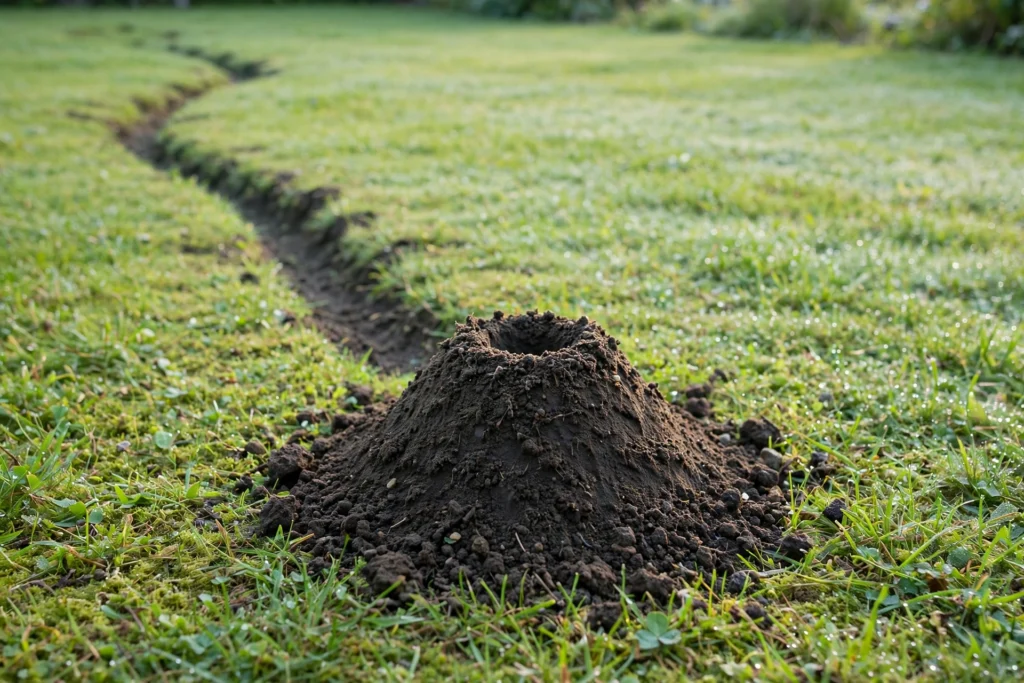
Molehills are the second clue. A molehill is a neat, cone-shaped pile of loose soil, roughly 2 inches high and about 12 inches across, like a tiny volcano. Most yards hold only 1–3 moles even when the damage looks extensive, and a single mole can tunnel up to 18 feet in an hour in soft, worm-rich soil. That is the first thing to know about how to get rid of moles in your yard: one animal can ridge a whole lawn in a week.
Grubs leave large brown patches that peel back like a carpet, but no ridges and no molehills. Ridges plus volcano mounds mean a yard mole — and spotting them is the first step in how to get rid of moles in your yard.
Moles vs Voles: How Do You Tell Them Apart?
Moles leave raised ridges and volcano-shaped mounds with no open entry holes and eat insects and worms, while voles leave open holes, surface runways, and chewed grass because they are herbivores that eat roots and stems. If you see an open hole with gnawed grass around it, it is voles, not moles.
Moles are insectivores that eat worms and grubs, never plants; voles are herbivore rodents that eat stems, roots, bulbs, and bark.
| Feature | Moles | Voles |
|---|---|---|
| Tunnels | Raised ridges, soft and squishy underfoot | Shallow surface runways, grass worn flat |
| Mounds | Cone-shaped volcano mounds, ~2″ high, ~12″ across | No mounds; small open holes, about 1–2″ wide |
| Entry holes | None — mole tunnels are closed | Open holes with chewed grass around them |
| Diet | Insectivore: earthworms, grubs, soil insects | Herbivore: roots, stems, bulbs, bark |
Moles almost never leave an open hole — a molehill is a plug of pushed-up soil, not an entrance. See our guide to signs of voles in yard for the full checklist — getting this right is the most useful step in how to get rid of moles in your yard.
How to Get Rid of Moles in Your Yard — What Works Best?
Trapping in a confirmed active tunnel is how to get rid of moles in your yard, because it removes the animal instead of just annoying it. Purdue’s Plant & Pest Diagnostic Lab verdict is clear: only trapping and worm-shaped bromethalin bait work reliably, while the home remedies most people try first have no real effect.
Chewing gum, mothballs, dish soap, ultrasonic spikes, flooding, buried glass, and human hair all have no real effect, according to Purdue.
Trapping removes the actual animal, and there are usually only 1–3 moles in a yard. Worm-shaped bromethalin bait is the other Purdue-backed method. Both demand the same first step in how to get rid of moles in your yard: find a tunnel still in use.
| Method | How it works | Rough cost (planning estimate, not a quote) | Does it work? |
|---|---|---|---|
| Harpoon / scissor-jaw / choker-loop trap | Kills the mole in an active tunnel | $20–$40 per trap | Yes — most reliable method |
| Worm-shaped bromethalin bait | Poison bait placed in an active tunnel | $15–$30 per pack | Yes — Purdue-backed |
| Castor-oil repellent | Taste/smell repellent sprayed on the lawn | $15–$30 per bottle | Temporary results only |
| Professional mole removal | Pro traps and monitors for you | $150–$500 | Yes — best for heavy damage |
How Do You Set a Mole Trap Correctly?
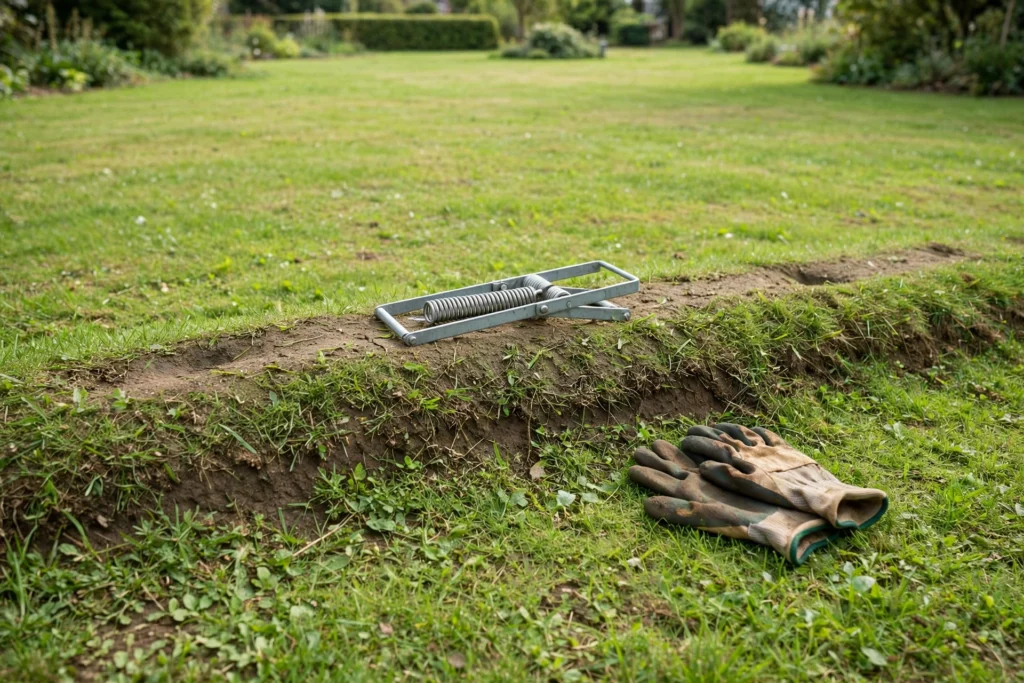
To set a mole trap correctly, first test the tunnel: flatten a section of a raised ridge, check it in 24–48 hours, and if it has been repaired, it is active. Then collapse a 1-inch section of that tunnel to half its height, place the trap over it, and move the trap after 3–4 days with no catch.
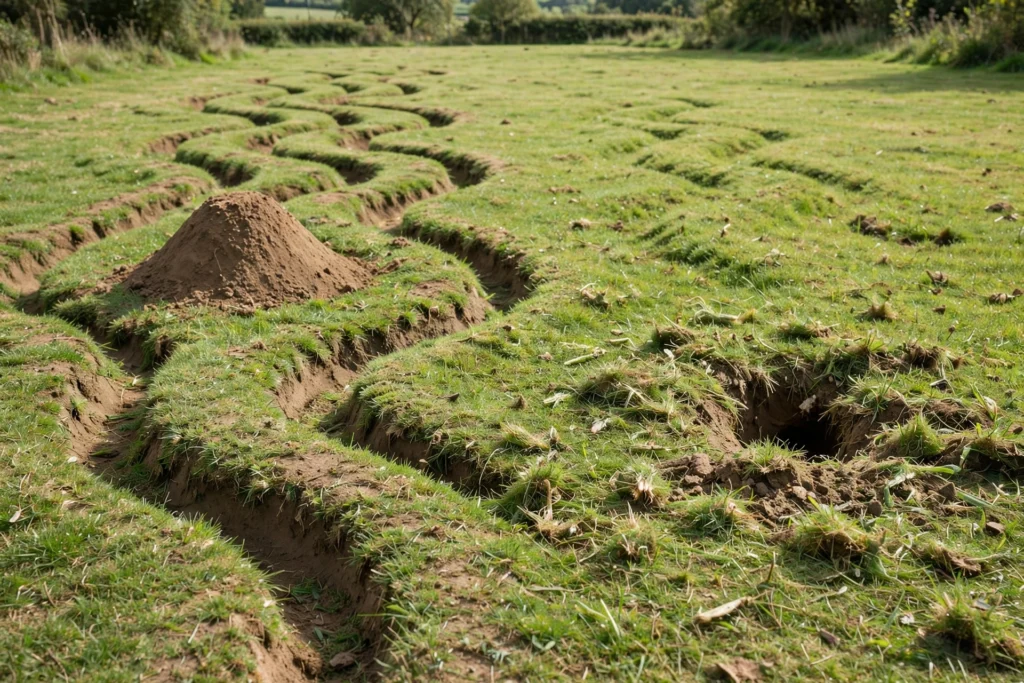
The tunnel test is the step most people skip, and it is the reason most traps fail. Moles dig two kinds of tunnels. Deep runways run 12–18 inches down and are marked by molehills. Surface tunnels are shallow, raised ridges, mostly dug in spring and fall. A ridge untouched for a week is a dead tunnel — and trapping a dead tunnel is the classic mistake in how to get rid of moles in your yard.
Here is the test. Pick a long, straight stretch of ridge — straight sections are travel routes. Flatten a short section, mark it, and come back in 24–48 hours: if it is pushed back up, the tunnel is active. This test is what makes how to get rid of moles in your yard work.
Collapse a 1-inch section to about half its height, so the trigger sits in the mole’s path. Set the trap over that spot and press it firmly into the soil. The three common types are the harpoon, scissor-jaw, and choker-loop traps.
PRO TIP
Wear gloves when you handle the trap and the tunnel, and do not leave your scent all over the collapsed section.
Do Mole Repellents and Home Remedies Work?
Most mole repellents and home remedies do not work: Purdue’s verdict is that chewing gum, mothballs, dish soap, ultrasonic spikes, flooding, buried glass, and human hair have no real effect. Castor oil is the only home remedy with any result, and even that is temporary.
Chewing gum is supposed to block the mole’s gut — it does not, because moles do not eat it. Mothballs fail too: moles live in soil that already smells strongly of damp earth. Flooding fails — moles are strong swimmers with high, dry chambers. Ultrasonic spikes have no real effect in Purdue’s testing.
Castor oil is different, but only slightly: sprayed on the lawn, it makes the soil and worms taste unpleasant, and moles move elsewhere for a while. The Quora humane-methods recipe is ¼ cup castor oil + 1 tablespoon cayenne + 2 tablespoons dish detergent per gallon of water, reapplied after rain. An ultrasonic device costs around $25, and a humane live trap released at least 5 miles away is an option where it is legal. Expect weeks of quiet, not a permanent fix — trapping is still the answer for how to get rid of moles in your yard permanently.
Grub killer is sold as a mole fix, but grub control alone does not solve how to get rid of moles in your yard, because moles mostly eat earthworms, not grubs. Milky spore and beneficial nematodes cut grubs, which is good lawn care, but a yard full of earthworms will still support a yard mole.
How Do You Prevent Moles From Coming Back?
You prevent moles from coming back by making the yard less attractive to earthworms near the surface: water less often and more deeply so the soil dries between waterings, keep the lawn healthy and dense, remove the trapped mole promptly, and add a 24–30-inch-deep underground barrier around small plots you want to protect.
Earthworms stay near the surface when the top few inches stay damp, and moles follow them. Drier soil forces earthworms deeper, and moles follow them down. Water deeply but less often, and avoid overwatering in spring and fall. That drier surface is the simplest form of how to get rid of moles in your yard without spending a cent.
For a small area — a vegetable bed, a new flower border — an underground barrier works. Bury hardware cloth or solid sheeting 24–30 inches deep, with a few inches above the soil line. Two feet deep is the figure in the Quora humane-methods thread; 24–30 inches is the extension-guide range.
PRO TIP
Do a five-minute ridge walk once a week in spring and fall, when surface tunnelling peaks. A fresh ridge caught on day one is one mole in one tunnel; the same ridge ignored for a month is a network of tunnels, dead grass, and an open invitation for voles to move into the abandoned runs.

Remove the mole once you catch it, and fill the tunnels — an empty system invites voles and mice.
Are Moles Dangerous to People or Pets?
Moles are not dangerous in the way most people fear: they are not aggressive, they do not bite people, and they do not eat plants or carry rabies the way some wild mammals do. The real risks are smaller and more practical — they can carry ticks or fleas, and a wrongly set trap is hazardous to pets and children.
Moles are insectivores, not rodents, and they spend almost their entire lives underground, alone, in the dark. That calm temperament is worth remembering when you weigh how to get rid of moles in your yard: the animal is not the danger, the tools can be.
Wear gloves when you handle a trap, a dead mole, or molehill soil, and wash your hands afterwards. If a pet catches a mole, check it for ticks and fleas, and do not let children handle a dead mole. The tunnels are a trip hazard — sinking ground can twist an ankle.
The biggest danger is the trap: a harpoon or scissor-jaw trap set where children play, or where a dog runs off-lead, can cause a painful injury. Set traps only where you can supervise them, mark them clearly, check them daily, and remove them the moment the job is done — that care is part of how to get rid of moles in your yard safely.
When Should You Call a Pro for Moles?
Call a pro for moles when the damage is extensive, when your traps keep failing after several tries in confirmed active tunnels, or when trapping is illegal in your state — and check state law first, because the rules on trapping vary.
Extensive damage is the clearest trigger — and the clearest sign that how to get rid of moles in your yard now needs a pro. If ridges cover most of the lawn, or the ground is sinking across a wide area, a professional with several traps and daily monitoring will clear it faster than a single trap. The same applies if fresh ridges appear the morning after a correctly set, moved trap. That is the point where the do-it-yourself version of how to get rid of moles in your yard has run its course.
Professional mole removal costs roughly $150–$500 — a rough planning estimate, not a quote — depending on yard size and visits. Ask what the price covers: a good service sets multiple traps, checks them daily, and comes back if new activity appears. If you need a pro, our sister site can help — see pestexpertpro.com for professional mole removal in your area.
Frequently Asked Questions
How many moles are in my yard if the damage looks huge?
Usually only 1–3 moles — a single mole can tunnel up to 18 feet per hour in soft soil.
What do moles eat — will they eat my plants?
Moles eat earthworms and grubs, not plants — they are insectivores, not rodents, and that is the first fact in how to get rid of moles in your yard. The plant damage is indirect: tunnels lift roots away from the soil, and abandoned mole tunnels invite voles and mice that do eat roots.
Do coffee grounds or chewing gum get rid of moles?
No. Chewing gum, mothballs, dish soap, ultrasonic spikes, flooding, buried glass, and human hair have no real effect, according to Purdue. Only trapping and worm-shaped bromethalin bait work reliably for how to get rid of moles in your yard; castor oil gives temporary results only.
How deep do mole tunnels go?
Deep runways run 12–18 inches down and are marked by molehills; surface tunnels are shallow, raised ridges, mostly dug in spring and fall. Trapping works in either kind once you confirm the tunnel is active — the test is part of how to get rid of moles in your yard, not an optional extra.
How do I tell a mole tunnel from a vole hole?
Mole tunnels are raised ridges and cone-shaped volcano mounds with no open entry holes; voles leave open holes about 1–2 inches wide, flat surface runways, and chewed grass.
Is it legal to trap moles where I live?
It depends on your state — trapping is illegal in some states and restricted in others, so check your state law first.
Final Thought
The mole in your yard is not an invasion, it is one hungry insectivore doing what it evolved to do — and that is good news, because the fix is small. Learn how to get rid of moles in your yard the way the evidence says: confirm the signs, rule out voles, test a tunnel, set one trap well, and then change the watering that invited it in. Most yards are quiet again within a week or two, and a weekly ridge walk keeps the next yard mole from settling in.