Hosting Thanksgiving at Home: A First-Timer’s Complete Guide
If this is your first year hosting Thanksgiving at home, the worry usually starts long before the turkey does. What if the food runs out, or people don’t get along? The honest answer from hosts who have done it before is simpler than you expect: the day goes well when the plan is simple, the guest list is settled early, and you stop trying to do everything yourself. This guide covers the guest list, timeline, seating, table setup, and cleanup.

I’m Hosting Thanksgiving for the First Time — What Do I Need to Know?
The most important thing to know about hosting Thanksgiving at home is that it is a planning job, not a cooking marathon. Decide the guest list and menu four weeks out, set the table the night before, and build a day-of timeline that works backwards from dinner time. Everything else — decor, drinks, games — is optional.
First, settle the three decisions that drive everything else: how many people are coming, what time dinner is served, and who is cooking what.
Second, write everything down. Hosts who keep the plan in their head forget the cranberry sauce or run out of ice. A one-page checklist taped inside a kitchen cabinet keeps the day from feeling chaotic.
Third, ask for help early and specifically. “Can you bring something?” gets vague answers. “Can you bring the green bean casserole and a bag of ice?” gets results. Most guests are relieved to contribute. When hosting Thanksgiving at home, your job is to coordinate, not to cook every dish.
How Far in Advance Should I Start Planning When Hosting Thanksgiving at Home?
When hosting Thanksgiving at home, start planning four weeks before the day. That gives you one week to settle the guest list and menu, one week to shop for non-perishables and table supplies, one week for the deep clean and freezer prep, and the final week for fresh groceries, thawing the turkey, and setting the table.
Four weeks out, send the invitations and confirm the headcount. Ask about food allergies and dietary needs in the same message. Decide the menu, assign dishes to guests who offer to bring something, and count your plates, glasses, chairs, and serving dishes — borrowing extras takes time.
Three to four days out, move the turkey from the freezer to the fridge. A frozen turkey needs roughly 24 hours of fridge time for every 4 to 5 pounds, so a 15-pound bird needs three full days. The day before, set the table, bake the pies, and chop the vegetables.
How Many Guests Can I Invite — and How Do I Build the Guest List?
When hosting Thanksgiving at home, your guest list should fit your table, your chairs, and your oven — in that order. Count the seats you actually have before you invite anyone, because every extra guest needs a chair, a plate, and two feet of table width. For most first-time hosts, 8 to 12 guests is the sweet spot.
Start with the people who matter most and work outward: immediate family first, then the close friends and relatives who would otherwise spend the day alone. Be honest about your space. If your dining table seats eight, inviting twenty means renting tables and chairs, cooking a second turkey, and doubling your work.
When hosting Thanksgiving at home, the budget grows with the guest count, but not as fast as people fear. Use the rough planning estimates below — these are not quotes, just realistic ranges to help you budget.
| Guests | Turkey size | Food budget | Table & seating extras | Total rough estimate |
|---|---|---|---|---|
| 4–6 | 11–13 lb | $50–$80 | $0–$30 | $50–$110 |
| 8–10 | 14–18 lb | $90–$140 | $20–$60 | $110–$200 |
| 12–16 | 18–22 lb | $140–$220 | $40–$100 | $180–$320 |
| 18–20 | 22–26 lb + extra dish | $200–$300 | $60–$150 | $260–$450 |
All figures are rough planning estimates, not quotes — actual prices vary by store, region, and what guests bring.
What Does a Thanksgiving Day Timeline Look Like?
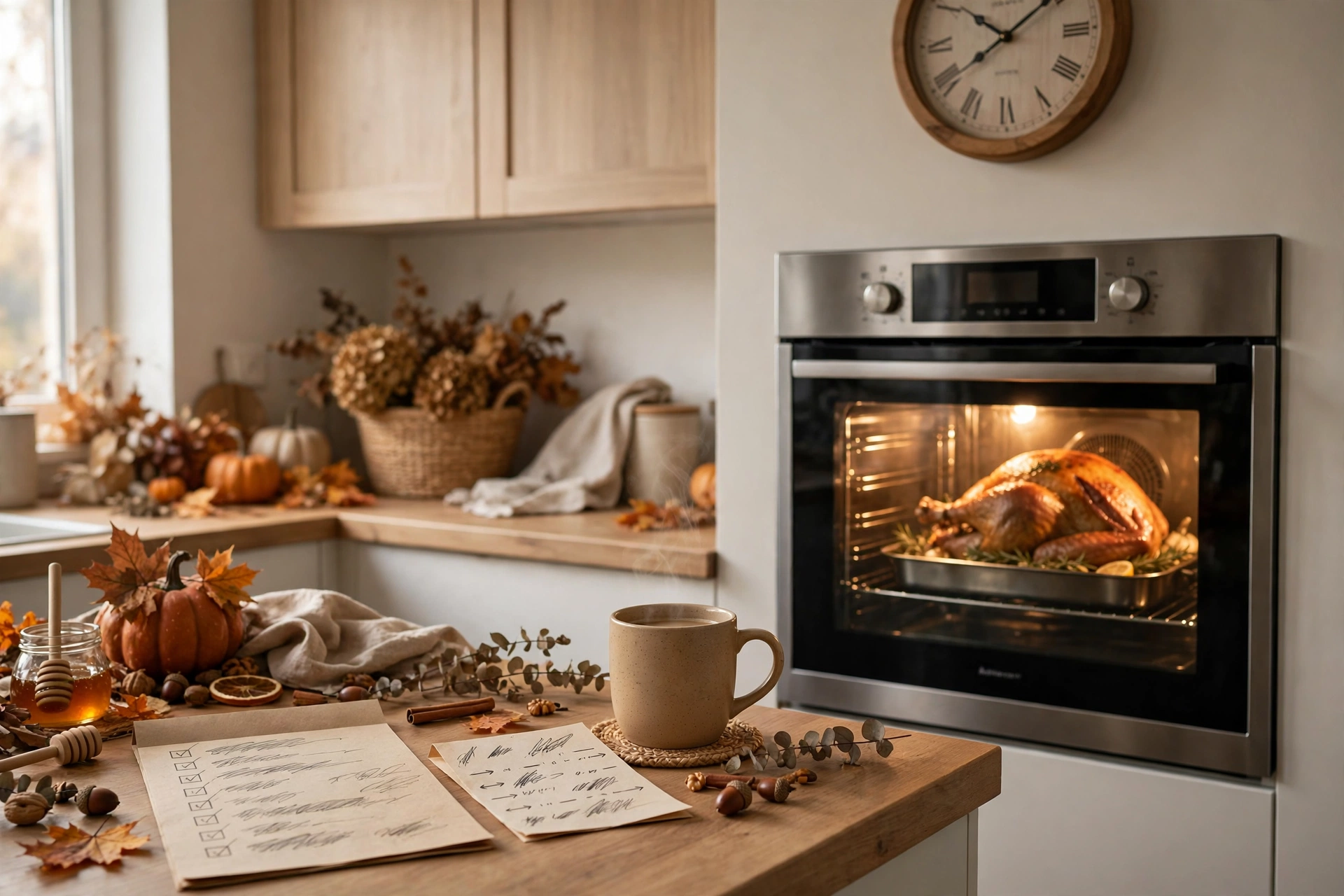
A good Thanksgiving timeline works backwards from dinner time, and it starts the night before. If dinner is at 4 p.m., the turkey goes in around 12:30 or 1 p.m. — it needs three to four hours in the oven — the table is already set, and the pies are already baked.
The night before is the real secret of hosting Thanksgiving at home. Set the table completely: plates, glasses, cutlery, napkins, name cards. Bake the pies and cover them. Chop the vegetables and store them in containers. Fill the sink with hot soapy water so dirty dishes can soak instead of piling up.
The example below assumes a 4 p.m. dinner — shift it to match yours.
| Time | What happens |
|---|---|
| 8:00 a.m. | Preheat the oven; turkey out of the fridge; make coffee |
| 9:00 a.m. | Prep side dishes; put the pies out; tidy the living room |
| 12:30 p.m. | Turkey goes in the oven (3–4 hours for a 12–16 lb bird) |
| 2:00 p.m. | Appetizers and drinks out; light candles; put on music |
| 3:00 p.m. | Guests arrive; drinks and appetizers; last sides in the oven |
| 4:00 p.m. | Dinner is served |
| 5:30 p.m. | Dessert and coffee; pack leftovers into containers |
| 7:00 p.m. | Guests head home; quick tidy; big pans soak overnight |
How Do I Set the Table Without Overdoing It?
When hosting Thanksgiving at home, set the table the night before, keep the centerpiece low, and give each guest about two feet of elbow room. The order is simple: tablecloth, runner, charger or plate, napkin, then cutlery — forks left, knife and spoon right, glasses above the knife.
The one rule that matters most is the centerpiece height. Keep it under 12 inches so guests can see each other across the table. A low row of mini pumpkins, candles, and greenery beats a tall arrangement nobody can talk over, and unscented candles are the only kind to use near food. If you want more inspiration for the look itself, our guide to thanksgiving table decor covers runners, place settings, and color palettes, and our thanksgiving centerpiece ideas round up low, conversation-friendly arrangements.
When hosting Thanksgiving at home, you do not need matching everything. Mixed plates, borrowed glasses, and a plain white tablecloth look intentional when the table is set with care.

How Do I Handle Seating, Kids, and Guests Who Don’t Get Along?
When hosting Thanksgiving at home, seat people with intention, not by accident. Put chatty guests next to quiet ones, seat the kids together at their own table, and never sit two people who clash side by side. Place cards make the plan invisible — guests just find their name and sit down.
Start with the kids’ table, because it solves the most problems at once. Children eat faster, spill more, and talk louder, and they are happier together than squeezed between adults who want a quiet conversation. A small table with its own plates and a simple craft keeps them busy through the meal.

When hosting Thanksgiving at home and you run out of chairs, borrow before you buy. Neighbors, family, and friends usually have folding chairs and a spare card table, and a quick message a week ahead is all it takes. If you do buy, folding chairs cost roughly $25–$40 each and a folding table around $60–$100.
What Should I Ask Guests to Bring — and How Do I Prep for Overnight Guests?
When hosting Thanksgiving at home, ask guests to bring one specific dish, plus ice or drinks. Be direct about what you need — “bring the green bean casserole” works, “bring something” does not — and keep a list of who is bringing what so you don’t end up with four pumpkin pies and no cranberry sauce.
You cook the turkey, the stuffing, and the mashed potatoes; guests bring the rest. Drinks are the easiest ask — a bottle of wine, a case of sparkling water, or a bag of ice. Desserts are the second-easiest, because pies travel well and can be baked the day before.
If guests are staying overnight, prepare the guest room the same way you prepare the table: the night before. Fresh sheets, a spare blanket and pillow, a cleared drawer, and a stocked bathroom with fresh towels and soap. Small touches help — the Wi-Fi password on a card, a phone charger by the bed, and breakfast laid out before you sleep.
The morning after hosting Thanksgiving at home, keep breakfast simple — coffee, eggs, toast, leftover pie — and lay out the coffee maker the night before.
How Do I Clean Up and Handle Leftovers Without Losing the Evening?
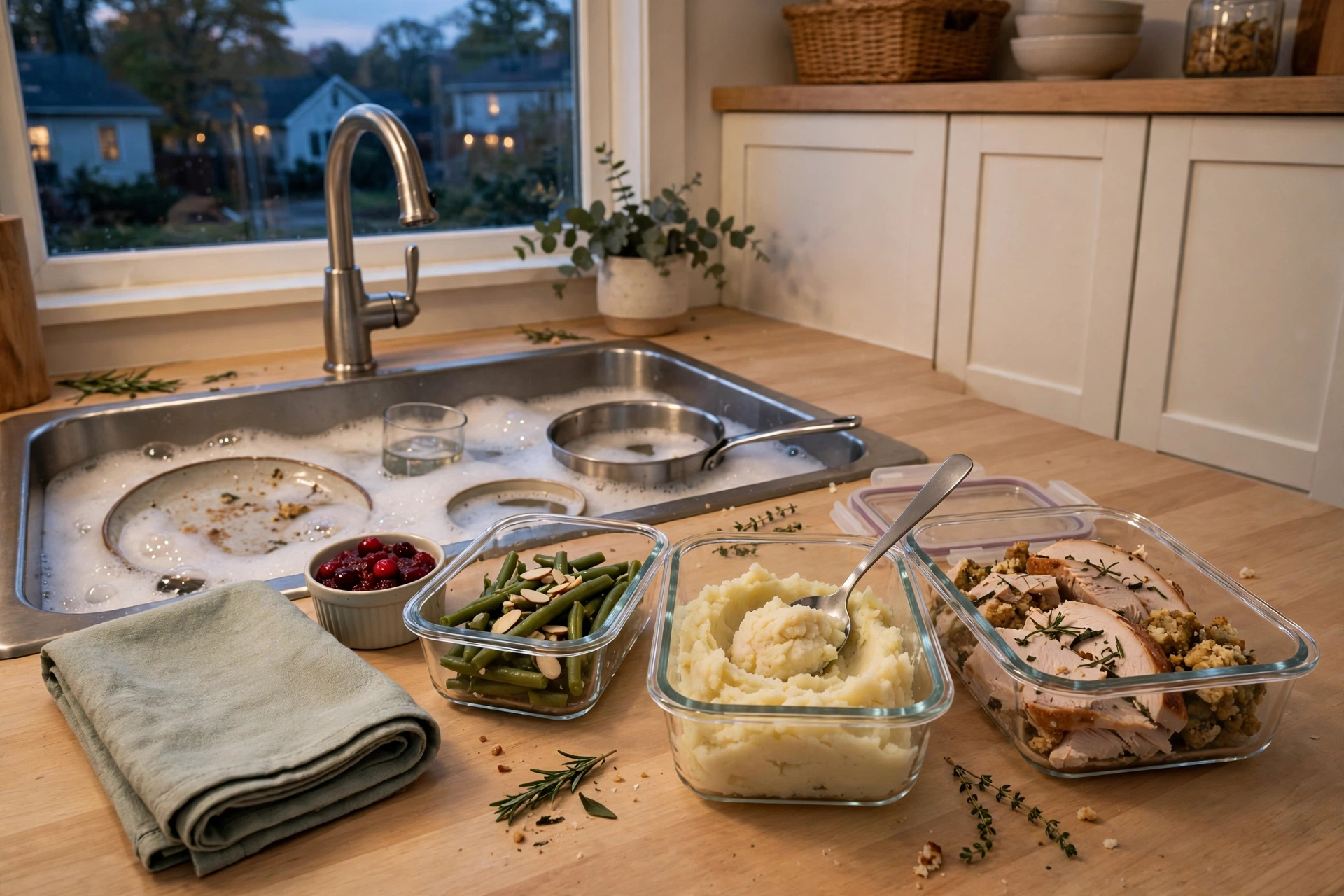
When hosting Thanksgiving at home, start cleanup before dinner, not after it. Fill the sink with hot soapy water and clear the table in one pass while dessert is served. Leftovers go into containers the same night — they keep three to four days in the fridge (USDA), and the rest should be frozen.
After hosting Thanksgiving at home, the best cleanup plan is a team plan. While dessert is served, one person clears plates, one wraps leftovers, one loads the dishwasher, and one takes out the trash. Fifteen minutes of shared work beats an hour alone at the sink.
Big pans and the roasting pan can soak overnight; there is no rule that says every dish must be washed before bed. Rinse them, fill them with hot soapy water, and deal with them in the morning. Wipe the counters, take out the trash, and leave the rest.
Cool leftovers within two hours, use shallow containers so they chill fast, and label anything you freeze. Turkey, stuffing, and mashed potatoes all freeze well for up to three months.
Frequently Asked Questions
How far in advance should I invite people to Thanksgiving dinner?
When hosting Thanksgiving at home, invite guests three to four weeks ahead, and ask for a firm yes or no two weeks out. Early invitations let people plan travel and time off, and a confirmed headcount lets you buy the right size turkey.
How much turkey do I need per person?
Plan on about 1¼ pounds of turkey per person, which covers dinner plus leftovers. A 12-pound turkey feeds about eight people, a 15-pound bird feeds about twelve, and a 20-pound bird feeds about sixteen.
What if I don’t have enough chairs, plates, or serving dishes?
Borrow first, buy second, rent last. Ask family and neighbors a week ahead for folding chairs, extra plates, and serving dishes — most people are glad to lend them.
Can I host Thanksgiving in a small home or apartment?
Yes — hosting Thanksgiving at home in a small space works well when you plan around it. Keep the guest list to six or eight people, serve buffet-style from the kitchen counter, and use folding chairs that stack away after dinner. For simple, space-friendly styling ideas, see our simple Thanksgiving decor guide.
What should I do if a guest has a food allergy or dietary restriction?
Ask about allergies in the invitation, then label every dish with a small card. Keep at least one or two dishes everyone can eat — a vegetable side and a salad are usually safe.
How do I keep the turkey moist if dinner runs late?
Let the turkey rest under loose foil for 30 to 45 minutes after it comes out of the oven — it stays hot, the juices redistribute, and the meat is juicier than if you carve it straight away. If dinner is delayed longer, slice the turkey into a dish with warm broth, cover with foil, and hold it in a low oven.
Final Thought
Hosting Thanksgiving at home for the first time feels big because it is big — you are making the holiday happen for the people you love. But the day is won in the week before, not on the day itself: an early guest list, a simple menu, a table set the night before, and guests who each bring one dish. Your first Thanksgiving won’t be perfect, and it doesn’t need to be — it needs to be warm, fed, and together.