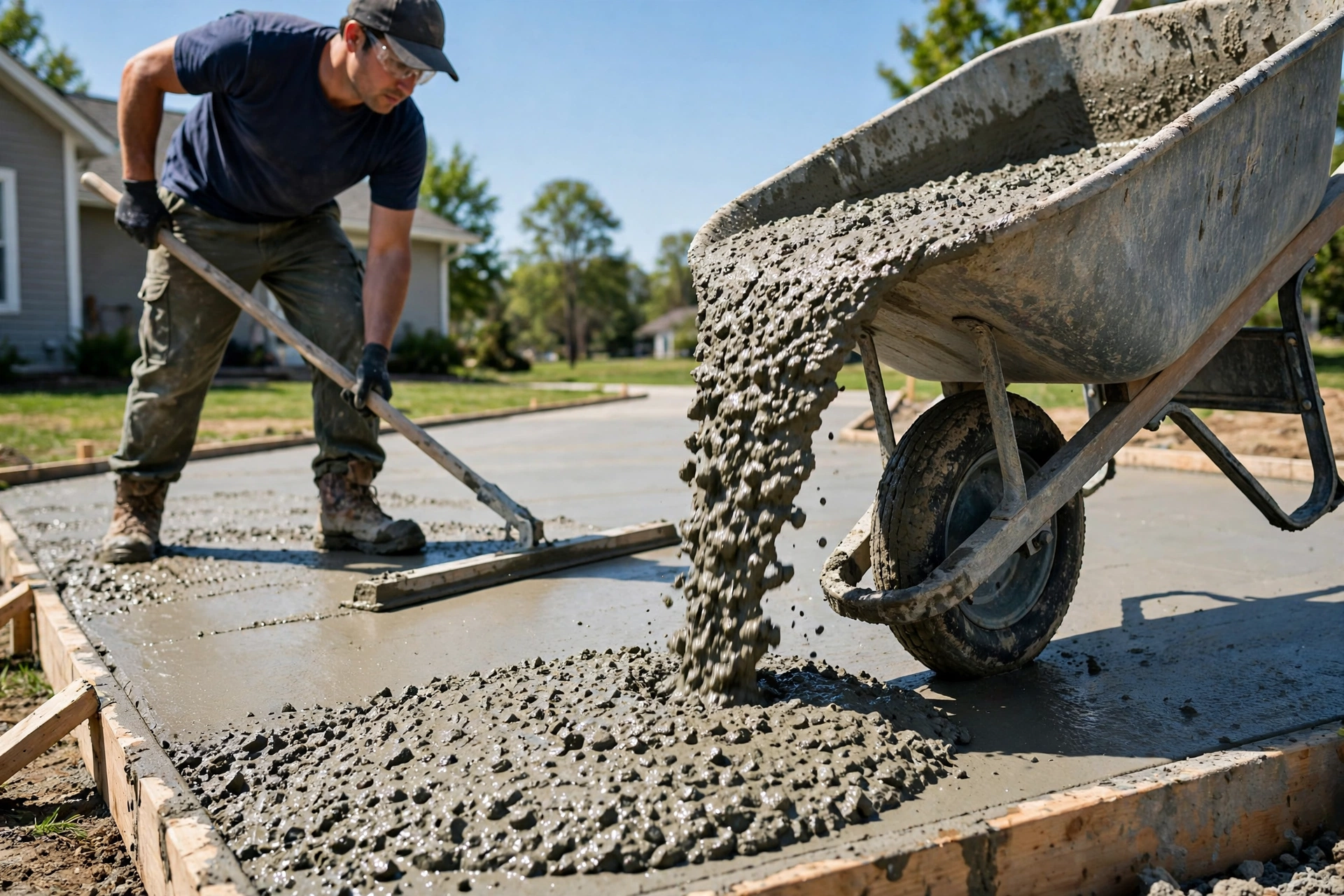
Concrete vs Cement: What’s the Difference (and When to Use Each)
Concrete vs cement is one of the most mixed-up pairs in home improvement: cement is a single ingredient — a fine grey powder — while concrete is the finished building material made from cement plus water, sand and gravel. Cement on its own is brittle and cracks under almost any load; concrete, with aggregate inside it, reaches 2,500 to 10,000 psi of compressive strength and holds up driveways, foundations and sidewalks for decades. Saying “cement driveway” is wrong — your driveway is made of concrete, and it only contains cement.
The confusion is understandable. Bags at the hardware store say “cement” on some and “concrete mix” on others, contractors use the words loosely on site, and most of us grew up hearing the two swapped around the house. But the difference matters the moment you buy materials, hire a contractor, or try to fix a crack: order cement when you need concrete and you will end up with a powder that cannot hold anything up, and call a concrete job “cement” in a quote and you may get a price for the wrong material entirely. This guide settles concrete vs cement once and for all — what each one is, what goes into concrete, when to use which, what each costs, and the common mix-ups to stop making.
TL;DR — Concrete vs Cement in Short
1. Cement is an ingredient; concrete is the finished material. Concrete = cement + water + sand + gravel.
2. Cement alone is brittle and weak. It cracks under load and has almost no structural strength by itself.
3. Concrete is strong because of aggregate: 2,500–10,000 psi compressive strength, depending on the mix.
4. A typical concrete mix is 10–15% cement, 40–50% coarse aggregate, 25–30% sand and 15–20% water.
5. Concrete hardens by hydration — a chemical reaction with water — not by drying out. Keep it damp while it cures.
6. Mortar (cement + sand) is for laying bricks and blocks. Grout (runny cement + sand) fills gaps between tiles.
7. Your “cement” driveway, sidewalk and patio are concrete. Call them that, and you will buy the right material.
That is the difference in short — the sections below explain each point in full.
What Is Cement, Exactly?
Cement is a fine powder, and Portland cement is the type used in nearly every home project. It is made by heating limestone and clay to about 2,700°F in a kiln, then grinding the resulting clinker into a powder so fine it feels like flour. On its own, cement does nothing structural: mix it with water and it turns into a paste that hardens into a brittle, chalky solid that cracks under the lightest load. Its only job is to act as the glue — the binder that holds the sand and gravel together once water starts the chemical reaction.
That glue role is why cement is sold in bags and why it matters so much despite being only 10 to 15% of a concrete mix. The quality of the cement, and the amount of water mixed with it, decides most of the strength of the finished concrete. Too much water weakens the paste and leaves a soft, dusty surface; too little water leaves dry pockets that never fully react. Pros measure water carefully for exactly this reason, and it is the first thing a bad DIY mix gets wrong.
Cement has one other property worth knowing: it goes bad in storage. A bag left open in a damp garage absorbs moisture from the air, starts hydrating in the bag, and sets into lumps that will never mix properly again. Buy cement fresh, keep it dry and sealed, and do not trust a bag that has been sitting open since last summer.
What Is Concrete, Exactly?
Concrete is what you get when you mix cement with water, sand and coarse aggregate — gravel or crushed stone — and let the mixture harden. The cement paste coats every grain of sand and every stone, and as it hydrates it locks the whole mass into a single solid. The aggregate does the heavy lifting: stone does not shrink, does not crack easily, and carries the load, while the cement paste is just the glue holding it all together. That is why concrete is strong in compression — 2,500 to 10,000 psi depending on the mix — and why it is the default material for anything that has to carry weight.
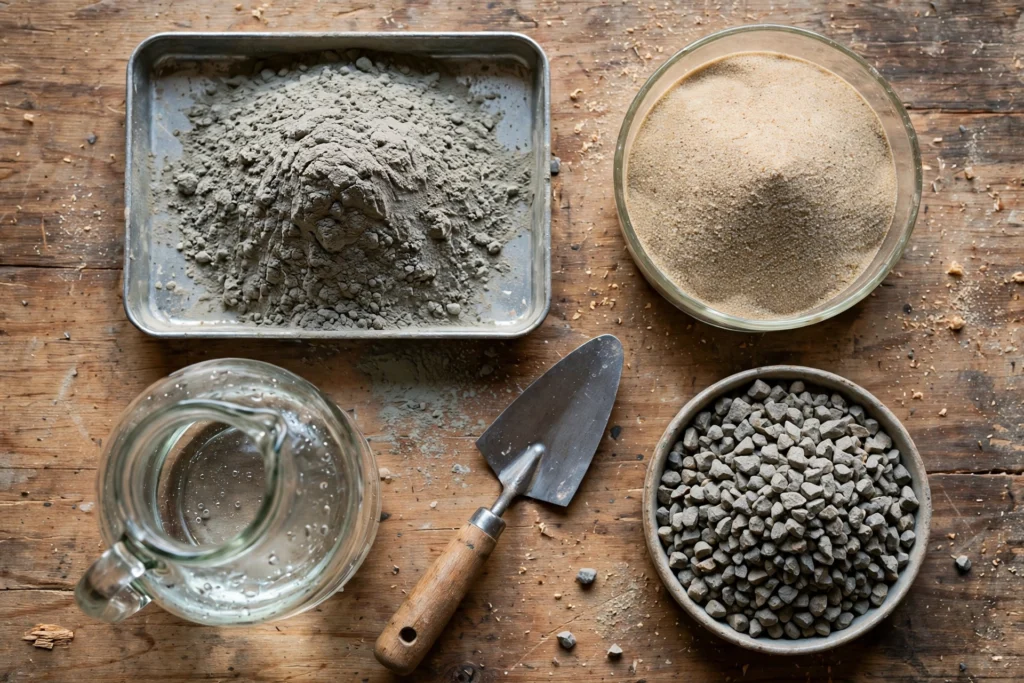
A typical general-purpose concrete mix breaks down roughly like this: cement 10–15%, coarse aggregate 40–50%, sand 25–30%, and water 15–20% by weight. Stronger mixes use more cement and less water; a footing or a driveway usually runs around 3,000–4,000 psi, while a foundation wall or a structural beam can call for 4,000–5,000 psi or more. The numbers on a ready-mix ticket are not decoration — they tell you exactly what strength you are paying for, and a contractor who cannot tell you the psi of the mix going into your driveway is a contractor to question.
How concrete hardens: hydration, not drying
The most useful fact in the whole cement-versus-concrete question is this: concrete does not harden by drying out. It hardens by hydration — a chemical reaction between cement and water that goes on for weeks. That is why fresh concrete is kept damp while it cures, why pros spray it or cover it with plastic in hot weather, and why a slab poured on a scorching day and left to bake can end up weaker than the same mix cured slowly in the shade. Water leaving the surface is not the slab “drying into strength” — it is the reaction running out of the water it needs. Keep new concrete moist for at least the first week, and it will end up far stronger than a slab left to dry in the sun.
Concrete vs Cement: Side-by-Side Comparison
| Feature | Cement | Concrete |
|---|---|---|
| What it is | One ingredient — a fine powder binder | Finished material — cement + water + sand + gravel |
| Strength | Brittle alone, almost no structural strength | 2,500–10,000 psi compressive strength |
| What it is used for | Glue in concrete, mortar and grout | Driveways, sidewalks, foundations, patios, slabs |
| Sold as | Bags of powder (~$10–$20 per 94-lb bag, rough planning estimate, not a quote) | Bags of dry mix (~$5–$8 per 60-lb bag) or ready-mix by the cubic yard (~$125–$200, rough planning estimate, not a quote) |
| Can you use it alone? | No — cracks under load | Yes — that is its purpose |
| Hardens by | Hydration with water | Hydration with water (keep damp while curing) |
| Lifespan | N/A alone | 25–50+ years for a well-built slab |
The price column deserves a note, because prices move by region and by season: the figures above are rough planning estimates for budgeting, not quotes. A 60-pound bag of concrete mix covers about 0.45 cubic feet, so a small repair takes a few bags while a driveway takes a ready-mix truck — and the truck is almost always cheaper per cubic foot once you pass about a cubic yard. If a contractor quotes you a per-yard price far outside the $125–$200 range, ask what strength mix, what delivery distance, and what finishing work is included before you compare it with anything else.
When Should You Use Cement, and When Concrete?
The rule is simple: use concrete for anything structural, and use cement only as an ingredient inside another mix. You never pour pure cement for a load-bearing job, because it will crack — but you do use cement every time you make mortar for bricks, grout for tiles, or a small batch of concrete from a bag.
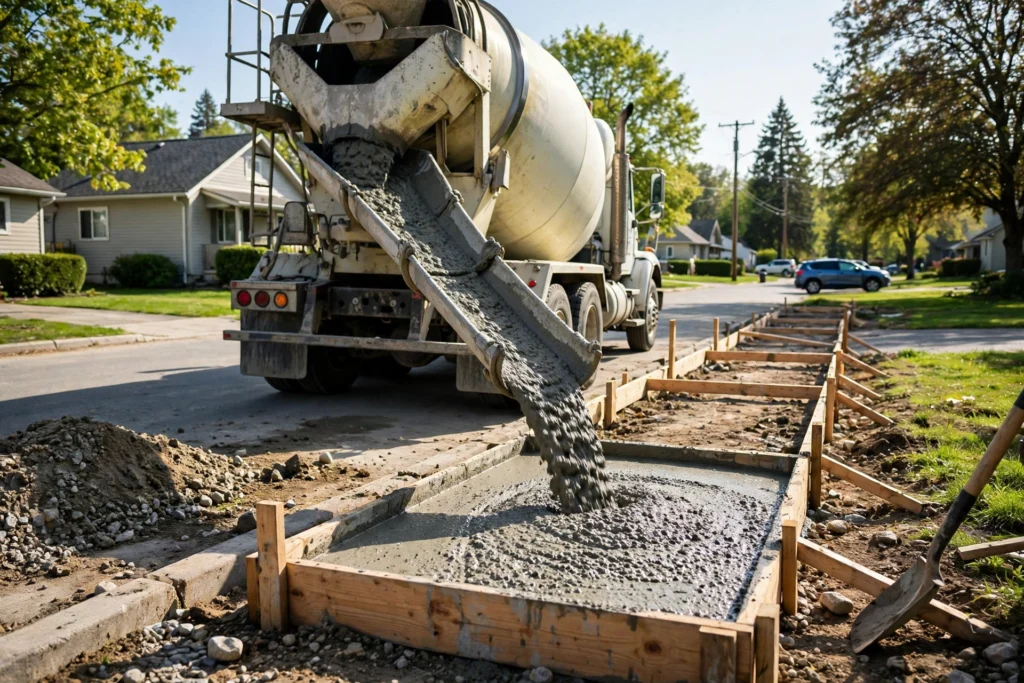
Use concrete when you are building a driveway, sidewalk, patio, foundation, footing, slab, or retaining wall — anything that carries weight, spans a gap, or has to survive weather and traffic. Buy it as bagged mix for small jobs (a fence post, a small pad, a repair) and as ready-mix delivered by truck for anything over about a cubic yard.
Use mortar (cement + sand, sometimes with lime) when you are laying bricks, blocks or stone. Mortar is the sticky bed between the units, not the structure itself — it holds the wall together and flexes slightly with movement, which concrete would not.
Use grout (runny cement + sand) when you are filling the joints between tiles. It is a thin, pourable mix designed to flow into narrow gaps and set hard, and it has no aggregate because aggregate would never fit between tiles. Once it is down and cured, keeping it clean is the next job — our guide to how to clean grout covers the routine that keeps tile joints looking new.
Use pure cement paste almost never, except for a thin skim coat or a slurry brushed onto a surface before a repair, where it acts as a bonding layer. Even there it is a helper, not the structure.
Buy the Bag That Says “Concrete Mix,” Not “Cement”
Standing in the hardware store aisle, the fastest way to get this right is to read the bag. “Portland cement” is the powder — one ingredient. “Concrete mix” is the complete dry mix with sand and gravel already in it: just add water. For a fence post or a small pad, concrete mix is what you want. If you grab cement by mistake, you will be back at the store buying sand and gravel too.
Common Mix-Ups to Stop Making
The most common mix-up is the language itself. “Cement sidewalk,” “cement driveway,” “cement patio” — all wrong, all everywhere, and all worth correcting, because the wrong word leads to the wrong purchase. Sidewalks, driveways and patios are made of concrete, and they contain cement the way a cake contains flour. Nobody calls a cake “flour,” and nobody should call a driveway “cement.”
The second mix-up is treating concrete like it is one material with one strength. A 2,500-psi mix for a garden path and a 4,000-psi mix for a driveway are different products with different cement content and different prices, and pouring the weaker mix where the stronger one belongs is how driveways crack in the first winter. Always match the mix to the job, and always ask for the psi on the ticket.
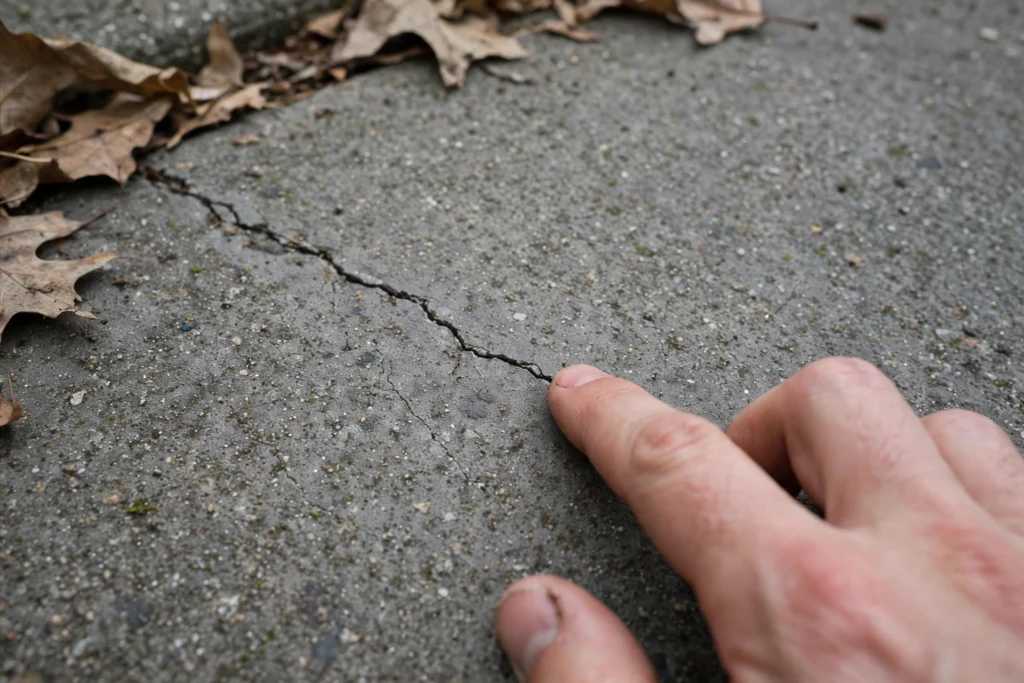
The third mix-up is about curing. Concrete that dries too fast is weak concrete, so the worst thing you can do to a fresh slab on a hot day is leave it baking in the sun. Keep it damp, cover it, or spray it for the first few days — the chemical reaction needs water, and patience in the first week pays off for the next thirty years. Hairline cracks still happen, and most are cosmetic rather than structural: a thin crack in a driveway slab is usually shrinkage, not failure. The photo below shows what normal shrinkage cracking looks like — and when to worry is when a crack is wide enough to fit a coin edge into, when one side sits higher than the other, or when water pools along it after rain.
The fourth mix-up is drilling and hanging. People treat a concrete wall like drywall, then wonder why the screw spins and the picture falls. Concrete needs a masonry bit, a hammer drill for anything serious, and the right anchor — plastic plugs for light loads, sleeve or wedge anchors for heavy ones. Our guide to how to hang pictures on wall covers the hanging side of the job, and the concrete side is the same rule: drill the right hole, use the right anchor, and never trust a drywall screw in masonry.
How Much Does Concrete Cost Compared to Cement?
For a homeowner, the practical comparison is not cement versus concrete by the bag — it is a bag of concrete mix versus a ready-mix truck. A 60-pound bag of concrete mix runs roughly $5–$8, and it covers about half a cubic foot, so small repairs and single fence posts are cheap. A 94-pound bag of Portland cement runs roughly $10–$20, but on its own it builds nothing — you still need sand, gravel and water, which is why almost nobody buys straight cement for a home project. A ready-mix truck runs roughly $125–$200 per cubic yard delivered, and one cubic yard covers about 80 square feet at 4 inches thick, which makes it the cheaper option for any slab, driveway or patio larger than a few square feet. All figures are rough planning estimates, not quotes — get a local price before you budget, because delivery distance and mix strength move the number more than anything else.
The hidden cost in a concrete job is rarely the concrete itself. It is the prep: excavation, the gravel base, the wooden forms, the rebar or wire mesh, the finishing, and the curing time. A contractor quote that looks high often includes all of that, while a bagged-mix DIY price leaves it out — so compare quotes line by line, not total to total, and ask whether the base, the forms and the finishing are in the number.

Concrete vs Cement — Frequently Asked Questions
Is cement stronger than concrete?
No — the opposite. Cement on its own is brittle and cracks under load. Concrete is strong because the sand and gravel inside it carry the weight, reaching 2,500 to 10,000 psi depending on the mix.
Can I use cement instead of concrete for a driveway?
No. Pure cement has no aggregate, so it cracks and crumbles under traffic and weather. A driveway needs concrete — cement plus water, sand and gravel.
Is mortar the same as concrete?
No. Mortar is cement plus sand (sometimes with lime) and is used to lay bricks and blocks. Concrete adds coarse aggregate (gravel), which gives it the strength for slabs, driveways and foundations.
What is the difference between concrete and grout?
Grout is a runny mix of cement and sand with no gravel, made to fill the narrow joints between tiles. Concrete contains gravel and is used for structural work like slabs and driveways.
Does concrete dry or cure?
Concrete cures — it hardens through hydration, a chemical reaction between cement and water. It does not harden by drying out, which is why fresh concrete should be kept damp while it cures.
Why is my concrete cracking?
Most hairline cracks are shrinkage as the slab cures, and they are cosmetic. Wide cracks, cracks with one side higher than the other, or cracks that let water pool are worth a closer look and possibly a professional opinion.
Final Thought
Concrete vs cement comes down to one sentence: cement is the glue, concrete is the building. Remember that, and the rest falls into place — you will buy the right bag, order the right mix, ask the contractor the right question about psi, and stop calling the driveway cement. And once the slab is down, treat it well: keep it damp while it cures, seal it every few years, and it will outlast almost everything else you build around the house — including, if you are decorating the rooms that look out on it, the kitchen wall decor you hang inside.