How to Get Rid of Fleas in Your Home: A Whole-Home Plan That Works
TL;DR
If you want to know how to get rid of fleas in your home, treat the whole home at once: pets, bedding, carpets, furniture, and yard. Fleas spend most of their life cycle off your pet as eggs, larvae, and pupae in carpets and cracks. Wash bedding in hot water, vacuum daily for two weeks, treat pets with a vet-approved product, and use an indoor insect growth regulator to stop eggs hatching. Most homes see bites drop sharply within 1–2 weeks and full control in 3–4 weeks, though dormant pupae can stretch it to 8 weeks. If bites continue after a month of consistent treatment, call a professional.
How to get rid of fleas in your home, step by step
Only about 5% of a flea population lives on your pet as adults, while roughly 95% hides in your home as eggs, larvae, and pupae — the key fact behind how to get rid of fleas in your home. That is why one bath or spray never works, and why this plan treats every stage at once.
The 5-step whole-home plan:
- Treat your pets first with a vet-approved treatment.
- Wash everything washable in hot water — bedding, blankets, pet beds, throw rugs.
- Vacuum daily for two weeks — carpets, rugs, floors, seams, baseboards.
- Treat floors with an insect growth regulator (IGR) to stop eggs maturing.
- Treat the yard where pets rest — shaded spots under decks and bushes.
Scope note: General whole-home treatment only; flea treatment in pregnancy is covered separately on SilkStoneHome.
Why do fleas keep coming back after treatment?
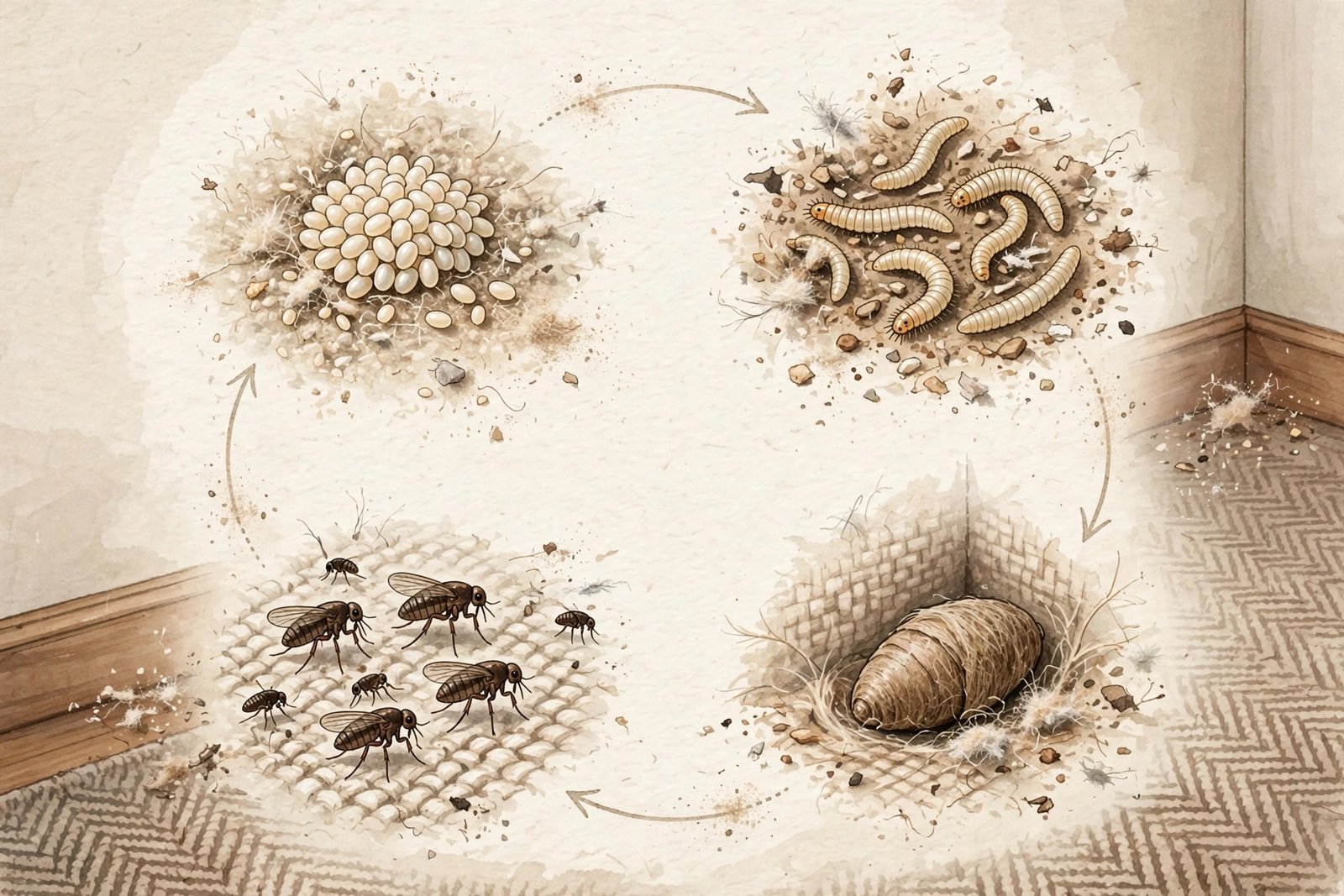
Fleas keep coming back because most treatments kill adults only, while eggs and pupae survive and hatch days or weeks later. A single female lays 40–50 eggs daily, up to 2,000 lifetime, scattering them into carpets and floor cracks. Pupae are toughest: inside a sticky cocoon, they can sit dormant for weeks or months until warmth and movement signal a host. So fresh fleas a week after spraying usually mean the next generation is hatching, not that the product failed. The fix is persistence: keep vacuuming and keep the IGR active for a full month — the hardest part of how to get rid of fleas in your home.
The flea life cycle at a glance:
| Stage | Where it hides | How long it lasts |
|---|---|---|
| Eggs | Carpets, bedding, floor cracks | Hatch in 2–12 days |
| Larvae | Deep in carpet fibers, under furniture | About 5–11 days |
| Pupae | Cocoons in carpets and cracks | 1 week to several months |
| Adults | On pets (and biting people) | 2–3 months on a host |
How do I know if I have fleas in my home?
You likely have fleas if pets scratch or groom excessively, if you find tiny black specks (flea dirt) in fur or bedding, or if you notice small itchy bites around your ankles. To confirm it, comb your pet over white paper: flea dirt looks like black pepper flakes and turns reddish-brown when dabbed with water — it is digested blood. Or try the white-sock test — walk slowly through carpeted rooms in white socks and look for dark specks jumping on. Check pet bedding, the tail base, and the groin and armpits first. If you find flea dirt or live fleas, start the plan the same day — day one of how to get rid of fleas in your home.
How to rid home of fleas: what should I treat first?
When you set out to rid your home of fleas, treat pets and sleeping areas first — the two biggest reservoirs of eggs and adults. Start with a vet-approved treatment for every dog and cat — treating one pet while another goes untreated hands fleas a safe host. At the same time, hot-wash every pet bed, blanket, and throw rug at 140°F (60°C), then dry on high heat for at least 30 minutes — heat kills eggs and larvae detergent may miss. Repeat weekly for a month. This pets-plus-bedding first step is the foundation of how to get rid of fleas in your home; skipping it is the top reason DIY efforts stall.

What is the best way to vacuum for fleas?
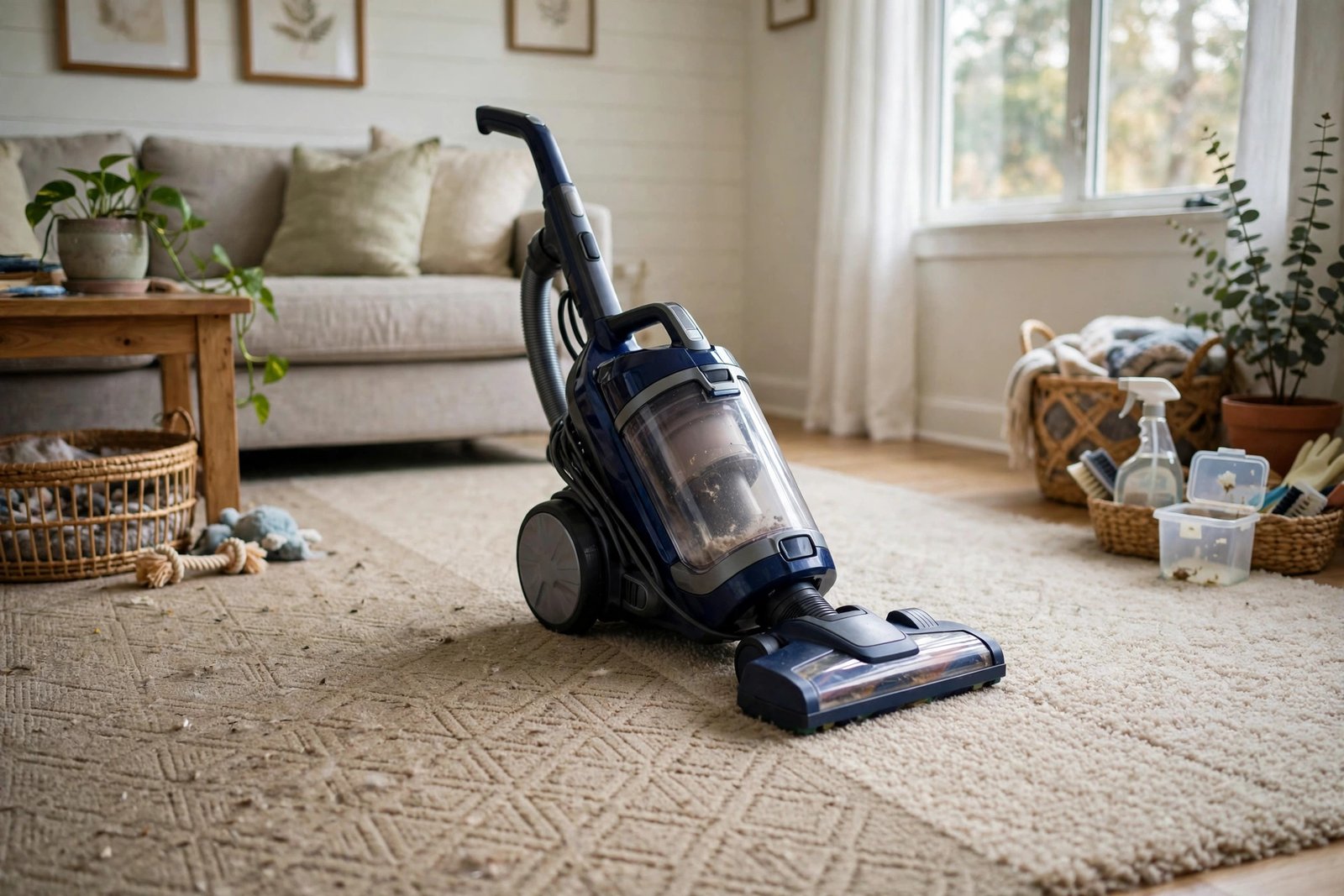
The best way to vacuum for fleas is daily, slowly, and thoroughly — one slow pass beats three fast ones, since suction pulls eggs and larvae from fibers and triggers pupae to hatch into a treated environment. Vacuum every carpeted room daily for two weeks, then 2–3 times weekly for another month, including hard floors, baseboards, under furniture, and sofa cushions. A HEPA-filter vacuum with a beater bar works best on carpets. After every session, seal the bag and bin it outside, or empty a bagless canister outdoors. Vacuuming removes an estimated 30–60% of eggs and larvae in carpets — the workhorse step in how to get rid of fleas in your home.
How should I wash bedding and soft furnishings for fleas?
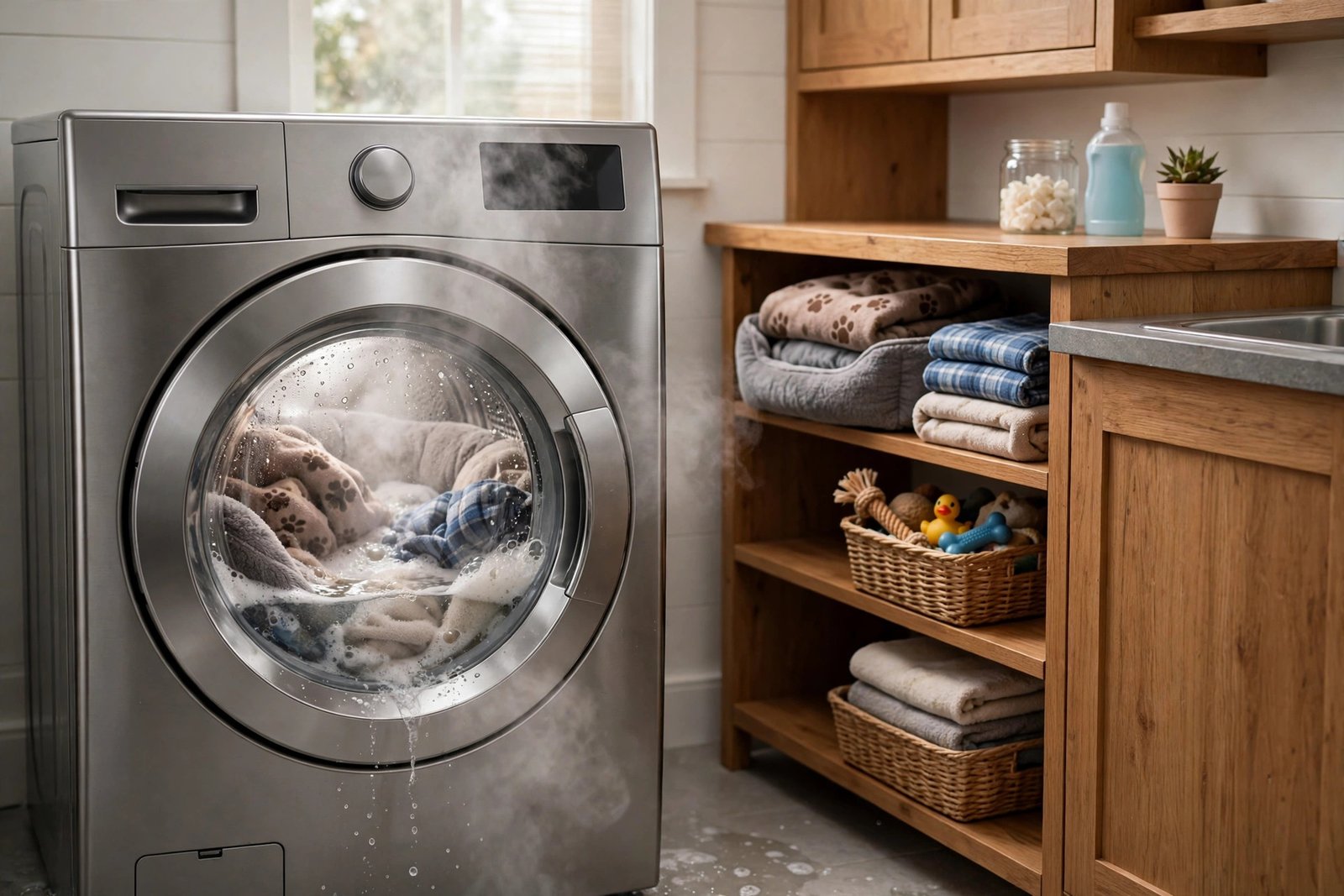
Wash bedding, pet beds, and washable rugs at 140°F (60°C), dry on high heat for 30 minutes, and repeat weekly for a month. Unwashable items — cushions, curtains, upholstery — should be vacuumed and, where labels allow, steam-cleaned, since steam above 140°F kills fleas at every stage. Do not forget car blankets, crate pads, and nap rugs. If an item is heavily infested and cannot be washed or steamed, bag it for two weeks or discard it rather than letting it re-seed the room. This weekly hot-wash habit is essential to how to get rid of fleas in your home for good.
Which flea treatments work indoors, and how long do they take?
Effective indoor flea treatments combine an adulticide, which kills adults, with an insect growth regulator (IGR), which stops eggs and larvae maturing — with realistic timelines of 1–2 weeks for fewer bites and 3–4 weeks for full control. Adulticides give fast knockdown but wear off, while IGRs such as methoprene or pyriproxyfen work up to 7 months on treated surfaces. Apply household flea spray to carpets, rugs, under furniture, and baseboards exactly as labeled, keeping pets and children out until surfaces are dry. Skip foggers as a first step: they rarely reach under furniture and cracks, and leave no lasting IGR protection. A few stragglers in week three do not mean failure — but if you are following how to get rid of fleas in your home correctly, a steady or rising bite count after four weeks means calling a professional.
How do I treat my yard for fleas?
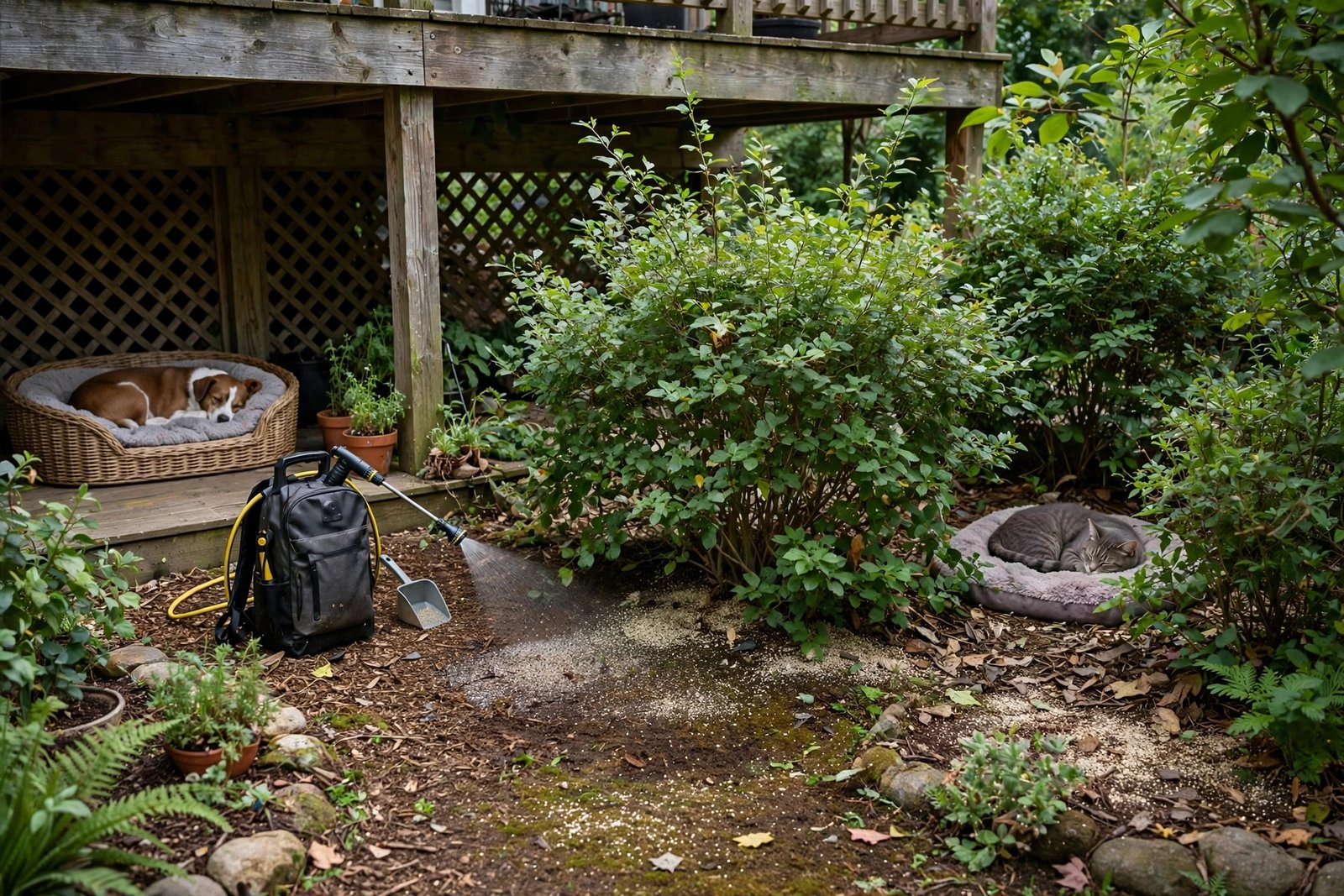
Treat your yard for fleas by focusing on shaded, humid spots where pets rest and breed — under decks, porches, and bushes — not the whole lawn. Fleas hate sun and dry grass, so mow short, rake litter, and trim shrubs to let light into damp corners. Apply yard flea spray or granules to pet areas, kennels, and fences, following label drying and re-entry times before pets return. Re-treat after heavy rain, and keep up yard care through warm months — fleas thrive between 70°F and 85°F with humidity above 50%. Blocking wildlife access under decks also helps — an outdoor step many guides to how to get rid of fleas in your home leave out.
How can I prevent fleas from coming back?
Prevent fleas from coming back by keeping pets on year-round prevention, vacuuming 2–3 times weekly, and washing pet bedding weekly, even after the infestation looks gone. One untreated summer month can restart the cycle, and indoor-only pets are not exempt — fleas hitchhike in on clothing and visiting pets. Inspect new or foster pets with a flea comb before they share furniture, and seal baseboard cracks and door gaps, which also helps with other pests — see our guide to what attracts cockroaches. A monthly five-minute check — comb the pet, check bedding, look for flea dirt — catches new problems early, and it is the cheapest part of how to get rid of fleas in your home permanently.
How much does flea treatment cost: DIY vs. professional?
A DIY whole-home effort typically runs $60–$180, while professional treatment usually runs $200–$450 for an average home. DIY suits early, contained infestations but demands a month of consistent vacuuming, washing, and re-treatment. Professional treatment costs more but buys thorough coverage, commercial-grade IGRs, and usually a follow-up visit. Use the table as rough planning estimates only — these are not quotes, and prices vary by region, home size, and severity. Budgeting this way keeps how to get rid of fleas in your home affordable.
| Treatment option | Typical cost (planning estimate, not a quote) | Best for |
|---|---|---|
| Pet flea treatment (per pet, monthly) | $15–$60 | Every infested household |
| Flea comb + household IGR spray | $25–$60 | DIY whole-home treatment |
| HEPA bags / filters | $15–$40 | Daily vacuuming homes |
| Yard flea spray or granules | $20–$50 | Pet yards |
| Professional treatment (average home) | $200–$450 | Heavy infestations, large homes |
| Professional follow-up visit | $75–$150 | Second treatment waves |
When should I call a professional for fleas?
Call a professional if bites continue after four consistent weeks of treatment, if the infestation covers multiple rooms, or if anyone has a severe reaction to bites. Professionals bring commercial-grade IGRs, equipment reaching deep into carpets and voids, and experience finding hidden reservoirs such as crawl spaces. They can also confirm whether a recurring problem is actually fleas — other pests need a different plan, as with ants that return after treatment (see ants that keep coming back). If you need a pro, pestexpertpro.com can assess and treat the whole home, including follow-ups for late-hatching pupae. Knowing when to stop DIY is itself part of how to get rid of fleas in your home without wasting another month.
How long does it take to get rid of fleas completely?
Getting rid of fleas completely usually takes 3–4 weeks, and up to 8 weeks with many dormant pupae. Expect week one to feel slow: vacuuming and IGRs do not kill pupae, so adults keep hatching. Week two usually brings a noticeable drop in bites as adults fall and the IGR blocks new generations. By week four, a consistently treated home should be nearly flea-free. Fresh fleas daily after eight weeks mean something feeds the cycle: an untreated pet, a visiting animal, a wildlife reservoir, or a missed room. Track bite counts and comb checks weekly and judge the trend over weeks, not days. That patience is what makes how to get rid of fleas in your home actually work.
FAQ
How fast does how to get rid of fleas in your home work?
Most homes see bites drop sharply within 1–2 weeks and full control in 3–4 weeks, with stubborn cases taking up to 8 weeks as pupae hatch. Consistency matters most: daily vacuuming for two weeks, weekly hot washes, and an IGR treatment break the cycle.
Do I need to treat my pets if I treat the house?
Yes — a complete plan for how to get rid of fleas in your home treats pets and house together: pets carry egg-laying adults, the house holds eggs, larvae, and pupae. Treating one side only restarts the infestation.
Can fleas live in a home without pets?
Yes, fleas can survive weeks without pets by feeding on people, and pupae can wait months in carpets. Previous tenants’ pets, visiting animals, and wildlife can all seed a pet-free home. The same plan applies: vacuum, wash, and IGR-treat.
Is vacuuming alone enough for how to get rid of fleas in your home?
No, though it removes an estimated 30–60% of eggs and larvae from carpets. Pair it with pet treatment and an IGR — it cannot reach every egg in cracks or kill pupae in cocoons.
What temperature kills fleas in laundry?
Water at 140°F (60°C) plus a high-heat dryer cycle of 30 minutes kills fleas at every stage. If fabric cannot take hot water, a long high-heat dryer cycle alone is next best; steam above 140°F works for unlaunderable items.
Why do I still see fleas two weeks after treatment?
Seeing fleas two weeks after treatment is normal and usually means pupae are hatching, not that the product failed. Vacuuming encourages pupae to hatch into a treated environment. Judge the four-week trend: falling bite counts mean the plan is working.
What search variations do people use for this topic?
People also search “how to rid home of fleas,” and common misspellings include “how yo get rid of fleas” and “how to get rid of fleaa.” All mean the same thing — this article’s whole-home flea plan.