Mice in the Walls or Attic? How to Get Rid of Them for Good
It’s 2:14 a.m. and something is scratching inside your bedroom wall — deliberate, stop-start, unmistakable. Not the house settling. You lie there in the dark, mapping its commute: up the wall, across the ceiling, into the attic. By morning you’re exhausted and googling “scratching in walls at night” before coffee. If you’re learning how to get rid of mice in walls, this guide covers the complete three-phase fix.
Mice in walls and attics are a special misery: you can hear them but can’t reach them, traps in the open catch nothing because the mice never leave the voids, and every night reminds you they’re in there — gnawing, nesting, and working on your insulation and wiring. The fix has three phases, in order: confirm what you’re dealing with, trap the interior population strategically, and seal them out permanently. Skip any phase and the scratching comes back.
TL;DR: Confirm mice (nighttime scratching, rice-grain droppings, gnaw marks, musky odor). Trap with snap traps placed perpendicular along runways in attics, basements, and behind appliances — peanut butter or nesting material as bait, plenty of traps (a dozen isn’t excessive), checked daily. Don’t use poison indoors: mice die in walls and stink for weeks. After catches stop for two weeks, seal every exterior entry point (see our exclusion guide), then clean up safely: ventilate, never sweep dry droppings (hantavirus risk), disinfect with wet methods. Call a pro for heavy infestations or attic remediation.
How to Confirm It’s Mice
Sounds. Mice are nocturnal and light: faint scratching, scurrying, and gnawing, mostly between dusk and dawn along a consistent route. Heavy thumping or slow dragging suggests rats or squirrels instead.
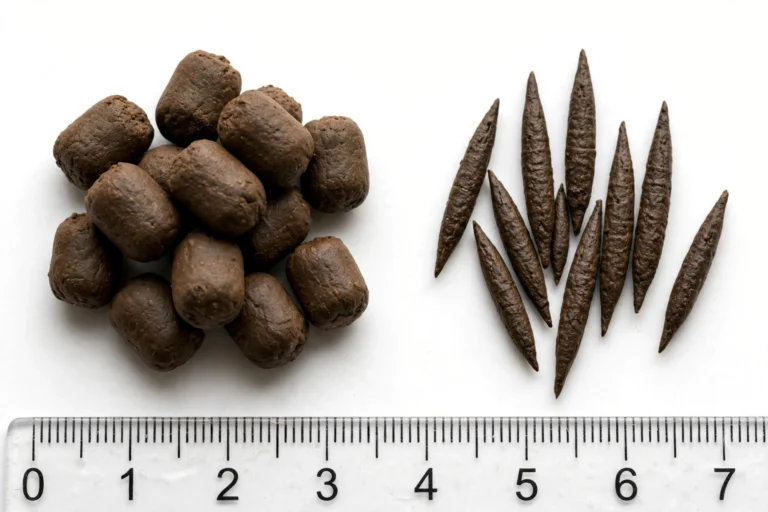
Droppings. The gold standard. Mouse droppings are 1/8–1/4 inch, rice-grain-shaped with pointed ends, found along runways: attic floor edges, basement sill plates, behind appliances. Fresh ones are dark and soft; old ones gray and crumbly. A few scattered pellets versus dozens along a runway tells you whether it’s a visitor or a population.
Gnaw marks. Mice gnaw to wear down ever-growing incisors: ragged 1–2 inch holes in drywall corners, chewed packaging, gnawed attic insulation. Fresh gnawing looks light; old gnawing darkens.
Odor and nesting. A persistent musky, ammonia-like smell in a closed room or attic means established activity — that’s urine. Shredded paper, insulation, or fabric tucked into corners confirms they’re living there, not passing through.
Tracks. In dusty attics, look for tiny footprints and tail drags. A light dusting of flour near a suspected runway reveals overnight traffic.
How to Get Rid of Mice in Walls: Trap Placement Strategy
You can’t put a trap inside the wall — so trap where mice travel: the runways between voids and food/water. That means attics, basements, crawlspaces, and the hidden highways behind appliances and cabinets.
Choose the right trap
| Trap type | Pros | Cons | Best for |
|---|---|---|---|
| Snap trap | Cheap, instant kill, reusable, easy to read | Placement-sensitive; mind your fingers | The workhorse — most situations |
| Electronic trap | No-touch kill, indicator light | Expensive, batteries, one mouse at a time | Low-maintenance spots checked rarely |
| Live-catch | No kill | Must release miles away; mice often return or die | Rarely the practical choice |
| Glue board | Cheap, simple | Inhumane, catches non-targets | Not recommended |
Snap traps are the professional standard: cheap enough to deploy by the dozen, instantly lethal, and they show exactly where activity is heaviest.
Placement: think runways, not rooms
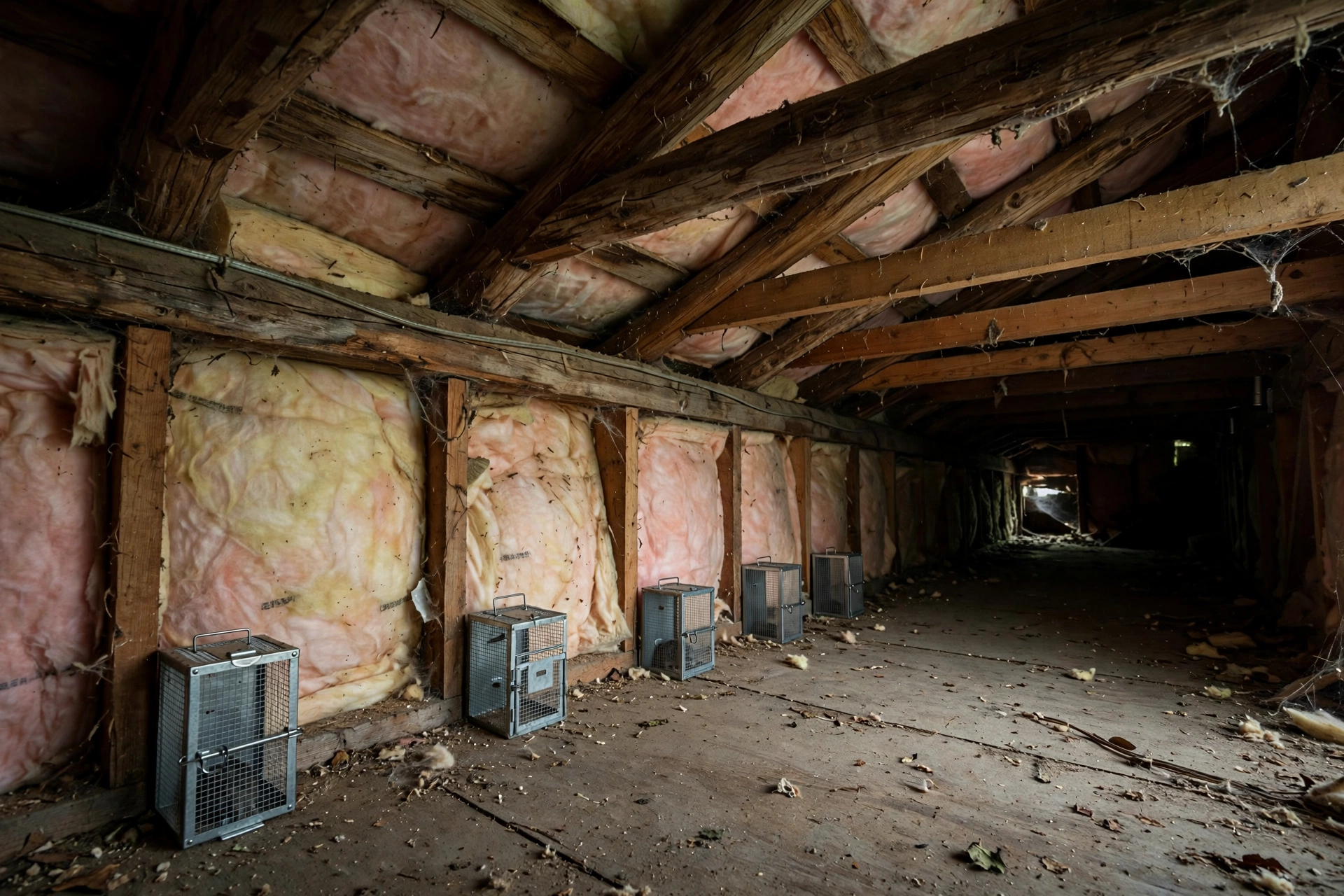
Mice hug edges, navigating by whisker contact. Place snap traps perpendicular to the wall, trigger end facing the baseboard, every 6–10 feet: attic floor edges, basement walls, behind the fridge and stove, inside cabinet kick spaces. Set them in pairs, back to back — a mouse approaching from either direction meets a trigger.
Bait and numbers
A tiny smear of peanut butter is the classic — a big glob lets mice lick it off without tripping the trigger. Or tie a small tuft of cotton ball to the trigger: mice tug nesting material, and it works even when they aren’t hungry. And deploy enough: a dozen traps is a starting point for an active attic, not overkill. Check daily — a sprung trap left for days becomes a smell — and keep trapping until two full weeks with zero catches. Stopping at one quiet week is how infestations “come back.”
PRO TIP
Wear gloves handling traps and bait. Human scent barely matters to mice, but skin oils make peanut butter go rancid faster — and gloves protect you from droppings.
PRO TIP
Pre-bait unset traps for 2–3 nights in heavy infestations. Let wary mice feed safely first, then set the triggers — your night-one catch rate roughly doubles.
Why Poison Is a Bad Idea Indoors
Poisoned mice don’t die politely by the bait station. They retreat into wall voids, under insulation, and into ductwork — where you can’t retrieve them. A decomposing mouse inside a wall smells horrific for 2–4 weeks, attracts flies, and all you can do is wait.
Then there’s secondary poisoning: owls, hawks, cats, and dogs that eat poisoned mice absorb the toxicant too. Modern rodenticides persist in tissue, and wildlife casualties are well documented. Add the risk to curious pets and toddlers, and indoor poison fails on effectiveness, safety, and basic decency. If rodenticides are used at all, keep them to secured tamper-resistant stations outdoors — preferably a professional’s call.
Exclusion: The Permanent Fix
Trapping removes the current population; exclusion prevents the next one. And fall — right now — is when it matters, as cooling nights push rodents toward warm structures.
The short version: a mouse fits through anything a pencil fits through. Walk the exterior and seal every pipe, wire, and vent penetration with copper mesh packed tight and capped with caulk; cover vents with 1/4-inch hardware cloth; add door sweeps where you see daylight. Never rely on spray foam alone — mice chew straight through it. The full method is in our guide to finding and sealing mouse entry points.
Sequence matters: trap hard for 2–4 weeks first, then seal the exterior, keeping a few sentinel traps out for another two weeks. Sealing first can trap mice inside voids with no exit — which is how you get desperate gnawing in brand-new places.
Cleanup and Sanitation: Do It Safely
Once the mice are gone, the mess remains — and it’s a health consideration, not just gross. Deer mice can shed hantavirus in droppings and urine; house mice carry their own bacteria. Rules:
- Ventilate first. Air out attics, basements, and closed rooms for 30 minutes before starting.
- Never sweep or vacuum dry droppings. That aerosolizes virus particles — the exact exposure you’re avoiding. Wet everything down first.
- Wet-wipe method. Soak droppings and nests with disinfectant (or 1:10 bleach solution), wait 5 minutes, wipe up with paper towels. Double-bag and trash.
- Gloves and a mask. Rubber gloves plus at least a dust mask; a proper respirator for heavy attic contamination.
- Judge the insulation. Lightly soiled insulation can sometimes stay; attic insulation saturated with urine and droppings usually needs professional removal and replacement. A strong ammonia smell is your answer.
Wash stored items from infested areas, launder fabrics hot, wipe shelving before restocking. Then monitor: a couple of sentinel traps in the attic and basement, checked monthly, catch the next invasion at mouse number one.
PRO TIP
Photograph droppings concentrations and gnawed areas during cleanup. If activity ever returns, you’ll know instantly whether it’s new or a missed spot — and any pro you call will thank you for the documentation.
When to Call a Professional
DIY trapping and exclusion handle most house-mouse situations. Call a licensed pest professional when: the infestation is heavy (dozens of droppings, strong odor, multiple rooms), you can’t find entries or the attic/crawlspace is unsafe, contaminated insulation needs remediation, or two months of disciplined trapping and sealing hasn’t ended it. Pros bring borescopes for wall voids, commercial exclusion materials, and attic remediation equipment — cheap next to chewed wiring and ruined insulation.
Bottom Line
- Confirm first: nighttime scratching + rice-grain droppings + gnaw marks = mice.
- Trap the runways, not the rooms: snap traps perpendicular to walls, every 6–10 feet, in attics, basements, behind appliances.
- A dozen traps is a starting point. Check daily; don’t stop until two weeks with zero catches.
- No poison indoors — dead mice in walls stink for weeks and poison wildlife and pets.
- Seal after trapping: quarter-inch rule, copper mesh + caulk, hardware cloth, door sweeps. Full guide: find and seal mouse entry points.
- Clean up wet, never dry — ventilate, disinfect, glove and mask up.
- Fall is the deadline — exclusion now prevents the winter invasion.
Frequently Asked Questions
How do I know if the scratching in my walls is mice?
Light, fast scratching at night along a consistent route, plus rice-grain droppings with pointed ends along baseboards or in the attic. Heavy thumping suggests rats or squirrels instead.
Will mice eventually leave my attic on their own?
No. Attics offer warmth, shelter, and nesting material — ideal habitat. Without intervention a small population breeds into a large one; one pair can produce dozens of descendants in months.
How many traps do I need for an attic?
More than you think — a dozen is a reasonable start. Place pairs perpendicular to walls every 6–10 feet. Under-trapping is the top reason DIY efforts drag on for months.
Is it safe to clean up mouse droppings myself?
Yes with precautions: ventilate, wear gloves and a mask, never sweep or vacuum droppings dry — wet them with disinfectant first — and double-bag waste. For heavy attic contamination, consider professional remediation.
Why do I still hear mice after catching several?
Either the population is larger than estimated (keep going — don’t stop at the first quiet week), or new mice are entering through unsealed gaps. Persistent activity after 3–4 weeks usually means missed entries.
Can mice chew back through sealed entries?
They can enlarge small gaps, which is why you seal with chew-proof materials (copper mesh, hardware cloth, metal) and trap the interior population first. Done right, they can’t chew back through.