Mouse vs Rat: How to Tell Them Apart (Size, Tail, Droppings)
TL;DR
What is the difference between a mouse and a rat? Size first: a house mouse has a 2–4 inch body and weighs 0.5–1 ounce, while a Norway rat has a 7–10 inch body and weighs 10–17 ounces. Droppings are the most reliable clue — mouse pellets are 1/8–1/4 inch and rice-shaped, rat pellets are 1/2–3/4 inch and capsule-shaped. The difference changes the trap.
You found droppings in the pantry, or something scratched in the wall at night. What is the difference between a mouse and a rat? More than size: a different species, a different trap plan, and a different level of risk. A mouse never grows into a rat, and treating a rat problem like a mouse problem wastes weeks. This guide answers what is the difference between a mouse and a rat across size, droppings, tails, ears, behaviour and entry gaps, with a mouse plan and a rat plan. Prices are rough planning estimates, not quotes.
What Is the Difference Between a Mouse and a Rat?
What is the difference between a mouse and a rat? Size, weight and behaviour: a house mouse has a 2–4 inch body and weighs 0.5–1 ounce, while a Norway rat has a 7–10 inch body and weighs 10–17 ounces. Mice investigate new traps in a day or two; rats avoid new objects for days.
First, they are different species, not different ages. A house mouse (Mus musculus) never grows into a rat, and a young rat is not a big mouse. A mouse weighs about as much as a couple of coins; a Norway rat weighs as much as a can of soup. That size gap is the first answer to what is the difference between a mouse and a rat, and it shows up in the droppings, the gnaw marks, the gaps, and the damage.
Second, the difference changes the treatment. Mice walk straight into a new trap within a day or two. Rats are neophobic — they avoid anything new for days to a week — so a rat trap must sit baited and unset for several days first. Identification is the first step of the fix, and it is why knowing what is the difference between a mouse and a rat matters before you buy a single trap.
How Big Is a Mouse Compared to a Rat?
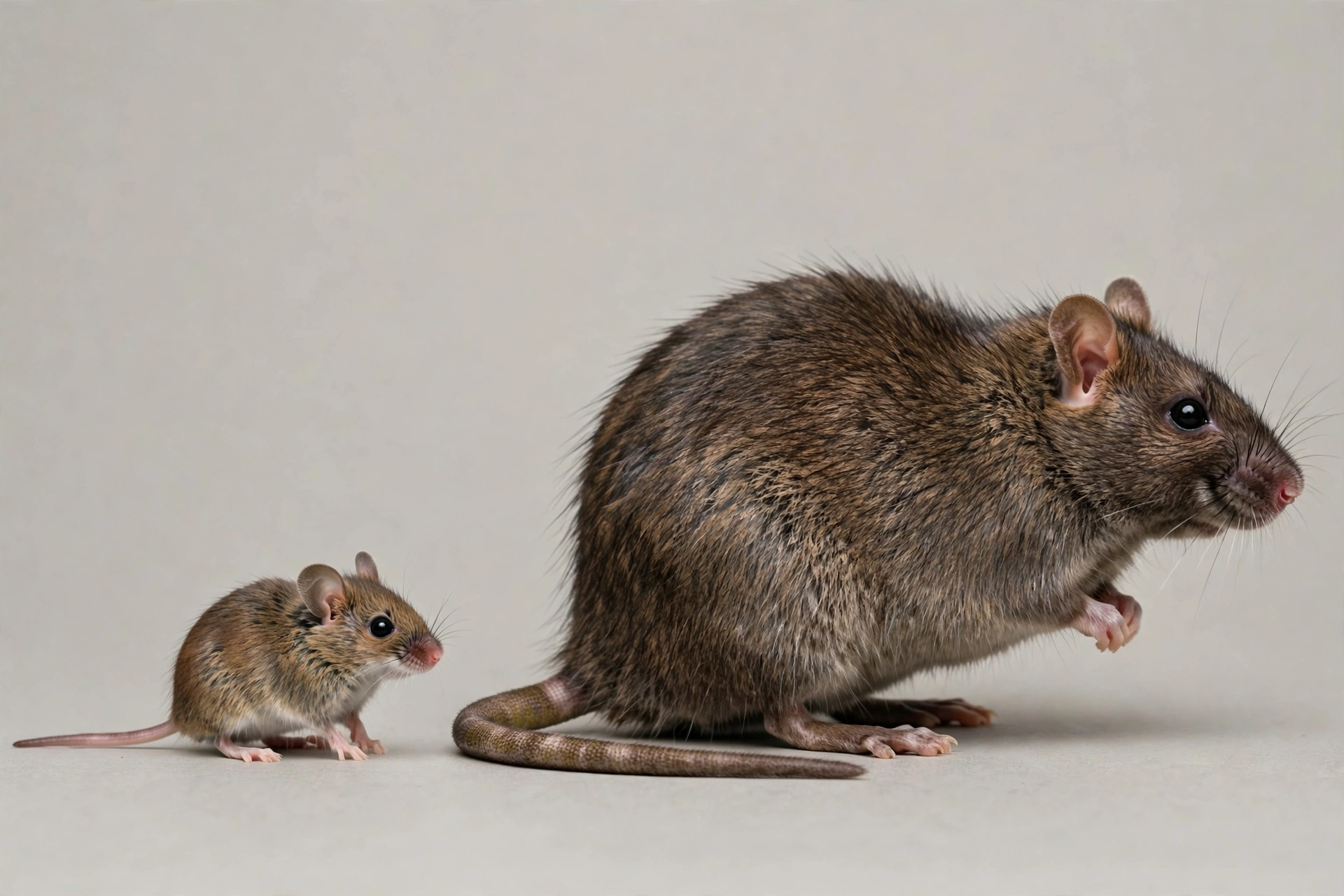
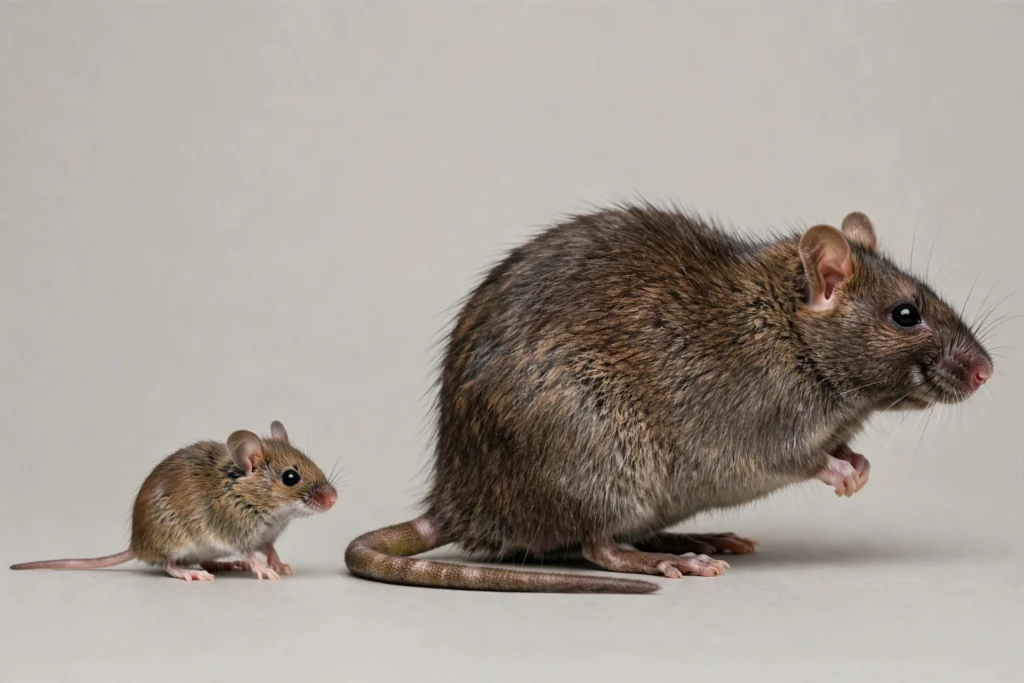
A house mouse is far smaller than a rat: its body is 2–4 inches long with a tail of about the same length, and it weighs 0.5–1 ounce. A Norway rat has a body of 7–10 inches, up to 18 inches with the tail, and weighs 10–17 ounces — roughly 10–17 times heavier.
Size is the fastest clue when you see the animal. A house mouse fits in the palm of a hand, tail included, about 5–7 inches long. A Norway rat is a different scale: 7–10 inches of body alone, up to 18 inches with the tail, and 10–17 ounces. If the animal was bigger than a sparrow, it was a rat; if it could hide behind a coffee mug, it was a mouse. When people ask what is the difference between a mouse and a rat, size is the answer most of them want.
| Feature | House mouse | Norway rat |
|---|---|---|
| Body length | 2–4 inches | 7–10 inches |
| Total length (with tail) | 5–7 inches | Up to 18 inches |
| Weight | 0.5–1 ounce | 10–17 ounces |
| Tail | Thin, as long as body | Thick, scaly, shorter than body |
| Ears | Large for head | Small for head |
| Snout | Pointed | Blunt |
| Droppings | 1/8–1/4 in, rice-shaped | 1/2–3/4 in, capsule-shaped |
How Do Mouse and Rat Droppings Differ?
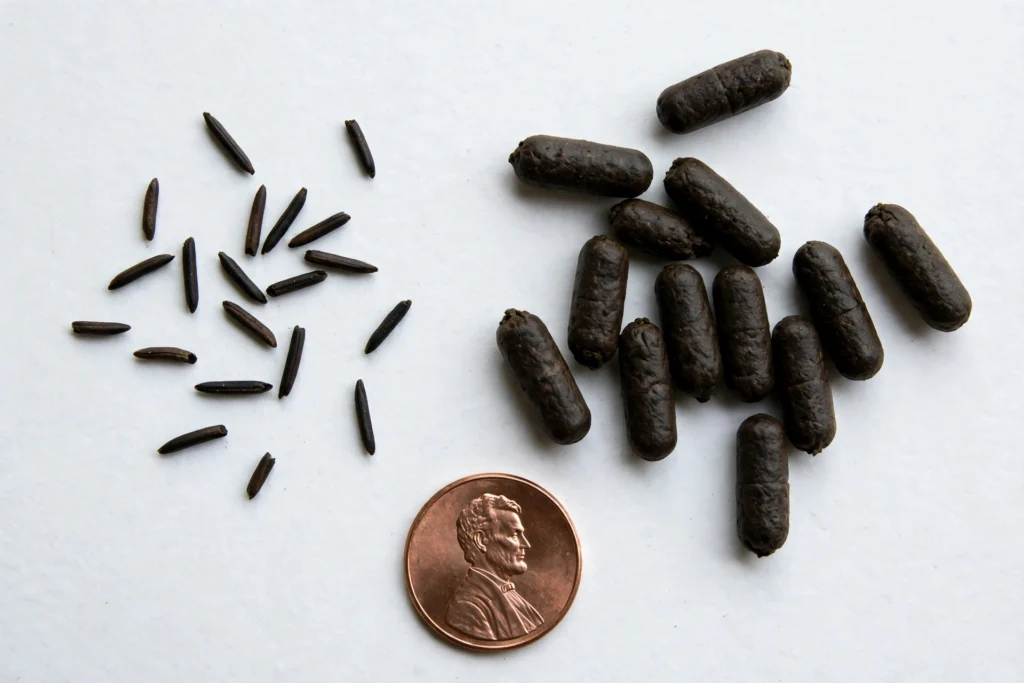
Mouse droppings are 1/8–1/4 inch long, shaped like grains of rice with pointed ends, and a mouse leaves 50–75 a day. Rat droppings are 1/2–3/4 inch long, capsule-shaped with blunt ends, about the size of an olive pit, and a rat leaves 20–50 a day. Size is the most reliable clue.
When people ask what is the difference between a mouse and a rat, droppings are the most reliable answer, because you almost never see the animal — mice and rats are nocturnal, and by the time you spot one, the infestation is established. Mouse pellets are small, dark, rice-shaped with pointed ends, about 1/8–1/4 inch long. Rat pellets are much bigger, about 1/2–3/4 inch, capsule-shaped with blunt ends, roughly the size of an olive pit.
A single mouse leaves 50–75 pellets a day, scattered along runways; a rat leaves 20–50, usually in clusters near feeding areas. Never sweep droppings dry — spray them with disinfectant, wear gloves and a mask, and pick them up with a paper towel. That is why droppings, not sightings, answer what is the difference between a mouse and a rat for most homeowners. Our guide to squirrel droppings covers a third animal that leaves pellets in the same places.
PRO TIP
Photograph the droppings next to a coin for scale before you clean them up — the fastest way to get a firm identification from a pest professional later.
How Do You Tell a Baby Rat From a Mouse?
Tell a baby rat from a mouse by the head and feet: a young rat’s head and hind feet look too big for its body, while a mouse looks balanced and proportional. A baby rat has a thicker tail and smaller ears. If the head looks oversized, it is a young rat, not a mouse.
This is the hardest identification in the guide, because a baby rat is roughly mouse-sized. The giveaway is proportion, not size: a young rat’s head and hind feet look too big for its body. A mouse looks balanced, with large ears and a pointed snout. The baby rat’s ears look small against its oversized head, and its snout is blunter.
The tail confirms it: a baby rat already has the thick, scaly tail of an adult rat, while a mouse tail stays thin. If the head looks oversized, it is a young rat, not a mouse — the trickiest case of what is the difference between a mouse and a rat, because a young rat means a nest nearby.
How Do Mouse and Rat Tails Differ?
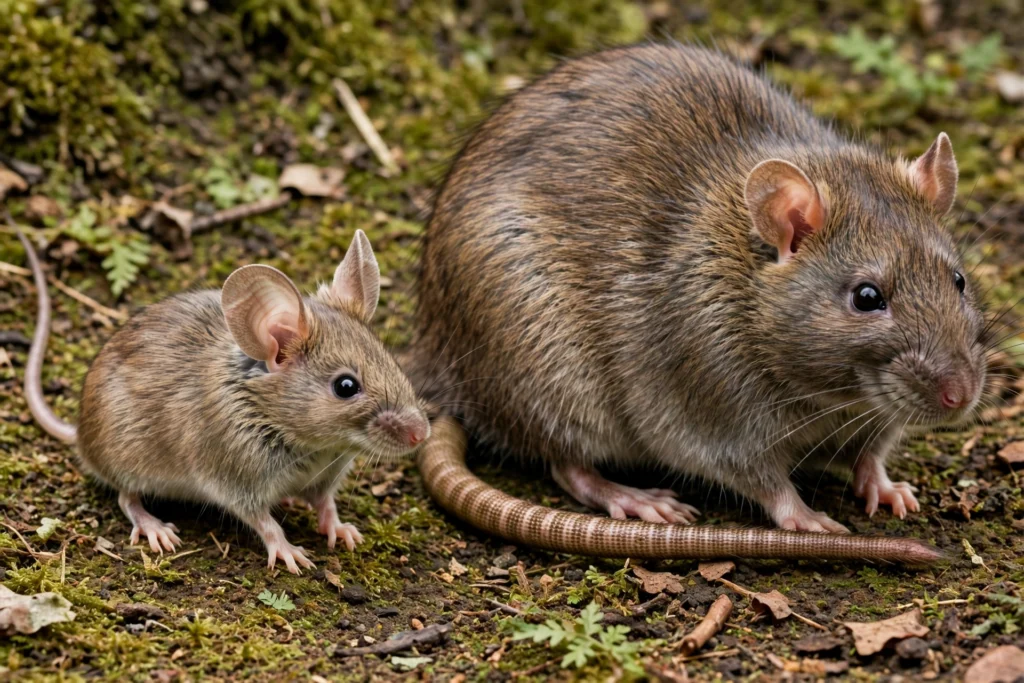
A mouse tail is thin, nearly hairless, and about as long as the mouse’s body. A Norway rat tail is thick, scaly, and shorter than its body, while a roof rat tail is longer than its body. Tail length is a quick clue, but size and droppings are more reliable.
The tail is the clue most people notice second, after size. A house mouse tail is thin, nearly hairless, and about as long as the body. A Norway rat tail is thick, visibly scaly, and shorter than the body.
That exception is why the tail alone cannot settle what is the difference between a mouse and a rat. Use the tail with size and droppings: a thin tail on a tiny animal is a mouse; a thick scaly tail on a large animal is a Norway rat; a long tail on a medium animal with a blunt snout is a roof rat. The tail is a supporting clue, not the verdict.
How Do Mice and Rats Behave Differently?
Mice are curious and investigate new objects, including traps, within 1–2 days, so trapping mice works fast. Rats are neophobic and avoid new objects for days to a week, so traps must sit baited and unset for several days first. That difference changes the trap plan: mice are bold, rats are cautious.
Behaviour is where identification turns into a plan. Mice are curious: put a new trap in a mouse runway and a mouse will investigate it within a day or two, which is why mouse trapping works fast. Rats are the opposite: neophobic, a rat will avoid a new trap for days to a week. A rat trap must sit baited and unset for several days so the rats learn it is safe, and only then should it be set.
What is the difference between a mouse and a rat in behaviour? Boldness against caution. Mice nibble from many places; rats return to the same food source once they trust it. Mice run along walls in the open; rats stick to cover and runways. Feeding habits are one more part of what is the difference between a mouse and a rat — and the trap plan must match the animal, or the traps will sit empty.
| Step | Mouse plan | Rat plan |
|---|---|---|
| Traps | Set immediately; mice investigate in 1–2 days | Bait unset 3–7 days first, then set |
| Trap size | Mouse snap traps ($5–$15 a pack) | Rat snap traps, larger and stronger |
| Bait | Peanut butter, chocolate, nesting material | Peanut butter, dried fruit, bacon |
| Placement | Along walls, every 6–10 feet | Along runways, near burrows |
| Sealing | Seal gaps over 1/4 in ($10–$30 supplies) | Seal gaps over 1/2 in; rats gnaw larger |
| Timeline | Results in days | Results in 1–3 weeks |
PRO TIP
For rats, place the baited but unset trap exactly where you will set it later, and do not move it — moving it restarts the waiting period.
How Small a Gap Can a Mouse or Rat Squeeze Through?
A mouse can squeeze through a gap just 1/4 inch wide — about the diameter of a pencil — because its skull is small and its body is flexible. A rat needs a gap of 1/2–3/4 inch, but it can gnaw a smaller opening larger. Seal every gap wider than 1/4 inch with steel wool and caulk.
The gap rule is the most surprising fact in rodent control. A mouse can squeeze through a 1/4-inch gap — the diameter of a pencil — because its skull is the widest part of its body, and if the skull fits, the rest follows. That makes the gap under a door or around a pipe a mouse door. A rat needs a 1/2–3/4 inch gap, but it can gnaw a smaller opening larger.
Sealing is the permanent fix, and it is cheaper than trapping: stuff steel wool into every gap wider than 1/4 inch, then seal with caulk — rats and mice cannot chew through steel wool. Check where pipes enter the house, and the gaps around doors and windows. Sealing supplies cost roughly $10–$30. That gap size is one more answer to what is the difference between a mouse and a rat, and it decides the sealing plan. If you are dealing with other yard pests, our guide to how to get rid of moles in your yard and signs of voles in yard cover the animals that dig rather than squeeze.
When Should You Call a Pro for Mice or Rats?
Call a pro for mice or rats when you see rats, when droppings keep appearing after two weeks of trapping, when you hear gnawing in the walls at night, or when you find droppings near food. A professional rodent visit costs roughly $100–$300. Rats especially need a pro, because they are harder to trap.
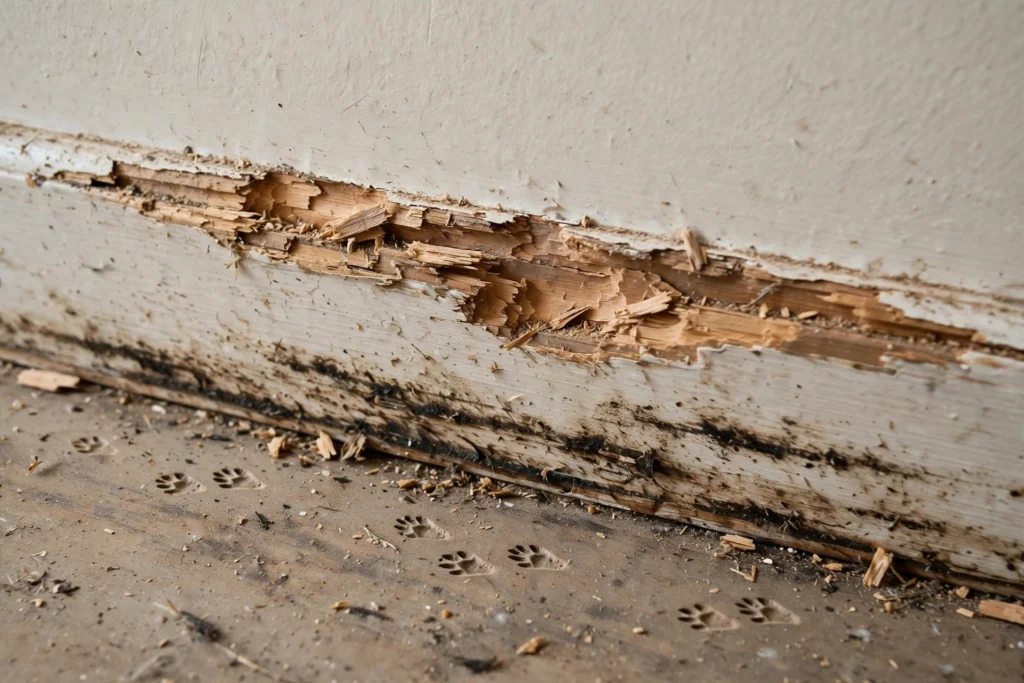
Rats are the clearest trigger for calling a professional. A mouse problem is often a do-it-yourself job: a few traps, some sealing, and a week of checking. A rat problem is a different scale — rats are bigger, smarter, harder to trap, and more destructive. If you have seen a rat, heard gnawing at night, or found droppings near food after two weeks of trapping, the do-it-yourself phase is over.
A professional rodent visit costs roughly $100–$300 as a planning estimate. A good service inspects the house, finds the entry points, and seals the gaps — and comes back if the activity continues. If you need a pro, our sister site can help — see pestexpertpro.com for professional rodent control in your area. What is the difference between a mouse and a rat, in the end, is also the difference between a weekend job and a professional one.

Frequently Asked Questions
Can a mouse grow into a rat?
No — and that is the heart of what is the difference between a mouse and a rat: they are different species (house mouse Mus musculus vs Norway rat Rattus norvegicus and roof rat Rattus rattus). A baby rat is roughly mouse-sized, but its head and feet look too big for its body.
What is the difference between a mouse and a rat in size?
A house mouse has a 2–4 inch body and weighs 0.5–1 ounce; a Norway rat has a 7–10 inch body and weighs 10–17 ounces — roughly 10–17 times heavier.
Are rat droppings bigger than mouse droppings?
Yes, much bigger. Mouse droppings are 1/8–1/4 inch, rice-shaped with pointed ends; rat droppings are 1/2–3/4 inch, capsule-shaped with blunt ends, about the size of an olive pit. Droppings are the most reliable clue to what is the difference between a mouse and a rat when you never see the animal.
How do you tell a baby rat from a mouse?
Look at the head and feet: a young rat’s head and hind feet look too big for its body, while a mouse looks balanced. A baby rat also has a thicker, scalier tail and smaller ears.
Do mice and rats need different traps?
Yes — and this is where what is the difference between a mouse and a rat decides the plan: mice are curious and investigate new traps in 1–2 days, so mouse traps work fast. Rats are neophobic and avoid new objects for days, so rat traps must sit baited and unset for 3–7 days first.
What is the difference between a mouse and a rat in behaviour?
Mice are curious explorers that investigate new objects quickly and nibble from many places. Rats are cautious and neophobic, avoiding new objects for days, sticking to cover and runways. The difference changes the trap plan completely.
Final Thought
A mouse and a rat are not two sizes of the same problem — they are two different animals, two different trap plans, and two different levels of risk. Size tells you in a second, droppings tell you without seeing the animal, and behaviour tells you how to trap it. What is the difference between a mouse and a rat? Everything that decides the fix: the trap, the timing, the gaps to seal, and whether to call a pro. Identify first, then act.